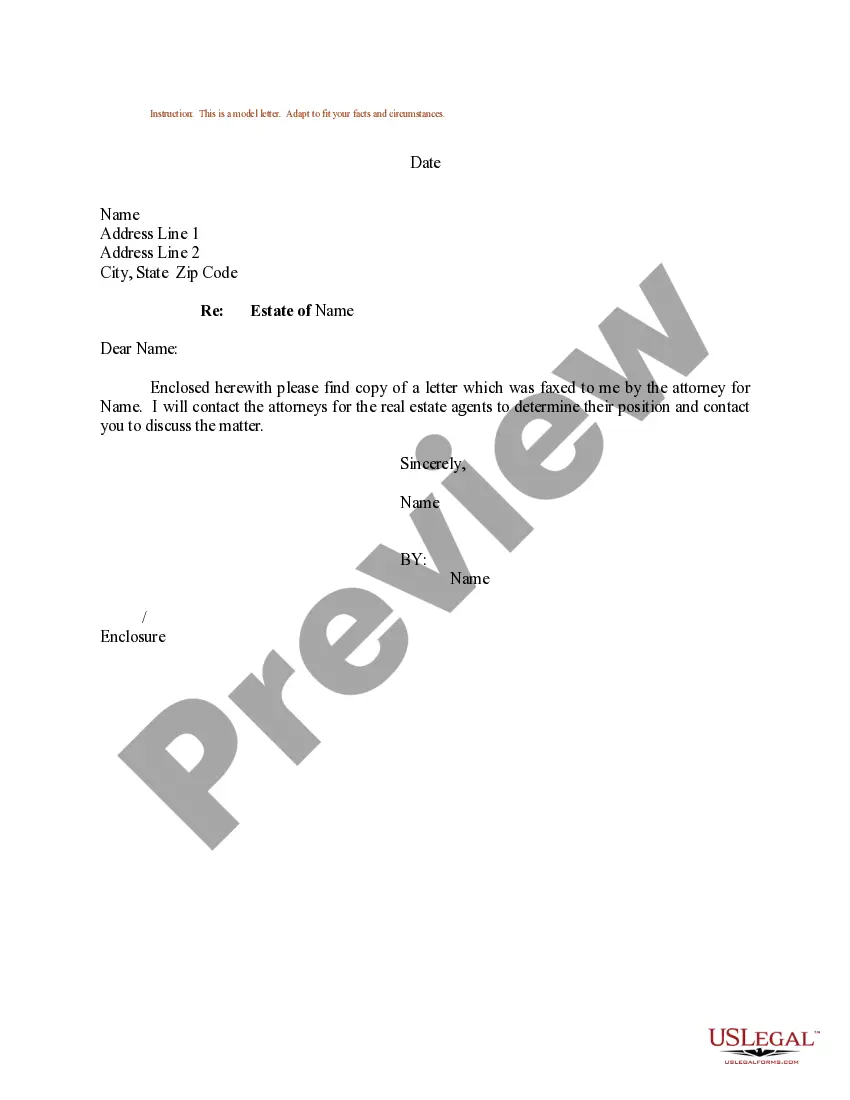
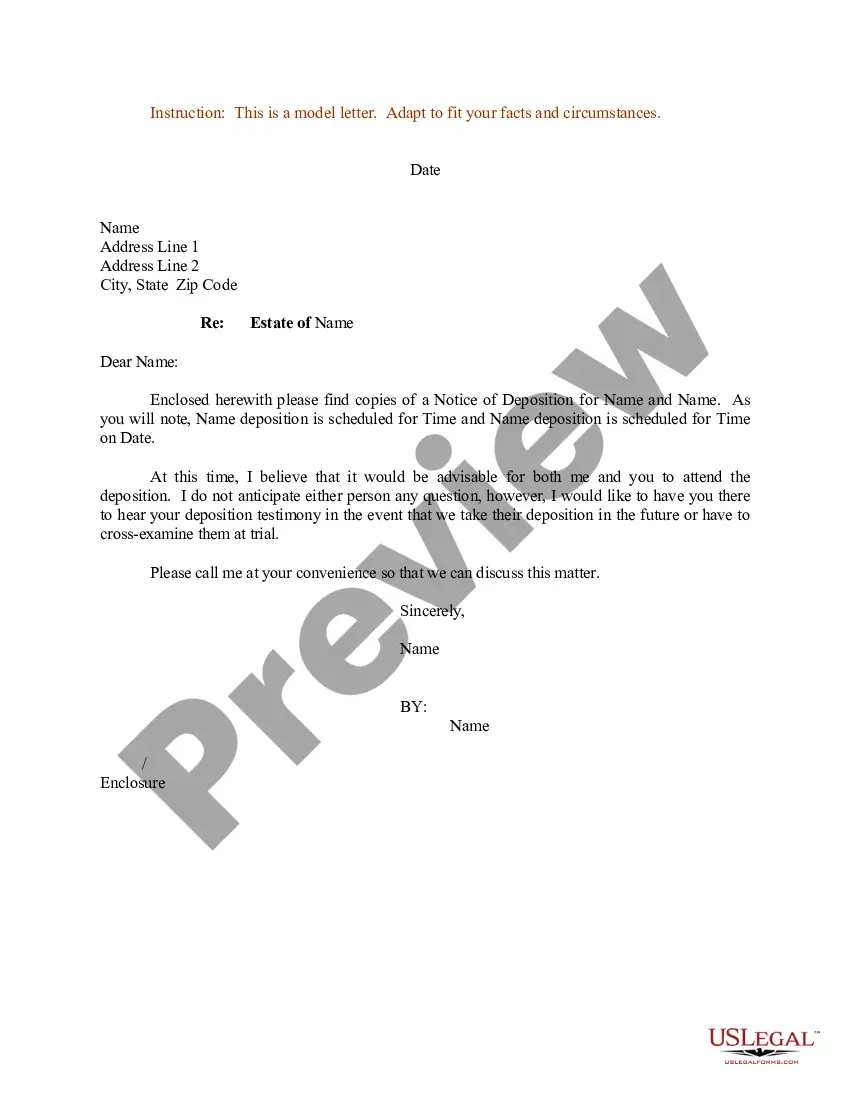
Minnesota Sample Letter for Foreclosed Home of Estate
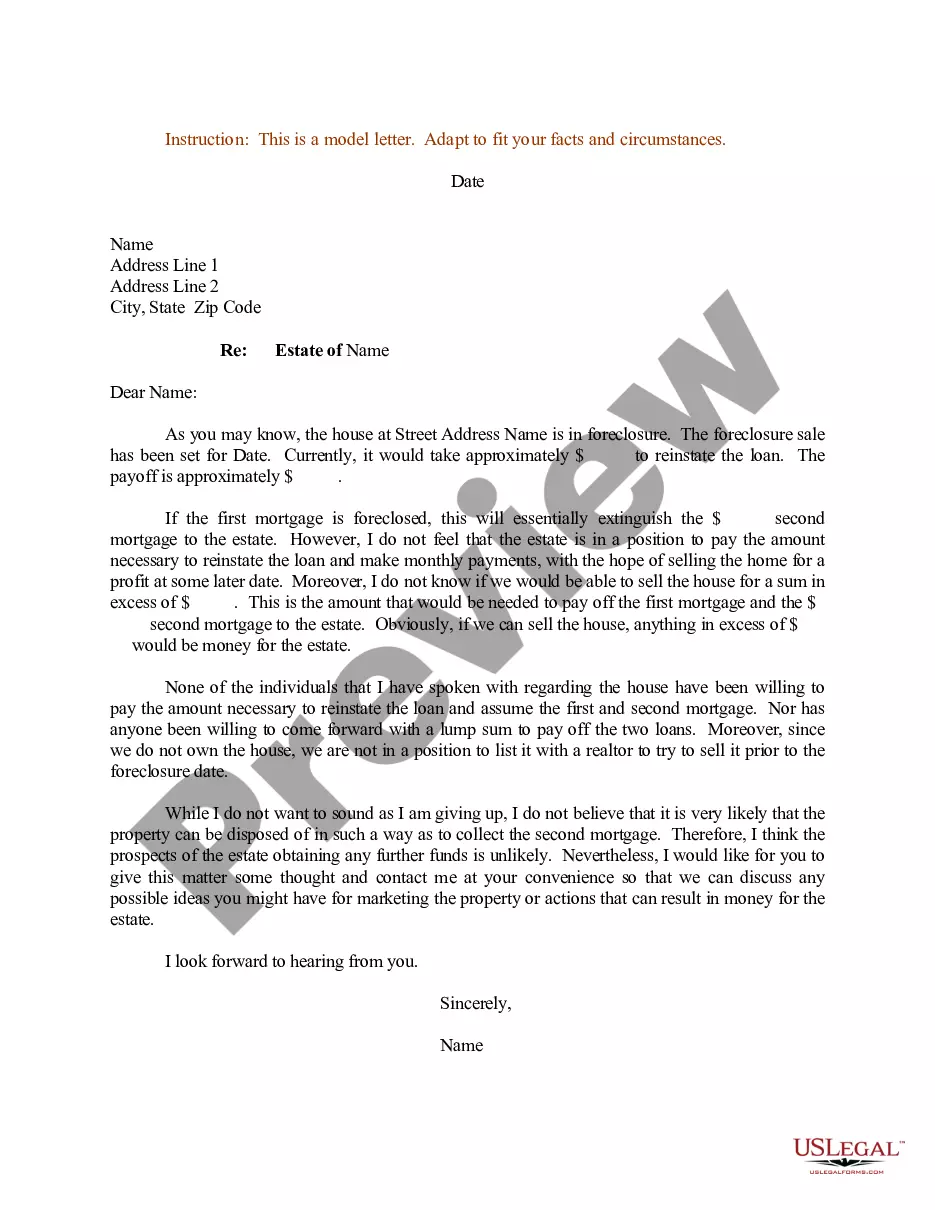
Description
Get your form ready online
Our built-in tools help you complete, sign, share, and store your documents in one place.
Make edits, fill in missing information, and update formatting in US Legal Forms—just like you would in MS Word.
Download a copy, print it, send it by email, or mail it via USPS—whatever works best for your next step.
Sign and collect signatures with our SignNow integration. Send to multiple recipients, set reminders, and more. Go Premium to unlock E-Sign.
If this form requires notarization, complete it online through a secure video call—no need to meet a notary in person or wait for an appointment.
We protect your documents and personal data by following strict security and privacy standards.

Make edits, fill in missing information, and update formatting in US Legal Forms—just like you would in MS Word.

Download a copy, print it, send it by email, or mail it via USPS—whatever works best for your next step.

Sign and collect signatures with our SignNow integration. Send to multiple recipients, set reminders, and more. Go Premium to unlock E-Sign.

If this form requires notarization, complete it online through a secure video call—no need to meet a notary in person or wait for an appointment.

We protect your documents and personal data by following strict security and privacy standards.
Looking for another form?
How to fill out Sample Letter For Foreclosed Home Of Estate?
It is possible to devote time on the Internet attempting to find the lawful document template that suits the federal and state needs you need. US Legal Forms gives a large number of lawful forms which are analyzed by pros. It is possible to download or printing the Minnesota Sample Letter for Foreclosed Home of Estate from the support.
If you already possess a US Legal Forms accounts, you may log in and then click the Obtain key. After that, you may complete, modify, printing, or signal the Minnesota Sample Letter for Foreclosed Home of Estate. Each lawful document template you buy is yours for a long time. To get another copy of any acquired kind, proceed to the My Forms tab and then click the corresponding key.
If you are using the US Legal Forms web site for the first time, adhere to the simple recommendations below:
- Initial, make sure that you have chosen the best document template to the county/area of your choice. See the kind description to make sure you have picked out the proper kind. If available, make use of the Preview key to search throughout the document template at the same time.
- In order to discover another edition from the kind, make use of the Look for industry to obtain the template that meets your needs and needs.
- After you have discovered the template you want, click Buy now to carry on.
- Find the costs prepare you want, type in your accreditations, and sign up for your account on US Legal Forms.
- Full the purchase. You can utilize your Visa or Mastercard or PayPal accounts to purchase the lawful kind.
- Find the file format from the document and download it to your device.
- Make adjustments to your document if needed. It is possible to complete, modify and signal and printing Minnesota Sample Letter for Foreclosed Home of Estate.
Obtain and printing a large number of document layouts using the US Legal Forms site, which provides the biggest selection of lawful forms. Use skilled and status-certain layouts to take on your small business or specific demands.
Form popularity
FAQ
In most cases, this is 6 months. However, some Mortgage Foreclosures are subject to federal regulations, in which case there is no redemption period. A Certificate of Redemption can be obtained from the Sheriff's Office of the county in which the foreclosure occurred or from the Mortgagee (lending institution).
(Sometimes, people refer to the period before a foreclosure sale actually happens as "preforeclosure," too.) During this time, the servicer can charge you various fees, like late charges and inspection fees, and, in most cases, must inform you about ways to avoid foreclosure.
Put your name, address, phone number, loan number, and date on the top of the letter. List the name and address of your lender. information about any money you have saved for a workout agreement. Tell the lender you are working with a foreclosure counselor and include their name and agency.
Even if the foreclosure process has already started, a mortgage company must stop the sheriff's sale if you apply for a loan modification or other option at least 7 business days before the sale is scheduled to happen. But if you plan to apply for a loan modification, don't wait until the last minute.
The sale is followed by a redemption period, which is usually six months. ingly, assuming there is no bankruptcy filing, a typical foreclosure by advertisement (including the typical six month redemption period) generally takes around eight to nine months.
In general, mortgage companies start foreclosure processes about 3-6 months after the first missed mortgage payment. Late fees are charged after 10-15 days, however, most mortgage companies recognize that homeowners may be facing short-term financial hardships.
Alternately, the borrower may attempt to sell the home in order to take advantage of any equity built up in the home. If the borrower is unable to refinance or sell the home after the six-month redemption period, he or she must vacate the property.
This is basically a document telling you that the lender will foreclose on your property if you do not take action to stop it. Ignoring it will only lead to further legal trouble, and it could prevent you from being able to negotiate with the lender to find a solution that allows you to keep your home.