This is a multi-state form covering the subject matter of the title.
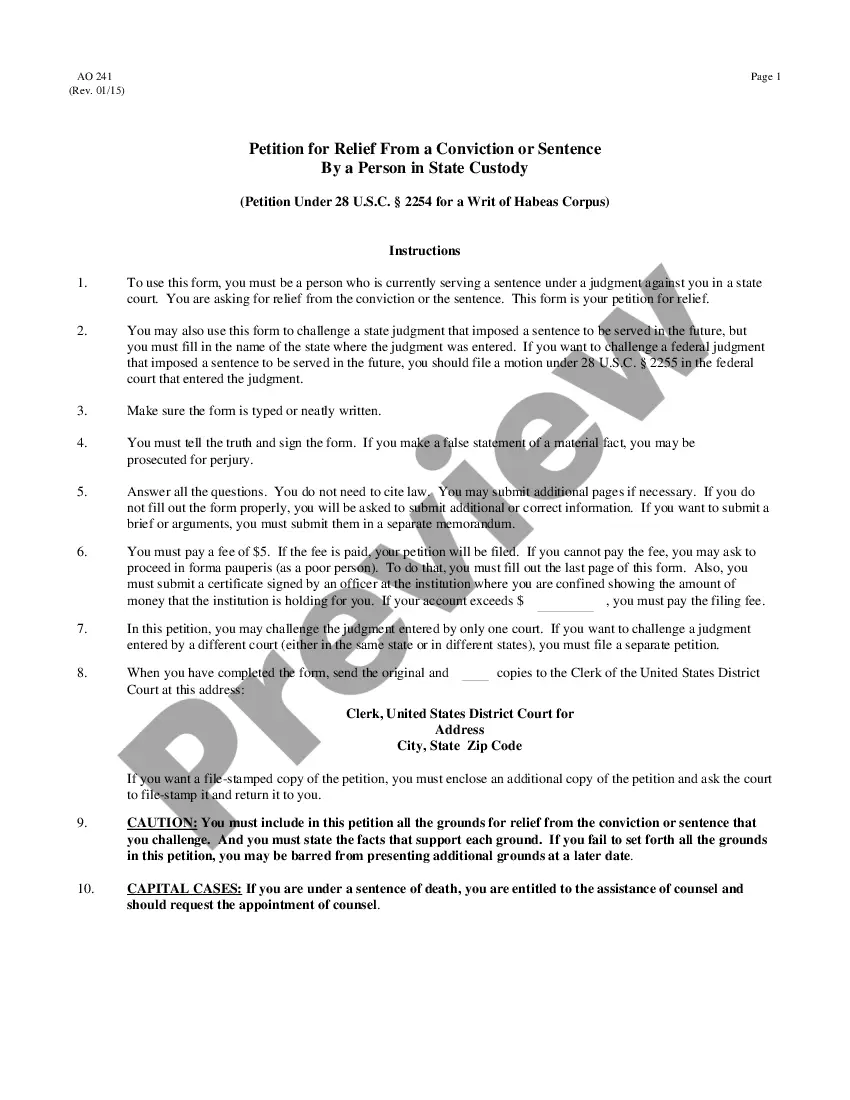
Minnesota Petition for Writ of Habeas Corpus by a Person in State Custody
Category:
State:
Multi-State
Control #:
US-00277
Format:
Word;
Rich Text
Instant download
Description
Free preview

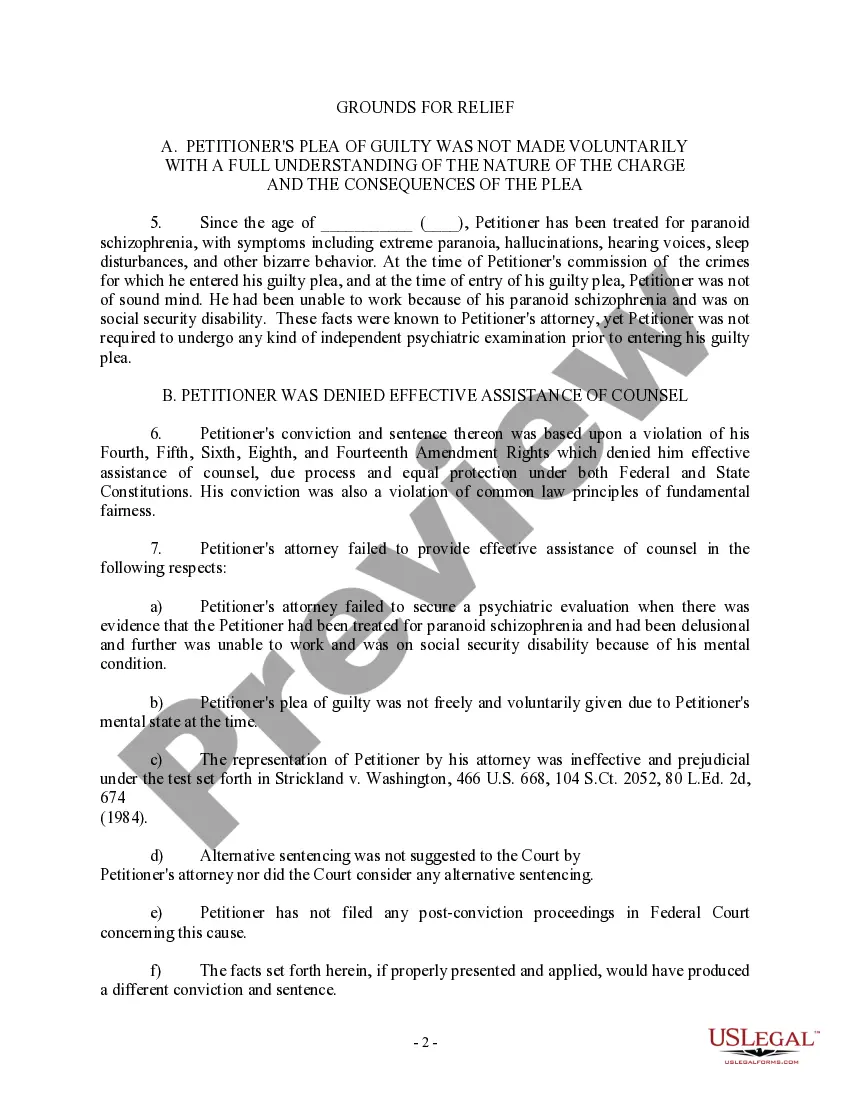
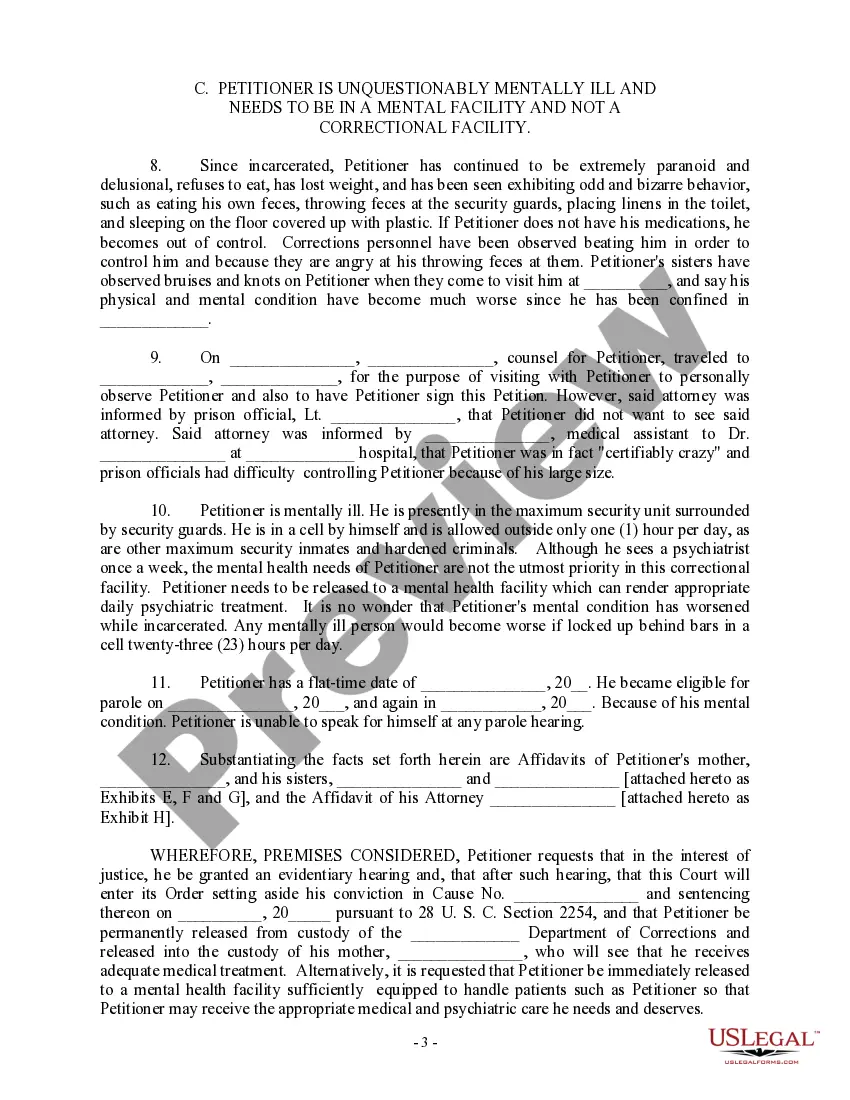
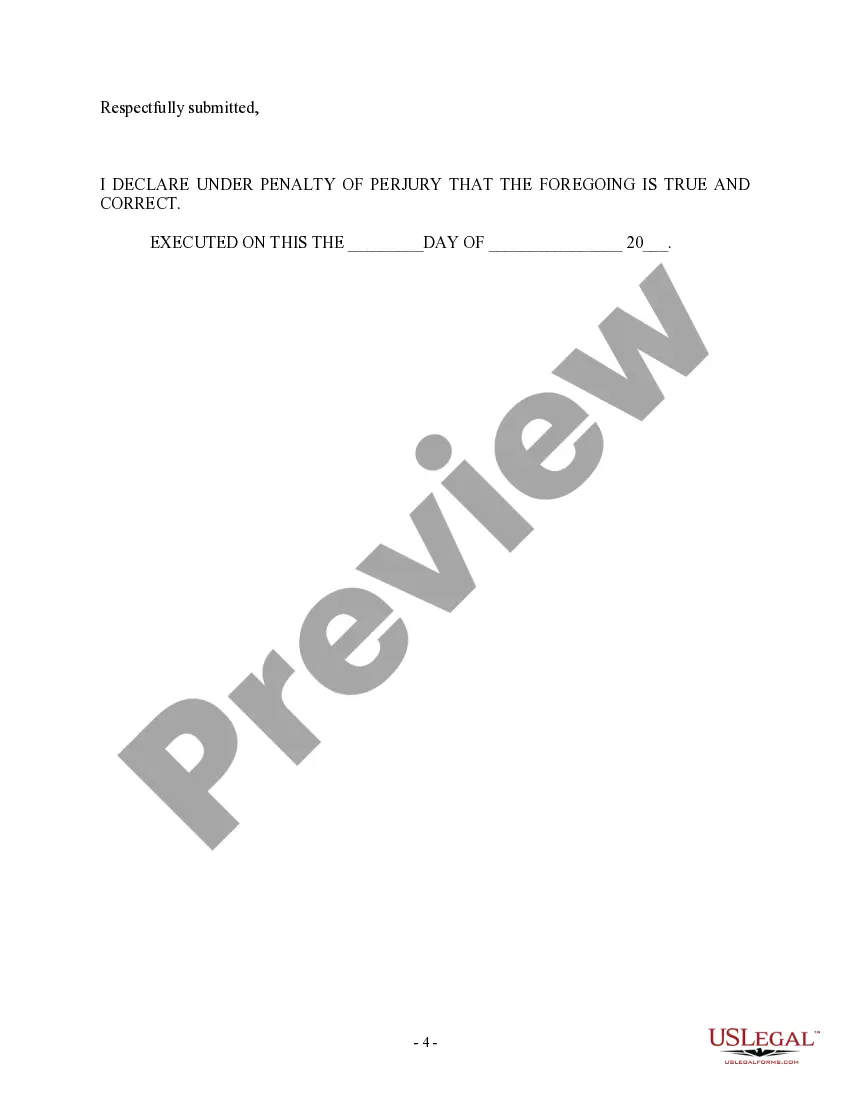
How to fill out Petition For Writ Of Habeas Corpus By A Person In State Custody?
You might spend several hours online searching for the legal document template that complies with the federal and state regulations you require. US Legal Forms provides a vast array of legal forms that have been evaluated by professionals.
It is easy to download or print the Minnesota Petition for Writ of Habeas Corpus by a Person in State Custody from their service. If you already possess a US Legal Forms account, you can Log In and click the Download button. After that, you can complete, modify, print, or sign the Minnesota Petition for Writ of Habeas Corpus by a Person in State Custody.
Every legal document template you purchase is yours permanently. To obtain another copy of the acquired form, go to the My documents tab and click the relevant button.
Select the format of the document and download it to your device. Make changes to your document if necessary. You can complete, modify, sign, and print the Minnesota Petition for Writ of Habeas Corpus by a Person in State Custody. Download and print thousands of document templates using the US Legal Forms website, which offers the largest collection of legal forms. Utilize professional and state-specific templates to address your business or personal needs.
- If you are using the US Legal Forms website for the first time, follow the straightforward instructions below.
- First, ensure you have selected the correct document template for the state/town of your choice. Read the form description to confirm that you have chosen the right one.
- If available, utilize the Review button to examine the document template as well.
- If you need to find an additional version of the form, use the Search field to locate the template that meets your needs.
- Once you have found the template you wish to use, click Get now to proceed.
- Choose the pricing plan you prefer, enter your credentials, and register for an account on US Legal Forms.
- Complete the transaction. You can use your credit card or PayPal account to pay for the legal form.
Form popularity
FAQ
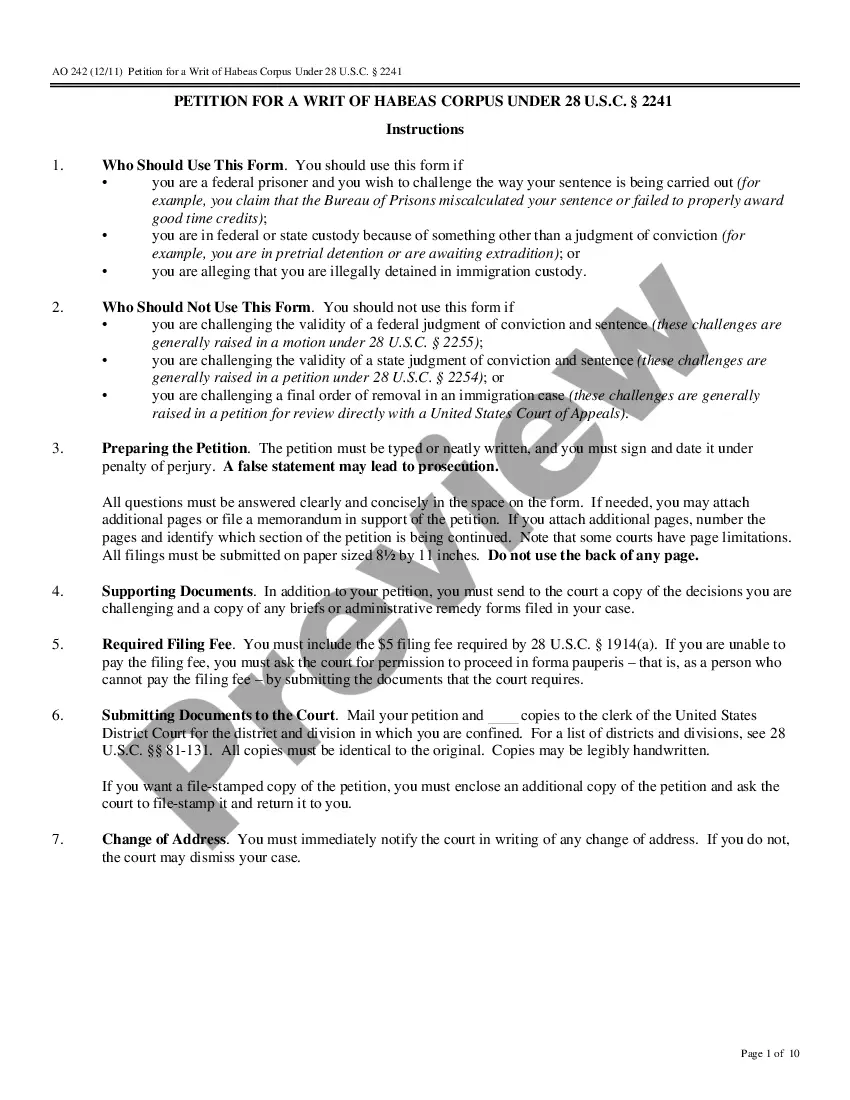
United States law affords persons the right to petition the federal courts for a writ of habeas corpus. Individual states also afford persons the ability to petition their own state court systems for habeas corpus pursuant to their respective constitutions and laws when held or sentenced by state authorities.
Arguments that Can Overturn Convictions. A Writ of Habeas Corpus usually addresses claims of ineffective assistance of counsel, prosecutorial misconduct, newly discovered evidence, jury misconduct, and claims of actual innocence.
Habeas Corpus petitions are filed in a California court by inmates or, more specifically, their attorneys, claiming they have been unlawfully detained or imprisoned.
In the United States, the petition for writ of habeas corpus has a long and rich history. Habeas corpus was inherited by the thirteen colonies from English common law. Today, it's still widely used to restore freedom to those who are imprisoned or in other forms of custody under state or federal institutions.
For example, if an individual was convicted on the basis that their skin color matched that of the perpetrator ing to eyewitnesses, but there is no other evidence against them, then the individual can appeal for habeas corpus in order to be freed from imprisonment.
If an inmate meets all the requirements to file a petition for writ of habeas corpus, they will file their petition in the superior court in the court of conviction. Within 60 days, the court will review the petition to determine if the inmate raised a prima facie case entitling them to relief.
Your lawyer can file a pretrial writ of habeas corpus to have your bond lowered to a reasonable amount so you can get out of jail.
The ?Great Writ? of habeas corpus is a fundamental right in the Constitution that protects against unlawful and indefinite imprisonment. Translated from Latin it means ?show me the body.? Habeas corpus has historically been an important instrument to safeguard individual freedom against arbitrary executive power.
A writ of habeas corpus orders the custodian of an individual in custody to produce the individual before the court to make an inquiry concerning his or her detention, to appear for prosecution (ad prosequendum) or to appear to testify (ad testificandum).