Minnesota Assignment of Tax Increment Financing
What this document covers
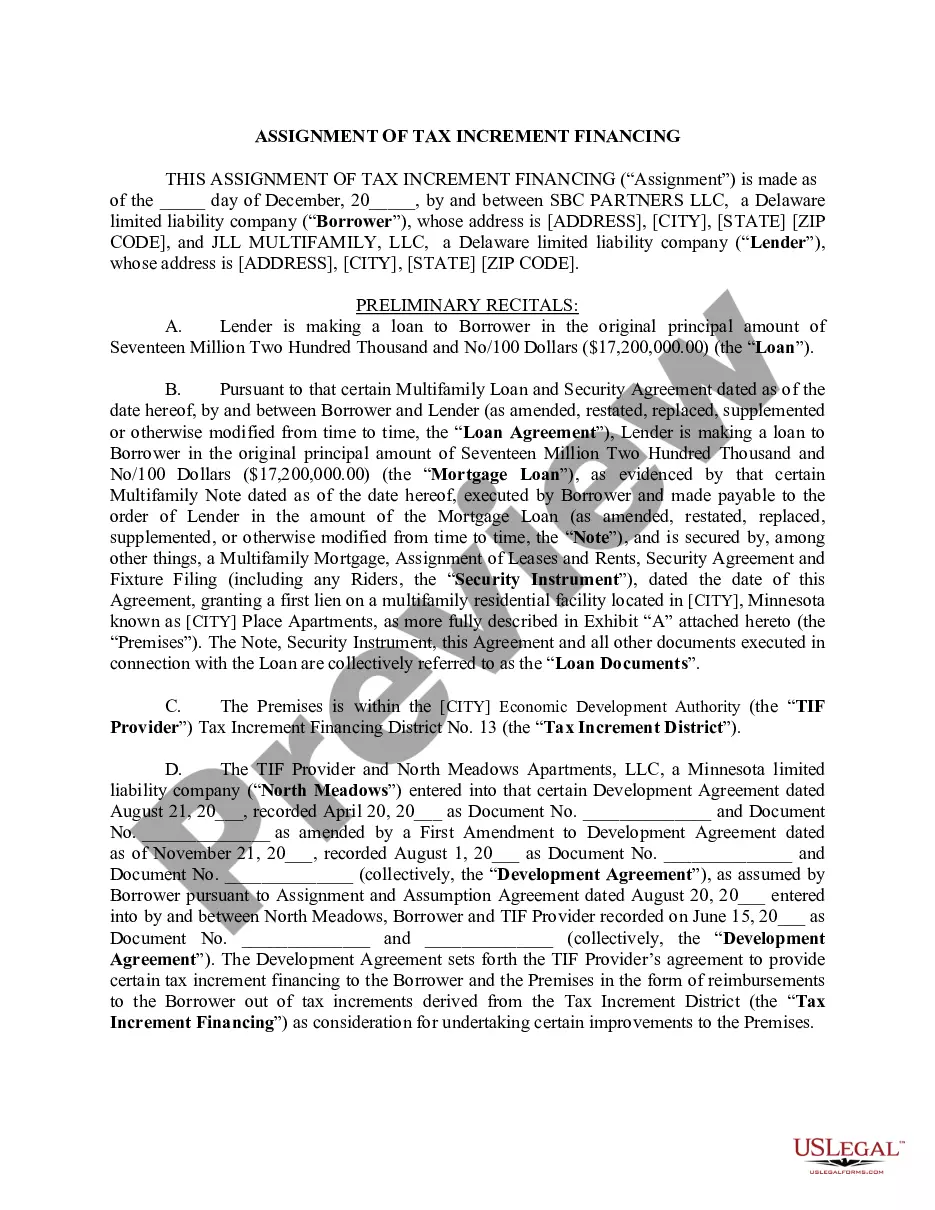
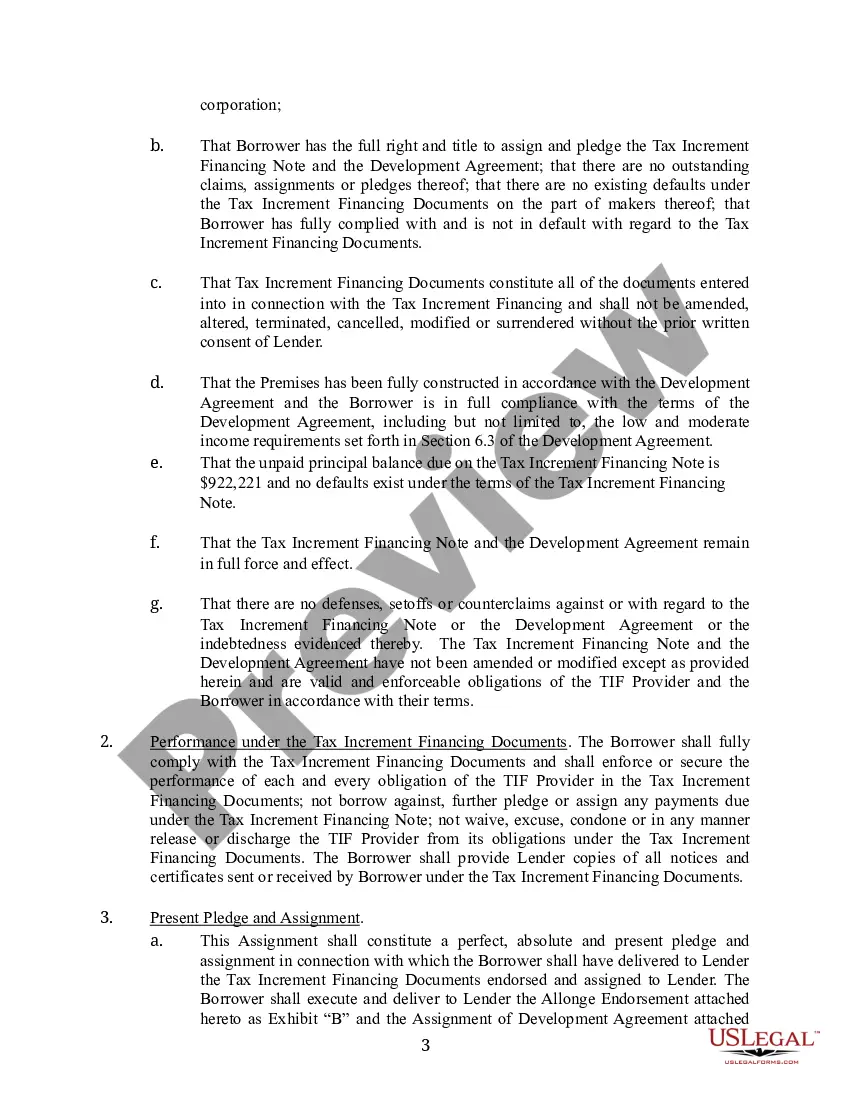
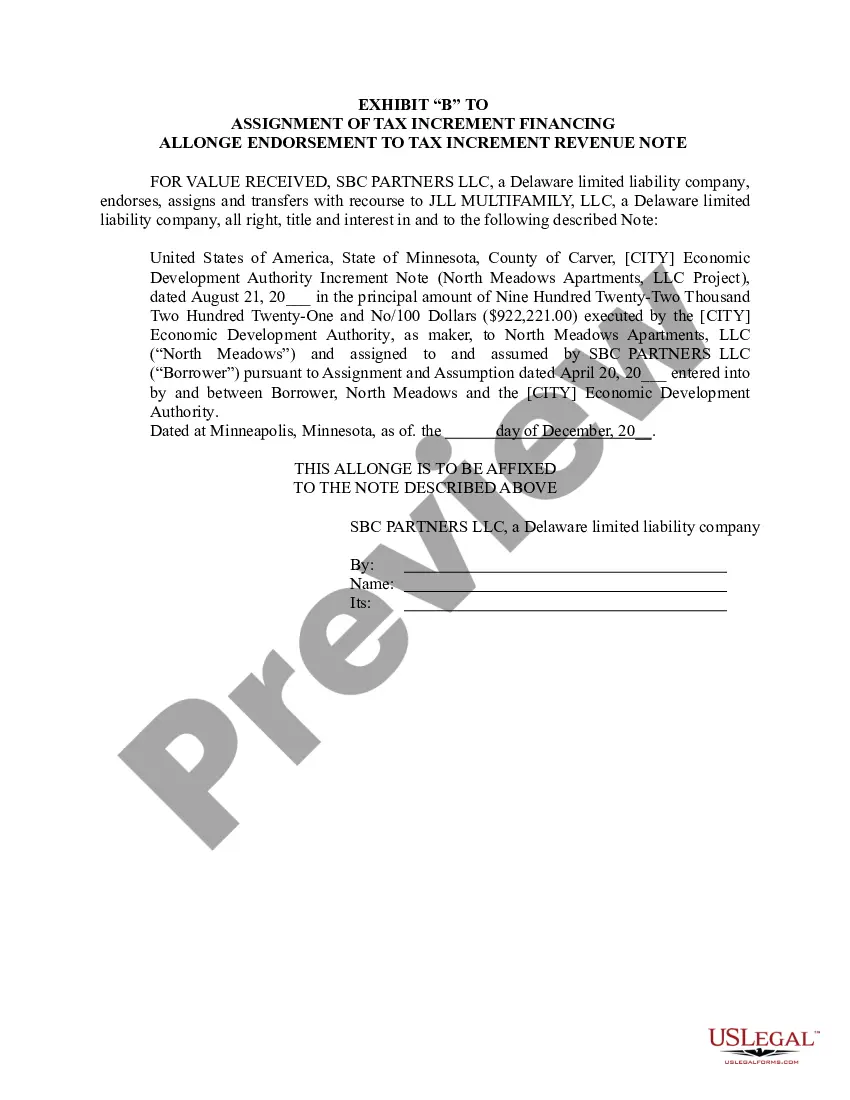
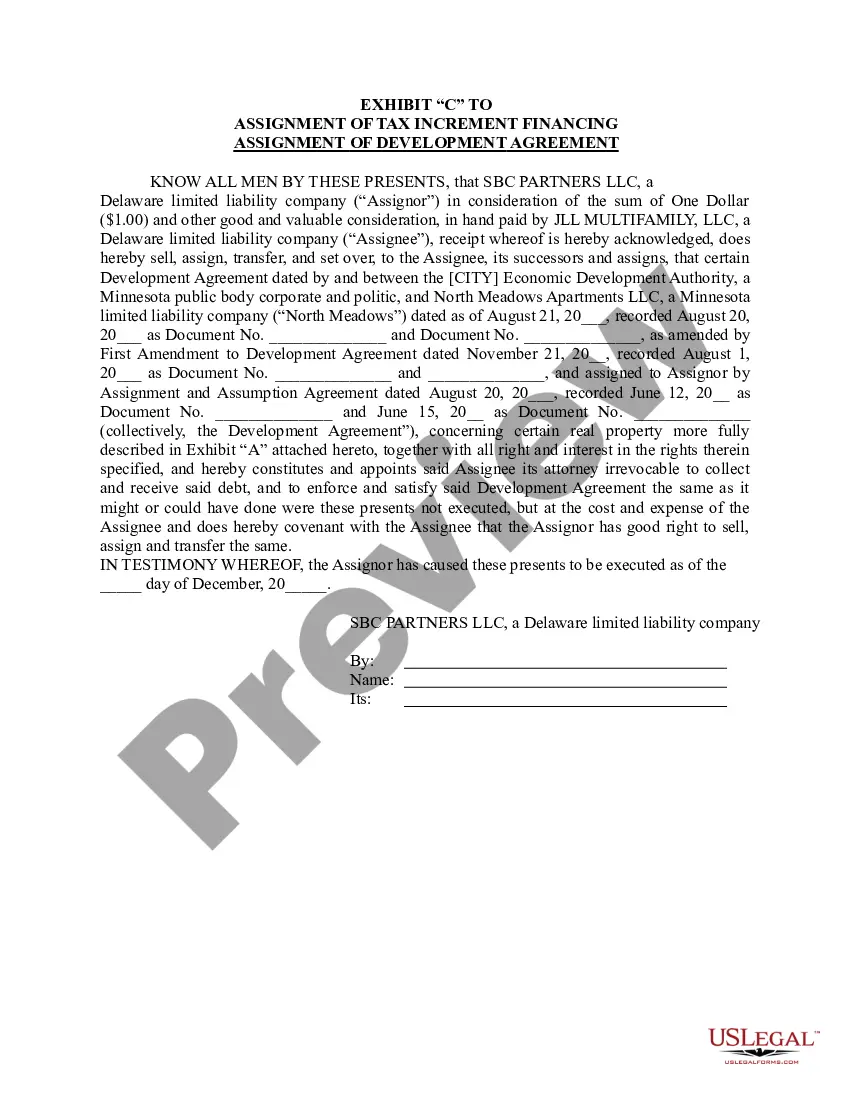
The Assignment of Tax Increment Financing is a legal document used to transfer the rights and obligations related to tax increment financing from one party to another. This form is specifically designed for transactions involving loans secured by a multifamily loan and security agreement and includes provisions for tax increment districts and related financial instruments. Unlike other financing forms, this assignment focuses on the specific tax increment financing agreements established between economic development authorities and property developers to facilitate redevelopment projects.
Form components explained
- Identification of the parties involved: Borrower and Lender.
- Details of the loan amount and related securities.
- Preliminary recitals outlining the context of the financing arrangement.
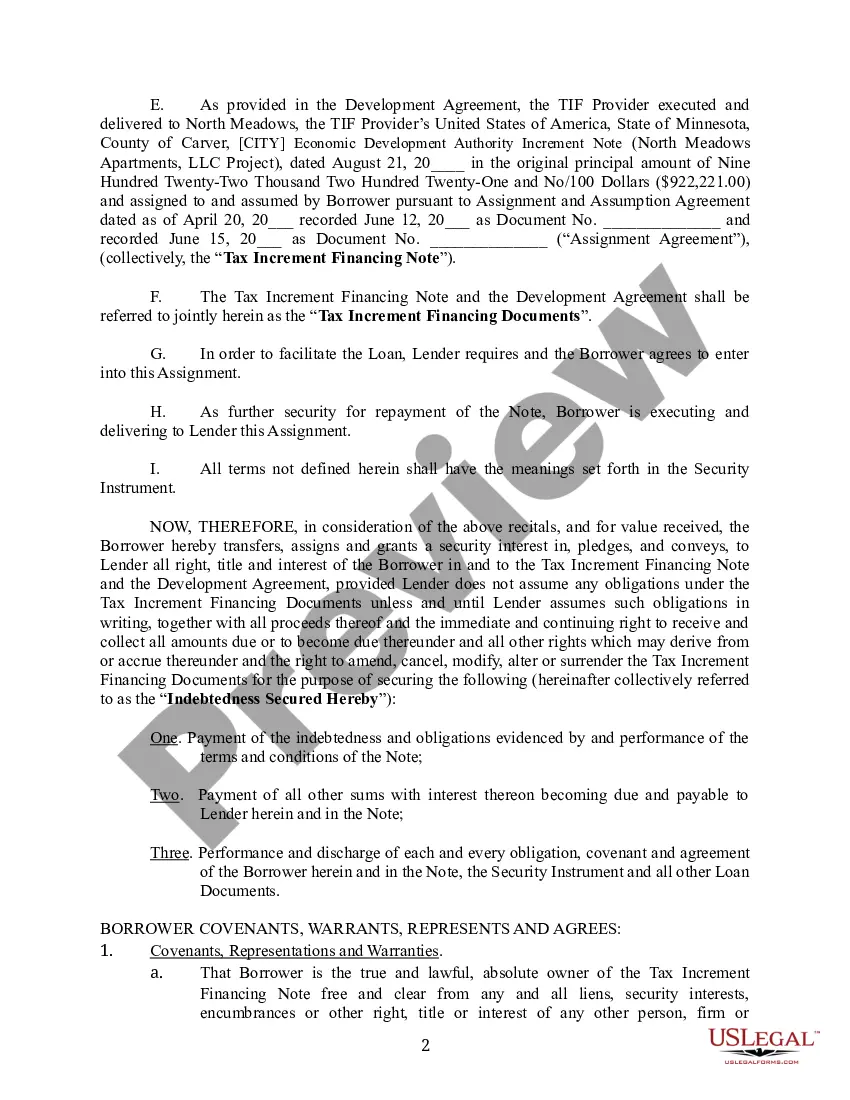
- Covenants, representations, and warranties made by the Borrower.
- Definitions and clarifications of terms used throughout the document.
- Procedures for events of default and remedies available to the Lender.







Situations where this form applies
This form should be used when a developer (the Borrower) seeks to assign rights to tax increment financing to a lender as part of a broader loan agreement. It is commonly needed when the development requires funding that will be repaid from the increased tax revenues generated by the improvements made to the property. Scenarios may include financing for multi-family residential projects and urban redevelopment initiatives that leverage local tax increment financing programs.
Who should use this form
- Property developers who require financing through tax increment financing.
- Lending institutions providing loans backed by tax increment financing.
- Parties involved in real estate development projects leveraging economic development incentives.
- Attorneys and legal representatives who are assisting clients with financing arrangements in real estate development.
Steps to complete this form
- Identify the parties involved by entering the names and addresses of the Borrower and Lender.
- Specify the loan amount and related financial details as described in the preliminary recitals.
- Enter the effective date of the assignment.
- Review and confirm all covenants and warranties provided by the Borrower.
- Ensure that all signatures are collected and the document is properly notarized where required.
- Provide copies of any additional relevant agreements or documents as outlined in the assignment.
Does this document require notarization?
Yes, this form must be notarized to be legally valid. Notarization helps provide an additional layer of authenticity and legality to the assignment, ensuring that the signatures are verified. US Legal Forms offers integrated online notarization services available 24/7 through secure video calls, ensuring convenience and compliance.
Get your form ready online
Our built-in tools help you complete, sign, share, and store your documents in one place.
Make edits, fill in missing information, and update formatting in US Legal Forms—just like you would in MS Word.
Download a copy, print it, send it by email, or mail it via USPS—whatever works best for your next step.
Sign and collect signatures with our SignNow integration. Send to multiple recipients, set reminders, and more. Go Premium to unlock E-Sign.
If this form requires notarization, complete it online through a secure video call—no need to meet a notary in person or wait for an appointment.
We protect your documents and personal data by following strict security and privacy standards.

Make edits, fill in missing information, and update formatting in US Legal Forms—just like you would in MS Word.

Download a copy, print it, send it by email, or mail it via USPS—whatever works best for your next step.

Sign and collect signatures with our SignNow integration. Send to multiple recipients, set reminders, and more. Go Premium to unlock E-Sign.

If this form requires notarization, complete it online through a secure video call—no need to meet a notary in person or wait for an appointment.

We protect your documents and personal data by following strict security and privacy standards.
Mistakes to watch out for
- Failing to include accurate party information, including names and addresses.
- Not thoroughly reviewing covenants and obligations which may lead to misunderstandings.
- Omitting necessary signatures, which can render the document unenforceable.
- Not complying with state-specific legal requirements for tax increment financing agreements.
Why complete this form online
- Convenient access to preformatted legal documents specific to tax increment financing.
- Editable templates that allow users to tailor details for various projects.
- Reliable legal standards ensured by licensed attorneys who draft the forms.
Looking for another form?










Form popularity
FAQ
Tax increment financing is a public financing method that supports urban development by capturing future tax benefits from rising property values. Essentially, it allows municipalities to invest in infrastructure projects without immediate tax increases for residents. In Minnesota, the Assignment of Tax Increment Financing allows local governments to fund these developments while stimulating economic growth in their communities.
To calculate tax increment financing, you first determine the base property value before the project starts. Next, after the improvements, you assess the new property value. The difference between the two values represents the increment, and the additional property taxes collected from this increment will repay the financing costs. Using platforms like US Legal Forms can help streamline this process and ensure accurate calculations for Minnesota Assignment of Tax Increment Financing.
Tax increment financing, or TIF, is a tool that helps fund development in specific areas. When a project starts, the current property taxes are collected as usual. As improvements increase the property value, any extra tax revenue generated goes back into funding the project. In Minnesota, the Assignment of Tax Increment Financing allows local governments to use these funds for infrastructure and community improvements.
Statute 469.177 outlines the legal framework for tax increment financing in Minnesota. This statute defines the eligibility criteria for TIF districts, the process for establishing these districts, and the allowable uses of TIF funds. Understanding the Minnesota Assignment of Tax Increment Financing and its statutory basis is crucial for municipalities looking to leverage this financing method effectively.
In Minnesota, tax increment financing operates under specific state laws designed to promote economic development. Municipalities can create TIF districts, where they can capture the increased tax revenue generated by new developments. The Minnesota Assignment of Tax Increment Financing provides a structured approach for funding public improvements, which ultimately supports local businesses and enhances community vitality.
While tax increment financing offers benefits, it also has drawbacks. One significant concern is that it can divert funds from other essential public services, like education and public safety, as the tax revenue is allocated to the TIF district. Additionally, the Minnesota Assignment of Tax Increment Financing can sometimes lead to increased property taxes for residents if the increased values do not benefit the community as a whole.
Tax increment financing (TIF) allows municipalities to finance public projects by capturing the future tax revenue generated from increased property values. Essentially, when a property is improved, the increased tax revenue is reinvested back into the area to support further development. The Minnesota Assignment of Tax Increment Financing is an essential tool for local governments to stimulate growth, enhance community infrastructure, and promote economic development.