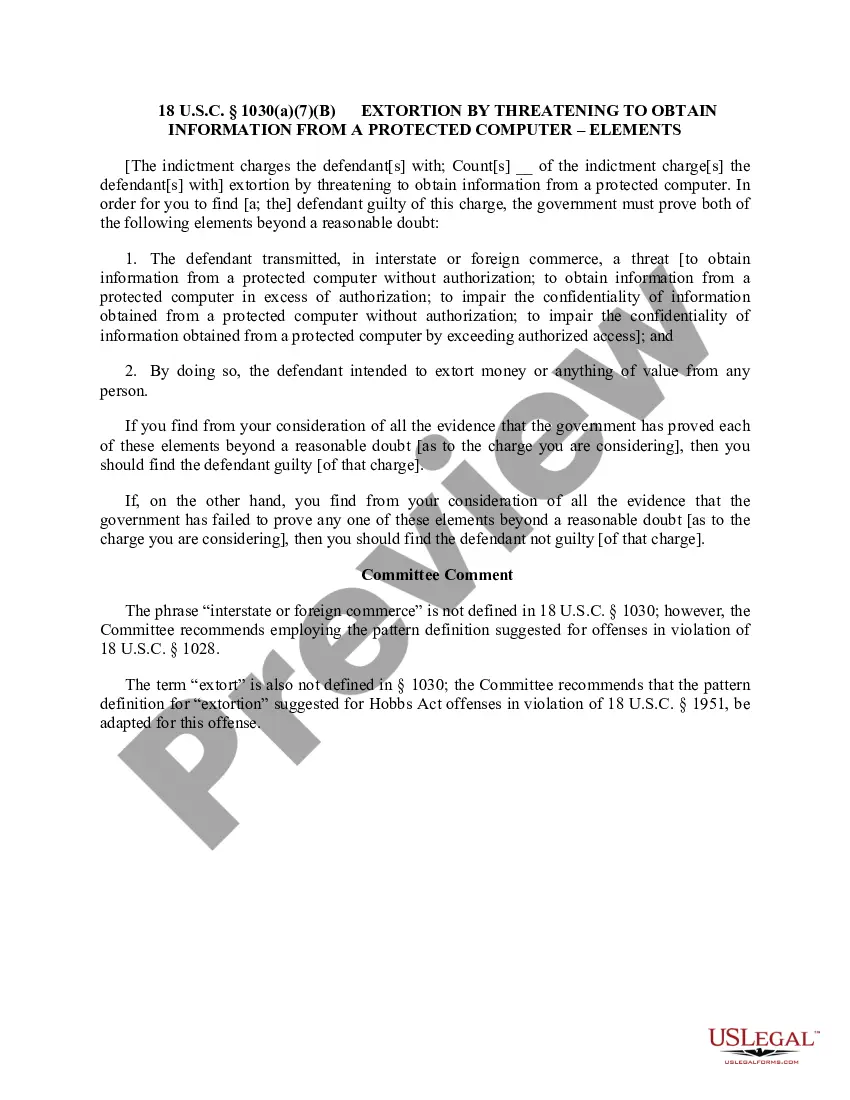
Minnesota Letter to Client regarding Hearing Scheduled on Client's Outstanding Attorney's Fees
What this document covers
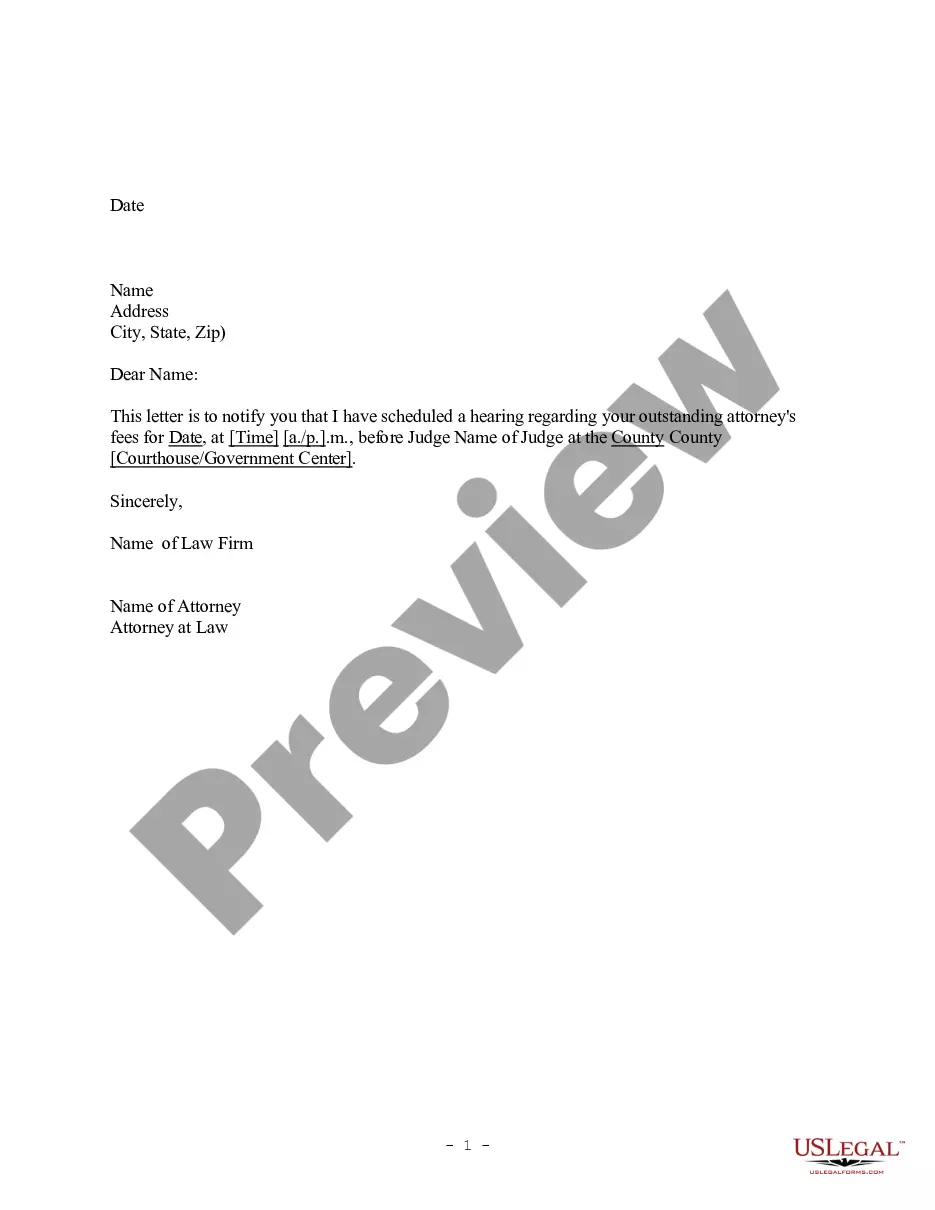
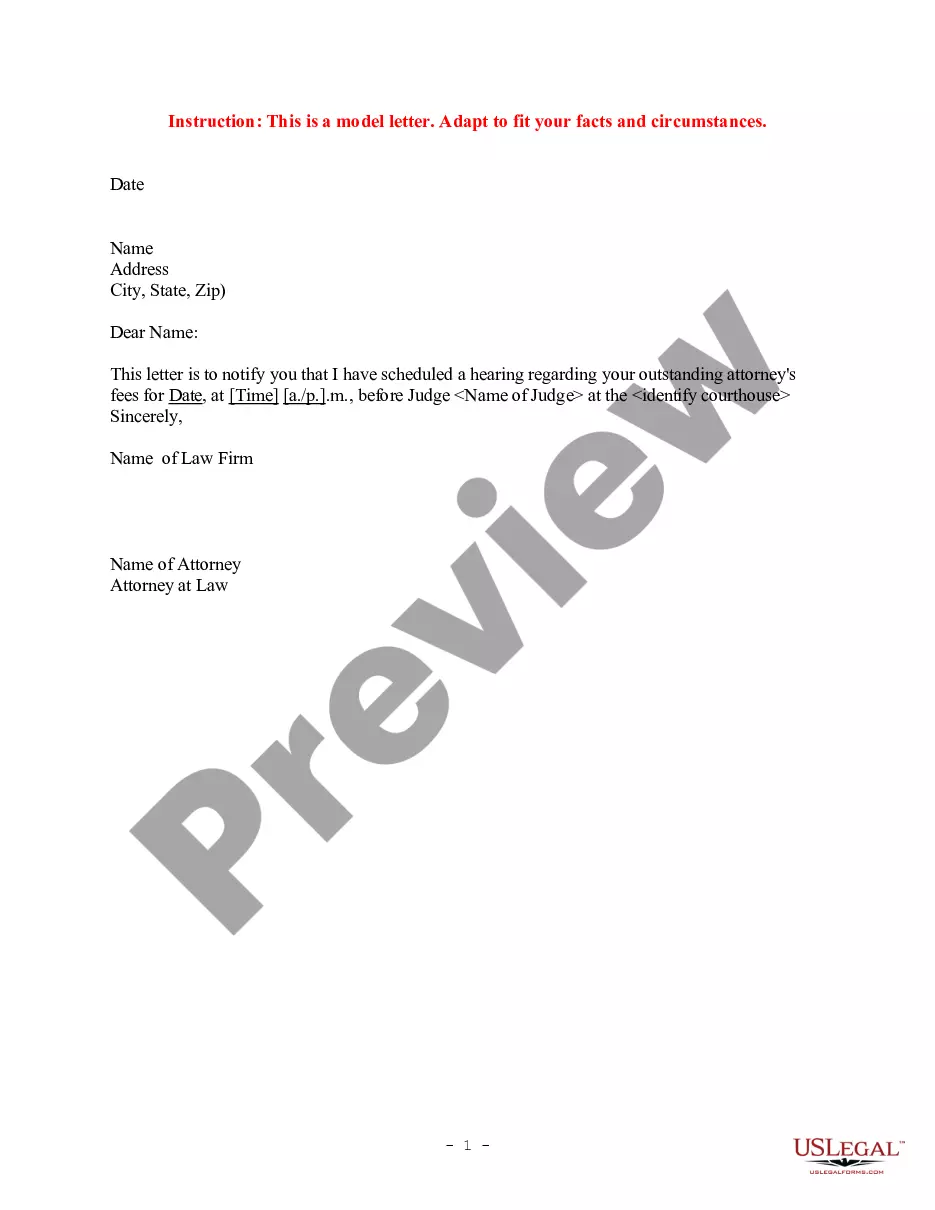
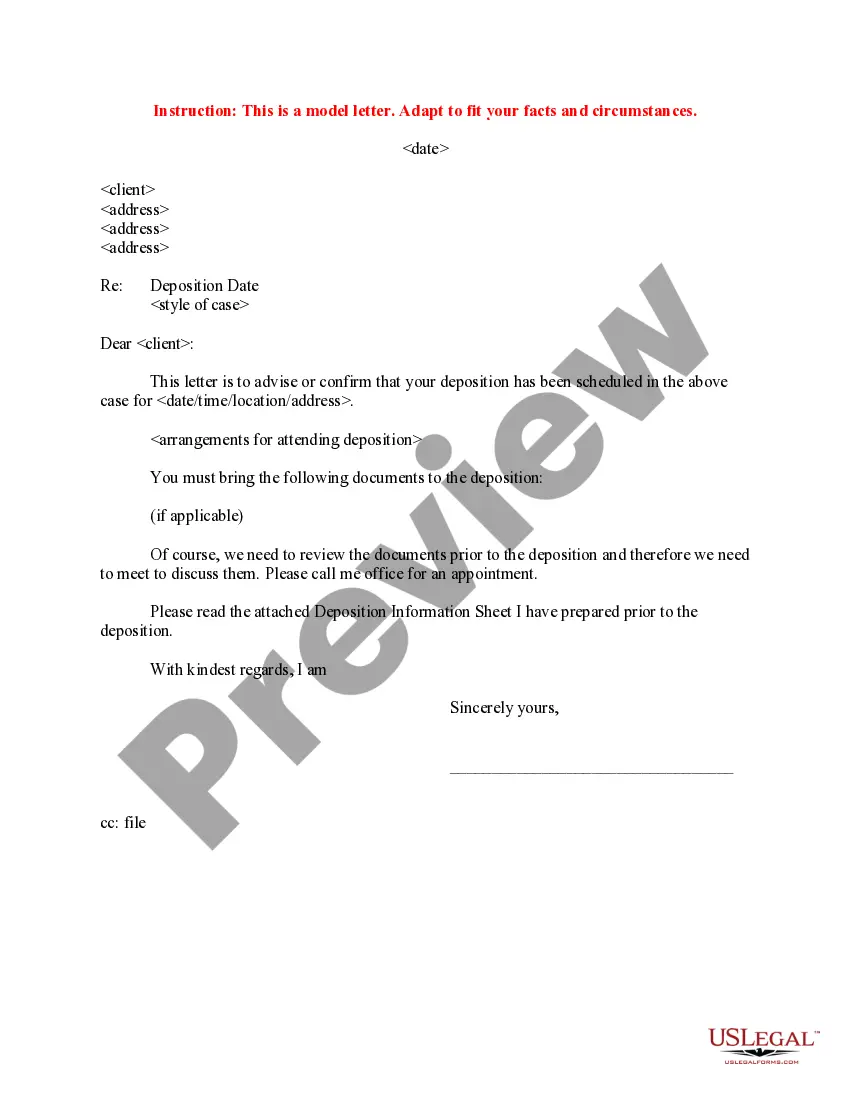
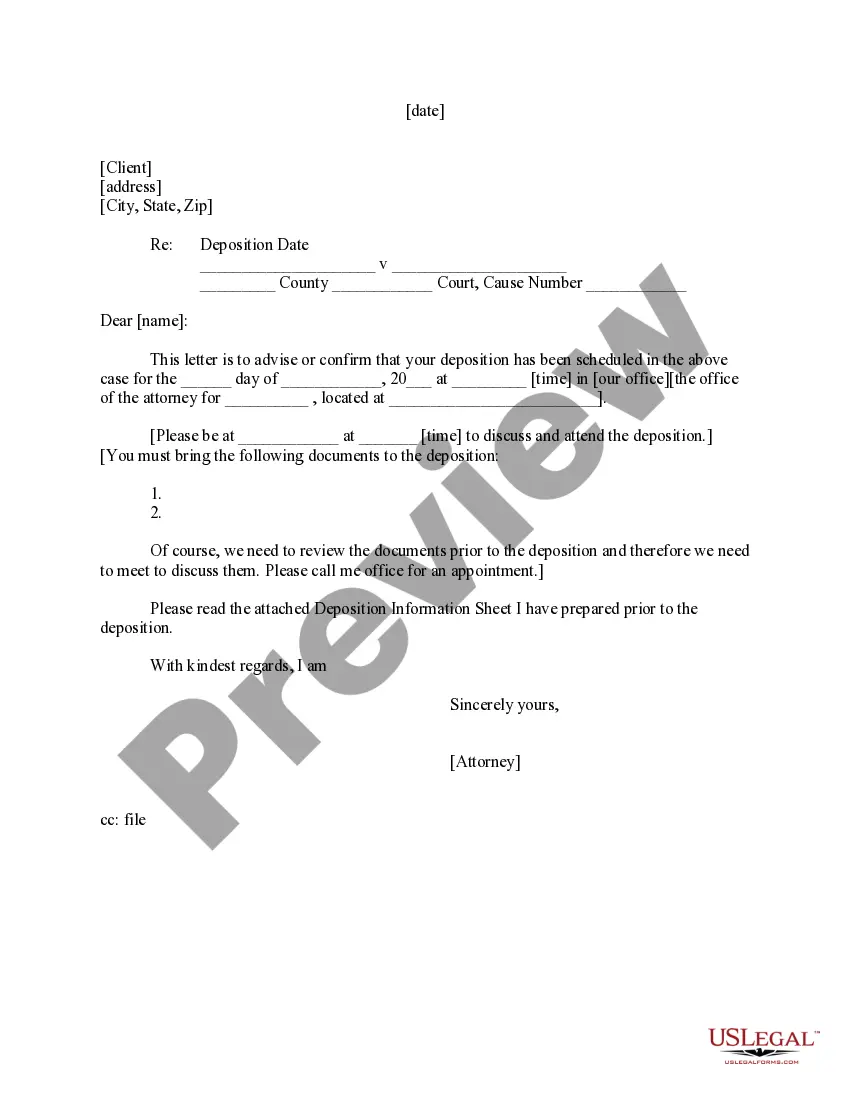
The Letter to Client regarding Hearing Scheduled on Client's Outstanding Attorney's Fees is a legal document informing clients about an upcoming court hearing due to unpaid attorney fees. This form serves as a formal notice, urging the client to address the outstanding balance before legal action becomes necessary. It is distinct from other collection notices as it includes specific details about the court hearing that may result from the delinquency.
What’s included in this form
- The date and time of the scheduled hearing.
- The name and location of the judge handling the case.
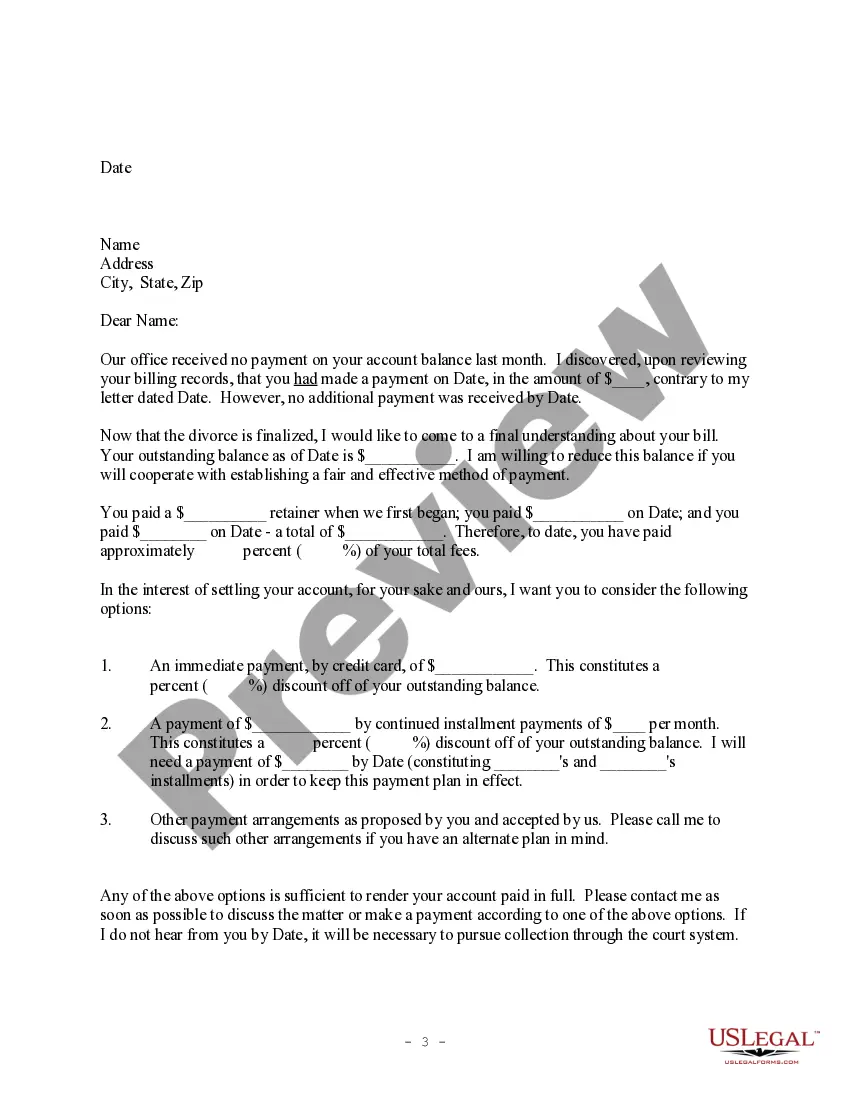
- The amount of the outstanding attorney fees.
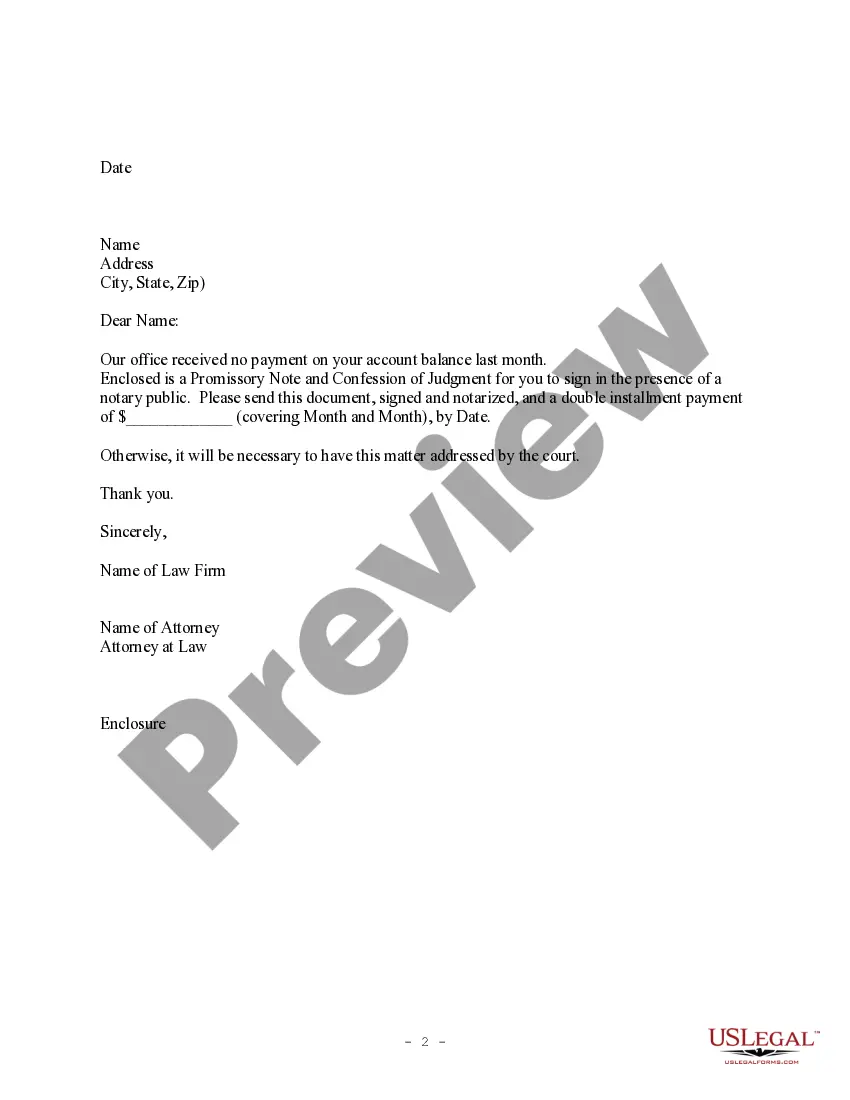
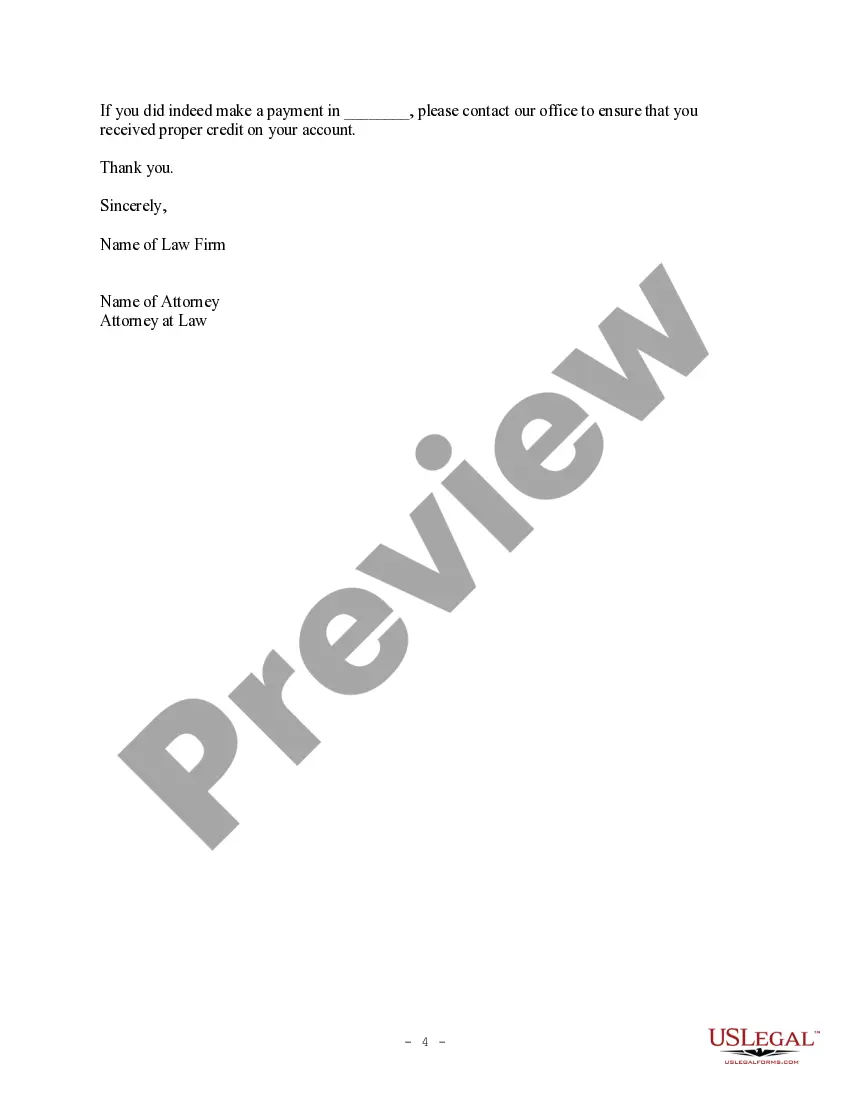
- A request for payment or alternative arrangements before the court date.
- Provisions for agreeing on a final payment method to settle the debt.
Situations where this form applies
This form is necessary when an attorney has not received payment from a client for services rendered and has decided to escalate the matter to the court. If a client is consistently late or fails to pay their attorney fees, this letter notifies them of the legal implications of their delinquency while providing them an opportunity to settle the balance before a hearing takes place.
Who should use this form
- Attorneys seeking to formally notify clients about scheduled hearings related to unpaid fees.
- Law firms managing delinquent accounts and needing to take legal action for collections.
- Clients who have received this notice and need guidance on addressing their outstanding fees.
How to prepare this document
- Enter the date and client's details at the top of the letter.
- Specify the date and time of the scheduled hearing.
- Fill in the name of the judge and the location of the court.
- Clearly state the outstanding amount the client owes.
- Include instructions for making payment or establishing alternative payment arrangements.
- Sign the letter with your name and law firm's details at the end.
Does this form need to be notarized?
This form does not typically require notarization unless specified by local law. It is important to check jurisdictional requirements to confirm whether notarization might be needed for enforcement of the document.
Get your form ready online
Our built-in tools help you complete, sign, share, and store your documents in one place.
Make edits, fill in missing information, and update formatting in US Legal Forms—just like you would in MS Word.
Download a copy, print it, send it by email, or mail it via USPS—whatever works best for your next step.
Sign and collect signatures with our SignNow integration. Send to multiple recipients, set reminders, and more. Go Premium to unlock E-Sign.
If this form requires notarization, complete it online through a secure video call—no need to meet a notary in person or wait for an appointment.
We protect your documents and personal data by following strict security and privacy standards.

Make edits, fill in missing information, and update formatting in US Legal Forms—just like you would in MS Word.

Download a copy, print it, send it by email, or mail it via USPS—whatever works best for your next step.

Sign and collect signatures with our SignNow integration. Send to multiple recipients, set reminders, and more. Go Premium to unlock E-Sign.

If this form requires notarization, complete it online through a secure video call—no need to meet a notary in person or wait for an appointment.

We protect your documents and personal data by following strict security and privacy standards.
Avoid these common issues
- Failing to provide accurate dates and times for the hearing.
- Neglecting to include the specific amount owed, leading to confusion.
- Not signing or dating the letter, which may render it invalid.
- Omitting clear payment instructions for the client.
Advantages of online completion
- Easy accessibility to download and customize the letter according to specific needs.
- Editability allows for quick adjustments to details like dates and amounts owed.
- Reliable format, drafted by licensed attorneys, ensuring legal compliance.
Legal use & context
- This form is legally binding and serves as an official notice to the client.
- It helps formalize the process of fee collection and provides a record of communication.
- Courts may look favorably on attorneys who have made attempts to resolve payment issues before resorting to litigation.
Main things to remember
- This letter notifies clients of a hearing for unpaid attorney fees.
- It is crucial to fill in all details accurately to ensure clarity.
- Communicate with clients promptly to encourage payment before legal proceedings.
- Use this form to maintain professionalism in client communications.
Looking for another form?
Form popularity
FAQ
A few more observations: Ask for the payment simply and be straightforward. Tell them you have included the invoice as part of the email and how you want to be paid. The conclusion is polite and lets them know that you'd love to work more with them in the future.
Express gratitude for doing business with you. Use courteous and sincere language. Mention the urgency of the dues to be paid on time for account purposes. Highlight details about the goods or services supplied. Give details like reference numbers of the delivery.
Your company name and address. recipient's name and address. today's date. a clear reference and/or any account reference numbers. the amount outstanding. original payment due date. a brief explanation that no payment has been received.
A few more observations: Ask for the payment simply and be straightforward. Tell them you have included the invoice as part of the email and how you want to be paid. The conclusion is polite and lets them know that you'd love to work more with them in the future.
The first invoice email. Polite. Concise. All the necessary information provided. Email on the due date. Reminder. Direct. Short. One to three weeks overdue. Direct. Unambiguously ask them to make the payment. A month overdue. Concise. Firm.
Make sure you're talking to the right person. Introduce yourself. Have a good idea of what you want. Get straight to the point. Speak calmly and clearly. Do not let the emotions get the better of you. Summarize everything at the end of the call.
Keep the letter simple and easy to understand. Use a friendly and polite tone. Refer to goods or services whose payment is pending. Explain why the payment has to be made. Mention the bill details and reference numbers of previous transactions.
Amount Due. Invoice Number. Month and year debt was incurred. Pay By date. Consequence of not paying by Pay By date. Your contact Information. Contact information for contesting the debt.
Get straight to the point by telling the receiver of the late payment. Remind them exactly what it is they have not paid for, and the amount. State the date the payment was due. Just under the first paragraph, attach all the bills owed and explain the details of that bill.