Minnesota Affidavit in Support of Motion to Establish Lien for Unpaid Attorney's Fees
Understanding this form
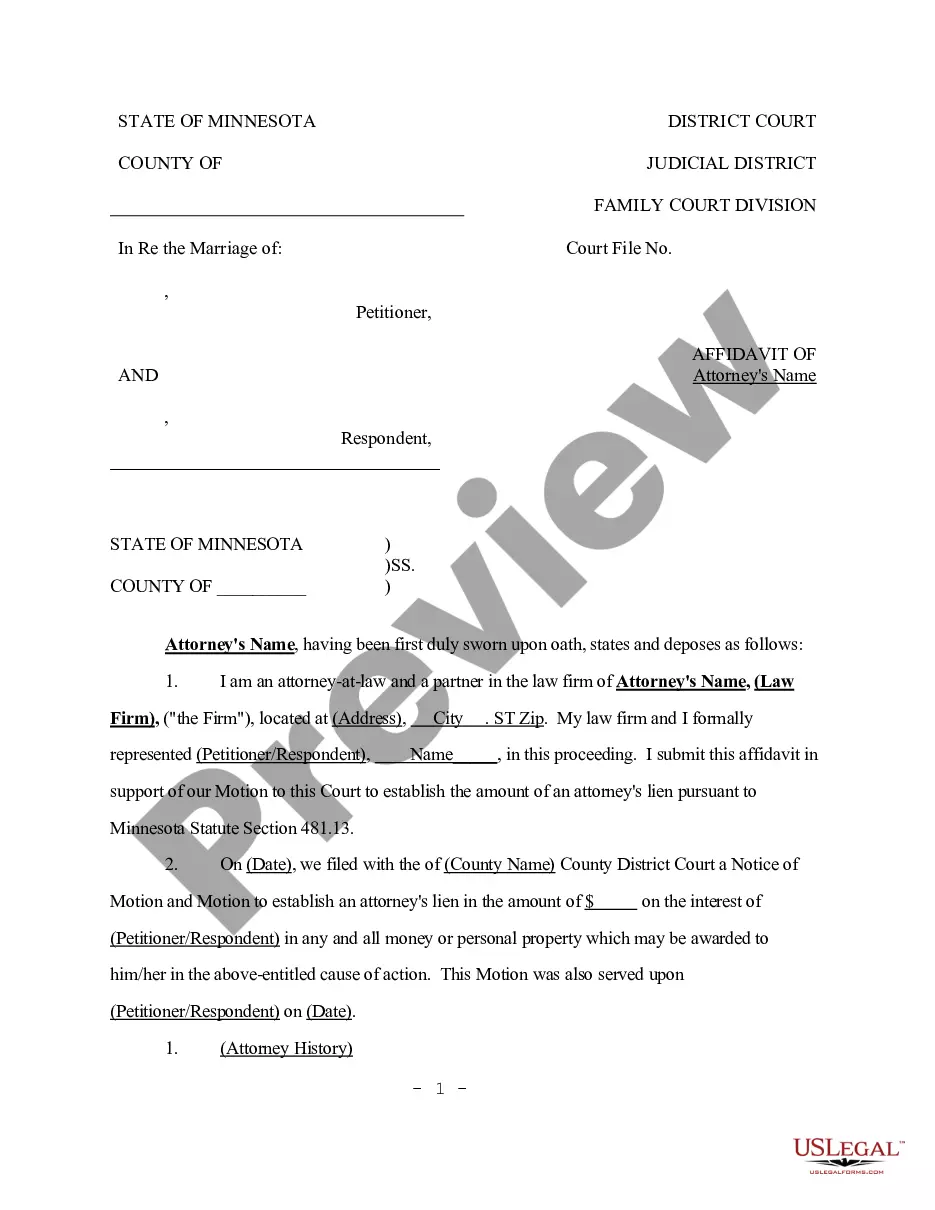
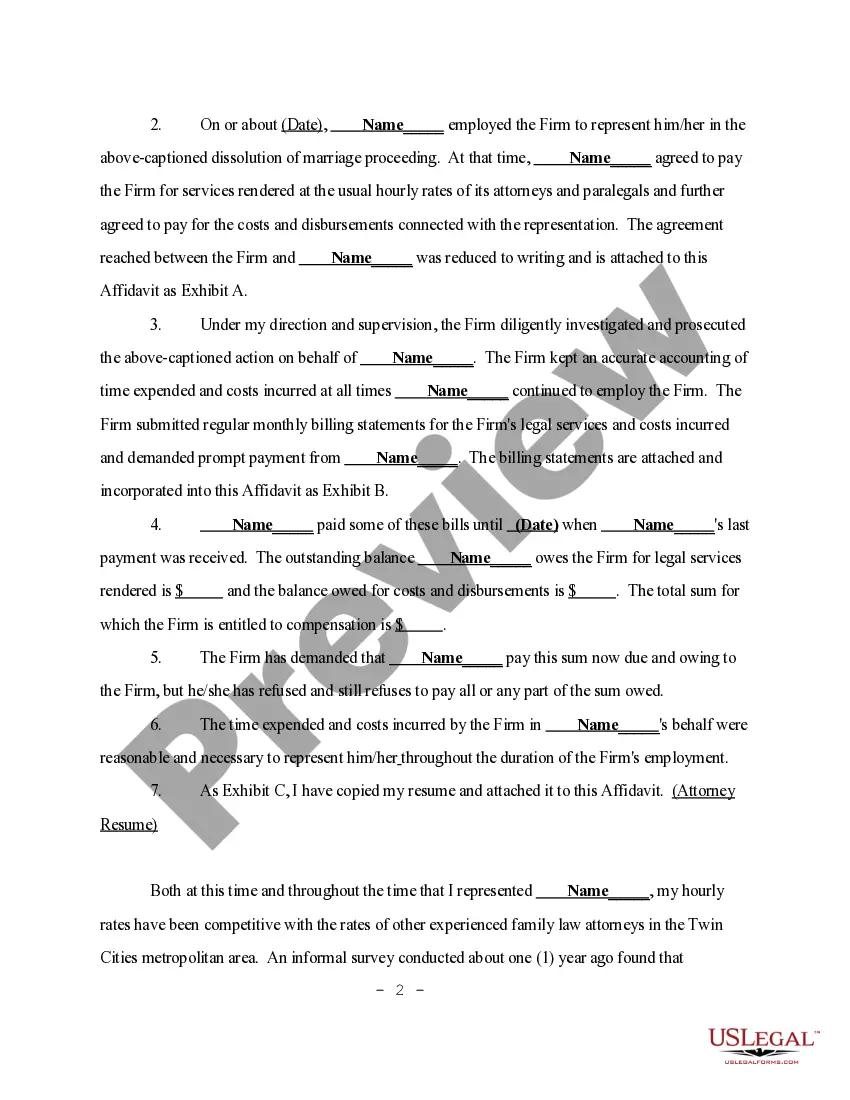
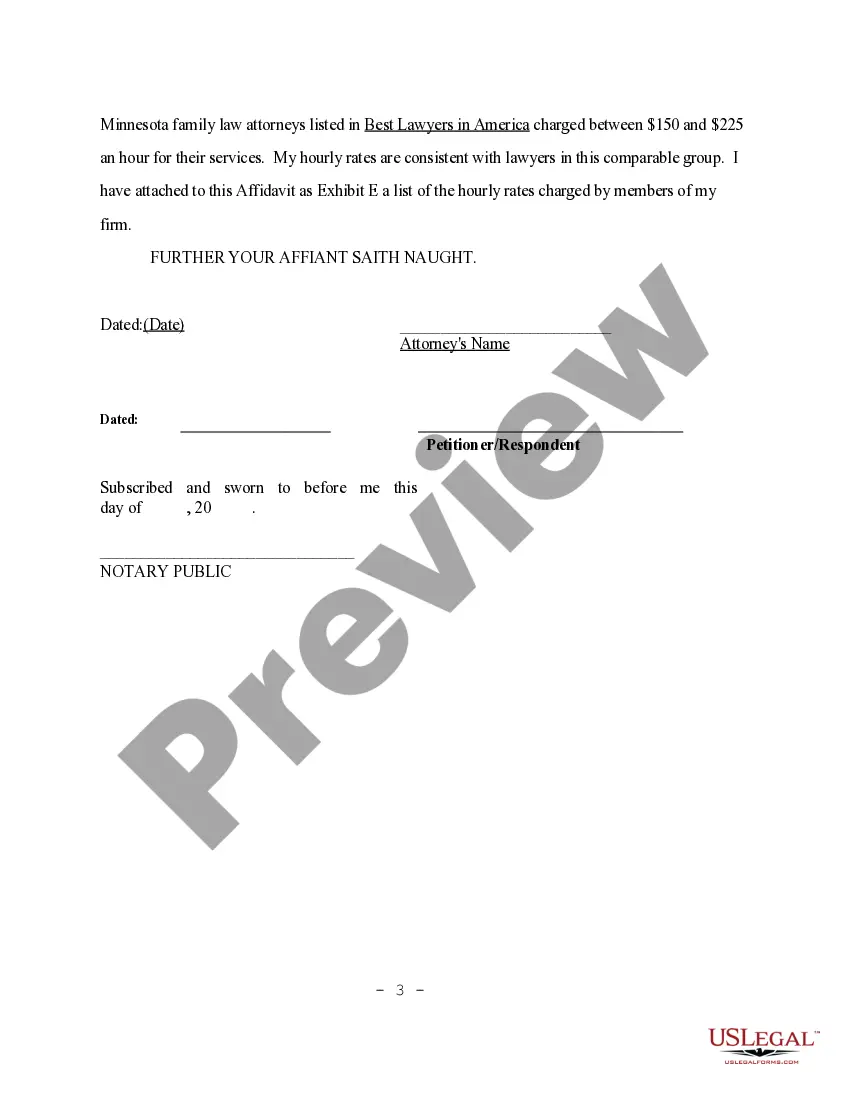
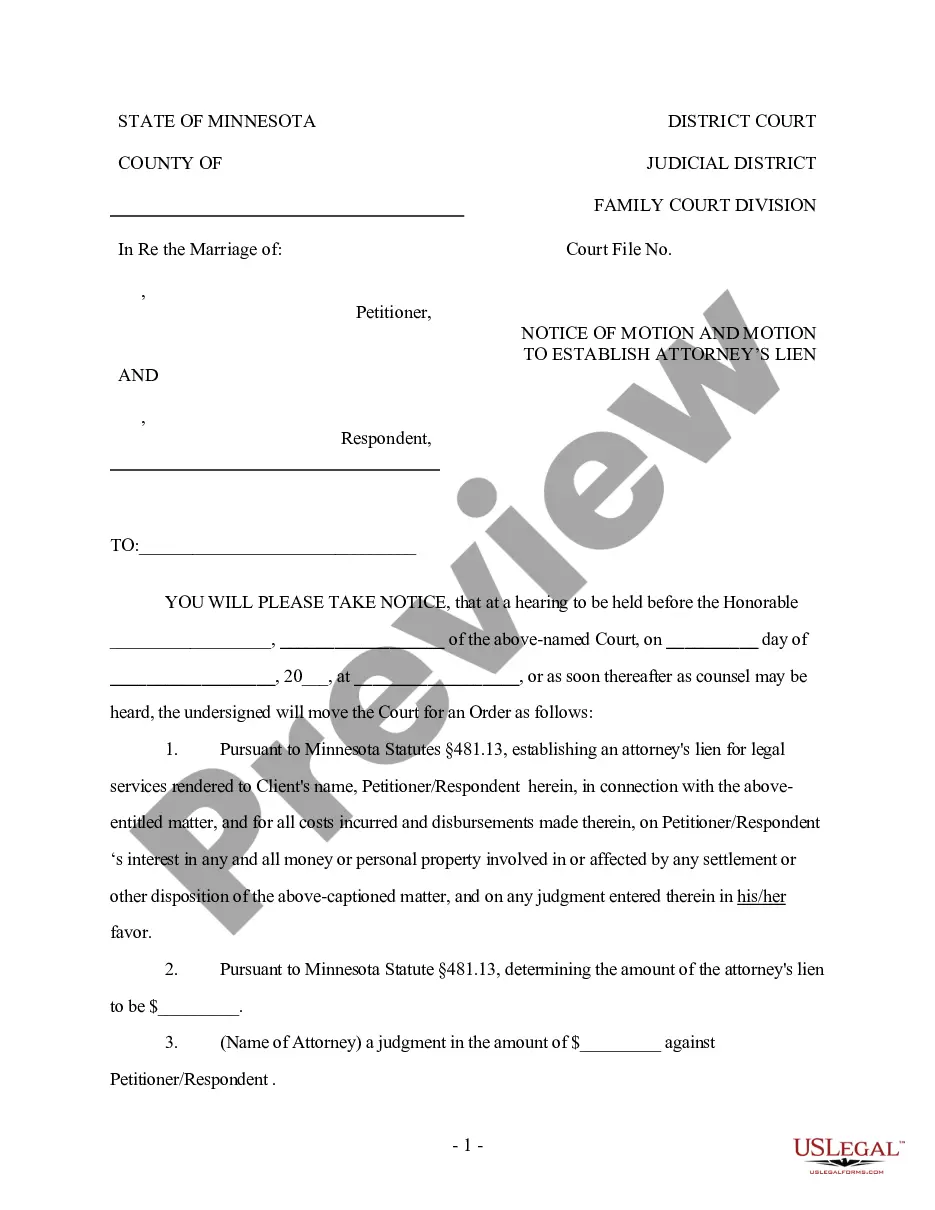
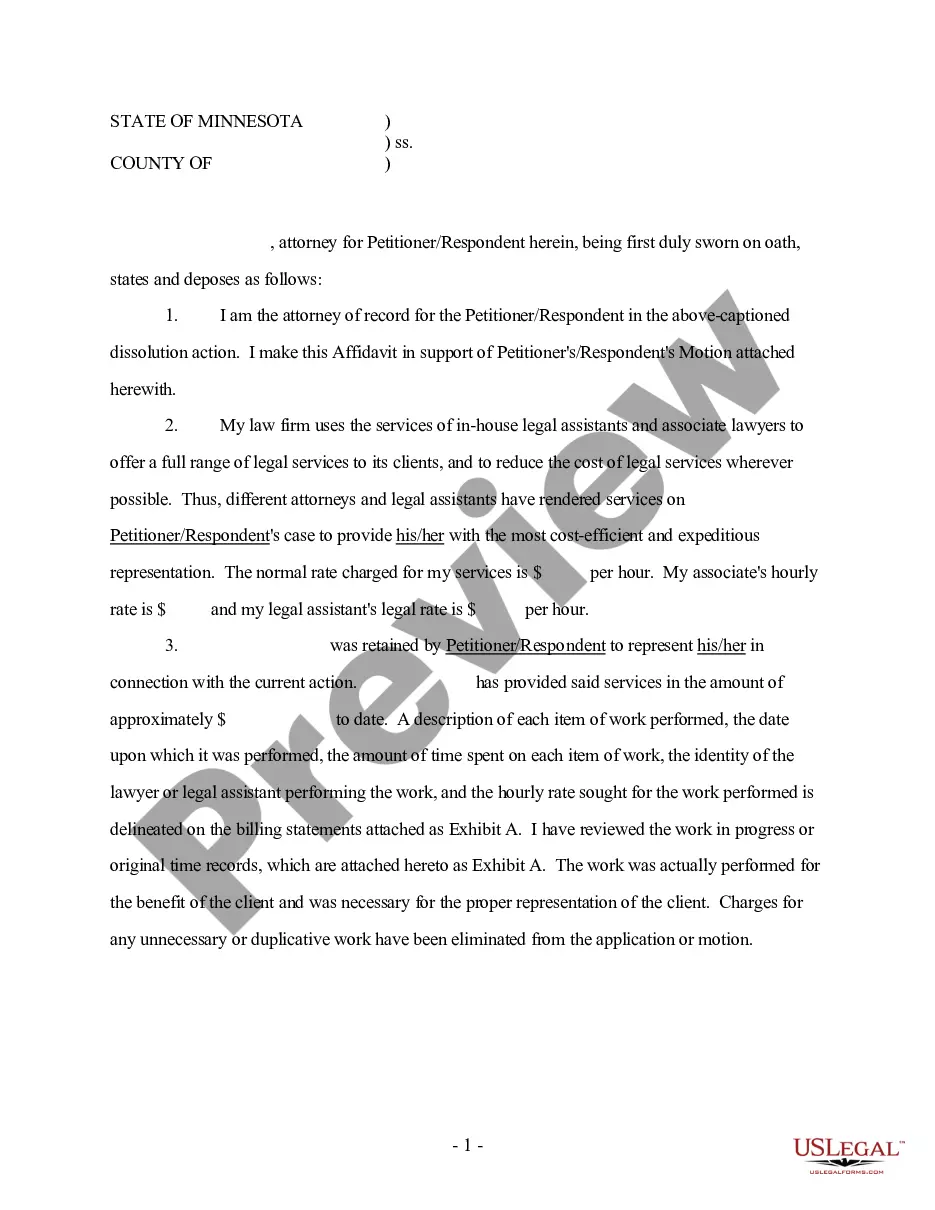
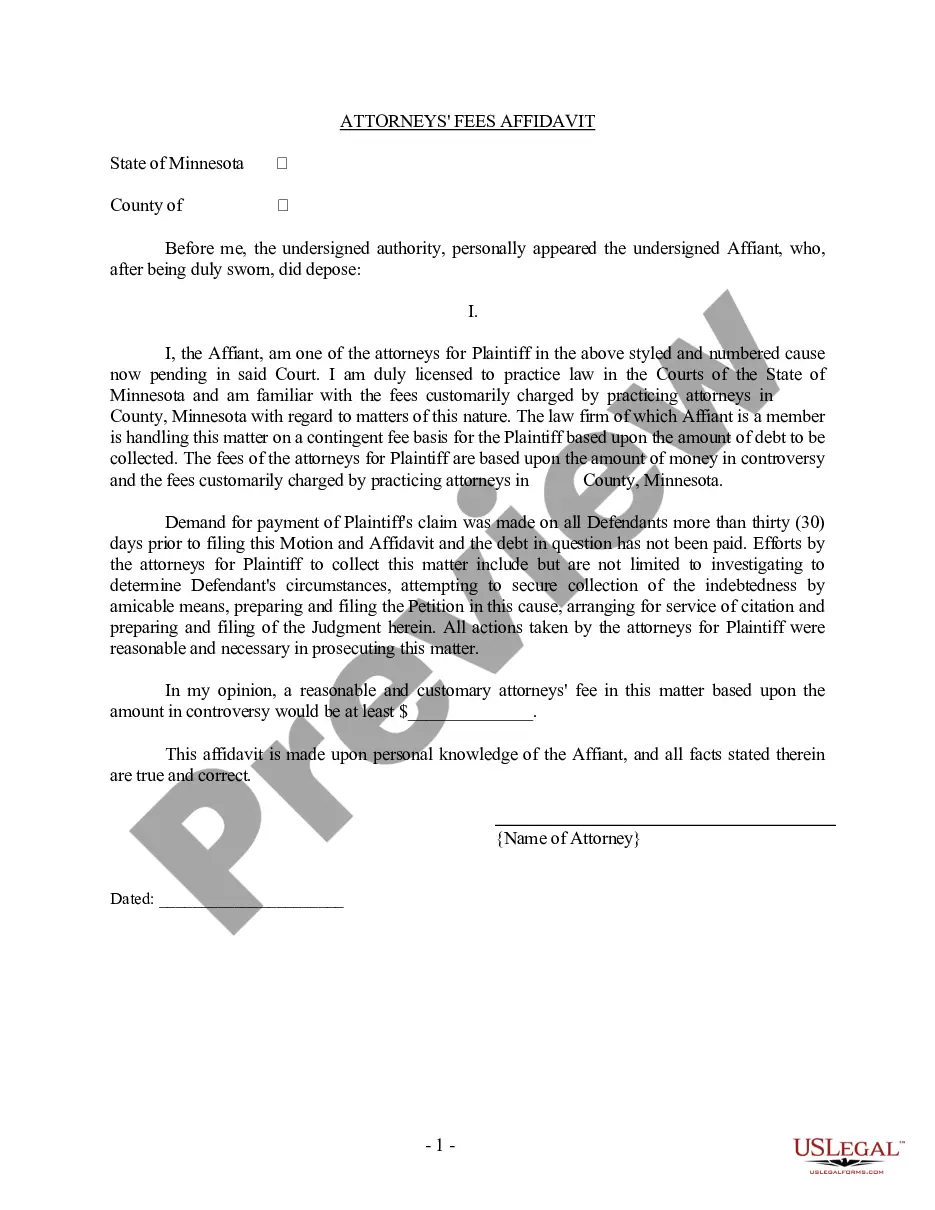
The Affidavit in Support of Motion to Establish Lien for Unpaid Attorney's Fees is a legal document used by attorneys to affirm their claim for unpaid fees. This affidavit is specifically submitted to support a motion that seeks to establish a lien on any money or property awarded to a client, due to non-payment for legal services rendered. It provides a detailed account of the attorney's representation, billing, and the client's refusal to pay, distinguishing it from other forms in the legal process of debt recovery.
Key parts of this document
- Identification of the attorney and law firm.
- A declaration stating the petitioner's name and the nature of representation.
- A summary of the attorney-client agreement regarding fees.
- An itemized account of services rendered and payments made.
- Details of outstanding balances and demands for payment.
- Supporting exhibits, including billing statements and the attorney's resume.
Common use cases
This affidavit should be used when an attorney has provided legal services to a client and has not been fully compensated for those services. It is specifically relevant in cases where an attorney needs to establish a lien against a client's award in legal proceedings, particularly in family law or similar cases where the attorney's fees remain unpaid.
Who can use this document
- Attorneys representing clients in legal proceedings who seek to recover unpaid fees.
- Law firms aiming to enforce their lien rights for services rendered.
- Legal professionals practicing in jurisdictions where such liens are recognized.
Completing this form step by step
- Identify the attorney and law firm, including their contact information.
- Clearly state the name of the client (petitioner/respondent) and nature of the legal representation.
- Detail the agreement on fees, including hourly rates and payment terms.
- Provide an itemized account of services rendered, payments made, and the outstanding balance.
- Attach relevant documentation such as billing statements and the attorney's qualifications.
Does this document require notarization?
This form does not typically require notarization unless specified by local law. However, it is always advisable to check with legal counsel or local regulations to confirm if notarization is necessary for your specific situation.
Get your form ready online
Our built-in tools help you complete, sign, share, and store your documents in one place.
Make edits, fill in missing information, and update formatting in US Legal Forms—just like you would in MS Word.
Download a copy, print it, send it by email, or mail it via USPS—whatever works best for your next step.
Sign and collect signatures with our SignNow integration. Send to multiple recipients, set reminders, and more. Go Premium to unlock E-Sign.
If this form requires notarization, complete it online through a secure video call—no need to meet a notary in person or wait for an appointment.
We protect your documents and personal data by following strict security and privacy standards.

Make edits, fill in missing information, and update formatting in US Legal Forms—just like you would in MS Word.

Download a copy, print it, send it by email, or mail it via USPS—whatever works best for your next step.

Sign and collect signatures with our SignNow integration. Send to multiple recipients, set reminders, and more. Go Premium to unlock E-Sign.

If this form requires notarization, complete it online through a secure video call—no need to meet a notary in person or wait for an appointment.

We protect your documents and personal data by following strict security and privacy standards.
Common mistakes to avoid
- Failing to include all necessary exhibits, such as billing statements and contracts.
- Not specifying the exact amount owed or any accrued interest.
- Inaccurate representation of dates associated with fees or services rendered.
Why complete this form online
- Immediate access to trusted legal templates created by licensed attorneys.
- Convenient and editable format that allows for customization to meet specific needs.
- Secure storage and downloading options to ensure document safety.
Quick recap
- The affidavit is crucial for attorneys seeking to secure unpaid fees through a lien.
- Proper documentation and accurate details are essential for the form's validity.
- Compliance with state-specific statutes is necessary for effective use of this form.
Looking for another form?

Form popularity
FAQ
The mechanic's lien statement must be filed with the county recorder, with a copy provided to the owner. Importantly, both the filing and the service on the owner must occur within 120 days after the lien claimant's last day of work at the property, or the last day that a material supplier provided materials.
The right of a lawyer to hold a client's property until the client pays for legal services provided. The property may include business files, official documents, and money awarded by a court.
2. States where the lien law doesn't require a written contract. In these states, contractors and suppliers are generally allowed to file a lien even if they don't have a written contract.These states typically permit parties with verbal, oral, or even implied contracts to claim lien rights.
In Minnesota, all mechanics liens must be filed within 120 days from the claimant's last day providing materials or labor. In Minnesota, mechanics liens expire 1 year from the date of the lien claimant's last furnishing of labor or materials to the project.
If a lien is filed against your property (in the form of a lien statement), it must be filed with the county recorder and a copy delivered to you, the property owner, either personally or by certified mail, within 120 days after the last material or labor is furnished for the job.
Formalize a defense for disputing the amount of the lien. Gather supporting documentation for your rebuttal, depending on the type of lien. Contact the agent representing the creditor to dispute the amount of the claim. Negotiate a payment settlement with the creditor if you cannot pay the amount you owe in full.
What Is a Fraudulent Lien?the claimant is owed money on another job by the same general contractor or property owner, but didn't file a lien on that project before time expired; or. the claimant wants to file a lien because of personal reasons generally related to the identity of the property owner.
If a lien is filed against your property (in the form of a lien statement), it must be filed with the county recorder and a copy delivered to you, the property owner, either personally or by certified mail, within 120 days after the last material or labor is furnished for the job.