Minnesota Notice of Third Party Levy and Disclosure - Garnishment
About this form
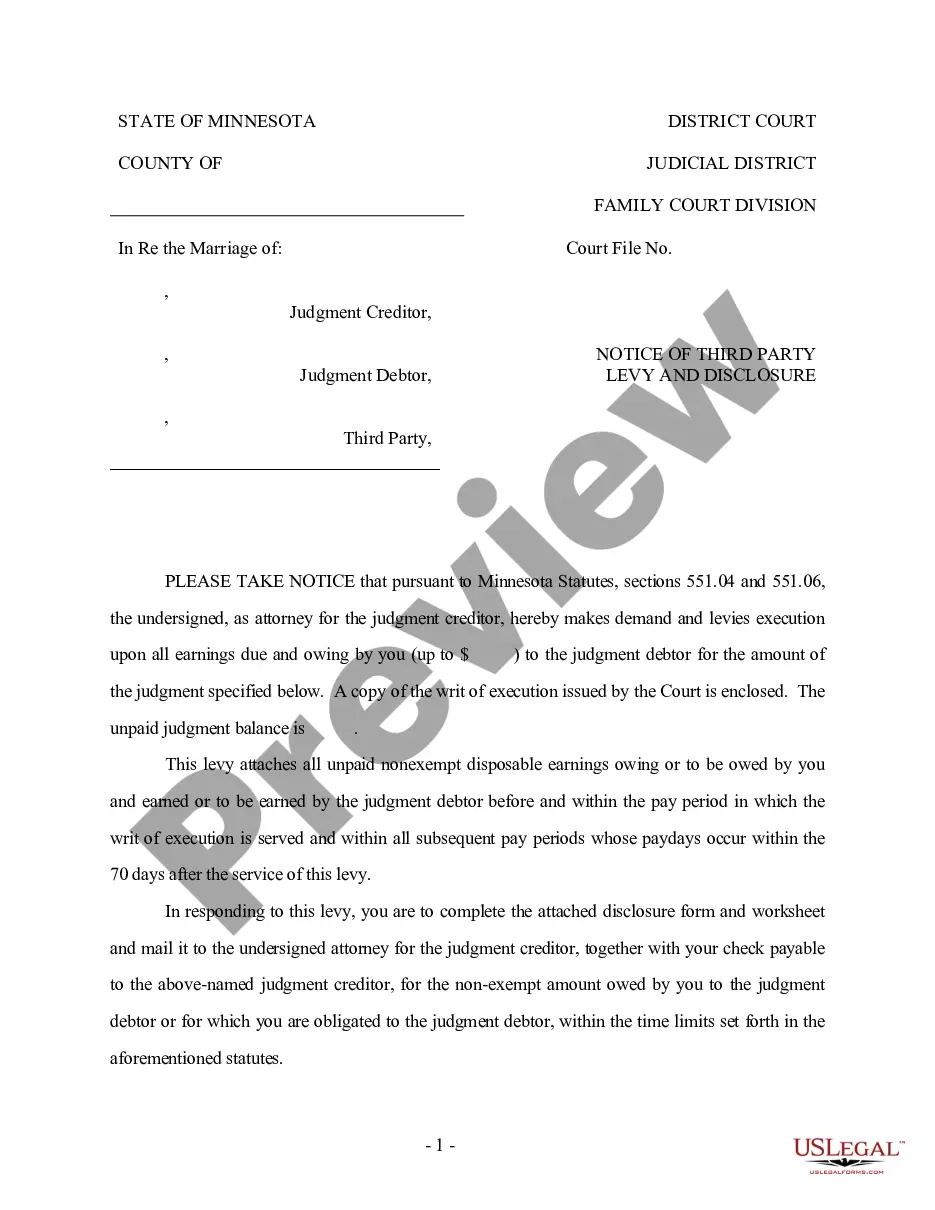
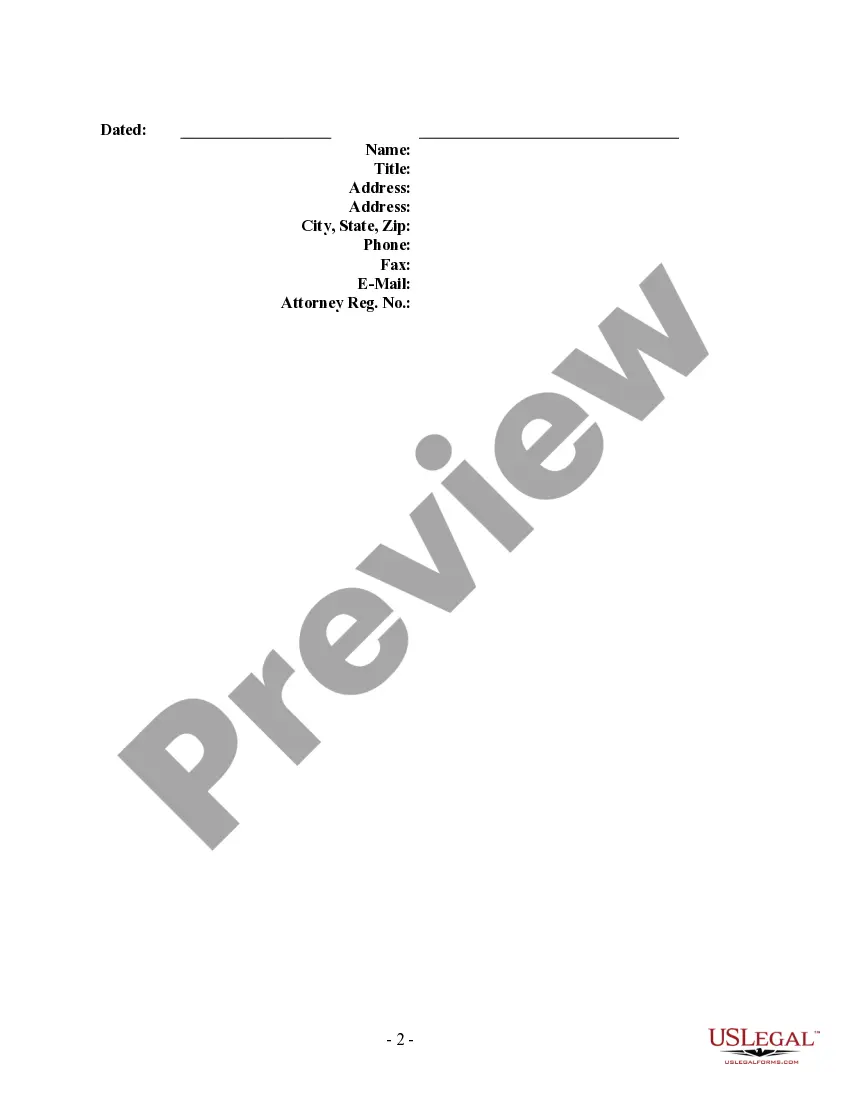
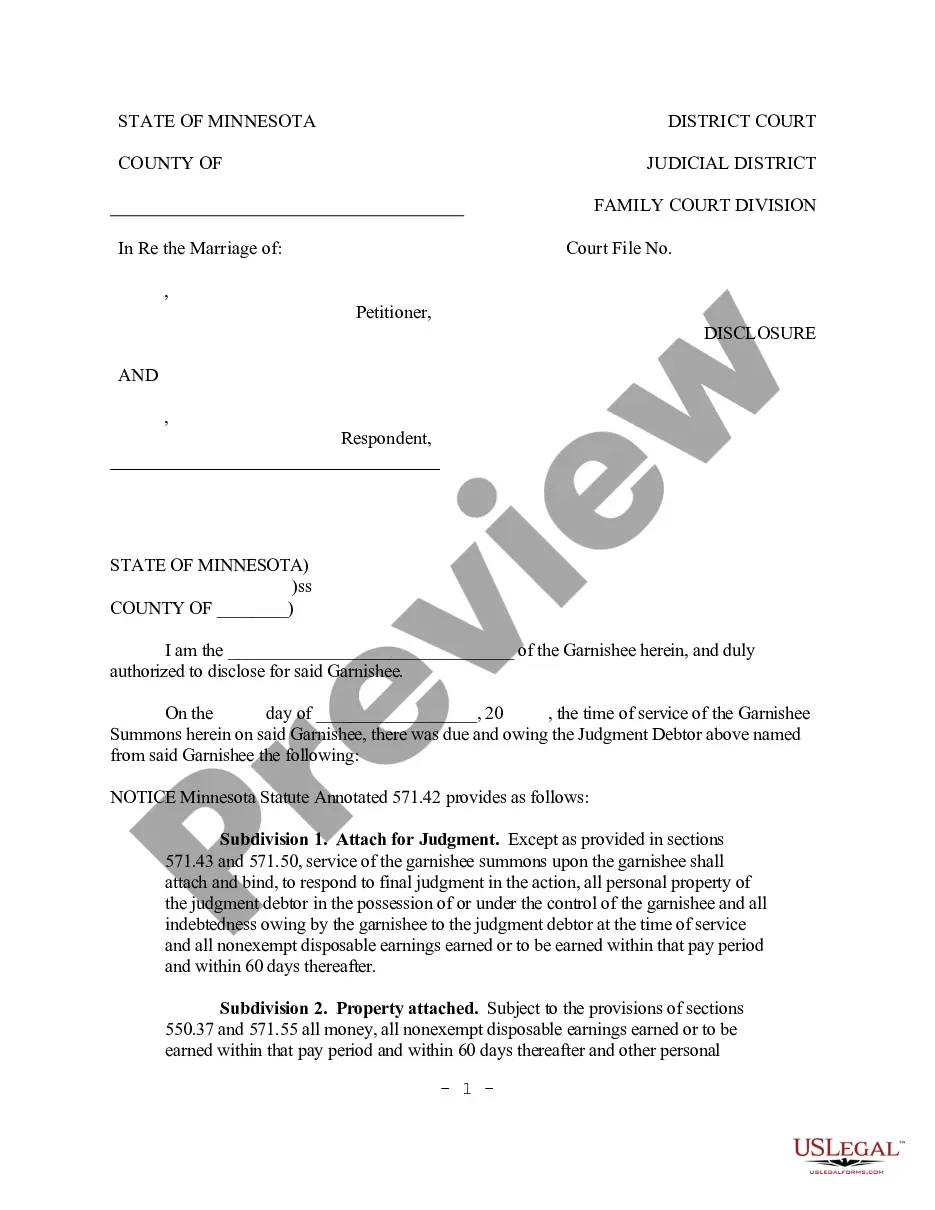
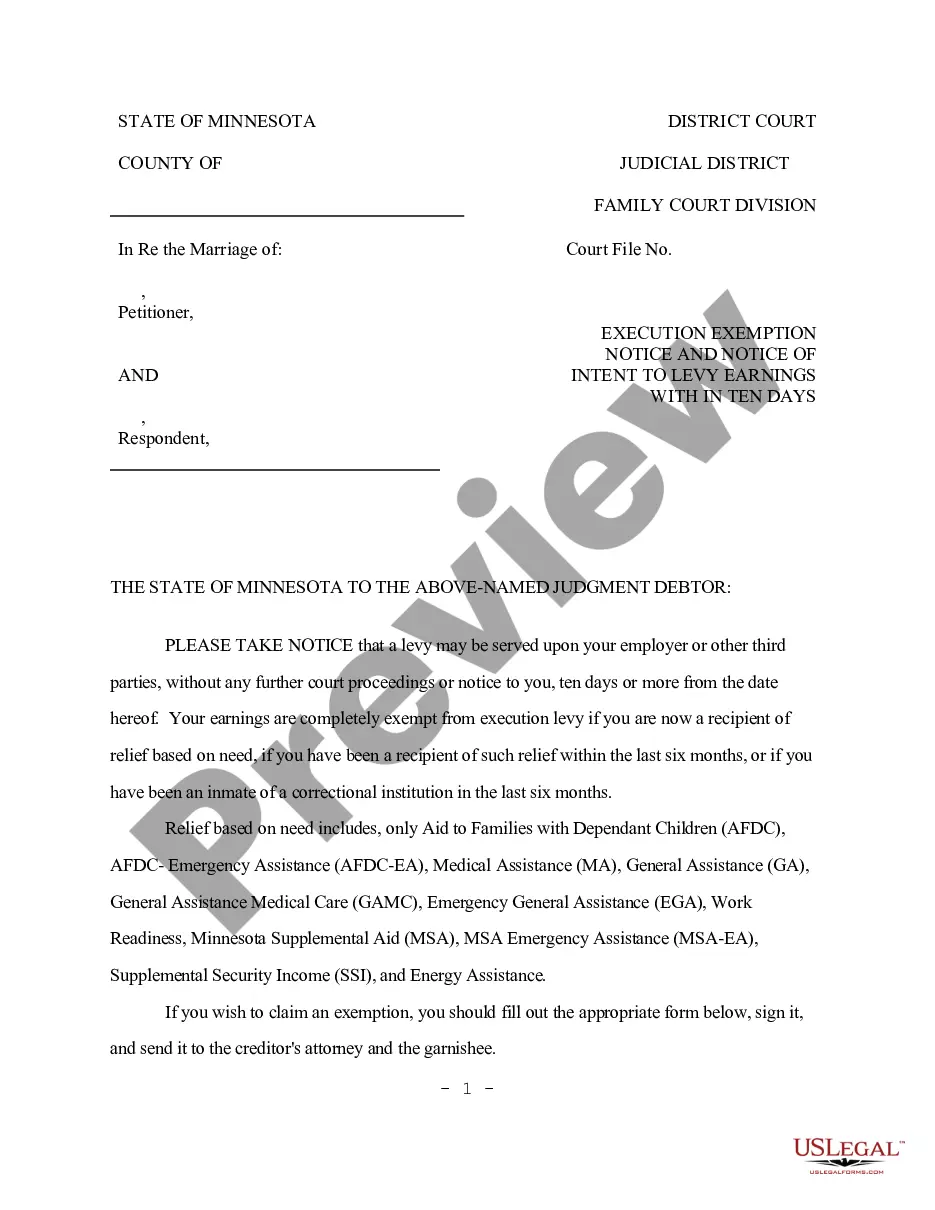
The Notice of Third Party Levy and Disclosure - Garnishment is a legal notice served to an employer regarding the garnishment of a judgment debtor's wages. This form informs the employer of their obligation to withhold a portion of the debtorâs disposable earnings to satisfy a court judgment, differentiating it from other debt collection forms by focusing specifically on earning disclosures and calculations associated with wage garnishment.
Key parts of this document
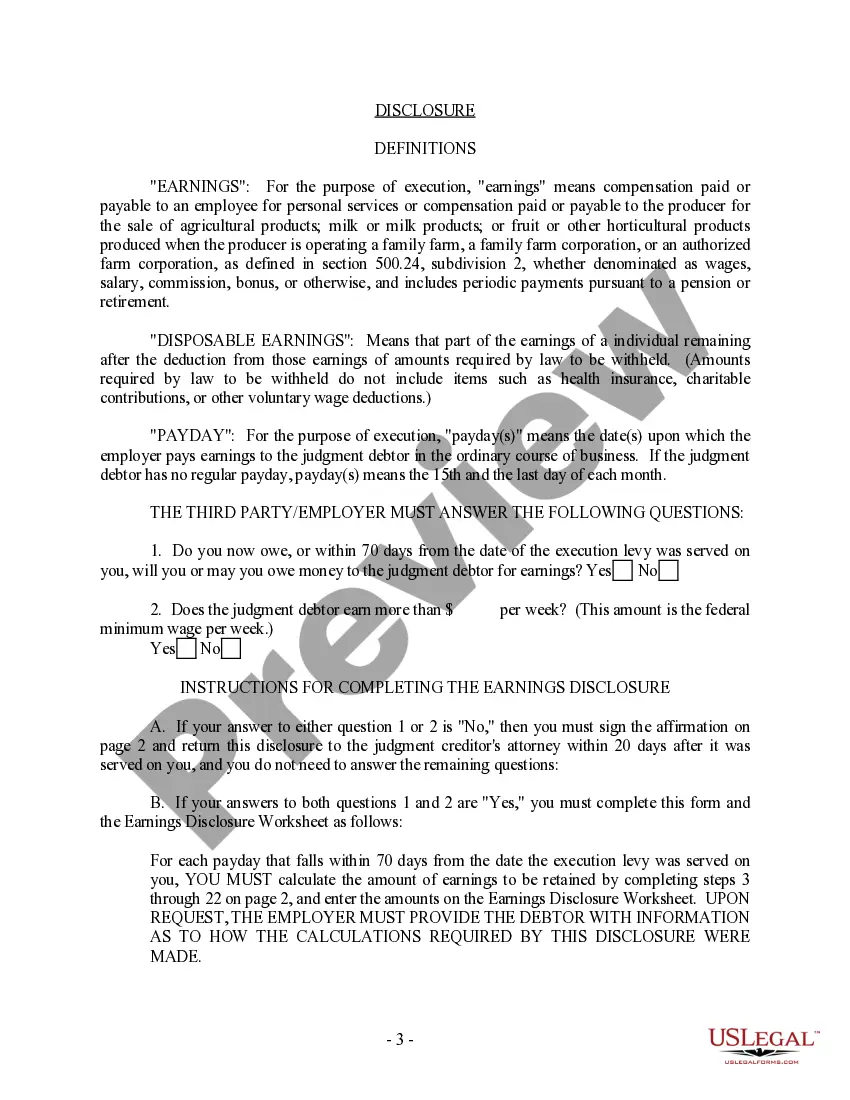
- Definitions of key terms, including disposable earnings and payday.
- Questions for the employer regarding potential money owed to the debtor.
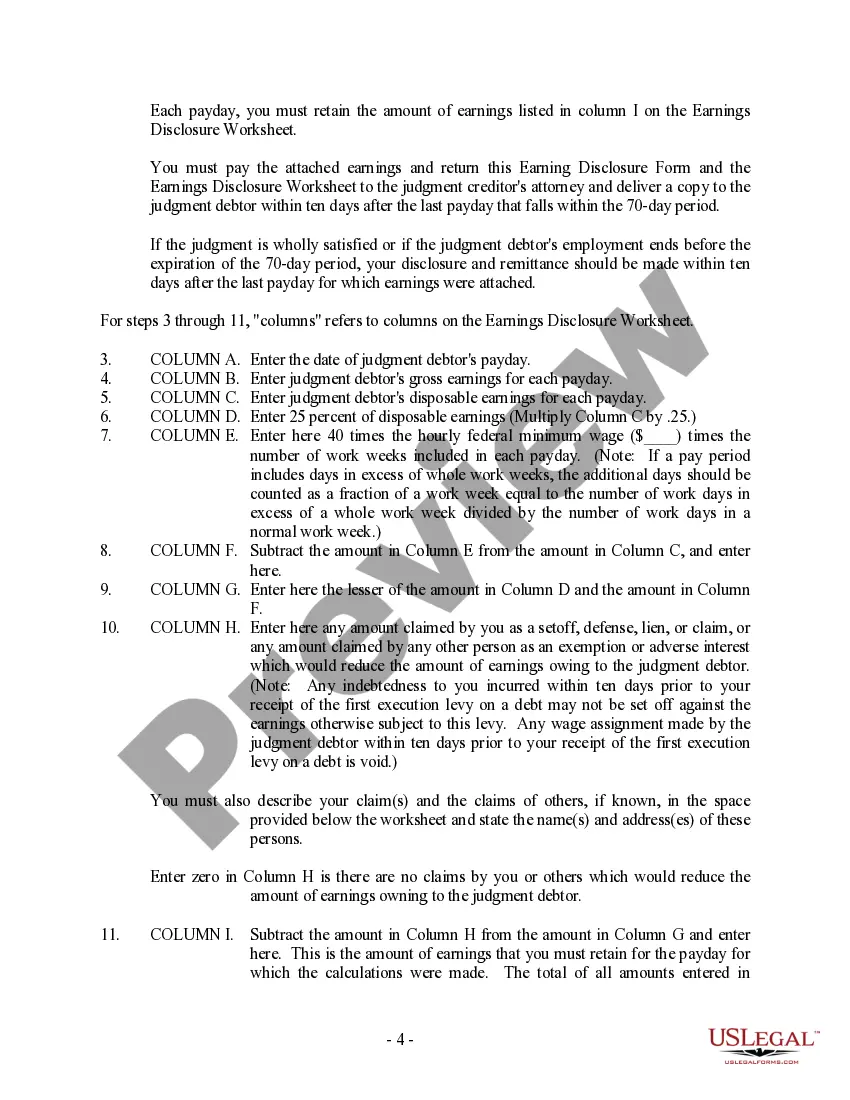
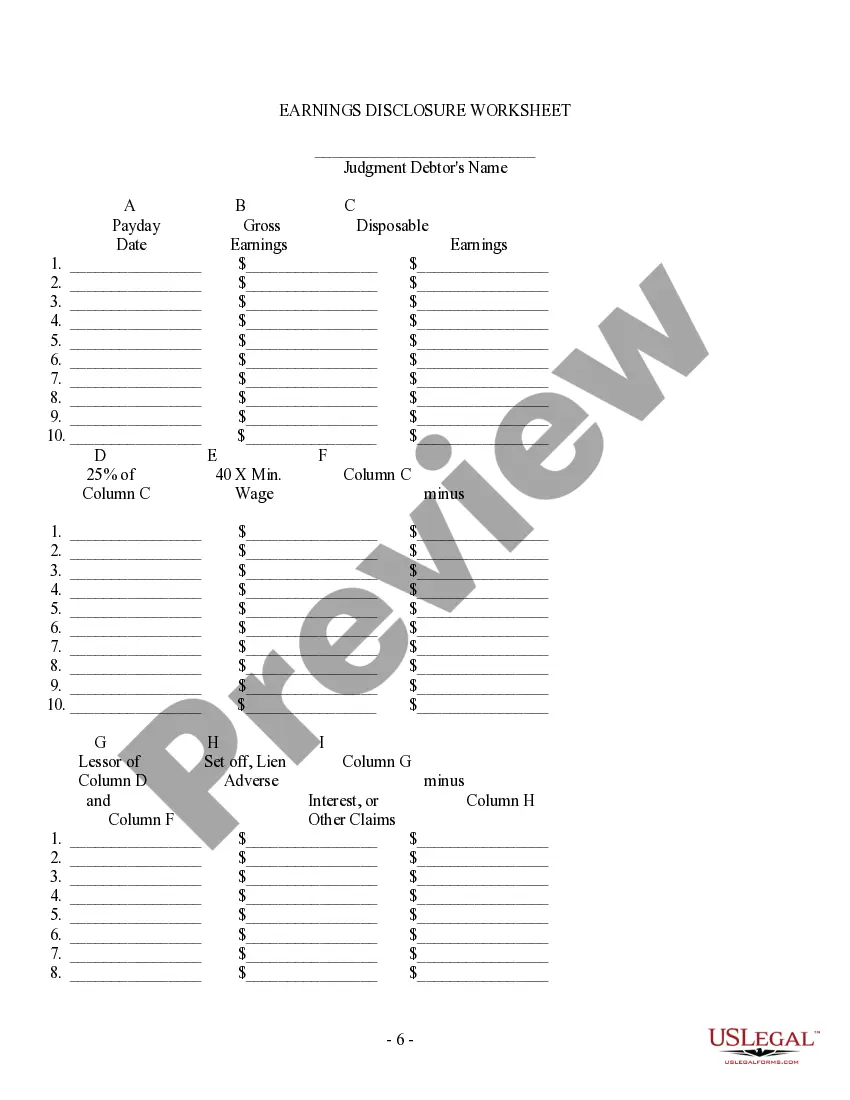
- Detailed calculation requirements for retained earnings, including multiple columns for various income figures.
- Instructions for submitting the completed disclosure to both the creditor and debtor.
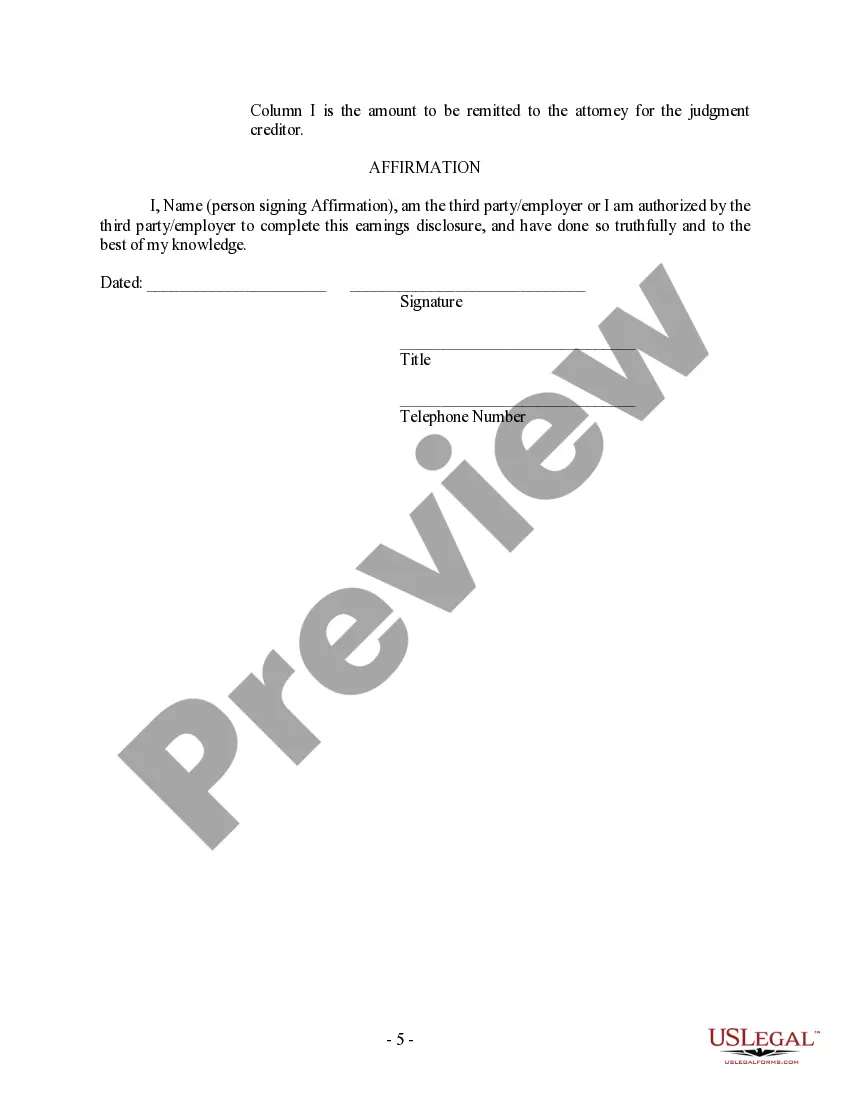
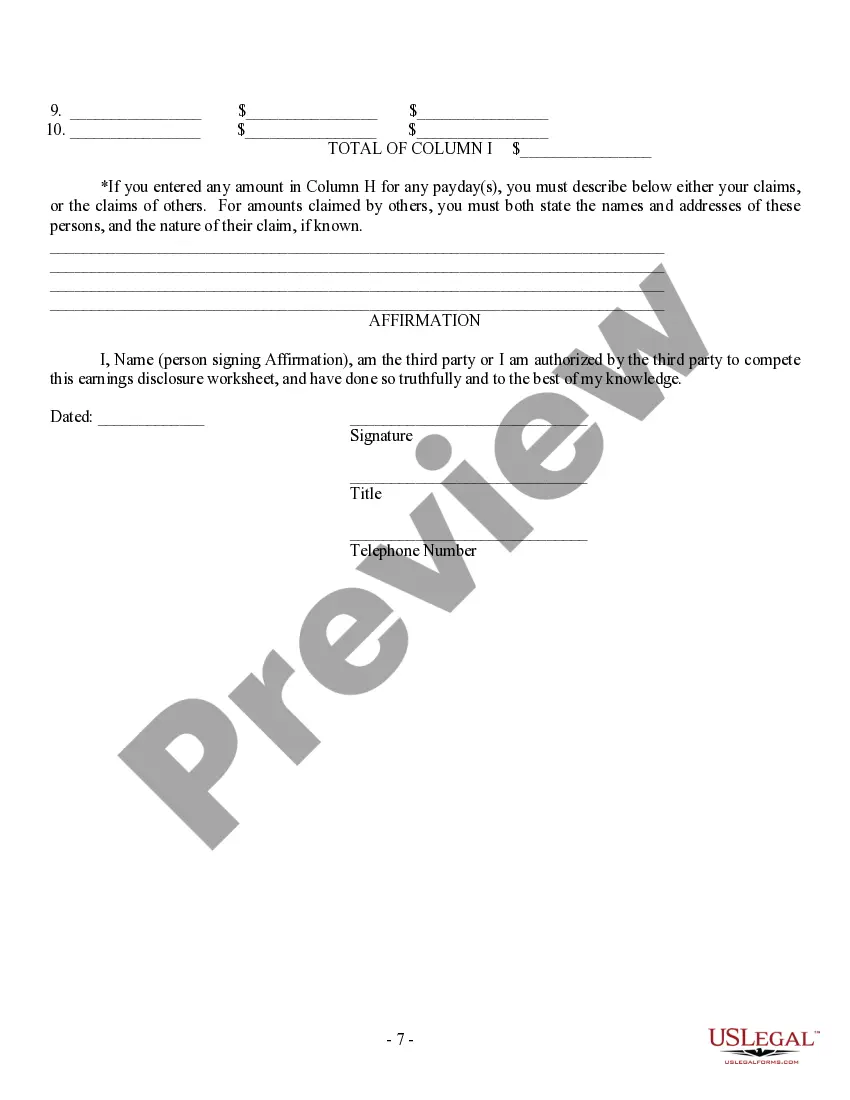
- A declaration affirmation to ensure the truthfulness of the provided information.
When to use this form
This form should be used when an employer receives a notice of garnishment related to a judgment against their employee (the debtor). It is necessary when the employer must disclose specific financial information regarding the debtor's wages and determine how much of their earnings must be withheld to comply with the court's order.
Intended users of this form
- Employers who receive a garnishment order for an employee.
- Legal representatives of creditors who need to assess and control the garnishment process.
- Individuals or organizations managing wage garnishments as part of debt recovery efforts.
Instructions for completing this form
- Identify the pay periods relevant to the judgment debtorâs earnings.
- Calculate the debtor's disposable earnings for each payday indicated.
- Complete the Earnings Disclosure Worksheet, following the required calculations in each column.
- Affirm that all information provided is truthful and accurate under penalty of perjury.
- Submit the filled form and worksheet to the judgment creditor's attorney and provide a copy to the judgment debtor within the designated timeframe.
Notarization guidance
Notarization is generally not required for this form. However, certain states or situations might demand it. You can complete notarization online through US Legal Forms, powered by Notarize, using a verified video call available anytime.
Get your form ready online
Our built-in tools help you complete, sign, share, and store your documents in one place.
Make edits, fill in missing information, and update formatting in US Legal Forms—just like you would in MS Word.
Download a copy, print it, send it by email, or mail it via USPS—whatever works best for your next step.
Sign and collect signatures with our SignNow integration. Send to multiple recipients, set reminders, and more. Go Premium to unlock E-Sign.
If this form requires notarization, complete it online through a secure video call—no need to meet a notary in person or wait for an appointment.
We protect your documents and personal data by following strict security and privacy standards.

Make edits, fill in missing information, and update formatting in US Legal Forms—just like you would in MS Word.

Download a copy, print it, send it by email, or mail it via USPS—whatever works best for your next step.

Sign and collect signatures with our SignNow integration. Send to multiple recipients, set reminders, and more. Go Premium to unlock E-Sign.

If this form requires notarization, complete it online through a secure video call—no need to meet a notary in person or wait for an appointment.

We protect your documents and personal data by following strict security and privacy standards.
Typical mistakes to avoid
- Incorrect calculation of disposable earnings, leading to over- or under-withholding.
- Failing to file the notice within the required 10-day deadline.
- Not providing proper disclosures about setoffs or claims against the debtor's earnings.
- Omitting signatures or affirmations, which may invalidate the form.
Benefits of using this form online
- Convenience of completing legal forms from anywhere at any time.
- Editable templates ensure that users can customize the form according to specific situations.
- Access to forms created by licensed attorneys, ensuring legal compliance and accuracy.
Legal use & context
This form is legally binding and must comply with state laws regarding wage garnishments. It serves to protect the rights of both the creditor and the debtor, ensuring fair handling of garnished wages in accordance with legal standards.
Main things to remember
- The Notice of Third Party Levy and Disclosure - Garnishment is essential for employers handling wage garnishments.
- Accurate calculations and timely submissions are crucial to avoid penalties.
- Understanding the definitions and required actions will facilitate smoother compliance with garnishment orders.
Looking for another form?

Form popularity
FAQ
Generally, any creditor can garnish your wages. But some creditors must meet more requirements before doing so. Specifically, most must file a lawsuit and obtain a money judgment and court order before garnishing your wages. However, not all creditors need a court order.
Regular creditors cannot garnish your wages without first suing you in court and obtaining a money judgment. That means that if you owe money to a credit card company, doctor, dentist, furniture company, or the like, you don't have to worry about garnishment unless those creditors sue you in court.
To start the wage garnishment process, file a Writ of Execution with the sheriff in that county. This authorizes the sheriff to inform the debtor's employer that a portion of his employee's wages need to be withheld from his paycheck each pay period until the debt is settled.
If you have won a court judgment against someone with a decent job, you may be able to intercept up to 25% of his or her wages to satisfy your judgment. This process, permitted in nearly every state, is called a wage garnishment.
But the $1,400 stimulus checks can be garnished for unpaid private debts, such as medical bills or credit card debts, provided they are subject to a court order, according to Christine Hines, legislative director at the National Association of Consumer Advocates.
The federal benefits that are exempt from garnishment include: Social Security Benefits. Supplemental Security Income (SSI) Benefits. Veterans' Benefits.
With the second stimulus check, your payment was protected from bank garnishment and from private creditors and debt collectors, according to the text of the law.Federal law allows only state and federal government agencies to take your refund as payment toward a debt, not individual or private creditors.
You can sue for wrongful garnishment You can sue even if you owe the debt. If you win the case, you get: (1) $1,000 in statutory damages; (2) any provable actual damages--such as out-of-pocket loss or emotional distress; (3) the collector has to pay your attorney fees; and (4) the collector has to pay your court costs.
Currently, there are only nine community property states in the United States: Arizona, California, Idaho, Louisiana, Nevada, New Mexico, Texas, and Washington.And since wages are considered community property if you have unpaid debts that result in judgments against you, your spouses' wages can be garnished also.