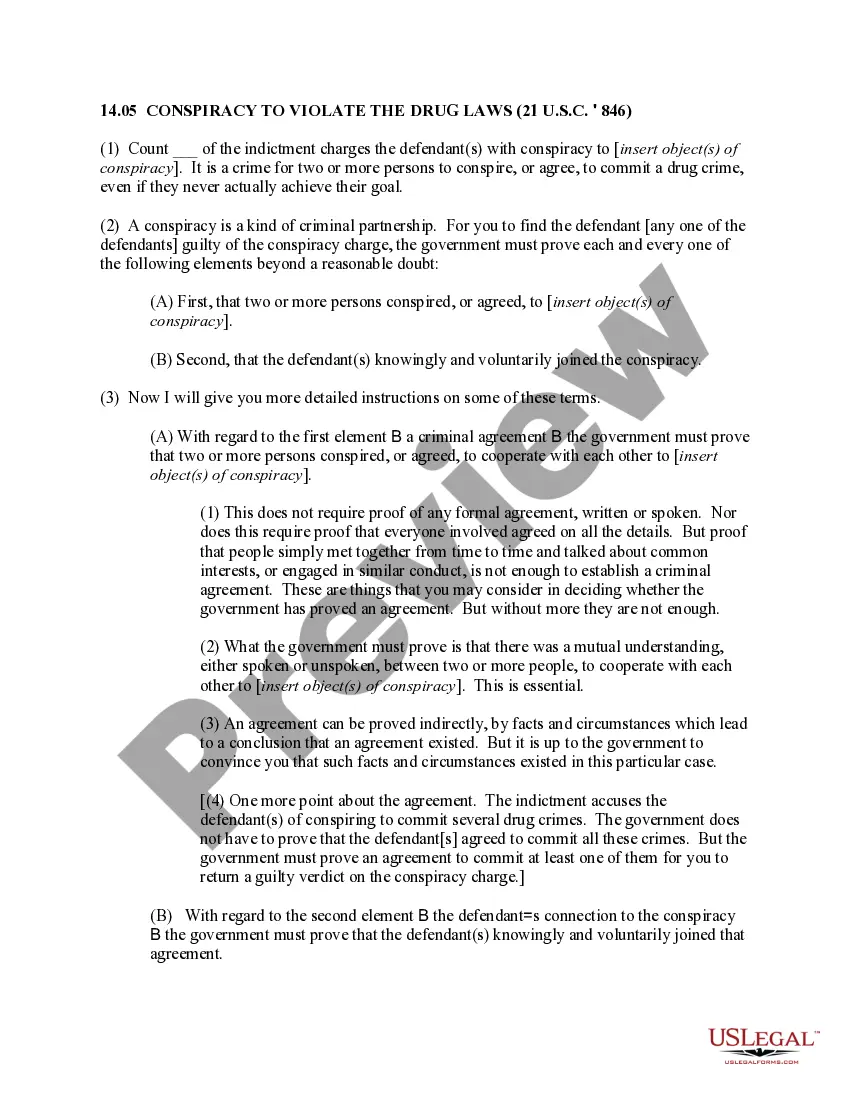
Minnesota Instructions for Severance of Joint Tenancy
What is this form?
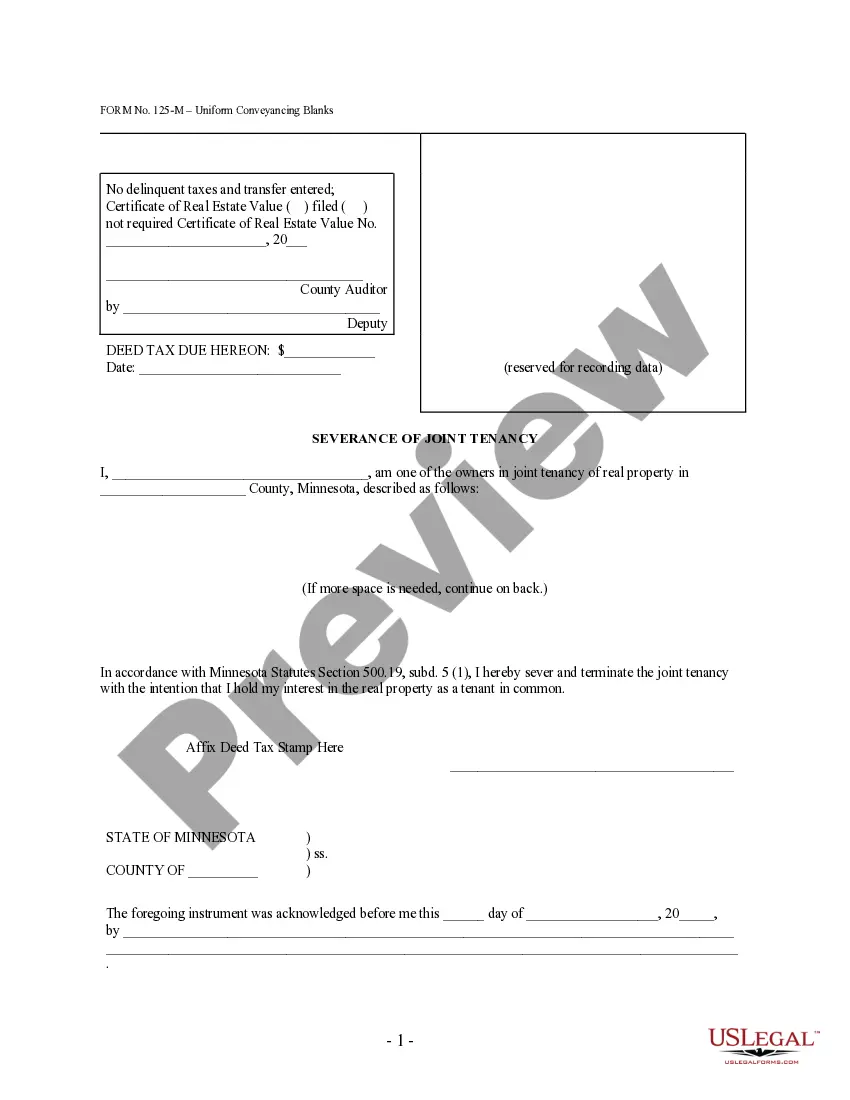
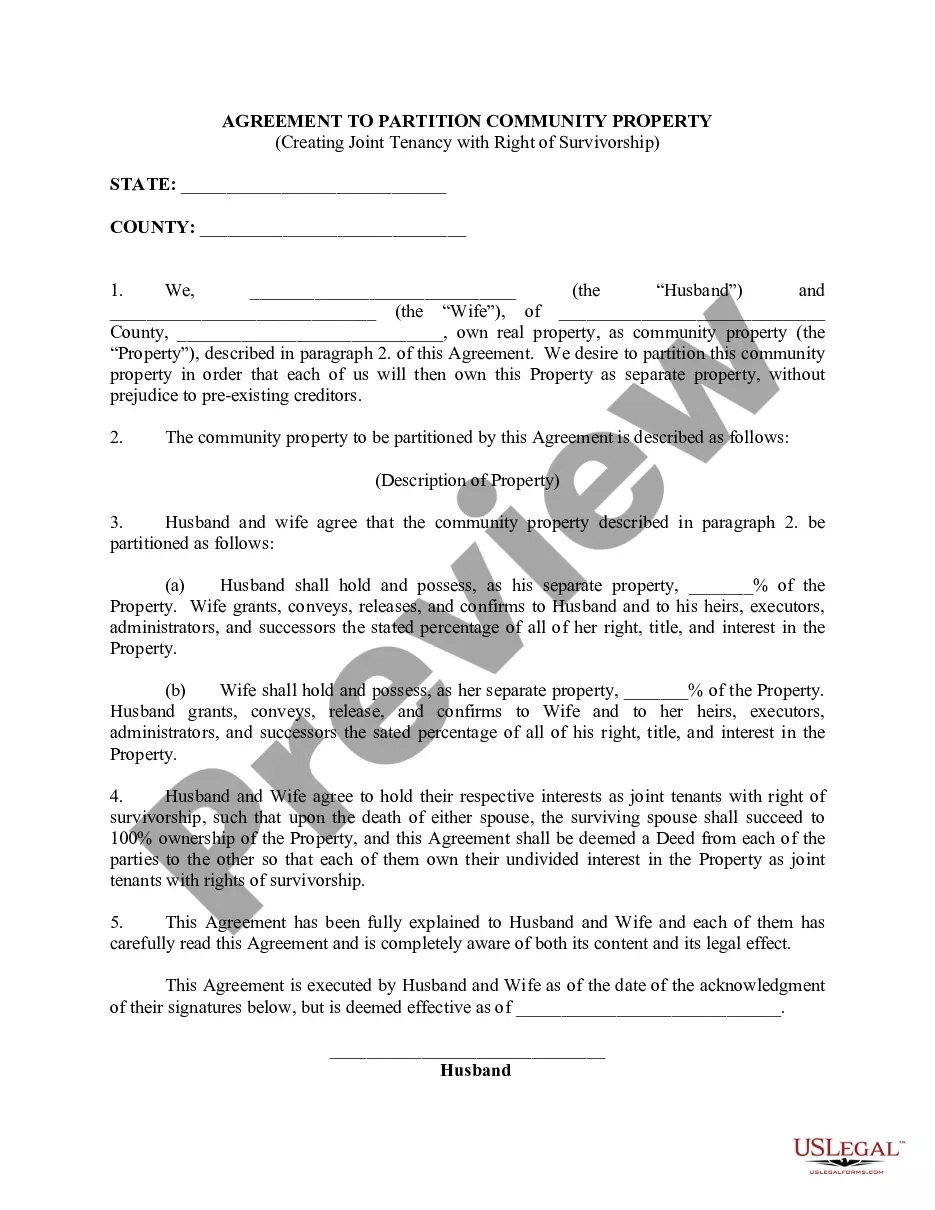
The Instructions for Severance of Joint Tenancy is a legal guide designed to assist individuals in dissolving a joint tenancy in the context of a marriage dissolution. This form outlines the necessary steps to sever the ownership of real property held jointly, distinguishing it from other property transfer forms by specifically addressing the unique situation of marital dissolution and the implications of shared ownership.
What’s included in this form
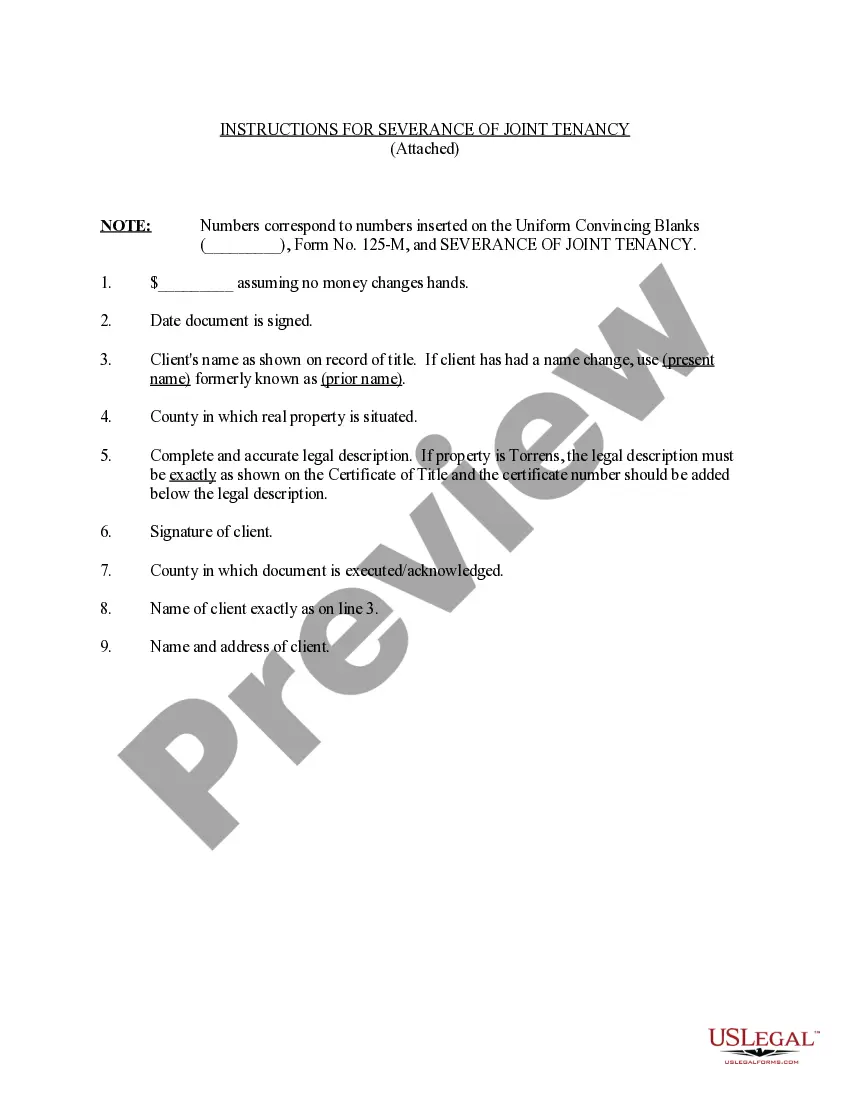
- Identification of the parties involved, including current and previous names if applicable.
- Legal description of the property, including certification details if the property is Torrens.
- Date of signing the document.
- Signature of the client to formally execute the severance.
- County details for both the location of the property and where the document is executed.

When this form is needed
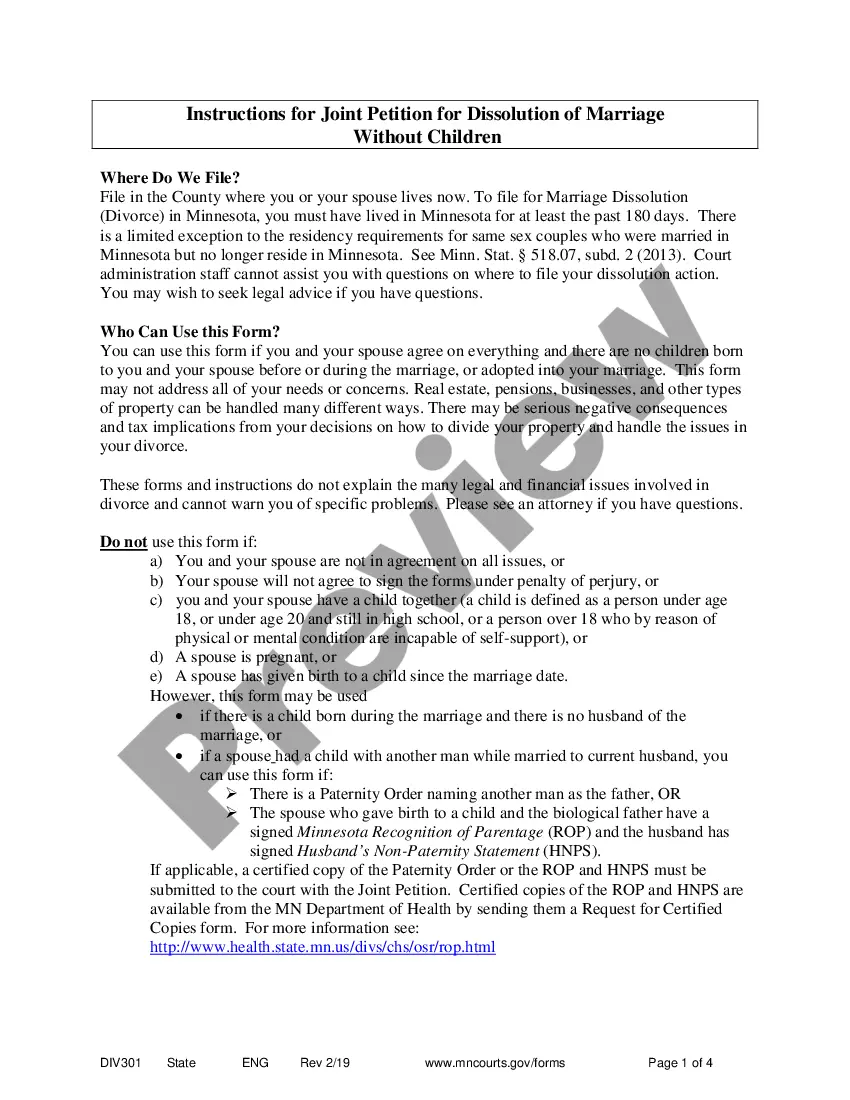
This form should be used during the dissolution of marriage when one or both parties wish to sever a joint tenancy concerning shared property. It is relevant in situations where couples own real estate together and need to legally outline the division of that property due to their separation.
Intended users of this form
- Individuals undergoing a divorce who own property jointly.
- Legal representatives assisting clients in property matters during marriage dissolution.
- Any party seeking clarity on property rights related to severing joint tenancy.
Instructions for completing this form
- Identify the parties by entering the correct names as per legal records.
- Specify the property's accurate legal description, including any necessary certificate information.
- Provide the date when the document is signed.
- Ensure the document is signed by the relevant parties in the appropriate county.
- Double-check all details for accuracy before finalizing the document.
Is notarization required?
This form does not typically require notarization unless specified by local law. However, it is always best practice to have documents notarized to ensure their legitimacy and enhance enforceability in any potential disputes.
Get your form ready online
Our built-in tools help you complete, sign, share, and store your documents in one place.
Make edits, fill in missing information, and update formatting in US Legal Forms—just like you would in MS Word.
Download a copy, print it, send it by email, or mail it via USPS—whatever works best for your next step.
Sign and collect signatures with our SignNow integration. Send to multiple recipients, set reminders, and more. Go Premium to unlock E-Sign.
If this form requires notarization, complete it online through a secure video call—no need to meet a notary in person or wait for an appointment.
We protect your documents and personal data by following strict security and privacy standards.

Make edits, fill in missing information, and update formatting in US Legal Forms—just like you would in MS Word.

Download a copy, print it, send it by email, or mail it via USPS—whatever works best for your next step.

Sign and collect signatures with our SignNow integration. Send to multiple recipients, set reminders, and more. Go Premium to unlock E-Sign.

If this form requires notarization, complete it online through a secure video call—no need to meet a notary in person or wait for an appointment.

We protect your documents and personal data by following strict security and privacy standards.
Typical mistakes to avoid
- Failing to use the correct legal names of the parties involved.
- Omitting necessary property details, particularly in Torrens titles.
- Not signing the document in the correct county.
- Ignoring to date the document at the time of signing.
Why use this form online
- Immediate access to professionally drafted instructions for ease of completion.
- Ability to download and edit the form according to specific needs.
- Secure and reliable method of obtaining legal documents without the need for in-person consultations.
Main things to remember
- The Instructions for Severance of Joint Tenancy is essential for terminating joint ownership of property, especially after a marriage ends.
- Completing the form accurately helps prevent ownership disputes.
- Ensure that you understand state-specific requirements to ensure proper processing.
Looking for another form?
Form popularity
FAQ
In Minnesota, any joint tenant can initiate the process to sever a joint tenancy. This action can be taken unilaterally, meaning one owner does not need the consent of the other joint tenants. To properly execute this, you should follow the Minnesota Instructions for Severance of Joint Tenancy, which guide you through the necessary steps. Engaging with platforms like US Legal Forms can simplify this process, providing you with the essential forms and instructions to ensure compliance with state laws.
There are three primary methods to sever a joint tenancy, which are detailed in the Minnesota Instructions for Severance of Joint Tenancy. These methods include executing a deed that transfers ownership, partitioning the property, or mutual agreement between co-owners. Each method has its own implications and legal requirements, so it is beneficial to consult resources like USLegalForms to help you choose the best option for your situation.
The process for severance of joint tenancy involves several clear steps as outlined in the Minnesota Instructions for Severance of Joint Tenancy. First, you must create a document that states your intention to sever the joint tenancy. Next, you need to sign and date this document, then file it with the appropriate county office to make it official. Using tools and resources from USLegalForms can provide guidance throughout this process, ensuring you complete each step correctly.
To sever a joint tenancy in Minnesota, you can follow the detailed steps provided in the Minnesota Instructions for Severance of Joint Tenancy. This typically includes drafting a declaration that clearly outlines your intention to sever the tenancy. After executing this declaration, you must file it with the county recorder's office. Engaging with platforms like USLegalForms can simplify this process and ensure you meet all legal requirements.
You can terminate a joint tenancy through several methods, as described in the Minnesota Instructions for Severance of Joint Tenancy. One common method involves creating a formal document that indicates your intent to sever the tenancy. Additionally, this document must be properly signed and recorded to be effective. Utilizing resources like USLegalForms can guide you through the necessary steps for a smooth process.
To legally terminate a joint tenancy, you must follow specific procedures outlined in the Minnesota Instructions for Severance of Joint Tenancy. This often involves drafting and executing a written document that explicitly states the intention to sever the joint tenancy. Once completed, you should file this document with the appropriate county office to ensure it is legally recognized. Consulting with a legal professional can provide clarity and ensure compliance with Minnesota laws.
Severing the joint tenancy which can be done with or without the agreement of the other joint owner now means that you and your husband still jointly own the property but as tenants in common rather than joint tenants.You do not need to worry about your husband selling the property or raising a loan on it.
Joint tenancy is a form of concurrent ownership, whereby two or more individuals hold title to a specific property.Severance of joint tenancy usually occurs when one or more of the joint tenants transfer their interest to a third party, or one or more joint tenants file a petition in court to partition the property.
When a property is owned by joint tenants with survivorship, the interest of a deceased owner automatically gets transferred to the remaining surviving owners. For example, if four joint tenants own a house and one of them dies, each of the three remaining joint tenants ends up with a one-third share of the property.
If you're joint tenants and you both want to leave, either you or your ex-partner can end the tenancy by giving notice.If your landlord doesn't update the tenancy agreement, you'll both still be responsible for rent and the person who leaves can still give notice to end the tenancy.