Minnesota Warning of Default on Residential Lease
Understanding this form
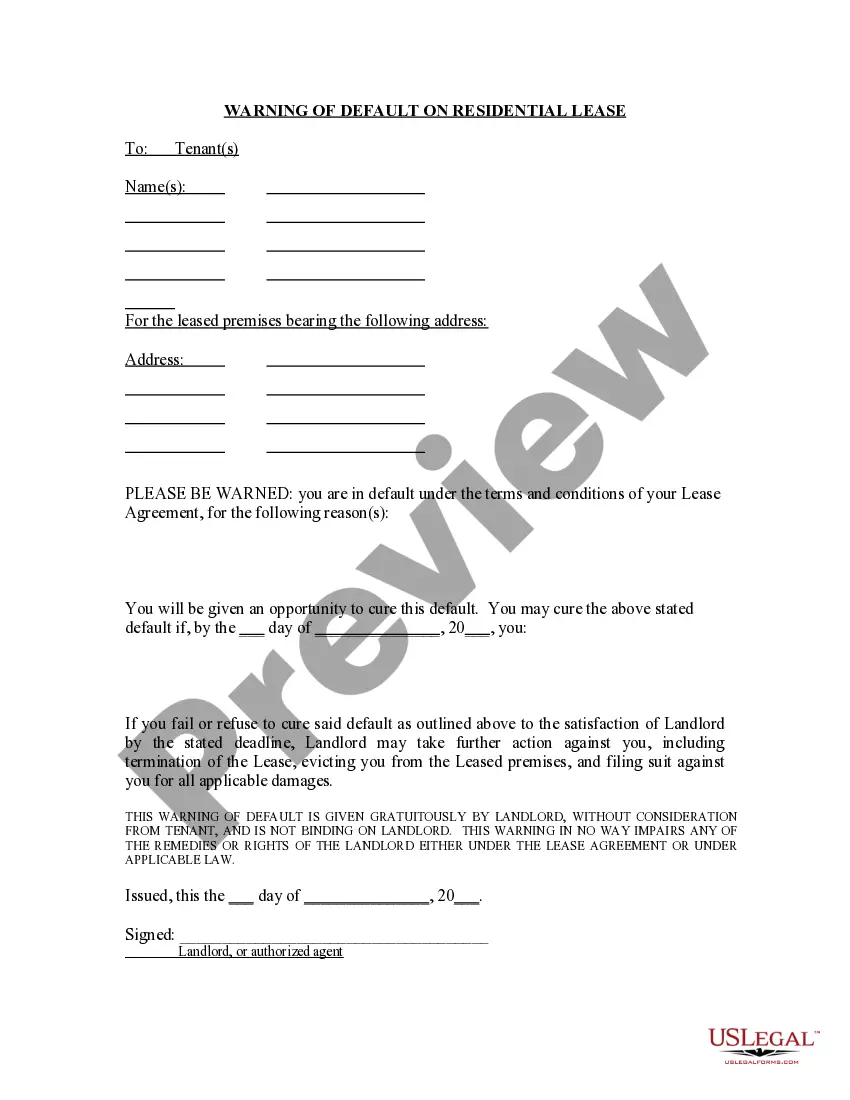
The Warning of Default on Residential Lease is a formal notification sent from a landlord to a tenant. Its purpose is to inform the tenant of potential default under the terms of the lease agreement. This document serves as an important step before taking more serious action, such as eviction proceedings. Unlike other notices, this warning allows the tenant an opportunity to remedy the situation before facing possible legal consequences.
Form components explained
- Warning statement outlining potential lease default.
- Date of issuance to track when the warning is given.
- Signature line for the landlord or an authorized agent.
- Clarification that the warning is given without consideration and is not binding on the landlord.



Common use cases
This form should be used when a tenant has violated certain lease terms, such as failing to pay rent or not adhering to property maintenance responsibilities. It is typically issued when the landlord believes that the tenant has not fulfilled their obligations and wants to formally notify them of the default and the need for remediation. This notice can help in preventing further legal action by providing the tenant with an opportunity to correct the issues.
Intended users of this form
- Landlords or property managers who manage residential rental properties.
- Tenants who are receiving notice of lease violations.
- Legal professionals assisting landlords in property management matters.
How to complete this form
- Identify the date of issuance.
- Fill in the relevant details about the tenant and the lease agreement.
- Clearly state the reason for the warning, specifying the lease obligations not being met.
- Sign the document as the landlord or authorized agent.
- Deliver the warning to the tenant according to state regulations.
Does this document require notarization?
This form does not typically require notarization to be legally valid. However, some jurisdictions or document types may still require it. US Legal Forms provides secure online notarization powered by Notarize, available 24/7 for added convenience.
Get your form ready online
Our built-in tools help you complete, sign, share, and store your documents in one place.
Make edits, fill in missing information, and update formatting in US Legal Forms—just like you would in MS Word.
Download a copy, print it, send it by email, or mail it via USPS—whatever works best for your next step.
Sign and collect signatures with our SignNow integration. Send to multiple recipients, set reminders, and more. Go Premium to unlock E-Sign.
If this form requires notarization, complete it online through a secure video call—no need to meet a notary in person or wait for an appointment.
We protect your documents and personal data by following strict security and privacy standards.

Make edits, fill in missing information, and update formatting in US Legal Forms—just like you would in MS Word.

Download a copy, print it, send it by email, or mail it via USPS—whatever works best for your next step.

Sign and collect signatures with our SignNow integration. Send to multiple recipients, set reminders, and more. Go Premium to unlock E-Sign.

If this form requires notarization, complete it online through a secure video call—no need to meet a notary in person or wait for an appointment.

We protect your documents and personal data by following strict security and privacy standards.
Mistakes to watch out for
- Failing to provide a specific timeframe for the tenant to remedy the default.
- Not properly signing the document, which can invalidate the notice.
- Sending the warning without first documenting the tenant's lease violations.
Why use this form online
- Easy access to a professionally drafted template tailored by licensed attorneys.
- Convenient download and edit options to fit specific needs.
- Quick completion without needing to visit a law office.
Legal use & context
- This warning serves to formally document the landlord's concerns, which can be useful in any subsequent legal actions.
- It helps protect the landlord's rights by providing evidence of the tenant's default.
- The form must align with local landlord-tenant laws to be enforceable.
Summary of main points
- The Warning of Default on Residential Lease is crucial for landlords before pursuing eviction.
- Properly completing and issuing the form can prevent further legal complications.
- Understanding local laws ensures the warning is enforceable and effective.
Looking for another form?

Form popularity
FAQ
A written warning for a tenant is an official communication from the landlord that addresses lease violations or other issues. This document outlines the specific concerns, such as unpaid rent or property damage, and may serve as a warning of default on residential lease in Minnesota. Providing a written warning helps clarify expectations and allows the tenant an opportunity to correct the problem. It is an essential step in maintaining a healthy landlord-tenant relationship.
To write a warning notice to a tenant, start by clearly stating the reason for the warning, including specific lease violations. Include important details, such as the lease terms that have been breached and any actions the tenant must take to remedy the situation. In Minnesota, your warning notice should also mention that it serves as a warning of default on residential lease, giving the tenant a clear understanding of the next steps. A well-structured notice fosters open communication and encourages resolution.
If you default on a lease, you may face various consequences, including eviction proceedings initiated by your landlord. Additionally, defaulting can affect your credit score and make it challenging to secure future rental agreements. In Minnesota, you will receive a warning of default on residential lease, which gives you an opportunity to remedy the situation before any further action is taken. Addressing the issue promptly can help protect your rights as a tenant.
A notice of default for a tenant is a formal communication indicating that the tenant has not adhered to the terms of the lease. This could involve late rent payments or violations of property rules. In Minnesota, landlords must provide a Minnesota Warning of Default on Residential Lease to inform tenants of their default status, allowing them an opportunity to rectify the situation. Utilizing legal forms through platforms like uslegalforms can simplify this process and ensure compliance with state laws.
When a landlord fails to meet the obligations outlined in the lease agreement, they are considered to be in default. This could include not making necessary repairs, failing to provide essential services, or not maintaining safety standards. In Minnesota, tenants can respond to a landlord's default by issuing a Minnesota Warning of Default on Residential Lease. This document formally notifies the landlord of their failure to comply and outlines steps for resolution.
Minnesota law does provide for some leeway in terminating a lease under extreme circumstances. Read over your lease. It may include a "breaklease" clause that lets you break your lease by paying your landlord a fee.
In landlord-tenant law, default refers to the failure of a tenant to timely pay rent due.In general, the landlord is required to give the tenant notice of the default before bringing eviction proceedings or applying security deposit proceeds to the payment in default.
A default is a failure to comply with a provision in the lease. Curing or remedying the default means correcting the failure or omission. A common example is a failure to pay the rent on time.Typically a lease will give the parties adequate notice and time to fix the problem before more drastic action is taken.
Your lease agreement will state what constitutes a default of the lease as well as if there is any grace period in making lease payments. Not making a contractually required monthly payment will normally be a breach of the lease and the lessor can then repossess the vehicle from you.
Protect your rental income. Even the most reliable tenants sometimes struggle to pay their rent.Tenant default insurance from Simply Business provides vital back-up for landlords it can cover your rental income if your tenant fails to pay rent.