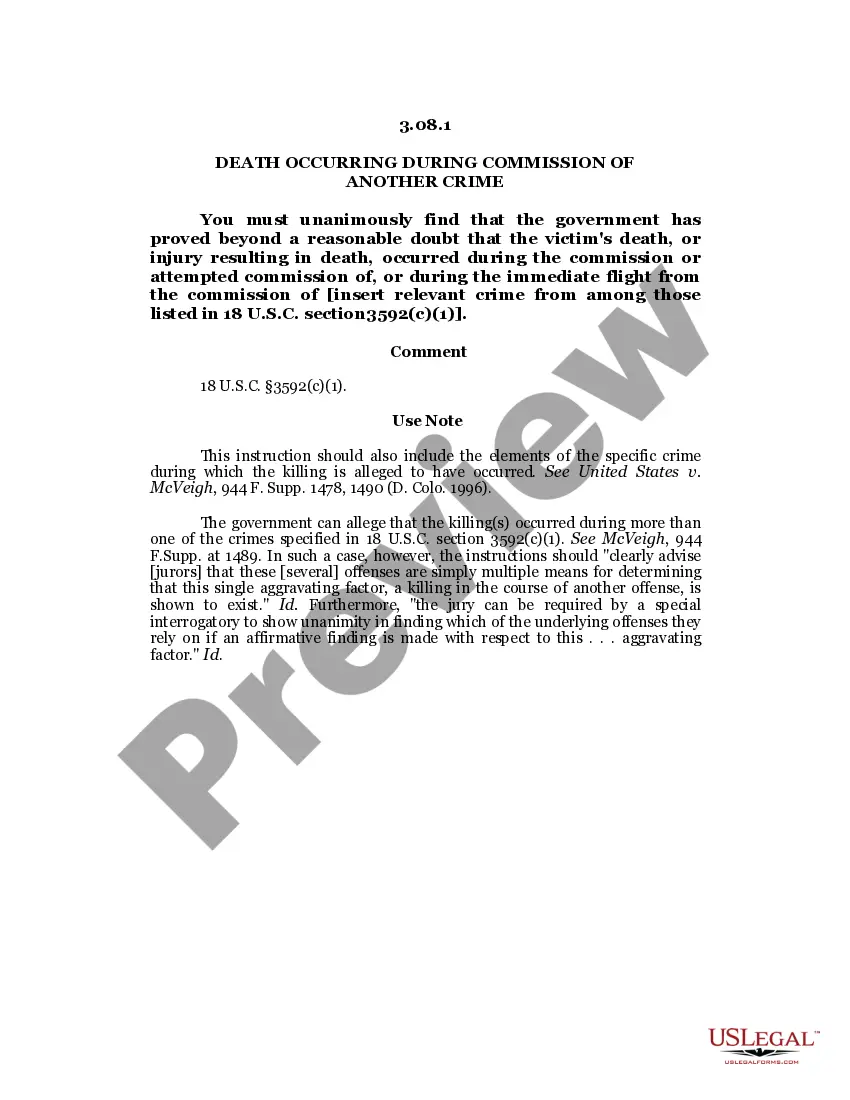
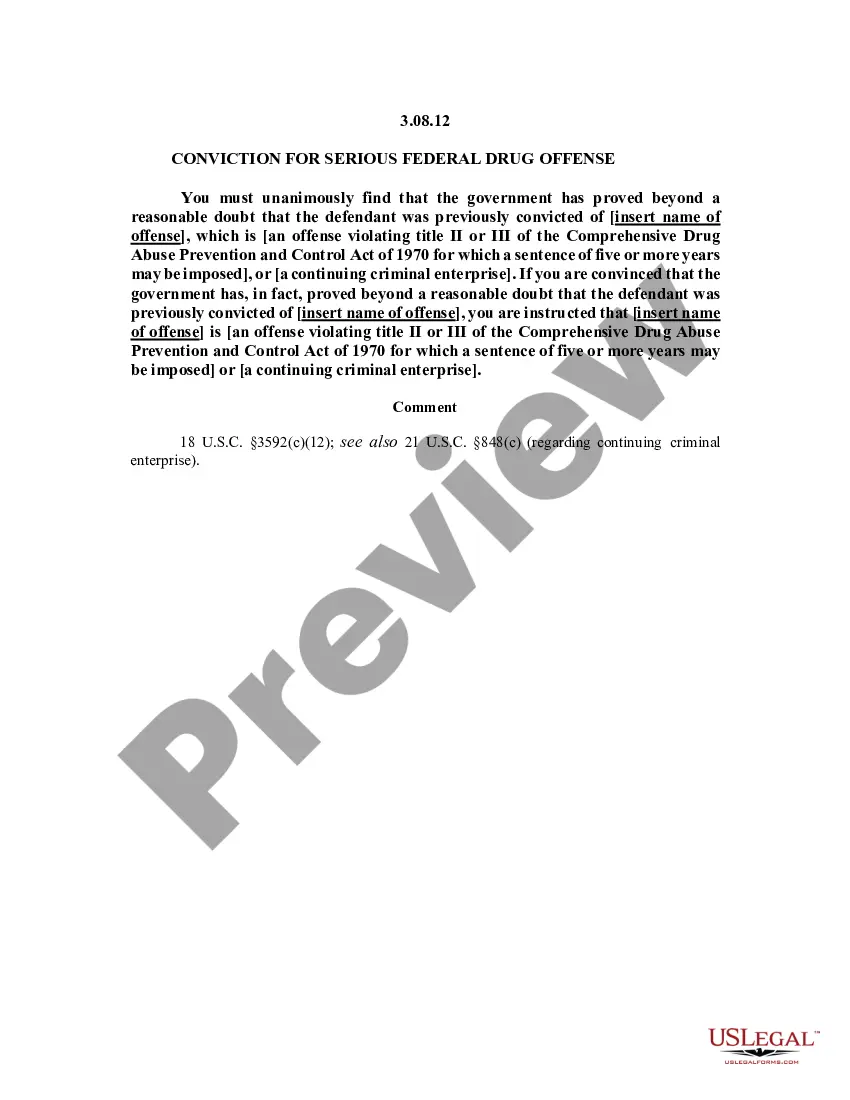
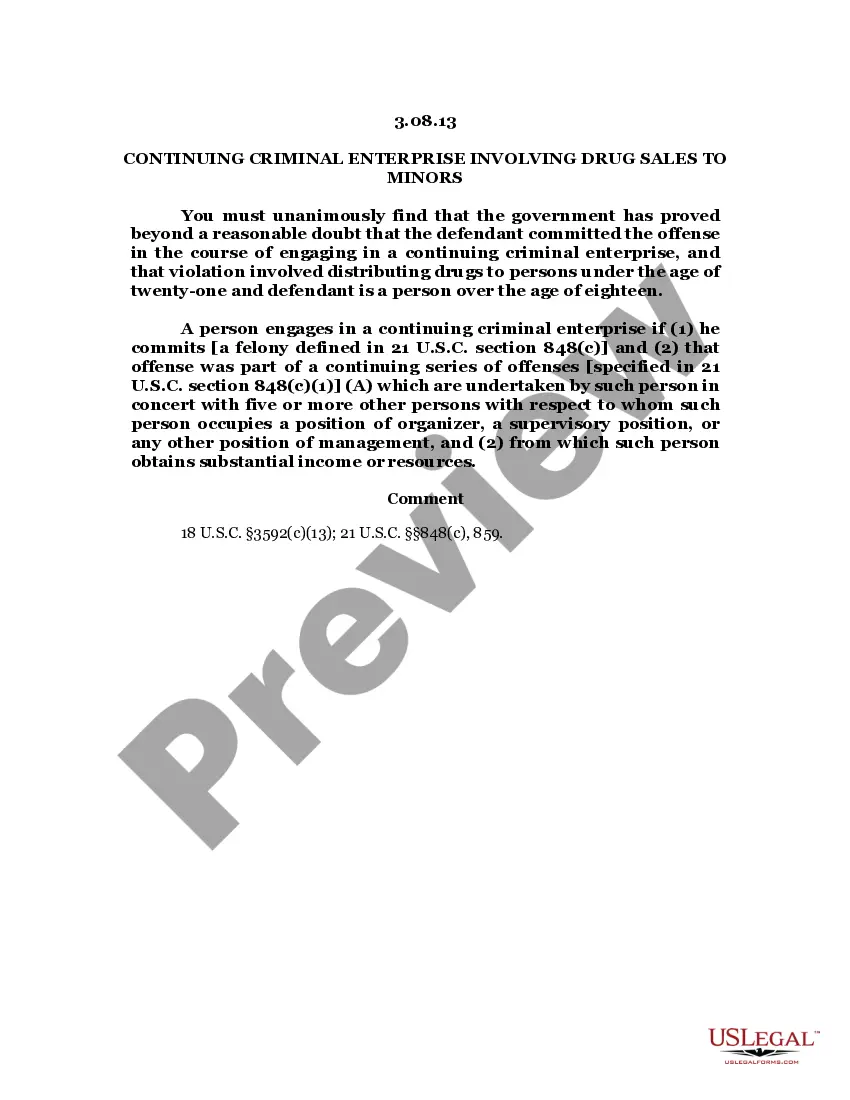
Minnesota Suggested "Partial Waiver" Language to Comply with New Requirements
What this document covers
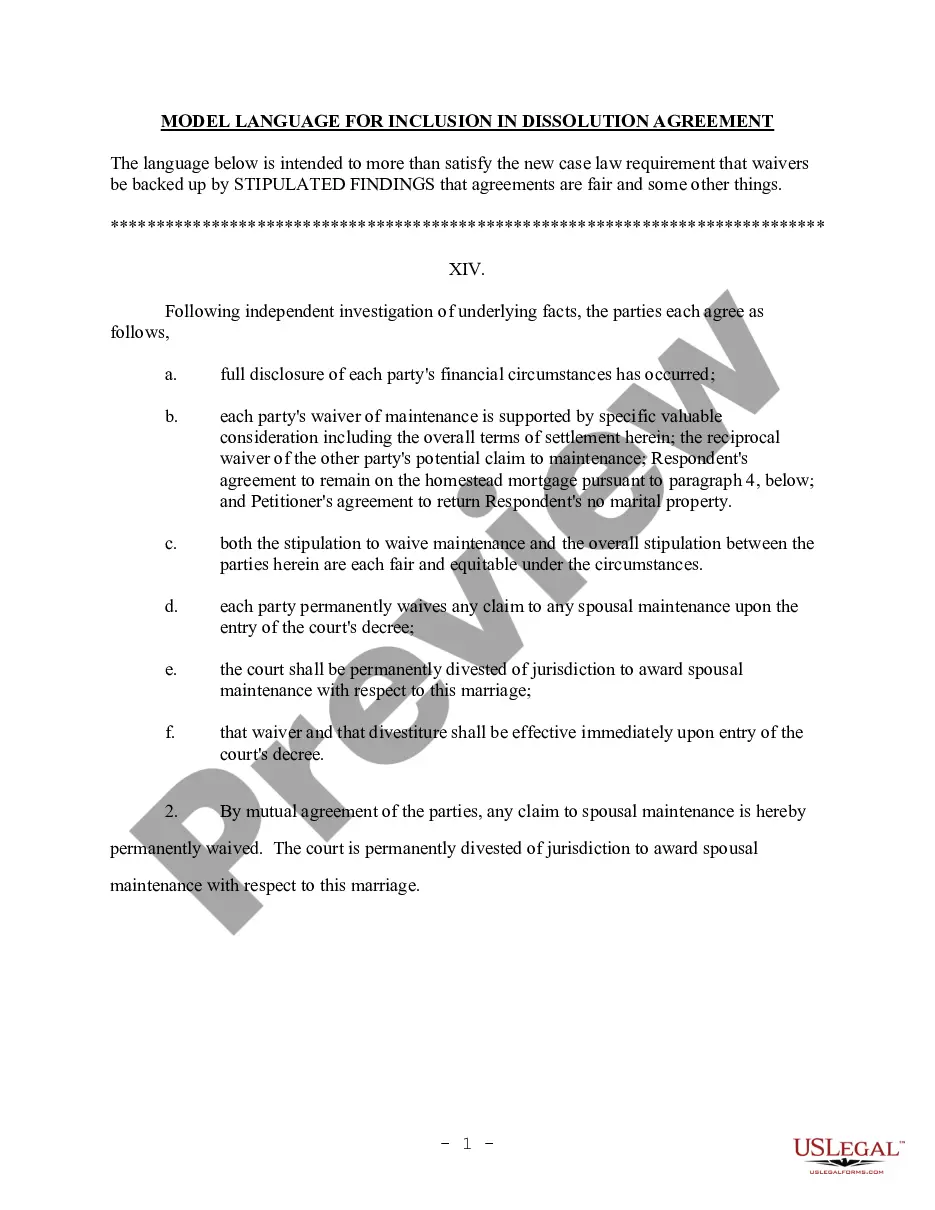
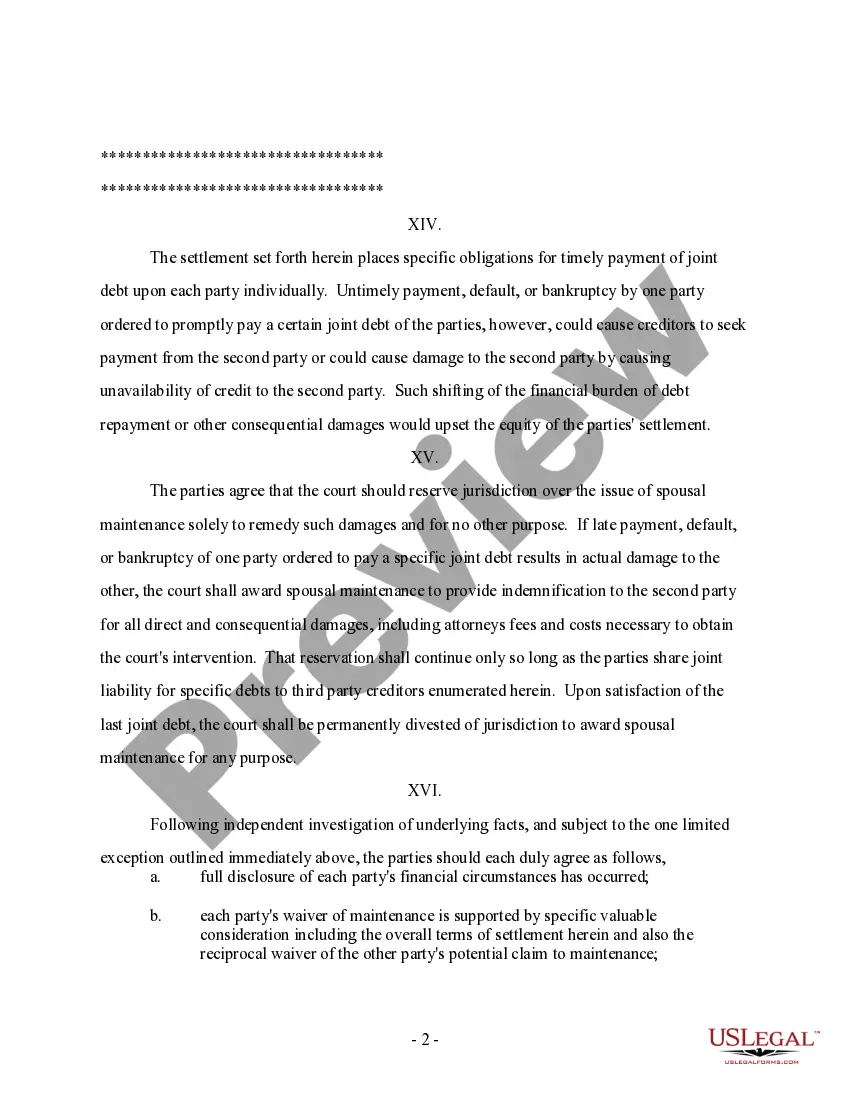
This form provides suggested language for a Partial Waiver, crafted to comply with new legal requirements concerning spousal maintenance waivers. It ensures that such waivers are supported by stipulated findings that confirm the fairness of any related agreements. This form is essential for couples seeking a clear and enforceable agreement regarding the waiver of spousal maintenance in the context of a divorce settlement.
Key components of this form
- Full disclosure of each party's financial circumstances.
- Specific valuable considerations supporting each party's waiver of maintenance.
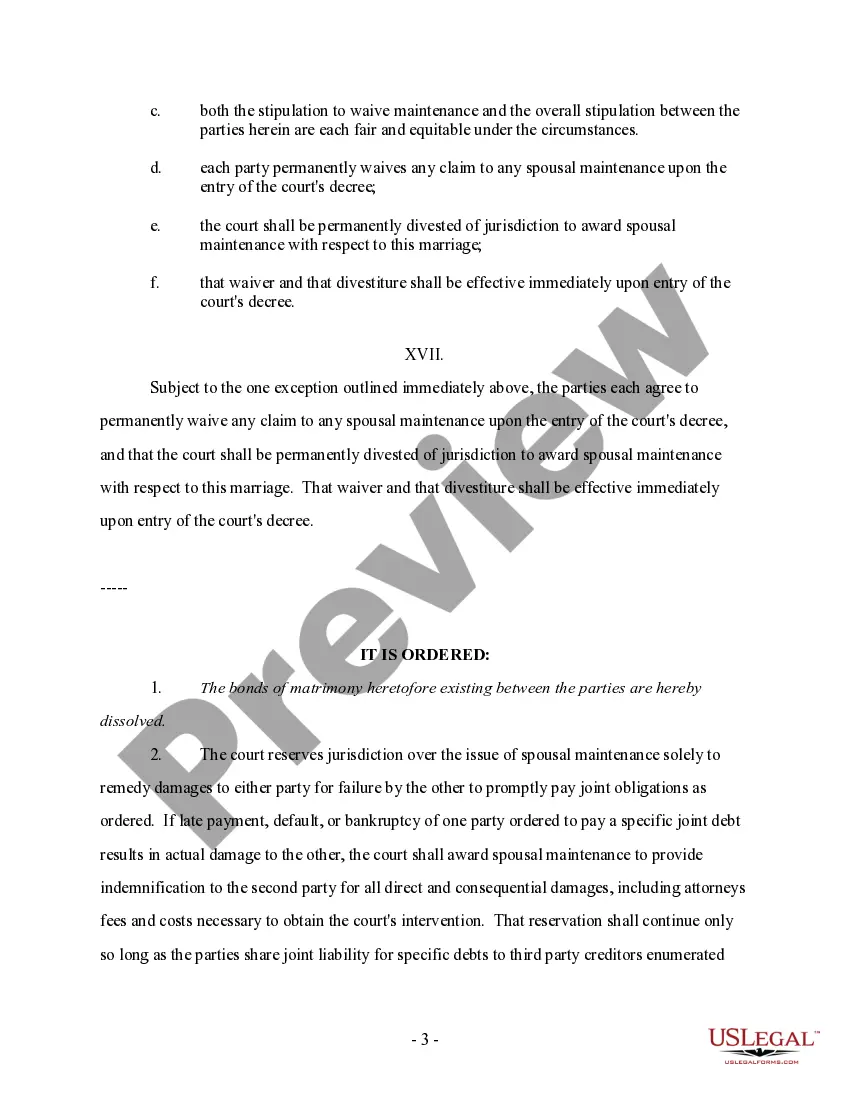
- Stipulations confirming both agreements are fair and equitable.
- Permanent waiver of maintenance claims upon court decree entry.
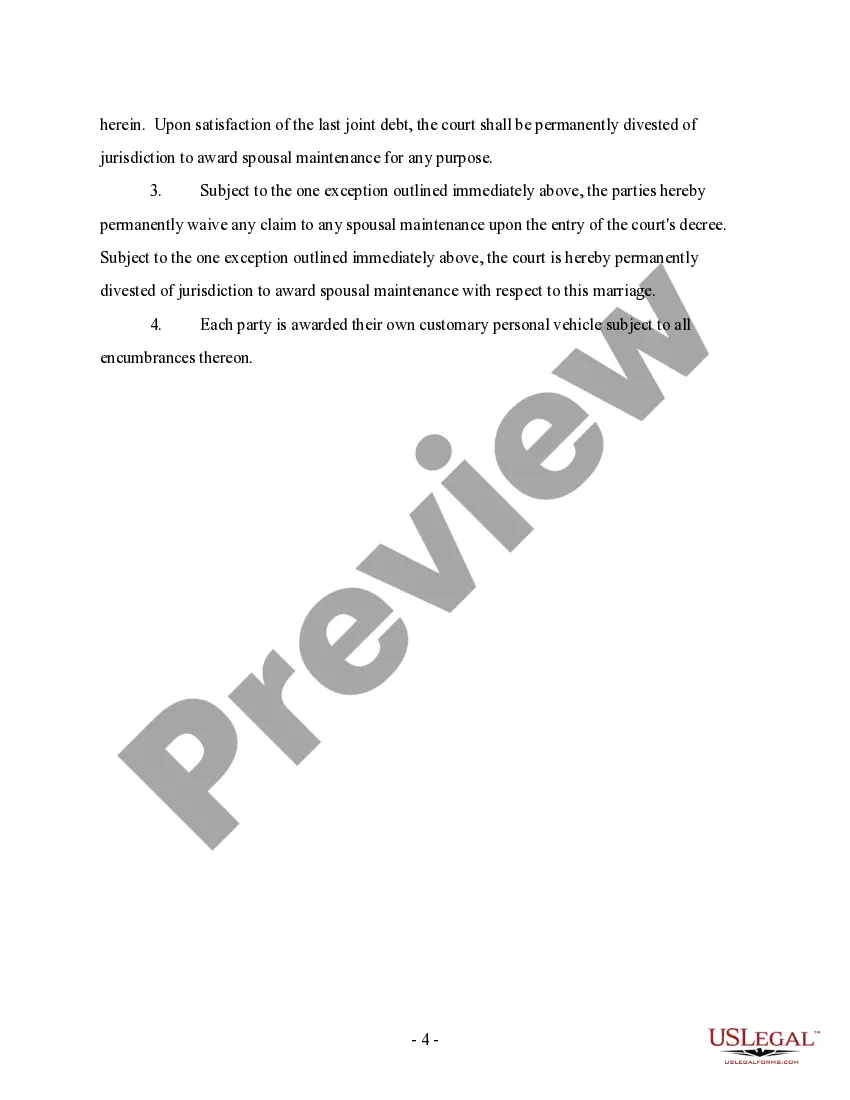
- Reservation of the court's jurisdiction over spousal maintenance for limited purposes.
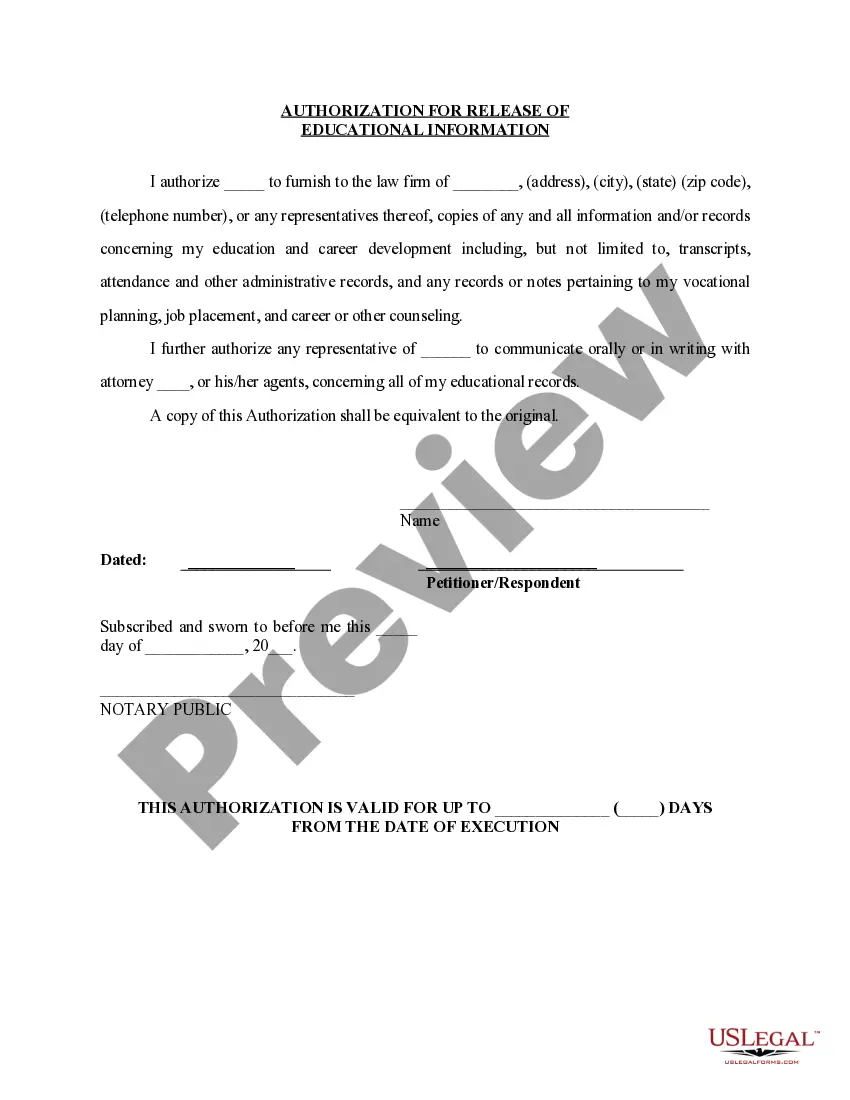
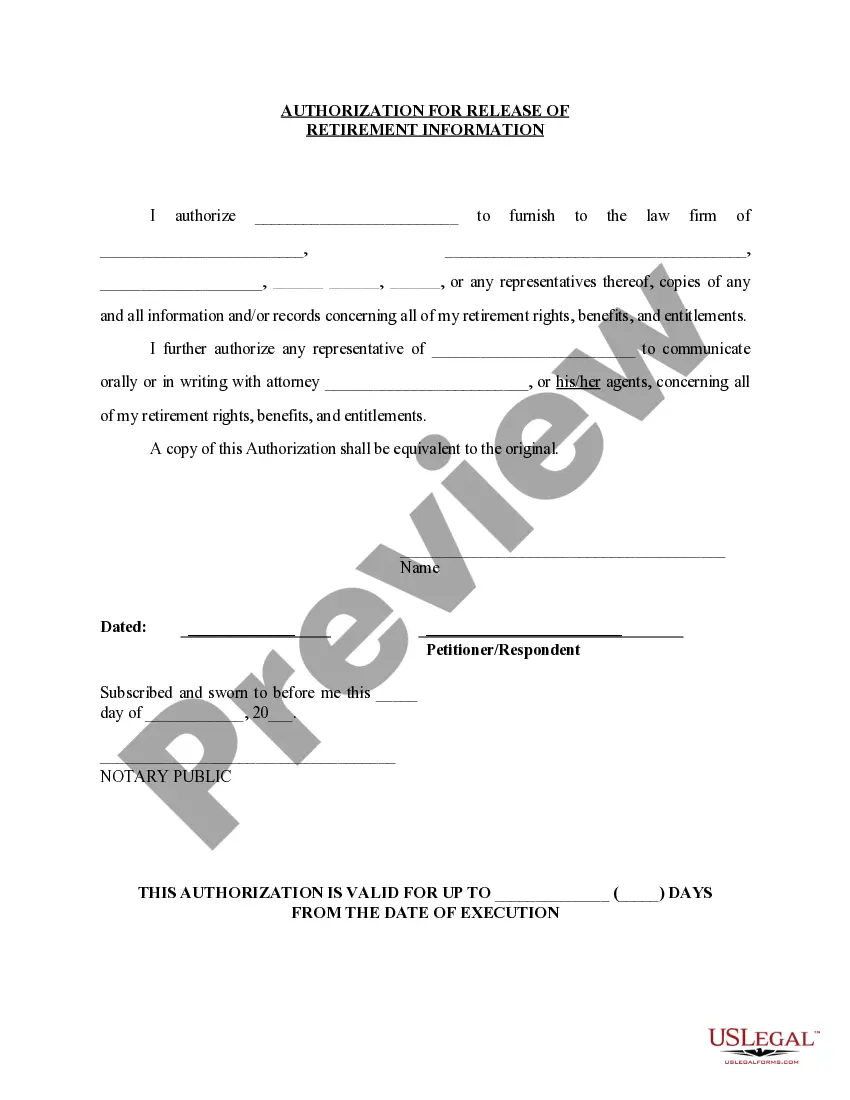
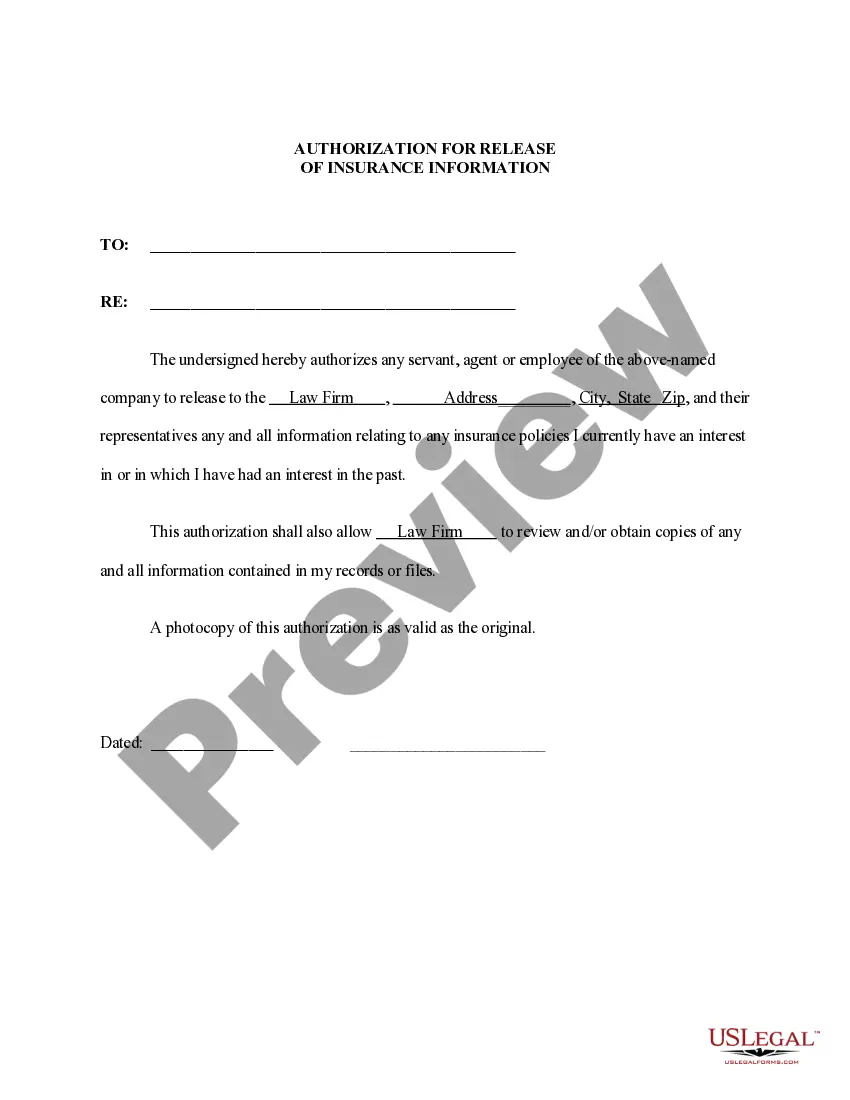
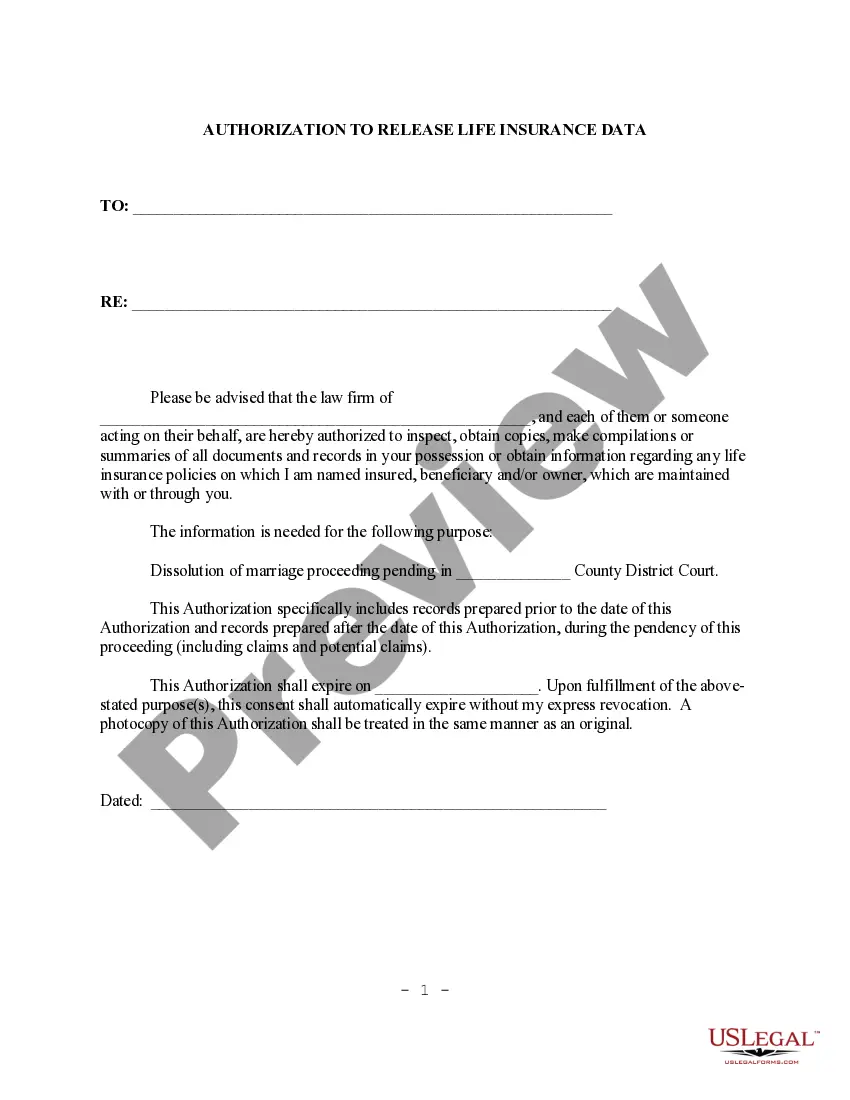
When to use this document
This form is needed when couples are negotiating a divorce settlement that includes waiving claims to spousal maintenance. It is particularly necessary when court filings require explicit stipulations to support a waiver of maintenance, ensuring compliance with relevant legal standards.
Who should use this form
- Divorcing couples who wish to waive spousal maintenance claims.
- Individuals seeking to ensure fairness and legal compliance in their divorce settlement.
- Attorneys helping clients draft divorce agreements involving maintenance waivers.
Completing this form step by step
- Identify and list the parties involved in the agreement.
- Detail the financial circumstances of each party to ensure full disclosure.
- Specify the terms of settlement including the waivers and considerations.
- Incorporate the fairness and equity declarations.
- Ensure each party signs the document after reviewing and agreeing to the terms.
Notarization guidance
This form does not typically require notarization unless specified by local law. Always check with your stateâs requirements to confirm if notarization is necessary for your specific situation.
Get your form ready online
Our built-in tools help you complete, sign, share, and store your documents in one place.
Make edits, fill in missing information, and update formatting in US Legal Forms—just like you would in MS Word.
Download a copy, print it, send it by email, or mail it via USPS—whatever works best for your next step.
Sign and collect signatures with our SignNow integration. Send to multiple recipients, set reminders, and more. Go Premium to unlock E-Sign.
If this form requires notarization, complete it online through a secure video call—no need to meet a notary in person or wait for an appointment.
We protect your documents and personal data by following strict security and privacy standards.

Make edits, fill in missing information, and update formatting in US Legal Forms—just like you would in MS Word.

Download a copy, print it, send it by email, or mail it via USPS—whatever works best for your next step.

Sign and collect signatures with our SignNow integration. Send to multiple recipients, set reminders, and more. Go Premium to unlock E-Sign.

If this form requires notarization, complete it online through a secure video call—no need to meet a notary in person or wait for an appointment.

We protect your documents and personal data by following strict security and privacy standards.
Common mistakes
- Failing to provide complete financial disclosure from both parties.
- Not ensuring that the stipulated findings explicitly confirm fairness.
- Overlooking the need for signatures or proper execution of the agreement.
Why use this form online
- Convenient access to legally vetted language tailored for specific needs.
- Editable templates that allow customization for individual circumstances.
- Rapid completion and downloading without the need for in-person meetings.
Looking for another form?
Form popularity
FAQ
A partial waiver is a legal document that relinquishes a claimant's right to lien for a specified amount of payment. It allows contractors and subcontractors to receive partial payment while maintaining the right to file a claim for any unpaid amounts later. When using Minnesota Suggested 'Partial Waiver' Language to Comply with New Requirements, you can ensure that the waiver reflects the necessary legal standards and protects your interests in the project.
To ensure your waiver is enforceable, you should follow specific legal guidelines. Utilize Minnesota Suggested 'Partial Waiver' Language to Comply with New Requirements, as it provides clear and concise terms that meet state regulations. Additionally, make sure all parties sign the document and keep a copy for your records. Proper execution and documentation play a significant role in the enforceability of waivers.
Filling out a partial unconditional waiver involves several key steps. First, clearly identify the project and the payment amount being waived. Next, include the date of the waiver and the names of all parties involved. Utilizing Minnesota Suggested 'Partial Waiver' Language to Comply with New Requirements can guide you through this process and ensure accuracy, which is vital for legal enforceability.
The primary distinction between a partial and final lien waiver lies in their scope. A partial lien waiver covers specific payments made at a particular stage of a project, while a final lien waiver releases all claims upon full payment for work completed. Understanding these differences is crucial for compliance with Minnesota Suggested 'Partial Waiver' Language to Comply with New Requirements. This clarity helps protect your rights and ensures proper documentation.
A waiver becomes legally binding when it meets specific criteria, including mutual consent, a clear understanding of the terms, and the presence of consideration. Additionally, using the Minnesota Suggested 'Partial Waiver' Language to Comply with New Requirements can help ensure that your waiver is enforceable in court. It is essential that all parties involved understand the implications of the waiver before signing. For reliable resources, consider exploring uslegalforms to find comprehensive legal forms and guidance.
Filling out a waiver of lien requires you to gather the necessary information, including details about the property, the parties involved, and the amount being waived. Start by clearly stating the purpose of the waiver and include the Minnesota Suggested 'Partial Waiver' Language to Comply with New Requirements for clarity. Make sure all parties sign the document, and consider having it notarized for added legal protection. If you need guidance, uslegalforms offers templates to simplify this process.
To create a valid waiver, you must ensure that it is clear and specific regarding the rights being waived. The Minnesota Suggested 'Partial Waiver' Language to Comply with New Requirements includes necessary elements such as the parties involved, the scope of the waiver, and the signatures of those granting the waiver. Furthermore, the waiver should not violate any laws or public policy. Utilizing resources like US Legal Forms can help you craft a compliant waiver that meets these essential requirements.
Filling out a conditional waiver of lien requires careful attention to detail. Start by providing all necessary information, including project details and payment amounts. Be sure to specify that the waiver is conditional upon receiving payment, which protects your rights. Utilizing Minnesota Suggested 'Partial Waiver' Language to Comply with New Requirements can guide you through the process effectively, ensuring compliance and clarity.
A waiver can become unenforceable for several reasons. If it lacks clear language or specificity, it may not meet legal standards. Additionally, if one party did not fully understand the implications of the waiver, it might be considered invalid. Using Minnesota Suggested 'Partial Waiver' Language to Comply with New Requirements can help ensure that your waiver is clear and legally sound.