Company Drug Policy
What is this form?
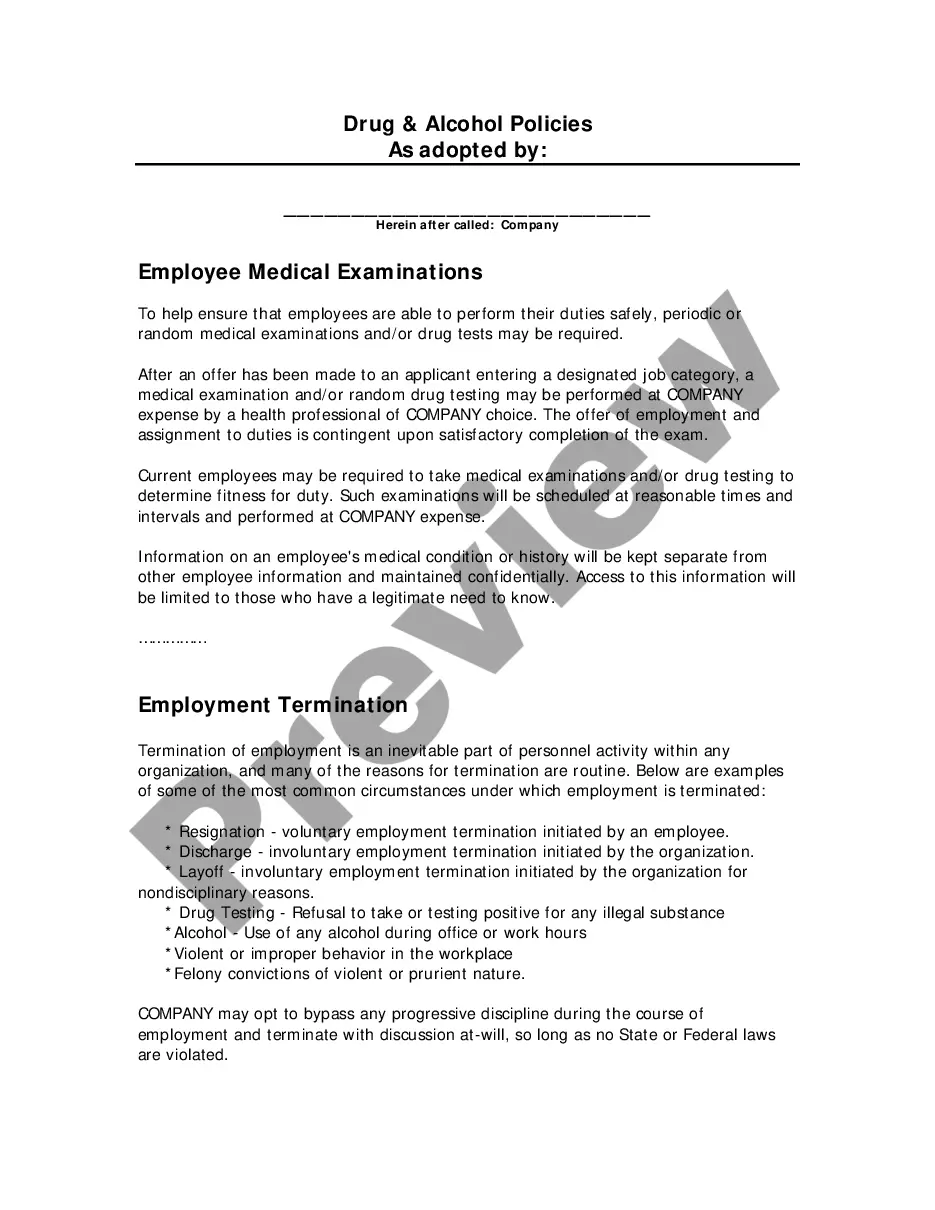
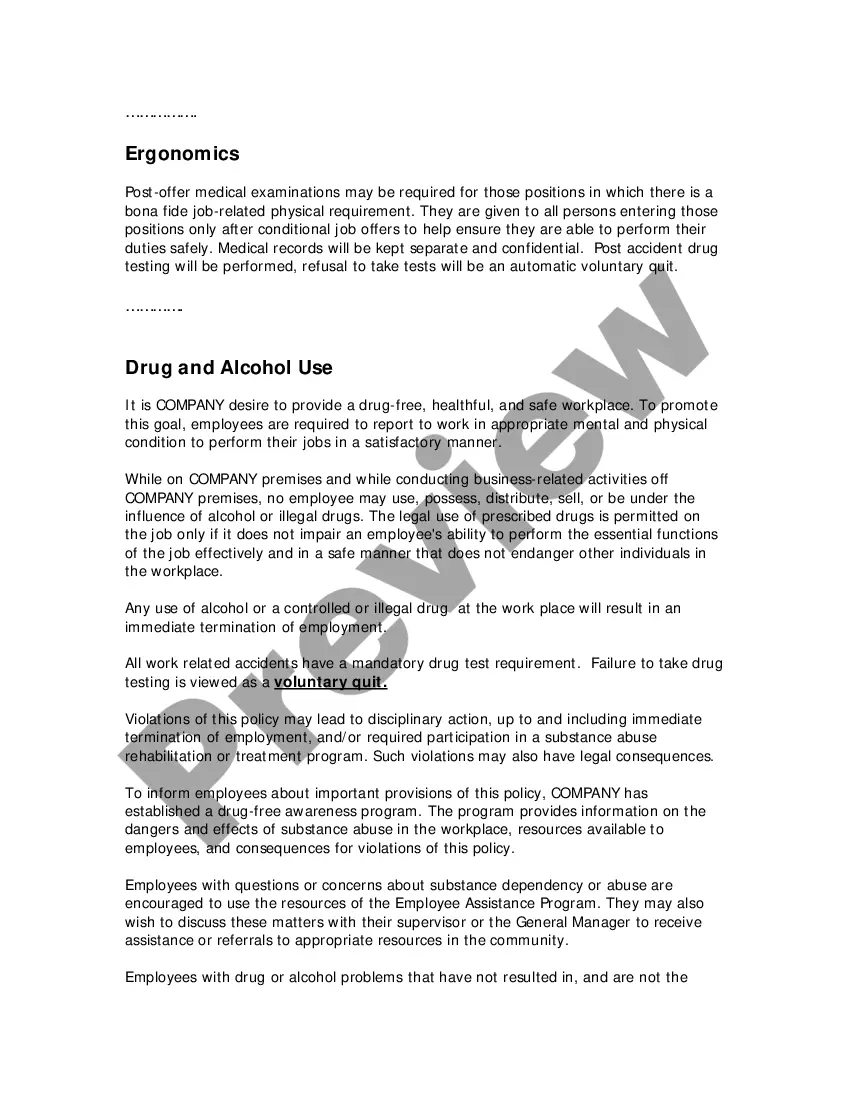
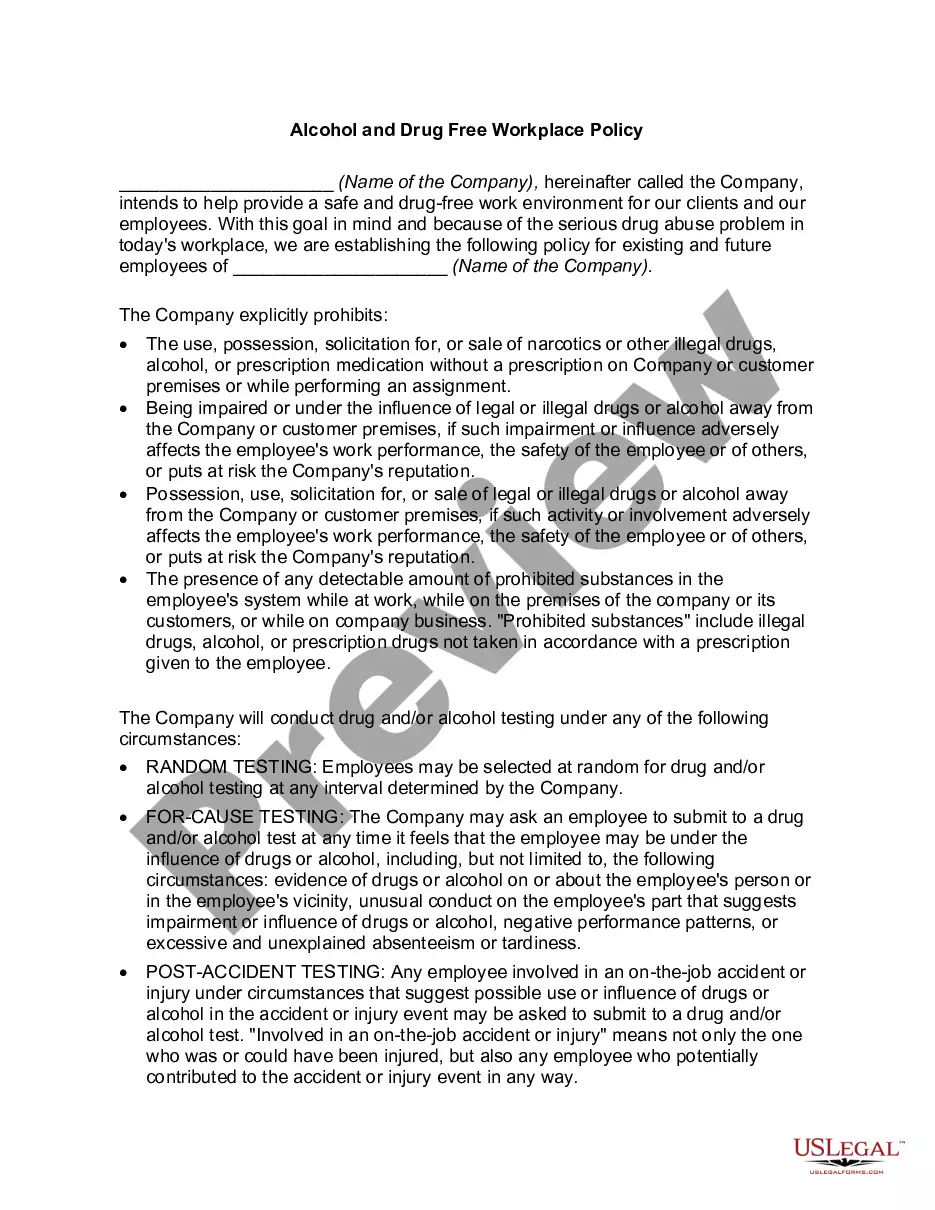
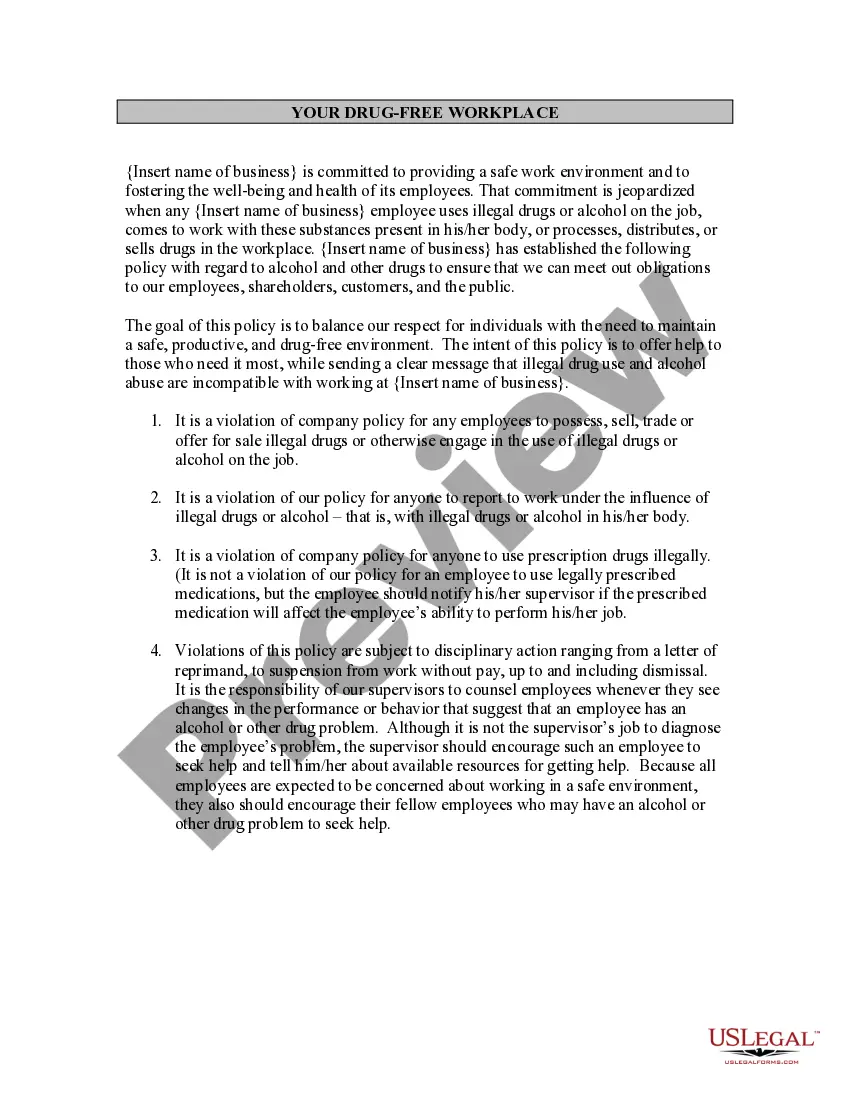
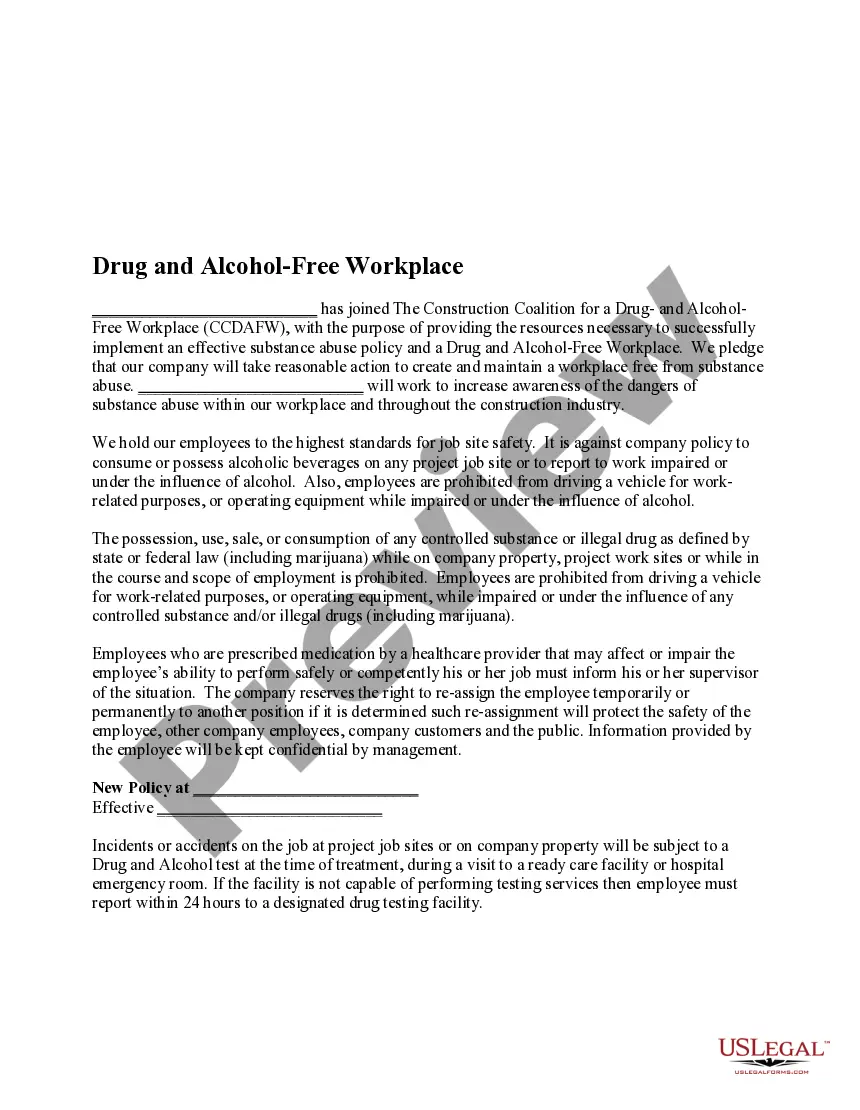
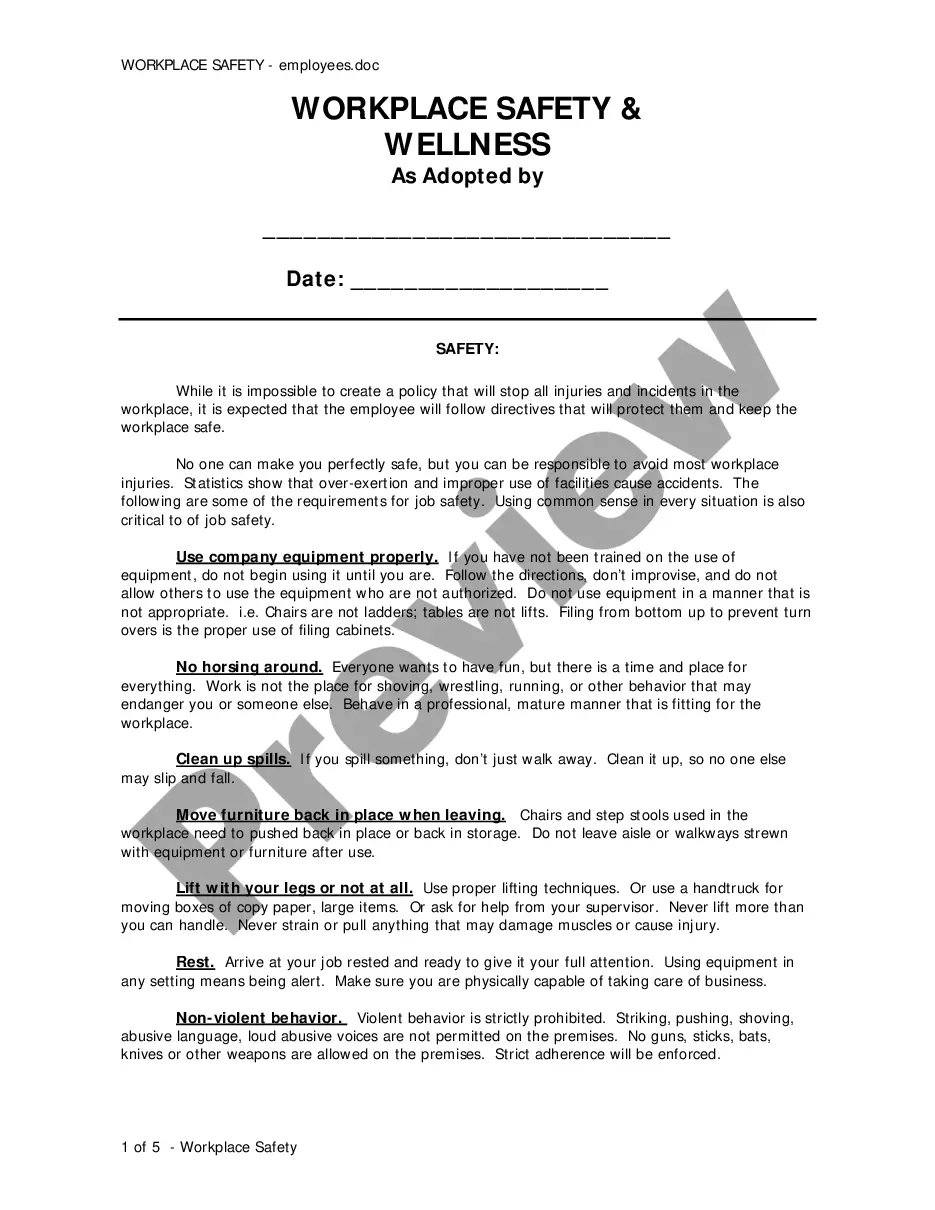
The Company Drug Policy is a legal document that outlines the rules and regulations regarding drug and alcohol use in the workplace. It serves to maintain a safe and healthy working environment by specifying the company's stance on substance use, requirements for employee medical examinations, and the consequences of policy violations. This policy is essential for ensuring compliance with legal standards and protecting employee well-being, distinguishing it from less comprehensive workplace policies.
Key components of this form
- Employee Medical Examinations: Guidelines for mandatory medical exams and drug testing during hiring and employment.
- Employment Termination: Circumstances under which employment may be terminated, including drug-related offenses.
- Drug and Alcohol Use: Prohibitions against substance use on company premises and during work hours.
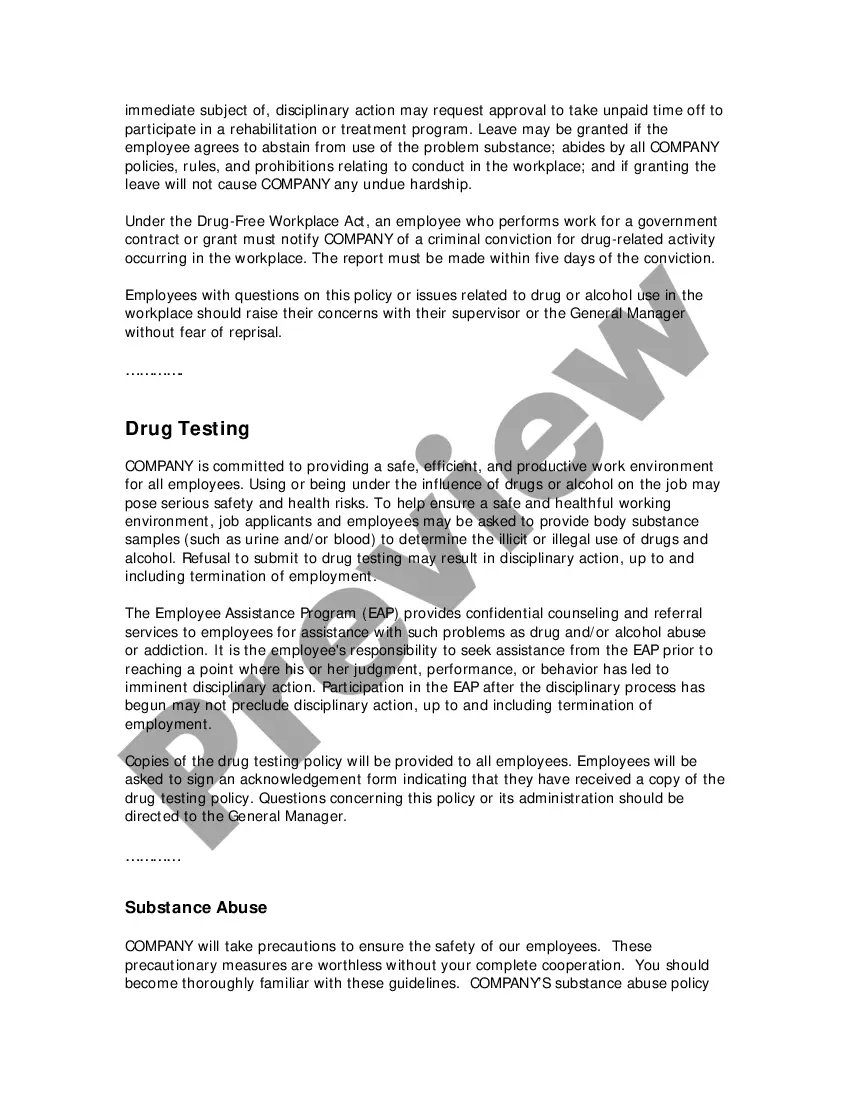
- Drug Testing: Procedures for conducting drug tests and the implications of refusing to comply.
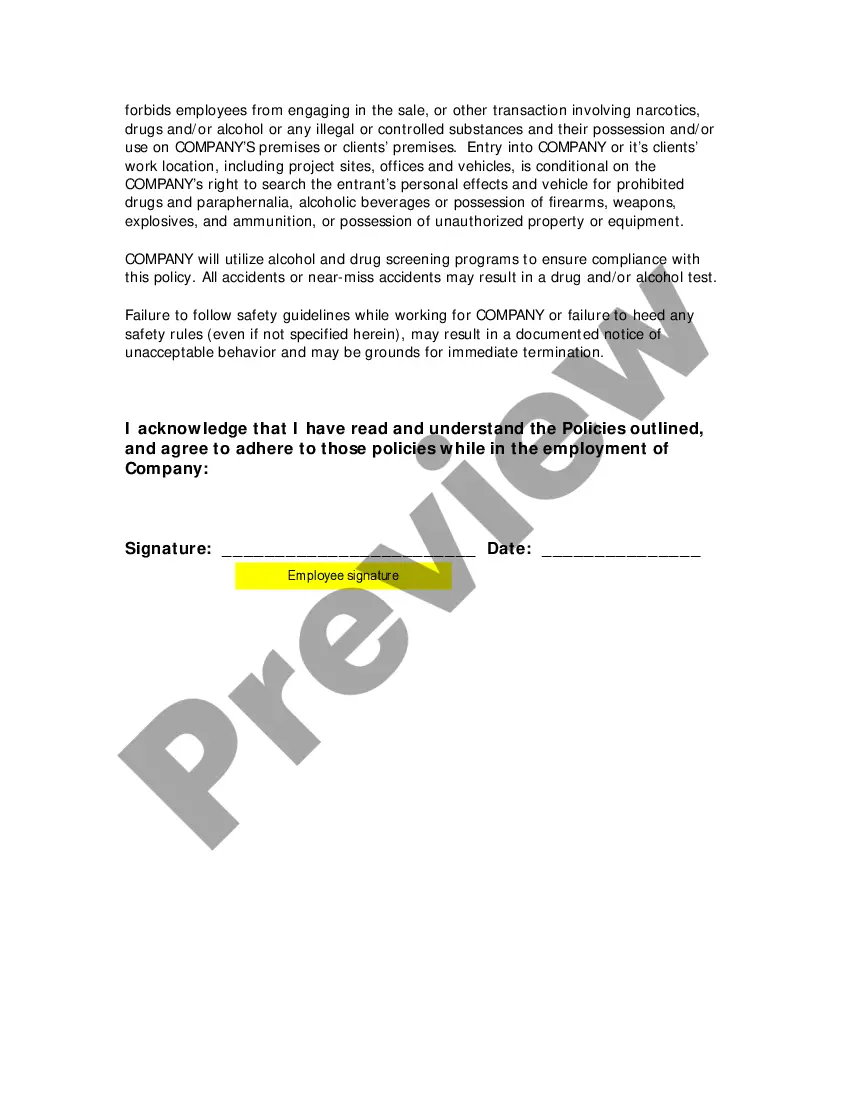
- Substance Abuse: Guidelines for employee cooperation and the management of substance abuse issues.
- Employee Assistance Program (EAP): Resources available for employees struggling with drug or alcohol issues.
When to use this document
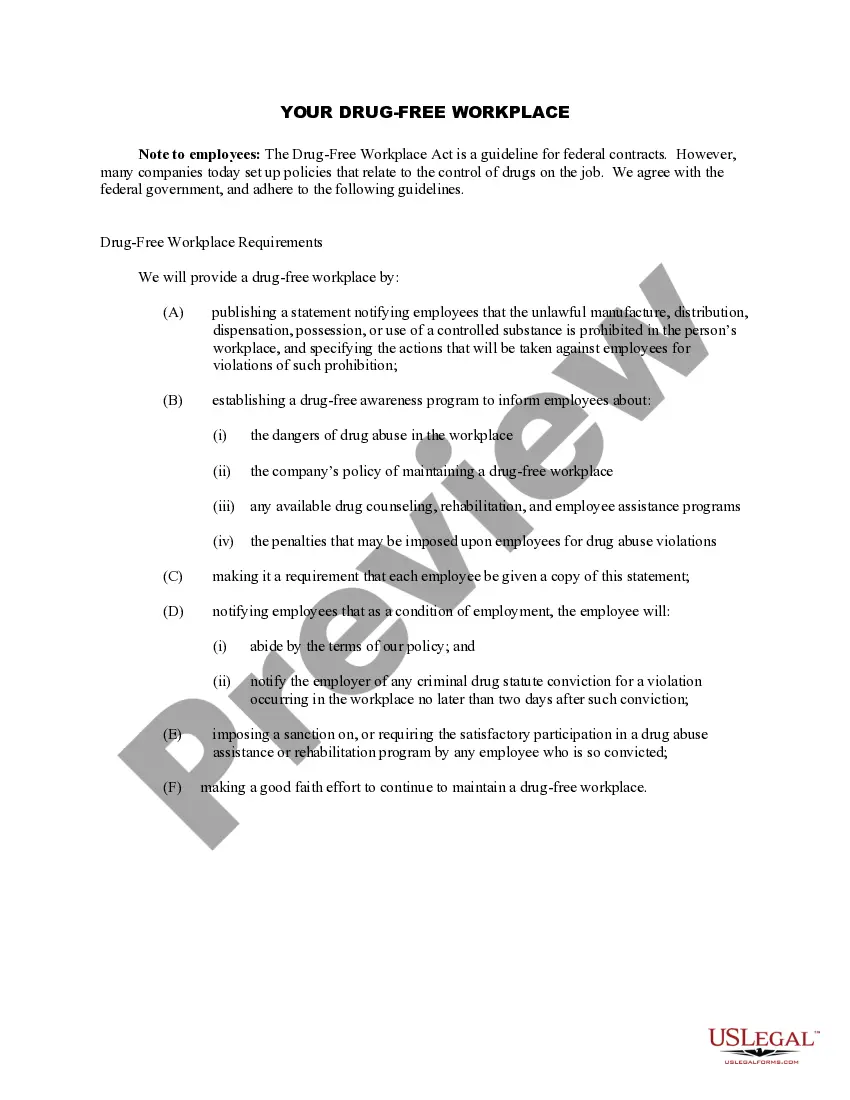
This form should be implemented by companies looking to establish clear policies on drug and alcohol use in the workplace. It is particularly necessary when hiring employees for roles that require decision-making, safety-sensitive positions, or when there are existing concerns about substance use within the organization. It can also be utilized to ensure compliance with legal obligations, especially for companies involved in government contracts or grants under the Drug-Free Workplace Act.
Who should use this form
- Human Resource professionals in charge of formulating workplace policies.
- Employers who want to enforce a drug-free work environment.
- Managers responsible for maintaining workplace safety and compliance.
- Organizations applying for government contracts that require a drug-free workplace policy.
How to prepare this document
- Review the document thoroughly to understand all sections and clauses.
- Fill in the company name and specifics in the designated areas.
- Ensure all employees read and understand the policy content before implementation.
- Distribute the policy to all employees and obtain signed acknowledgments of receipt.
- Keep a copy of the signed acknowledgment forms for your records.
Is notarization required?
Notarization is not commonly needed for this form. However, certain documents or local rules may make it necessary. Our notarization service, powered by Notarize, allows you to finalize it securely online anytime, day or night.
Get your form ready online
Our built-in tools help you complete, sign, share, and store your documents in one place.
Make edits, fill in missing information, and update formatting in US Legal Forms—just like you would in MS Word.
Download a copy, print it, send it by email, or mail it via USPS—whatever works best for your next step.
Sign and collect signatures with our SignNow integration. Send to multiple recipients, set reminders, and more. Go Premium to unlock E-Sign.
If this form requires notarization, complete it online through a secure video call—no need to meet a notary in person or wait for an appointment.
We protect your documents and personal data by following strict security and privacy standards.

Make edits, fill in missing information, and update formatting in US Legal Forms—just like you would in MS Word.

Download a copy, print it, send it by email, or mail it via USPS—whatever works best for your next step.

Sign and collect signatures with our SignNow integration. Send to multiple recipients, set reminders, and more. Go Premium to unlock E-Sign.

If this form requires notarization, complete it online through a secure video call—no need to meet a notary in person or wait for an appointment.

We protect your documents and personal data by following strict security and privacy standards.
Common mistakes to avoid
- Failing to communicate the policy adequately to all employees.
- Not obtaining employee signatures to acknowledge receipt of the policy.
- Neglecting to update the policy according to state-specific legal changes.
- Overlooking the need for regular training on the policy for employees.
Why complete this form online
- Immediate download of a comprehensive, professionally drafted document.
- Editable to customize according to specific company needs and state requirements.
- Access to legal resources and support to ensure compliance and clarity.
Quick recap
- The Company Drug Policy is essential for maintaining a safe and drug-free workplace.
- Employers must ensure compliance with this policy and communicate its provisions effectively to employees.
- Regular updates and employee training on the policy are crucial for its effectiveness.
Looking for another form?

Form popularity
FAQ
The Drug-Free Workplace Act of 1988 (41 U.S.C. 81) is an act of the United States which requires some federal contractors and all federal grantees to agree that they will provide drug-free workplaces as a precondition of receiving a contract or grant from a Federal agency.
Substance abuse can simply be defined as a pattern of harmful use of any substance for mood-altering purposes. "Substances" can include alcohol and other drugs (illegal or not) as well as some substances that are not drugs at all.
The elements of a comprehensive substance abuse policy. Reasonable suspicion and recognizing observable behaviors that may mean an employee is impaired by alcohol and/or drugs. Scenarios that illustrate procedures for confronting an employee who may be impaired. Common alcohol and drug testing procedures.
While employers are free to terminate and can refuse to hire anyone whose alcohol or drug use impairs their ability to perform the duties of their job, employers cannot fire or take other negative employment actions against an employee because of their status as an alcoholic or drug addict. California and federal laws
Yes. Just like incoming applicants can be tested for drugs, so can existing employees. The only difference is, in most cases, your employer must have reasonable suspicion that you have been taking drugs before you can be tested.
There are four major conceptual approaches to prevention: risk-factor, developmental, social influence, and community-specific.
An effective drug-testing program consists of two key elements: (1) a general understanding of illicit drug use and the primary regulation that addresses drug testing, and (2) a written policy that is tailored to your business's specific needs. Both are explained below.
While employers are free to terminate and can refuse to hire anyone whose alcohol or drug use impairs their ability to perform the duties of their job, employers cannot fire or take other negative employment actions against an employee because of their status as an alcoholic or drug addict. California and federal laws
Unless you had a contract or promise of continued employment, you were employed "at will" and can be fired for any lawful reason. Firing an "at will" employee for suspected drug use is lawful.