Minnesota Discovery - Petitioner's First Set of Interrogatories to Respondent
What this document covers
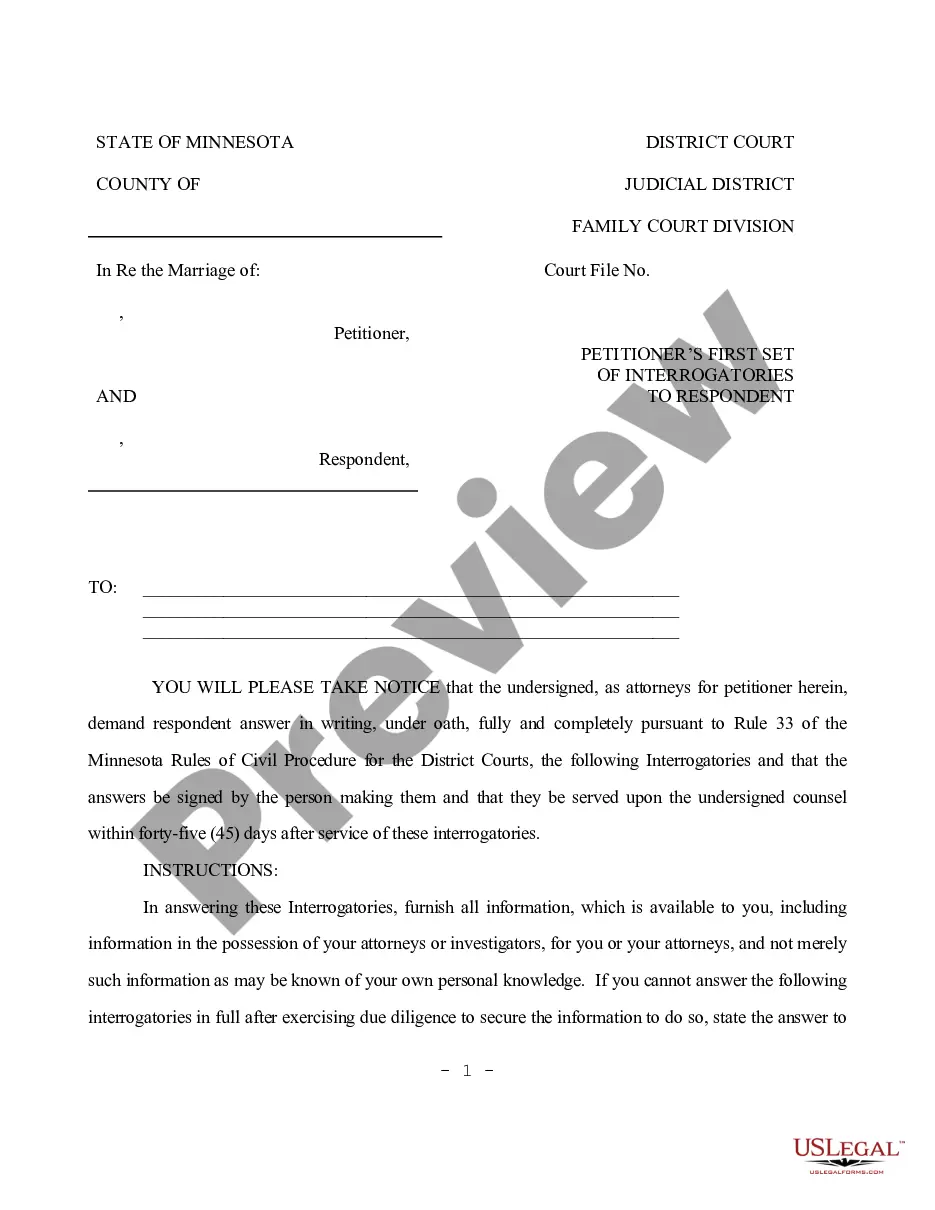
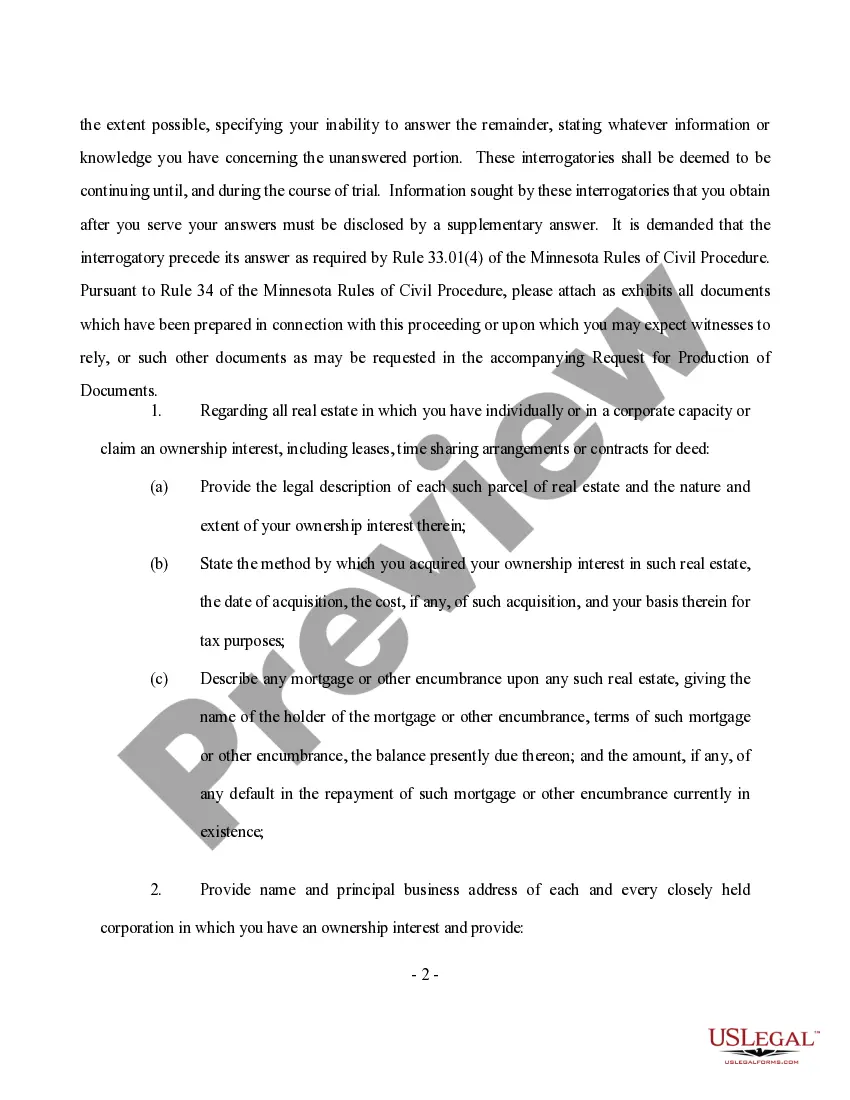
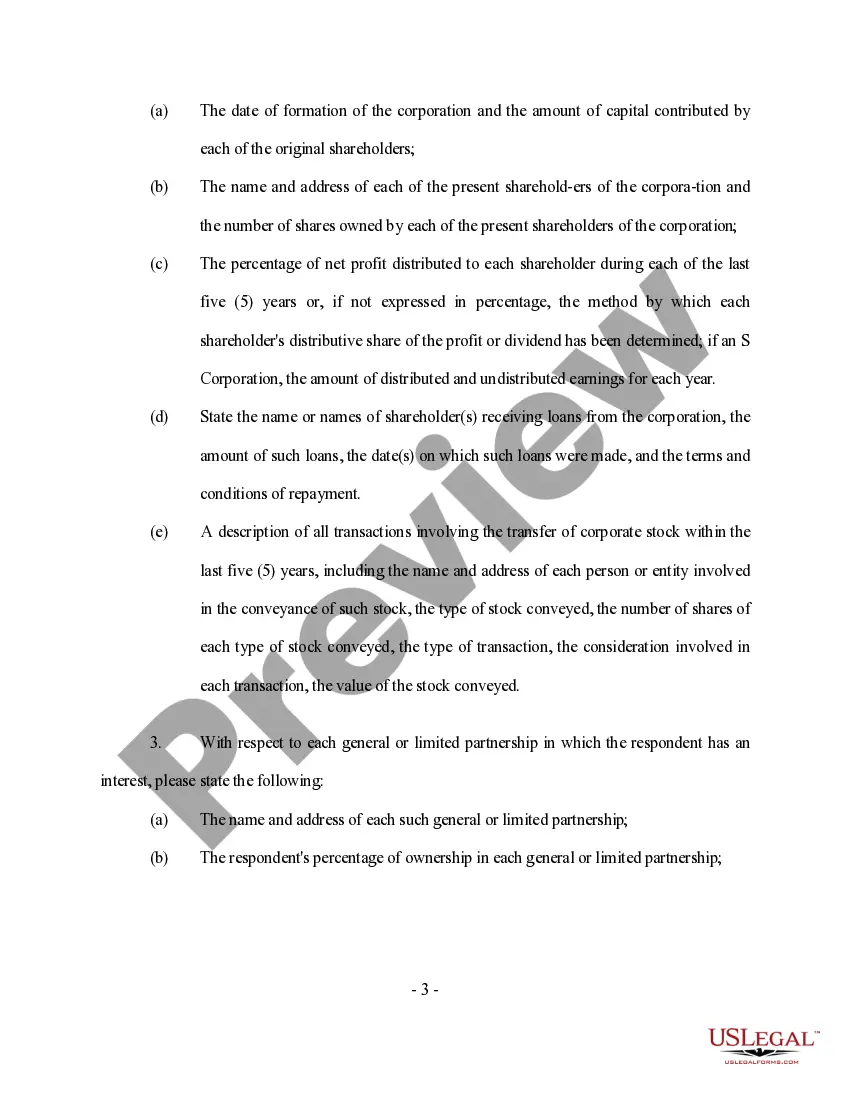
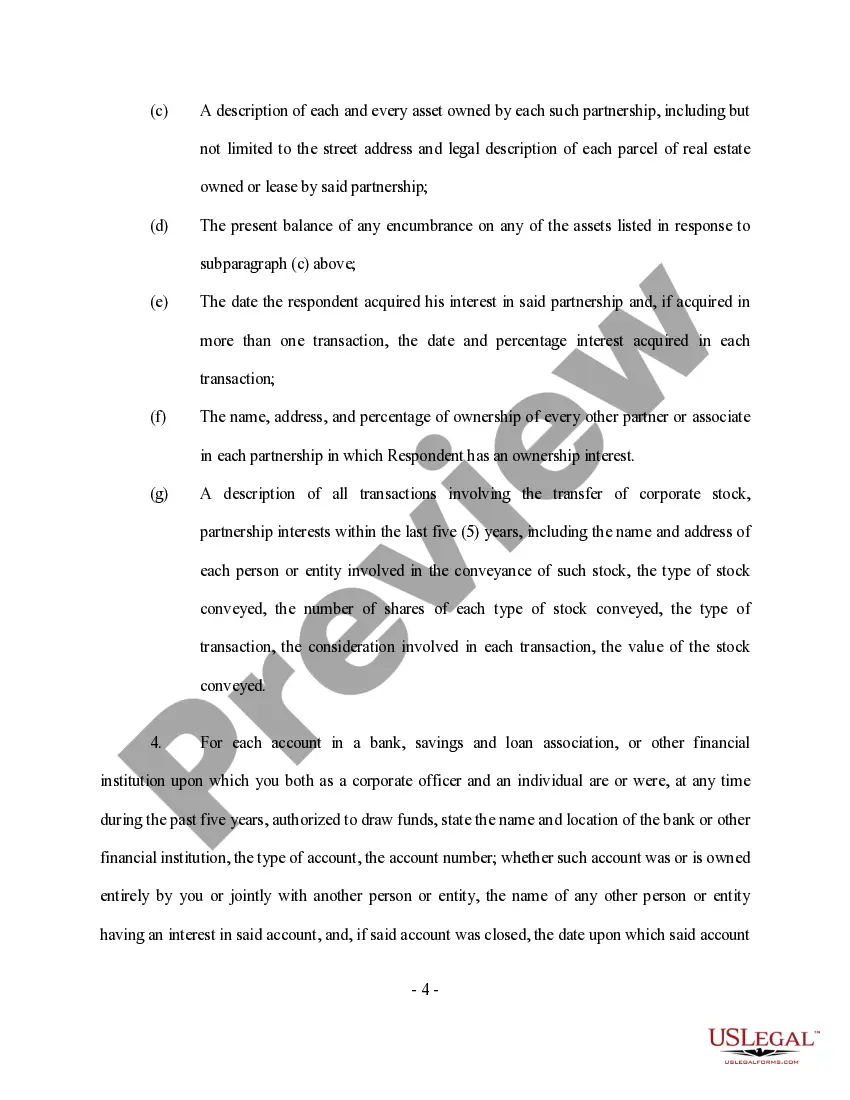
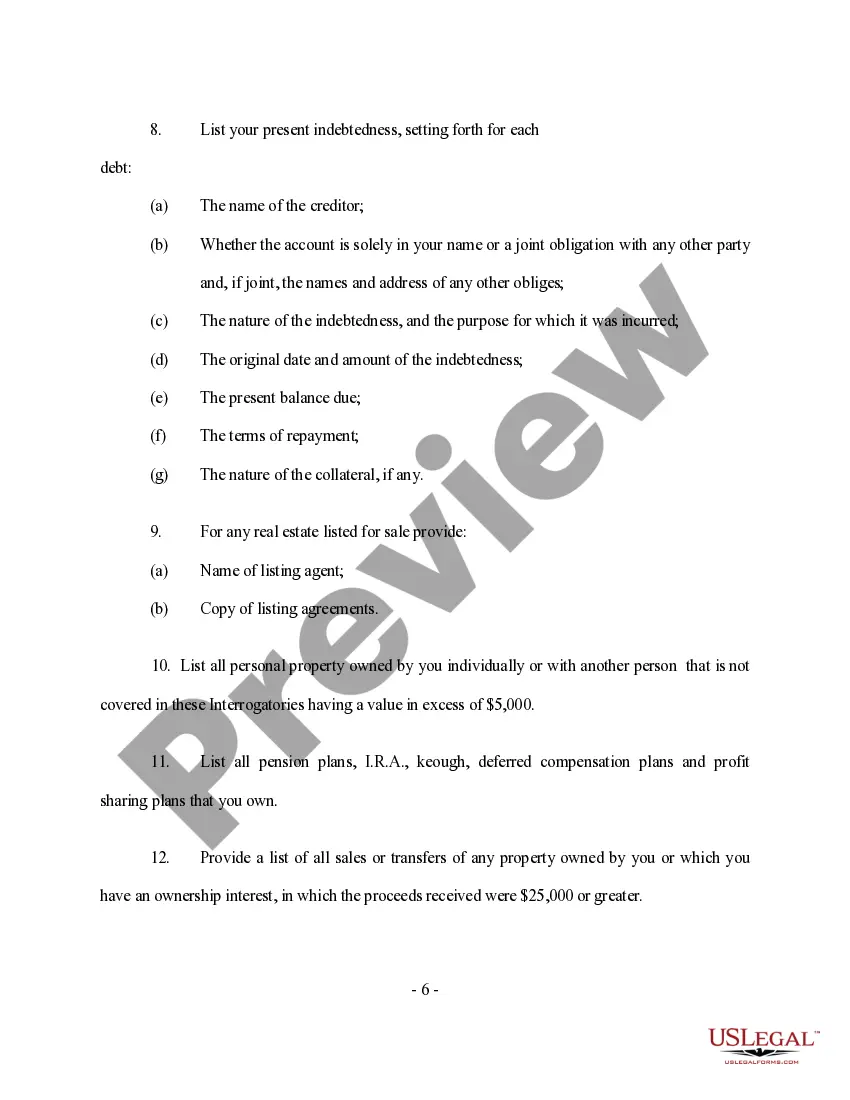
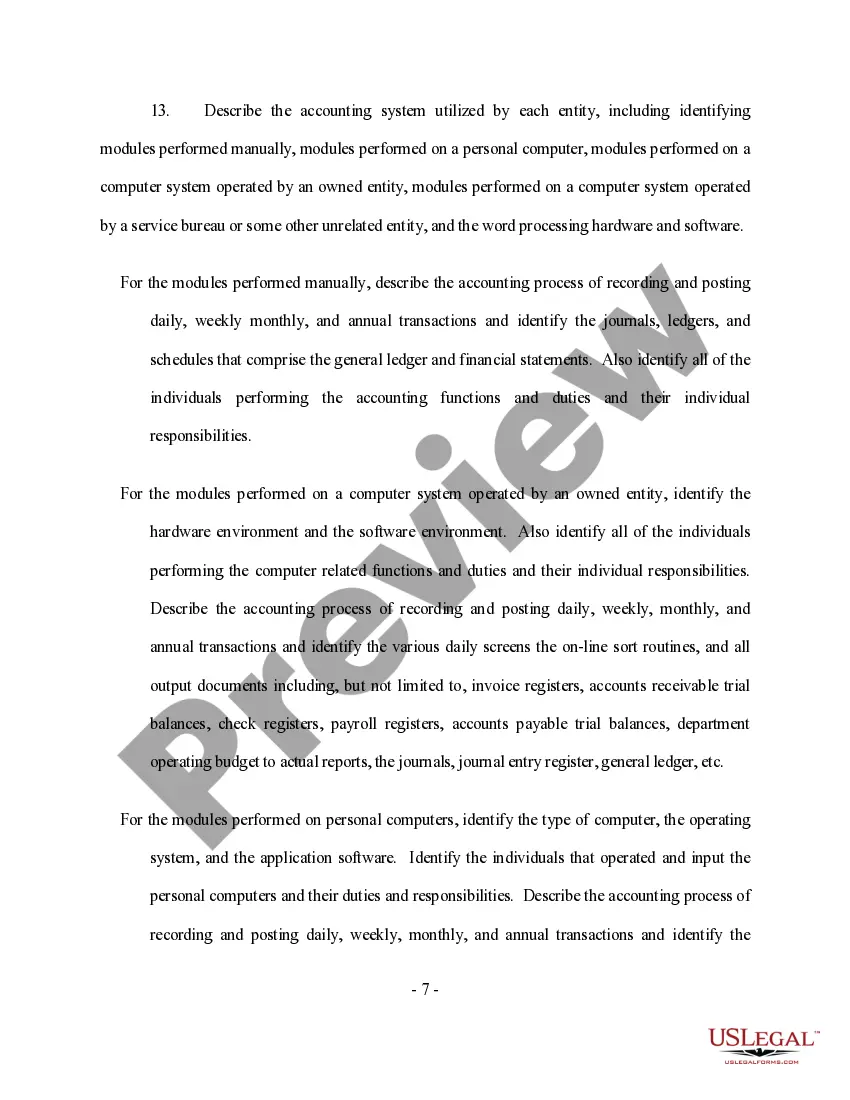
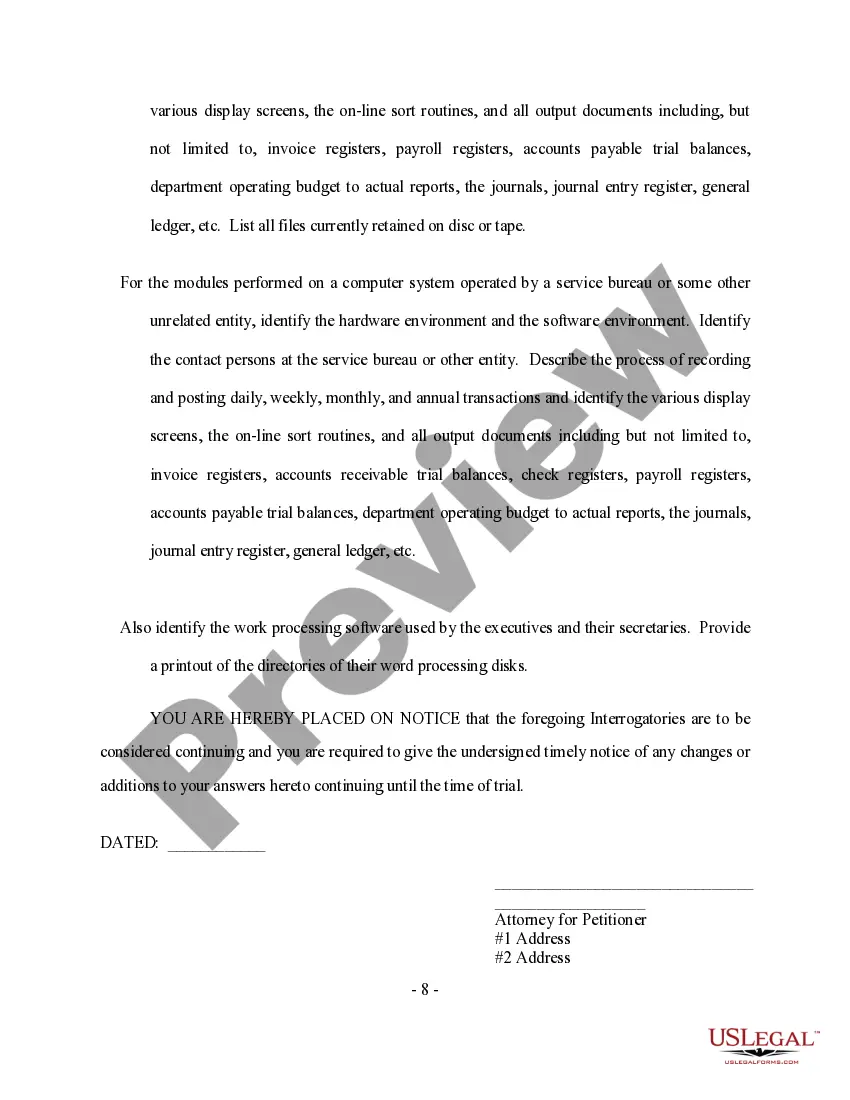
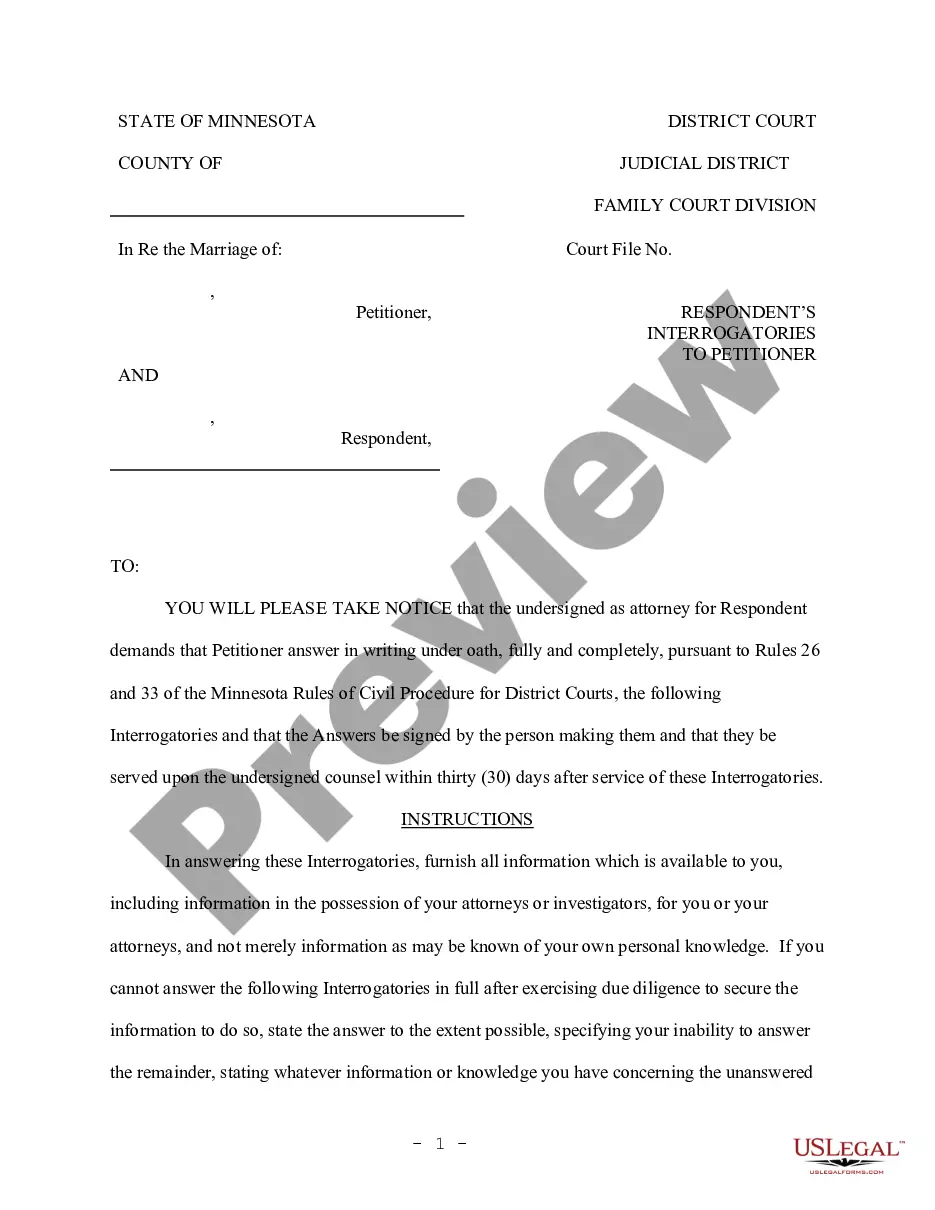
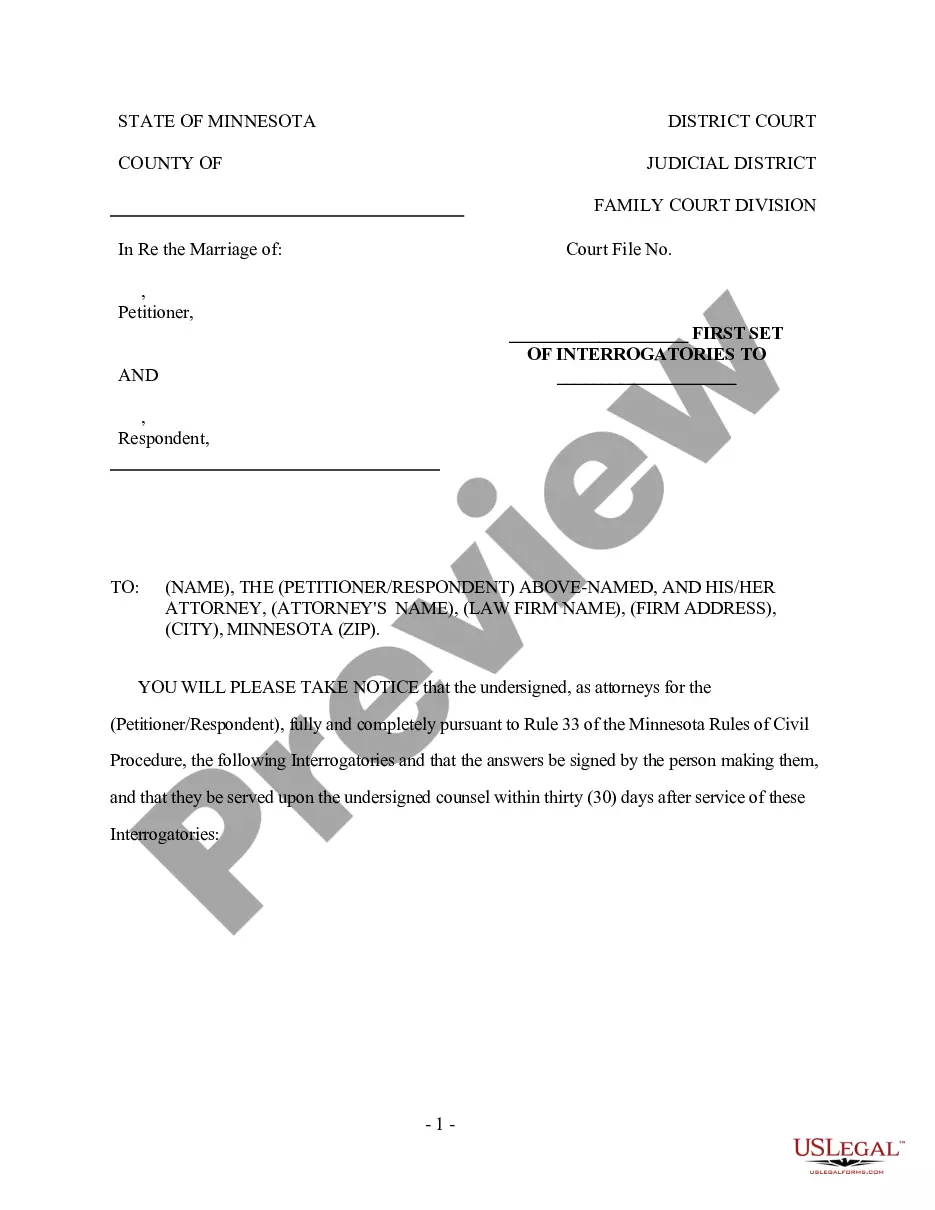
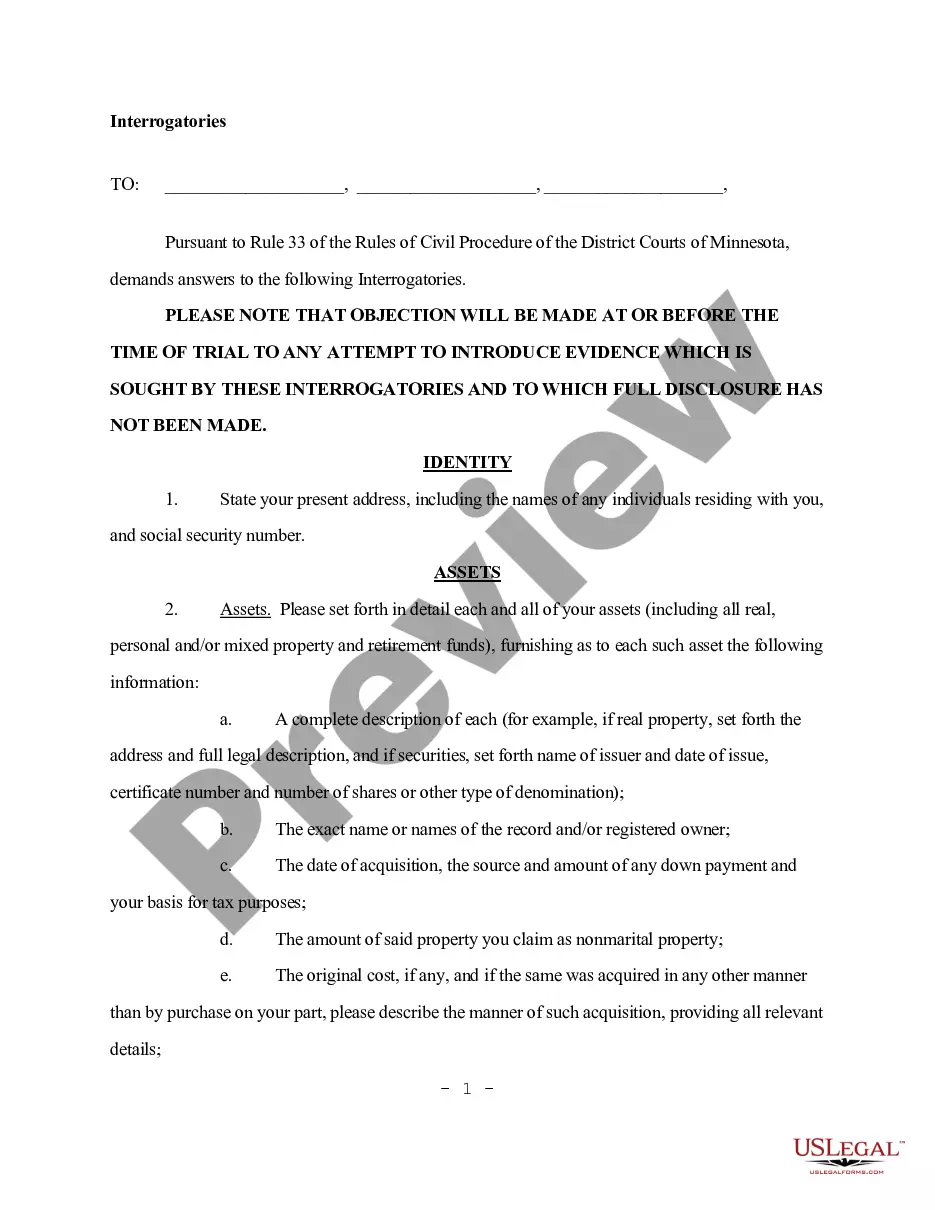
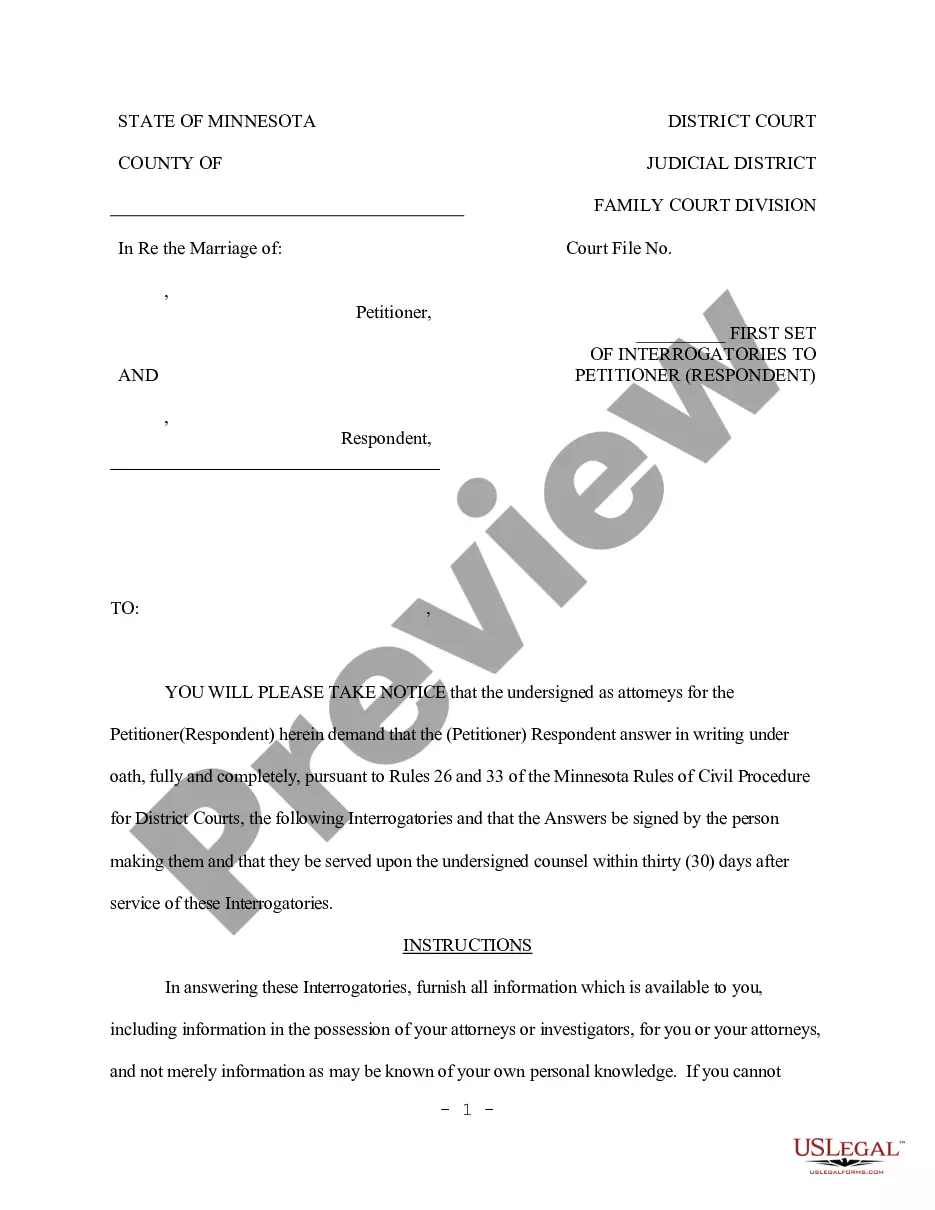
The Discovery - Petitioner's First Set of Interrogatories to Respondent is a legal document used in family court proceedings in Minnesota. This form allows the petitioner to submit a series of questions, known as interrogatories, to the respondent. The purpose is to gather information about various topics, including financial matters, property ownership, and debts, to prepare for court proceedings. Unlike other legal forms that may cater to wider applications, this form is specifically designed for situations involving family law disputes where detail and accuracy regarding the parties' circumstances are crucial.
Main sections of this form
- Legal description of any real estate and ownership interests.
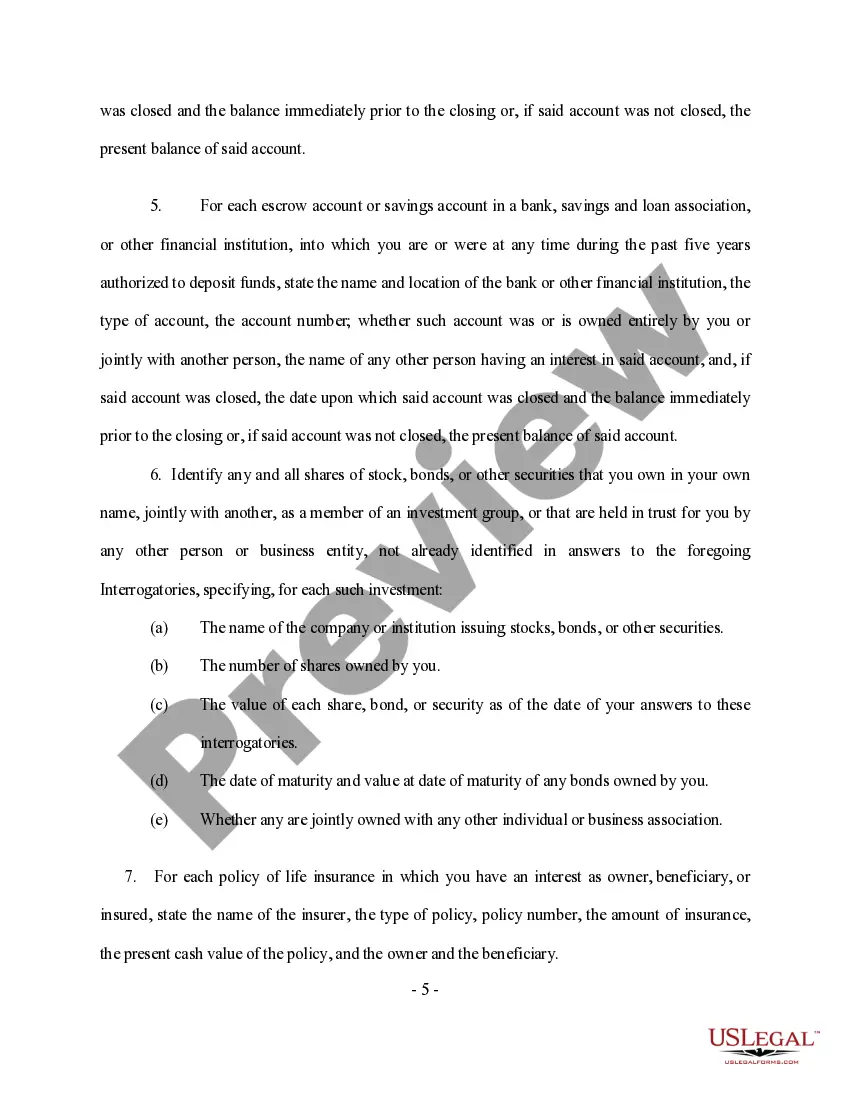
- Details about bank accounts, including account types and balances.
- Information regarding life insurance policies and their cash values.
- Questions regarding entities, such as corporations or partnerships, owned by the respondent.
- Disclosure of debts and the nature of the indebtedness.

When this form is needed
This form is necessary when a petitioner needs to obtain comprehensive information from the respondent during a divorce or family law case in Minnesota. It is typically utilized after a legal petition has been filed and formal discovery has begun. Situations may include dividing assets, determining spousal support, or resolving child custody issues, where full financial transparency is required.
Who should use this form
This form should be used by:
- Petitioners in family court cases seeking financial disclosures from the respondent.
- Individuals involved in divorce proceedings where detailed financial information is necessary.
- Lawyers representing clients in family law cases in Minnesota.
How to prepare this document
- Identify the petitioner and respondent by entering their full names and court file number at the top of the document.
- List all real estate owned by the respondent, providing legal descriptions and ownership details.
- Fill in questions regarding bank accounts, ensuring to detail account types, balances, and whether accounts are jointly held.
- Provide accurate information about any life insurance policies held by the respondent, including policy numbers and cash values.
- Sign the document and ensure it is served to the respondent, allowing forty-five days for a response.__
Is notarization required?
Notarization is generally not required for this form. However, certain states or situations might demand it. You can complete notarization online through US Legal Forms, powered by Notarize, using a verified video call available anytime.
Get your form ready online
Our built-in tools help you complete, sign, share, and store your documents in one place.
Make edits, fill in missing information, and update formatting in US Legal Forms—just like you would in MS Word.
Download a copy, print it, send it by email, or mail it via USPS—whatever works best for your next step.
Sign and collect signatures with our SignNow integration. Send to multiple recipients, set reminders, and more. Go Premium to unlock E-Sign.
If this form requires notarization, complete it online through a secure video call—no need to meet a notary in person or wait for an appointment.
We protect your documents and personal data by following strict security and privacy standards.

Make edits, fill in missing information, and update formatting in US Legal Forms—just like you would in MS Word.

Download a copy, print it, send it by email, or mail it via USPS—whatever works best for your next step.

Sign and collect signatures with our SignNow integration. Send to multiple recipients, set reminders, and more. Go Premium to unlock E-Sign.

If this form requires notarization, complete it online through a secure video call—no need to meet a notary in person or wait for an appointment.

We protect your documents and personal data by following strict security and privacy standards.
Common mistakes to avoid
- Failing to serve the interrogatories within the required timeline.
- Not providing complete or accurate answers to the interrogatories.
- Overlooking the need to attach supporting documents as required.
- Not signing the interrogatories prior to submission.
Benefits of completing this form online
- Immediate access to the form eliminates the need for physical paperwork.
- Easy customization allows users to input their information and details quickly.
- Downloadable format enables users to save and print as needed for court submissions.
- Access to attorney-drafted templates ensures compliance with legal standards.
Legal use & context
- This form is legally recognized in Minnesota and is used primarily in family law disputes.
- Responses to interrogatories may be used as evidence during court proceedings.
- Failure to respond adequately may result in sanctions or unfavorable judgments.
Main things to remember
- The Discovery - Petitioner's First Set of Interrogatories to Respondent is essential for gathering financial information in family law cases in Minnesota.
- Accurate completion and timely submission of this form are crucial for the discovery process.
- This form is tailored to meet Minnesota's legal requirements and facilitate transparency during legal proceedings.
Looking for another form?

Form popularity
FAQ
(1) Number. Unless otherwise stipulated or ordered by the court, a party may serve on any other party no more than 25 written interrogatories, including all discrete subparts.
So, can you refuse to answer interrogatories? The answer is, no, you may not. You must answer a Rule 33 interrogatory within 30 days of being served with it. That answer must either permit inspection of the requested information or object to the production of the information for a specific reason.
Interrogatories are a part of the "discovery" stage of a civil case.During discovery, the parties request and exchange information and documents. Interrogatories and depositions form the bulk of the discovery process. Unlike many legal documents, interrogatories do not need to be filed with the court.
You must answer each interrogatory separately and fully in writing under oath, unless you object to it. You must explain why you object. You must sign your answers and objections.
Personal/Corporate information of opposing party. Identifying information of witnesses. Contact information & background of expert witnesses. Insurance information.
You must answer each interrogatory separately and fully in writing under oath, unless you object to it. You must explain why you object. You must sign your answers and objections.
Your answers to the interrogatories should usually be short, clear, and direct and should answer only the question that is being asked. This is not the time to set out your entire case or defense to the other side. Take the time to make sure your answers are correct and truthful.
Motions to Compel If a party doesn't respond to interrogatories or requests for production, then the party seeking those answers must file a motion to compel with the court. If the court grants the motion to compel, then the party who objected or failed to answer must then do so.