Minnesota Responsive Notice of Motion and Motion in limine
What this document covers
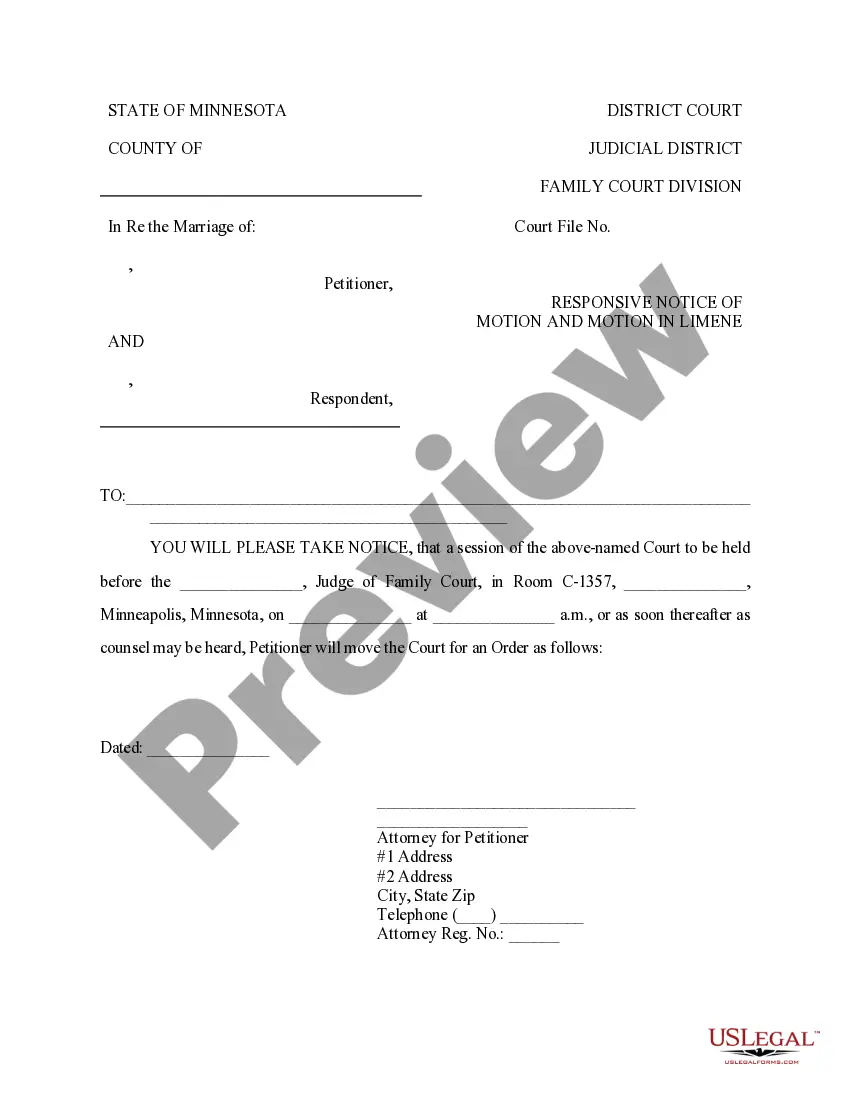
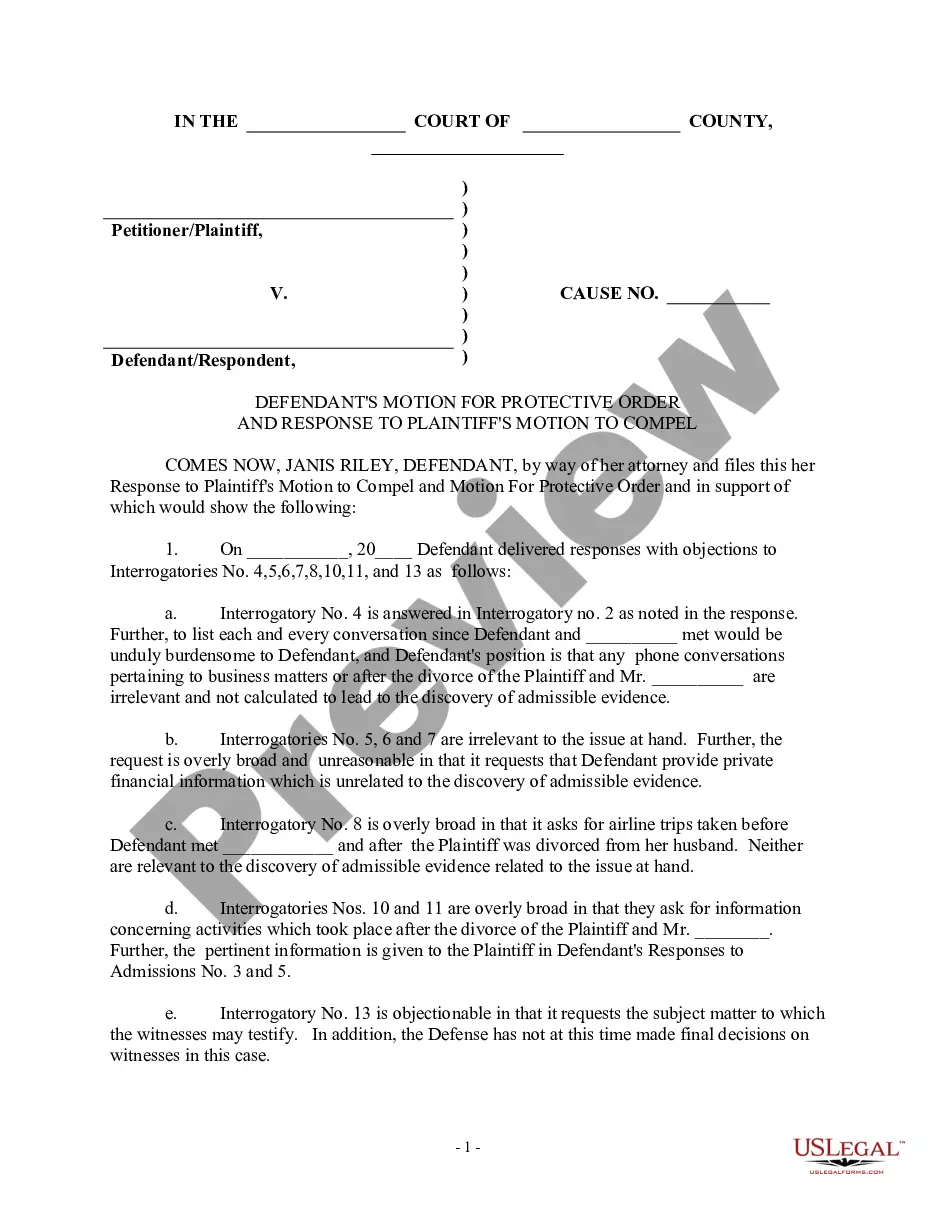
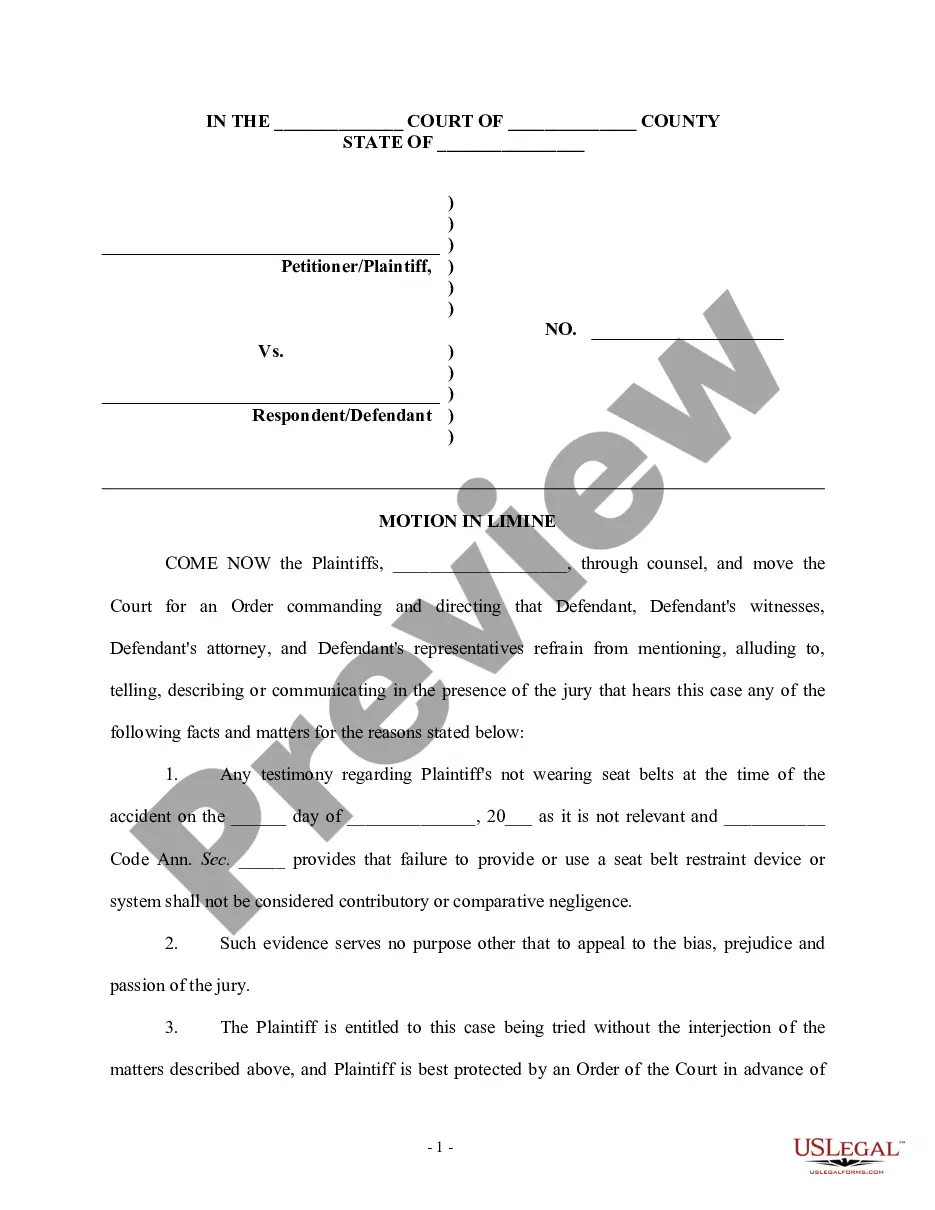
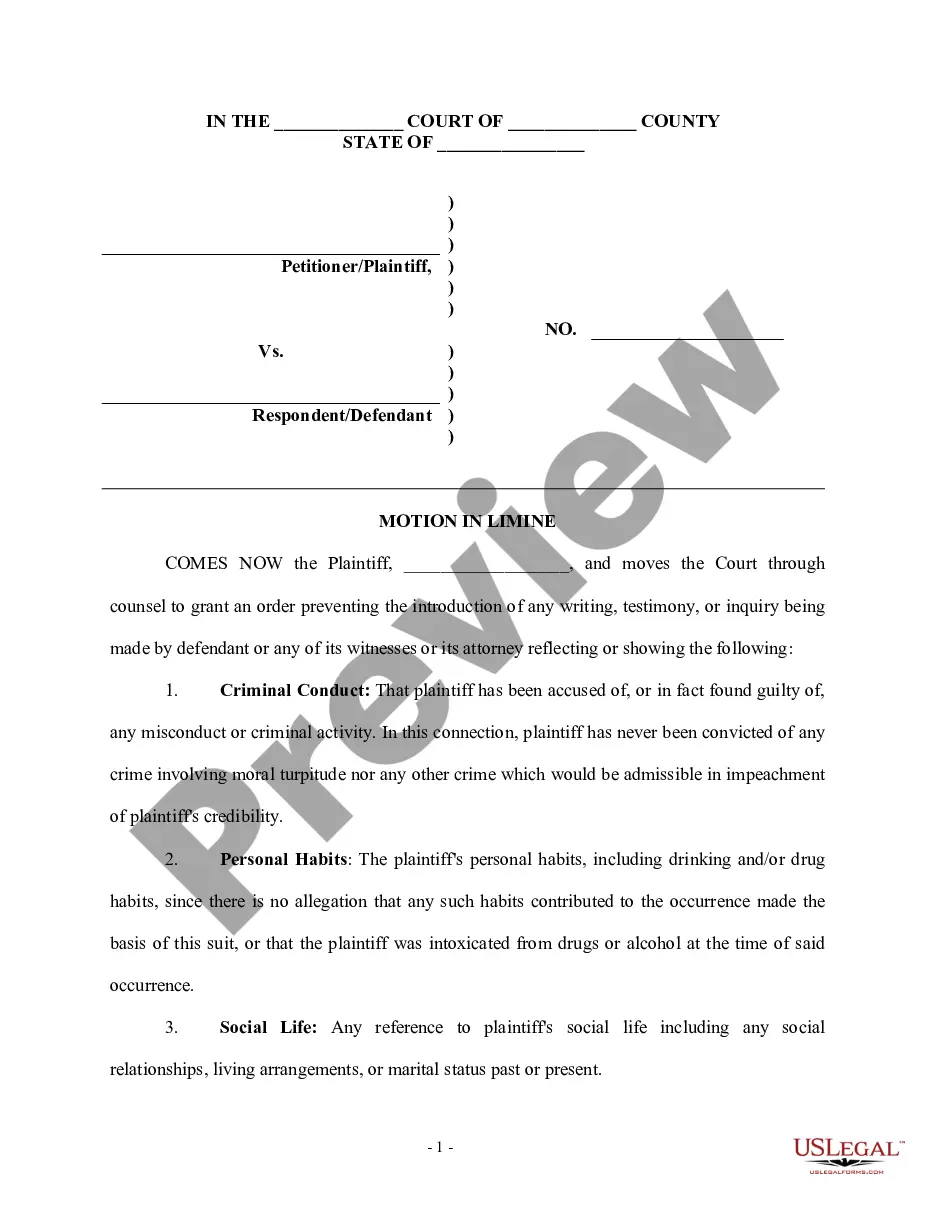
The Responsive Notice of Motion and Motion in Limine is a legal document that notifies all interested parties of a scheduled court session. This form is used when a petitioner wishes to request a specific order from the court regarding the admissibility of certain evidence in a legal proceeding. It is particularly important for ensuring that both sides in a court case are informed and prepared for these motions, distinguishing it from other legal notices that may not involve motions in limine.
What’s included in this form
- Party information: names and details of the parties involved
- Court details: includes the name of the court, judge, and courtroom location
- Date and time: specifies when the court session will occur
- Requested order: a clear statement of the order being requested from the court
- Attorney information: name and contact details of the attorney representing the petitioner
- Signature line: for the attorney to sign and date the document
When this form is needed
This form should be used when a party involved in a legal case needs to inform the court and other parties about a motion they are filing. Common situations include cases related to family law, where specific evidence may need to be excluded from a trial, or when a party wants to limit the scope of evidence presented. It ensures that everyone involved understands the nature of the motion and can prepare accordingly.
Who should use this form
- Petitioners seeking to file a motion in limine
- Individuals or attorneys involved in a legal case
- Those requiring court permission to restrict the introduction of certain evidence
How to complete this form
- Fill in the names and contact details of all parties involved in the case.
- Specify the details of the court where the motion will be heard, including the judge's name.
- Enter the date and time of the scheduled court session.
- Clearly state the order you are requesting from the court concerning the evidence.
- Provide the attorney's name, address, and registration number.
- Sign and date the document.
Notarization guidance
This form does not typically require notarization to be legally valid. However, some jurisdictions or document types may still require it. US Legal Forms provides secure online notarization powered by Notarize, available 24/7 for added convenience.
Get your form ready online
Our built-in tools help you complete, sign, share, and store your documents in one place.
Make edits, fill in missing information, and update formatting in US Legal Forms—just like you would in MS Word.
Download a copy, print it, send it by email, or mail it via USPS—whatever works best for your next step.
Sign and collect signatures with our SignNow integration. Send to multiple recipients, set reminders, and more. Go Premium to unlock E-Sign.
If this form requires notarization, complete it online through a secure video call—no need to meet a notary in person or wait for an appointment.
We protect your documents and personal data by following strict security and privacy standards.

Make edits, fill in missing information, and update formatting in US Legal Forms—just like you would in MS Word.

Download a copy, print it, send it by email, or mail it via USPS—whatever works best for your next step.

Sign and collect signatures with our SignNow integration. Send to multiple recipients, set reminders, and more. Go Premium to unlock E-Sign.

If this form requires notarization, complete it online through a secure video call—no need to meet a notary in person or wait for an appointment.

We protect your documents and personal data by following strict security and privacy standards.
Common mistakes to avoid
- Failing to provide complete contact information for all parties
- Leaving out the motion's requested order details
- Incorrectly specifying the date and time of the court hearing
- Not signing the document before submission to the court
Benefits of completing this form online
- Convenience of downloading the form immediately
- Editability allows customization to fit specific case details
- Access to professionally drafted templates ensures legal compliance
- Saves time compared to drafting from scratch
Legal use & context
- The form must be properly filed with the court to ensure that the motion is heard.
- Correct completion is crucial for the enforceability of the motion.
- Understanding the context of motions in limine can significantly impact trial procedures.
Quick recap
- The Responsive Notice of Motion and Motion in Limine is essential for addressing preliminary legal issues before trial.
- Accurate completion of the form is necessary for it to be effective in court.
- Users should consult local regulations when completing and filing the form.
Looking for another form?
Form popularity
FAQ
Rule 609 in Minnesota addresses the admissibility of evidence regarding a witness's prior convictions. This rule outlines the circumstances under which such evidence may be introduced, aiming to maintain fairness in legal proceedings. When filing a Minnesota Responsive Notice of Motion and Motion in limine, it is important to understand Rule 609 to effectively challenge the use of potentially damaging evidence.
You should file motions in limine before the trial begins, typically during pre-trial conferences or hearings. Doing so allows the court to consider and rule on the admissibility of evidence in advance, ensuring a smoother trial process. A Minnesota Responsive Notice of Motion and Motion in limine can help you establish the necessary groundwork for your case.
A motion in limine in Minnesota is a legal request to limit or exclude certain evidence before a trial starts. This motion aims to prevent any unfair prejudice or confusion that might arise from the introduction of specific evidence during the trial. Filing a Minnesota Responsive Notice of Motion and Motion in limine is essential for safeguarding your interests in court.
Rule 77.04 in Minnesota governs the procedures for filing motions, including motions in limine. This rule requires parties to provide notice to the opposing party and the court, ensuring transparency in the legal process. A Minnesota Responsive Notice of Motion and Motion in limine must adhere to these guidelines to be effective and properly considered by the court.
The most common motion in limine often seeks to exclude evidence related to a party's prior criminal record. This type of evidence can unfairly sway the jury's opinion, making it crucial to address it before the trial begins. Utilizing a Minnesota Responsive Notice of Motion and Motion in limine can help prevent such bias in your case.
The purpose of a motion in limine is to request that the court exclude certain evidence from being presented during the trial. This motion helps to ensure a fair trial by preventing prejudicial or irrelevant information from influencing the jury. By filing a Minnesota Responsive Notice of Motion and Motion in limine, you can protect your case from potentially damaging evidence.
To write a response to a motion in limine, begin by reviewing the motion thoroughly to understand its arguments. Structure your response by addressing each point made in the motion, providing counterarguments and supporting evidence where applicable. Be concise yet thorough, and focus on the legal standards relevant to the motion. For additional support in crafting a solid response, US Legal provides helpful templates for Minnesota Responsive Notice of Motion and Motion in limine to guide you.
A motion in limine typically includes a title, a statement of facts, legal arguments, and a request for relief. You should also provide a supporting memorandum that outlines the reasons for your motion and any relevant case law. Each component should be clearly articulated to ensure that the court understands your position. For comprehensive guidance and templates, consider utilizing the resources available on the US Legal platform for Minnesota Responsive Notice of Motion and Motion in limine.
When formatting a motion in limine, ensure that the document is typed and double-spaced, with margins set to one inch. Include a caption at the top that specifies the court, the parties involved, and the title of the motion. Use clear headings and subheadings to organize your content, making it easy for the court to follow your argument. US Legal provides formatting guidelines and templates tailored for the Minnesota Responsive Notice of Motion and Motion in limine to help you get it right.
To fill out a notice of motion, start by clearly stating the title of the document at the top. Include the case name, court information, and the specific relief you are seeking. Be sure to detail the grounds for your motion and provide any relevant facts. You can simplify this process by using the US Legal platform, which offers templates specifically designed for Minnesota Responsive Notice of Motion.