Minnesota Summons - for service by alternative means
About this form
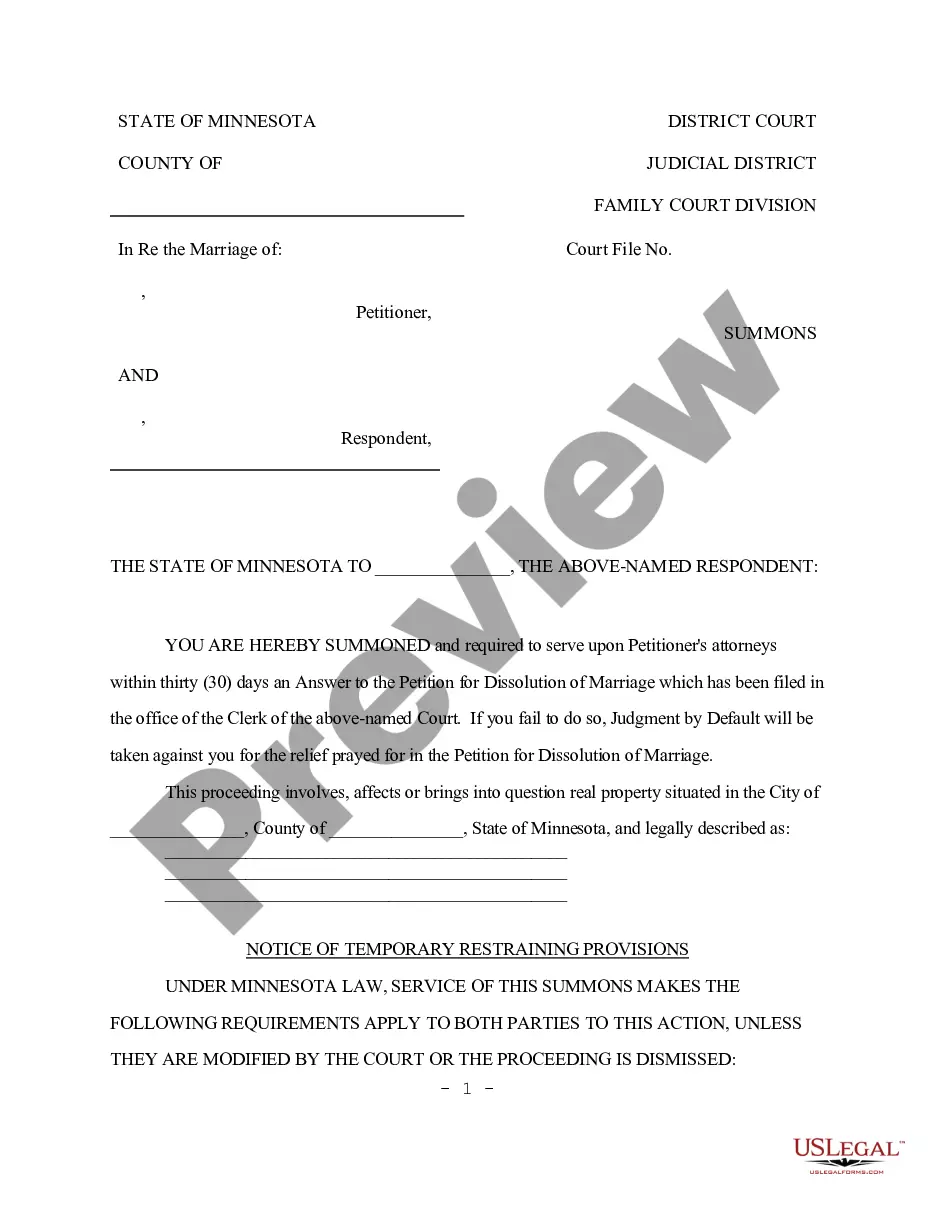
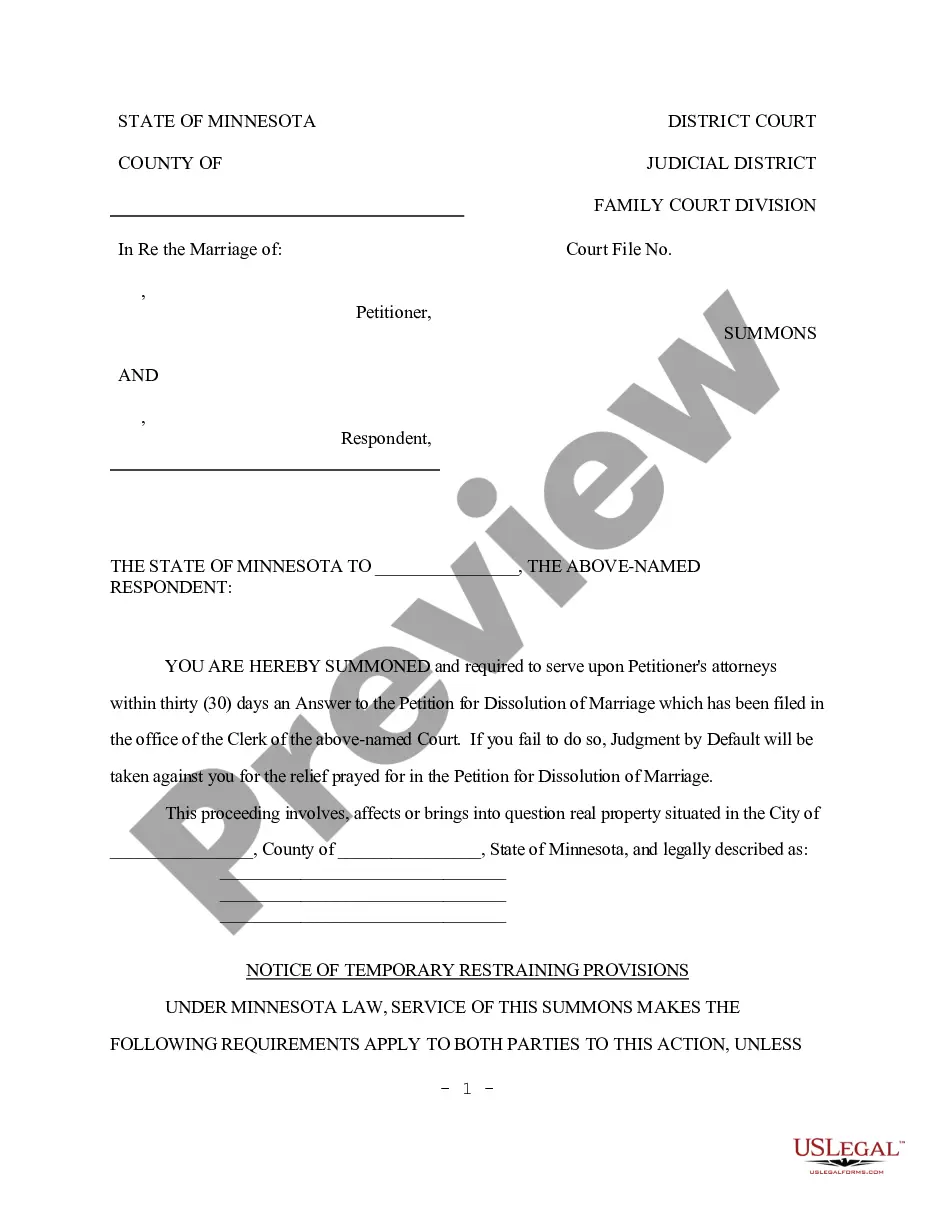
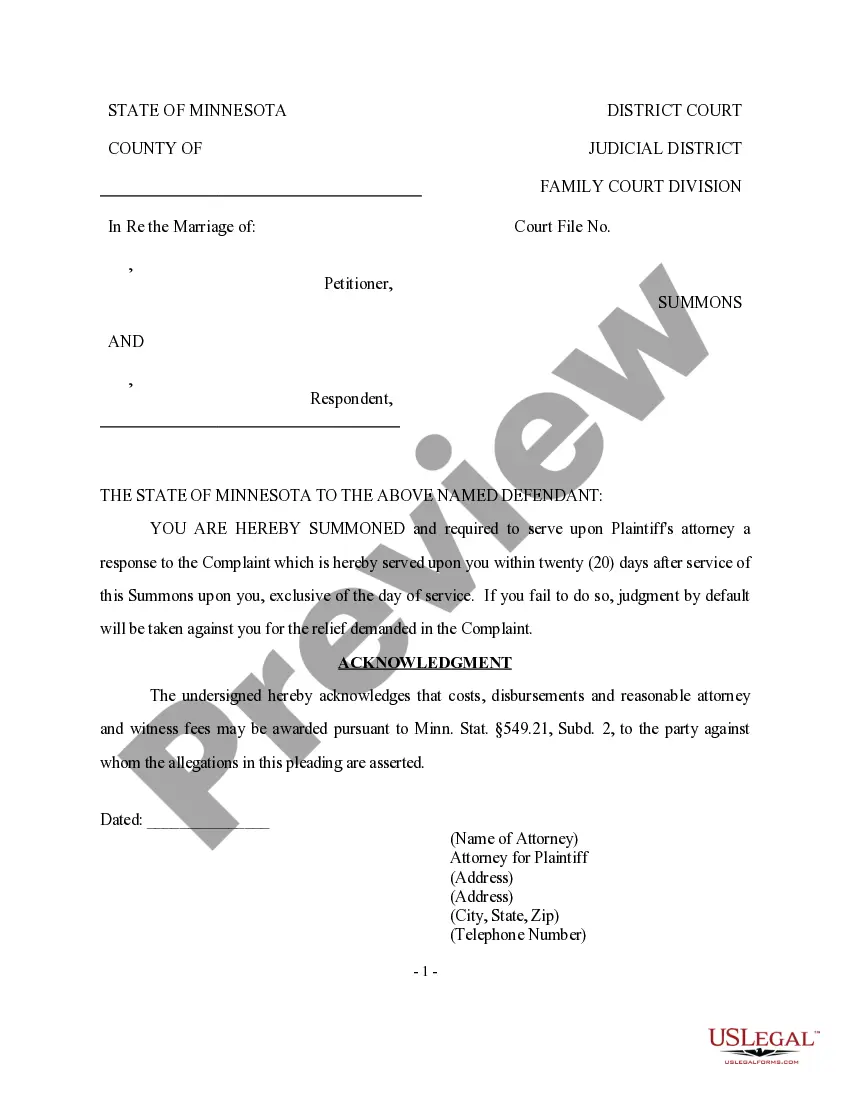
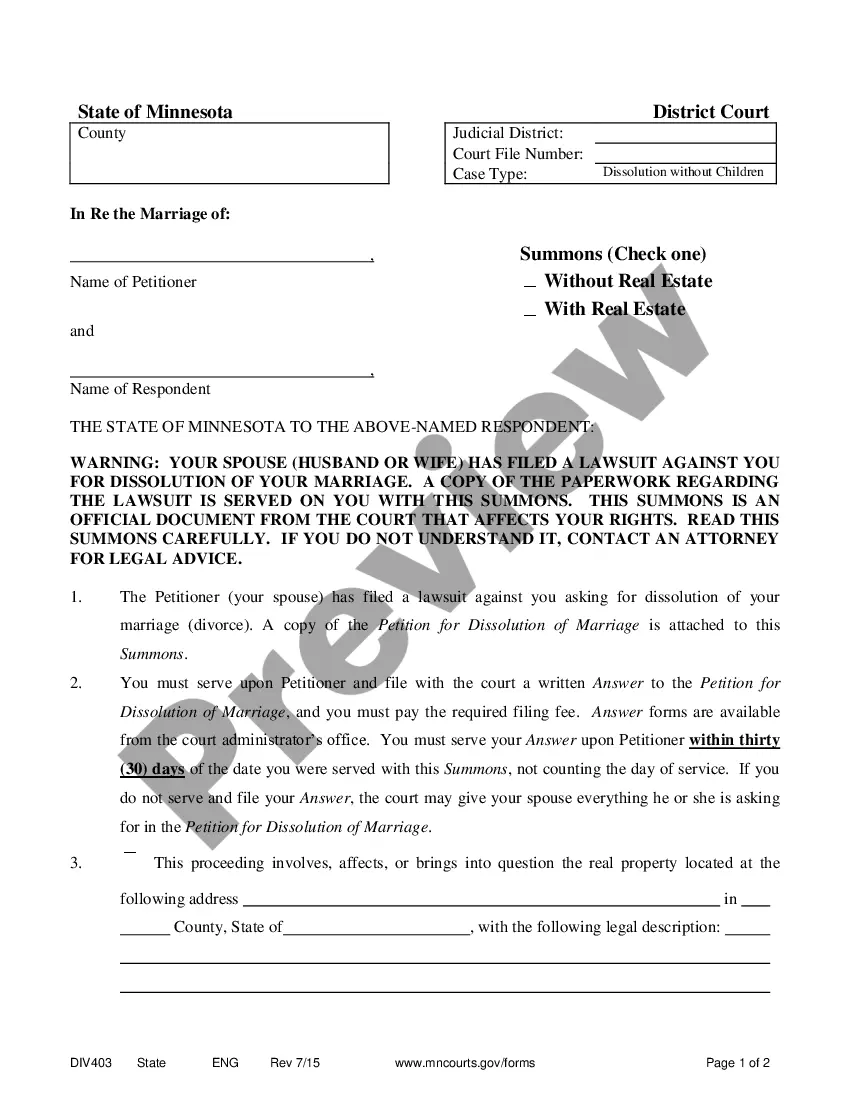
The Summons for service by alternative means is a legal document used in a dissolution of marriage proceeding. Its primary purpose is to notify the respondent that they must respond to the petition for divorce within a specified timeframe. This form differs from standard summonses by allowing for alternative methods of service when traditional methods cannot be employed effectively.
Main sections of this form
- Identification of the respondent and the court.
- Instructions for the respondent to answer the dissolution petition within thirty days.
- A statement regarding the consequences of failing to respond, resulting in a default judgment.
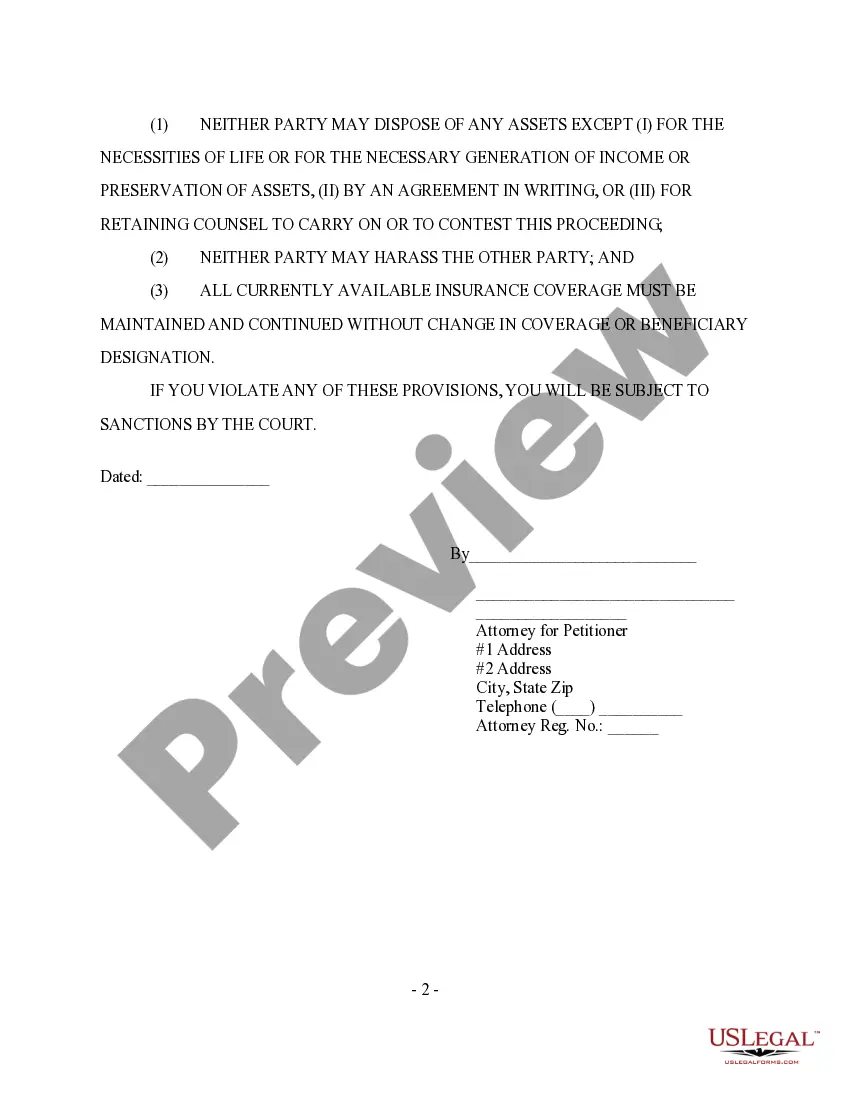
- Temporary restraining provisions affecting both parties during the proceedings.
- Contact information for the petitioner's attorney including address and registration number.
Situations where this form applies
This form should be used when a respondent in a divorce case cannot be served through traditional means, such as personal service. Situations may include the respondent being unreachable or refusing to accept a summons. Utilizing this form ensures that the legal process can continue without unnecessary delays.
Who can use this document
- Petitioners seeking dissolution of marriage when standard service is not possible.
- Respondents who have been notified of legal proceedings through alternative means.
- Attorneys representing clients in family law cases involving divorce.
Completing this form step by step
- Identify the parties involved by entering the names of the petitioner and respondent.
- Specify the court's name and location.
- Fill in the necessary dates, including the date of issuance of the summons.
- Detail the legal description of the property involved, if applicable.
- Add the attorney's contact information, including the registration number.
Is notarization required?
In most cases, this form does not require notarization. However, some jurisdictions or signing circumstances might. US Legal Forms offers online notarization powered by Notarize, accessible 24/7 for a quick, remote process.
Get your form ready online
Our built-in tools help you complete, sign, share, and store your documents in one place.
Make edits, fill in missing information, and update formatting in US Legal Forms—just like you would in MS Word.
Download a copy, print it, send it by email, or mail it via USPS—whatever works best for your next step.
Sign and collect signatures with our SignNow integration. Send to multiple recipients, set reminders, and more. Go Premium to unlock E-Sign.
If this form requires notarization, complete it online through a secure video call—no need to meet a notary in person or wait for an appointment.
We protect your documents and personal data by following strict security and privacy standards.

Make edits, fill in missing information, and update formatting in US Legal Forms—just like you would in MS Word.

Download a copy, print it, send it by email, or mail it via USPS—whatever works best for your next step.

Sign and collect signatures with our SignNow integration. Send to multiple recipients, set reminders, and more. Go Premium to unlock E-Sign.

If this form requires notarization, complete it online through a secure video call—no need to meet a notary in person or wait for an appointment.

We protect your documents and personal data by following strict security and privacy standards.
Avoid these common issues
- Failing to serve the summons within the prescribed timeline.
- Neglecting to provide complete and accurate information about the parties.
- Forgetting to include any necessary attachments or legal descriptions of property.
- Overlooking the need to maintain current insurance coverage as stipulated.
Advantages of online completion
- Convenient access to legal documents without needing to visit a law office.
- Editable templates that allow for easier customization to your specific situation.
- Reliable forms drafted by licensed attorneys to ensure legal compliance.
Looking for another form?

Form popularity
FAQ
Rule 69 in Minnesota governs the enforcement of judgments and the procedures for serving summonses related to such enforcement. It outlines the methods by which a plaintiff can enforce their judgment, which may include using a Minnesota Summons - for service by alternative means. Familiarizing yourself with this rule is essential for effectively navigating the enforcement process in the Minnesota legal system.
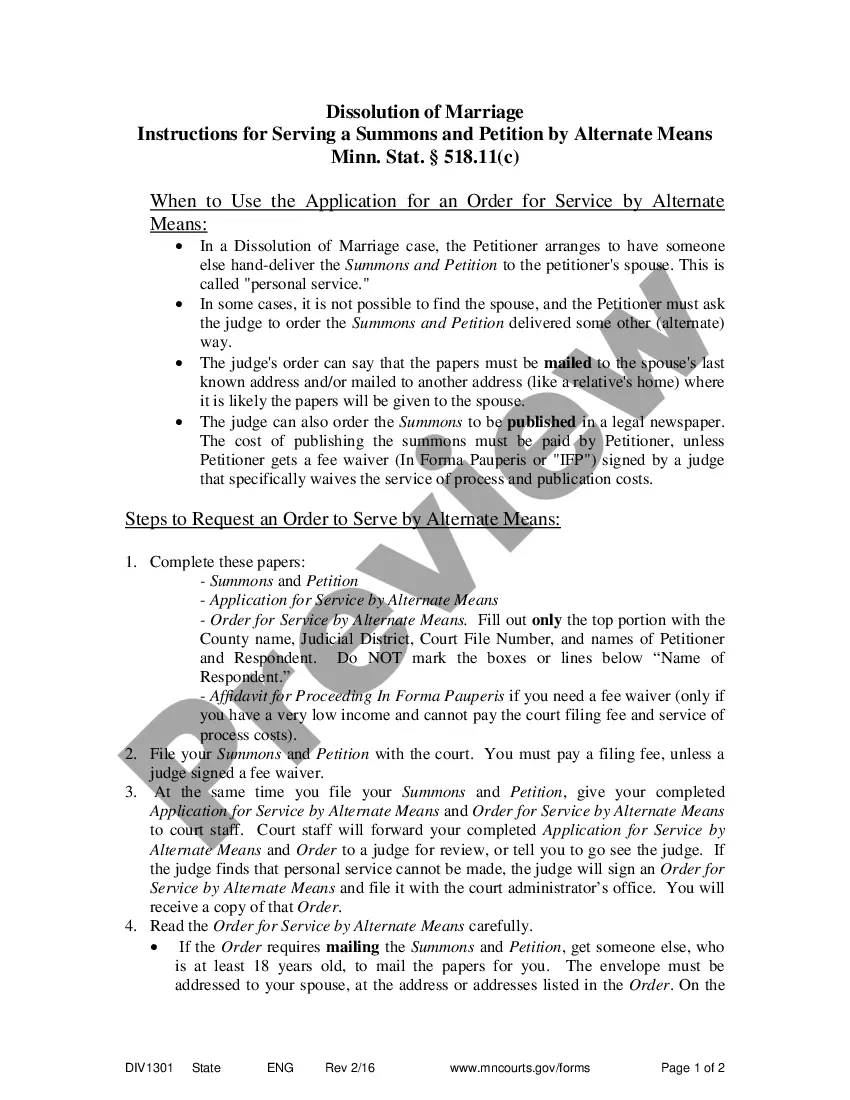
Substitute service refers to delivering a summons when the individual cannot be directly served. In such cases, the Minnesota Summons - for service by alternative means allows for options like leaving documents with a household member or posting them in a public place. This ensures that the person is still informed about legal proceedings, even if they are not physically present.
In Minnesota, there are two main types of summons: the summons for civil cases and the summons for criminal cases. The civil summons notifies the defendant about a lawsuit, while the criminal summons informs an individual of criminal charges against them. Understanding these distinctions is crucial when preparing your Minnesota Summons - for service by alternative means, as the format and requirements may differ.
Serving someone who is avoiding you can be challenging. You might consider using alternative methods like a Minnesota Summons - for service by alternative means. This process allows you to serve documents through mail, publication, or other methods approved by the court. By utilizing these options, you can ensure that the individual receives the summons even if they are hard to reach.
A summons for substituted service is a legal method used when the intended recipient cannot be located for direct service. This approach allows you to serve the summons to someone else, like a family member or a neighbor, who can then inform the recipient. This ensures that the legal process continues despite challenges in delivering documents directly. If you're dealing with Minnesota Summons - for service by alternative means, US Legal Forms can guide you through this procedure.
Serving a summons in Minnesota requires delivering the document to the intended recipient in accordance with local rules. You can do this in person, by mail, or through alternative means if traditional methods are unfeasible. Properly documenting the service is essential to ensure the legal process proceeds without delays. For Minnesota Summons - for service by alternative means, US Legal Forms can simplify this entire process.
To serve someone's papers in Minnesota, you must first prepare the legal documents accurately. You can then choose to serve them personally, through mail, or by employing alternative methods as permitted by the court. It's important to follow the guidelines set by the Minnesota Rules of Civil Procedure to avoid complications. For a streamlined experience with Minnesota Summons - for service by alternative means, consider using US Legal Forms.
Rule 4.03 in Minnesota outlines the procedures for serving a summons and complaint when traditional methods are impractical. This rule allows for alternative means such as mailing or electronic service, which can save time and resources. Understanding this rule is crucial for ensuring compliance with legal requirements. If you need assistance with Minnesota Summons - for service by alternative means, US Legal Forms can provide the necessary resources.
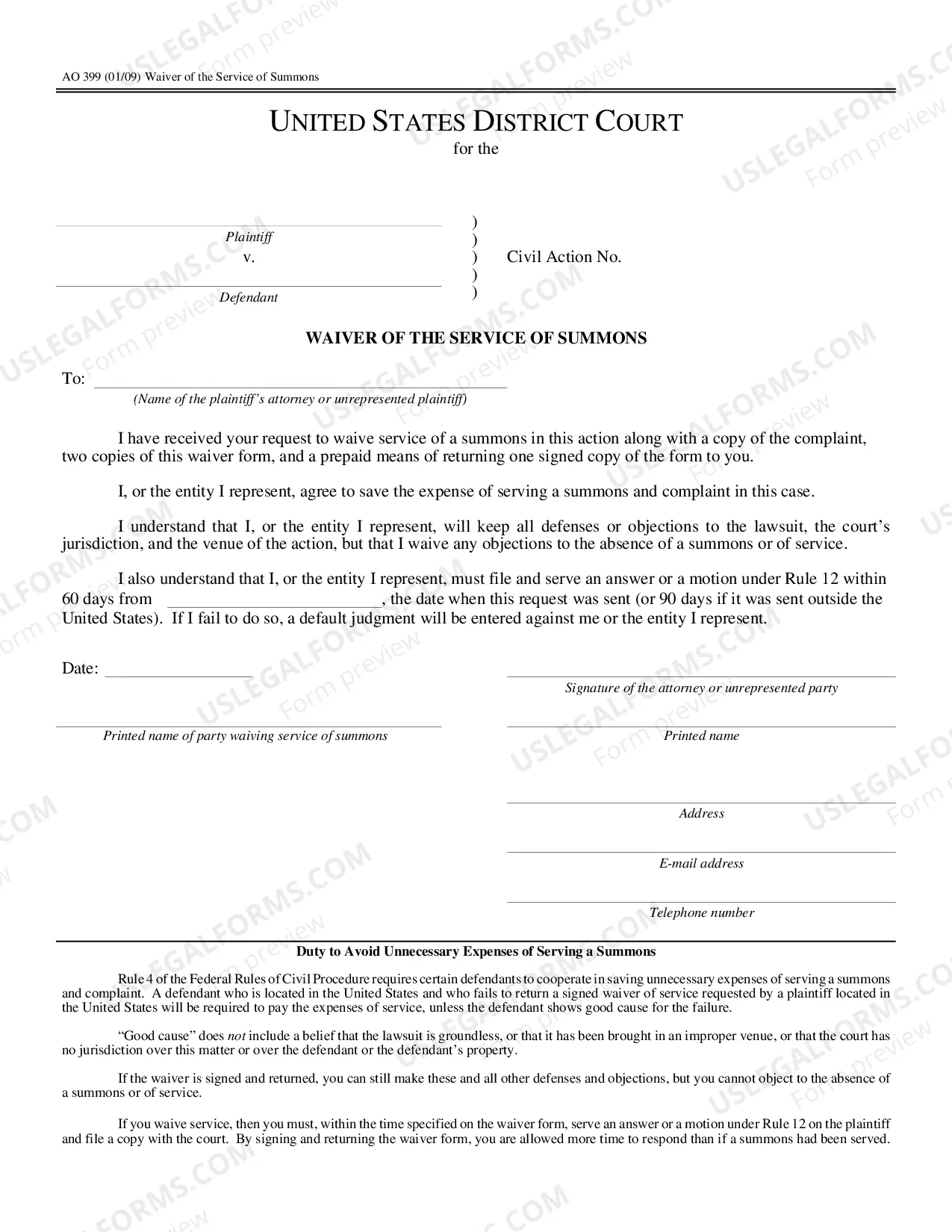
A waiver of service of summons is a legal document where a defendant agrees to forgo formal service of the summons. This means the defendant acknowledges receiving the documentation without needing a formal delivery. By signing this waiver, a defendant can expedite the legal process, making it smoother for both parties involved. If you're navigating Minnesota Summons - for service by alternative means, this waiver can be a useful tool.
Serving a summons involves delivering legal documents to inform a person about a legal action against them. In Minnesota, this process ensures that individuals receive proper notice of a lawsuit. You can serve a summons in person, by mail, or through alternative means, depending on the circumstances. For efficient handling of Minnesota Summons - for service by alternative means, consider using platforms like US Legal Forms.