Minnesota Temporary Order Pending Final Judgment - Based upon Written Stipulation of the Parties
Overview of this form
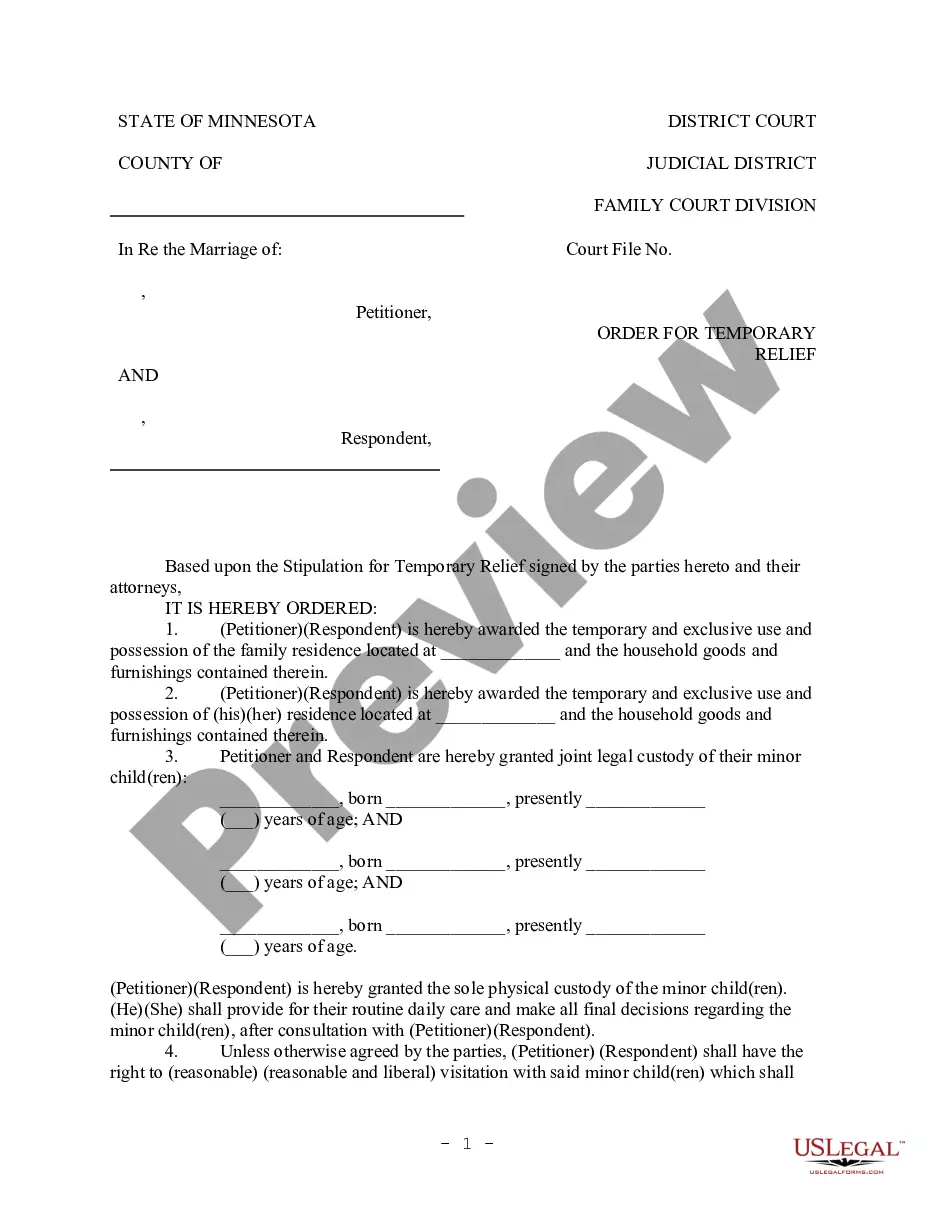
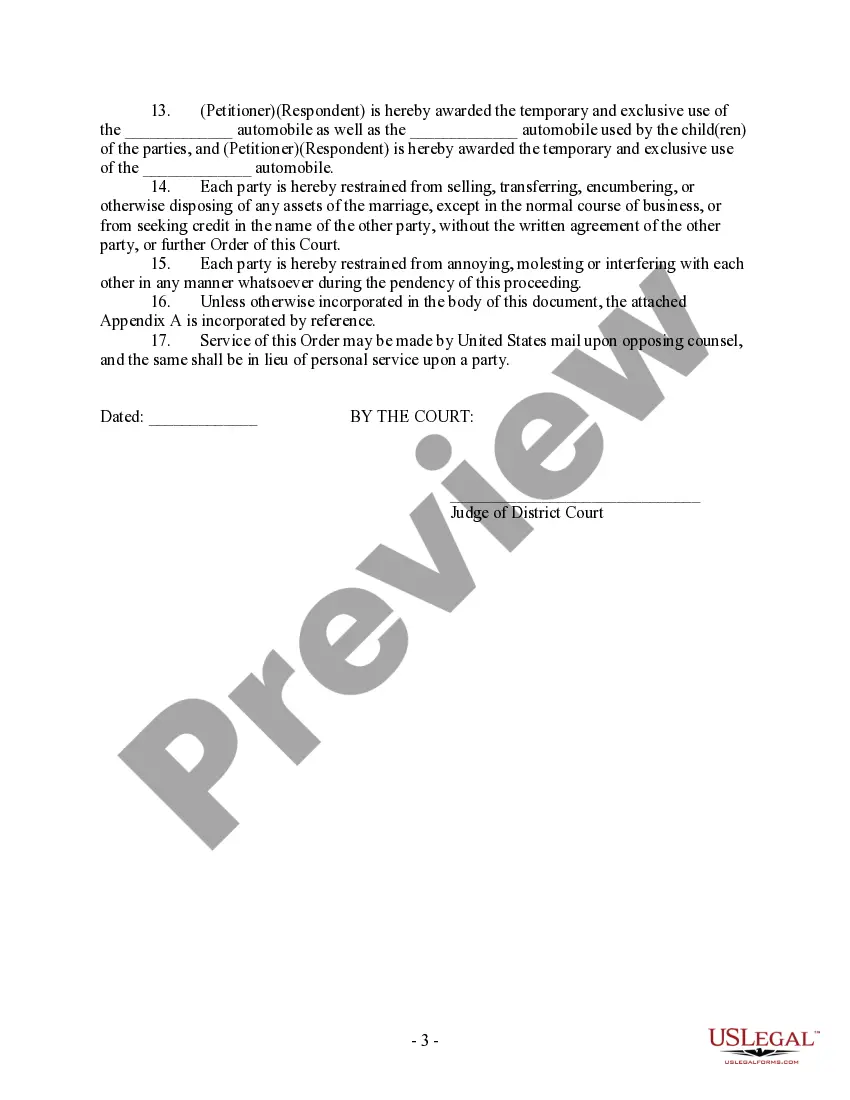
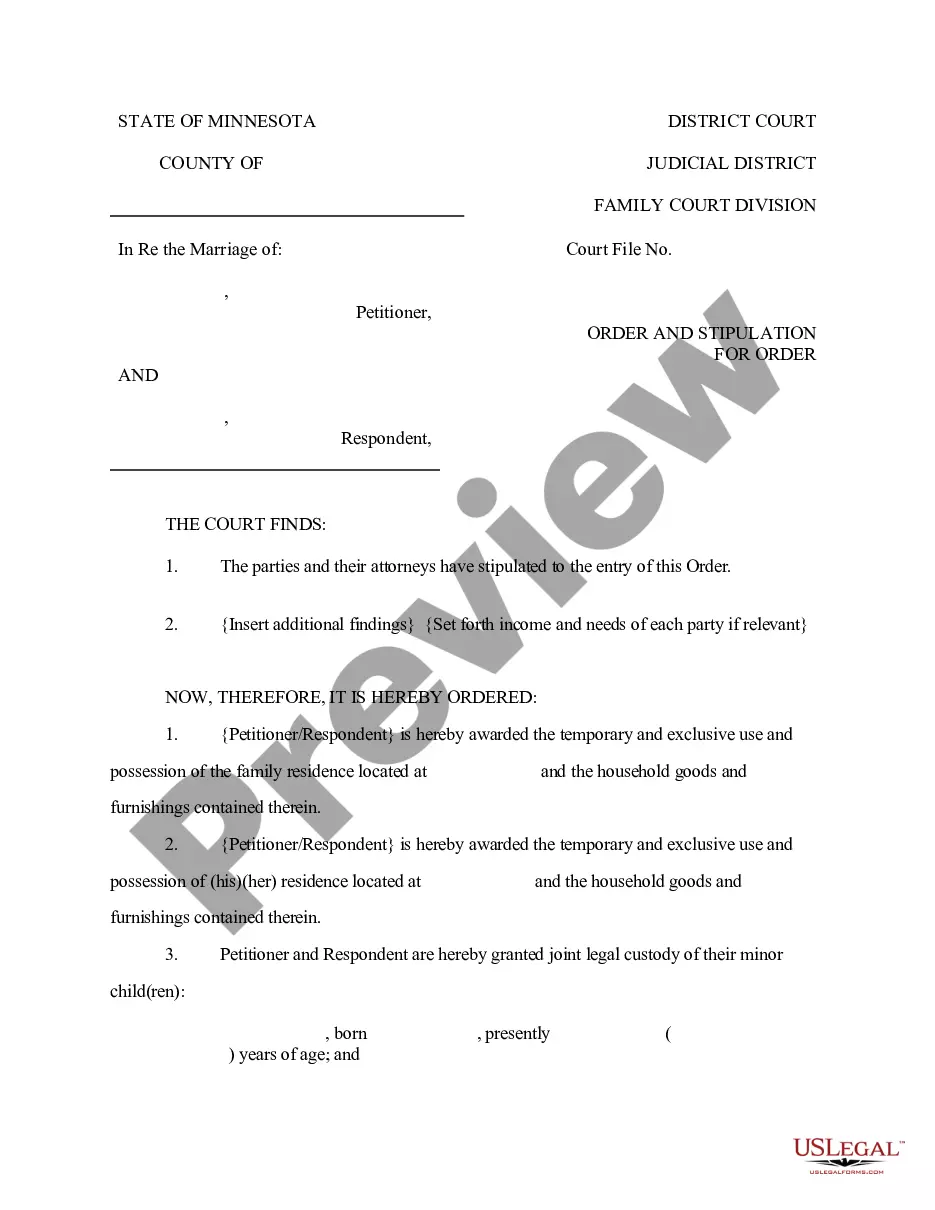
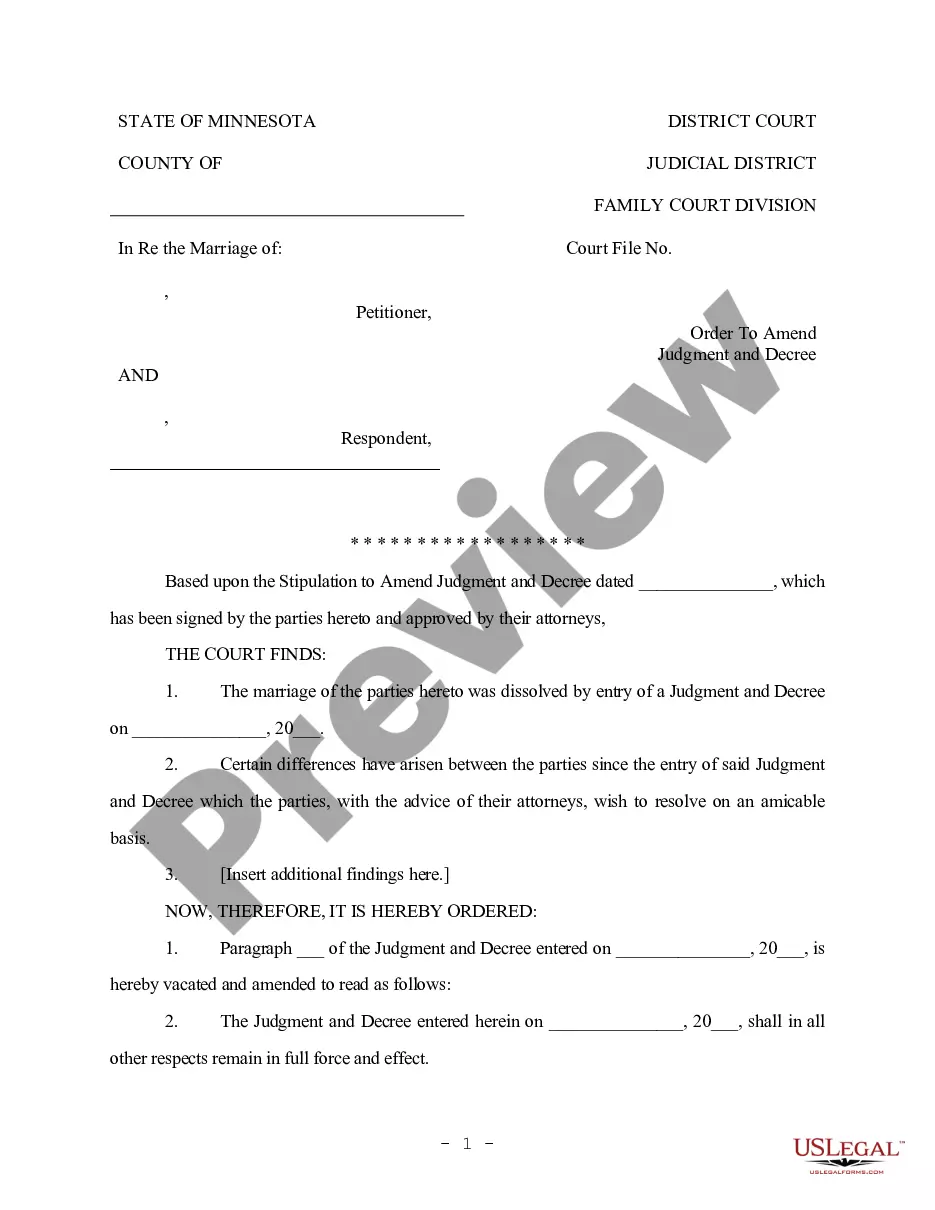
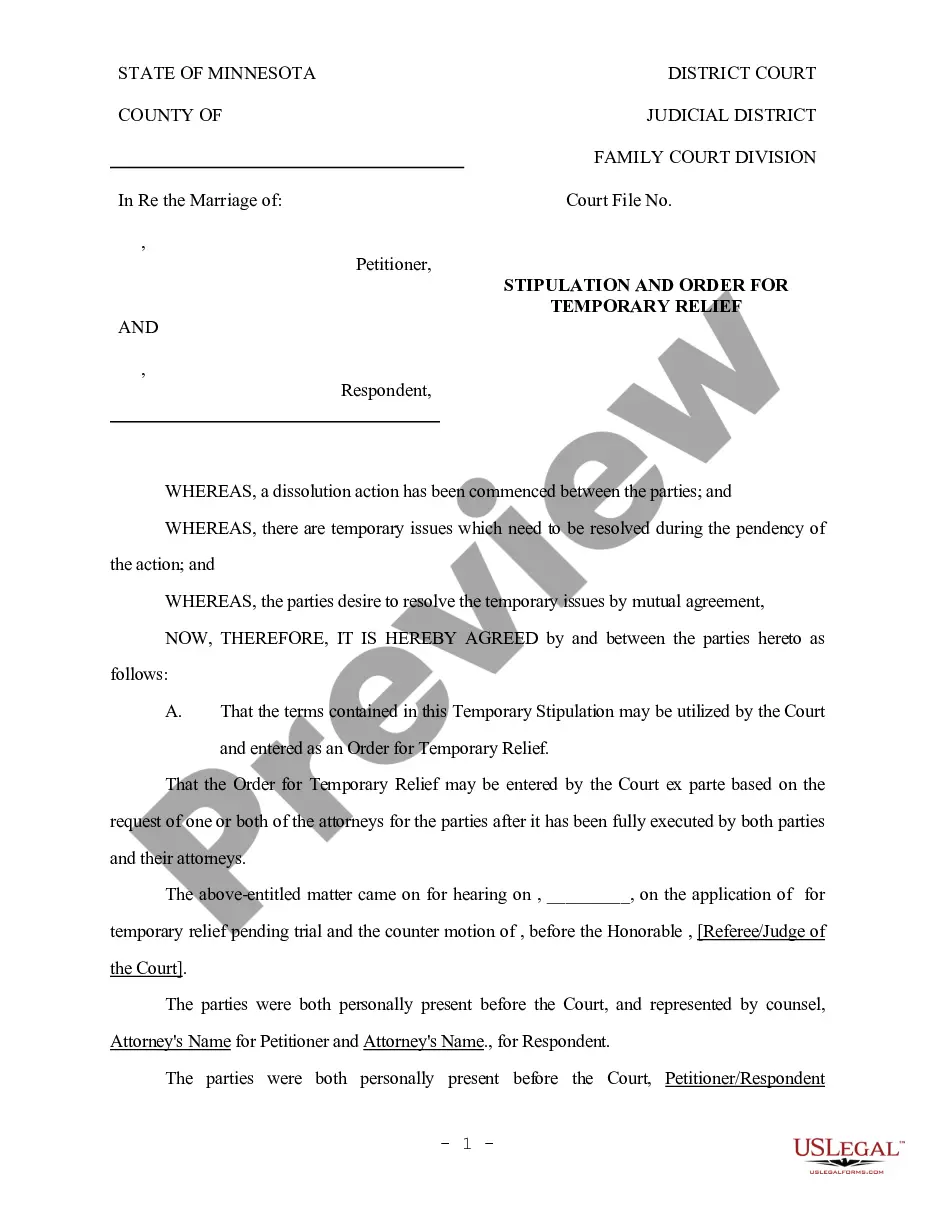
This form is a Temporary Order Pending Final Judgment, which provides immediate relief during a dissolution of marriage proceeding. It differs from other forms by setting specific temporary arrangements regarding custody, support, visitation, and the use of shared assets while the divorce is being finalized.
Main sections of this form
- Award of temporary and exclusive possession of the family residence.
- Granting of joint legal custody and sole physical custody of minor child(ren).
- Defined visitation rights for the non-custodial parent.
- Financial obligations, including child support and temporary maintenance.
- Division of tax refunds and responsibilities for debts incurred before the court's ruling.
- Restrictions on asset transfers and interactions between the parties.

When to use this document
This form should be used when parties involved in a divorce or legal separation need immediate arrangements regarding child custody, visitation, and support before a final judgment is made. It is particularly useful in cases where one party may need clear guidelines for the care and support of minor children while the legal process is ongoing.
Who this form is for
- Couples undergoing divorce proceedings.
- Parents seeking temporary custody and support arrangements.
- Individuals requiring legal documentation for shared assets during divorce.
- Attorneys representing clients in family law cases.
How to complete this form
- Identify the petitioner and respondent by entering their names and contact information.
- Specify the family residence and any additional properties involved.
- Fill in details about the minor child(ren), including names and birthdates.
- Outline the visitation schedule and child support amounts based on your agreement.
- List any provisions for the division of tax refunds and payment responsibilities for existing debts.
Notarization guidance
In most cases, this form does not require notarization. However, some jurisdictions or signing circumstances might. US Legal Forms offers online notarization powered by Notarize, accessible 24/7 for a quick, remote process.
Get your form ready online
Our built-in tools help you complete, sign, share, and store your documents in one place.
Make edits, fill in missing information, and update formatting in US Legal Forms—just like you would in MS Word.
Download a copy, print it, send it by email, or mail it via USPS—whatever works best for your next step.
Sign and collect signatures with our SignNow integration. Send to multiple recipients, set reminders, and more. Go Premium to unlock E-Sign.
If this form requires notarization, complete it online through a secure video call—no need to meet a notary in person or wait for an appointment.
We protect your documents and personal data by following strict security and privacy standards.

Make edits, fill in missing information, and update formatting in US Legal Forms—just like you would in MS Word.

Download a copy, print it, send it by email, or mail it via USPS—whatever works best for your next step.

Sign and collect signatures with our SignNow integration. Send to multiple recipients, set reminders, and more. Go Premium to unlock E-Sign.

If this form requires notarization, complete it online through a secure video call—no need to meet a notary in person or wait for an appointment.

We protect your documents and personal data by following strict security and privacy standards.
Common mistakes
- Failing to provide accurate names and ages of the children involved.
- Not specifying clear visitation schedules or financial obligations.
- Overlooking the need for both parties to sign the agreement.
Benefits of using this form online
- Quick and easy access to a professionally drafted legal document.
- Edit and customize the form to fit your specific situation.
- Downloadable format allows for instant use and printing.
Legal use & context
- This form serves as a legally binding agreement until a final judgment is issued.
- It establishes temporary custody and support arrangements that the court will recognize.
- Failure to comply with the orders specified in this form can lead to legal consequences.
Key takeaways
- The form provides essential temporary relief in family law cases.
- It addresses custody, visitation, and financial obligations that need urgent attention during a divorce.
- Ensure all required sections are completed accurately to avoid delays or legal issues.
Looking for another form?
Form popularity
FAQ
Rule of Practice 521 in Minnesota governs the procedures for temporary orders in family law cases. This rule specifically addresses how parties can seek temporary orders pending a final judgment based on a written stipulation. Understanding this rule is essential for ensuring that your stipulation aligns with the legal requirements for a Minnesota Temporary Order Pending Final Judgment - Based upon Written Stipulation of the Parties. For further assistance, consider using USLegalForms to access the necessary legal information and templates.
To write a stipulation and order, you first need to clearly outline the agreement between the parties involved. Begin by stating the purpose of the stipulation, then include specific terms that both parties have agreed upon. Ensure that the document is formatted properly, includes signatures from both parties, and is aligned with the Minnesota Temporary Order Pending Final Judgment - Based upon Written Stipulation of the Parties. Utilizing resources like USLegalForms can simplify this process, providing templates to guide you.
Obtaining temporary custody can be a straightforward process, especially if you present a solid case. Courts typically focus on the child's best interests when considering requests for a Minnesota Temporary Order Pending Final Judgment - Based upon Written Stipulation of the Parties. With clear documentation and a well-structured application, you can enhance your chances of success. US Legal Forms provides resources that simplify the paperwork and help you navigate the legal requirements effectively.
The time it takes to secure a temporary order can vary, but generally, you can expect a response within a few weeks after filing. Factors that can influence this timeline include the court's caseload and the complexity of your case. For those seeking a Minnesota Temporary Order Pending Final Judgment - Based upon Written Stipulation of the Parties, using US Legal Forms can help you prepare your documents efficiently, potentially expediting the process.
To obtain a temporary custody order in Minnesota, you should start by visiting your local family court. The court provides the necessary forms and guidance for filing a Minnesota Temporary Order Pending Final Judgment - Based upon Written Stipulation of the Parties. Additionally, you can streamline the process by utilizing resources like US Legal Forms, which offers templates and support for your specific situation.
A motion for a temporary order is a formal request to the court for urgent relief concerning specific issues while a legal case is ongoing. In the context of the Minnesota Temporary Order Pending Final Judgment - Based upon Written Stipulation of the Parties, this motion addresses critical matters such as child custody or financial support. Such motions are crucial for establishing terms that protect the interests of both parties during the legal process.
The duration of a temporary divorce order varies, but typically it remains in effect until the final judgment is issued. In the case of the Minnesota Temporary Order Pending Final Judgment - Based upon Written Stipulation of the Parties, this could mean several months, depending on the complexities of your case. It's essential to stay informed about your court's timeline and any necessary steps to transition from temporary to permanent orders.
Responding to a motion for a temporary order involves reviewing the motion thoroughly and preparing your own response. You should clearly outline your objections or agreements regarding the terms proposed in the Minnesota Temporary Order Pending Final Judgment - Based upon Written Stipulation of the Parties. It's important to submit your response in a timely manner, as the court will consider your input when making decisions on the motion. Consulting a legal professional can help guide you through this process.
A motion for a temporary order is a legal request made to the court for immediate relief while a case is pending. In the context of the Minnesota Temporary Order Pending Final Judgment - Based upon Written Stipulation of the Parties, this motion allows parties to establish temporary terms, such as custody or financial support, until a final decision is made. This process helps ensure that necessary arrangements are in place during the duration of the case.
Temporary orders, including the Minnesota Temporary Order Pending Final Judgment - Based upon Written Stipulation of the Parties, typically do not become permanent by default. They are designed to provide immediate relief and structure during ongoing legal proceedings. However, if both parties agree in writing, these temporary orders can be incorporated into a final judgment, thus becoming permanent. It's crucial to consult with a legal expert to understand how this process works.