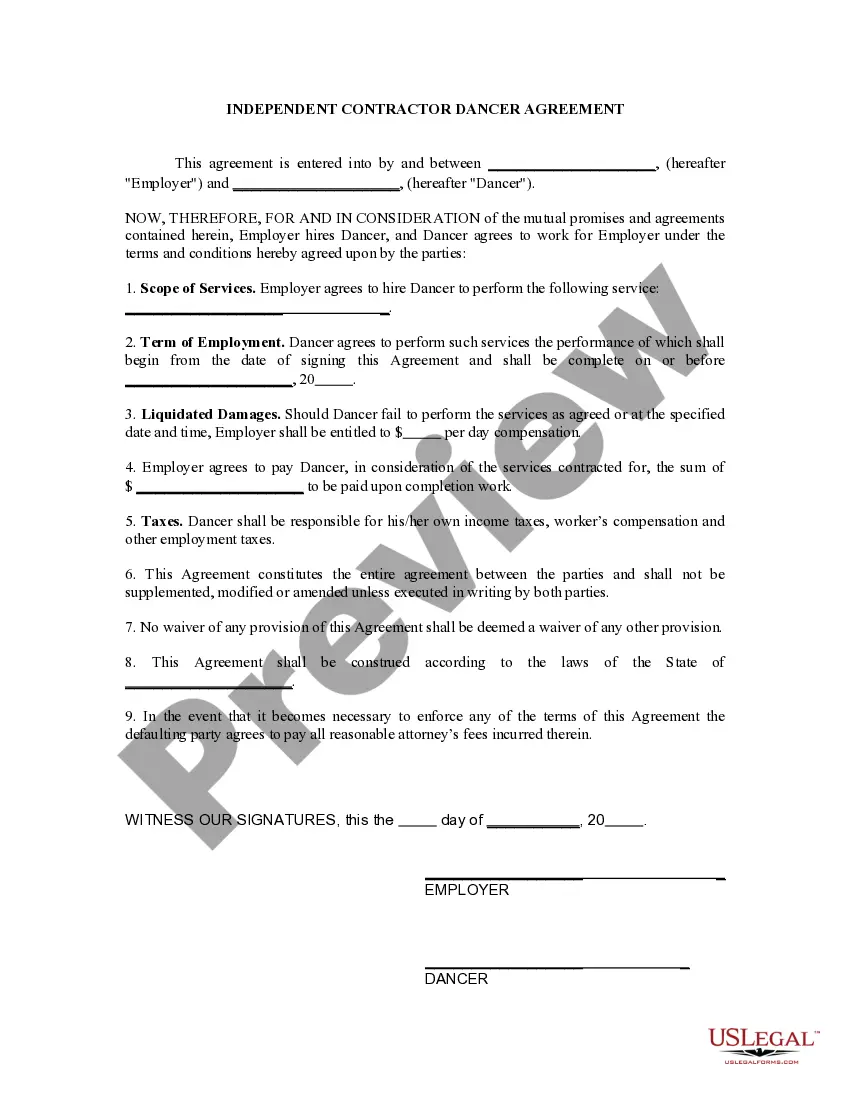
Minnesota Discovery - Model Request for Production of Documents
Understanding this form
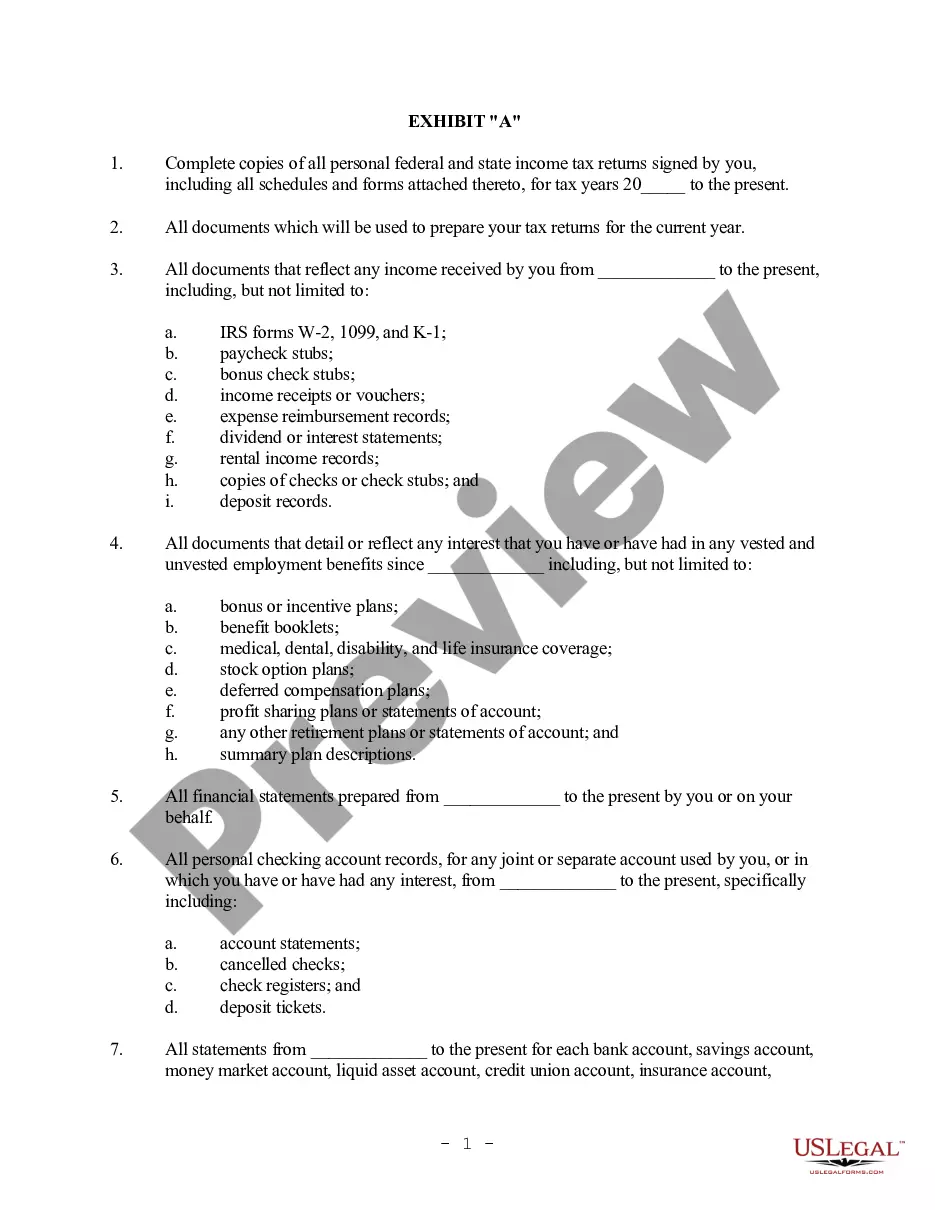
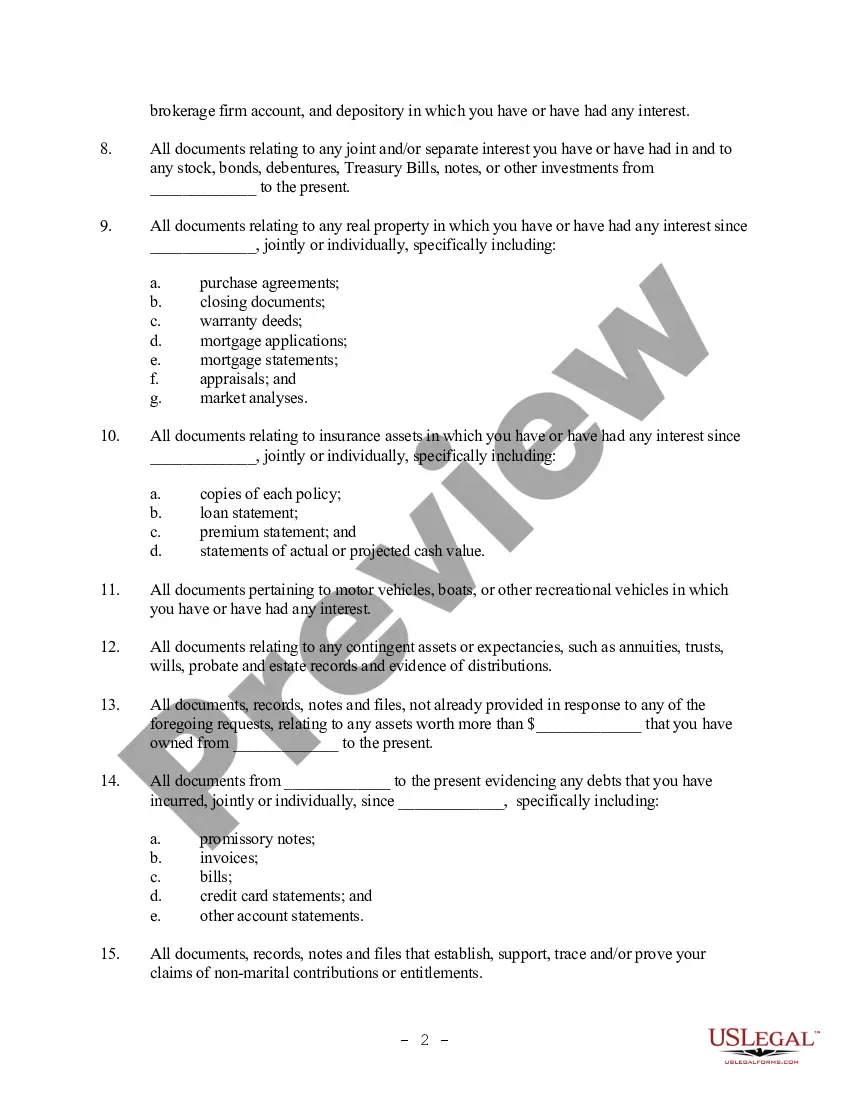
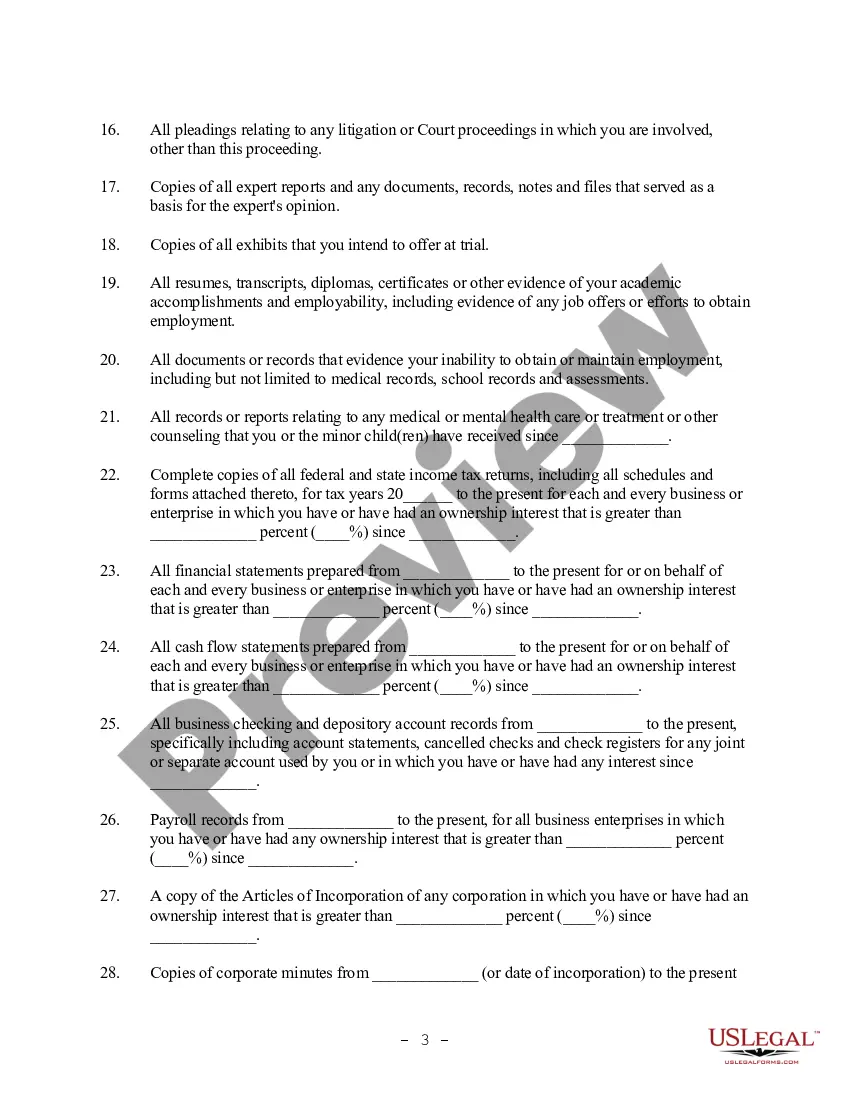
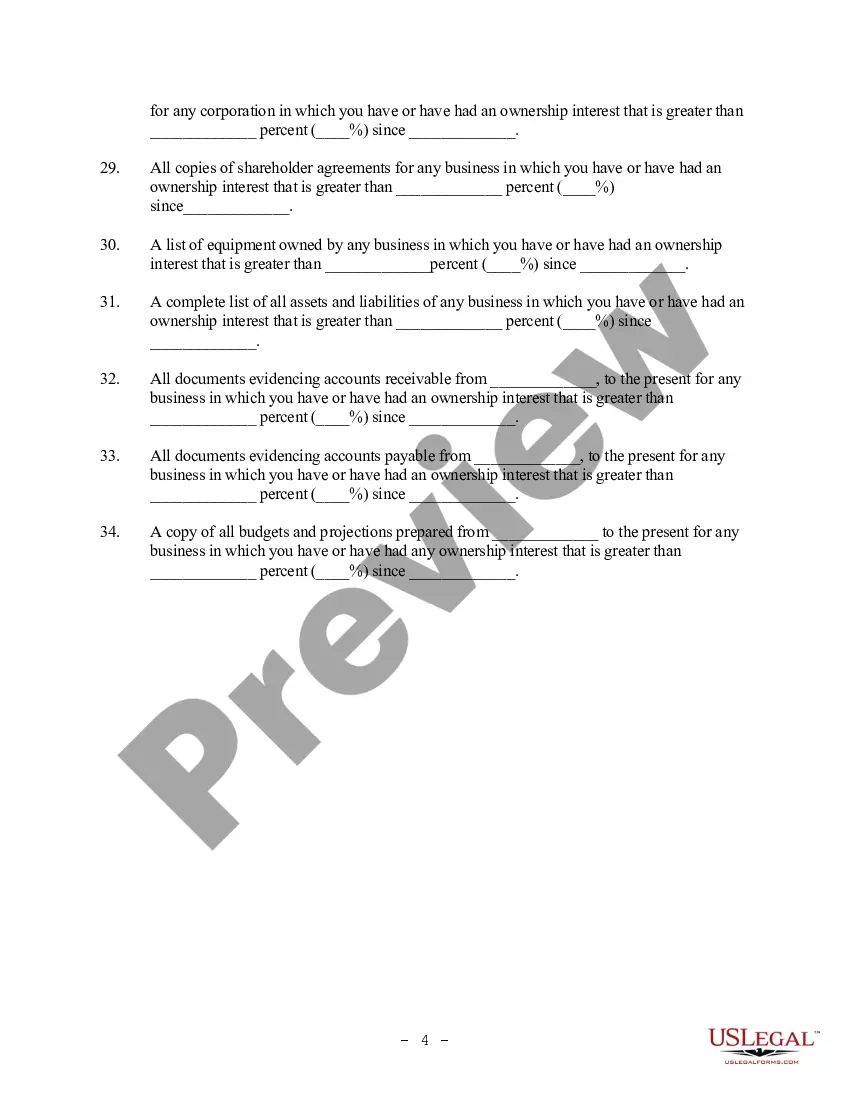
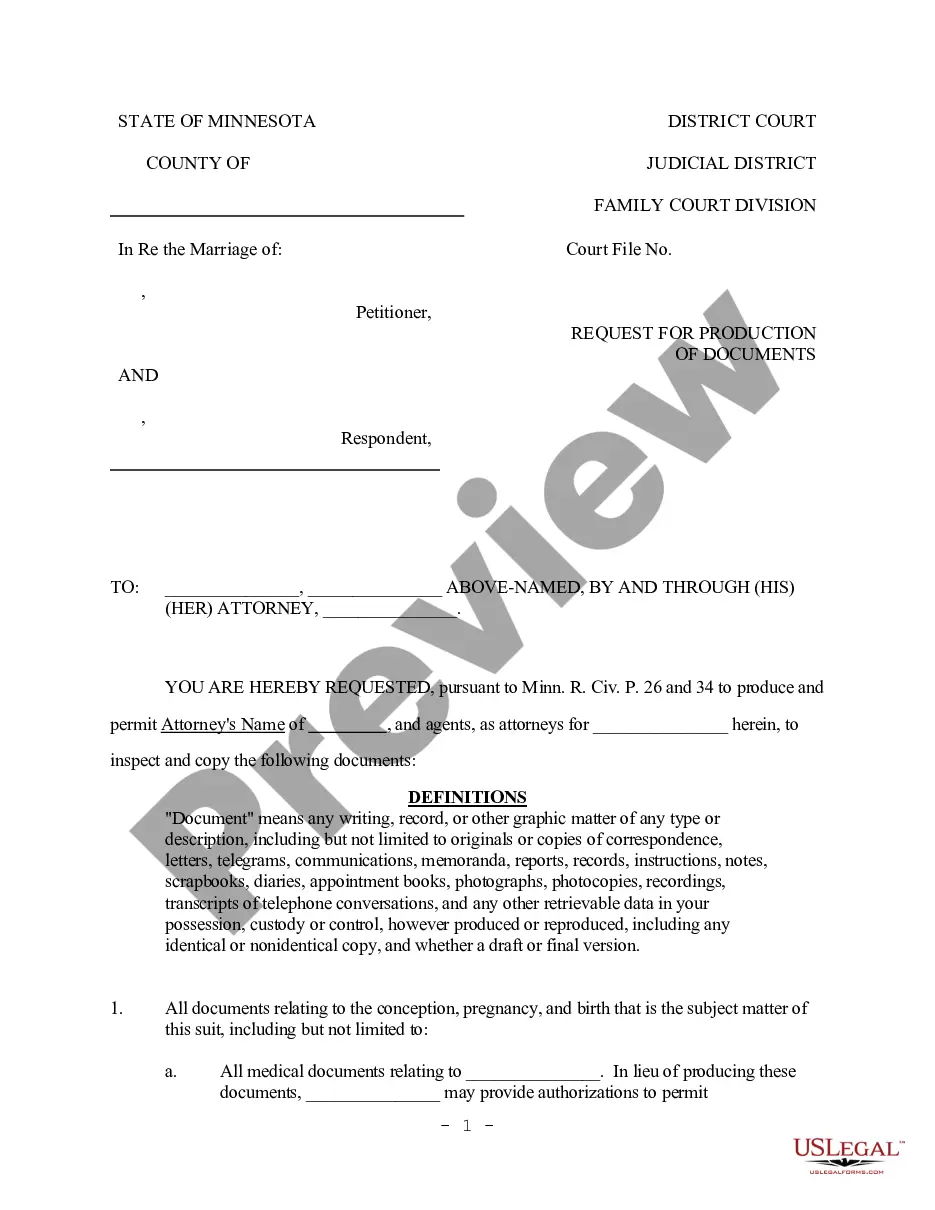
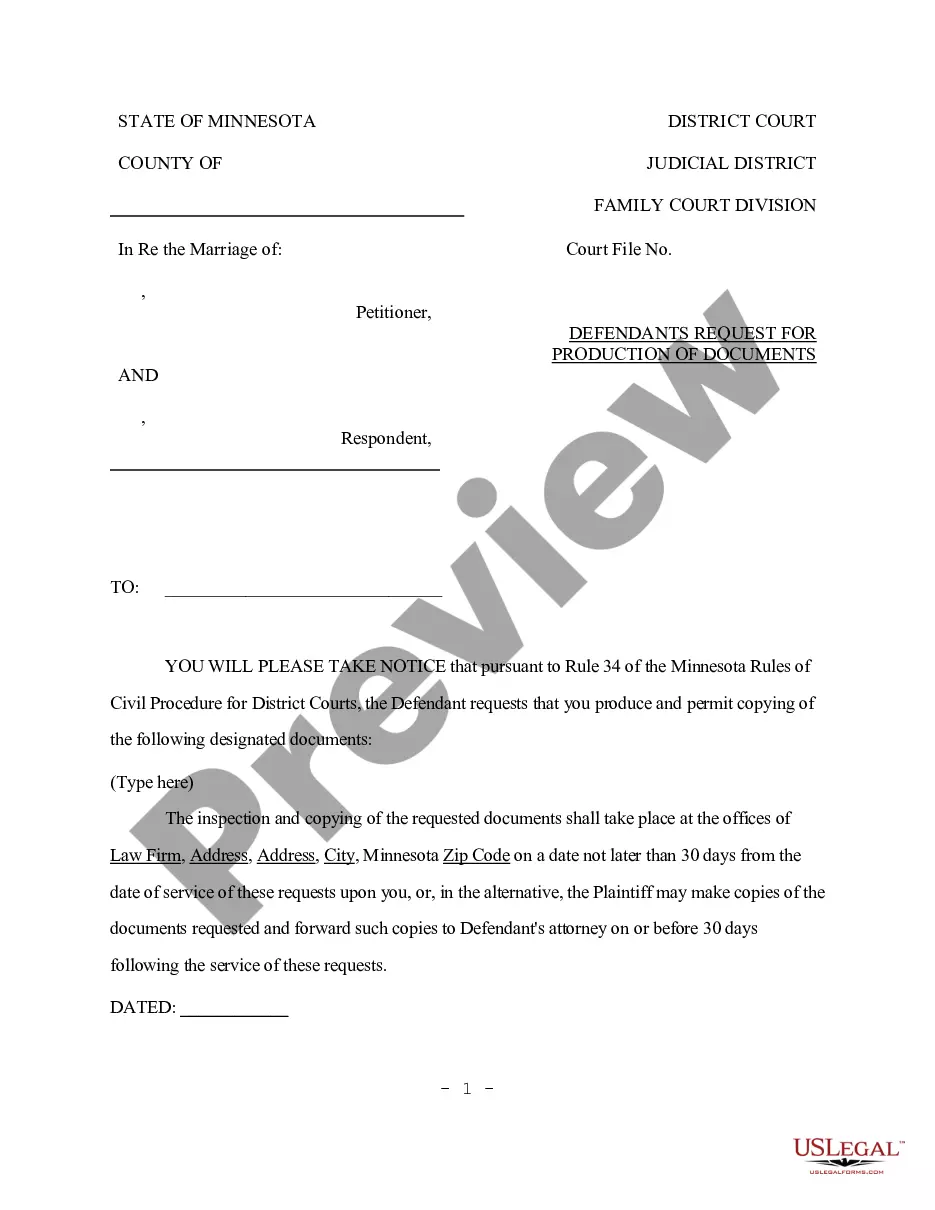
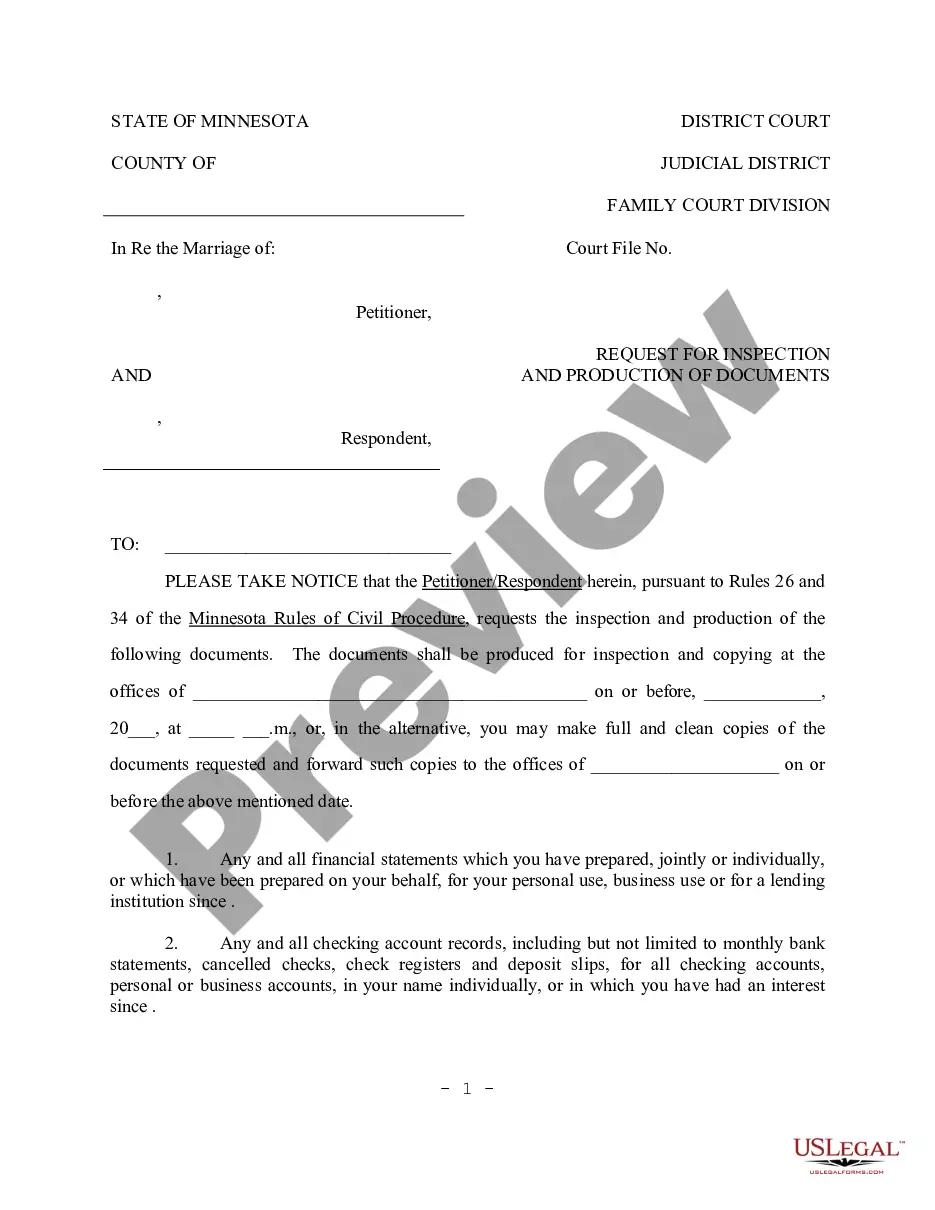
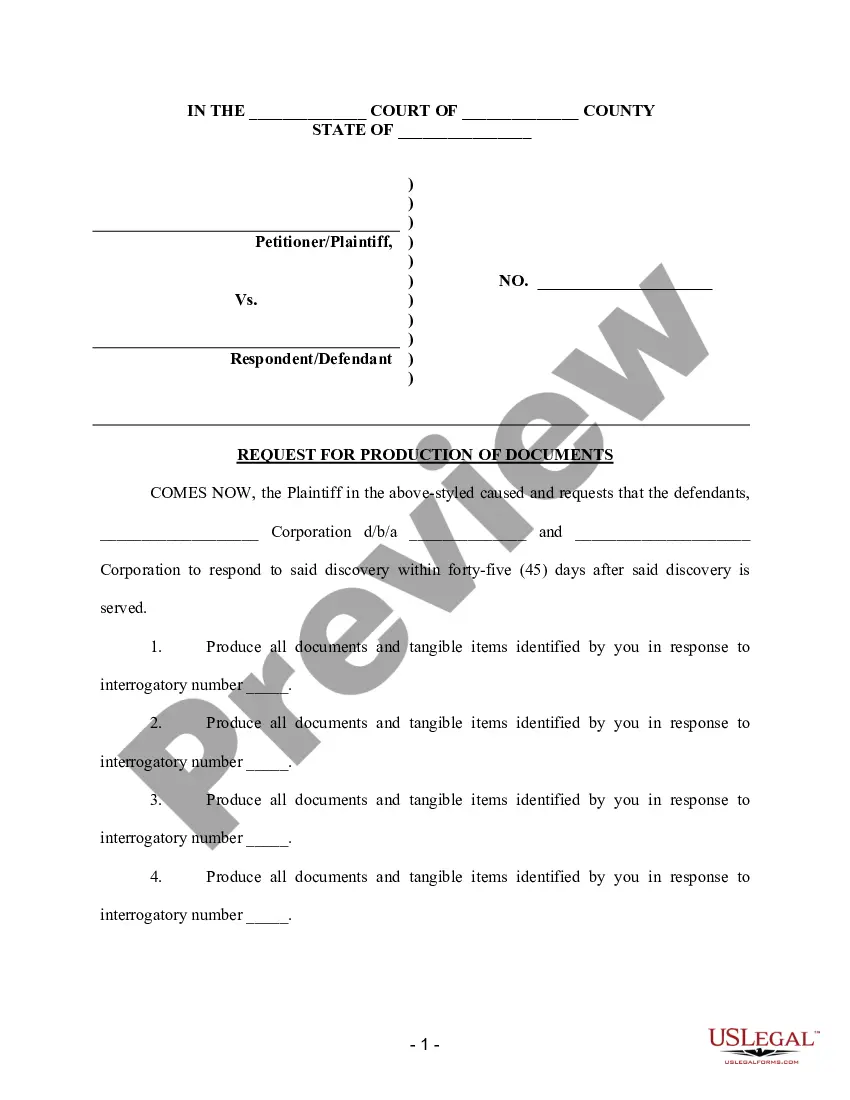
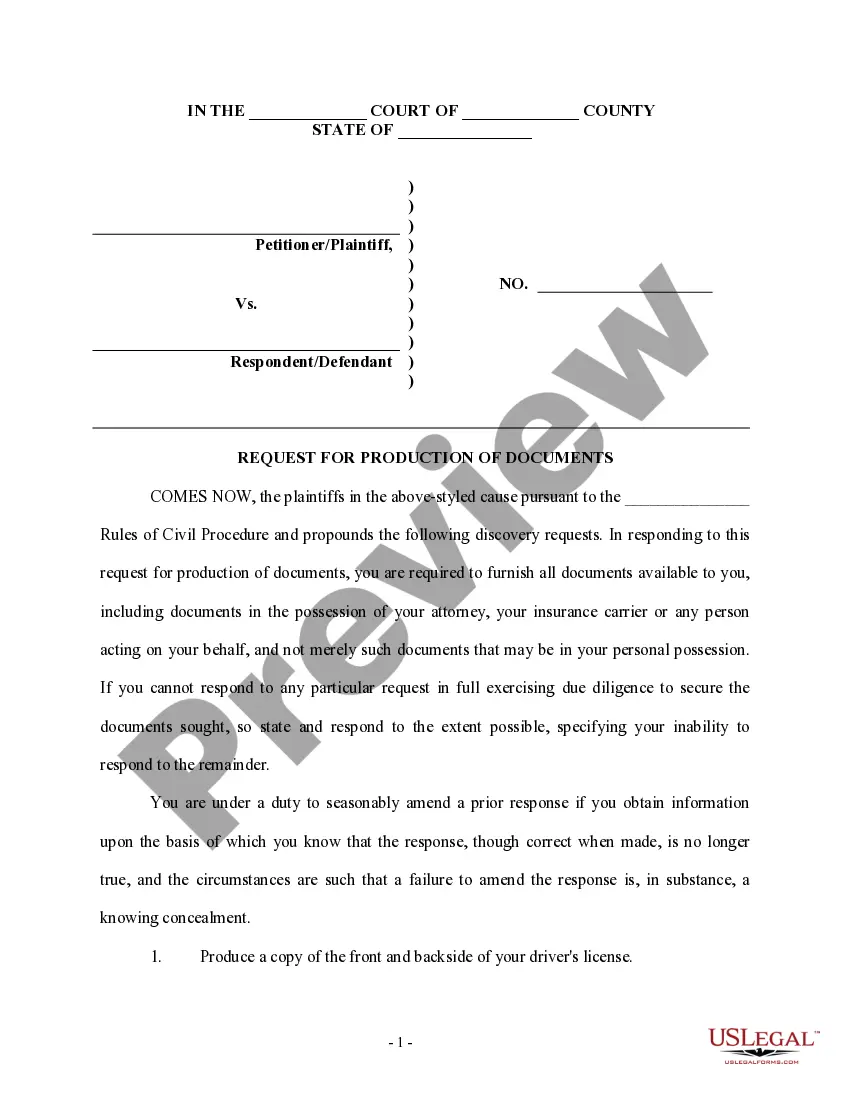
The Discovery - Model Request for Production of Documents is a legal form used during the discovery phase of litigation. It allows a party to request specific documents from another party to support their case. This form differs from generic document requests by outlining detailed categories of documents to ensure a comprehensive understanding of financial and relevant personal history, which may be crucial for the case at hand.
Form components explained
- Complete copies of all personal federal and state income tax returns.
- Documents used in the preparation of tax returns.
- Financial statements and records of income from various sources.
- Records pertaining to debts and any assets including real estate and vehicles.
- Documents related to any business ownership interests.
- Healthcare and treatment records related to employment capability.
When this form is needed
This form is used when a party in a legal proceeding needs to gather evidence through document requests. It is particularly relevant in divorce cases, business disputes, or matters involving the equitable distribution of assets. Essentially, this form helps establish the financial background and interests of both parties and is an integral part of preparing for trial.
Who can use this document
This form is intended for individuals or legal representatives involved in litigation, especially in divorce or civil cases, where document transparency is necessary. It is beneficial for both plaintiffs and defendants seeking to establish their financial positions or examine opposing claims.
Completing this form step by step
- Identify the relevant tax years and fill in the blanks appropriately for financial records.
- Gather and include all requested documents such as tax returns and bank statements.
- Specify any joint ownership interests in businesses or real estate as indicated.
- Ensure all sections are completed without omissions to avoid delays in the process.
- Review the final document for accuracy before submission to the court or opposing party.
Does this document require notarization?
In most cases, this form does not require notarization. However, some jurisdictions or signing circumstances might. US Legal Forms offers online notarization powered by Notarize, accessible 24/7 for a quick, remote process.
Get your form ready online
Our built-in tools help you complete, sign, share, and store your documents in one place.
Make edits, fill in missing information, and update formatting in US Legal Forms—just like you would in MS Word.
Download a copy, print it, send it by email, or mail it via USPS—whatever works best for your next step.
Sign and collect signatures with our SignNow integration. Send to multiple recipients, set reminders, and more. Go Premium to unlock E-Sign.
If this form requires notarization, complete it online through a secure video call—no need to meet a notary in person or wait for an appointment.
We protect your documents and personal data by following strict security and privacy standards.

Make edits, fill in missing information, and update formatting in US Legal Forms—just like you would in MS Word.

Download a copy, print it, send it by email, or mail it via USPS—whatever works best for your next step.

Sign and collect signatures with our SignNow integration. Send to multiple recipients, set reminders, and more. Go Premium to unlock E-Sign.

If this form requires notarization, complete it online through a secure video call—no need to meet a notary in person or wait for an appointment.

We protect your documents and personal data by following strict security and privacy standards.
Typical mistakes to avoid
- Leaving sections blank or failing to enter required dates.
- Not including all relevant documents that support the requests.
- Using vague language instead of clearly specifying the documents needed.
- Ignoring local court rules regarding document production timelines.
Advantages of online completion
- Convenience of downloading and completing the form from home.
- Editability allows users to customize requests based on their specific situation.
- Access legal forms prepared by licensed attorneys, ensuring reliability and accuracy.
Legal use & context
- This form serves as a formal request for documents during legal proceedings and must be specific to be enforceable.
- Parties must comply with the discovery process as outlined by the relevant court rules.
- Failure to provide requested documents may result in legal penalties or affect the outcome of the case.
Key takeaways
- The Discovery - Model Request for Production of Documents is essential for gathering evidence in legal proceedings.
- Complete and accurate completion of the form is vital.
- Understanding the specific requirements of your jurisdiction is critical for effective use.
Looking for another form?
Form popularity
FAQ
Rule 33 of the Minnesota Rules of Civil Procedure outlines the procedures for written interrogatories in civil cases. This rule allows parties to request information relevant to the case, which aids in the discovery process. Understanding this rule is crucial for effective Minnesota Discovery - Model Request for Production of Documents, as it ensures both parties exchange necessary information. By utilizing resources such as USLegalForms, you can streamline your discovery process and create effective requests that comply with these rules.
To answer a request for production of documents, start by compiling the requested materials in an organized manner. Clearly label each document and provide a brief description, if necessary. Utilizing a Minnesota Discovery - Model Request for Production of Documents can streamline this process, ensuring you meet all legal requirements and deadlines.
Examples of production of documents can include a wide range of materials, such as contracts, emails, reports, and photographs. Essentially, any written or electronic material pertinent to the case can qualify. By referring to a Minnesota Discovery - Model Request for Production of Documents, you can identify and request specific documents that serve your legal objectives.
When crafting a request for production of documents, focus on the information crucial to your case. Ask for documents that directly relate to the claims or defenses involved, including emails, contracts, and financial records. Using a Minnesota Discovery - Model Request for Production of Documents can guide you in formulating specific and relevant requests that enhance your case.
Responding to a Request for Production of documents requires careful attention. First, review the request thoroughly and determine which documents you can provide. Utilize a Minnesota Discovery - Model Request for Production of Documents template to organize your response, ensuring you address each item specifically while maintaining compliance with legal standards.
To respond to a document request email effectively, begin by acknowledging receipt of the request. Clearly state whether you will provide the requested documents and, if applicable, outline the timeline for their delivery. Consider using a Minnesota Discovery - Model Request for Production of Documents template to ensure you include all necessary details, making your response clear and professional.
To object to a request for production of documents in Minnesota Discovery, first, review the request carefully to identify any vague or overly broad terms. Next, draft a written response that clearly states your objections, citing specific reasons for each objection, such as relevance or privacy concerns. It’s important to ensure your objections are supported by applicable rules or laws. Utilizing resources like the US Legal platform can help you find a Minnesota Discovery - Model Request for Production of Documents to guide your response effectively.
A request for production of documents in Minnesota is a legal tool used during the discovery phase of a lawsuit to obtain specific documents from the opposing party. This request is part of the broader Minnesota Discovery - Model Request for Production of Documents framework, which facilitates information exchange. By following this process, parties can build stronger cases and prepare effectively for trial.
Rule of Practice 521 in Minnesota outlines the procedures and requirements for discovery, including requests for production of documents. This rule aims to promote transparency and fairness in the legal process. Familiarizing yourself with Minnesota Discovery - Model Request for Production of Documents will help you understand your rights and obligations under this rule.
Yes, if you receive a request for production of documents, you are legally obligated to respond. Failing to respond can lead to legal penalties or sanctions. In Minnesota Discovery - Model Request for Production of Documents, timely and complete responses are crucial to maintaining the integrity of the discovery process.