Minnesota Discovery - Information on Preparing for Deposition
Overview of this form
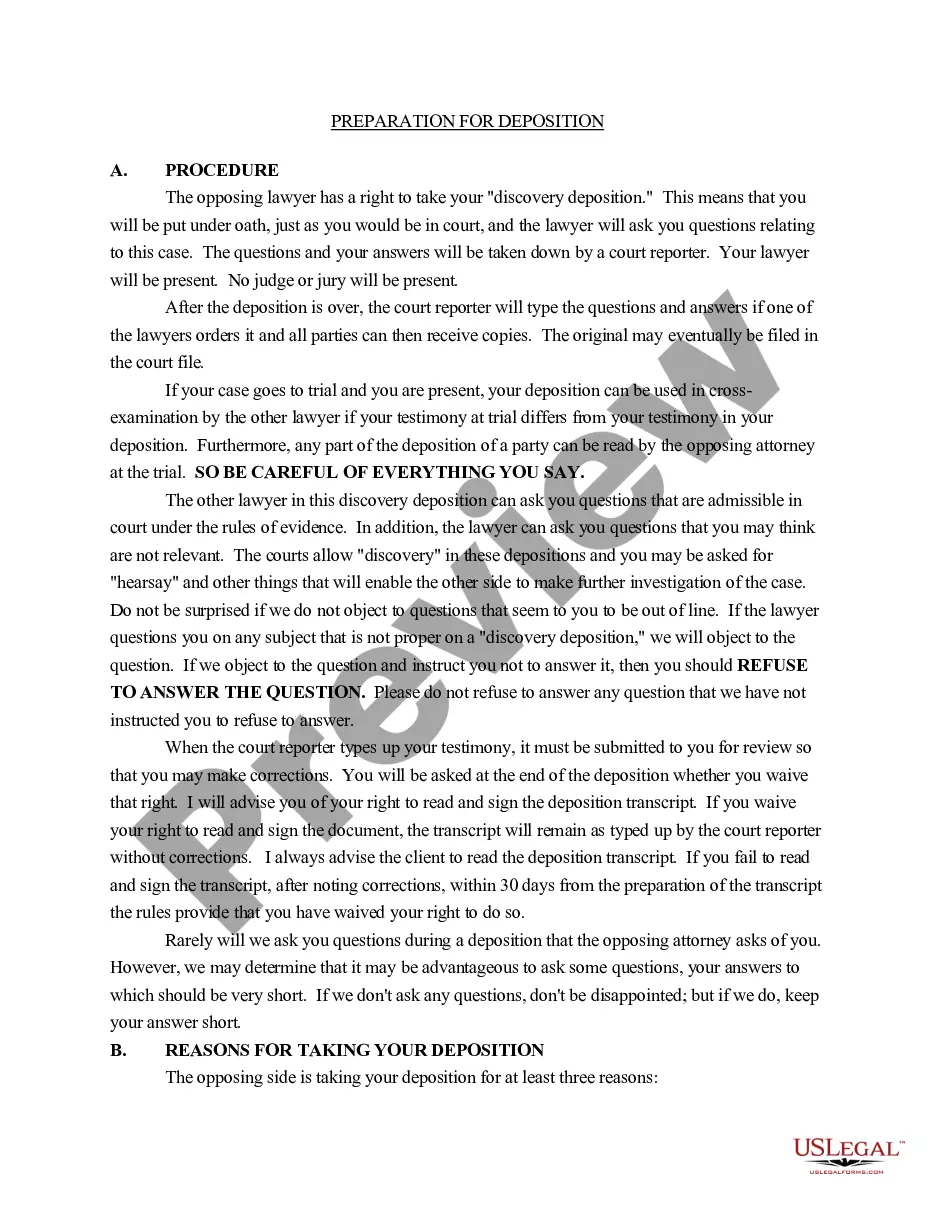
The Discovery - Information on Preparing for Deposition form outlines the procedural steps necessary for preparing for a legal deposition. This form is distinct in that it specifically addresses the process involved in depositions, emphasizing the importance of preparation, the roles of various parties, and the significance of the information exchanged during this critical part of the legal discovery process.
What’s included in this form
- Detailed procedures for attending and testifying at a deposition.
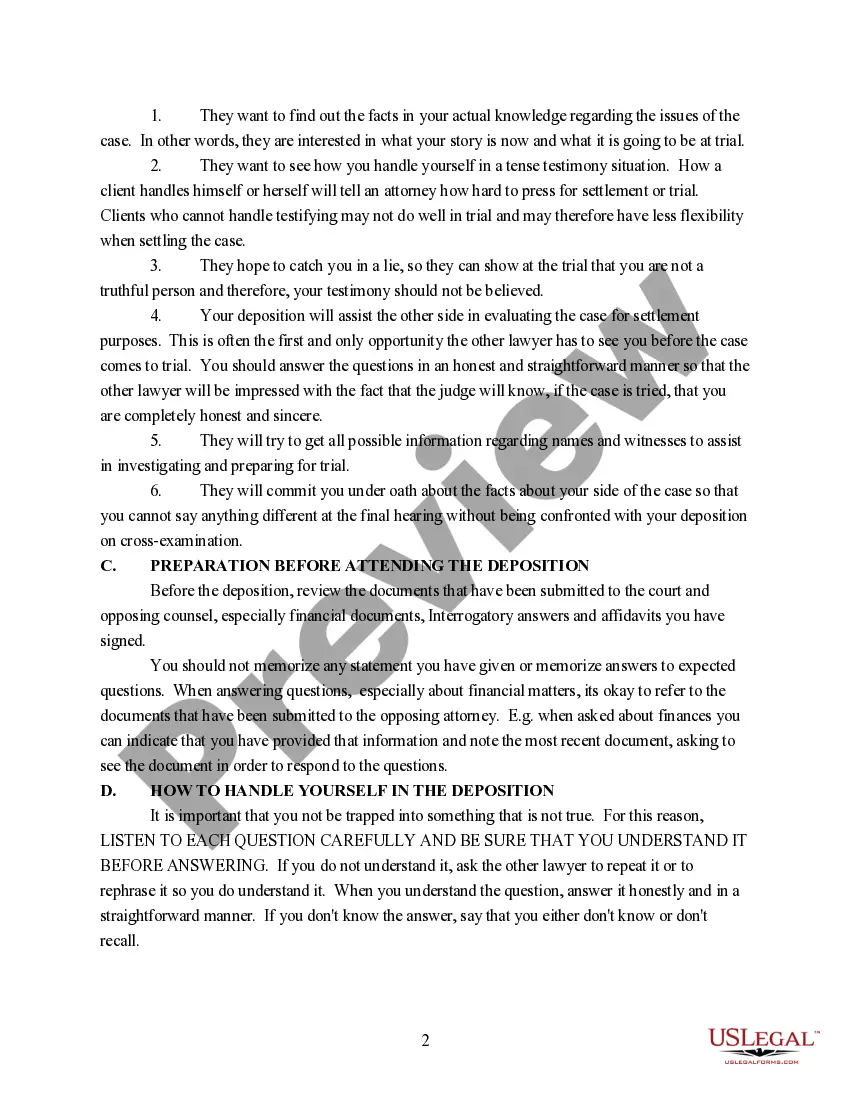
- Clarification on why depositions are taken and what is expected from the deponent.
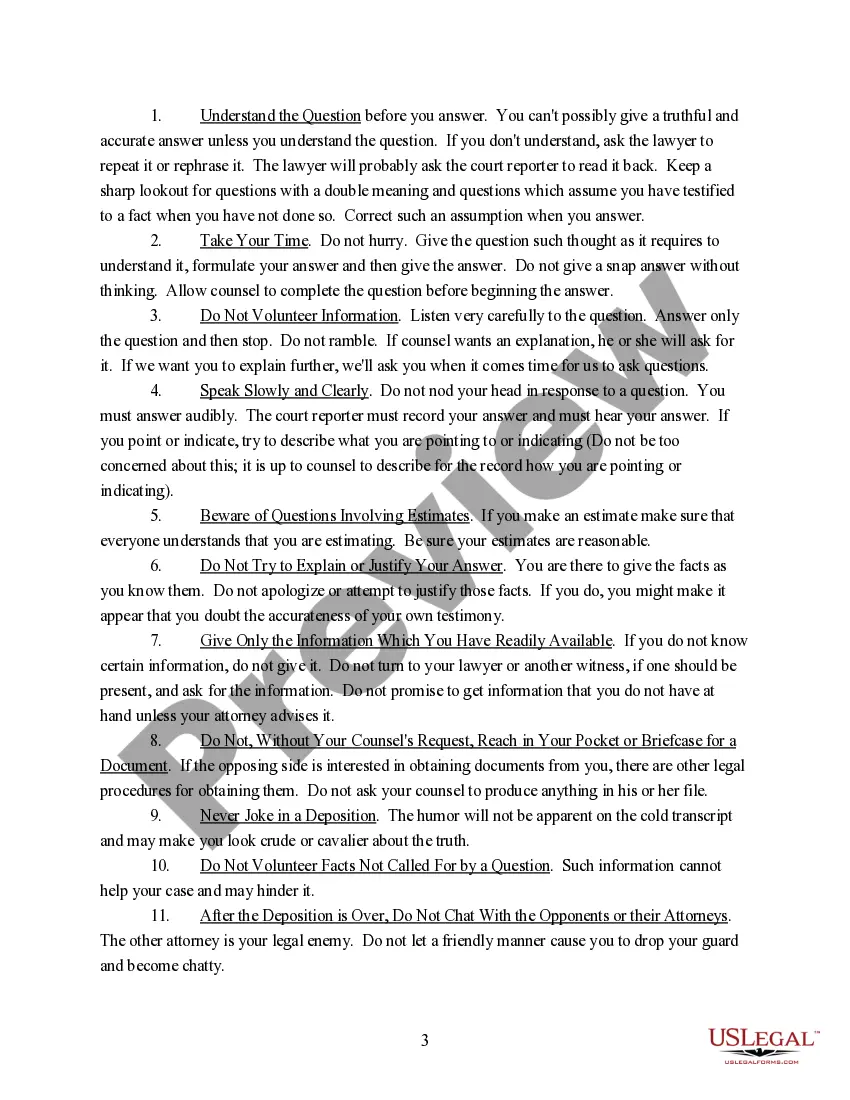
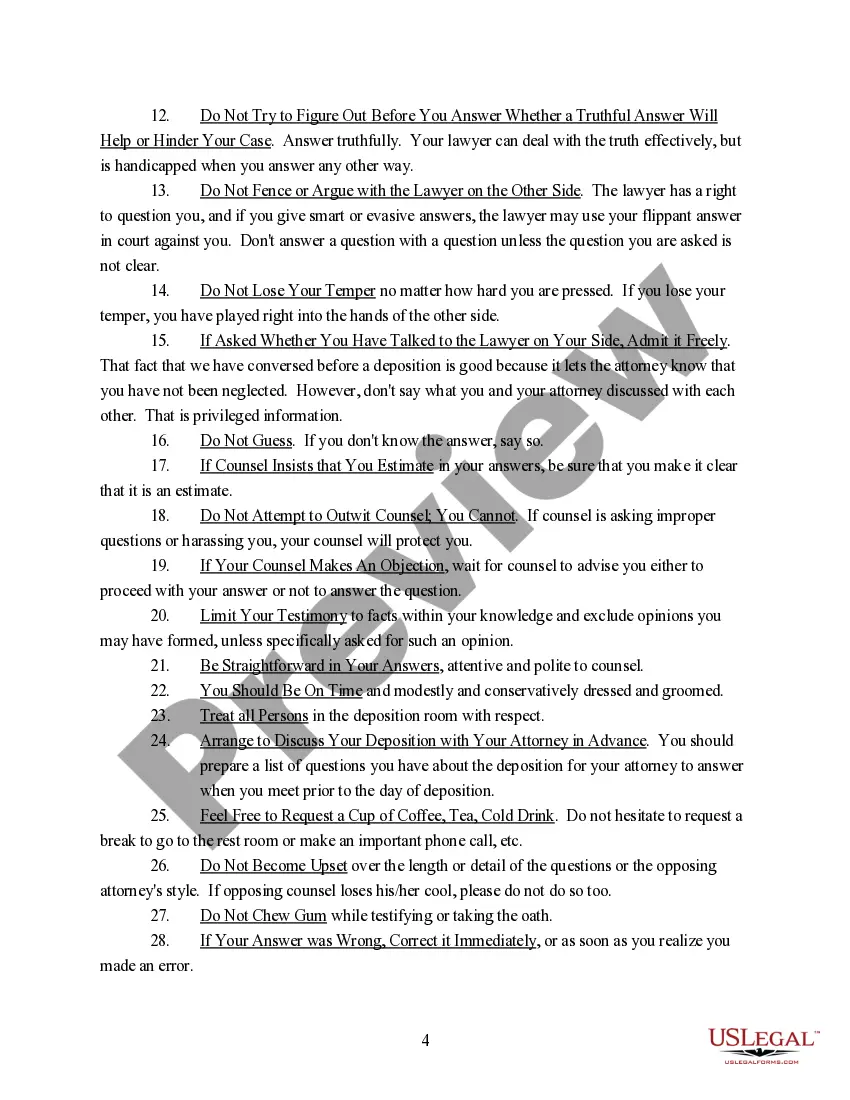
- Guidelines for preparation and behavior during the deposition.
- Advice on how to respond to questions effectively.
- Insights on reviewing and signing the deposition transcript.
Situations where this form applies
This form is essential for anyone preparing for a deposition in ongoing litigation. It is particularly important when a case involves substantial testimony or complex evidence that will be addressed in court. Use it to familiarize yourself with the deposition process before your scheduled session, ensuring you understand your responsibilities and rights during the procedure.
Who should use this form
- Individuals who are required to provide testimony as a part of legal proceedings.
- Parties involved in civil or criminal cases where depositions are necessary.
- Clients seeking guidance on how to navigate the deposition process effectively.
How to prepare this document
- Review prior documents relevant to your case, including any interrogatories and affidavits.
- Understand the procedures about how depositions are conducted and your rights during that process.
- Familiarize yourself with the types of questions you may be asked and plan your responses.
- Consult with your attorney to clarify any uncertainties regarding deposition procedures.
- Confirm your attendance and arrive punctually, dressed appropriately.
Is notarization required?
In most cases, this form does not require notarization. However, some jurisdictions or signing circumstances might. US Legal Forms offers online notarization powered by Notarize, accessible 24/7 for a quick, remote process.
Get your form ready online
Our built-in tools help you complete, sign, share, and store your documents in one place.
Make edits, fill in missing information, and update formatting in US Legal Forms—just like you would in MS Word.
Download a copy, print it, send it by email, or mail it via USPS—whatever works best for your next step.
Sign and collect signatures with our SignNow integration. Send to multiple recipients, set reminders, and more. Go Premium to unlock E-Sign.
If this form requires notarization, complete it online through a secure video call—no need to meet a notary in person or wait for an appointment.
We protect your documents and personal data by following strict security and privacy standards.

Make edits, fill in missing information, and update formatting in US Legal Forms—just like you would in MS Word.

Download a copy, print it, send it by email, or mail it via USPS—whatever works best for your next step.

Sign and collect signatures with our SignNow integration. Send to multiple recipients, set reminders, and more. Go Premium to unlock E-Sign.

If this form requires notarization, complete it online through a secure video call—no need to meet a notary in person or wait for an appointment.

We protect your documents and personal data by following strict security and privacy standards.
Avoid these common issues
- Failing to review relevant documents before the deposition.
- Answering questions without fully understanding them.
- Volunteering information that is not asked for during the deposition.
- Not taking the time to think before answering questions.
- Neglecting to correct any mistakes made during the deposition.
Benefits of using this form online
- Convenient access to important legal information from anywhere.
- Editability allows users to customize the form while following legal guidelines.
- Reliable resources prepared by licensed attorneys ensure accuracy and compliance.
Legal use & context
- Depositions are legally recognized as part of the discovery process in most civil and criminal proceedings.
- Any discrepancies between deposition testimony and court testimony can have significant consequences.
- Effective preparation helps ensure fair and truthful testimonies that can be relied upon in court.
Looking for another form?
Form popularity
FAQ
You can obtain a discovery packet by contacting the court where your case is filed. They will provide you with instructions on how to request the documents. It's important to ensure that you follow all required steps to avoid delays in receiving your packet. For a smoother experience, refer to Minnesota Discovery - Information on Preparing for Deposition through platforms like US Legal Forms, which can offer helpful templates and guidance.
Yes, a discovery packet is generally considered public information in Minnesota. This means that anyone can access the documents contained within it, as long as they follow the appropriate procedures. However, some sensitive information may be redacted to protect privacy. Understanding Minnesota Discovery - Information on Preparing for Deposition is essential for navigating this process.
Discovery should ideally be completed before the trial begins, allowing both parties sufficient time to review the evidence and prepare their arguments. Specific deadlines can vary depending on the court's scheduling order, so it's crucial to stay organized. To manage your timeline effectively, consider using Minnesota Discovery - Information on Preparing for Deposition as a guide.
Rule 30.02 pertains to the process of depositions in Minnesota. It details how depositions should be conducted, including the notice requirements and the manner of questioning. Understanding this rule is essential, and resources like Minnesota Discovery - Information on Preparing for Deposition can provide clarity on how to conduct yourself during a deposition.
Rule 37 of the Minnesota Rules of Civil Procedure addresses failure to make disclosures or cooperate in discovery. It outlines the consequences for parties that do not comply with discovery obligations, which can include sanctions or court orders. Familiarizing yourself with Minnesota Discovery - Information on Preparing for Deposition can help you navigate these rules effectively.
Preparing for a deposition involves several key steps, including reviewing relevant documents, understanding the case facts, and practicing your responses to potential questions. It's important to create a calm environment to reduce anxiety and enhance clarity during your testimony. Utilize resources like Minnesota Discovery - Information on Preparing for Deposition to guide your preparation process.
Discovery happens before the deposition takes place. This allows both sides to prepare adequately and understand the context of the information being shared. By focusing on Minnesota Discovery - Information on Preparing for Deposition, you can ensure that you gather all necessary materials ahead of your deposition.
Discovery occurs during the pre-trial phase of the court process. This stage allows both parties to gather evidence, witness statements, and documents relevant to the case. Engaging in Minnesota Discovery - Information on Preparing for Deposition will help you understand how to effectively utilize this phase to strengthen your position.
Once a deposition concludes, the next steps usually include reviewing the deposition transcript and preparing for trial. The information gathered can influence settlement negotiations or further legal strategies. For those navigating this process, Minnesota Discovery - Information on Preparing for Deposition can provide valuable insights to make informed decisions.
Discovery typically occurs before a deposition in the legal process. During discovery, both parties exchange relevant information and evidence. This phase helps prepare for the deposition by ensuring each side is aware of the facts and documents that may be discussed. Understanding Minnesota Discovery - Information on Preparing for Deposition can greatly enhance your readiness.