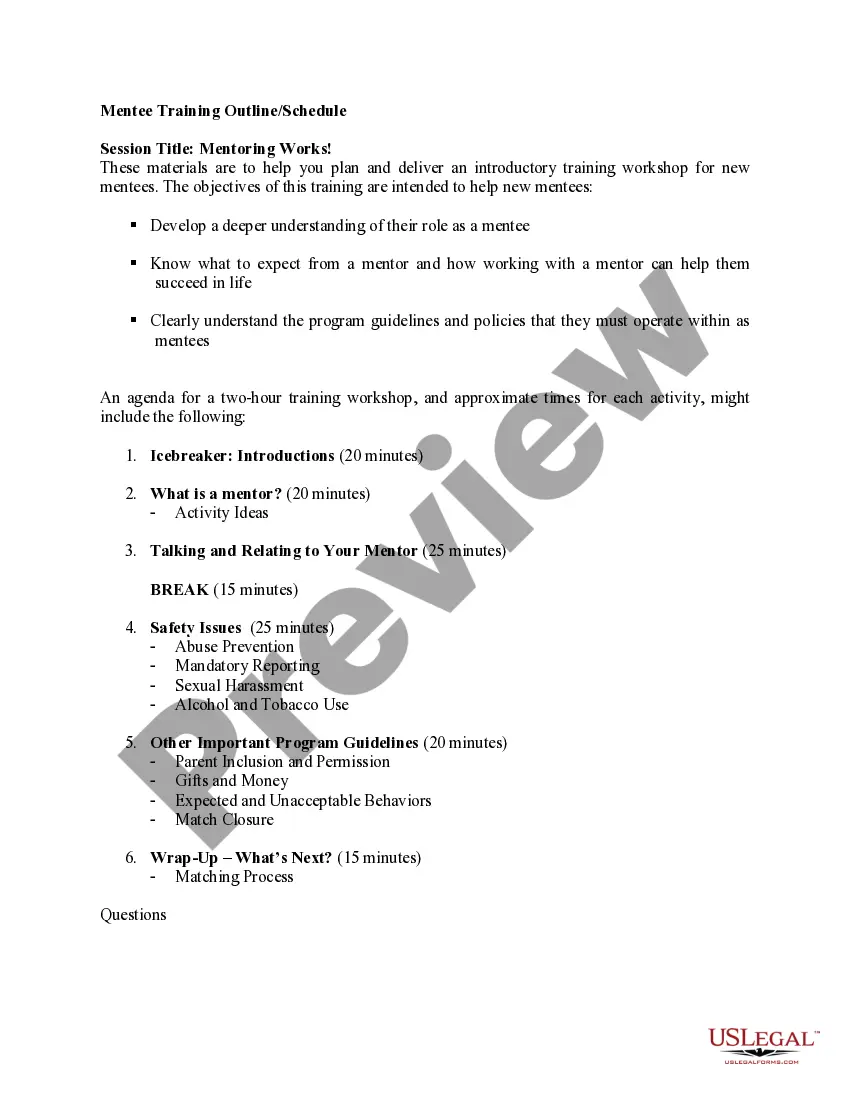
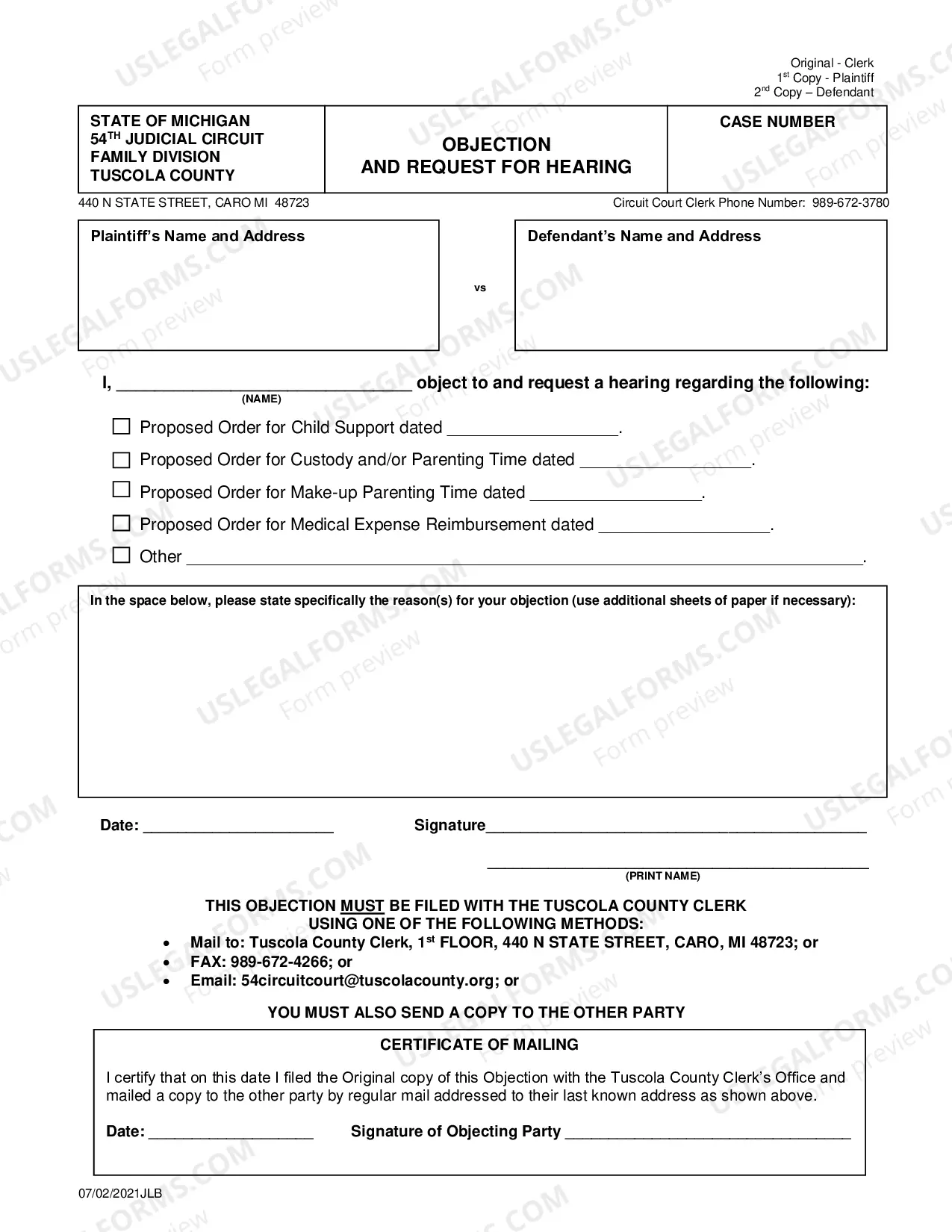
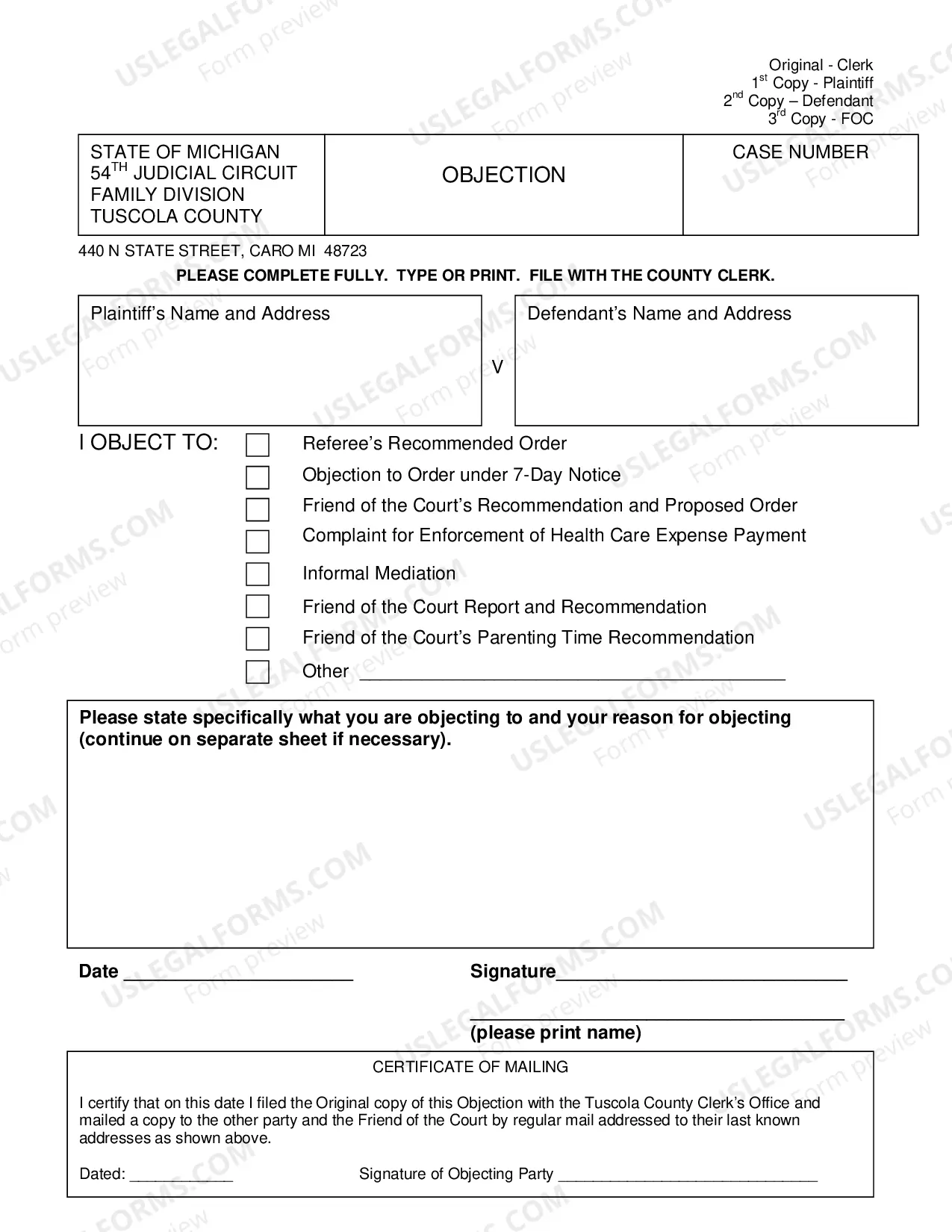
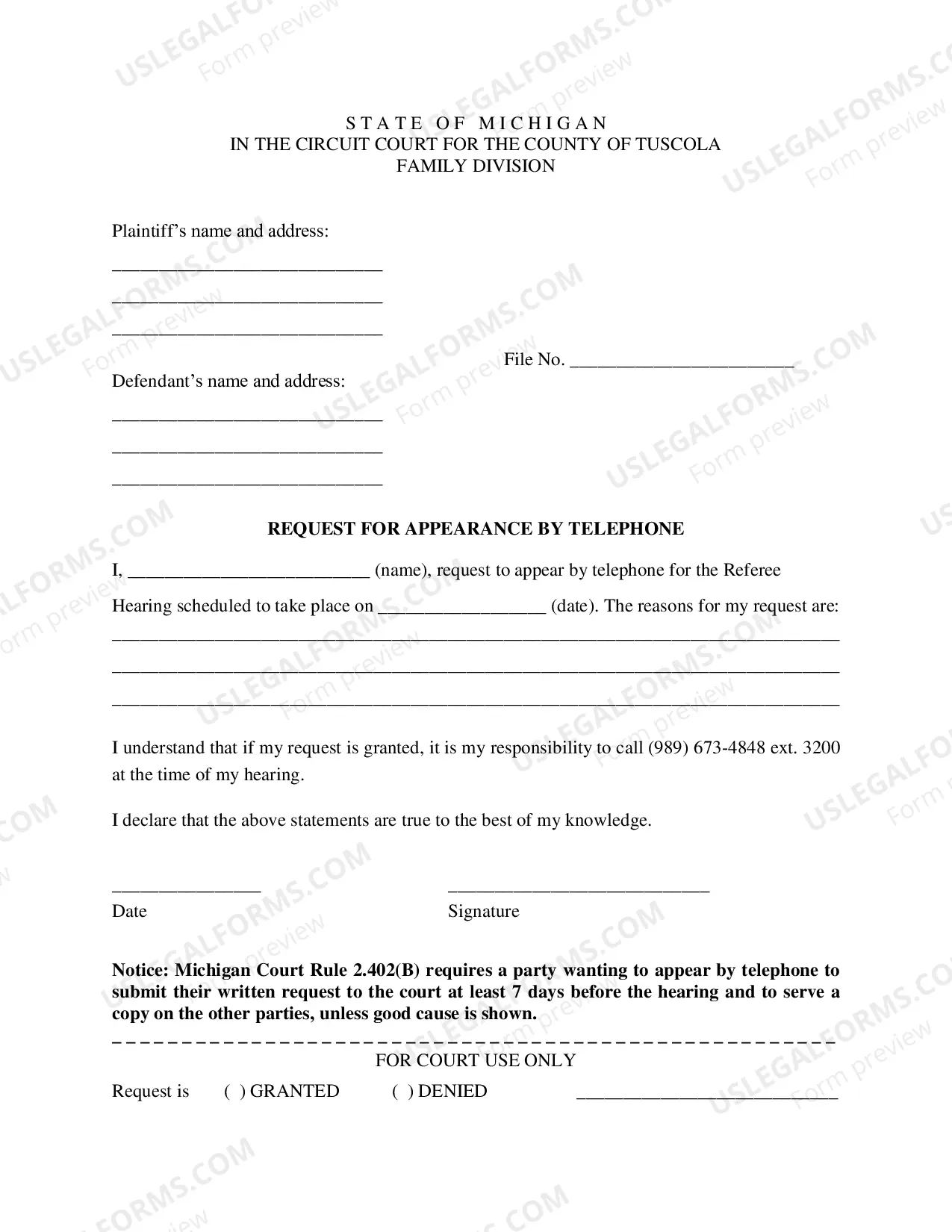
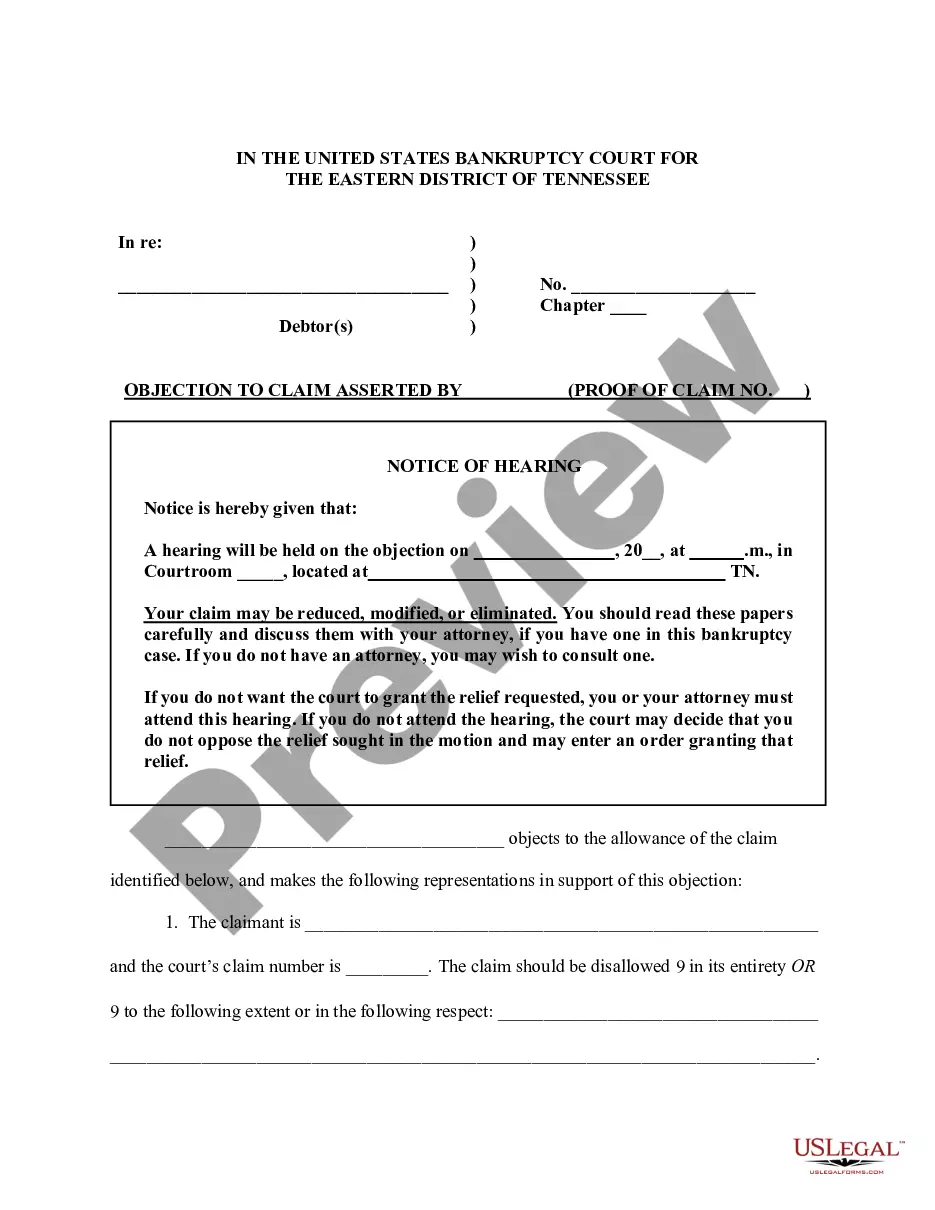
Michigan Objection And Request For Hearing is a legal document used to challenge the suspension or revocation of a driver's license in Michigan. It is filed with the Michigan Department of State Driver Assessment and Appeal Division (DEAD) to request an administrative hearing. The Objection and Request for Hearing form must be completed and accompanied by any supporting documentation. There are two types of Michigan Objection And Request For Hearing: Driver License Objection and Vehicle Registration Objection. The Driver License Objection is used to challenge the suspension or revocation of a driver's license due to a violation. The Vehicle Registration Objection is used to challenge the suspension or revocation of vehicle registration due to a violation.
Michigan Objection And Request For Hearing
Description
Get your form ready online
Our built-in tools help you complete, sign, share, and store your documents in one place.
Make edits, fill in missing information, and update formatting in US Legal Forms—just like you would in MS Word.
Download a copy, print it, send it by email, or mail it via USPS—whatever works best for your next step.
Sign and collect signatures with our SignNow integration. Send to multiple recipients, set reminders, and more. Go Premium to unlock E-Sign.
If this form requires notarization, complete it online through a secure video call—no need to meet a notary in person or wait for an appointment.
We protect your documents and personal data by following strict security and privacy standards.

Make edits, fill in missing information, and update formatting in US Legal Forms—just like you would in MS Word.

Download a copy, print it, send it by email, or mail it via USPS—whatever works best for your next step.

Sign and collect signatures with our SignNow integration. Send to multiple recipients, set reminders, and more. Go Premium to unlock E-Sign.

If this form requires notarization, complete it online through a secure video call—no need to meet a notary in person or wait for an appointment.

We protect your documents and personal data by following strict security and privacy standards.
Looking for another form?




How to fill out Michigan Objection And Request For Hearing?
Handling official paperwork necessitates focus, precision, and utilizing correctly-prepared templates. US Legal Forms has been assisting individuals across the country for 25 years, so when you select your Michigan Objection And Request For Hearing form from our service, you can be confident it complies with federal and state laws.
Utilizing our service is simple and quick. To access the required documents, all you need is an account with an active subscription. Here’s a brief guide for you to acquire your Michigan Objection And Request For Hearing in just minutes.
All forms are designed for multiple uses, like the Michigan Objection And Request For Hearing you see here. If you need them again, you can complete them without additional payment - just access the My documents section in your account and finalize your document whenever necessary. Experience US Legal Forms and complete your business and personal paperwork swiftly and in full legal adherence!
- Ensure to carefully review the form details and its alignment with general and legal standards by previewing it or examining its description.
- Search for another official template if the one you opened does not fit your circumstance or state laws (the link for that is in the upper corner of the page).
- Sign in to your account and download the Michigan Objection And Request For Hearing in your preferred format. If it's your first time using our site, click Buy now to proceed.
- Create an account, select your subscription option, and pay using your credit card or PayPal account.
- Choose the format in which you wish to save your form and click Download. Print the document or add it to a professional PDF editor to prepare it digitally.
Form popularity
FAQ
To request a hearing for your driver's license in Michigan, you must submit a written request to the Michigan Secretary of State’s office. Include your personal information, your driver's license number, and reasons for the hearing. It's essential to clearly state any objections or requests for hearings related to your case. US Legal Forms provides helpful resources and templates to guide you through the Michigan Objection And Request For Hearing process, ensuring you cover all necessary points.
To request court documents in Michigan, you will need to contact the specific court where your case is filed. You can typically submit your request in person, by mail, or through the court's website. Be sure to provide necessary details such as your case number, the names of the parties involved, and the specific documents you need. Using a service like US Legal Forms can simplify this process, offering templates and guidance tailored for Michigan Objection And Request For Hearing situations.
Rule 2.119 in Michigan governs the procedures for motions and hearings in civil cases. It outlines how to properly file motions, including the necessary documentation and timelines. Understanding this rule is vital when you submit a Michigan Objection And Request For Hearing, as it ensures that you follow proper protocols to improve your chances of a favorable outcome.
When judges do not agree with an objection in court, they typically state their reasons clearly and may deny the request. This response is an essential part of the legal process, allowing parties to understand the judge's perspective. If you face such a situation, consider filing a Michigan Objection And Request For Hearing to further present your case and seek clarity.
The 7 day rule in Michigan courts refers to the requirement that parties must file certain motions or objections within seven days after receiving notice of a court action. This rule is crucial when submitting a Michigan Objection And Request For Hearing, as timely submissions ensure that your voice is heard. Failing to comply with this timeline may weaken your case.
The new child support law in Michigan introduces updated guidelines for calculating support payments. It aims to create a fairer system that reflects the needs of children and the financial capacities of parents. If you have questions regarding how this affects your situation, consider using a Michigan Objection And Request For Hearing to address any disputes.
Yes, you can use a voice recording as evidence in Family Court in Michigan, but there are specific rules that apply. The recording must be legally obtained, typically requiring consent from at least one party involved. When preparing your Michigan Objection And Request For Hearing, it's essential to ensure that the recording adheres to state laws to be admissible.
A letter of objection is a formal document that states your disagreement with a decision or action taken by another party. It typically includes your reasons for the objection and any relevant supporting information. When drafting a letter of objection, referencing the Michigan Objection And Request For Hearing guidelines can strengthen your position.
A legal objection can occur when one party believes that evidence presented is inadmissible due to specific legal grounds. For instance, a party might object to hearsay evidence that does not meet legal standards. Understanding these objections is vital when preparing for the Michigan Objection And Request For Hearing process.
When writing an objection letter to the court, ensure you include the case title, your name, and contact information at the top. Clearly outline your objection, including the reasons and any supporting evidence. Adhering to the Michigan Objection And Request For Hearing format will help you present a strong case to the judge.