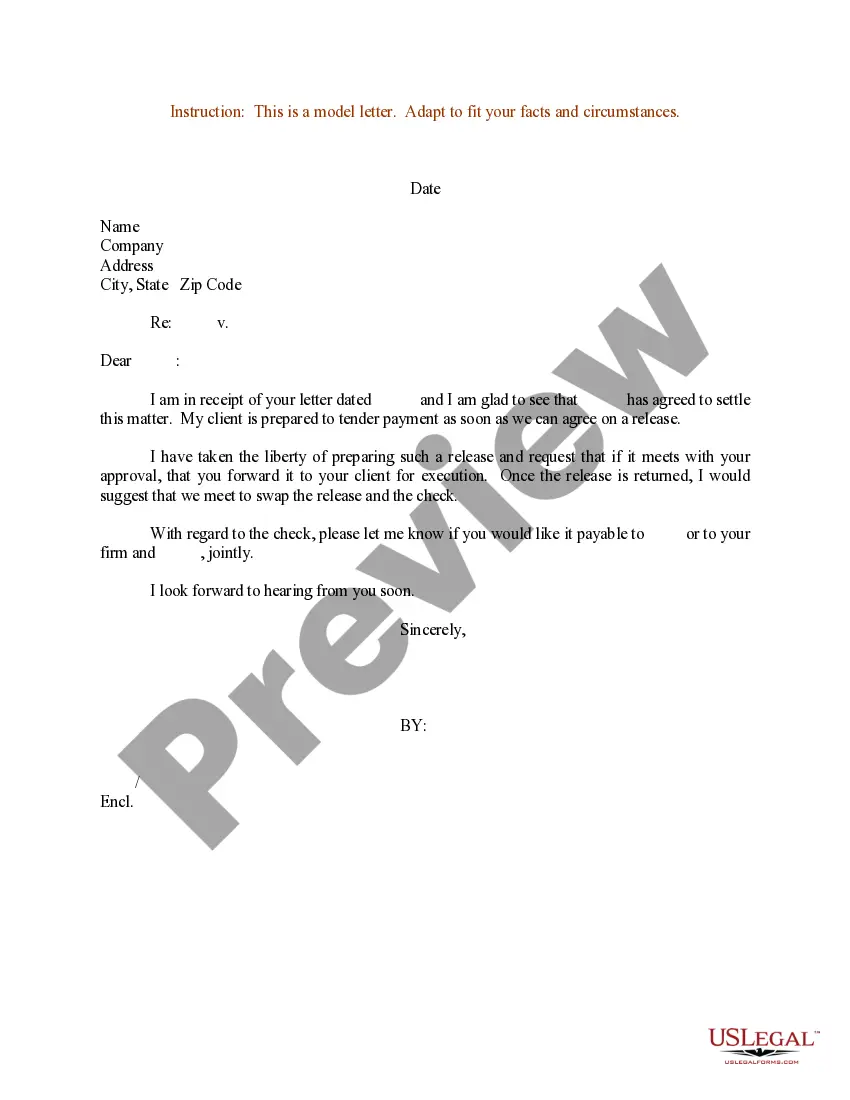
Michigan Comprehensive Special Tax Notice Regarding Plan Payments
Description

Get your form ready online
Our built-in tools help you complete, sign, share, and store your documents in one place.
Make edits, fill in missing information, and update formatting in US Legal Forms—just like you would in MS Word.
Download a copy, print it, send it by email, or mail it via USPS—whatever works best for your next step.
Sign and collect signatures with our SignNow integration. Send to multiple recipients, set reminders, and more. Go Premium to unlock E-Sign.
If this form requires notarization, complete it online through a secure video call—no need to meet a notary in person or wait for an appointment.
We protect your documents and personal data by following strict security and privacy standards.

Make edits, fill in missing information, and update formatting in US Legal Forms—just like you would in MS Word.

Download a copy, print it, send it by email, or mail it via USPS—whatever works best for your next step.

Sign and collect signatures with our SignNow integration. Send to multiple recipients, set reminders, and more. Go Premium to unlock E-Sign.

If this form requires notarization, complete it online through a secure video call—no need to meet a notary in person or wait for an appointment.

We protect your documents and personal data by following strict security and privacy standards.
Looking for another form?





How to fill out Comprehensive Special Tax Notice Regarding Plan Payments?
In the event that you need to complete, download, or create official document templates, utilize US Legal Forms, the largest assortment of legal forms available online.
Take advantage of the site's user-friendly search to locate the documents you require.
Various templates for business and personal use are categorized by types and states, or keywords.
- Employ US Legal Forms to quickly find the Michigan Comprehensive Special Tax Notice Regarding Plan Payments.
- If you are already a US Legal Forms user, sign in to your account and click the Download button to obtain the Michigan Comprehensive Special Tax Notice Regarding Plan Payments.
- You may also access forms you previously saved from the My documents section in your account.
- If you are using US Legal Forms for the first time, follow these instructions.
- Step 1. Ensure that you have selected the form for the correct region/state.
- Step 2. Use the Preview option to review the form's details. Make sure to read the description.
Form popularity
FAQ
Since 2012, the tax on Michigan pension income received across the state's 147 state- and locally-administered public pension systems has added up to more than $5 billion, according to the Michigan State Employee Retirees Association.
Michigan is tax-friendly toward retirees. Social Security income is not taxed. Withdrawals from retirement accounts are partially taxed. Wages are taxed at normal rates, and your marginal state tax rate is 5.90%.
For the 2021 income tax returns, the individual income tax rate for Michigan taxpayers is 4.25 percent, and the personal exemption is $4,900 for each taxpayer and dependent.
All retirement (private and public) and pension benefits are taxable to Michigan, unless one of following applies: Taxpayers born January 1, 1953 through January 1, 1955 should not file Form 4884.
This is age 60 with 30 or more years of railroad service or age 62 with less than 30 years of railroad service. beginning date. Partition payments are not subject to tax-free calculations using the EEC amount. Note - The RRB does not provide or compute the tax-free amount of railroad retirement annuities.
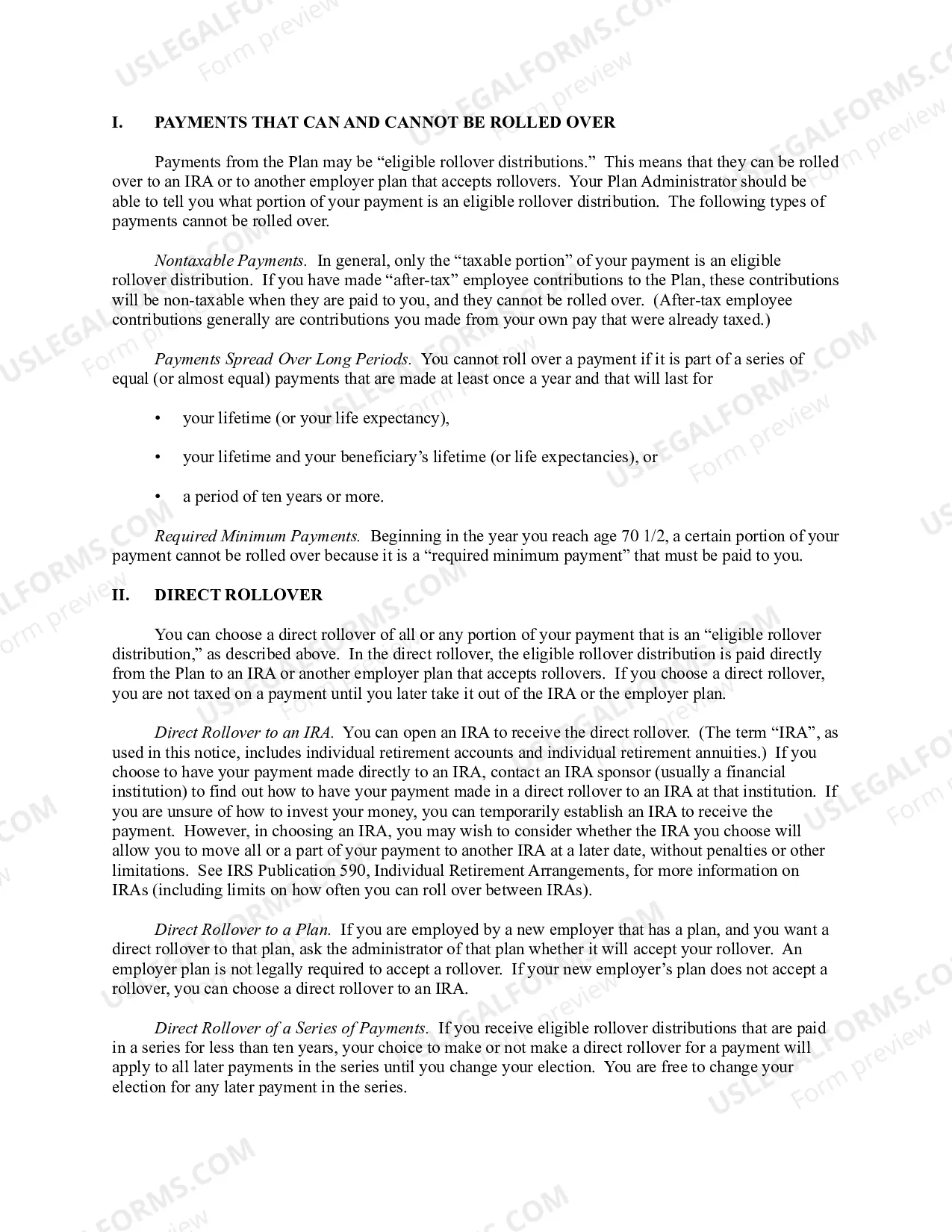
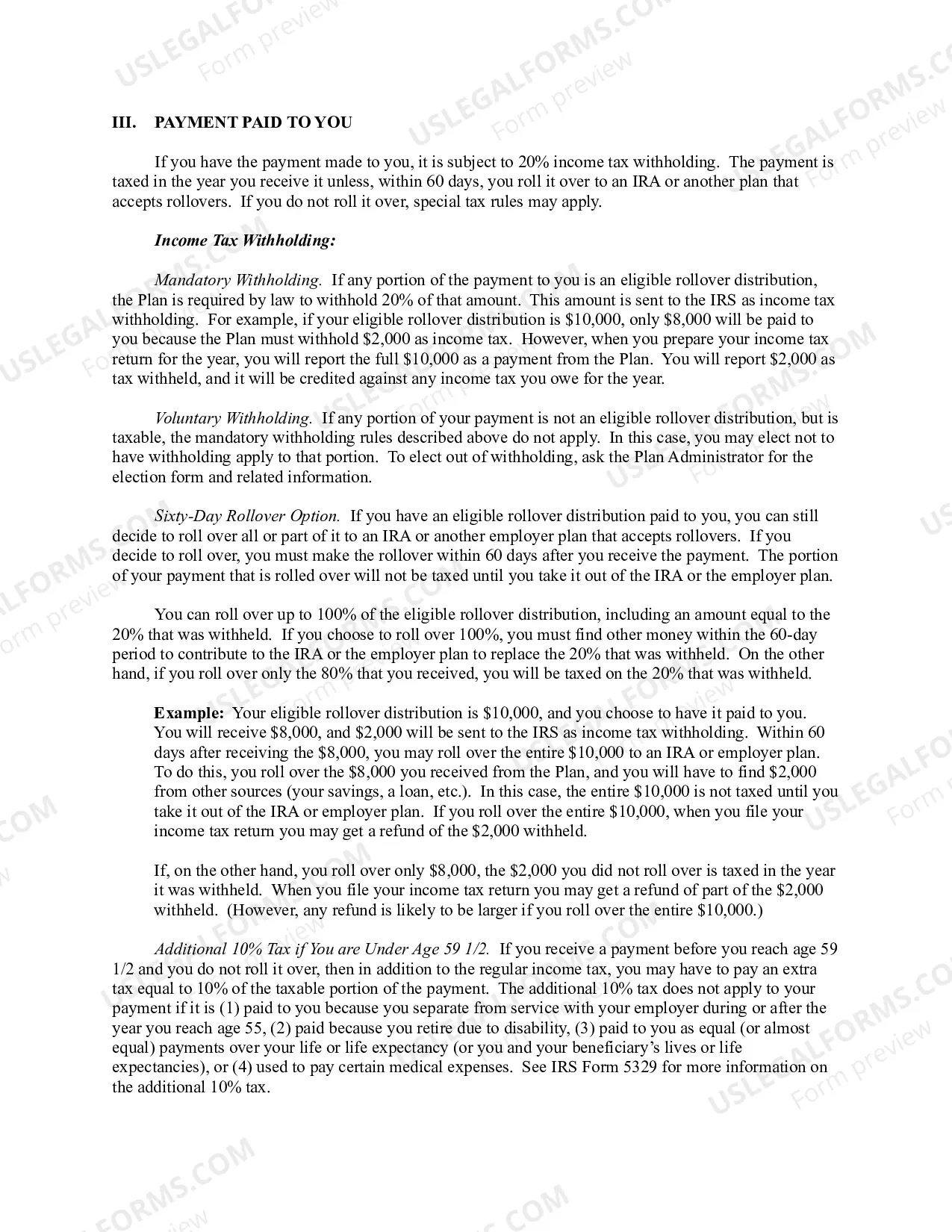
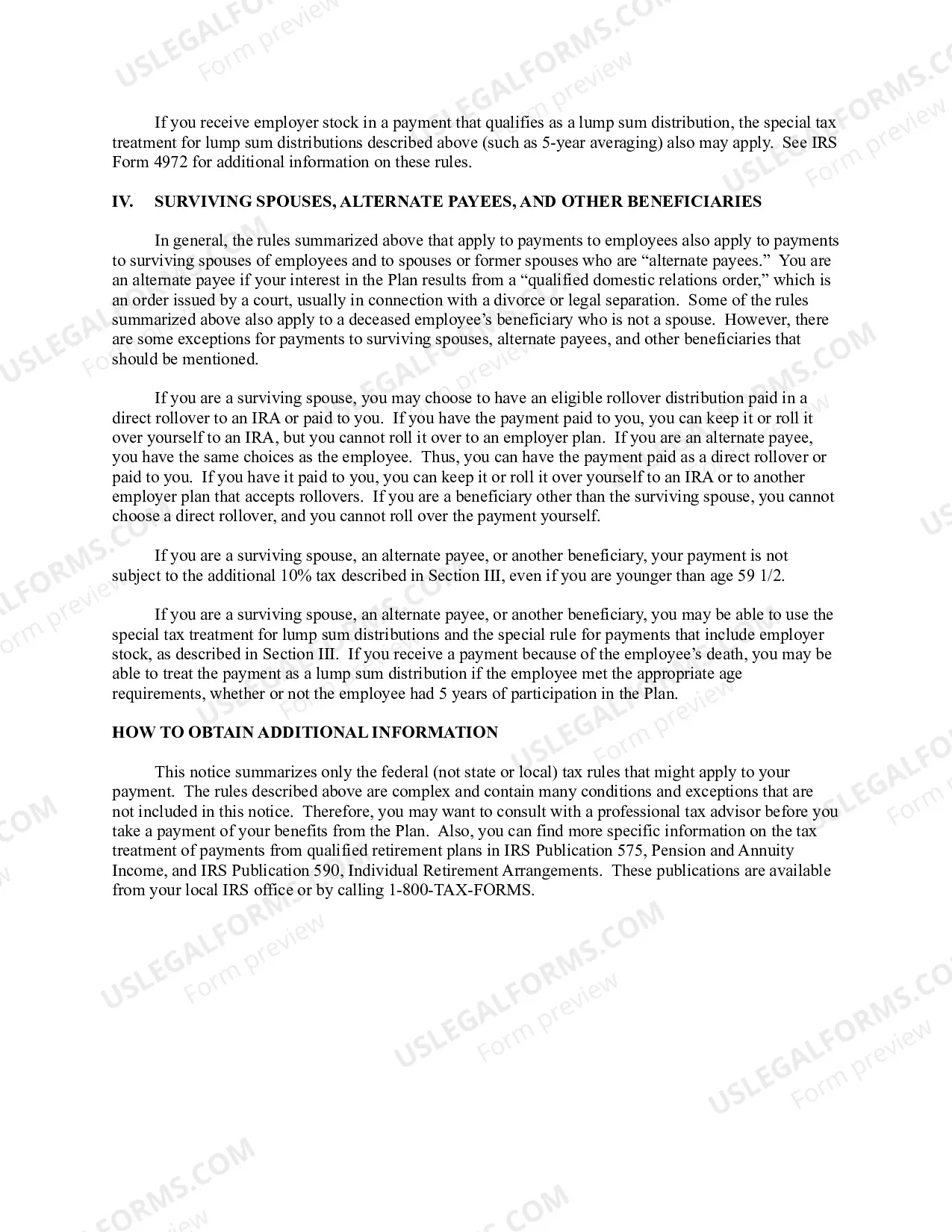
You are receiving this notice because all or a portion of a payment you are receiving from the Plan is eligible to be rolled over to either an IRA or an employer plan; or if your payment is from a Designated Roth Account to a Roth IRA or Designated Roth Account in an employer plan.
If you (and your spouse) were born after 1952, all private and public pension and annuity benefits are fully taxable and may not be subtracted from Michigan taxable income.
You do not owe income taxes on your annuity until you withdraw money or begin receiving payments. Upon a withdrawal, the money will be taxed as income if you purchased the annuity with pre-tax funds. If you purchased the annuity with post-tax funds, you would only pay tax on the earnings.
Under the special rule, the net unrealized appreciation on the stock included in the earnings in the payment will not be taxed when distributed to you from the Plan and will be taxed at capital gain rates when you sell the stock.
This notice is intended to help you decide whether to do such a rollover. This notice describes the rollover rules that apply to payments from the Plan that are not from a designated Roth account (a type of account with special tax rules in some employer plans).