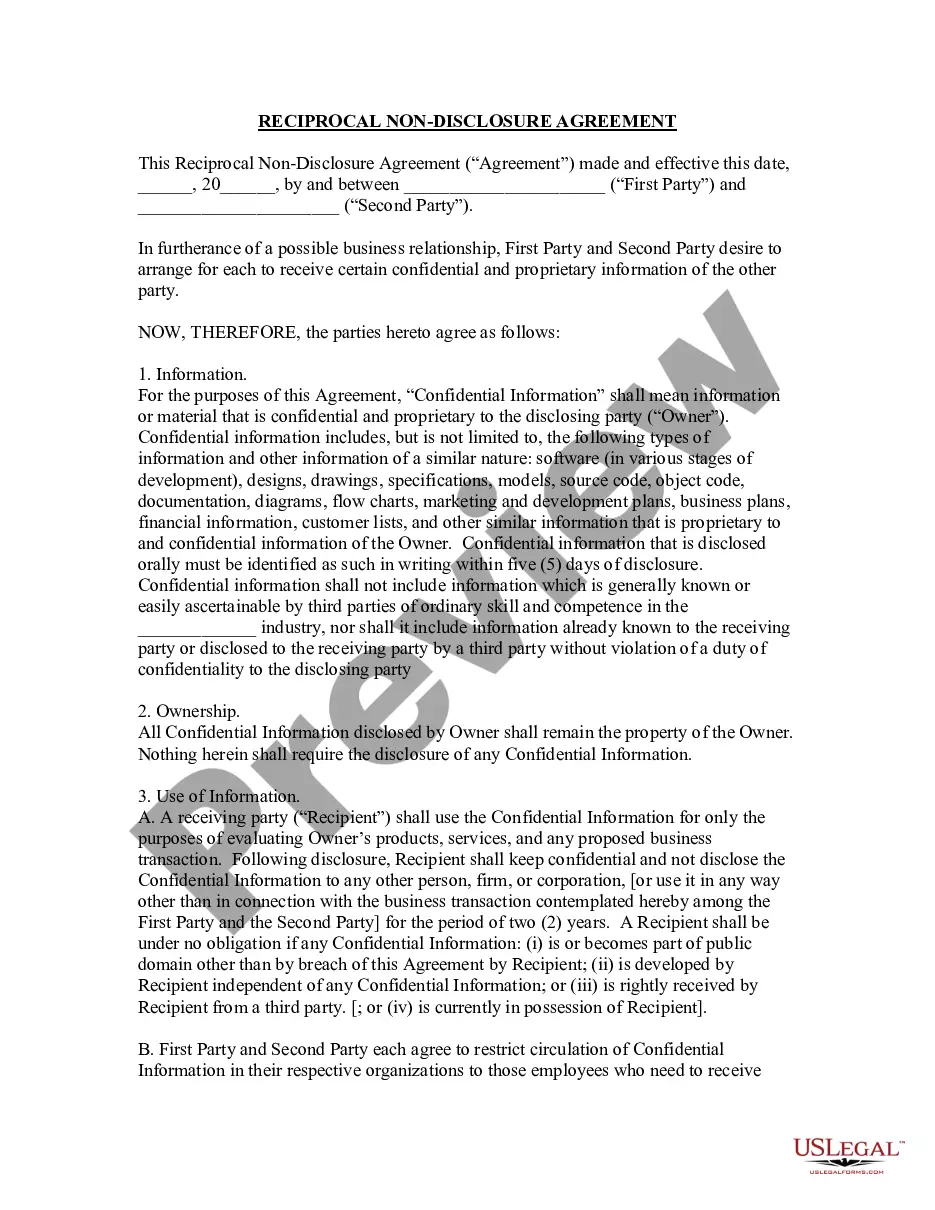
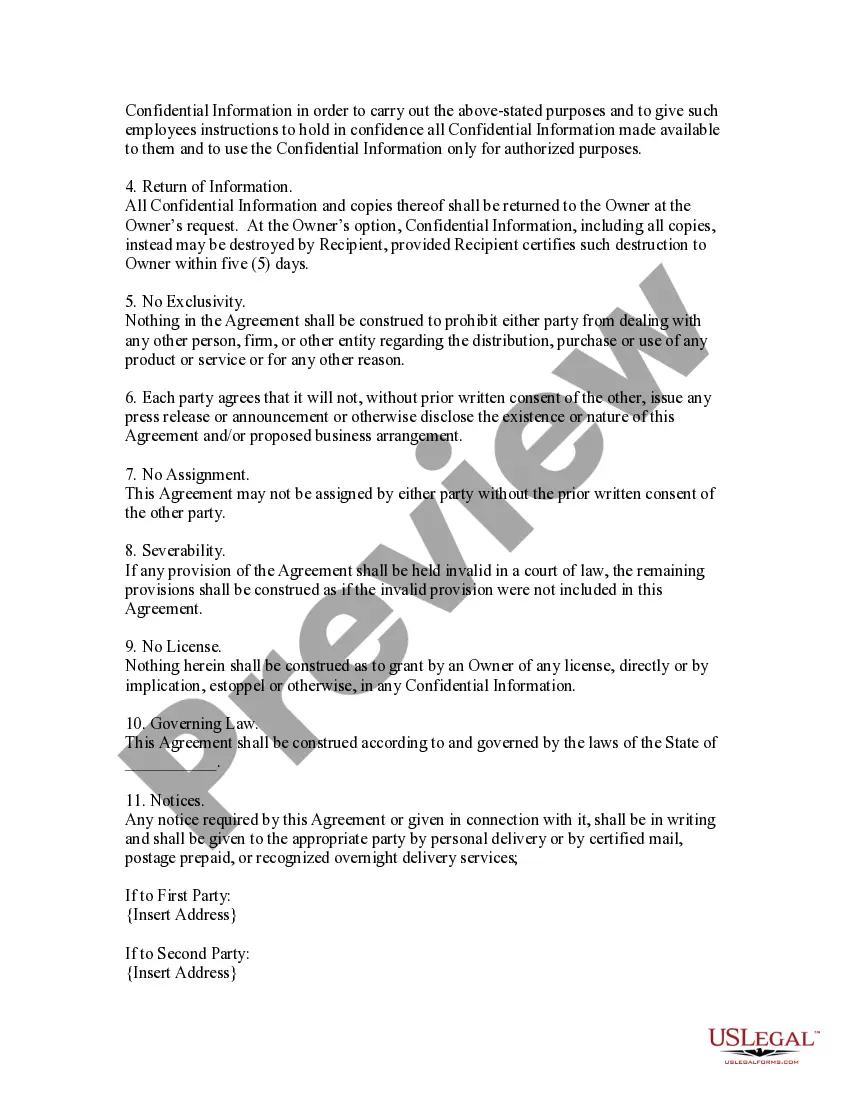
Michigan Reciprocal Nondisclosure Agreement
Description
Get your form ready online
Our built-in tools help you complete, sign, share, and store your documents in one place.
Make edits, fill in missing information, and update formatting in US Legal Forms—just like you would in MS Word.
Download a copy, print it, send it by email, or mail it via USPS—whatever works best for your next step.
Sign and collect signatures with our SignNow integration. Send to multiple recipients, set reminders, and more. Go Premium to unlock E-Sign.
If this form requires notarization, complete it online through a secure video call—no need to meet a notary in person or wait for an appointment.
We protect your documents and personal data by following strict security and privacy standards.

Make edits, fill in missing information, and update formatting in US Legal Forms—just like you would in MS Word.

Download a copy, print it, send it by email, or mail it via USPS—whatever works best for your next step.

Sign and collect signatures with our SignNow integration. Send to multiple recipients, set reminders, and more. Go Premium to unlock E-Sign.

If this form requires notarization, complete it online through a secure video call—no need to meet a notary in person or wait for an appointment.

We protect your documents and personal data by following strict security and privacy standards.
Looking for another form?



How to fill out Reciprocal Nondisclosure Agreement?
If you seek to acquire, obtain, or print authentic document templates, utilize US Legal Forms, the premier selection of lawful forms that are accessible online.
Take advantage of the website's user-friendly and straightforward search feature to procure the documents you require.
Various templates for business and personal purposes are organized by categories and states, or keywords.
Step 4. Once you have located the form you desire, click the Get now button. Choose your preferred pricing plan and fill in your details to register for an account.
Step 5. Complete the transaction. You may use your credit card or PayPal account to finalize the purchase.
- Utilize US Legal Forms to secure the Michigan Reciprocal Nondisclosure Agreement with just a few clicks.
- If you are an existing US Legal Forms customer, sign in to your account and click the Download button to retrieve the Michigan Reciprocal Nondisclosure Agreement.
- You can also access forms you previously obtained from the My documents tab in your account.
- If you are utilizing US Legal Forms for the first time, adhere to the following instructions.
- Step 1. Ensure you have selected the form for the appropriate area/state.
- Step 2. Make use of the Review option to examine the form's content. Don't forget to check the summary.
- Step 3. If you find the form unsatisfactory, utilize the Search field at the top of the screen to find alternative types of the legal form format.
Form popularity
FAQ
Depending on your needs, you can choose from three types of NDAs: unilateral, bilateral, and unilateral. Unilateral NDAs only require one party to disclose confidential information, while bilateral NDAs require two parties to disclose private information.
Violating an NDA can have serious consequences NDAs are legally binding contracts. If an employee has violated an NDA, then the company may take legal action. The most common claims in NDA lawsuits include: Breach of the contract (such as the breach of NDA)
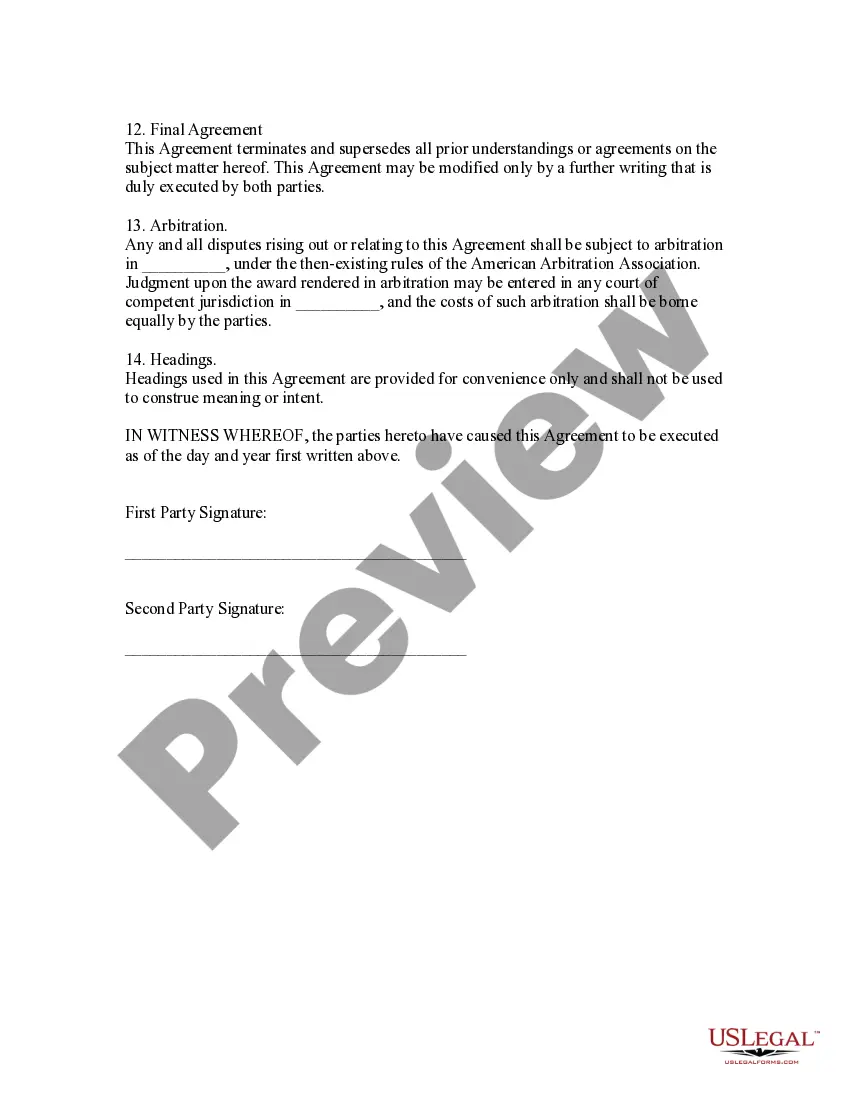
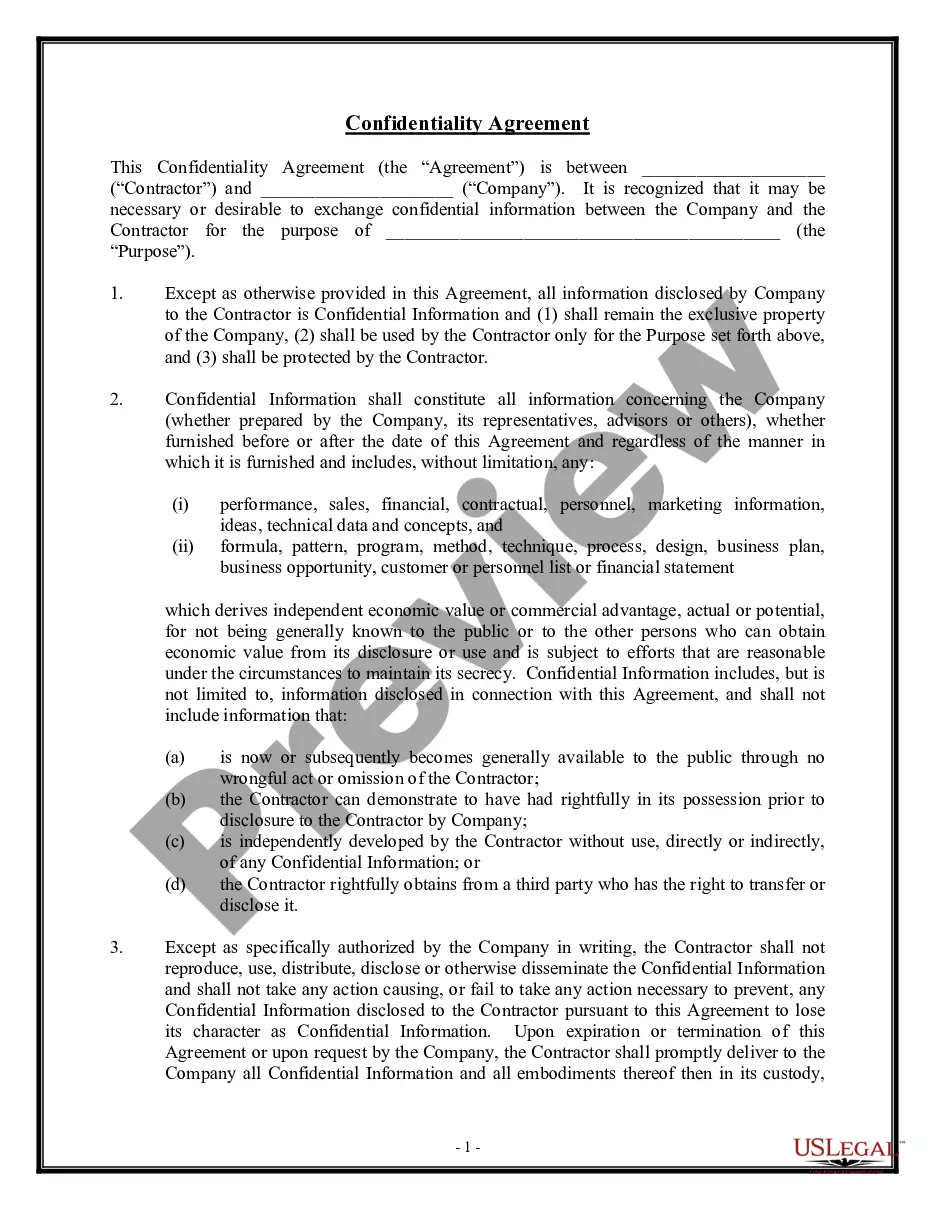
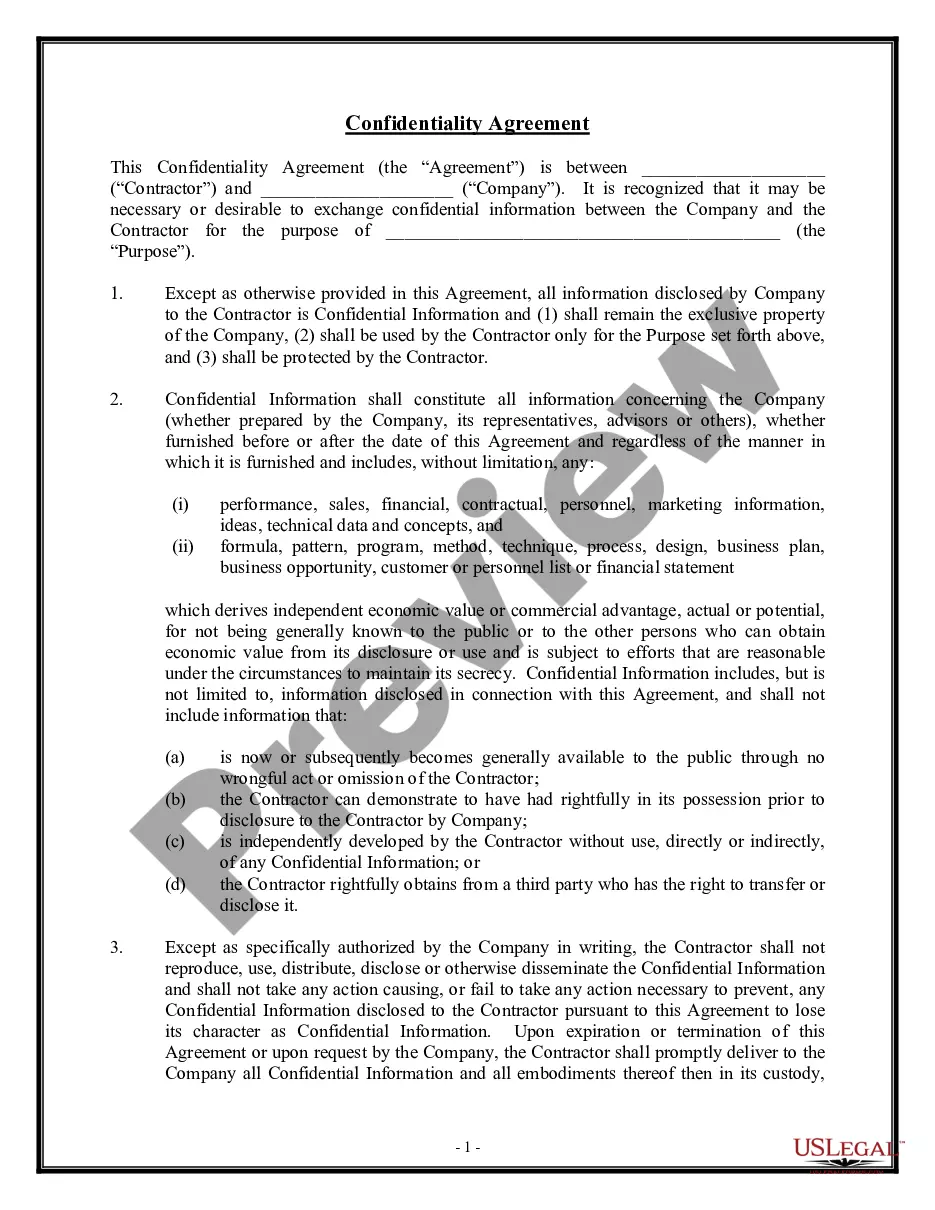
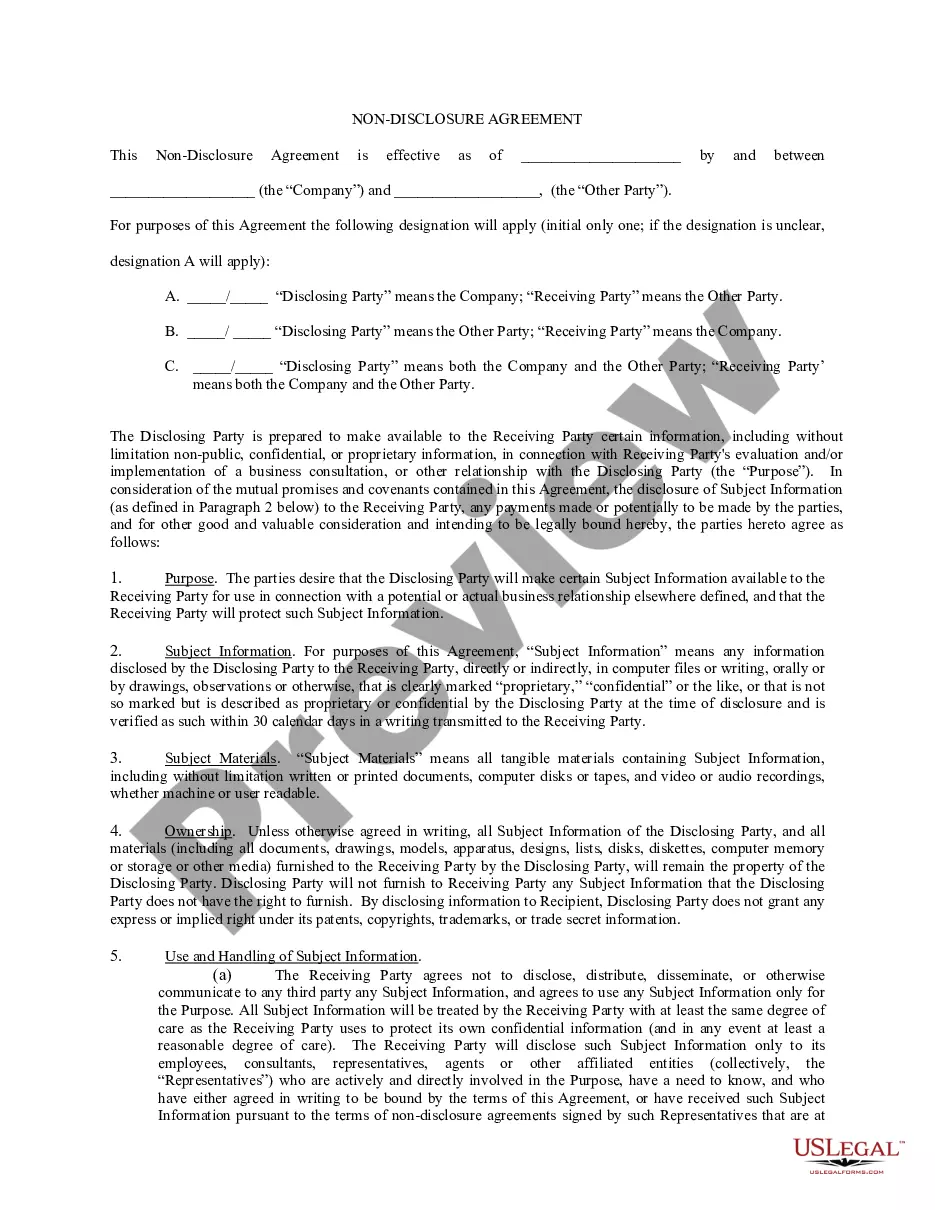
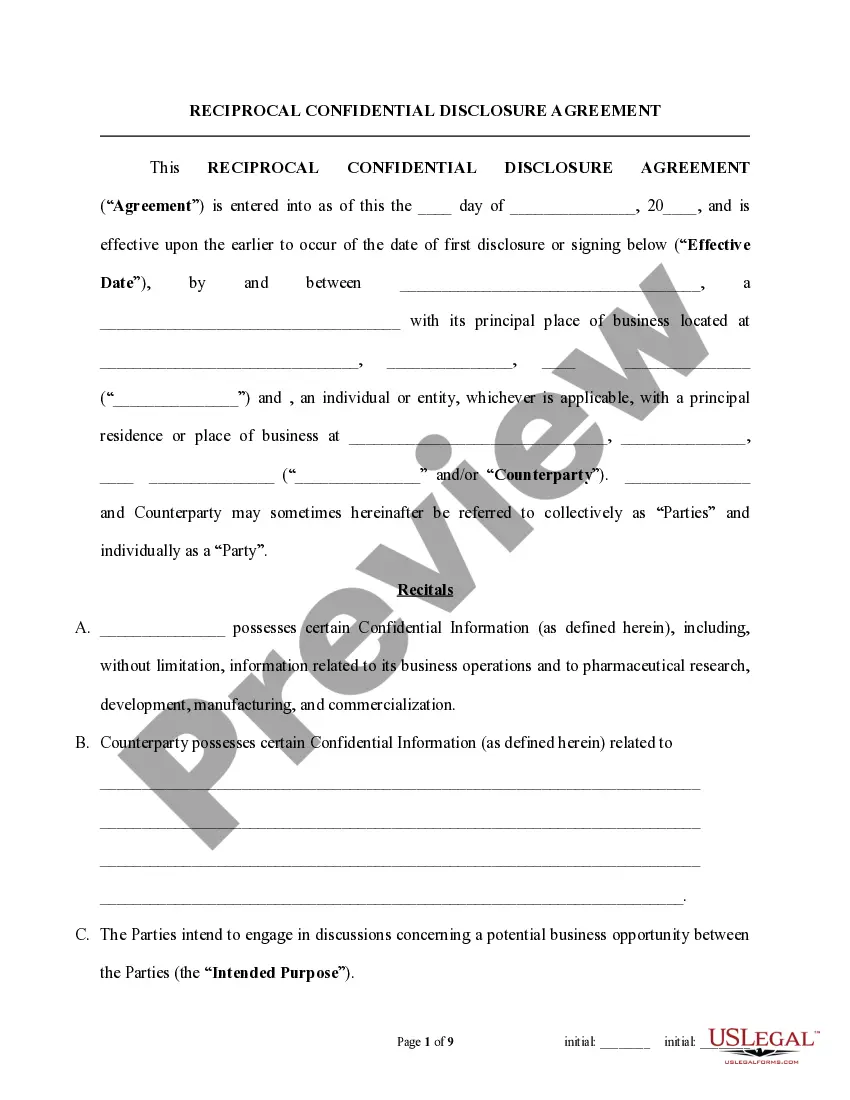
A reciprocal, or mutual, nondisclosure agreement protects both parties who are entering into a business relationship through which confidential information will be exchanged.
NDAs, or non-disclosure agreements, are legally enforceable contracts that create a confidential relationship between a person who has sensitive information and a person who will gain access to that information. A confidential relationship means one or both parties has a duty not to share that information.
Terms within the NDA should be reasonable. If the NDA terms are too broad, courts may refuse to enforce all of them.
The contractual consequences of a breach of a NDA could include a compensation claim or securing an injunction order to prevent further damage or loss arising from the breach of confidentiality.
Three-Party NDA Like other NDAs, the three-way NDA allows all parties present at the meeting or in the negotiations to discuss the confidential idea freely and without worrying that the other parties will take their idea or violate their rights.
Summary A Reciprocal Confidentiality Agreement, otherwise known as a Non-Disclosure Agreement or NDA, can help to protect private, sensitive or confidential information disclosed between two people. This NDA provides for a reciprocal duty of confidentiality.
NDAs generally will only be enforced if the enforcing party can show: (1) the existence of a trade secret or other confidential information; (2) that the trade secret or confidential information was acquired improperly or as a result of a confidential relationship; and (3) that there was actual or threatened
Violating an NDA leaves you open to lawsuits from your employer, and you could be required to pay financial damages and possibly associated legal costs. It's illegal to reveal trade secrets or sensitive company information to a competitor.