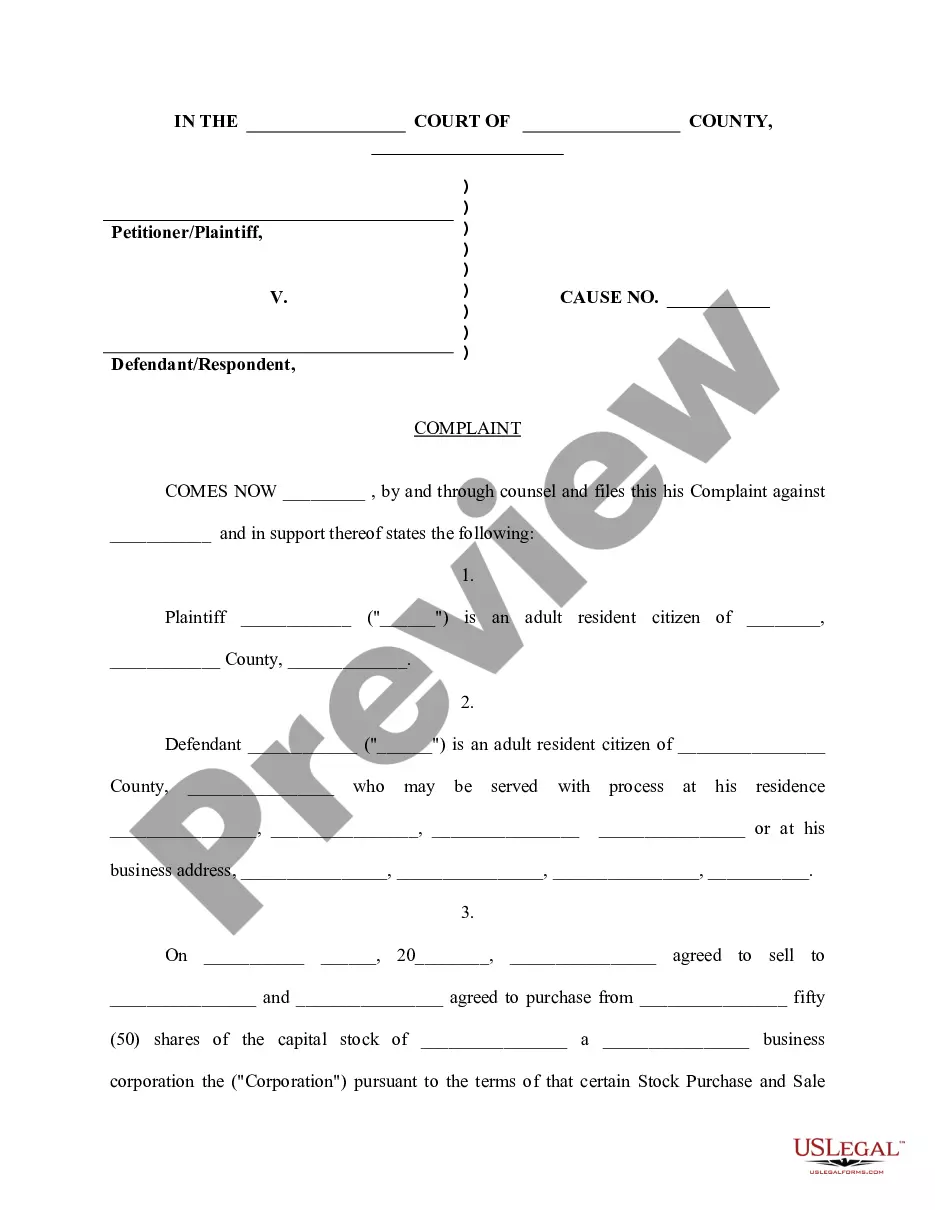
Michigan Toll Manufacturing Agreement
Description
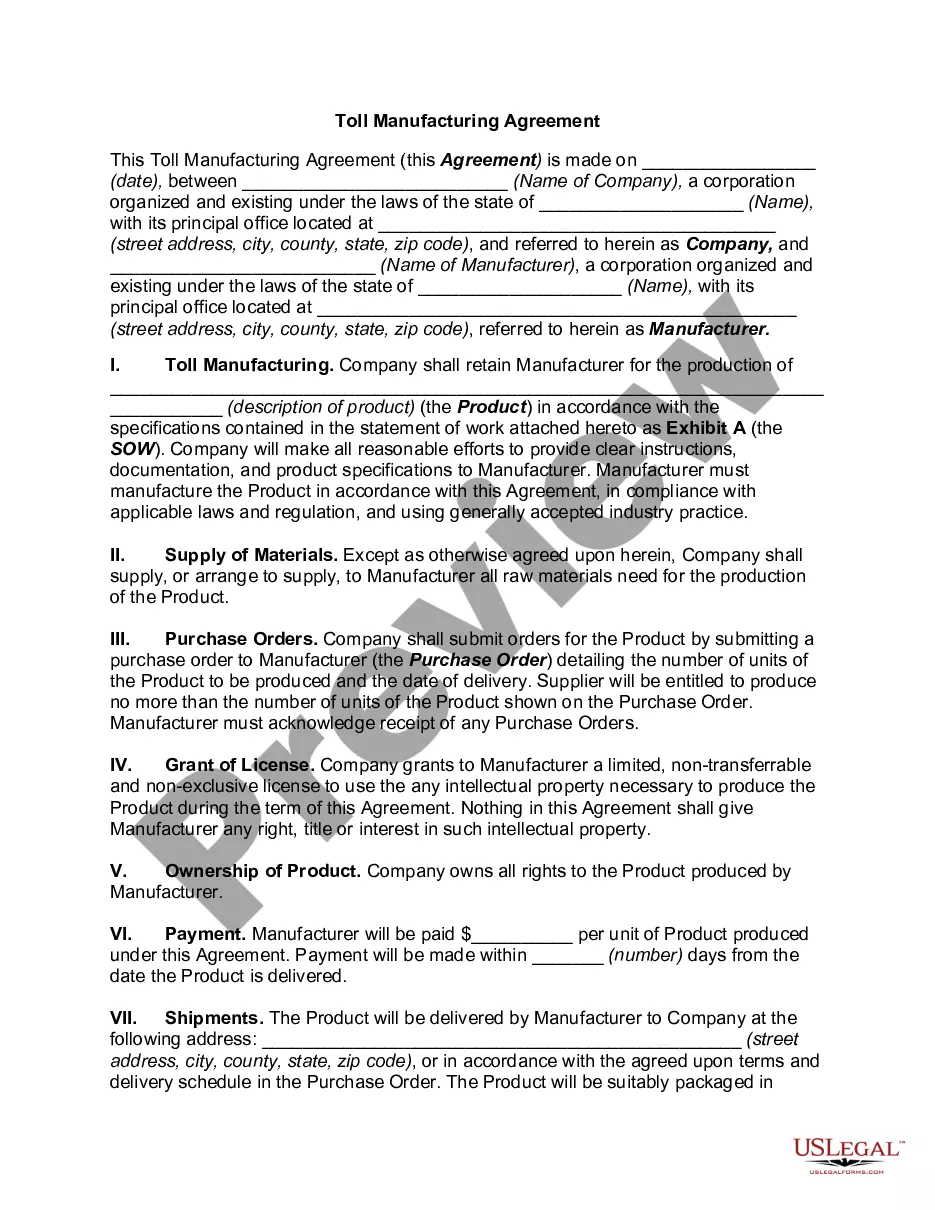
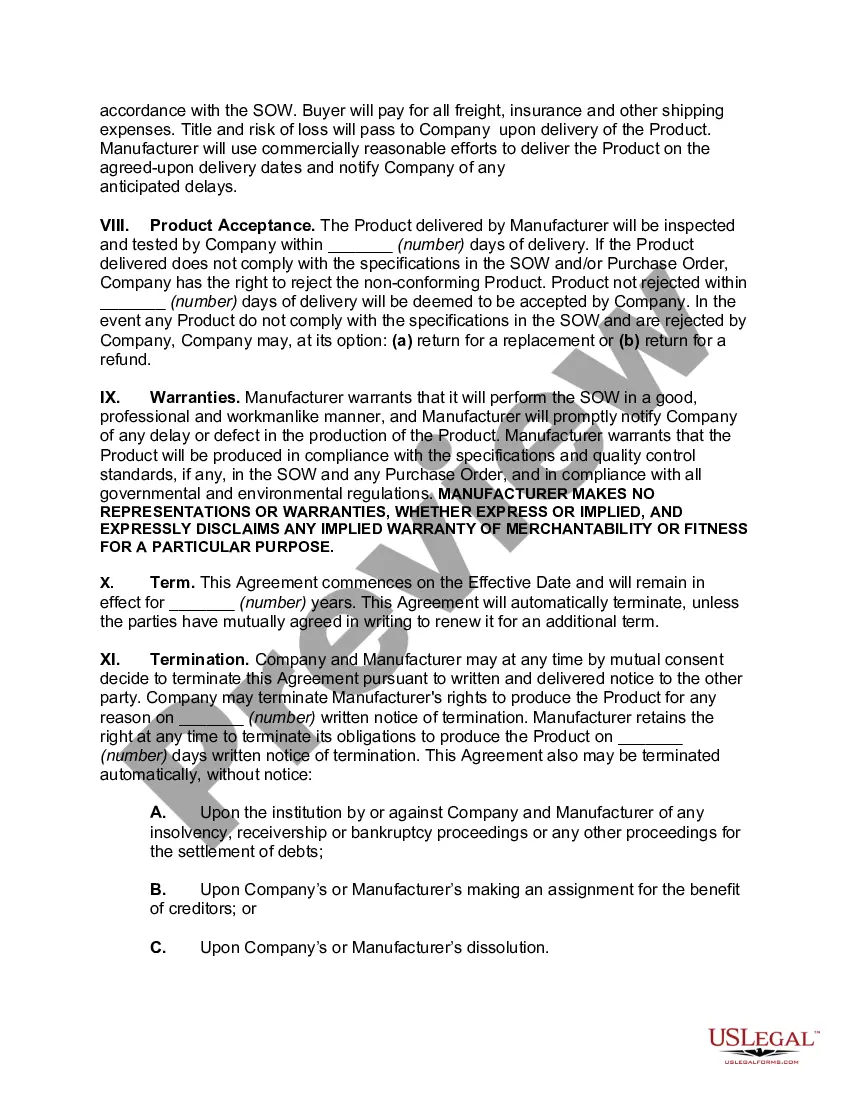
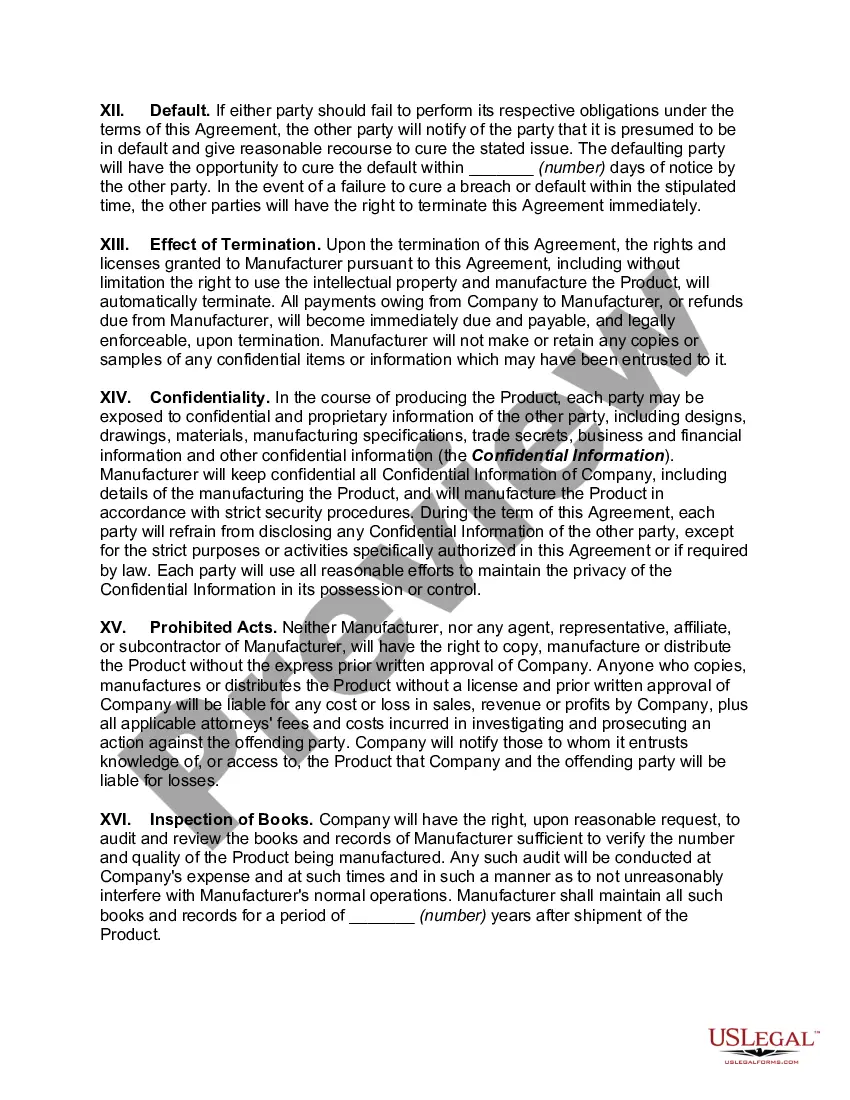
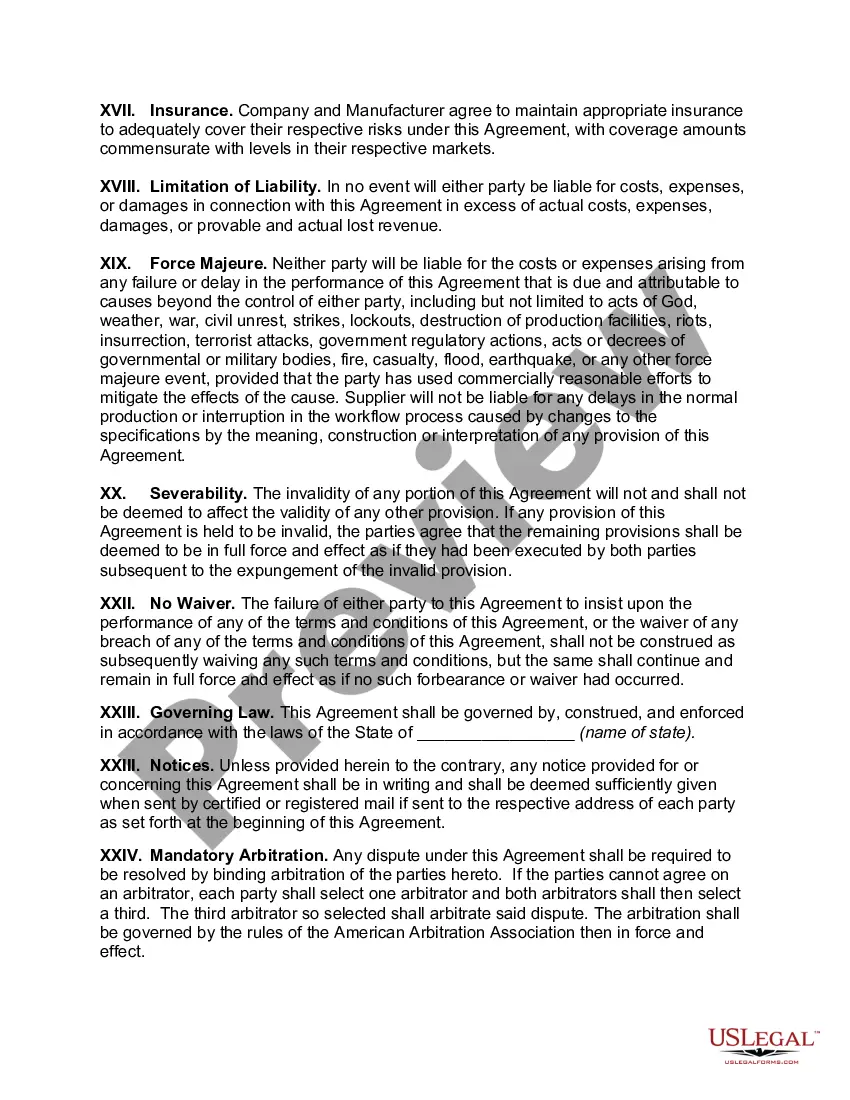
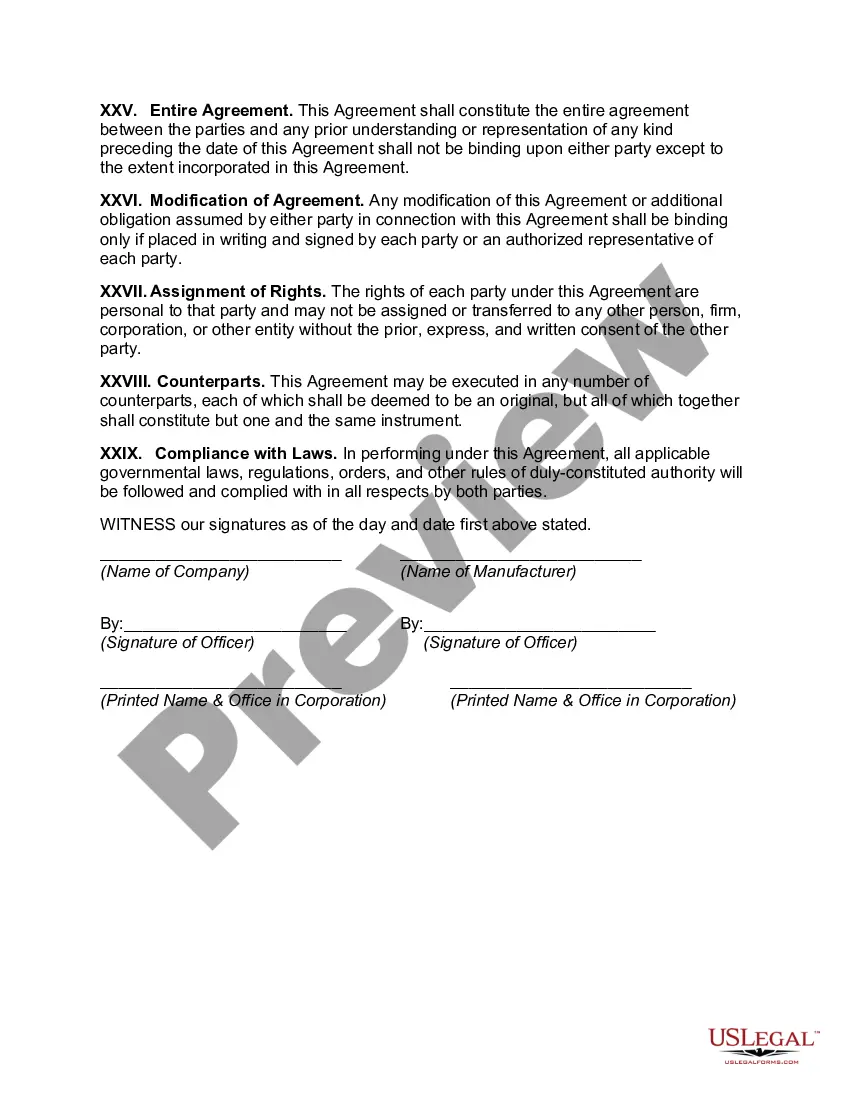
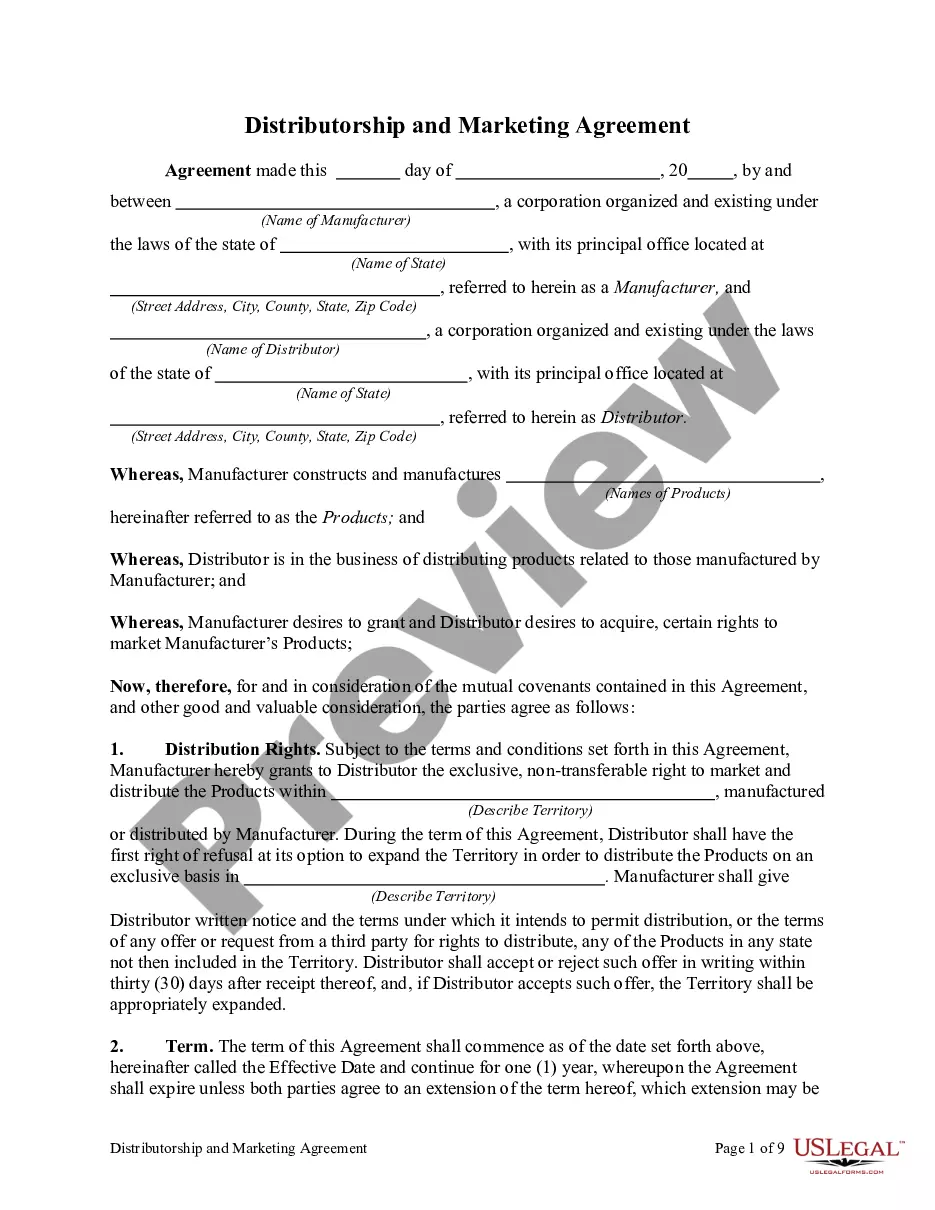
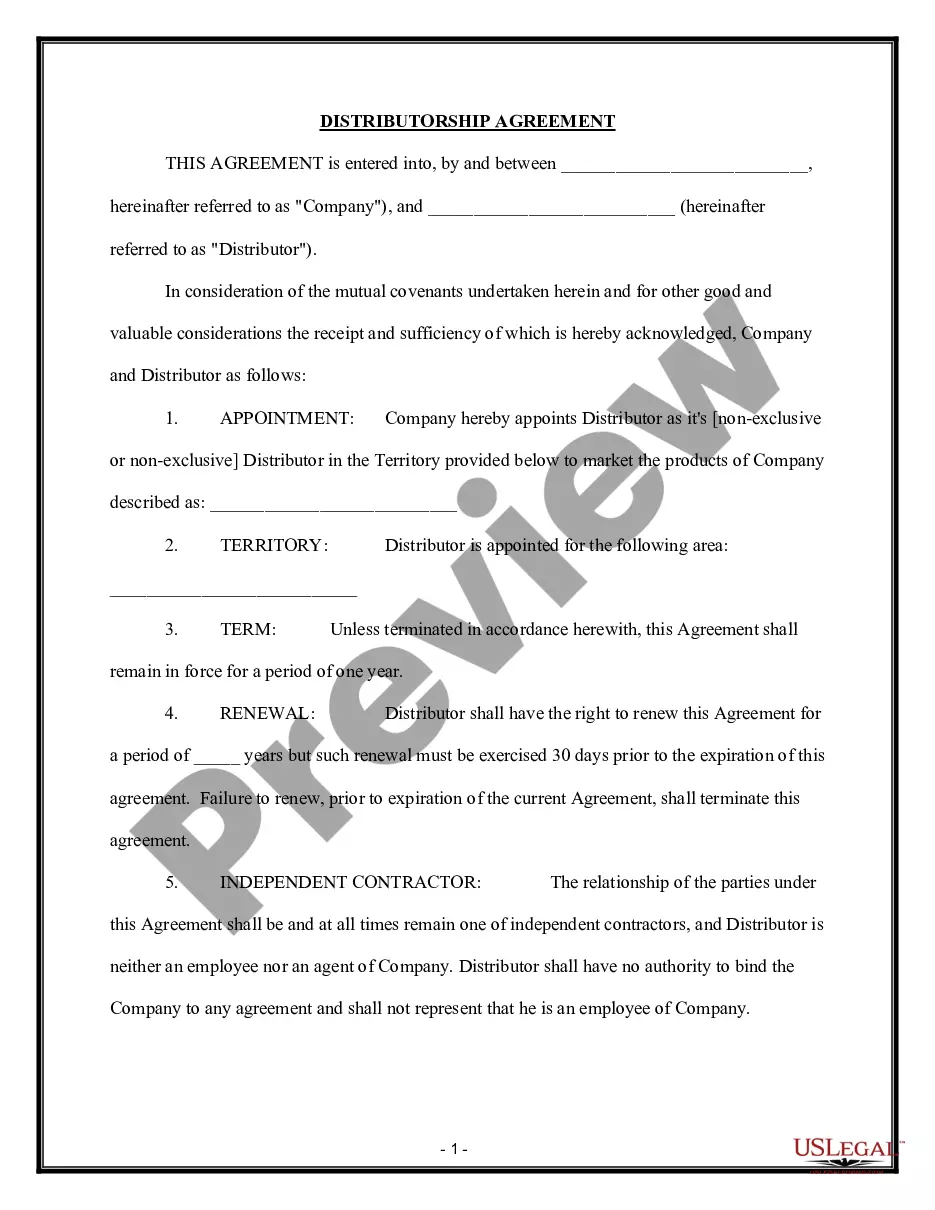
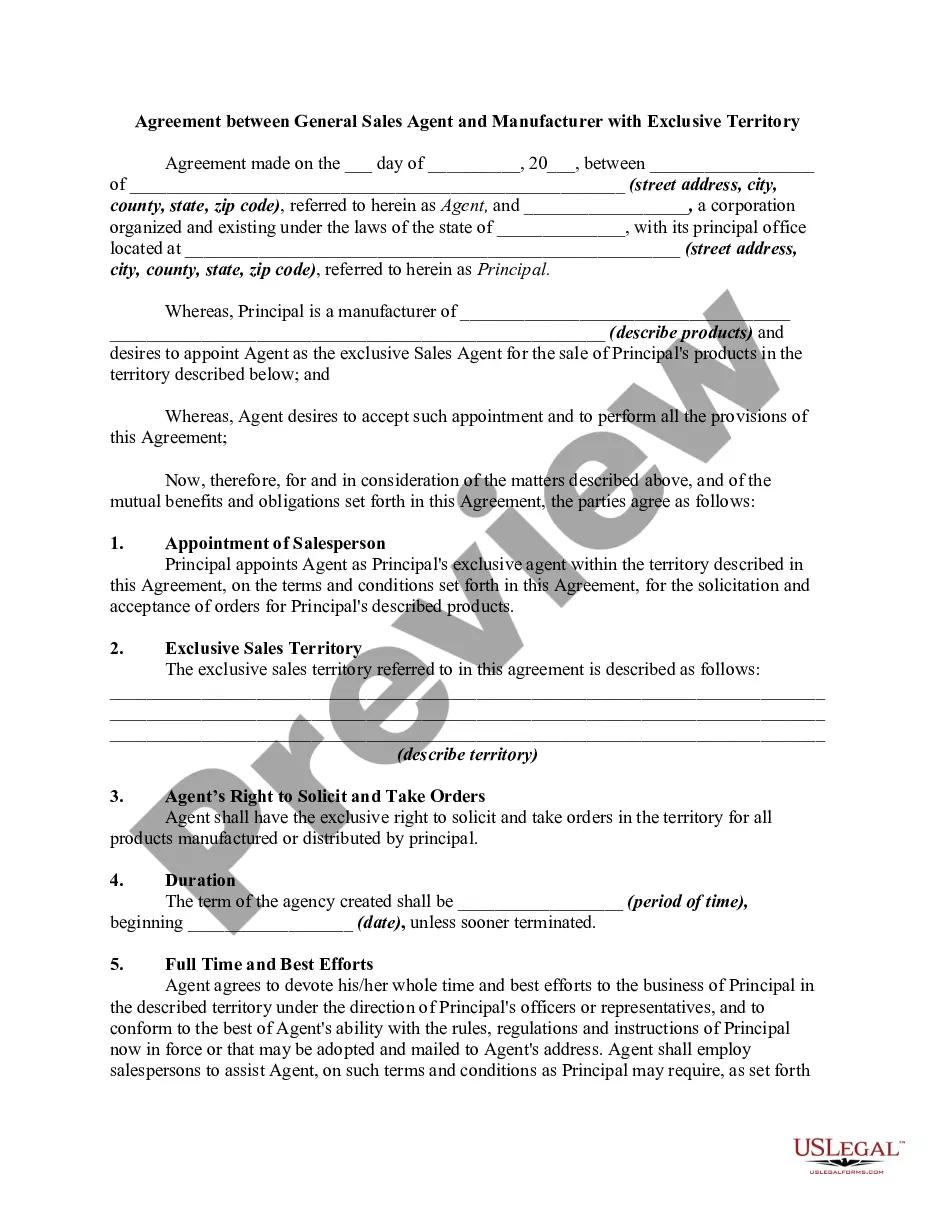
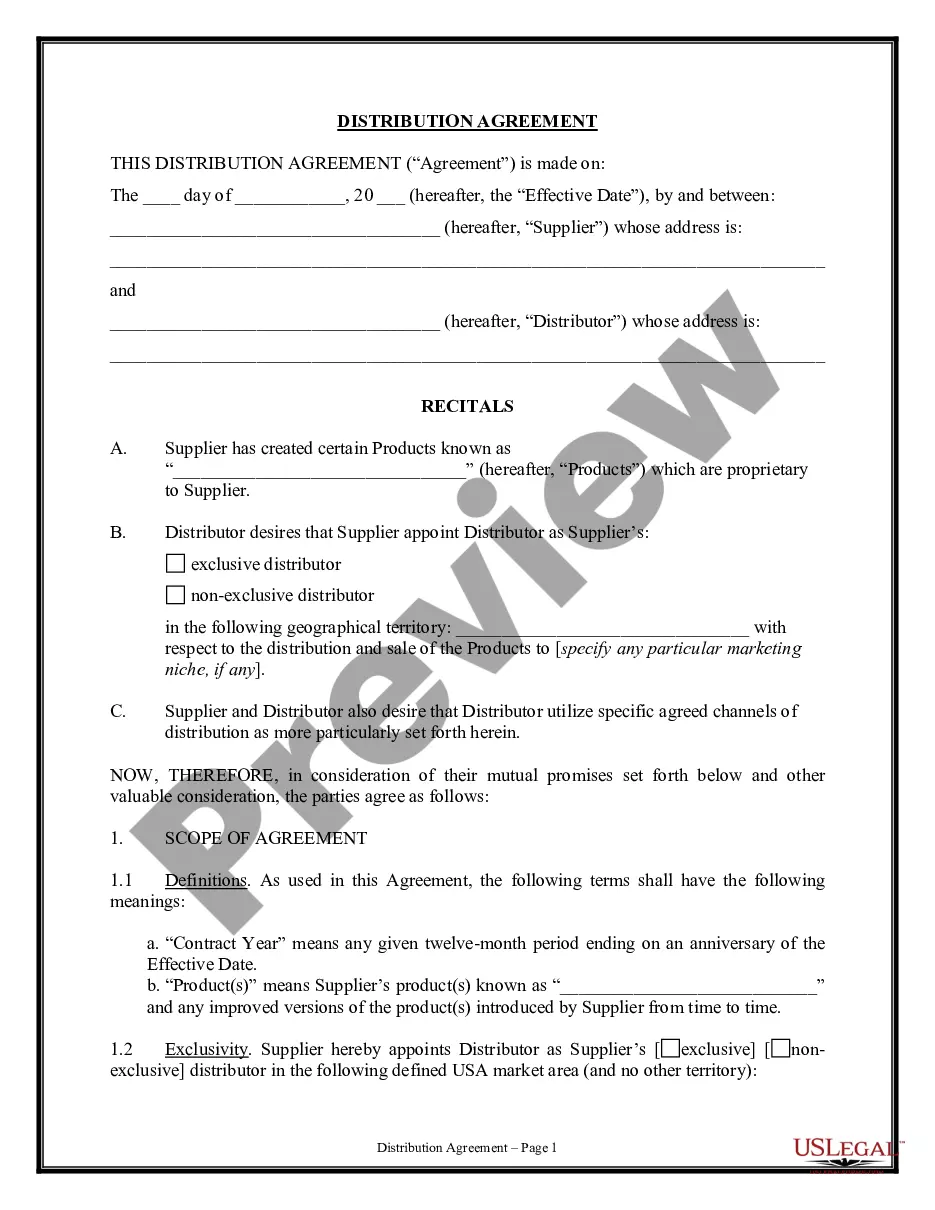
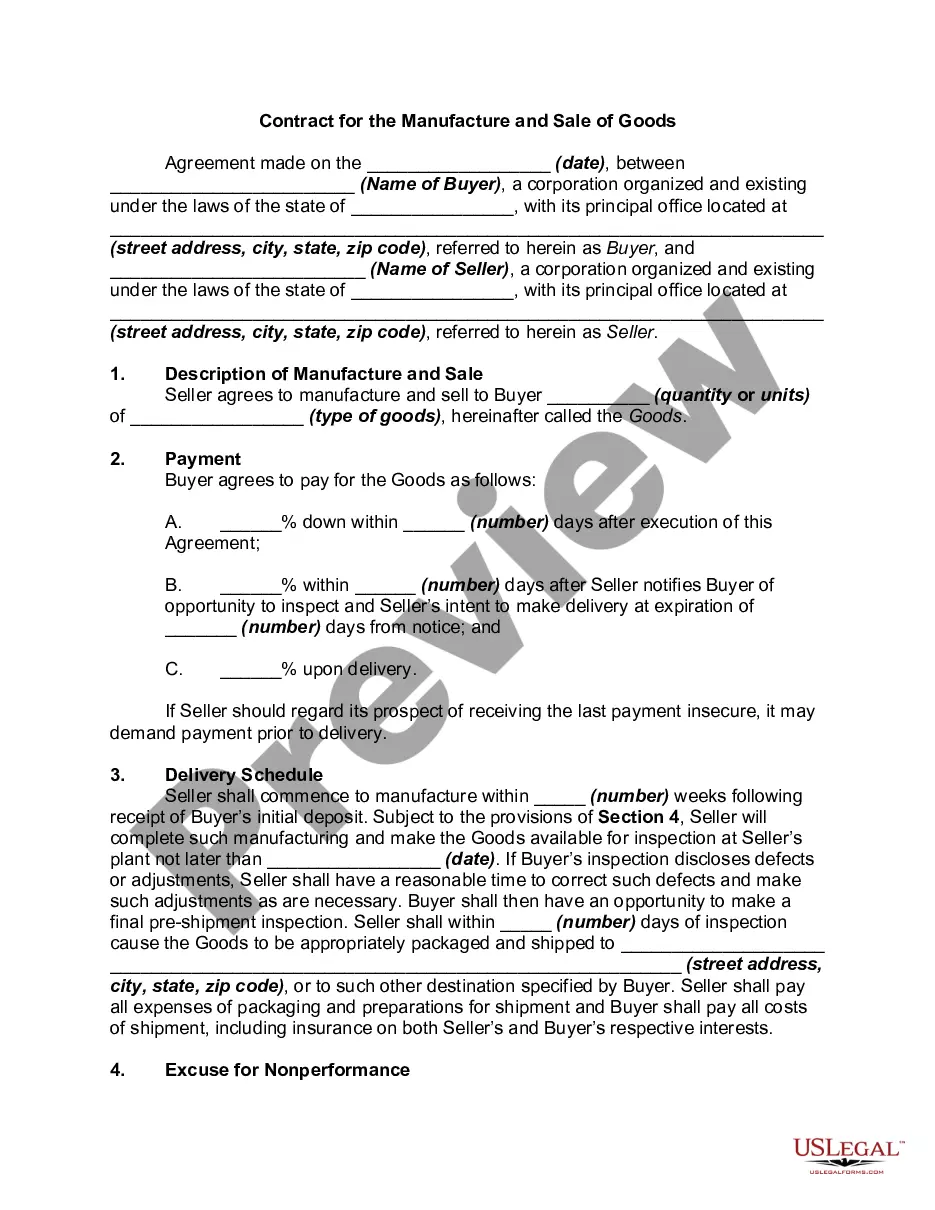

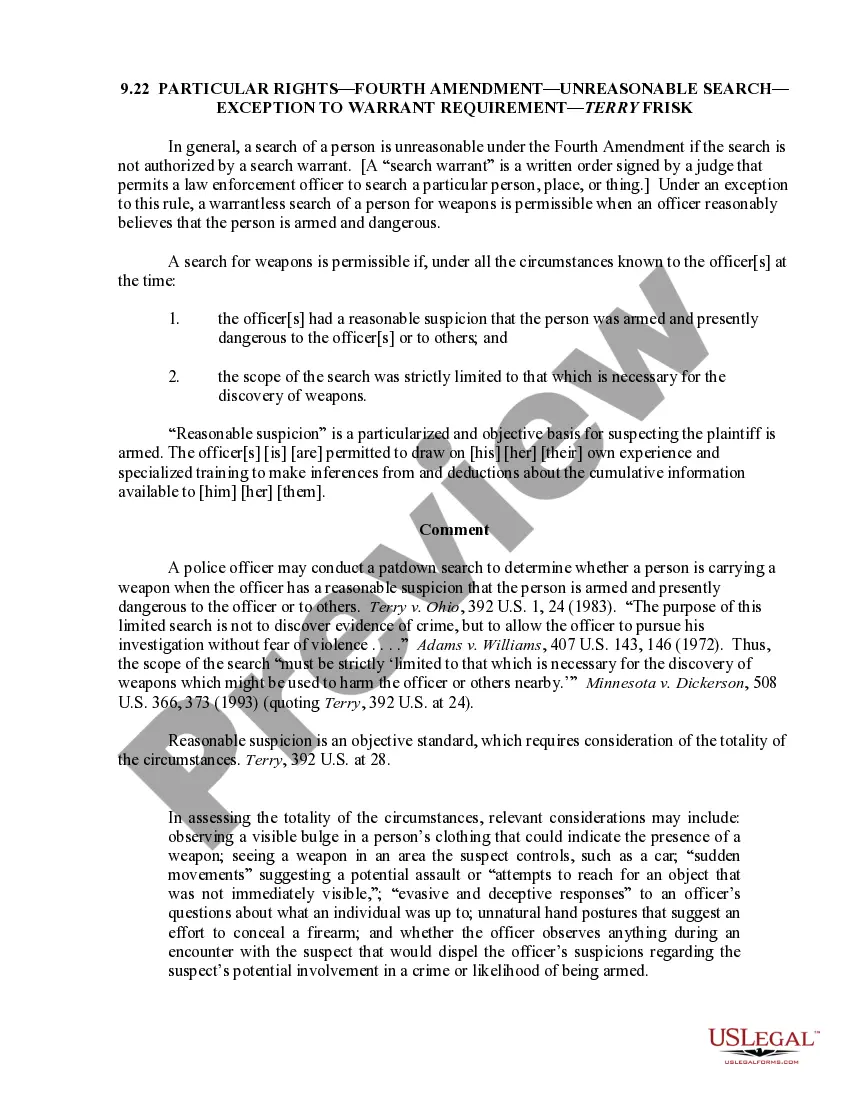
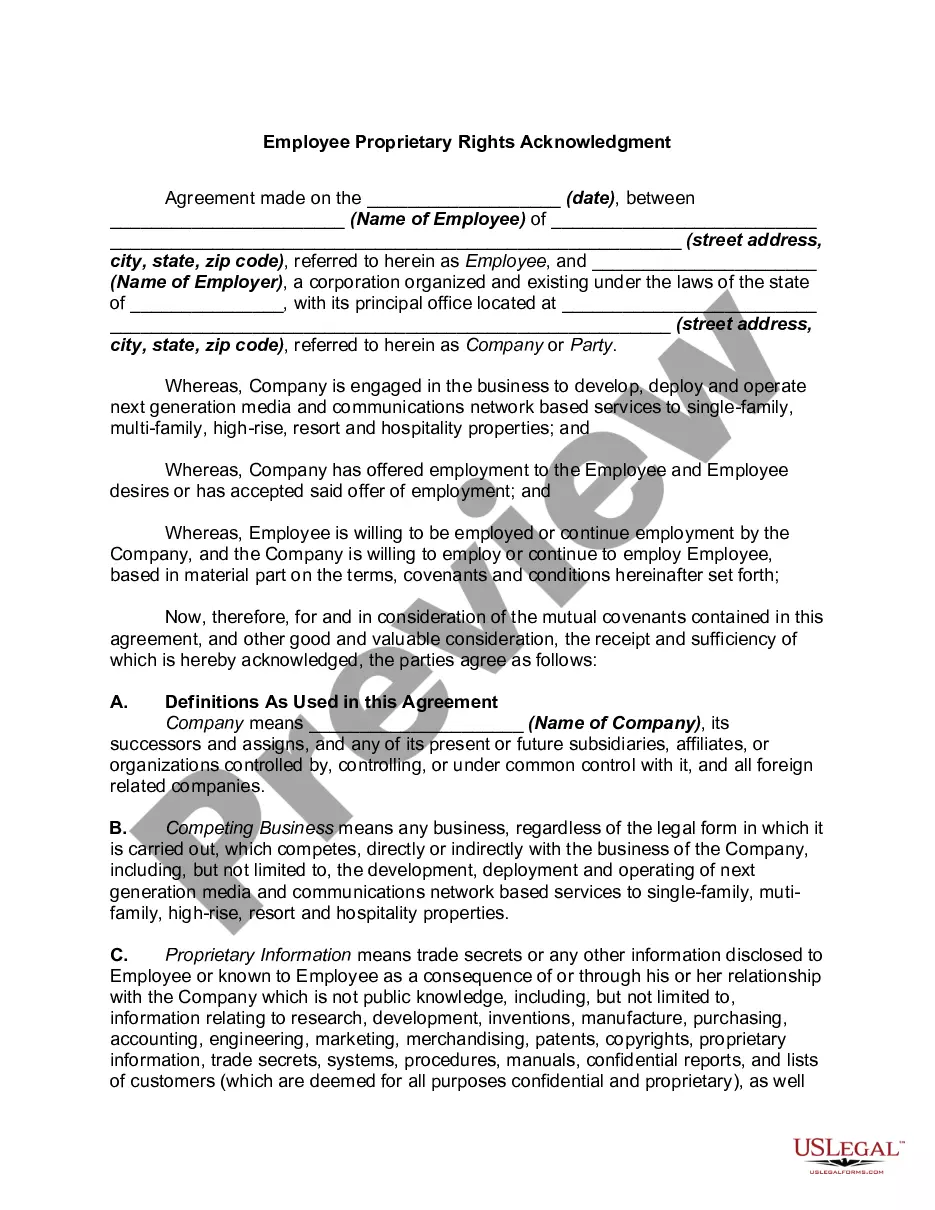
How to fill out Toll Manufacturing Agreement?
If you wish to be thorough, download, or create official document templates, utilize US Legal Forms, the largest selection of legal forms, which are available online.
Take advantage of the website's straightforward and convenient search to find the documents you need.
Various templates for business and personal purposes are sorted by categories and jurisdictions, or keywords.
Step 4. After locating the form you need, click on the Purchase now button. Choose the pricing plan you prefer and enter your details to create your account.
Step 5. Process the transaction. You can use your credit card or PayPal account to complete the purchase. Step 6. Select the format of the legal document and download it onto your device. Step 7. Complete, edit, and print or sign the Michigan Toll Manufacturing Agreement.
Each legal document format you acquire is yours indefinitely. You have access to every form you downloaded within your account.
Acquire and download, and print the Michigan Toll Manufacturing Agreement with US Legal Forms. There are countless professional and state-specific forms available for your business or personal needs.
- Use US Legal Forms to obtain the Michigan Toll Manufacturing Agreement in merely a few clicks.
- If you are already a US Legal Forms user, Log In to your account and click the Acquire button to access the Michigan Toll Manufacturing Agreement.
- You can also access forms you have previously downloaded in the My documents section of your account.
- If this is your first time using US Legal Forms, follow the instructions below.
- Step 1. Ensure you have chosen the form for the correct region/state.
- Step 2. Use the Preview option to review the form's content. Be sure to read the details.
- Step 3. If you are unsatisfied with the form, use the Search box at the top of the screen to find other versions of the legal form format.
Form popularity
FAQ
Toll manufacturing refers specifically to a partnership where one company manufactures products for another, using the client’s materials. In contrast, regular manufacturing typically involves a company handling its production from start to finish, including sourcing materials. With a Michigan Toll Manufacturing Agreement, clients maintain control over the quality of their raw materials while benefiting from the capabilities of experienced manufacturers. This allows businesses to focus on their core functionalities without the burden of in-house production.
A Michigan Toll Manufacturing Agreement outlines the terms under which one company (the toll manufacturer) produces goods for another company (the client). In this arrangement, the client provides the raw materials, while the toll manufacturer processes these materials into finished products. This type of agreement benefits businesses by allowing them to leverage specialized manufacturing capabilities without investing in additional equipment. It’s a strategic way to lower production costs and increase efficiency.
To create a contract for manufacturing, start by clearly defining the scope of work, including the products involved and production timelines. Next, detail the responsibilities of both the manufacturer and the client, including payment terms and quality standards. Utilizing a Michigan Toll Manufacturing Agreement can streamline this process, ensuring all essential elements are addressed for a successful partnership.
The toll manufacturing process involves one company, known as the toller, producing goods for another company, known as the client. The client provides raw materials, while the toller uses their equipment and expertise to create the finished product. This arrangement can be outlined in a Michigan Toll Manufacturing Agreement to specify the roles and expectations of both parties.
Toll manufacturing refers to a contractual arrangement where one company produces goods or processes materials on behalf of another company. The client retains ownership of the raw materials, while the toll manufacturer provides specific processing services. A Michigan Toll Manufacturing Agreement formalizes this relationship, ensuring clear expectations are set between the involved parties.
Subcontract manufacturing refers to a process where a business outsources part of its manufacturing needs to another company. This can include tasks such as assembly, packaging, or specific production tasks. Businesses can implement subcontract manufacturing through clear agreements, enhancing efficiency and resource management, including formats like the Michigan Toll Manufacturing Agreement.
A toll manufacturer operates under a Michigan Toll Manufacturing Agreement, processing materials owned by another company without taking ownership of the final product. In contrast, contract manufacturers usually manage both the production process and supply of materials, with a greater financial stake in the finished goods. Understanding these distinctions helps businesses make informed decisions about their manufacturing needs.
Subcontractors take on specific tasks as part of a larger project and do not typically own or produce the product, while manufacturers are responsible for creating and assembling products from start to finish. In many cases, manufacturers might utilize subcontractors for specialized tasks in a Michigan Toll Manufacturing Agreement, ensuring efficient production without the risk of overextension. Recognizing these roles can enhance project management and production efficiency.
Toll manufacturing focuses on processing specific materials provided by another company, while subcontracting refers to delegating part of the manufacturing process to a third party. Under a Michigan Toll Manufacturing Agreement, the toll manufacturer processes materials according to the supplier’s specifications, whereas subcontracting might involve a broader array of manufacturing tasks. This clarity can aid companies in deciding which method best aligns with their operational strategy.
Toll manufacturing involves one company providing materials to another for processing, while contract manufacturing generally involves a more comprehensive agreement where the manufacturer also provides materials. The Michigan Toll Manufacturing Agreement specifies the process where the client retains ownership of the raw materials, whereas in a contract manufacturing scenario, the manufacturer may own or source the materials. Understanding these distinctions helps businesses choose the best approach for their needs.