UCC-1 for Personal Credit
Overview of this form
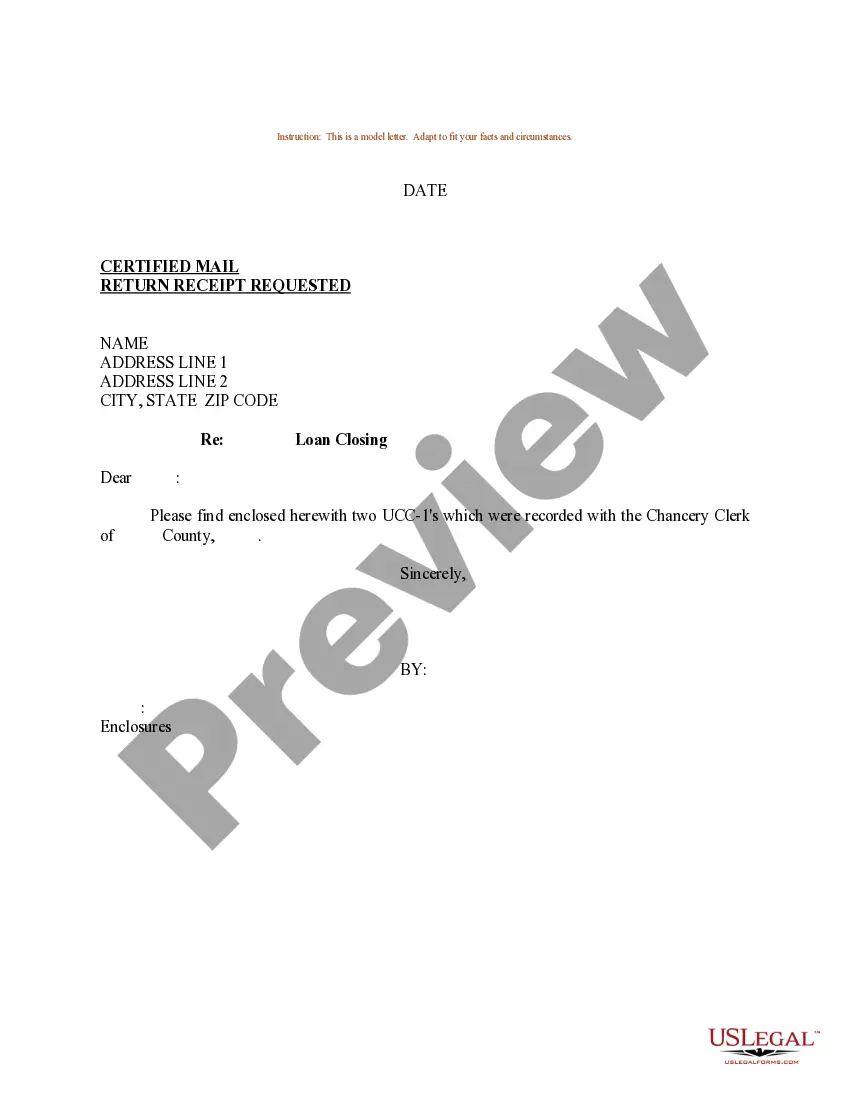
The UCC-1 for personal credit is a legal document used to secure a creditor's interest in a borrower's personal property. It serves as a notice filing with the appropriate state authority, indicating the creditor's priority over other claims to the same collateral. This form differs from similar documents by focusing specifically on personal credit situations, ensuring that lenders can claim secured interests in the assets of individuals. In essence, it is crucial for protecting a lender's rights in the event of default by the borrower.
Key components of this form
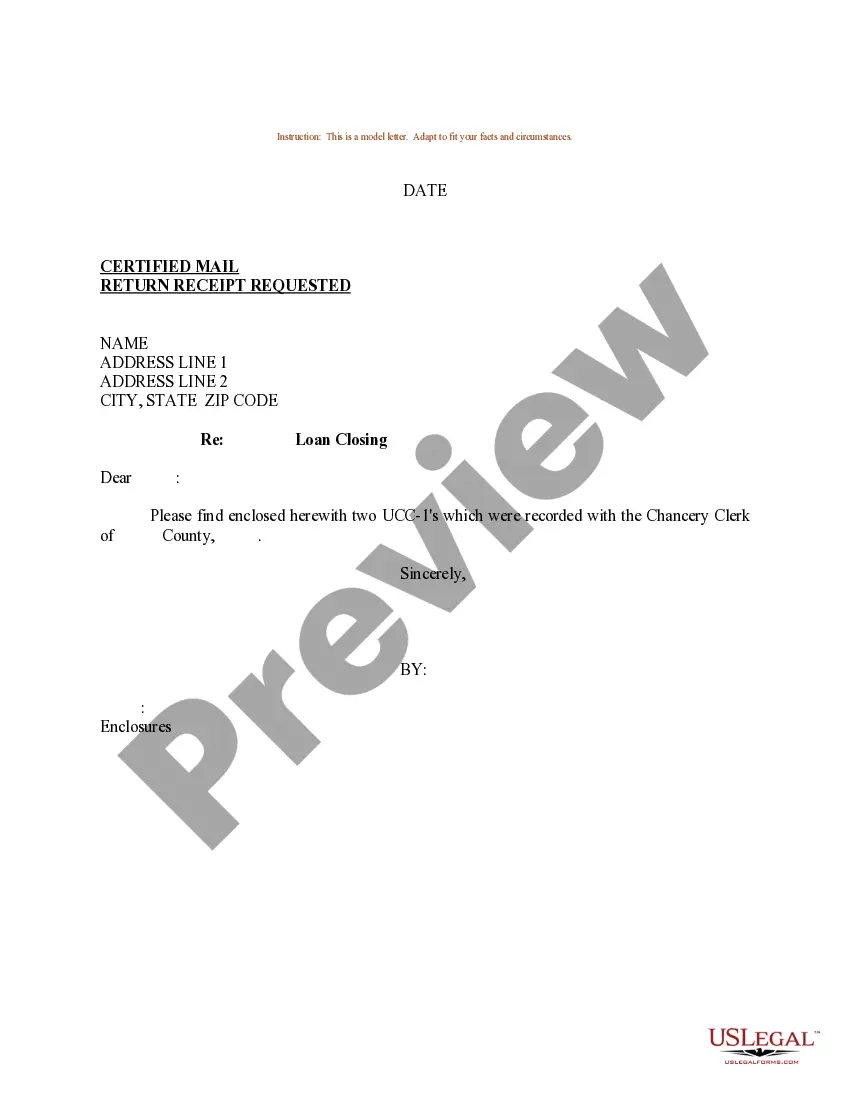
- Date of the filing
- Sender's name and address
- Borrower's name and address
- Description of the collateral
- Signature line

When this form is needed
This form should be used when a lender intends to secure a loan through a borrower's personal property or assets. Common situations include personal loans, installment agreements, and secured lines of credit where property is provided as collateral. By filing the UCC-1, the lender establishes a legal claim to the property and protects their financial interests in case of the borrower's default.
Who can use this document
The UCC-1 form is intended for:
- Individual lenders looking to secure personal loans
- Businesses offering credit to individuals
- Financial institutions managing personal credit lines
- Borrowers who need to understand the implications of using personal property as collateral
Instructions for completing this form
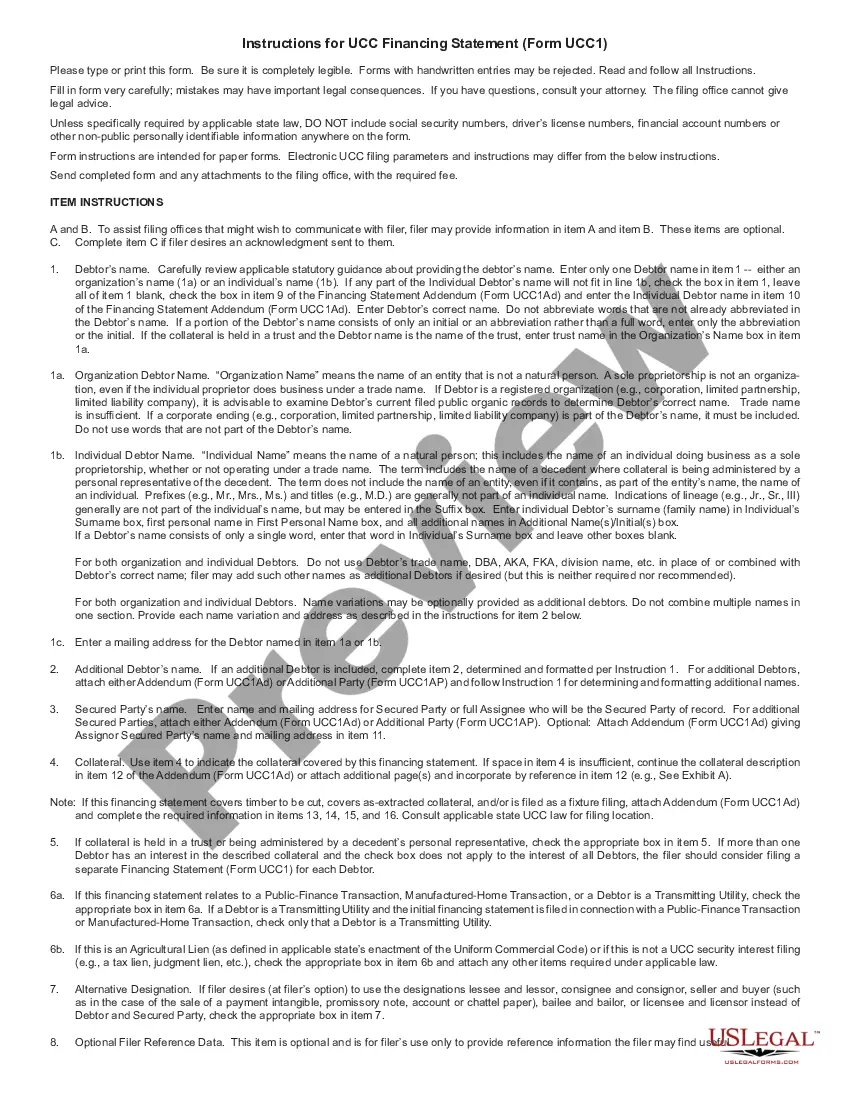
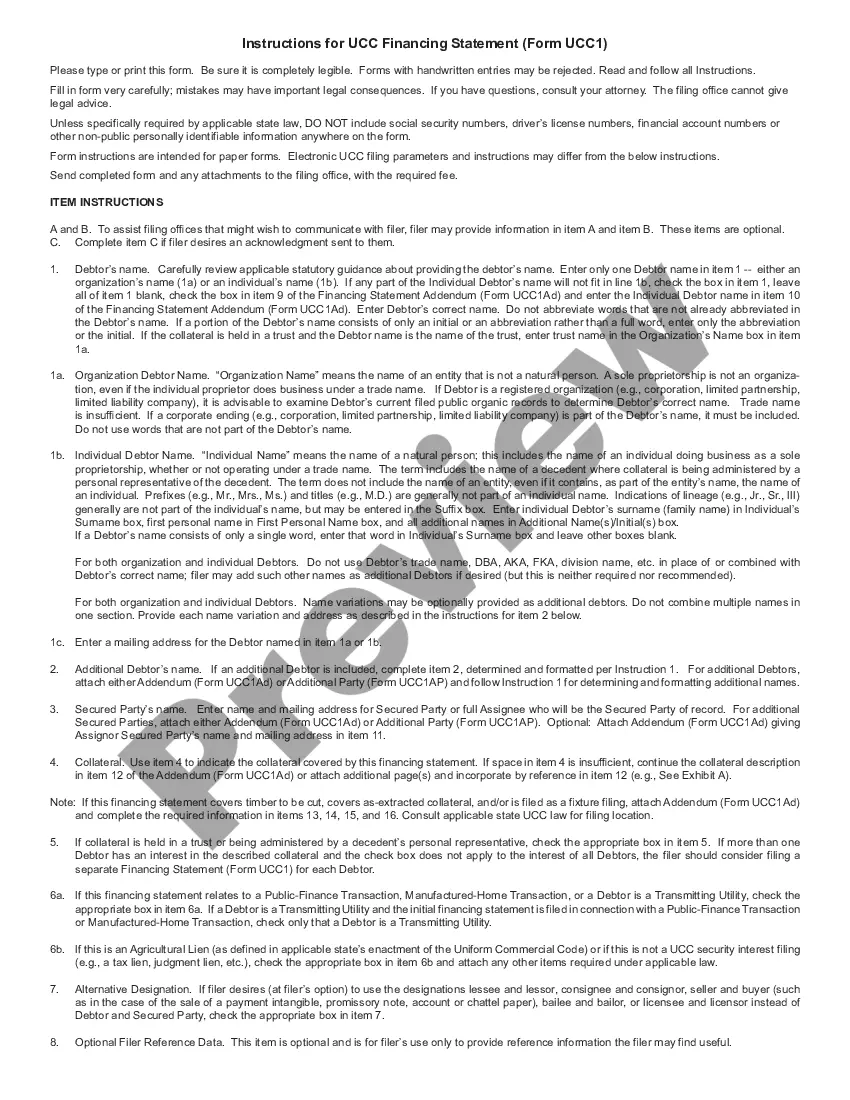
- Enter the date of the filing at the top of the document.
- List the full name and address of the sender (creditor).
- Provide the full name and address of the borrower.
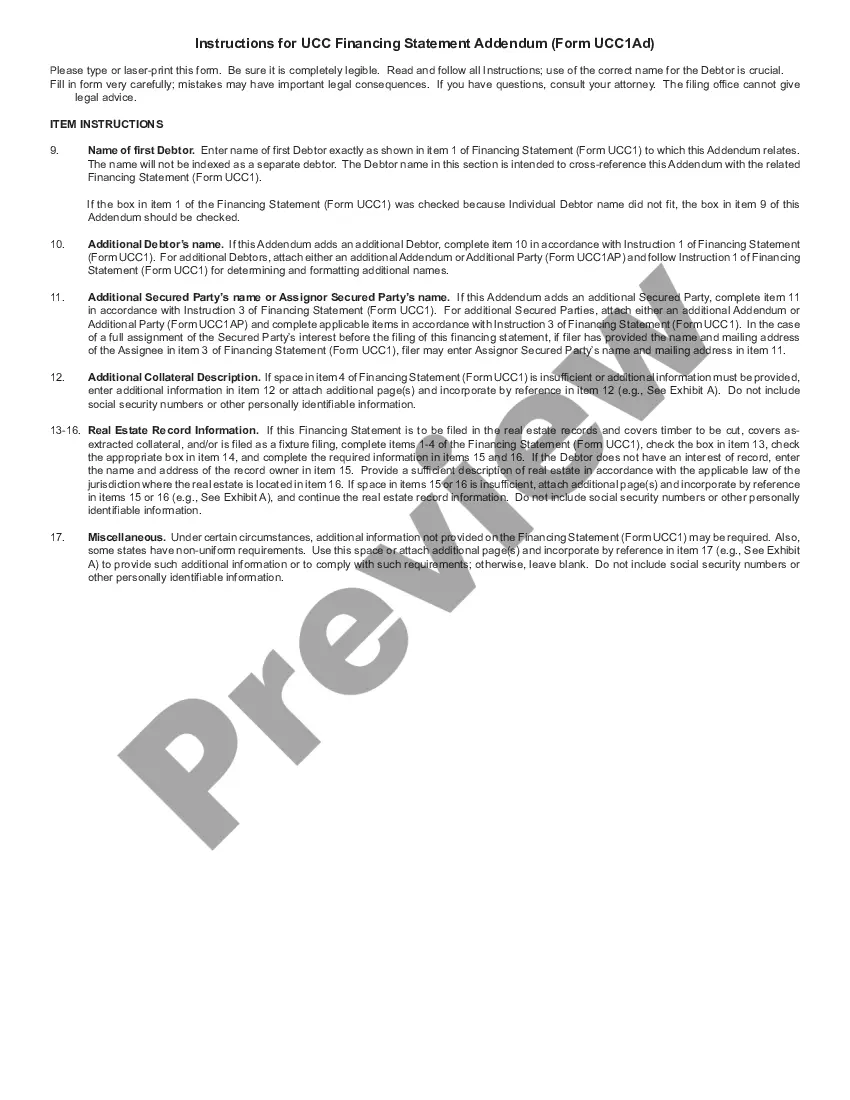
- Clearly describe the personal property being secured as collateral.
- Review the completed form for accuracy and signatures before submitting.
Does this form need to be notarized?
This form does not typically require notarization unless specified by local law. However, it is advisable to check state-specific regulations to ensure compliance before filing.
Get your form ready online
Our built-in tools help you complete, sign, share, and store your documents in one place.
Make edits, fill in missing information, and update formatting in US Legal Forms—just like you would in MS Word.
Download a copy, print it, send it by email, or mail it via USPS—whatever works best for your next step.
Sign and collect signatures with our SignNow integration. Send to multiple recipients, set reminders, and more. Go Premium to unlock E-Sign.
If this form requires notarization, complete it online through a secure video call—no need to meet a notary in person or wait for an appointment.
We protect your documents and personal data by following strict security and privacy standards.

Make edits, fill in missing information, and update formatting in US Legal Forms—just like you would in MS Word.

Download a copy, print it, send it by email, or mail it via USPS—whatever works best for your next step.

Sign and collect signatures with our SignNow integration. Send to multiple recipients, set reminders, and more. Go Premium to unlock E-Sign.

If this form requires notarization, complete it online through a secure video call—no need to meet a notary in person or wait for an appointment.

We protect your documents and personal data by following strict security and privacy standards.
Typical mistakes to avoid
- Failing to include a complete description of the collateral.
- Omitting signatures of the creditor or borrower.
- Incorrectly providing the parties' names or addresses.
- Not filing the form with the appropriate state office.
Why complete this form online
- Convenience of completing the form from your home.
- Ability to edit and save information easily.
- Access to legally sound templates drafted by licensed attorneys.
- Quick and efficient process for securing personal loans.
Summary of main points
- The UCC-1 for personal credit secures a lender's interest in a borrower's personal property.
- It is crucial for protecting lenders in case of default on loans.
- Completion requires accurate borrower and collateral information.
- Filing procedures may vary by state, so always check local regulations.
Looking for another form?
Form popularity
FAQ
A UCC lien is a claim against your business assets under the U.S. Uniform Commercial Code.If you borrow money, a UCC filing simply lets the lender establish a priority claim on your assets. If your company goes belly up, the lien makes it easier for the lender to collect its due.
Lenders can file UCC liens against businesses or individuals. They work on a first-come-first-serve basis, so if there is a default, the first lender to file a UCC lien will have the first rights to that asset.
A UCC filing is a legal notice a lender files with the secretary of state when they have a security interest against one of your assets. It gives notice that the lender has an interest, or lien, against the asset being used by you to secure the financing. The term UCC filing comes from the uniform commercial code.
It should be noted that UCC financing statements filed now generally do not contain a grant of the security interest and generally are not signed or otherwise authenticated by the Debtor and therefore would not satisfy the requirement of a security agreement.
A creditor files a UCC-1 to provide notice to interested parties that he or she has a security interest in a debtor's personal property. This personal property is being used as collateral in some type of secured transaction, usually a loan or a lease.
Primarily there are two main ways to remove them. One way is by having the lender file a UCC-3 Financing Statement Amendment. Another way to remove a UCC filing is by swearing an oath of full payment at the secretary of state office.
A creditor files a UCC-1 to provide notice to interested parties that he or she has a security interest in a debtor's personal property. This personal property is being used as collateral in some type of secured transaction, usually a loan or a lease.
The UCC-1 Financing Statement is filed to protect a lender's or creditor's security interest by giving public notice that there is a right to take possession of and sell certain assets for repayment of a specific debt with a certain debtor.