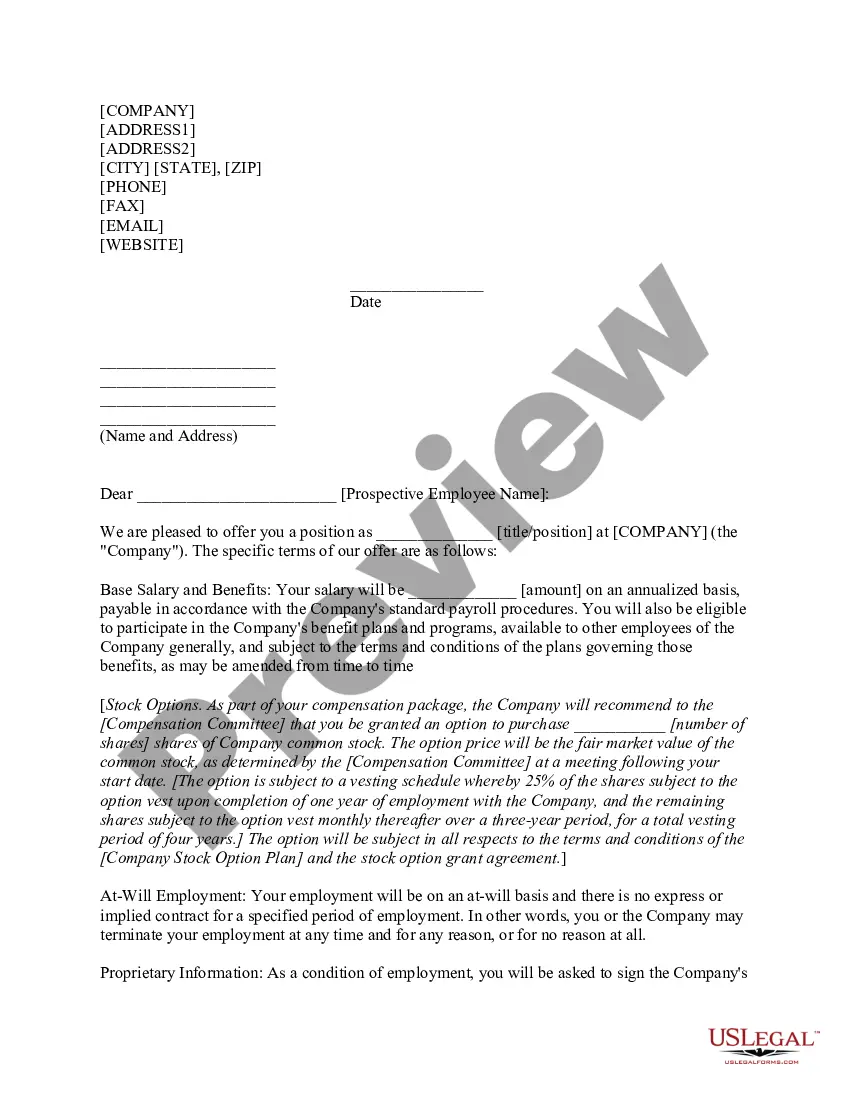
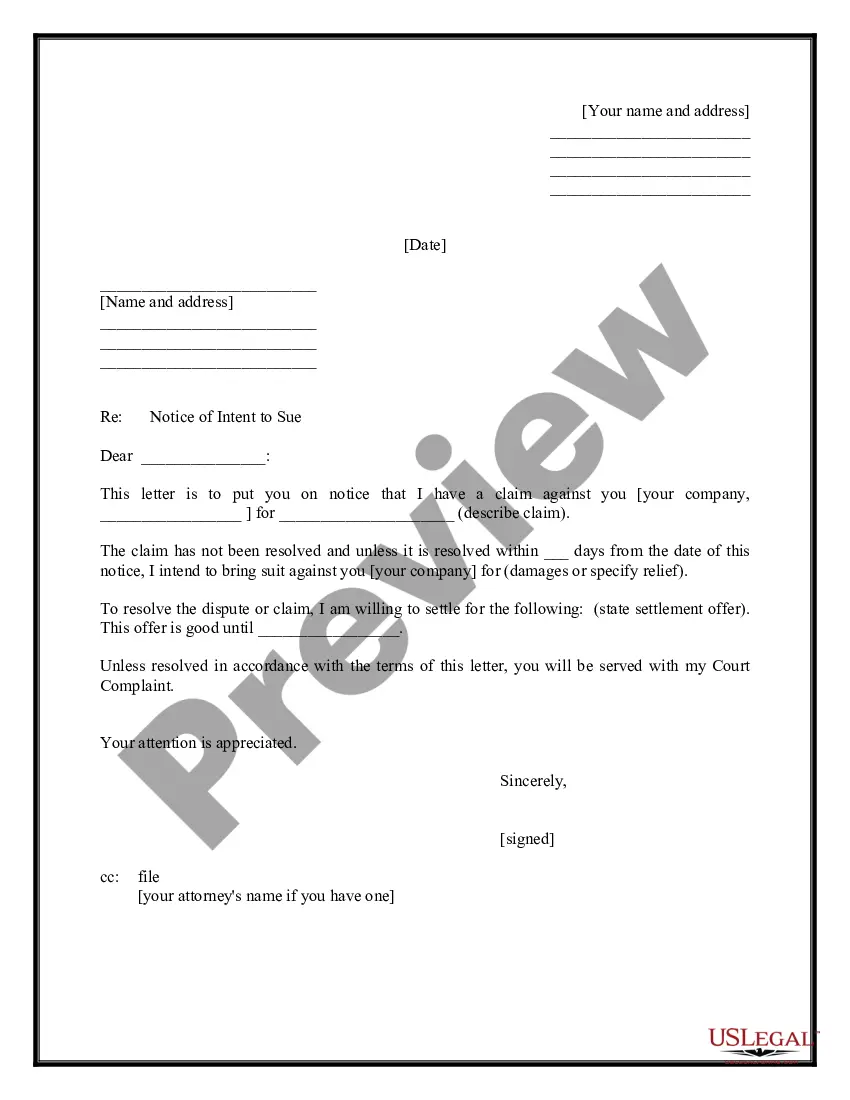
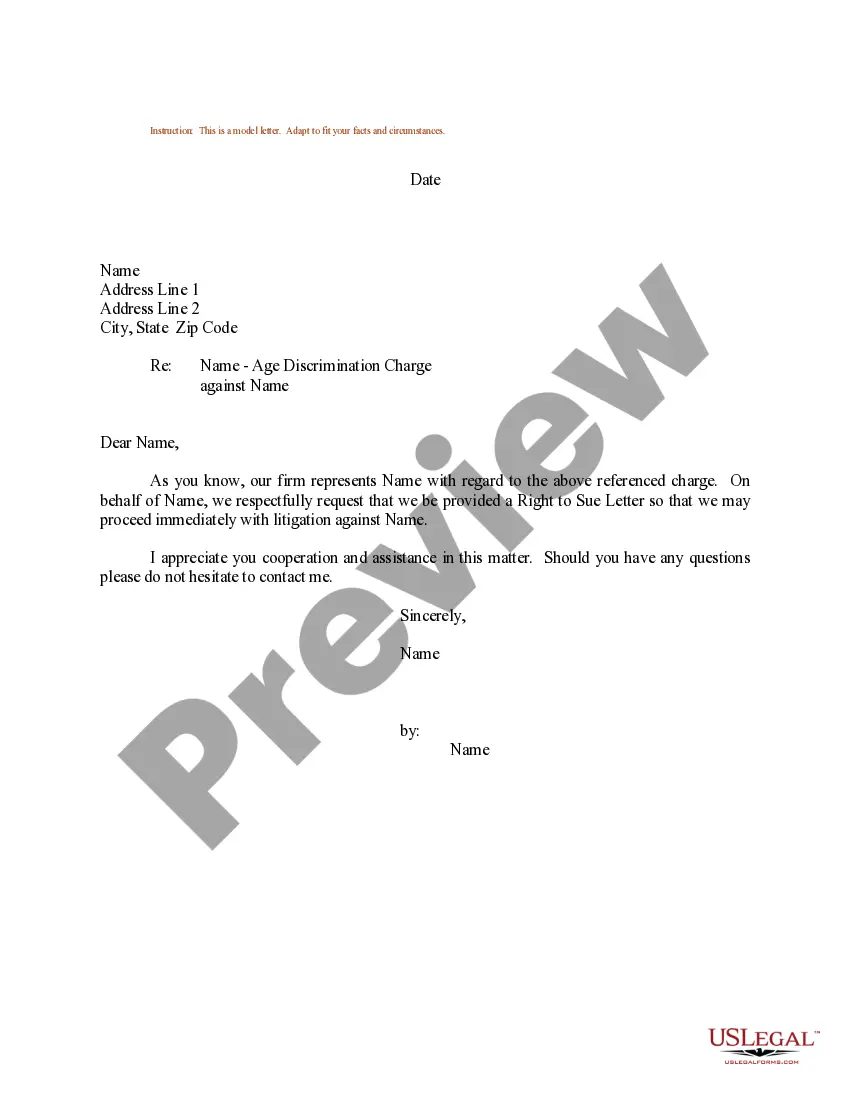
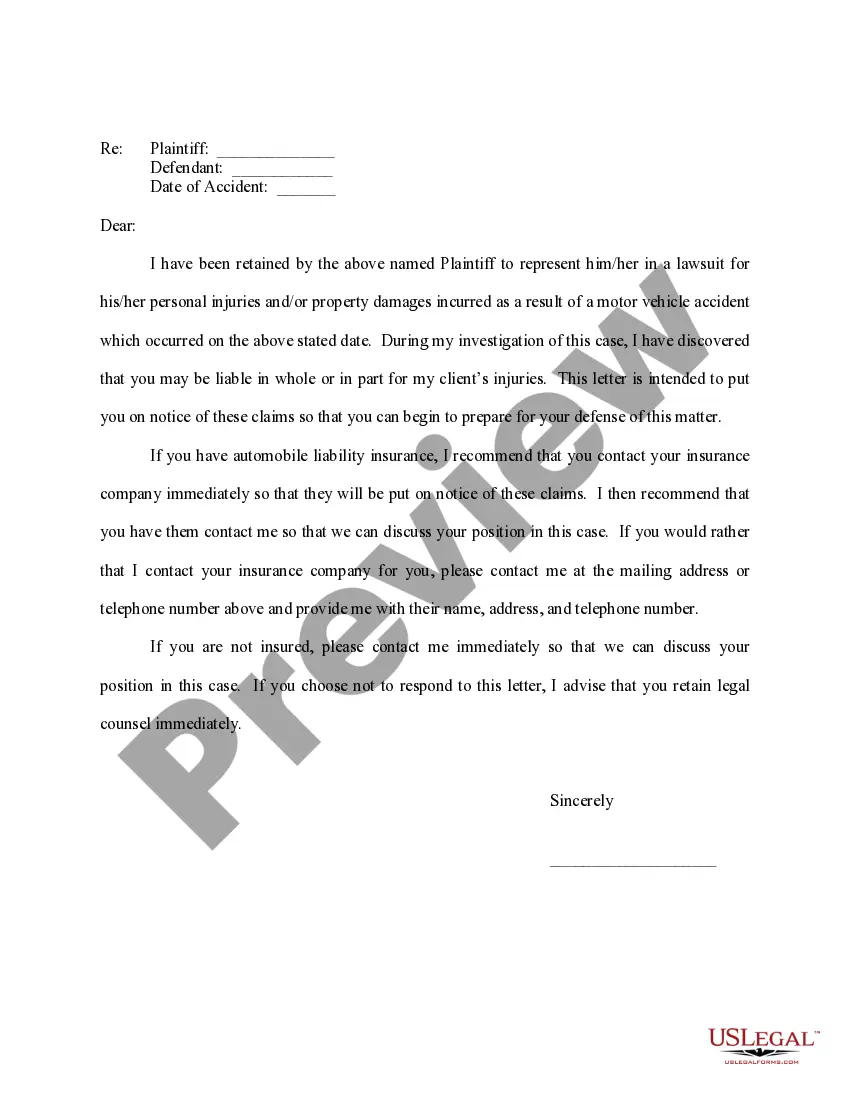
Michigan Letter of Intent to Sue
Description
Get your form ready online
Our built-in tools help you complete, sign, share, and store your documents in one place.
Make edits, fill in missing information, and update formatting in US Legal Forms—just like you would in MS Word.
Download a copy, print it, send it by email, or mail it via USPS—whatever works best for your next step.
Sign and collect signatures with our SignNow integration. Send to multiple recipients, set reminders, and more. Go Premium to unlock E-Sign.
If this form requires notarization, complete it online through a secure video call—no need to meet a notary in person or wait for an appointment.
We protect your documents and personal data by following strict security and privacy standards.

Make edits, fill in missing information, and update formatting in US Legal Forms—just like you would in MS Word.

Download a copy, print it, send it by email, or mail it via USPS—whatever works best for your next step.

Sign and collect signatures with our SignNow integration. Send to multiple recipients, set reminders, and more. Go Premium to unlock E-Sign.

If this form requires notarization, complete it online through a secure video call—no need to meet a notary in person or wait for an appointment.

We protect your documents and personal data by following strict security and privacy standards.
Looking for another form?
How to fill out Letter Of Intent To Sue?
Selecting the appropriate legal document template can be a challenge. Of course, there are numerous templates available online, but how do you locate the legal form you require? Utilize the US Legal Forms website. The service offers a vast array of templates, including the Michigan Letter of Intent to Sue, which you can employ for business and personal purposes. All of the forms are vetted by professionals and comply with state and federal regulations.
If you are already registered, Log In to your account and click the Download option to obtain the Michigan Letter of Intent to Sue. Use your account to search through the legal forms you have previously purchased. Visit the My documents section of your account and download another copy of the document you need.
If you are a new user of US Legal Forms, here are simple instructions for you to follow: First, ensure you have selected the correct form for your city/state. You can view the form using the Preview option and read the form summary to confirm this is indeed the right one for you. If the form does not meet your requirements, use the Search field to find the correct form. Once you are certain that the form is correct, click the Purchase now option to acquire the form. Choose the pricing plan you prefer and enter the required information. Create your account and complete the purchase using your PayPal account or credit card. Select the file format and download the legal document template to your device. Finally, complete, modify, print, and sign the acquired Michigan Letter of Intent to Sue.
In summary, US Legal Forms provides a comprehensive solution for obtaining legal documents tailored to your needs.
- US Legal Forms is the largest repository of legal forms where you can find various document templates.
- Use the service to obtain professionally crafted documents that adhere to state requirements.
- Browse through an extensive collection of legal templates.
- Access forms designed for both personal and business use.
- Ensure compliance with both state and federal standards.
- Easily manage your purchased documents online.
Form popularity
FAQ
In order to prove emotional distress after an accident, you will need an attorney on your side to gather the evidence needed to prove emotional distress. This may include medical records, witness statements, and testimony from mental health professionals.
A party could maintain an action for emotional distress arising out of fear for his or her own personal safety as a result of the defendant's negligent act, as well as in the capacity of a bystander who witnesses or observes the negligent infliction of tortious injury upon an immediate family member.
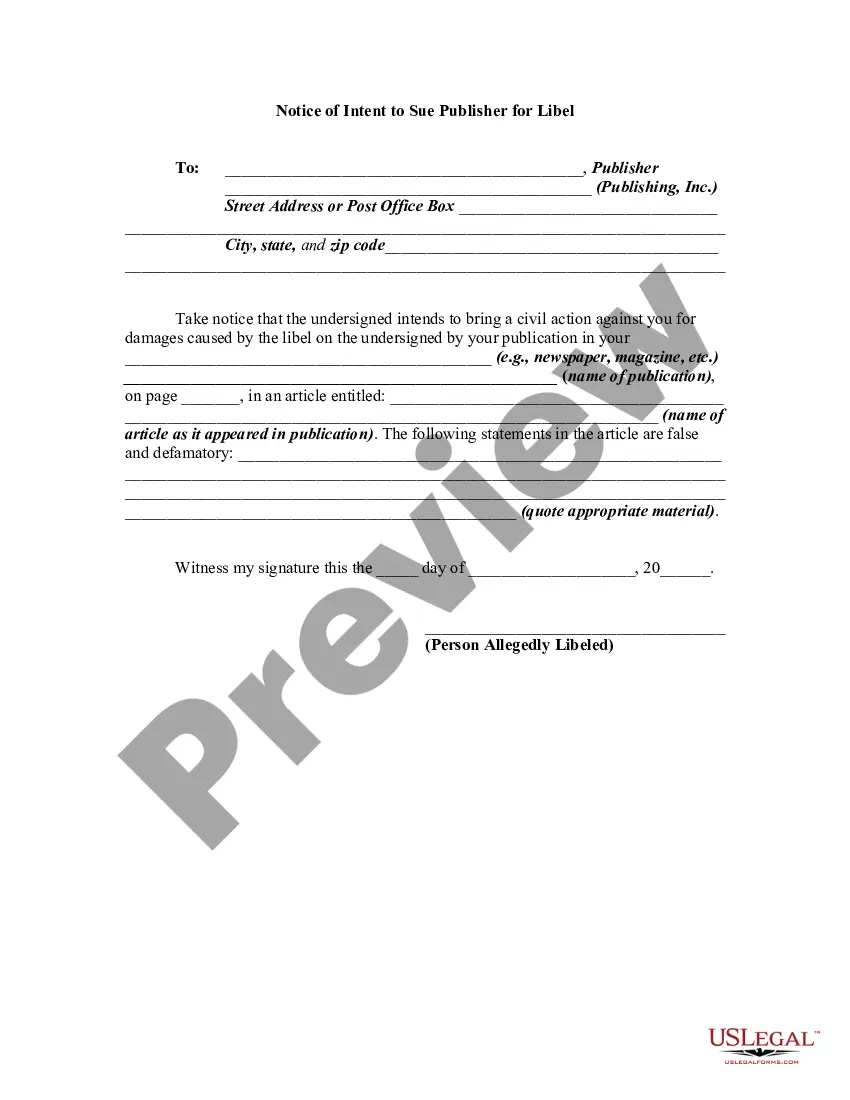
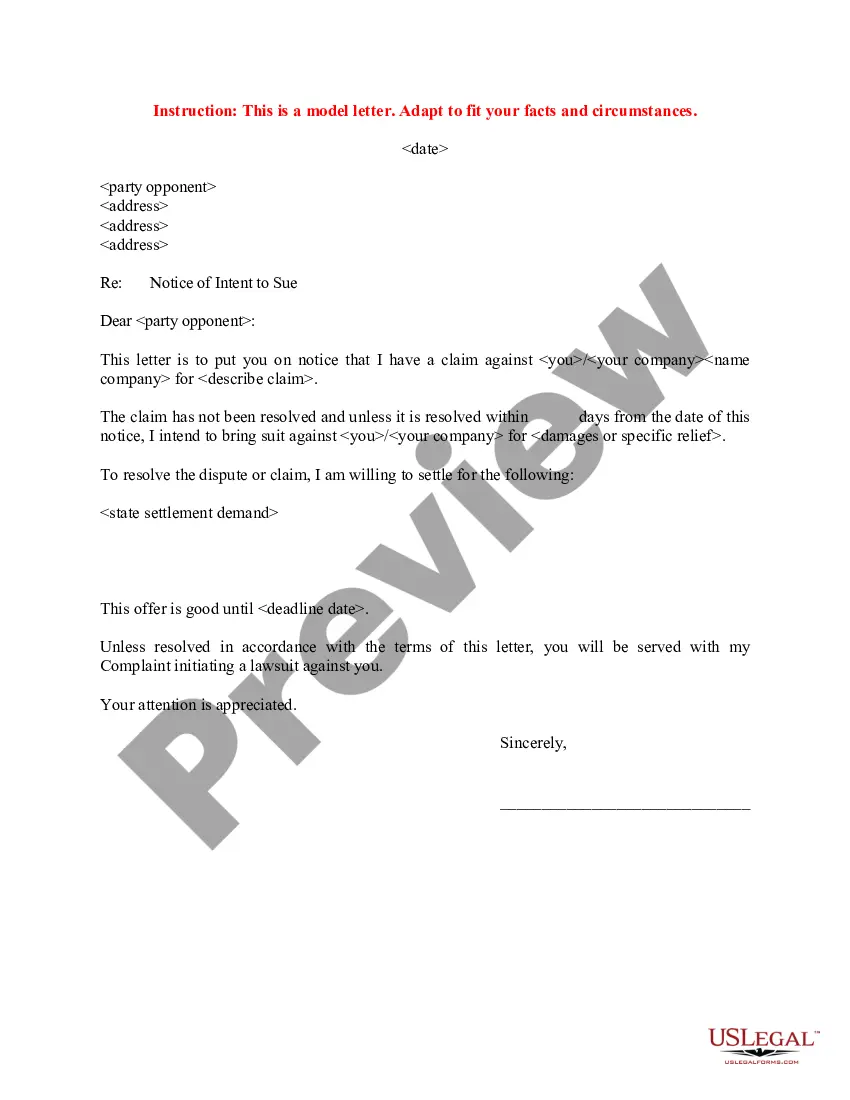
An intent to sue letter should have the addresses of both parties, a detailed description of the dispute, the settlement demand (e.g., payment amount, cease and desist, repair damages, etc.), the sender's contact information, and the deadline for the proposed settlement.
The courts recognize emotional distress as a type of damage that can be recovered through a civil lawsuit. This means you can sue someone for emotional trauma or distress if you can provide evidence to support your claims.
Michigan law requires a mandatory 182-day notice of a lawsuit to the defendant. It's a letter detailing the problem, explaining why you're filing, and giving them a chance to prepare themselves to show up in court.
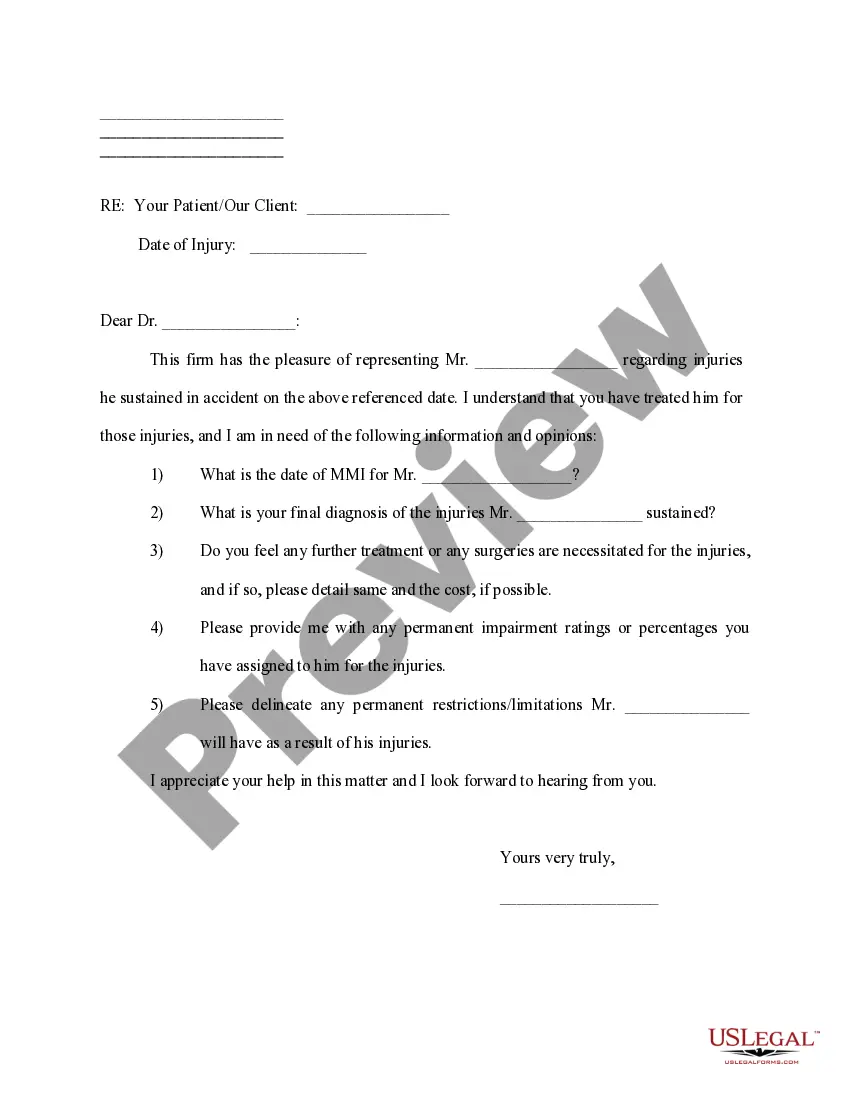
In sum, section 364 requires a litigant pursuing a medical-malpractice action to provide at least 90 days of notice to a healthcare defendant before initiating a lawsuit. If the letter is sent within the last 90 days of the statute of limitations, a plaintiff has an extra 90 days to file the lawsuit.
Typically, emotional distress is a category of damages you may recover if you can prove a specific tort. But in some instances, you can sue for emotional distress as its own separate tort.
This is a type of emotional distress. The same is true for other types of mental anguish that are emotional and psychological in nature. If you are embarrassed by a scar or a burn injury, this too would qualify for emotional damages that you can sue for in your case.