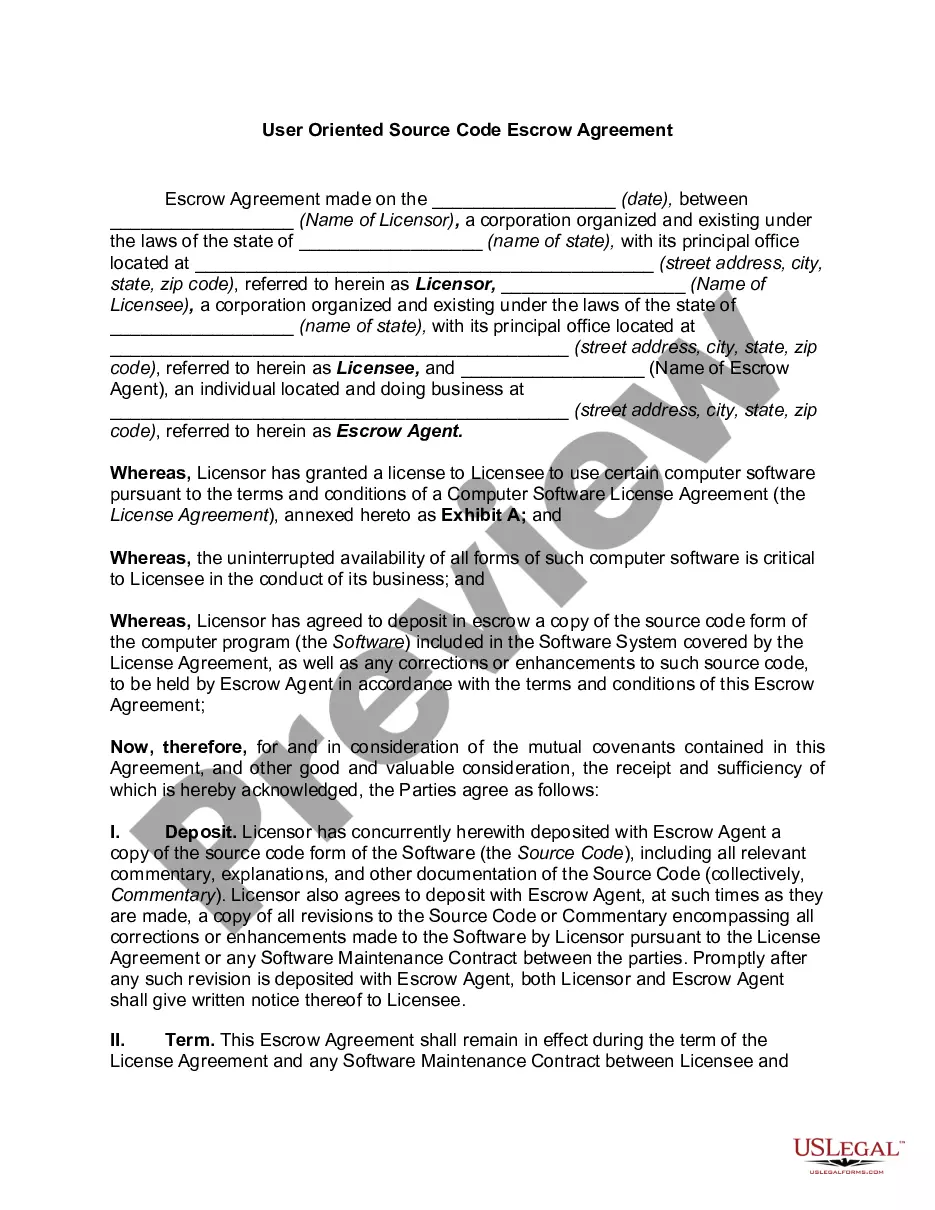
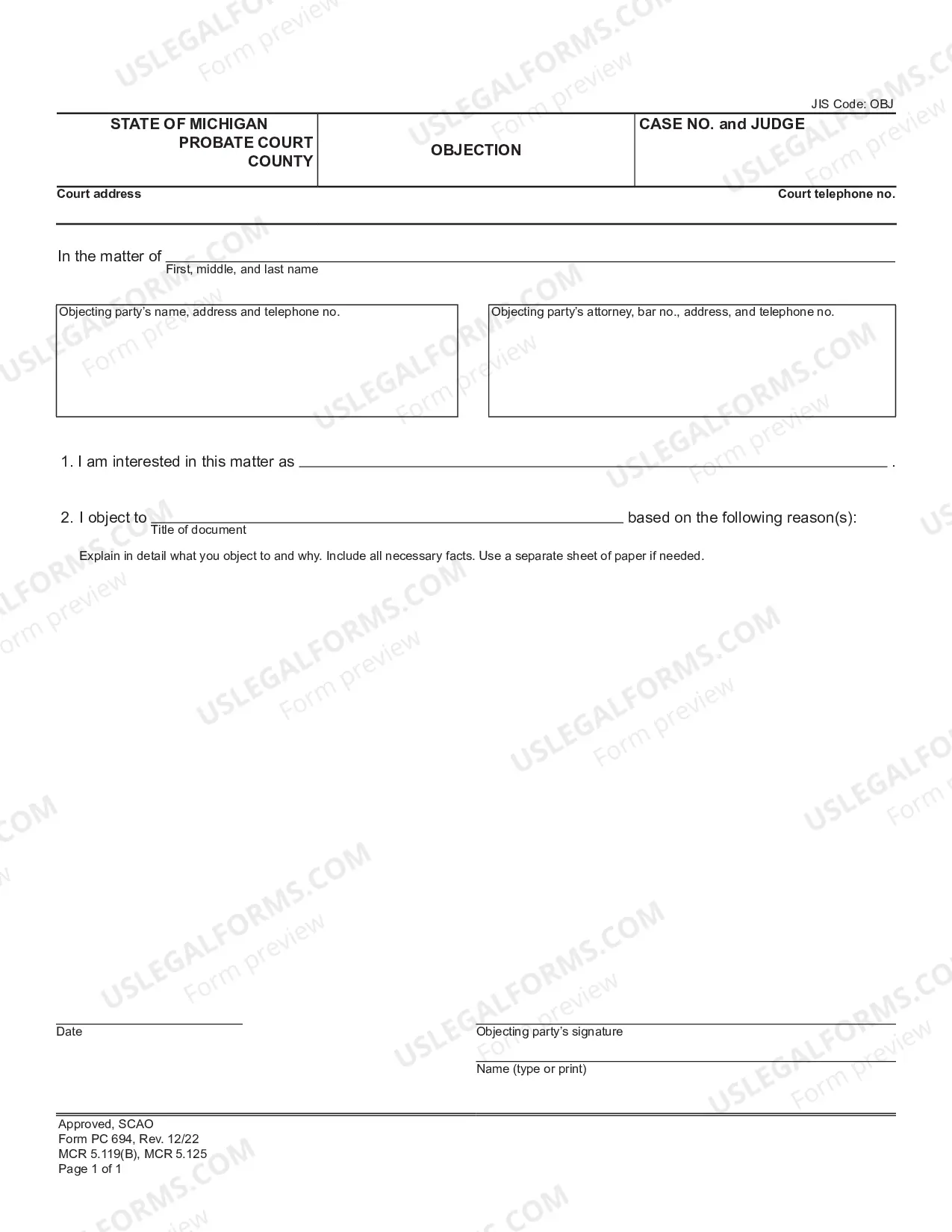
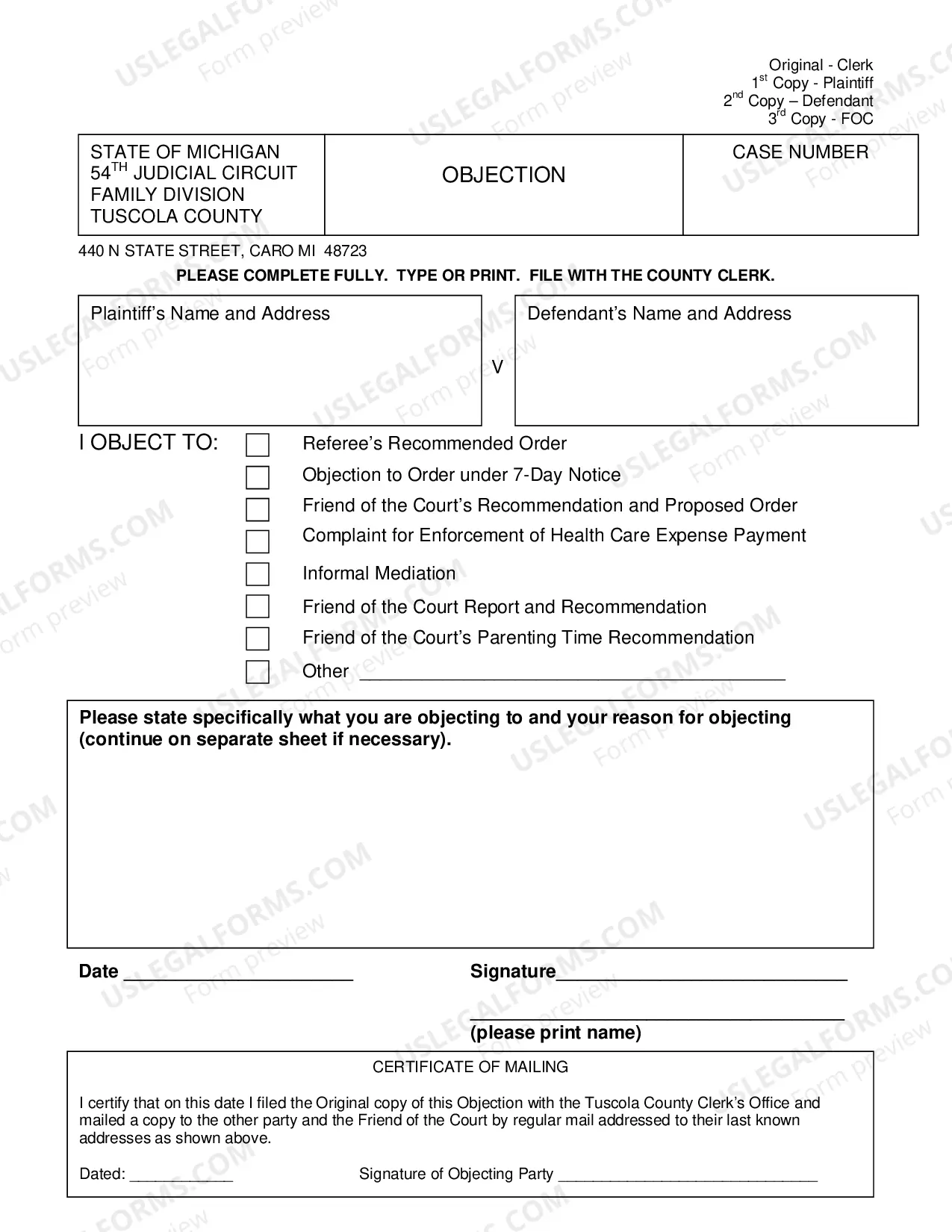
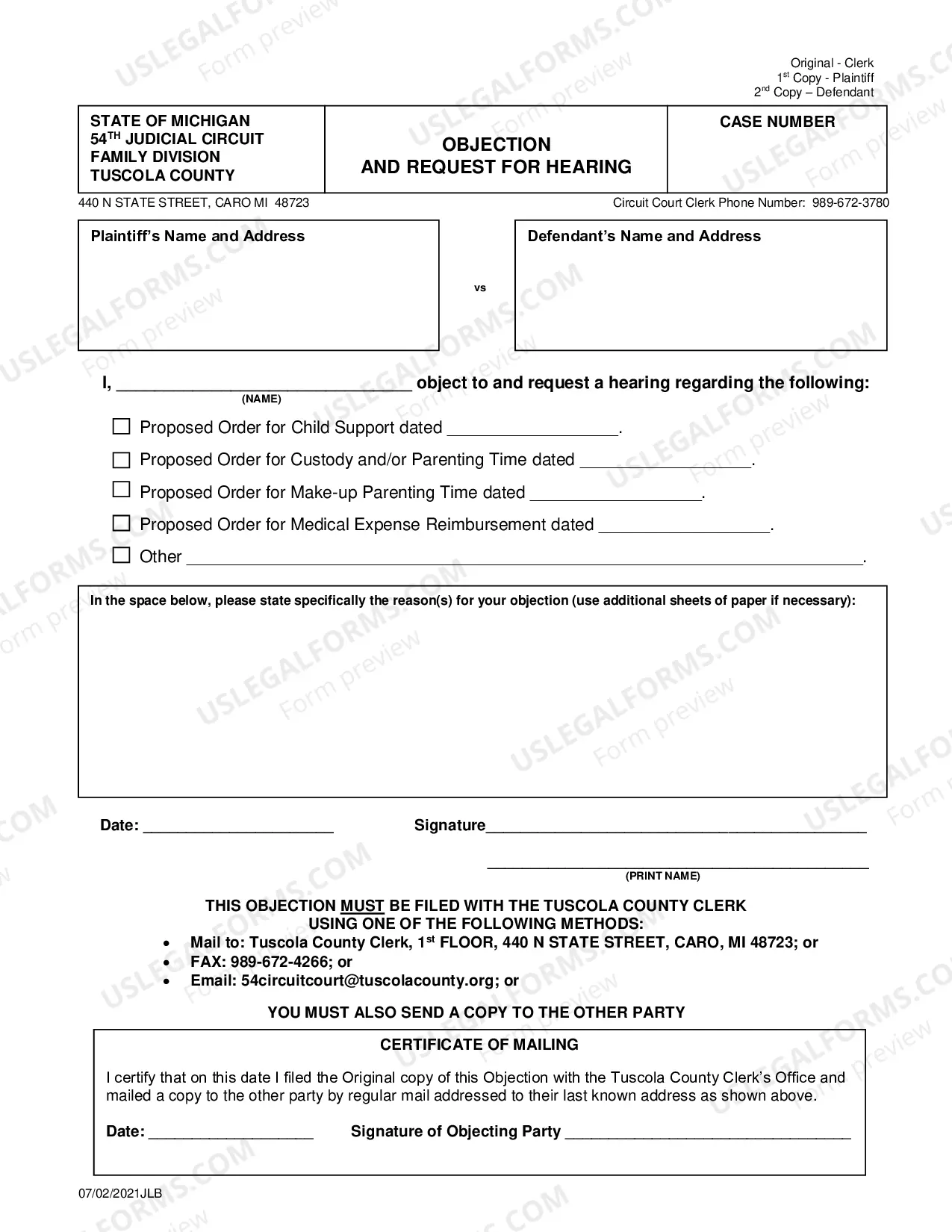
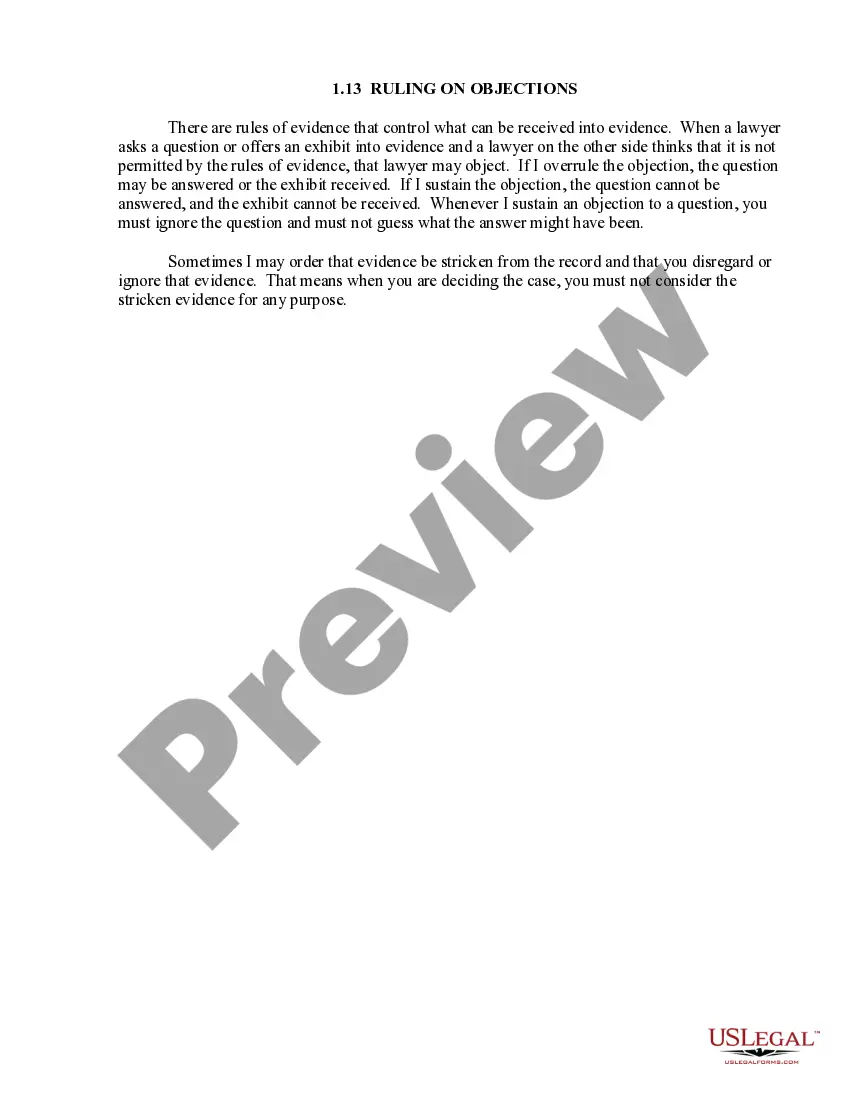
Michigan Objections are the rules of evidence that attorneys must follow when presenting their case in state court. They are based on the Michigan Rules of Evidence and are designed to ensure fairness during the trial process. Michigan Objections are divided into several categories, including objection to form, objection to relevancy, hearsay objection, objection to the competency of a witness, objection to the admissibility of evidence, and objection to the scope of the examination. Objection to form includes challenges to the wording of a question, while objection to relevancy deals with the relevance of the evidence offered. Hearsay objections are raised when a statement is made outside the courtroom that is offered as evidence in the trial. Objection to the competency of a witness is when the witness is deemed unfit to testify or provide relevant information. Objection to the admissibility of evidence deals with the legality of the evidence, while objection to the scope of the examination refers to the line of questioning.
Michigan Objections
Description
Get your form ready online
Our built-in tools help you complete, sign, share, and store your documents in one place.
Make edits, fill in missing information, and update formatting in US Legal Forms—just like you would in MS Word.
Download a copy, print it, send it by email, or mail it via USPS—whatever works best for your next step.
Sign and collect signatures with our SignNow integration. Send to multiple recipients, set reminders, and more. Go Premium to unlock E-Sign.
If this form requires notarization, complete it online through a secure video call—no need to meet a notary in person or wait for an appointment.
We protect your documents and personal data by following strict security and privacy standards.

Make edits, fill in missing information, and update formatting in US Legal Forms—just like you would in MS Word.

Download a copy, print it, send it by email, or mail it via USPS—whatever works best for your next step.

Sign and collect signatures with our SignNow integration. Send to multiple recipients, set reminders, and more. Go Premium to unlock E-Sign.

If this form requires notarization, complete it online through a secure video call—no need to meet a notary in person or wait for an appointment.

We protect your documents and personal data by following strict security and privacy standards.
Looking for another form?
How to fill out Michigan Objections?
How much time and resources do you typically allocate for creating official documents.
There’s a better alternative to obtaining such forms than employing legal experts or spending hours searching the internet for an appropriate template. US Legal Forms is the leading online repository that provides expertly crafted and verified state-specific legal documents for any purpose, such as the Michigan Objections.
Another advantage of our library is that you can access previously purchased documents that you securely store in your profile in the My documents tab. Retrieve them at any time and re-complete your paperwork as often as necessary.
Save time and effort managing official documents with US Legal Forms, one of the most reliable web solutions. Sign up with us today!
- Review the document content to ensure it adheres to your state laws. To do this, read the document description or use the Preview option.
- If your legal template does not meet your requirements, find another one using the search bar at the top of the page.
- If you are already registered with our service, Log In and download the Michigan Objections. Otherwise, continue to the following steps.
- Click Buy now once you locate the appropriate template. Choose the subscription plan that best fits your needs to access our library’s complete service.
- Create an account and pay for your subscription. You can make a payment using your credit card or via PayPal - our service is completely secure for that.
- Download your Michigan Objections onto your device and complete it on a printed hard copy or electronically.
Form popularity
FAQ
An example of a Michigan objection can occur during a court trial when one party challenges the admissibility of a piece of evidence. For instance, if a witness's statement seems irrelevant or hearsay, the opposing counsel might raise a Michigan objection to prevent that statement from influencing the jury. Raising such objections is crucial as it protects your rights and helps ensure a fair trial. Understanding the nuances of Michigan objections can significantly impact the outcome of your case, so it's essential to be prepared.
In any situation, including Michigan objections, we can identify three main types: emotional objections, logical objections, and ethical objections. Emotional objections stem from feelings, such as fear or uncertainty, that influence decision-making. Logical objections rely on rational analysis, where facts and figures can sway a choice. Ethical objections focus on values and morals, often relating to the integrity of a solution. Recognizing and addressing these objections can lead to more effective communication and resolution.
Michigan objections typically fall into three categories: substantive objections, procedural objections, and evidentiary objections. Substantive objections address the validity of the evidence or legal arguments presented. Procedural objections focus on the processes followed during a trial, while evidentiary objections challenge the admissibility of specific pieces of evidence. Understanding these distinctions helps parties navigate the court system effectively.
Rule 2.313 in Michigan refers to the regulation governing the discovery process, specifically depositions and interrogatories. This rule allows parties in a case to obtain evidence relevant to their claims, which can be pivotal when formulating Michigan Objections. Understanding this rule enables you to effectively gather the necessary information for your legal strategy. If you need assistance navigating these rules, uslegalforms can provide the support you need.
A 7-day demand for payment in Michigan is a formal request for payment that gives the debtor seven days to settle an outstanding debt. This demand is an important step prior to escalation through Michigan Objections, as it usually signals potential legal action if the debt remains unpaid. It is essential to prepare this demand correctly to establish your position effectively. Utilizing resources like uslegalforms can help you create the proper documentation.
The 7-day rule in Michigan court requires parties to respond to specific motions or requests within seven days after they are served. This rule is particularly relevant when dealing with Michigan Objections, as it emphasizes the importance of timely legal action. Following this rule can significantly affect the progress and outcome of your case. Always be aware of deadlines to protect your legal interests.
Filing an objection to a garnishment in Michigan involves submitting a written objection to the court that issued the garnishment. You should provide reasons why the garnishment should not take place, focusing on aspects such as exemptions or procedural errors. Understanding the requirements for Michigan Objections in this process is vital to ensuring your rights are protected. Consider using platforms like uslegalforms to access necessary forms and guidance.
To raise objections in court, you must clearly state your objection during a court proceeding. You should explain the reason for the objection, whether it relates to evidence or procedure, in the context of Michigan Objections. Often, you will need to follow specific procedures outlined in court rules to ensure your objection is officially noted. Knowing how to do this can significantly influence the outcome of your case.
The 7-day order rule in Michigan refers to a requirement that parties must respond to certain court orders or motions within seven days. This rule is crucial when dealing with Michigan Objections, as it helps ensure that disputes are addressed promptly. The timely response fosters a more efficient judicial process. Therefore, understanding this rule is essential to navigating Michigan's legal landscape.
The 77-day rule in Michigan refers to the requirement for the state to bring criminal cases to trial within 77 days after arraignment. This timeline is designed to protect defendants from prolonged legal battles. If the state fails to meet this deadline, you may raise Michigan objections to seek dismissal of the charges. Understanding this rule can significantly influence your defense strategy.