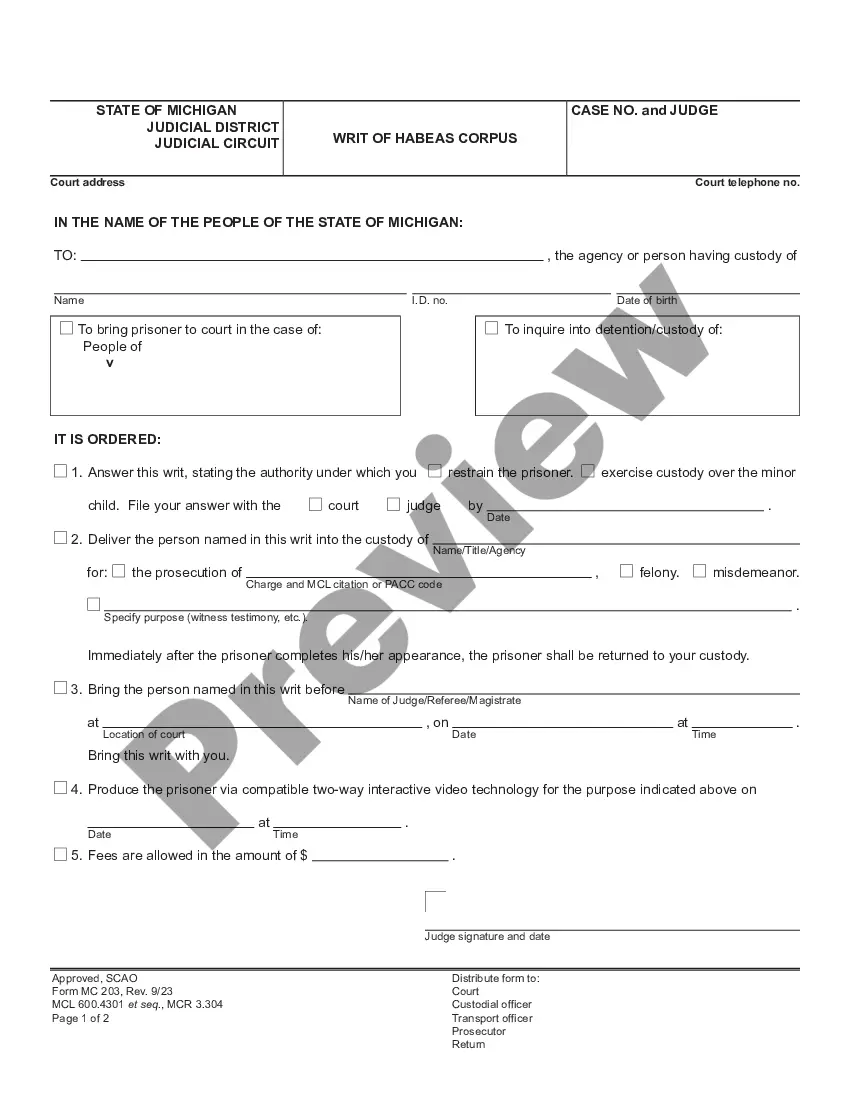
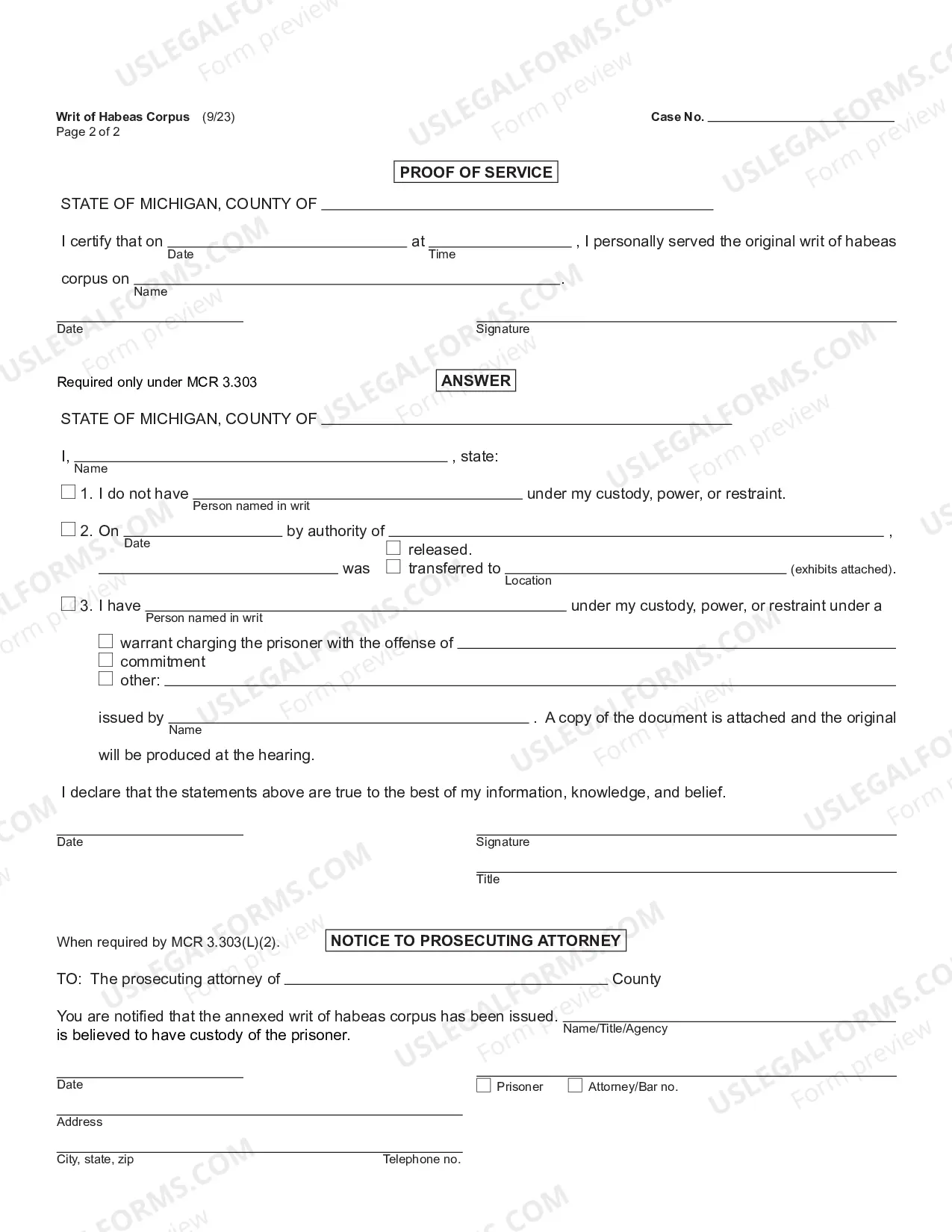
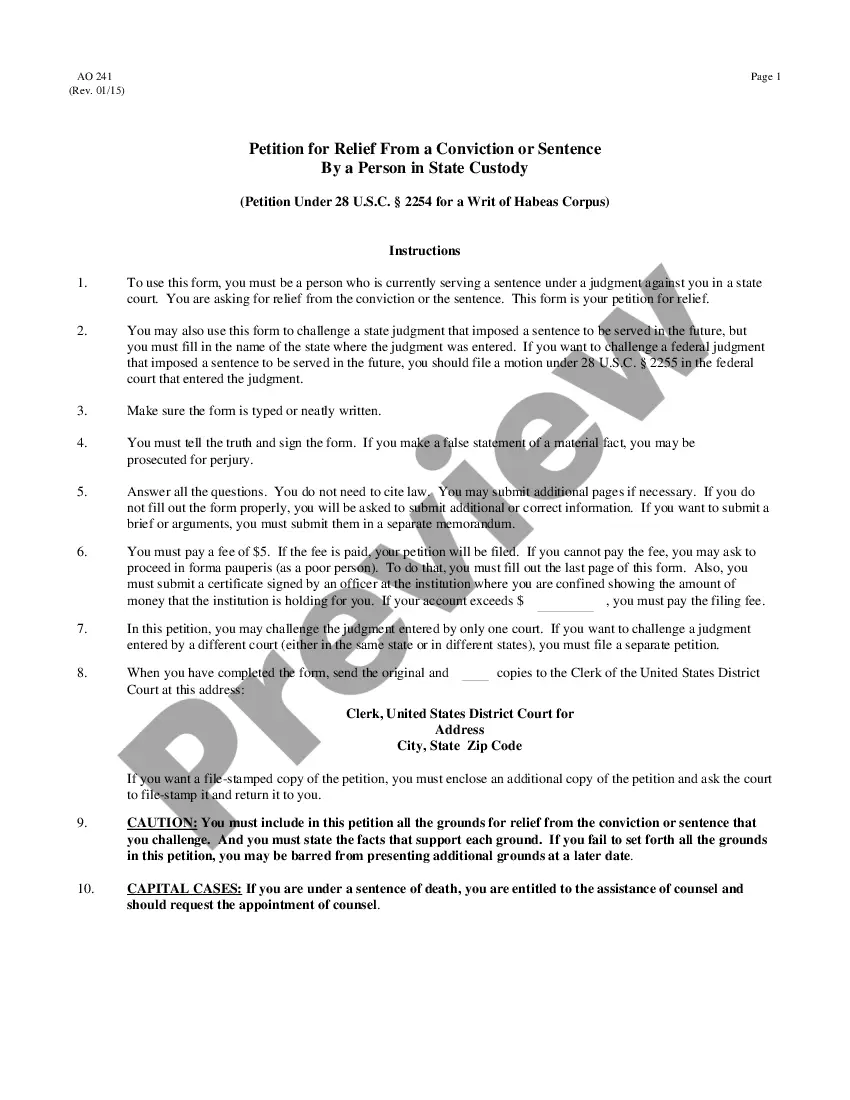
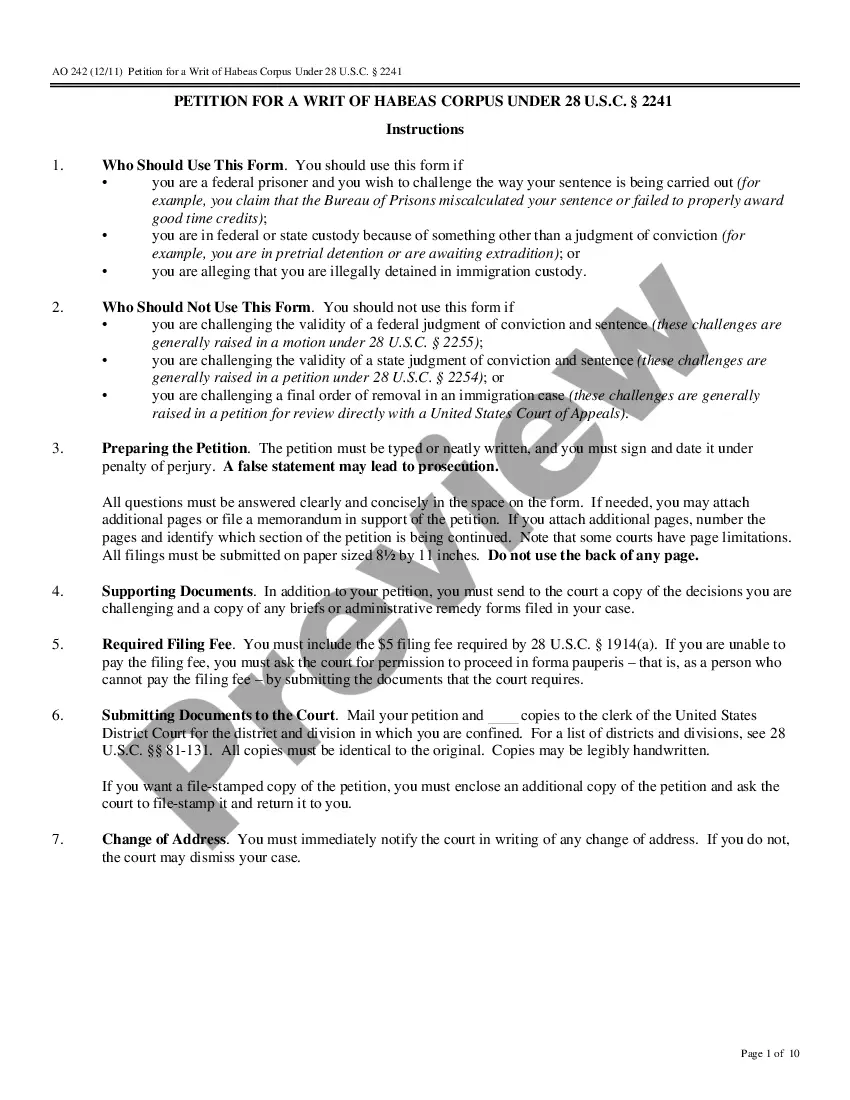
This Writ of Habeas Corpus is an official document from the Michigan State Court Administration Office, and it complies with all applicable state and Federal codes and statutes. USLF updates all state and Federal forms as is required by state and Federal statutes and law.
Michigan Writ of Habeas Corpus
Instant download
This website is not affiliated with any governmental entity
Public form
Description
Free preview

Get your form ready online
Our built-in tools help you complete, sign, share, and store your documents in one place.
Built-in online Word editor
Make edits, fill in missing information, and update formatting in US Legal Forms—just like you would in MS Word.
Export easily
Download a copy, print it, send it by email, or mail it via USPS—whatever works best for your next step.
E-sign your document
Sign and collect signatures with our SignNow integration. Send to multiple recipients, set reminders, and more. Go Premium to unlock E-Sign.
Notarize online 24/7
If this form requires notarization, complete it online through a secure video call—no need to meet a notary in person or wait for an appointment.
Store your document securely
We protect your documents and personal data by following strict security and privacy standards.

Make edits, fill in missing information, and update formatting in US Legal Forms—just like you would in MS Word.

Download a copy, print it, send it by email, or mail it via USPS—whatever works best for your next step.

Sign and collect signatures with our SignNow integration. Send to multiple recipients, set reminders, and more. Go Premium to unlock E-Sign.

If this form requires notarization, complete it online through a secure video call—no need to meet a notary in person or wait for an appointment.

We protect your documents and personal data by following strict security and privacy standards.
Looking for another form?

How to fill out Michigan Writ Of Habeas Corpus?
Obtain any template from 85,000 legal documents including Michigan Writ of Habeas Corpus online with US Legal Forms. Each template is created and refreshed by state-certified attorneys.
If you possess a subscription, Log In. Once you are on the form’s page, click the Download button and navigate to My documents to gain access to it.
If you have not subscribed yet, follow the guidelines listed below.
With US Legal Forms, you will consistently have quick access to the relevant downloadable sample. The service offers you access to documents and organizes them into categories to simplify your search. Utilize US Legal Forms to obtain your Michigan Writ of Habeas Corpus easily and swiftly.
- Verify the state-specific requirements for the Michigan Writ of Habeas Corpus you intend to utilize.
- Browse the description and preview the sample.
- Once you’re confident the template meets your needs, simply click Buy Now.
- Choose a subscription plan that truly fits your budget.
- Establish a personal account.
- Make payment in one of two acceptable ways: by credit card or through PayPal.
- Select a format to download the document in; two options are available (PDF or Word).
- Download the document to the My documents tab.
- When your reusable template is ready, print it out or save it to your device.
Form popularity
FAQ
The primary purpose of the writ of habeas corpus is to prevent unlawful imprisonment and protect individual freedom. By filing a Michigan Writ of Habeas Corpus, individuals can compel the authorities to justify their detention. This legal remedy addresses issues of due process and individual rights, ensuring that no one is held without just cause. Thus, the writ serves as a vital safeguard in the legal system, reinforcing the principle of liberty.
A significant sentence regarding habeas corpus is: 'The Michigan Writ of Habeas Corpus empowers individuals to contest the validity of their detention in a court of law.' This illustrates that the writ serves as a critical tool for individuals seeking justice and remedy against wrongful imprisonment. It underscores the importance of legal representation and the judicial process in safeguarding fundamental rights. Ultimately, this process highlights how essential it is to have accessible legal resources.
An example of a writ of habeas corpus occurs when a person believes they are unlawfully detained. For instance, if an individual is arrested without proper cause, they can file a Michigan Writ of Habeas Corpus to challenge their detention. This legal action prompts a court to review the reasons for the arrest and determine if the detention is justified. Such a mechanism ensures that personal liberties are protected against unlawful confinement.
The Michigan Writ of Habeas Corpus serves as a legal tool that protects individuals from unlawful detention. Essentially, it allows a person to challenge their imprisonment in court. Through this process, the court examines whether the detention is justified under the law. If you believe you are being held without proper legal cause, seeking a Michigan Writ of Habeas Corpus can be a critical step toward regaining your freedom.
A writ of habeas corpus in Michigan is a legal mechanism that allows individuals to challenge the legality of their detention or imprisonment. This powerful tool aims to protect against unlawful confinement and ensures that due process rights are upheld. When filing in Michigan, specific procedures must be followed to ensure that your rights are fully supported. Legal platforms like USLegalForms can assist you in navigating the complexities of obtaining a Michigan Writ of Habeas Corpus.
To successfully file a habeas corpus petition, significant evidence supporting your claim is essential. This may include trial transcripts, witness statements, and any documentation that demonstrates a violation of your rights. The evidence should establish a direct connection between your detention and legal infringement. Therefore, gathering strong evidence is key to navigating the Michigan Writ of Habeas Corpus process effectively.
A writ of habeas corpus cannot be issued under certain conditions, such as when a petitioner does not exhaust all state remedies. Courts may also deny the writ if the claim is procedurally defaulted or if it involves non-custodial situations. Furthermore, petitions that lack a valid legal basis can face rejection. Understanding these limits is crucial for those seeking relief under the Michigan Writ of Habeas Corpus.
Winning a habeas corpus case can indeed be challenging. Petitioners must present clear legal arguments and compelling evidence to support their claims. Factors such as procedural errors and substantive rights violations can impact the outcome. The Michigan Writ of Habeas Corpus process requires careful attention to detail and often benefits from experienced legal assistance.
A petition for writ of habeas corpus in Michigan is a formal request to challenge unlawful detention or imprisonment. This legal document asserts that the individual is being held without adequate justification and seeks redress from the court. By filing such a petition, you can initiate a legal review of your case, potentially leading to your release. Using platforms like USLegalForms can simplify this process, providing templates and guidance for submitting your petition effectively.
When a Michigan writ of habeas corpus is granted, the court orders the immediate release of the detained individual. This process often allows the court to examine the legality of the detention, ensuring that the person's rights are protected. Additionally, the ruling may lead to a hearing where the state must justify the detention. The outcome can significantly influence the individual's situation and legal standing.