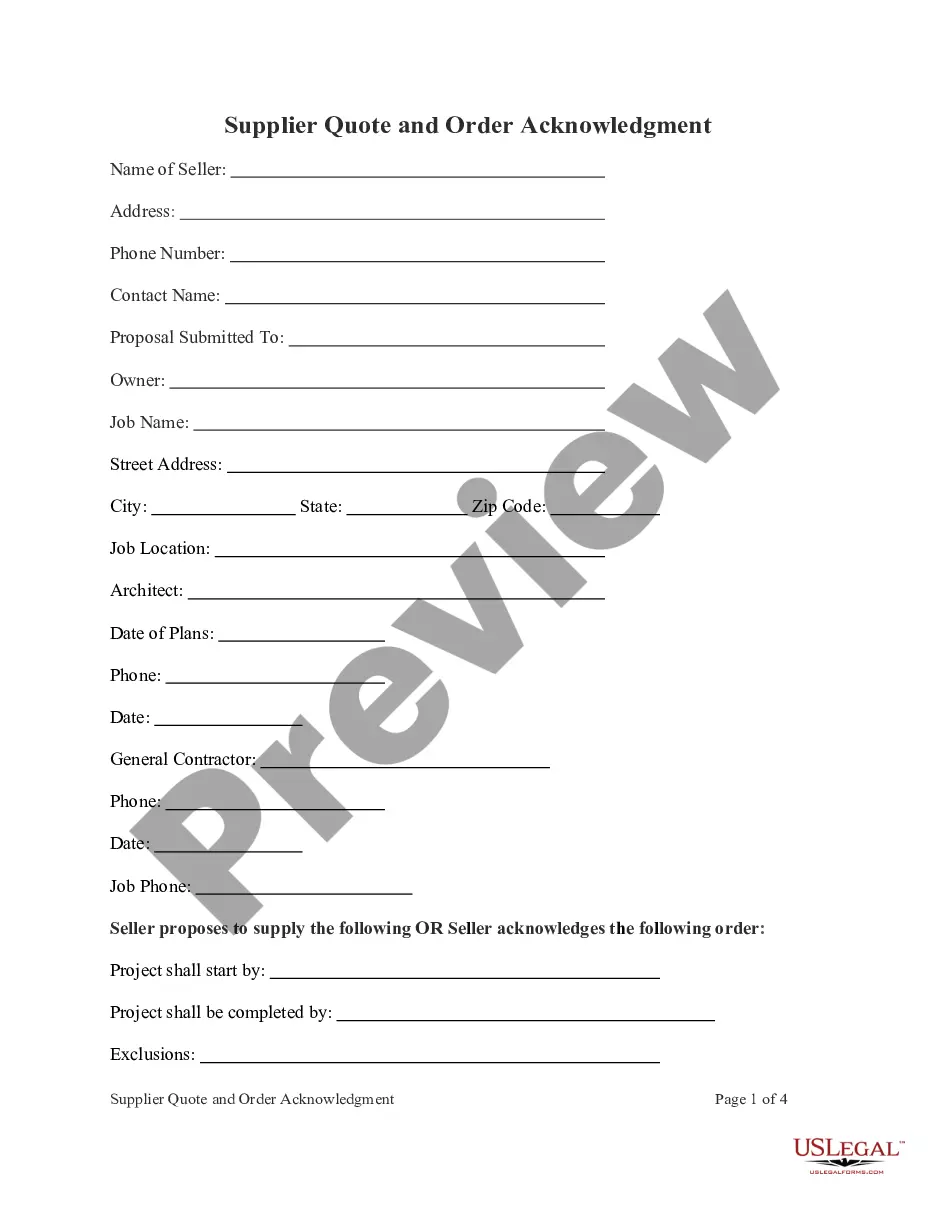
Michigan River Easement
About this form
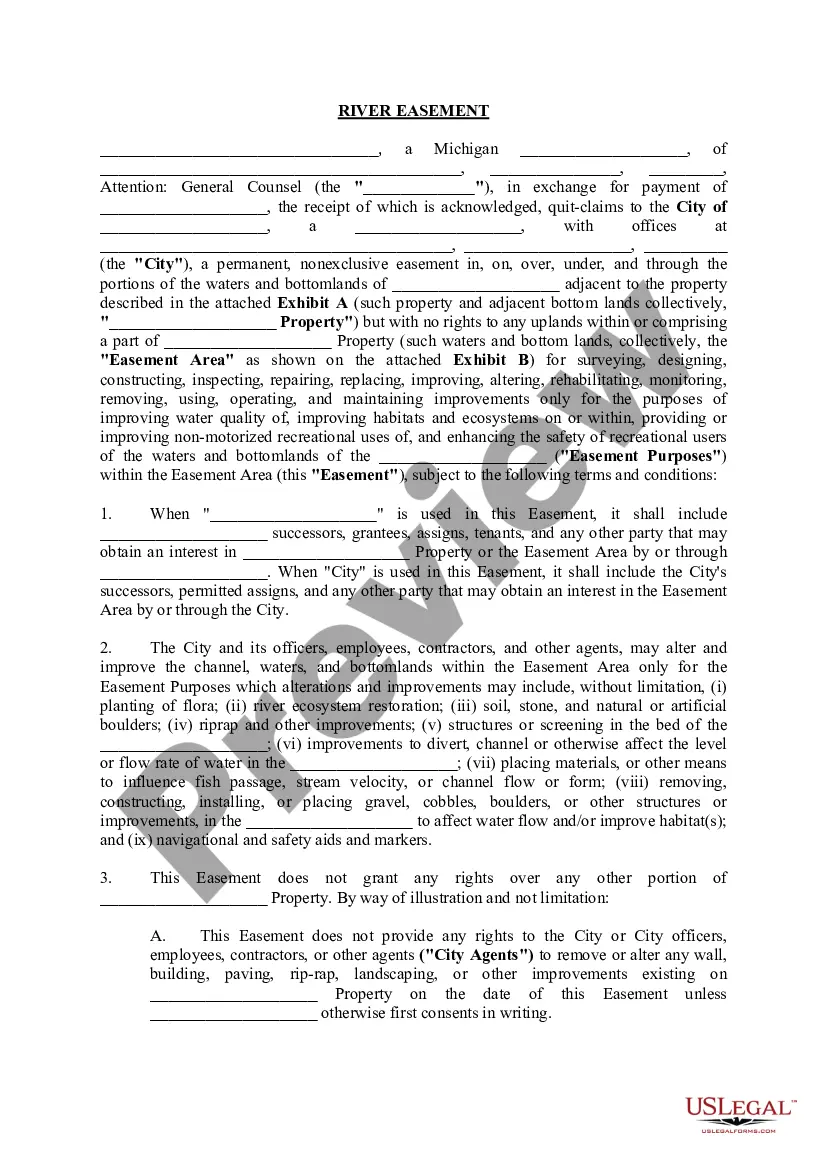
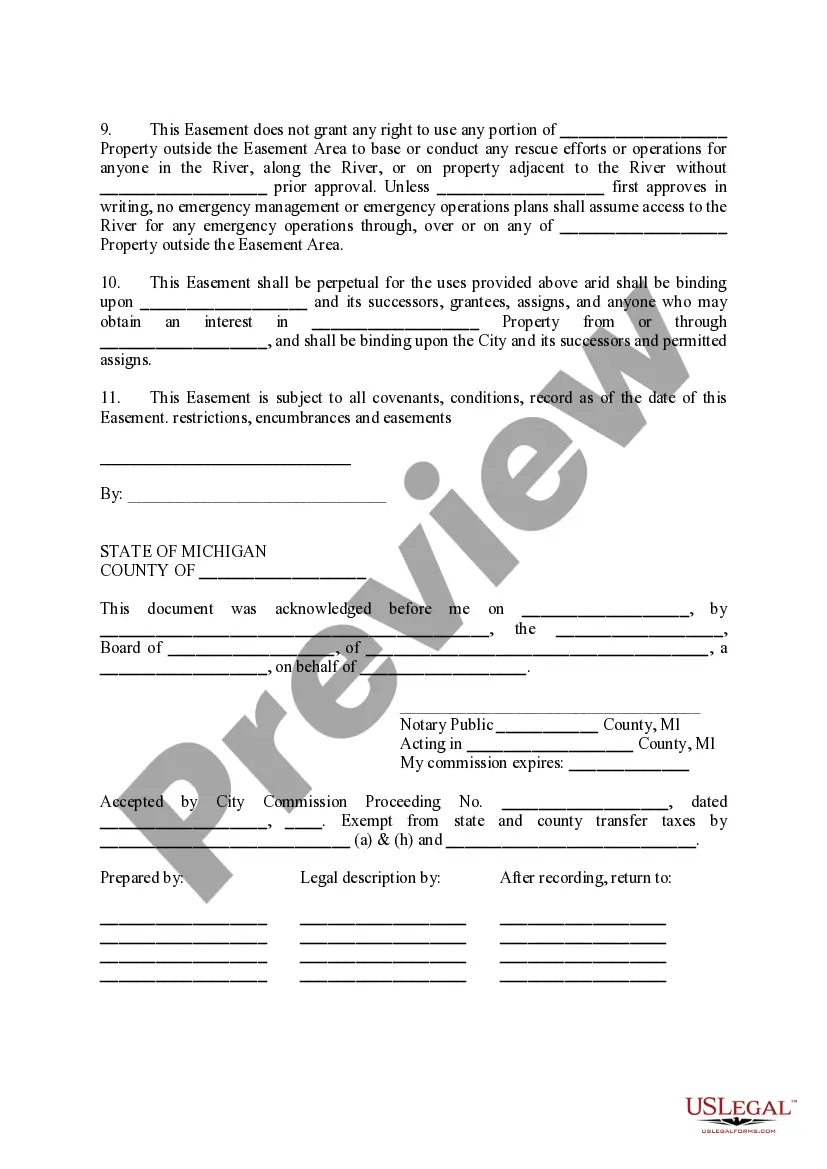
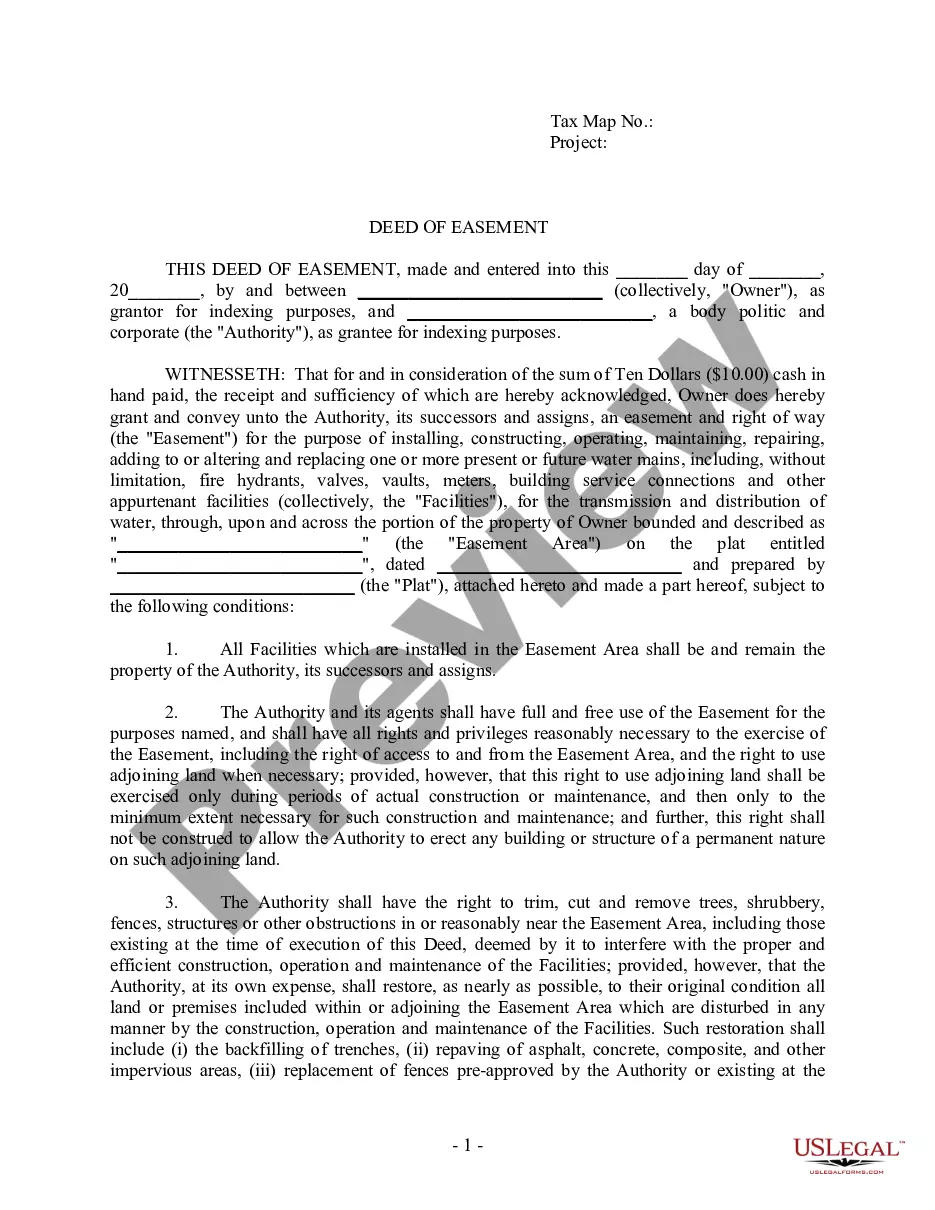
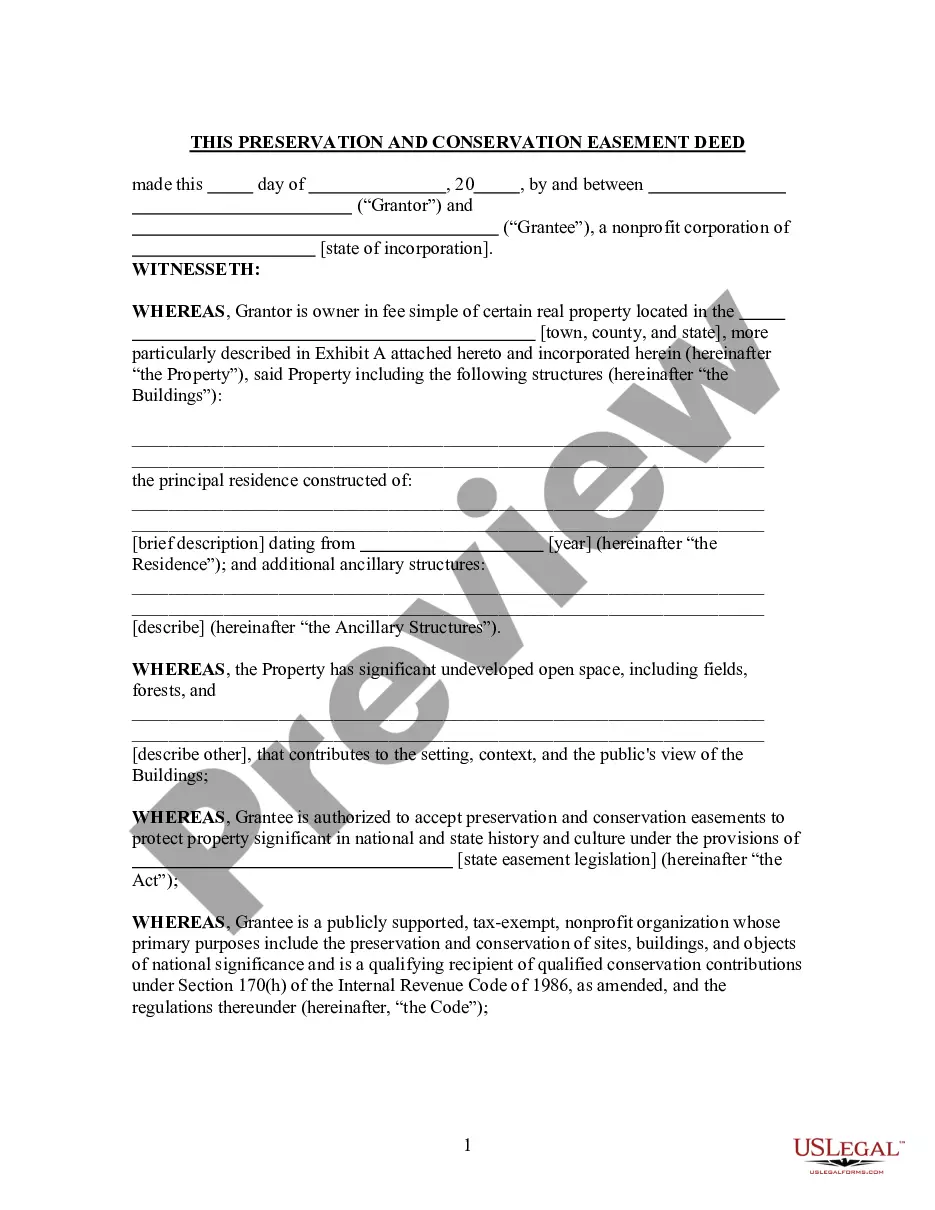
The River Easement form grants a nonpossessory right to a city to use specific portions of river waters and bottomlands. This easement allows the city to perform activities aimed at improving water quality, habitats, and recreational uses without granting them rights over the property's uplands. Unlike other easements, this form specifically deals with river access and its surrounding environment, making it vital for municipalities looking to enhance recreational and ecological conditions alongside waterways.
Main sections of this form
- Identification of the parties involved: the grantor and the city.
- Detailed description of the easement area and its purpose.
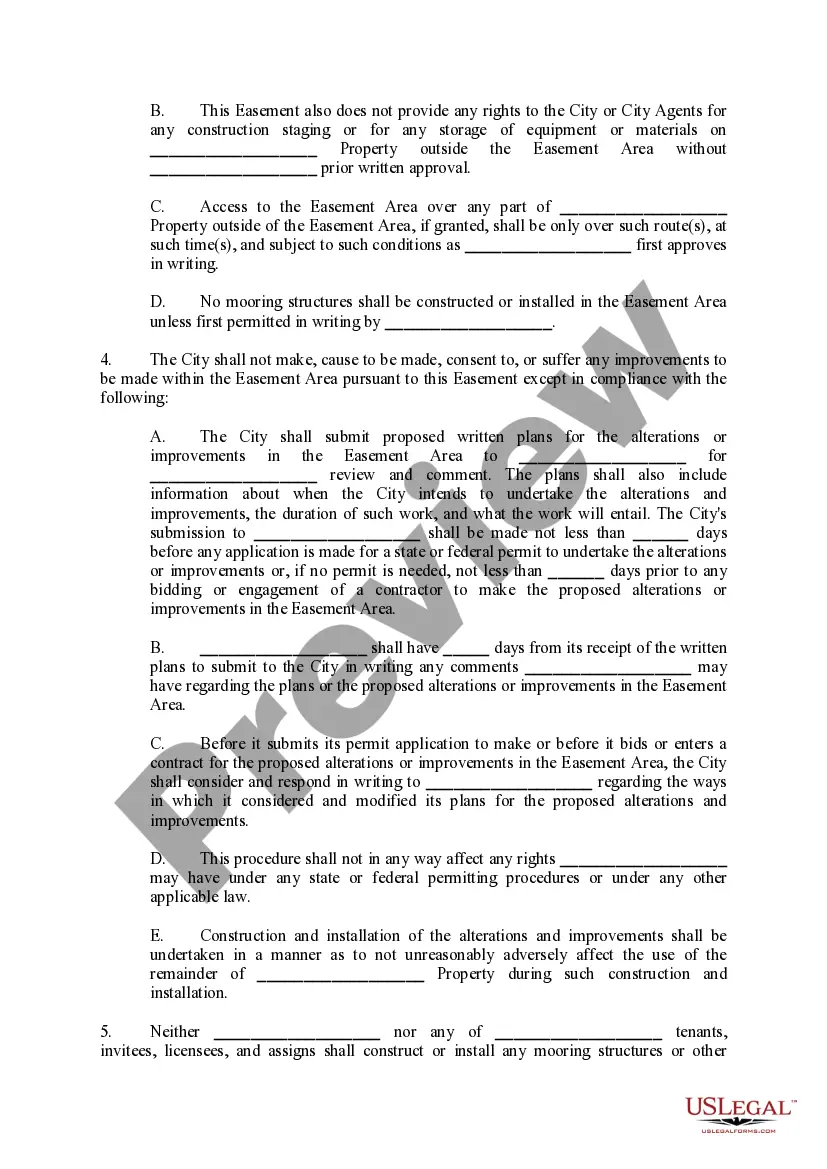
- Terms outlining the rights and responsibilities of the city regarding alterations and improvements.
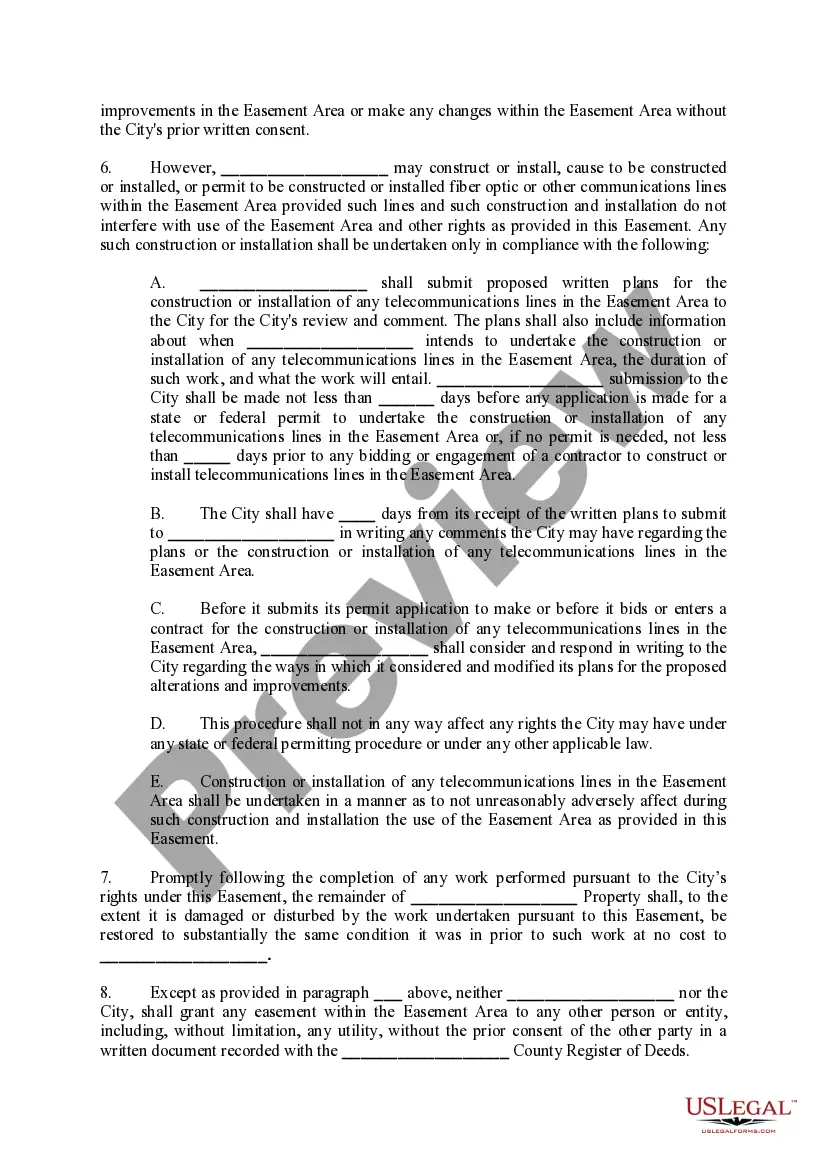
- Conditions under which access and construction activities may occur.
- Restoration requirements for any damage caused by the cityâs activities.
- Clauses addressing the need for prior consent before granting easement rights to others.
When to use this document
This form should be used when a city requires access to a river for the purposes of improving water quality, restoring ecosystems, or enhancing recreational opportunities. It is essential when the city needs to perform maintenance or construction activities within the river and surrounding areas, ensuring that legal permissions are documented and agreed upon before proceeding.
Intended users of this form
This form is intended for:
- Municipalities seeking to maintain or improve river environments.
- Landowners adjacent to rivers wishing to grant easements to their local government.
- Legal professionals involved in property and environmental law.
- Environmental organizations collaborating with cities on habitat restoration projects.
Steps to complete this form
- Identify the parties involved: complete the grantor and city details.
- Specify the easement area by accurately describing the adjacent waters and bottomlands.
- Enter the payment amount acknowledged for the easement transfer.
- Detail the intended easement purposes, including improvements and maintenance activities.
- Include necessary signatures and notary acknowledgment, if required.
Does this document require notarization?
Yes, this form must be notarized to be legally valid. Users can benefit from US Legal Forms' integrated online notarization service, allowing for secure video calls with a notary at any time, ensuring legal equivalence without the need for travel.
Get your form ready online
Our built-in tools help you complete, sign, share, and store your documents in one place.
Make edits, fill in missing information, and update formatting in US Legal Forms—just like you would in MS Word.
Download a copy, print it, send it by email, or mail it via USPS—whatever works best for your next step.
Sign and collect signatures with our SignNow integration. Send to multiple recipients, set reminders, and more. Go Premium to unlock E-Sign.
If this form requires notarization, complete it online through a secure video call—no need to meet a notary in person or wait for an appointment.
We protect your documents and personal data by following strict security and privacy standards.

Make edits, fill in missing information, and update formatting in US Legal Forms—just like you would in MS Word.

Download a copy, print it, send it by email, or mail it via USPS—whatever works best for your next step.

Sign and collect signatures with our SignNow integration. Send to multiple recipients, set reminders, and more. Go Premium to unlock E-Sign.

If this form requires notarization, complete it online through a secure video call—no need to meet a notary in person or wait for an appointment.

We protect your documents and personal data by following strict security and privacy standards.
Common mistakes to avoid
- Failing to accurately describe the easement area, leading to potential disputes.
- Not obtaining the necessary approvals from involved parties before commencing work.
- Neglecting to provide complete information in required fields, such as payment acknowledgment.
- Assuming prior easements or permits will suffice without clarity on the new agreement.
Why complete this form online
- Convenience of downloading the form at any time from home or office.
- Editability allows users to customize the agreement to their specific needs.
- Reliability with documents drafted by licensed attorneys, ensuring compliance with legal standards.
Looking for another form?
Form popularity
FAQ
To record a Michigan River Easement, you need to file the easement agreement with your local county clerk or recorder's office. This process typically includes submitting the signed document and paying any associated fees. Recording the easement ensures it becomes part of the public record, providing legal protection and notice to future property owners. For simplified recording steps and document templates, check out USLegalForms for helpful resources.
Easements in Minnesota function similarly to those in Michigan but may have different state-specific regulations. Generally, an easement grants one party the right to use another party's property for a designated purpose, such as access to a river. It's crucial to ensure that any easement aligns with state laws to avoid future complications. For specific questions about Michigan River Easements that may cross state lines, consider consulting with a local attorney.
Filling out a Michigan River Easement form involves several important steps. Start by clearly identifying the parties involved and describing the specific area of the easement. Be sure to detail the purpose of the easement, and include any necessary legal descriptions. Online platforms like USLegalForms make it easier to access the correct forms and guide you step-by-step in completing them accurately.
The length of a typical Michigan River Easement can vary based on its purpose and the property involved. Generally, easements allow access, which could range from a few feet to several dozen feet wide. It's important to check local guidelines and specific needs of the easement for your situation. Understanding these dimensions can help you better manage your riverfront property.
Obtaining a Michigan River Easement by necessity can present challenges, as it often requires proving that the easement is essential for accessing your property. You will need to demonstrate that no alternative access exists and that the easement benefits your property significantly. Engaging Michigan's legal frameworks and professionals, like those at UsLegalForms, can guide you through this process and increase your chances of success.
To establish a Michigan River Easement, you need a clearly defined purpose, a specific area, and the consent of the property owner. The easement must be in writing and recorded with the county. Additionally, it should comply with state laws, ensuring it serves a legitimate need, like access to a waterway or right-of-way.
Property lines in Michigan generally extend to the water's edge, but this can vary depending on local laws and regulations. In many cases, water rights may also involve easements, particularly for access or use. Clarifying how Michigan River Easements relate to property boundaries can help landowners better manage their rights.
Easement law in Michigan is built around property rights and responsibilities. It governs how easements are created, enforced, and terminated. Understanding Michigan River Easement laws is crucial, as they outline the legal framework for the use of another's land and ensure both parties know their responsibilities.
The rules around easements in Michigan dictate that they must be clearly defined and adhered to by both parties involved. These rules ensure that easement holders have the right to use the property as outlined, while property owners maintain their rights over their land. Familiarizing yourself with these guidelines, especially regarding Michigan River Easements, can help prevent conflicts.
A property owner cannot arbitrarily block an easement once it has been established. This delineates legal access rights that must be honored. If concerns arise about the use of the easement, it's wise to consult a legal expert familiar with Michigan River Easement laws to explore options for resolution.