Michigan Consent to Collateral Assignment of Tenant's Leasehold Interests
About this form
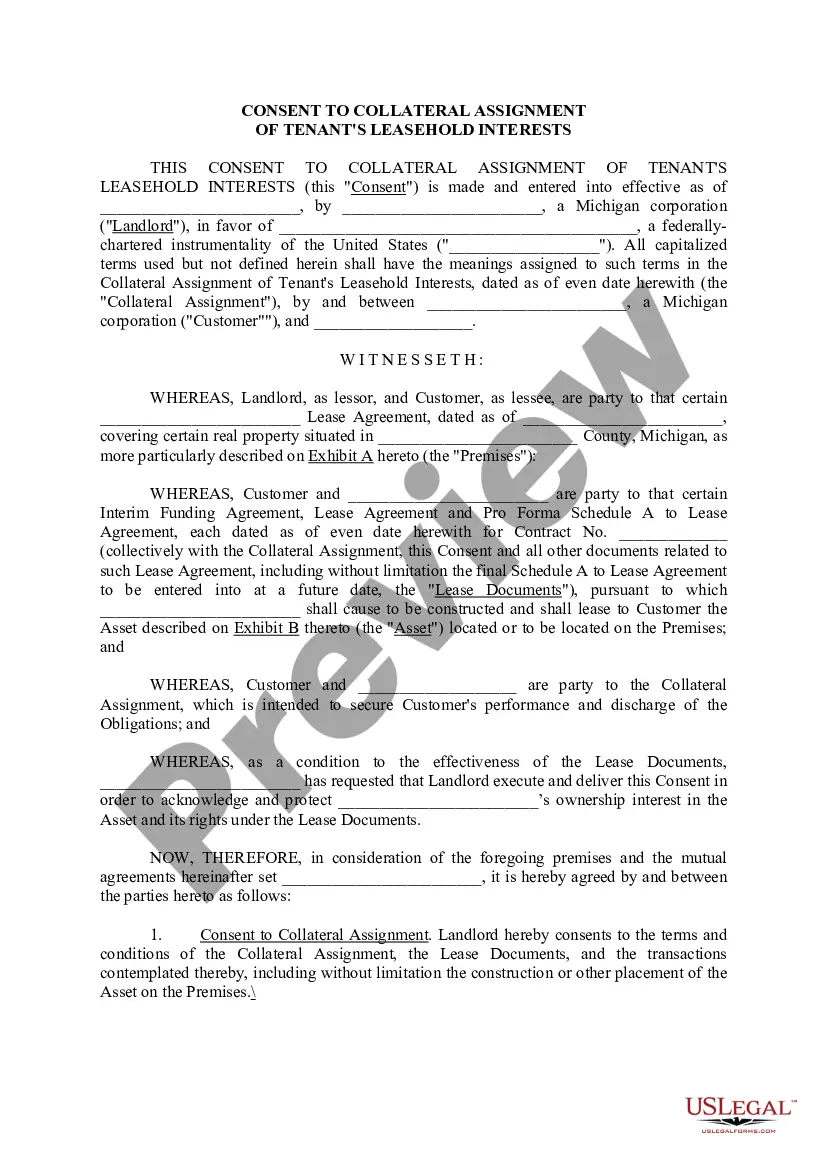
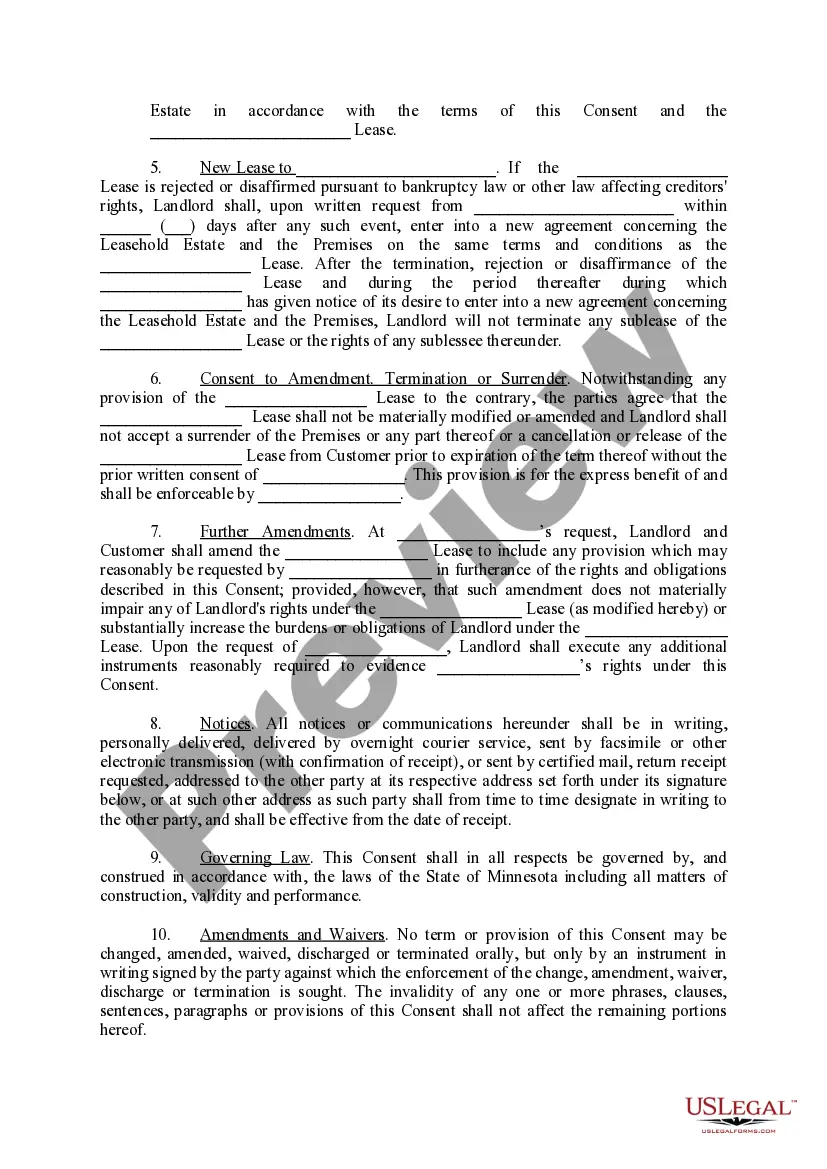
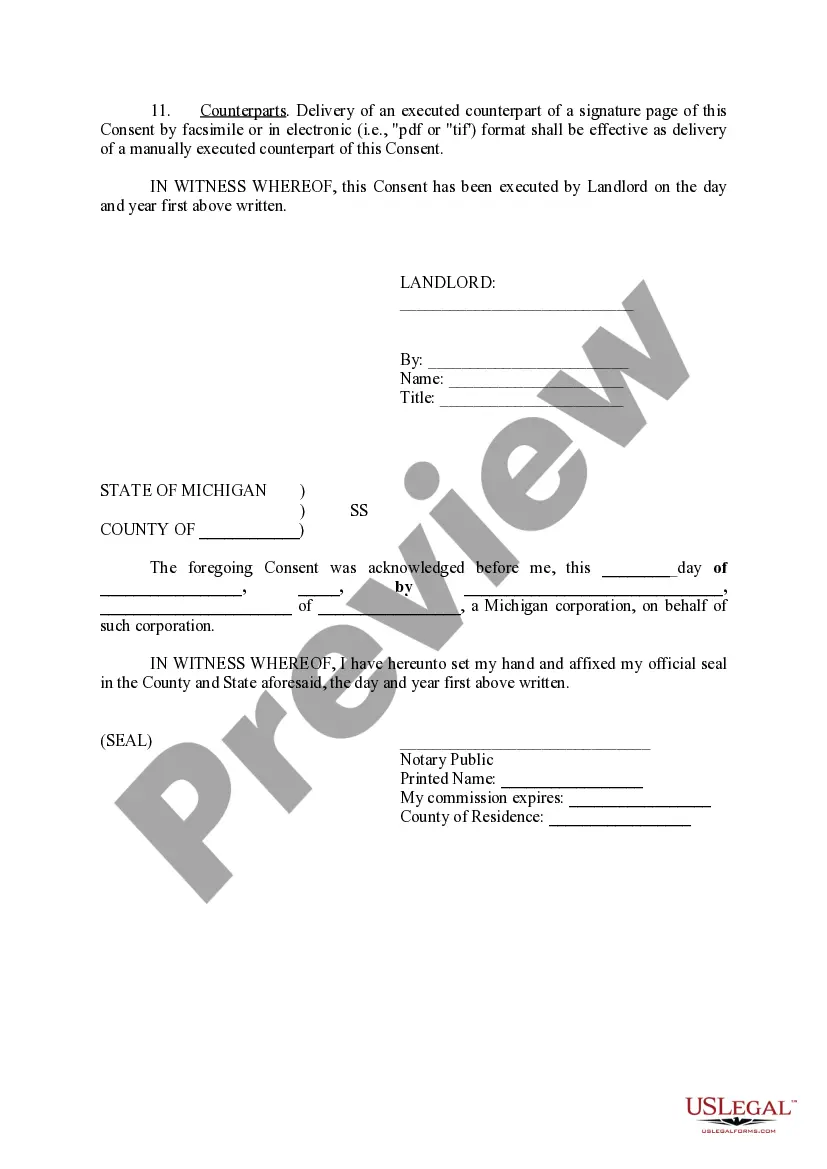
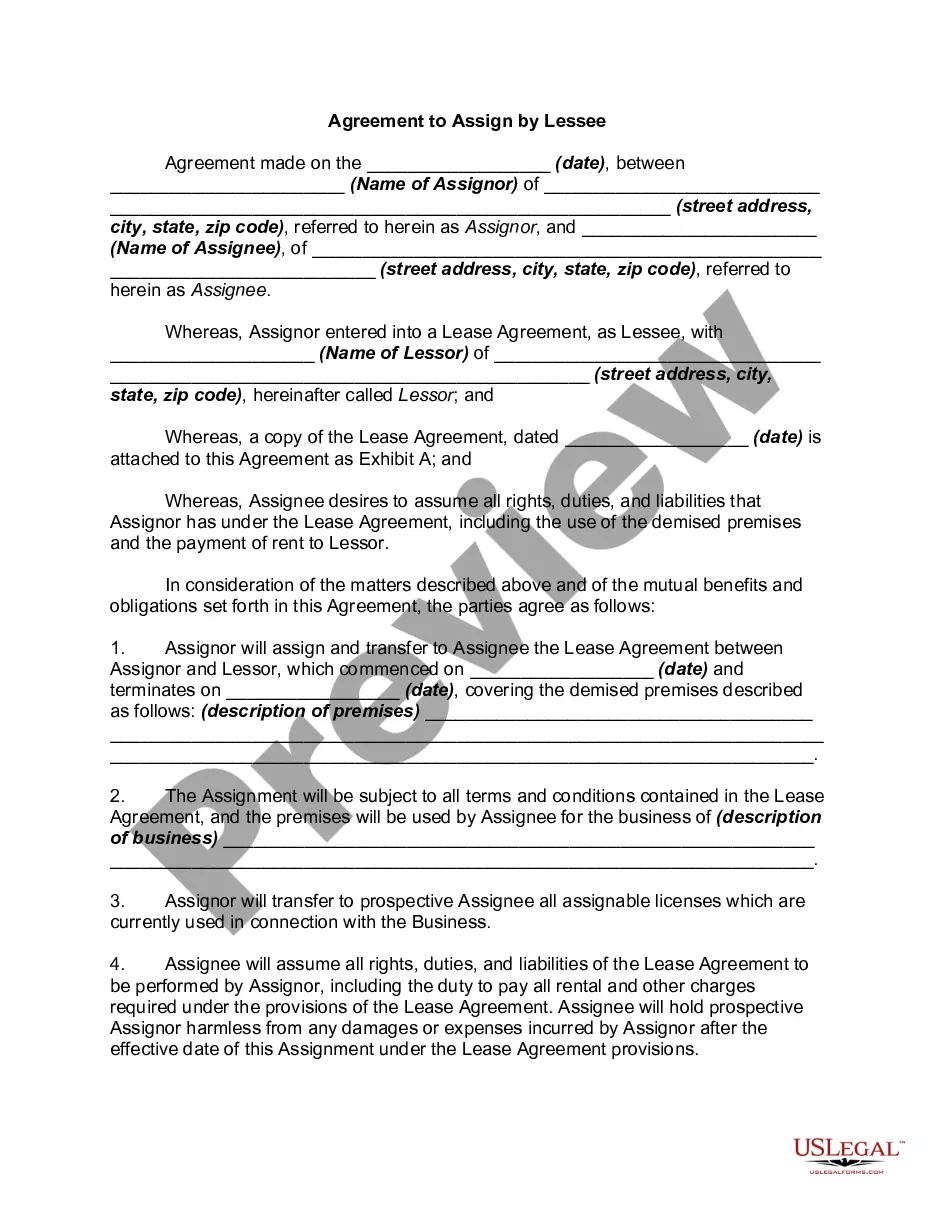
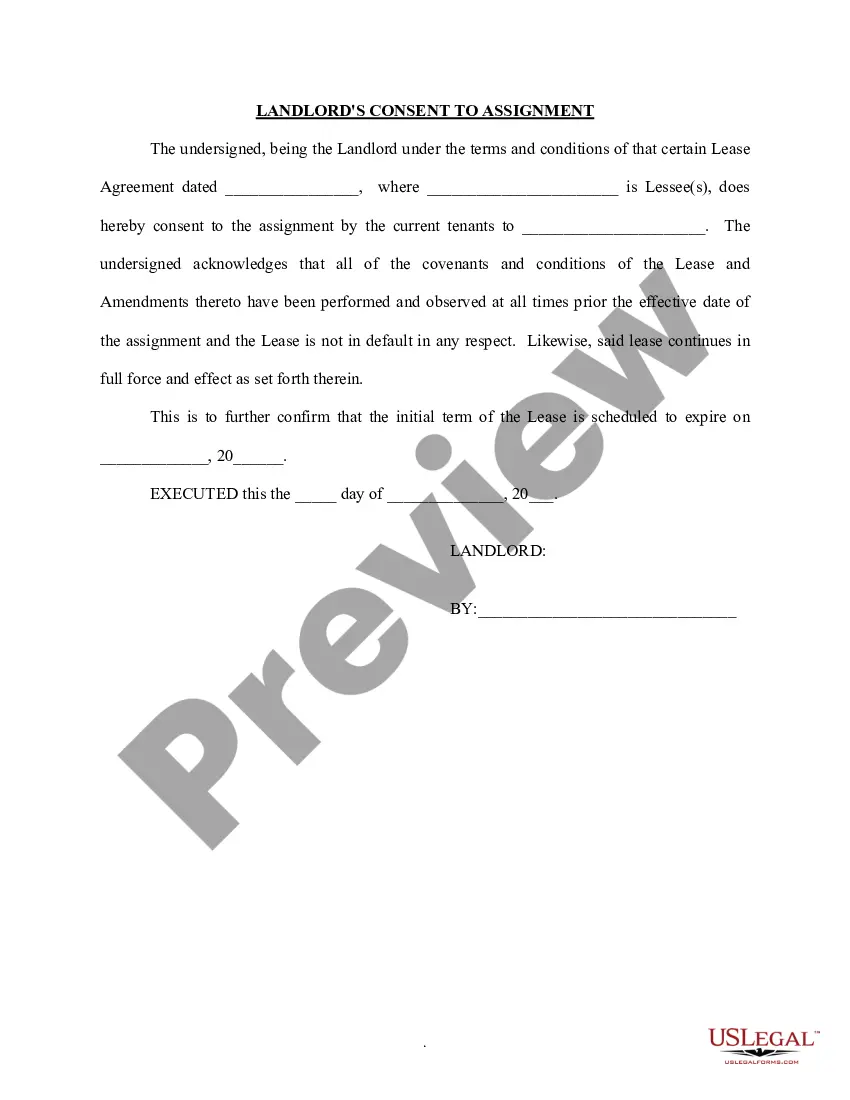
The Consent to Collateral Assignment of Tenant's Leasehold Interests is a legal document that grants a landlord's approval for the tenant to assign their leasehold interests to a third party as collateral. This form ensures that the landlord recognizes the assignment and secures the tenant's obligations under the lease agreement. It is essential for situations where a tenant wishes to use their lease as collateral for financing or other obligations, differentiating it from standard lease agreements or assignments.
Main sections of this form
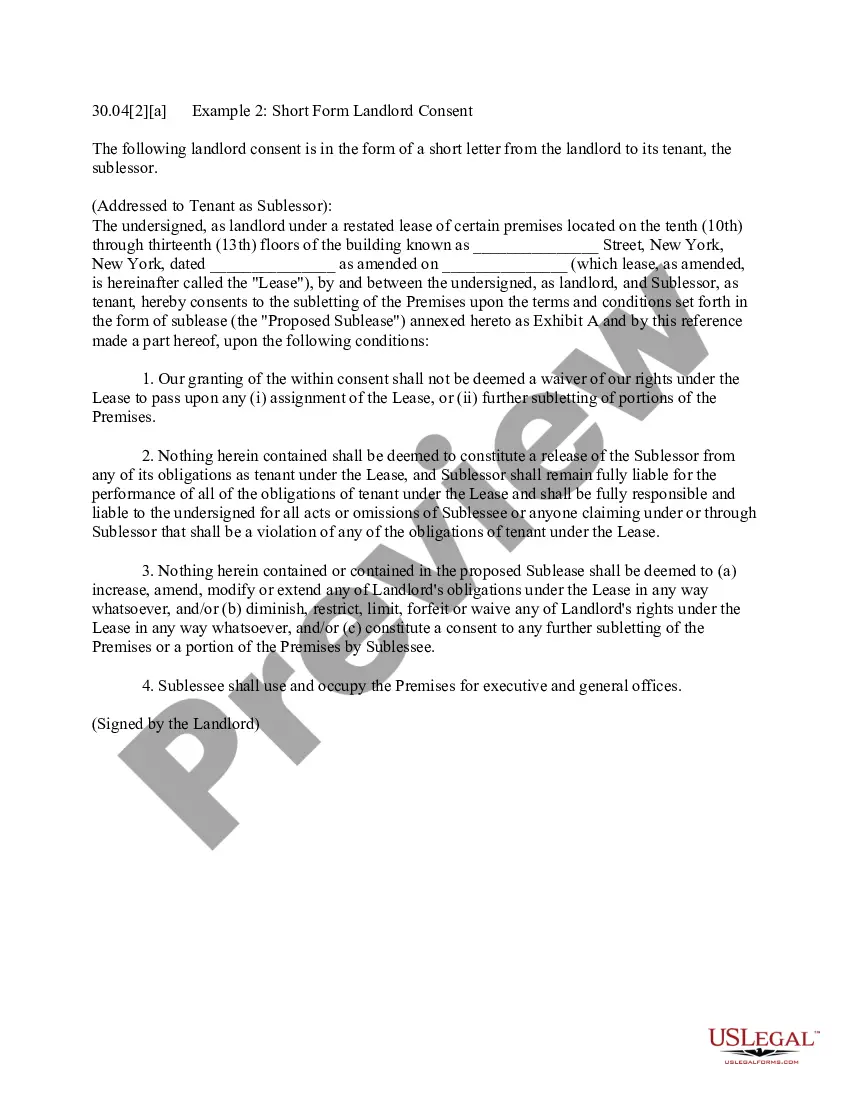
- Consent from the landlord to the collateral assignment.
- Identification of the parties involved, including the landlord, tenant, and assignee.
- Details of the lease agreement and property description.
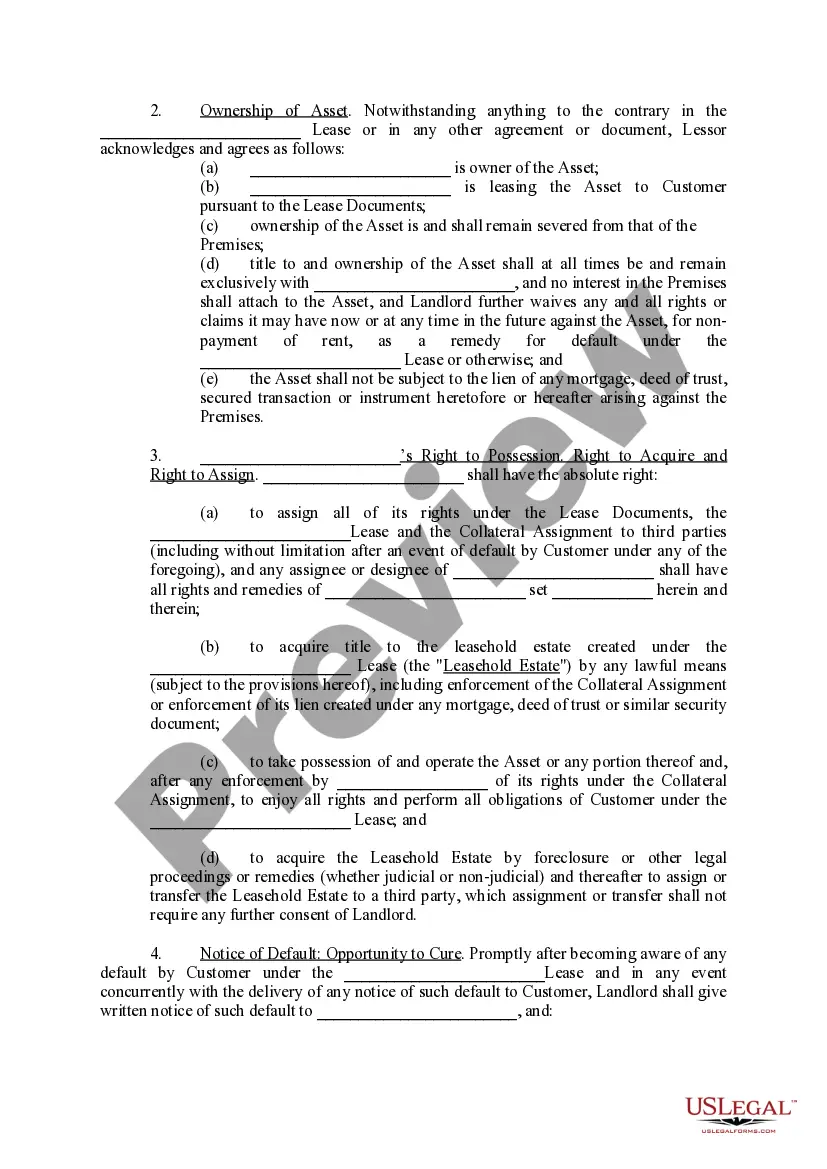
- Provisions regarding the ownership and rights associated with the asset.
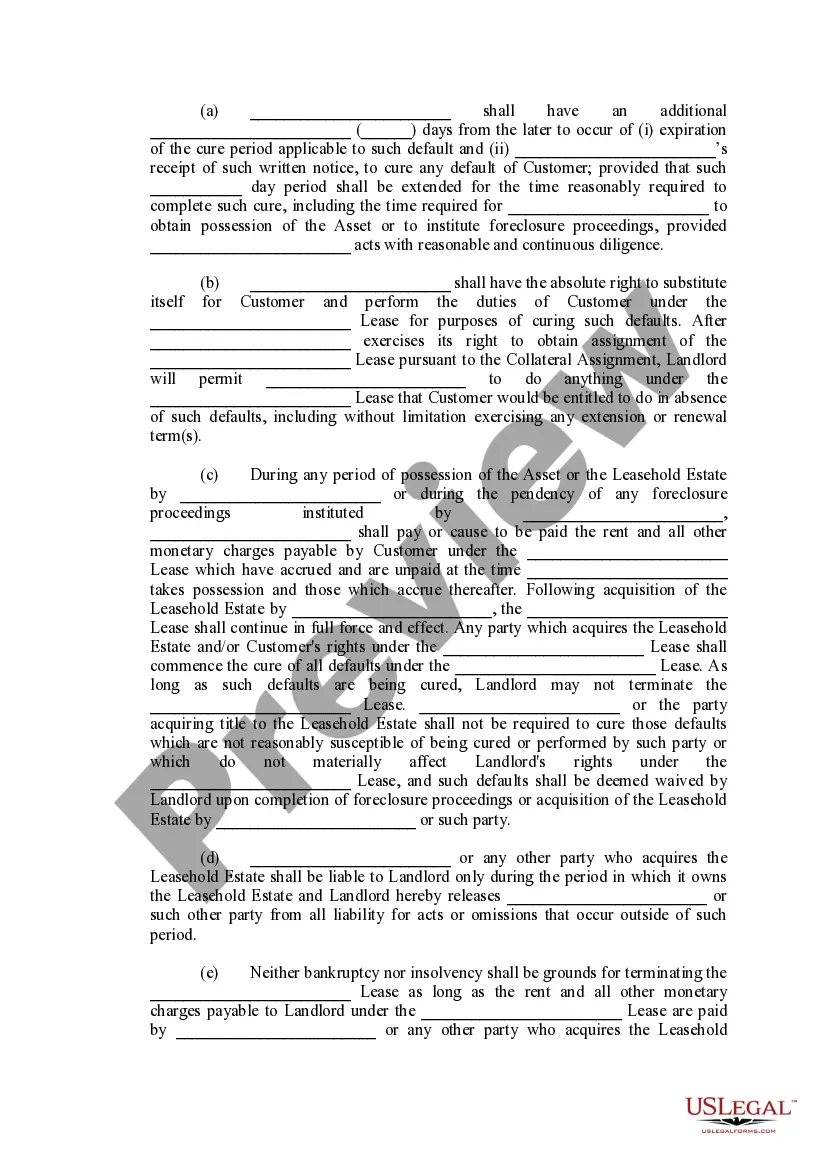
- Procedures and timelines for addressing defaults and curing breaches.
- Clauses specifying governing law and amendment procedures.
When to use this document
This form is commonly used when a tenant wants to secure a loan or financing using their leasehold interests as collateral. It is also applicable when a landlord needs to acknowledge and provide consent for such a collateral assignment, ensuring both parties understand their rights and obligations regarding the lease and any collateralized asset.
Who this form is for
- Tenants looking to assign their leasehold interests as collateral.
- Landlords who need to formally consent to a tenantâs collateral assignment.
- Financial institutions or third parties involved in the financing arrangements.
Steps to complete this form
- Identify all parties involved: the landlord, tenant, and assignee.
- Specify the property details including the lease agreement date and property location.
- Fill in necessary details regarding the collateral assignment and any conditions.
- Enter required signatures from all parties to formalize the consent.
- Consider notarization, if required in your situation, for additional legal validation.
Notarization requirements for this form
This form does not typically require notarization unless specified by local law. Always check specific state requirements to ensure compliance.
Get your form ready online
Our built-in tools help you complete, sign, share, and store your documents in one place.
Make edits, fill in missing information, and update formatting in US Legal Forms—just like you would in MS Word.
Download a copy, print it, send it by email, or mail it via USPS—whatever works best for your next step.
Sign and collect signatures with our SignNow integration. Send to multiple recipients, set reminders, and more. Go Premium to unlock E-Sign.
If this form requires notarization, complete it online through a secure video call—no need to meet a notary in person or wait for an appointment.
We protect your documents and personal data by following strict security and privacy standards.

Make edits, fill in missing information, and update formatting in US Legal Forms—just like you would in MS Word.

Download a copy, print it, send it by email, or mail it via USPS—whatever works best for your next step.

Sign and collect signatures with our SignNow integration. Send to multiple recipients, set reminders, and more. Go Premium to unlock E-Sign.

If this form requires notarization, complete it online through a secure video call—no need to meet a notary in person or wait for an appointment.

We protect your documents and personal data by following strict security and privacy standards.
Avoid these common issues
- Failing to include all necessary parties can invalidate the consent.
- Not specifying the property details accurately may lead to disputes.
- Omitting the signatures of all parties involved in the agreement.
Advantages of online completion
- Convenient access to legally reviewed templates, ensuring compliance with state laws.
- Editable documents tailored to your specific situation without needing a lawyer for simple agreements.
- Available for immediate download, saving time and allowing for quick processing.
Looking for another form?
Form popularity
FAQ
Accordingly, the real collateral value in a leasehold improvement loan could be said to be in the increased value of the leased premises themselves. The SBA has addressed this issue by requiring lenders to secure loans that finance leasehold improvements with, among other things, a collateral assignment of the lease.
The difference between assignment and transfer is that assign means it's legal to transfer property or a legal right from one person to another, while transfer means it's legal to arrange for something to be controlled by or officially belong to another person.
A leasehold mortgage is possible when a lien is placed on the tenant's interest with the lease, and it is used as collateral for the loan the individual obtained.Generally, this occurs so that the leaseholder benefits through financing a construction or to renovate the property.
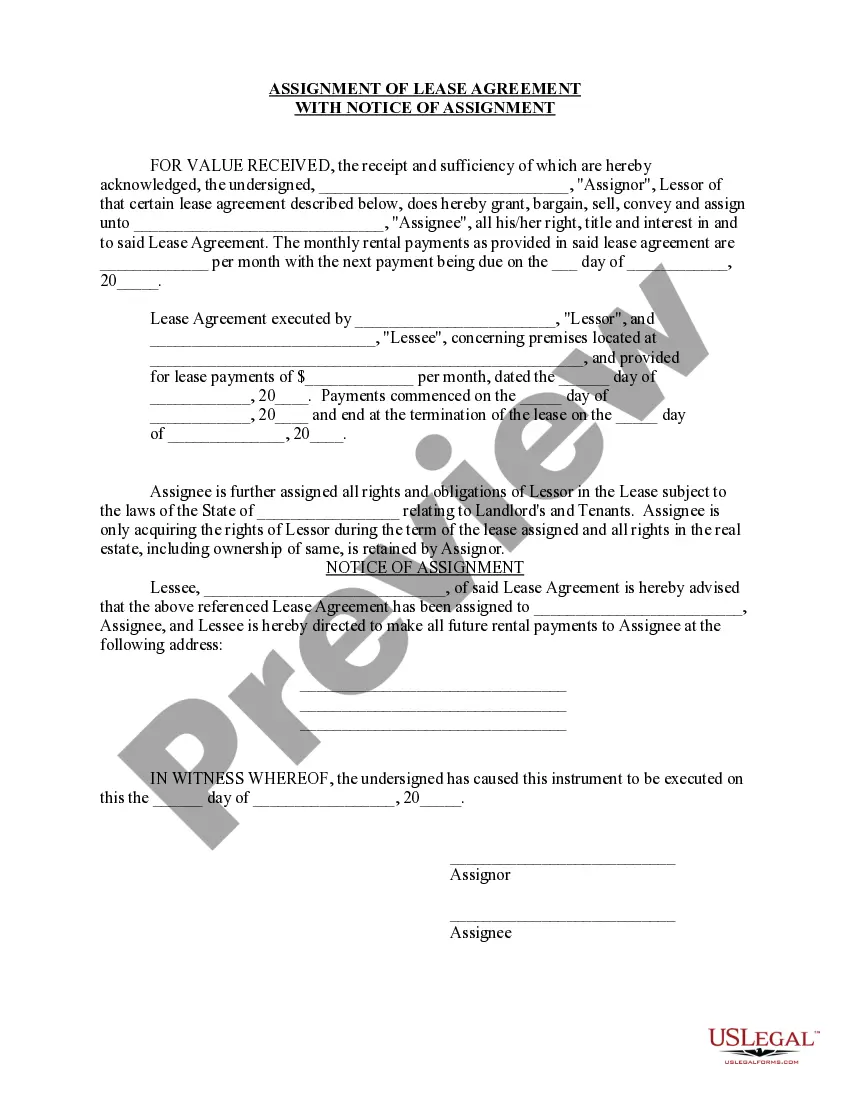
An assignment of a Commercial Lease is where a new tenant steps into the shoes of the original tenant and takes over the lease going forward.
An assignment is when the tenant transfers their lease interest to a new tenant using a Lease Assignment. The assignee takes the assignor's place in the landlord-tenant relationship, although the assignor may remain liable for damages, missed rent payments, and other lease violations.
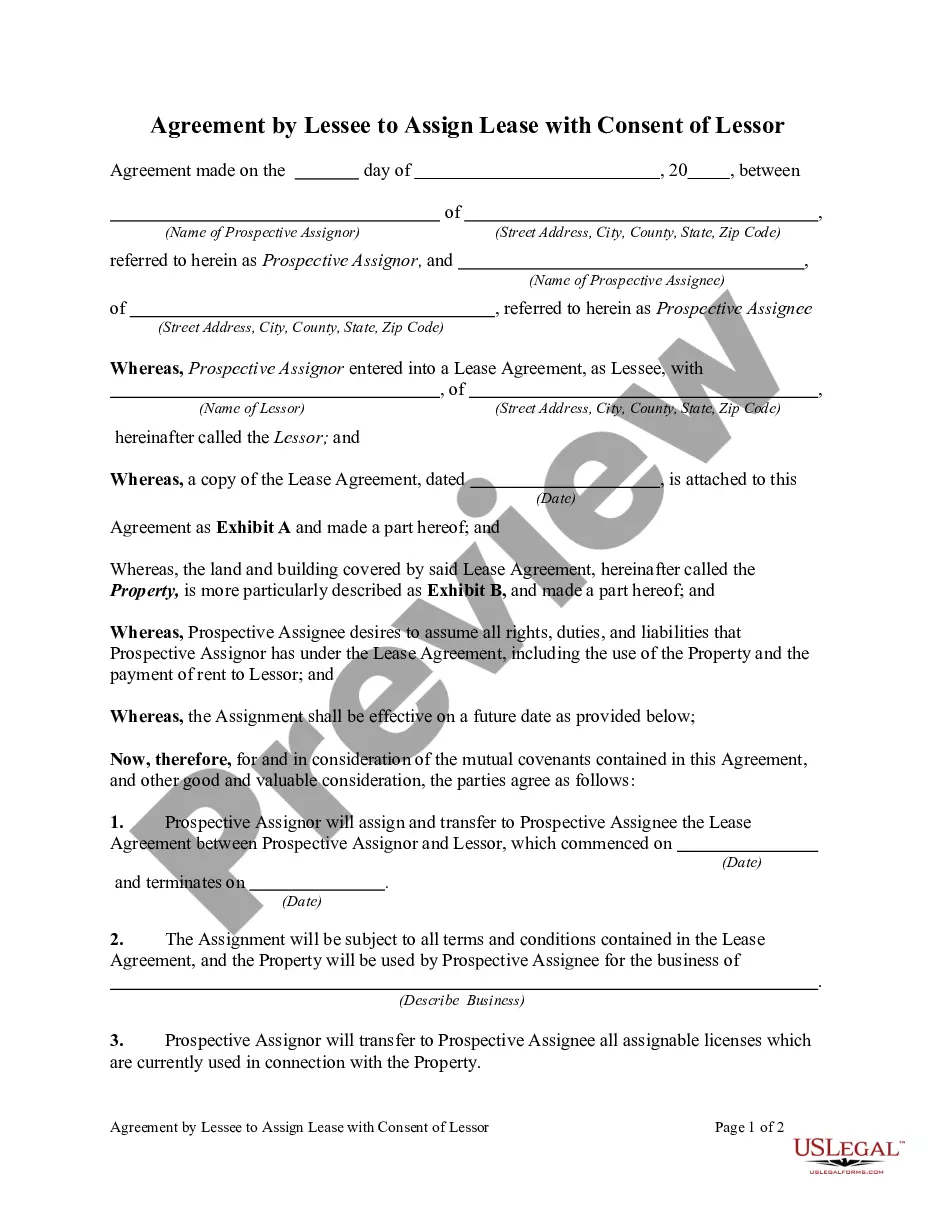
What is a Landlord's Consent to Lease Assignment? With a Landlord's Consent to Lease Assignment, landlords and property managers can give formal approval to tenants who wish to exit their lease agreement and transfer it to a new tenant before the rental term is complete.
What is Loan Against Leased Property ? Loan Against Leased Property or Lease Rental Discounting (LRD) is a term loan provided against receipts derived from lease contracts with tenants. The loan is provided to the lessor based on the discounted value of the rentals as well as the inherent property value.
Consent to assignment refers to allowing a party of a contract (the assignor) to assign a contract and move the obligations to another party (the assignee).
Tenants still can't assign to their guarantors.