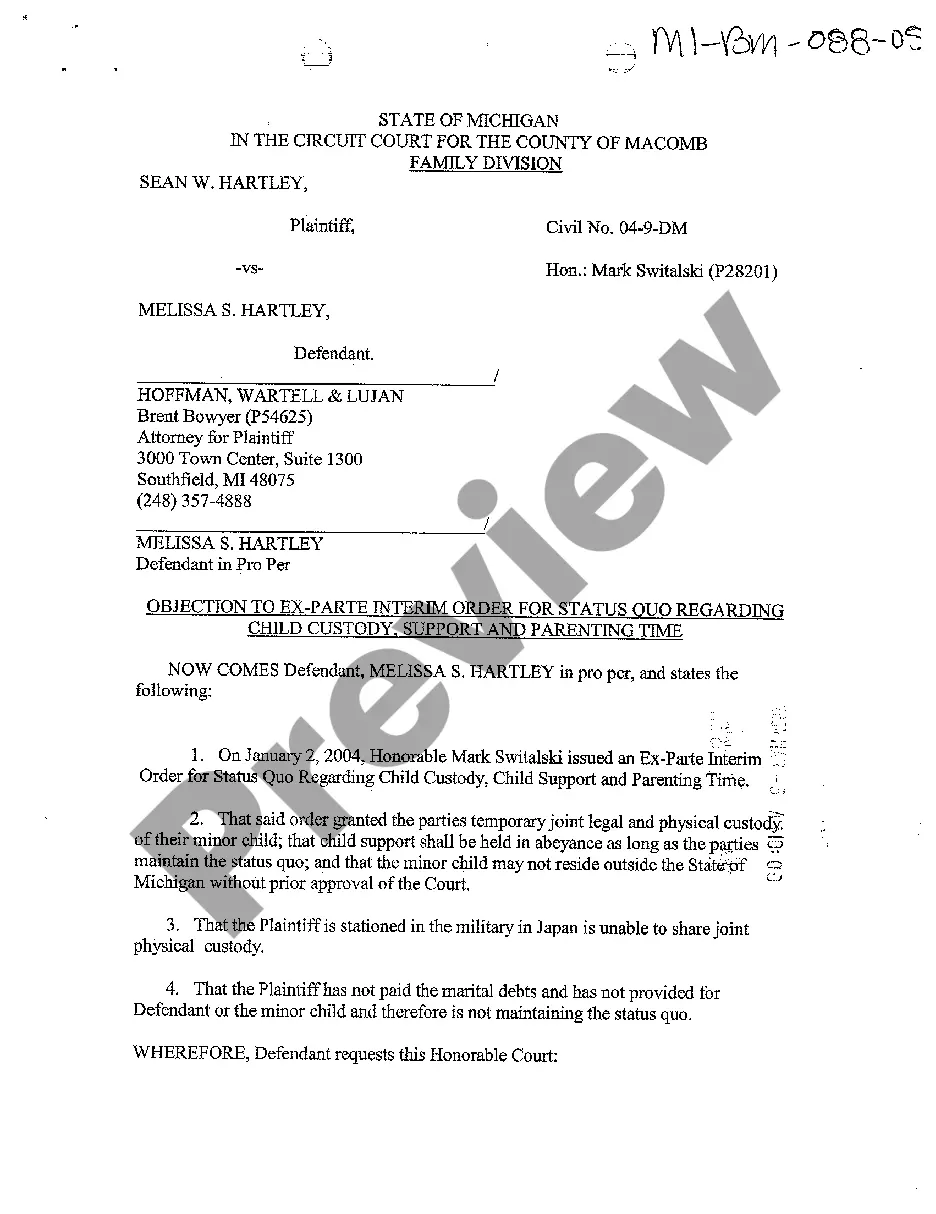
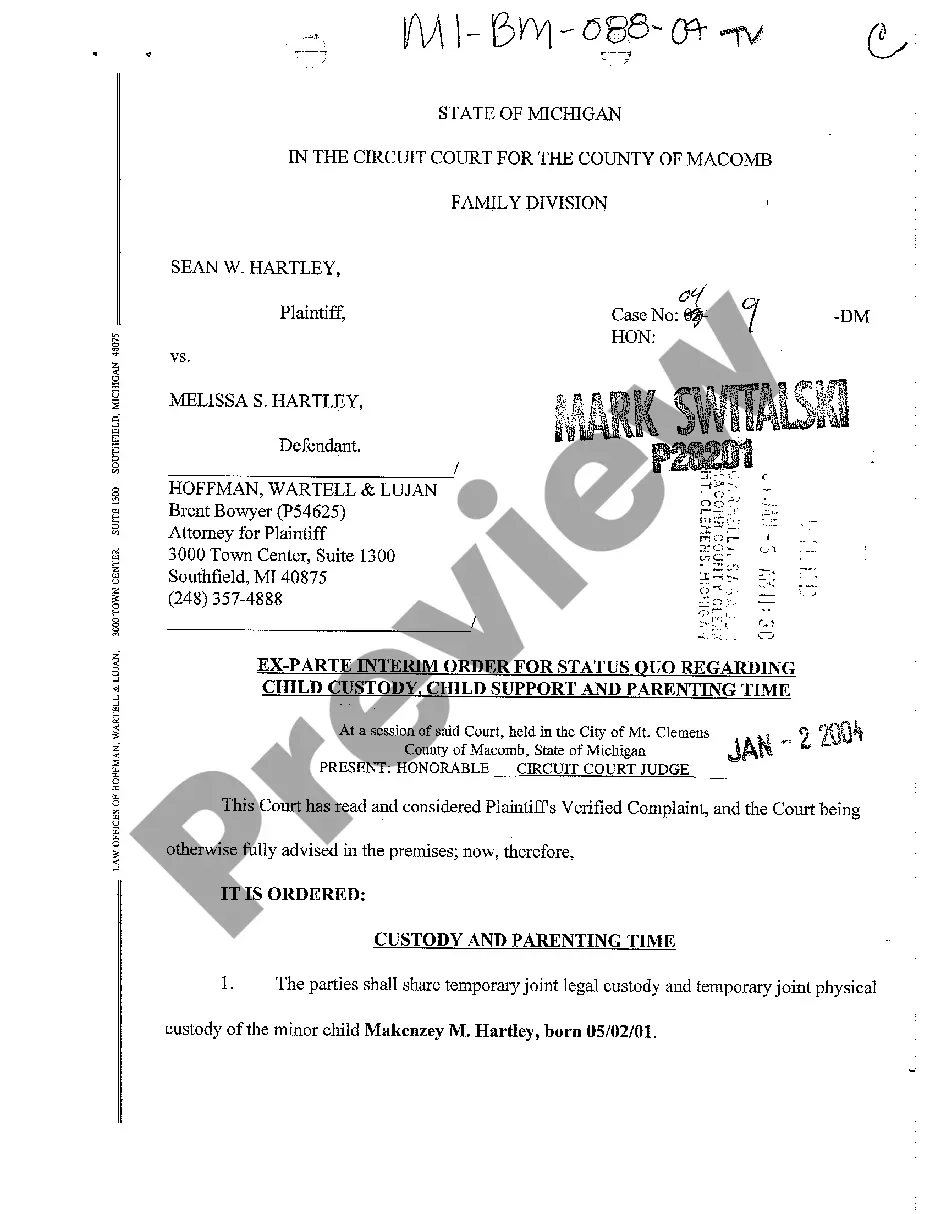
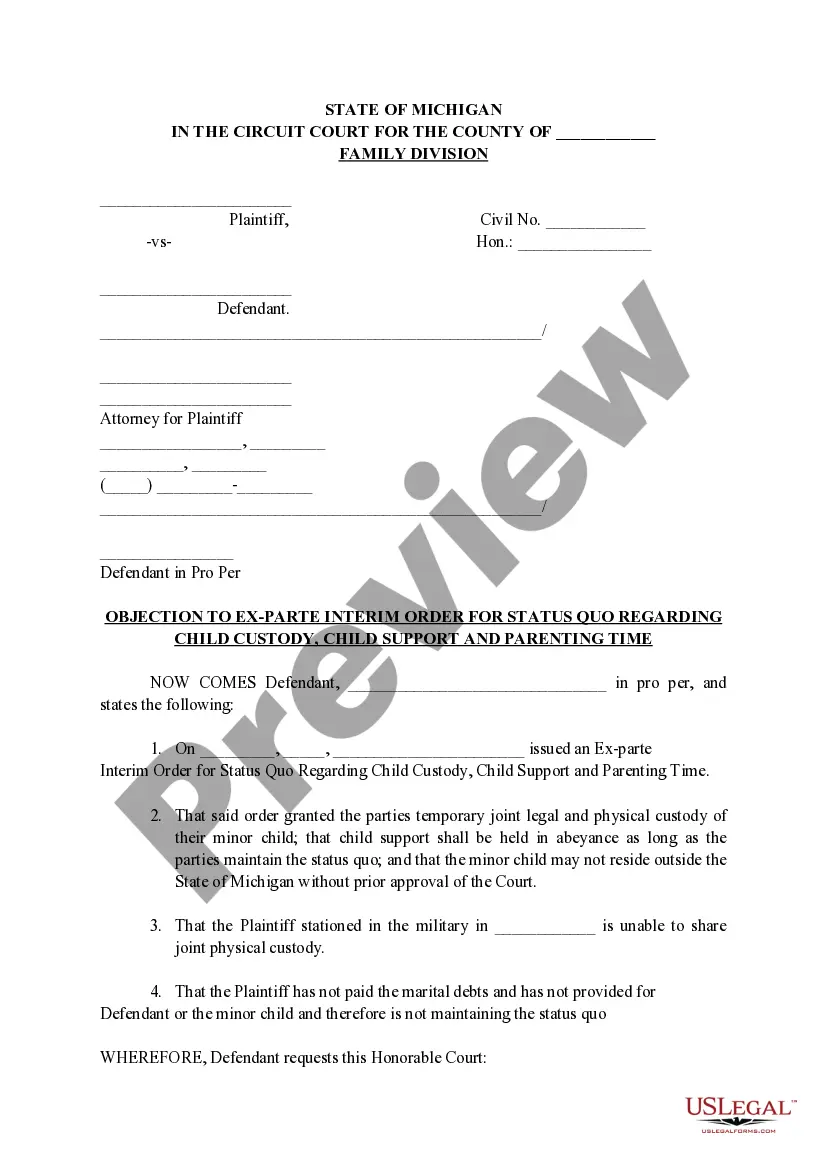
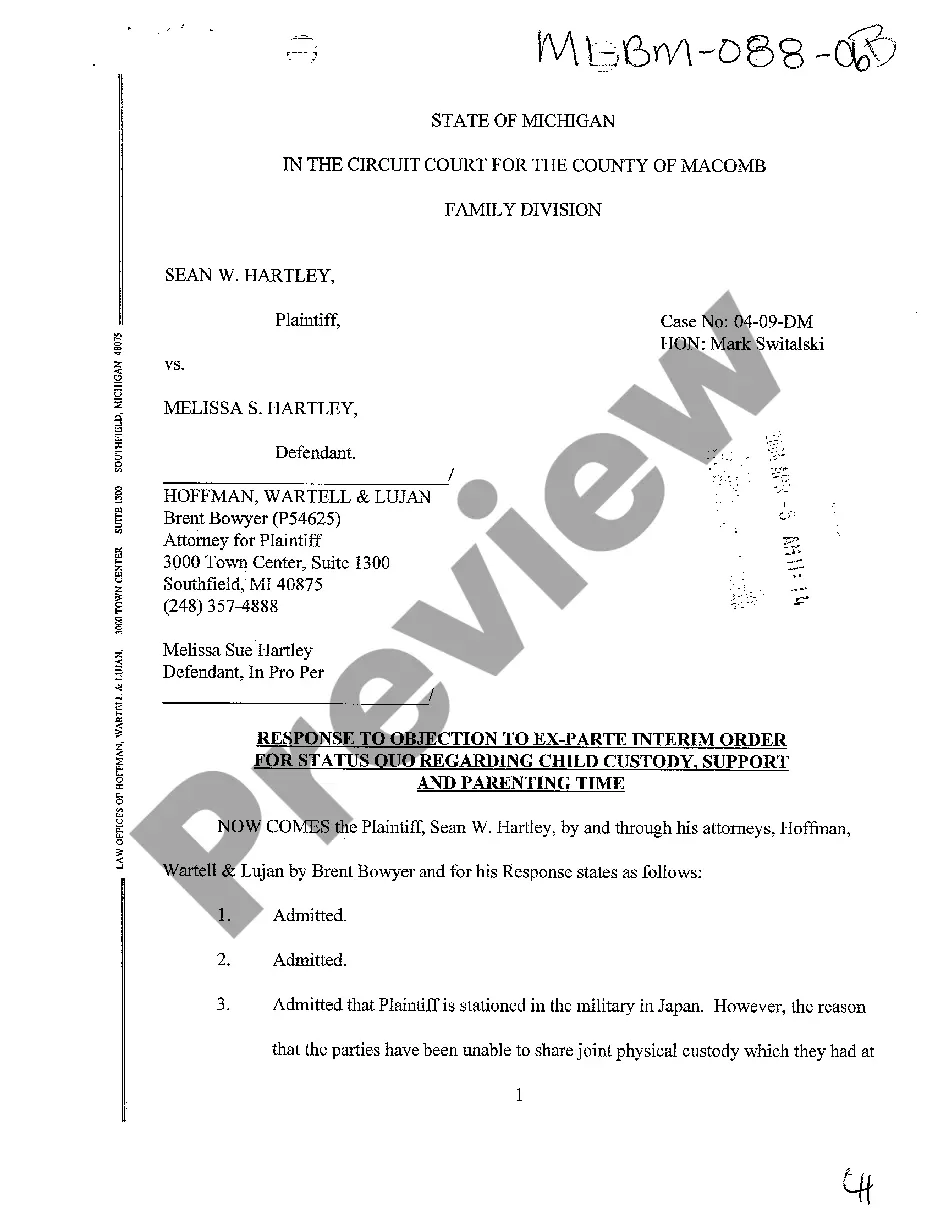
Michigan Objection to Ex Parte Interim Order for Status Quo Regarding Child Custody, Child Support and Parenting Time

Notarization requirements for this form
This form usually doesn’t need to be notarized. However, local laws or specific transactions may require it. Our online notarization service, powered by Notarize, lets you complete it remotely through a secure video session, available 24/7.


Form popularity
FAQ
Ex parte motions can limit your strategic options and may result in a one-sided decision by the court. When contesting a Michigan Objection to Ex Parte Interim Order for Status Quo Regarding Child Custody, Child Support and Parenting Time, opponents often find it challenging to address claims they were unaware of. This lack of two-sided argument may lead to temporary orders that do not serve the best interest of the child, impacting custody and support arrangements. Understanding these risks is crucial when deciding your approach.
Winning an ex parte hearing requires clear and compelling evidence to justify your request. In a Michigan Objection to Ex Parte Interim Order for Status Quo Regarding Child Custody, Child Support and Parenting Time, present facts that demonstrate immediate harm or risk to your child if the order is not granted. Preparation is vital—gather documentations and understand the judge's past rulings on similar cases. A strong legal argument can significantly improve your chances of success.
Several factors can negatively influence a custody case, including failure to comply with court orders and demonstrating a lack of concern for the child's welfare. If you file a Michigan Objection to Ex Parte Interim Order for Status Quo Regarding Child Custody, Child Support and Parenting Time, presenting yourself as reliable and cooperative will enhance your position. Additionally, accusations or actions that might suggest instability, such as substance abuse or frequent jail time, can also reflect poorly on your case. Maintaining a respectful demeanor throughout the process is crucial.
Ex parte proceedings can lead to unfair outcomes because only one party presents their case, which may not reflect the full picture. In a Michigan Objection to Ex Parte Interim Order for Status Quo Regarding Child Custody, Child Support and Parenting Time, the other party might miss crucial opportunities to defend their interests. This lack of communication can create misunderstandings and unresolved issues. It's essential to consider these risks when navigating custody and support matters.
To object to an ex parte motion, you must file a written objection with the court that received the motion. Carefully outline your reasons for disagreement, ensuring your objections are clear and based on factual evidence. Utilizing resources from USLegalForms can provide you with templates and guidance to make this process more manageable.
An ex parte order may be denied if the court finds insufficient justification for the immediate need of such an order, or if proper notice was not provided to all parties involved. If the evidence presented does not substantiate an urgent situation, the judge may refuse the request. Understanding these factors can help you avoid pitfalls in future motions or objections.
To increase your parenting time in Michigan, you should file a motion for parenting time modification with the court. Clearly outline your reasons and provide evidence supporting your request. Engaging legal aid, such as what USLegalForms offers, can enhance your chances of success by ensuring you meet all procedural requirements.
The primary remedy against an ex parte order is to file an objection or a motion for reconsideration. This process allows you to argue against the order's validity and seek modification or cancellation. By leveraging the resources at USLegalForms, you can gain insights on filing procedures and present a strong argument to the court.
To file a motion to change parenting time in Michigan, start by completing the necessary court forms. You’ll need to specify the changes you seek and the reasons justifying these changes. The Michigan Objection to Ex Parte Interim Order for Status Quo Regarding Child Custody, Child Support and Parenting Time can help clarify your position in the eyes of the court, ensuring your concerns are heard.
Disagreeing with a motion involves filing a formal response in court that outlines your objections. Make sure to address the points raised in the original motion while articulating your stance clearly. Utilizing tools from USLegalForms can assist you in organizing your response as you work through this important process.