Michigan Stipulated Order Compelling Plaintiff To Sign Medical Release Authorization
What is this form?
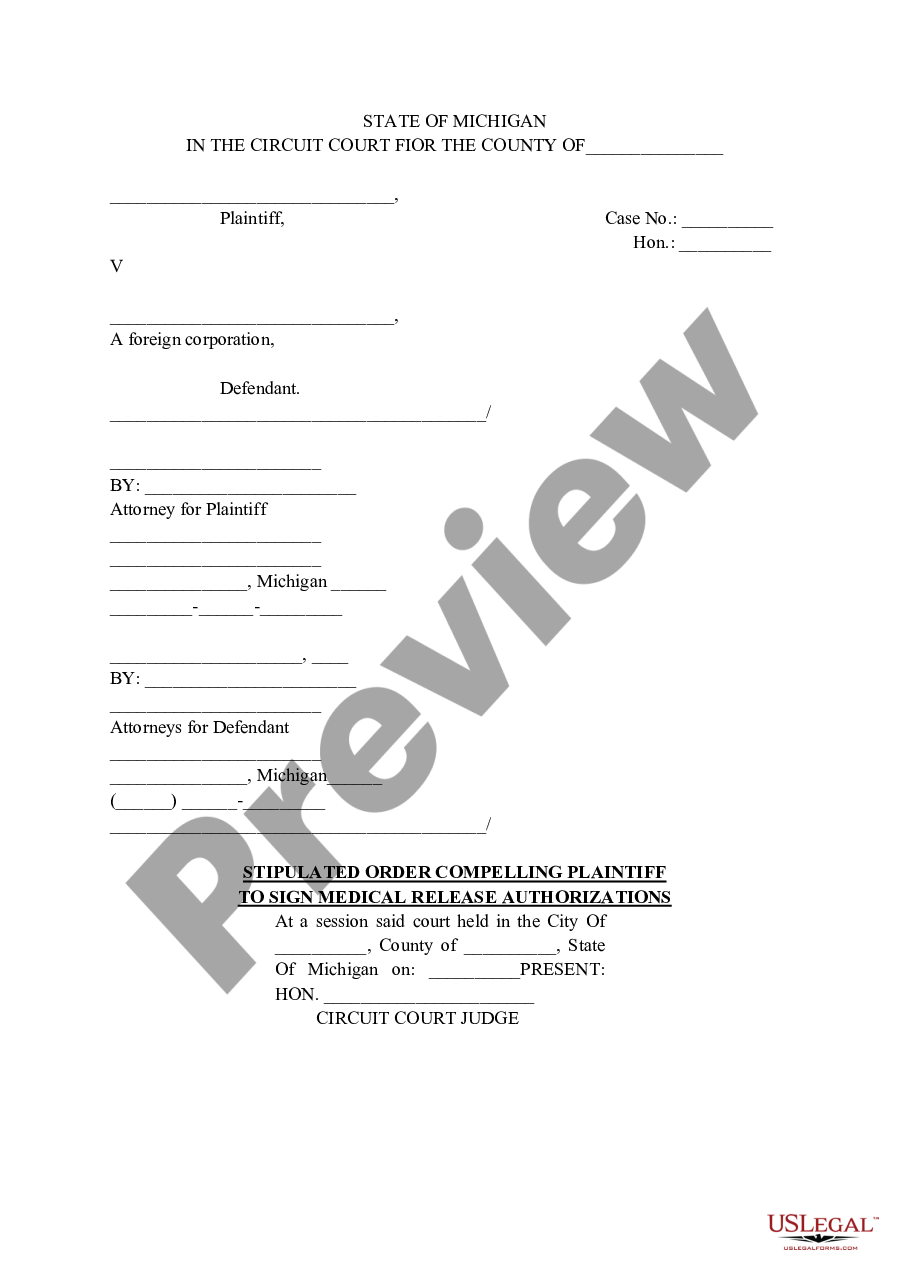
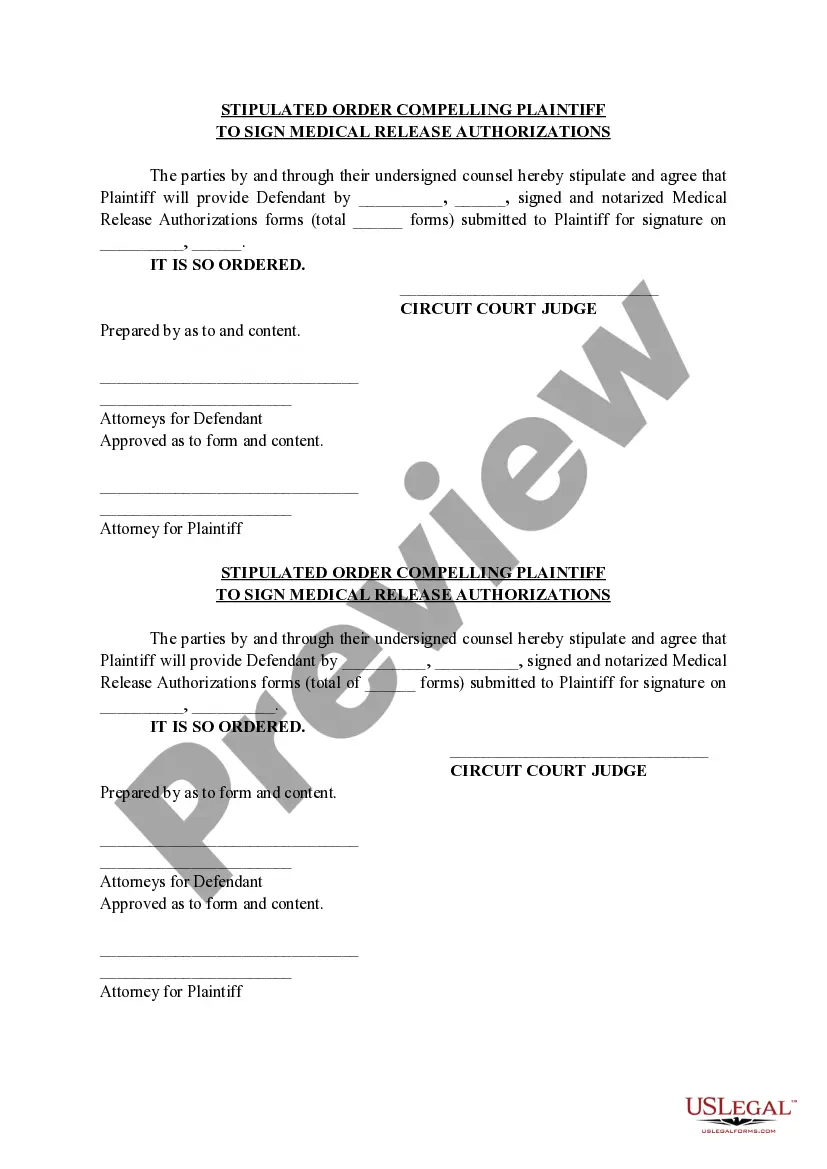
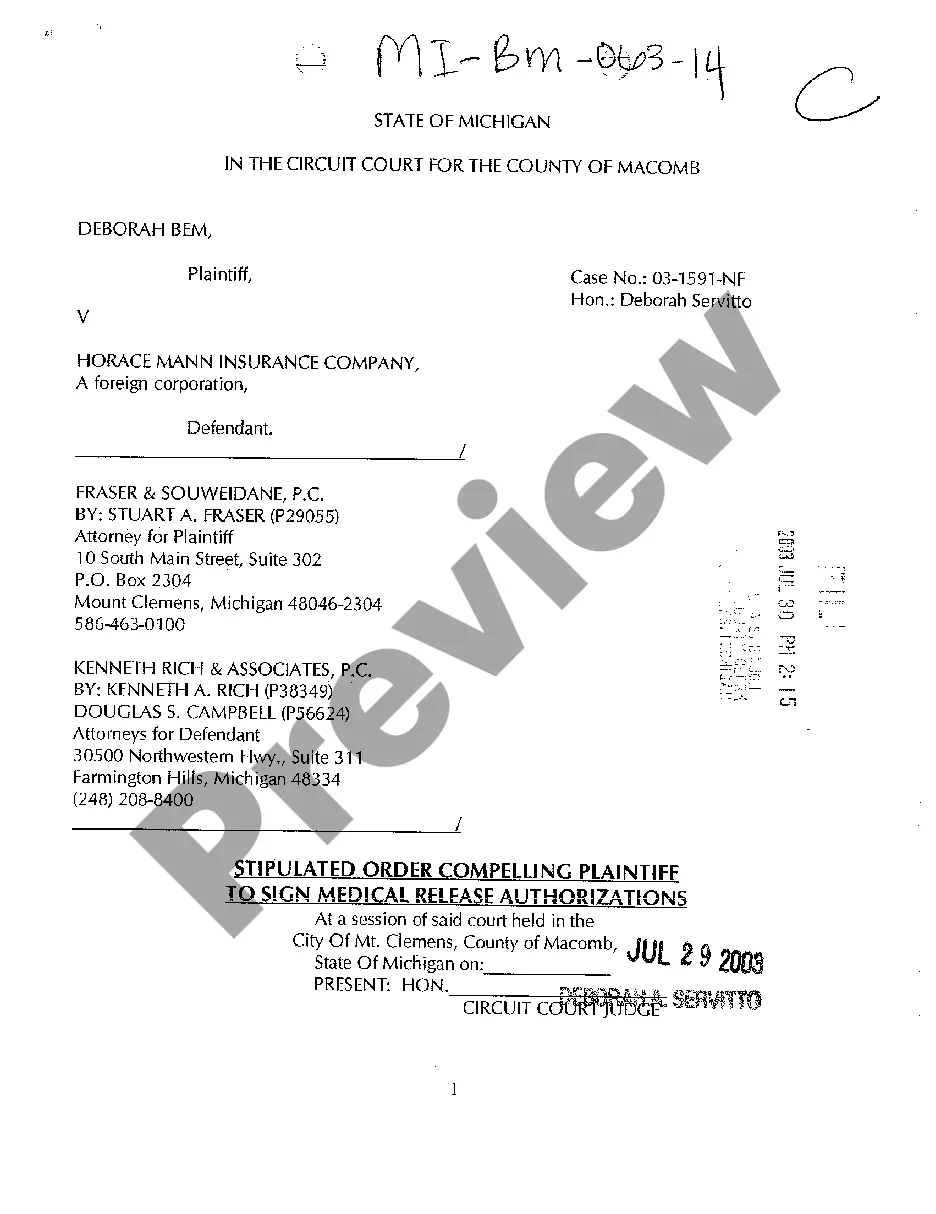
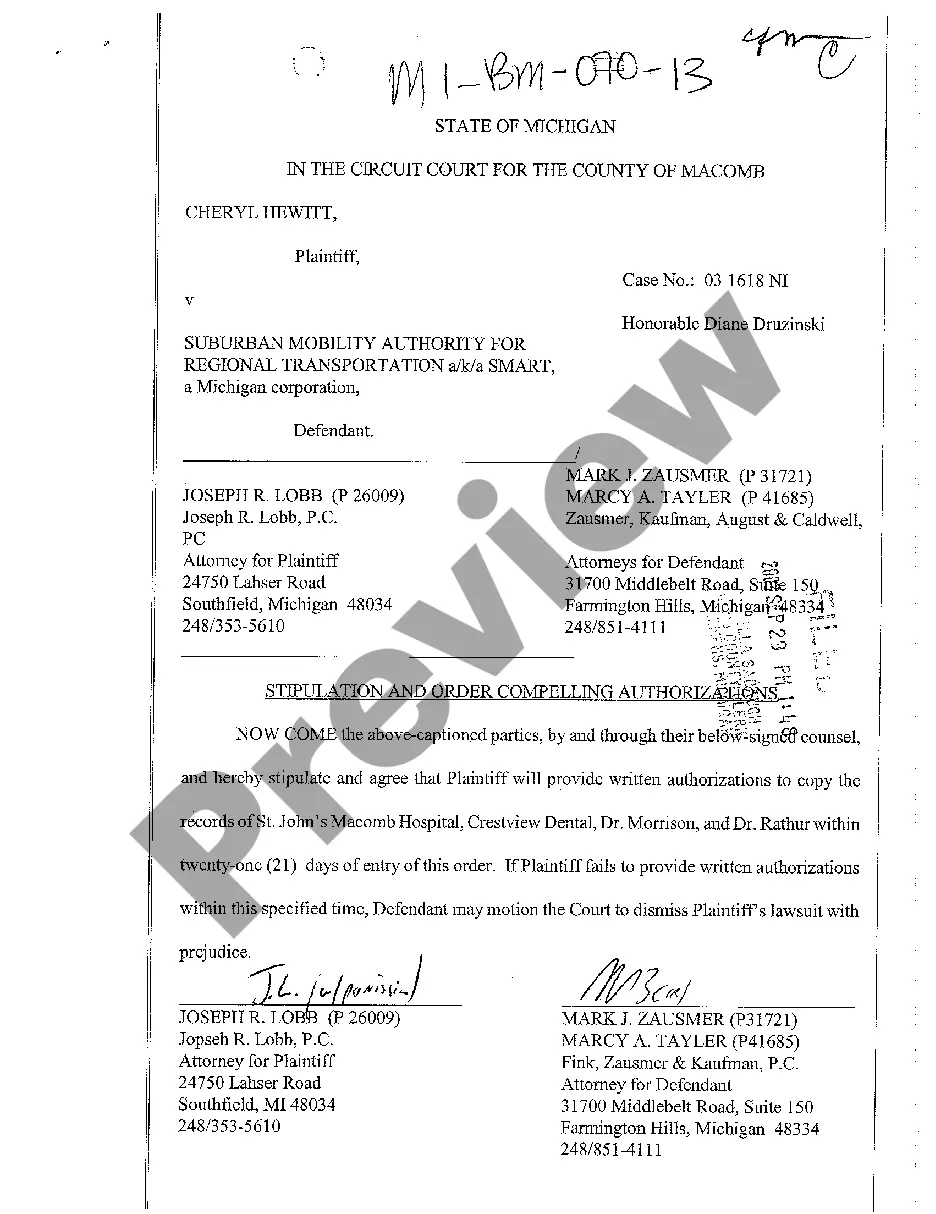
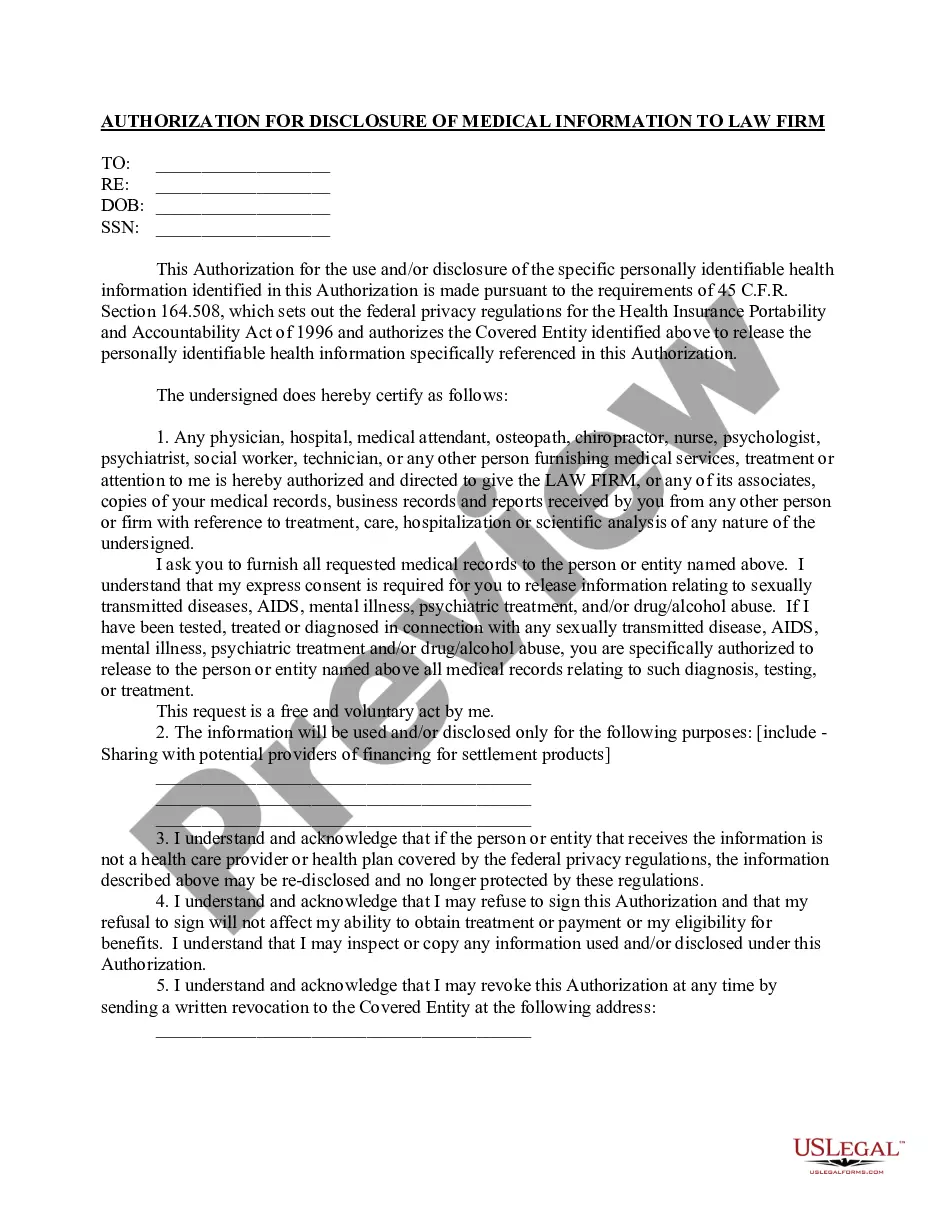
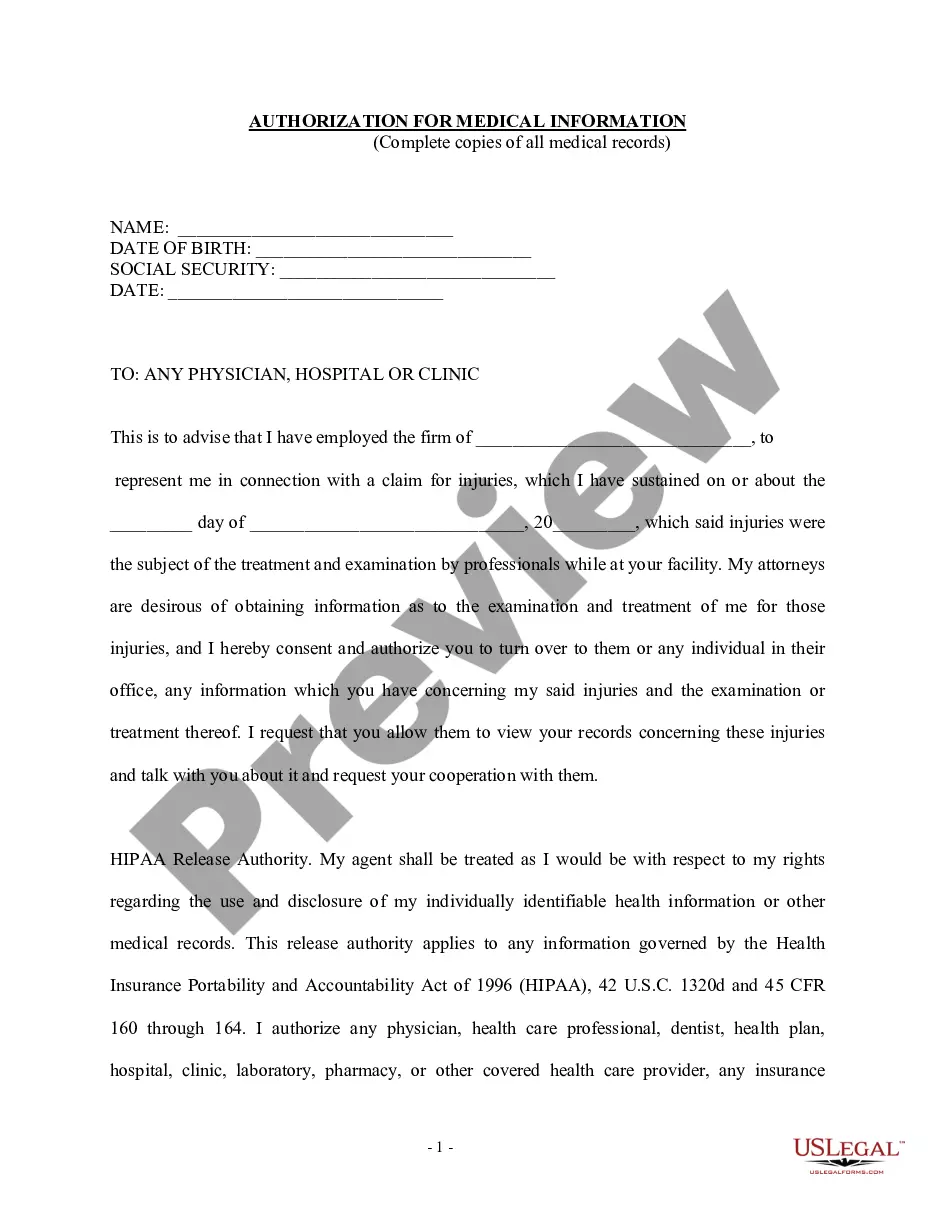
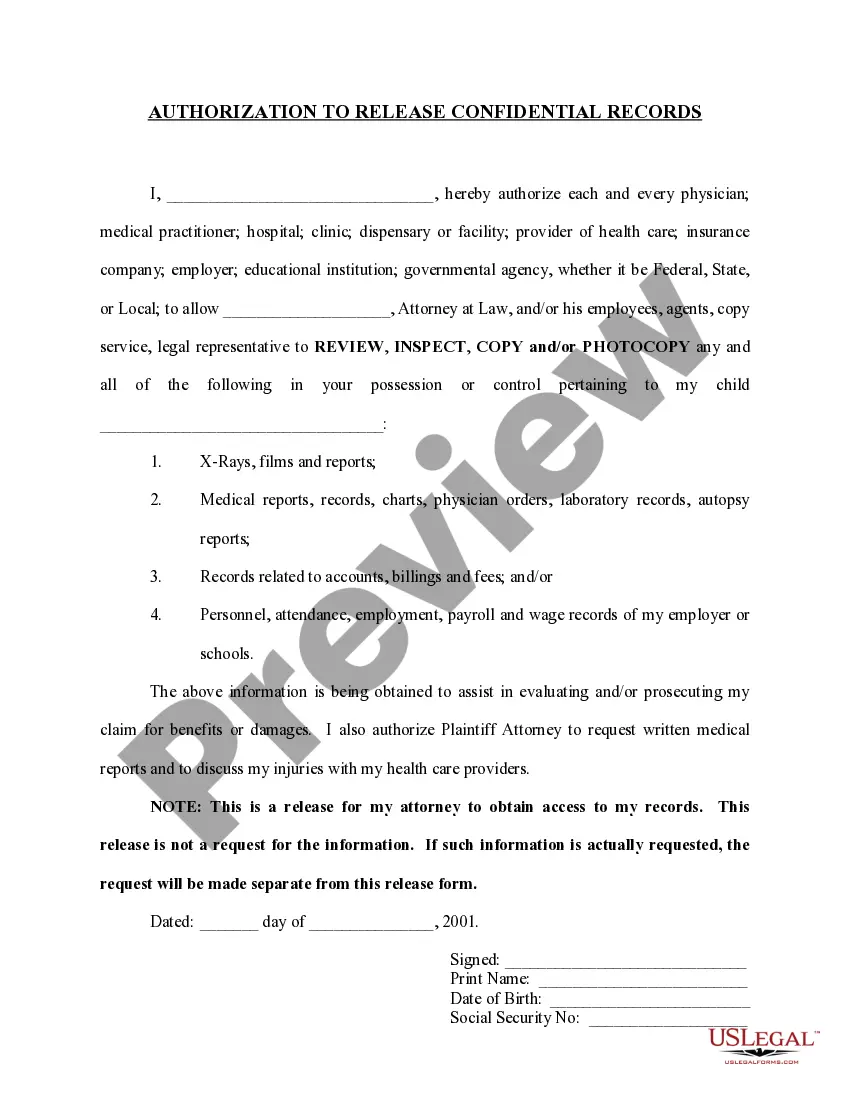
The Stipulated Order Compelling Plaintiff To Sign Medical Release Authorization is a legal document that establishes an agreement between the parties involved in a lawsuit. It requires the plaintiff to provide signed medical release authorizations to the defendant. This form is essential in cases where the defendant needs access to the plaintiff's medical records to support their legal arguments or defenses. Unlike other forms, this stipulated order specifically outlines the timeline and requirements for obtaining the signed authorizations.
What’s included in this form
- Identifying information for the plaintiff and defendant, including names and case number.
- A statement indicating the requirement for the plaintiff to provide signed medical release authorizations.
- The agreed timeline for submitting the signed forms.
- Signature spaces for attorneys representing both parties, ensuring legal acknowledgment.
- Judicial order confirming the stipulation, providing legal authority to the agreement.
Common use cases
This stipulated order should be used during legal proceedings when the defendant requires access to the plaintiff's medical records. It is applicable in personal injury cases, medical malpractice suits, or any situation where medical history is relevant to the case's outcome. This form ensures that the plaintiff complies with the request for information necessary for the defendant's defense or settlement negotiations.
Who should use this form
This form is suitable for:
- Plaintiffs who are involved in civil litigation cases where medical records are pertinent.
- Defense attorneys representing defendants seeking medical information to support their case.
- Legal professionals who are negotiating settlements and require mutual agreements between parties.
How to complete this form
- Enter the court's name and location at the top of the form.
- Fill in the case number and the names of the plaintiff and defendant.
- Specify the number of medical release authorization forms required.
- Provide the agreed date by which the plaintiff must sign and return the forms.
- Ensure both attorneys sign the document, indicating their agreement.
- Submit the completed form to the court for it to become an official order.
Does this form need to be notarized?
This form does not typically require notarization unless specified by local law. Ensure that all signatures are appropriately executed to maintain compliance with court requirements.
Get your form ready online
Our built-in tools help you complete, sign, share, and store your documents in one place.
Make edits, fill in missing information, and update formatting in US Legal Forms—just like you would in MS Word.
Download a copy, print it, send it by email, or mail it via USPS—whatever works best for your next step.
Sign and collect signatures with our SignNow integration. Send to multiple recipients, set reminders, and more. Go Premium to unlock E-Sign.
If this form requires notarization, complete it online through a secure video call—no need to meet a notary in person or wait for an appointment.
We protect your documents and personal data by following strict security and privacy standards.

Make edits, fill in missing information, and update formatting in US Legal Forms—just like you would in MS Word.

Download a copy, print it, send it by email, or mail it via USPS—whatever works best for your next step.

Sign and collect signatures with our SignNow integration. Send to multiple recipients, set reminders, and more. Go Premium to unlock E-Sign.

If this form requires notarization, complete it online through a secure video call—no need to meet a notary in person or wait for an appointment.

We protect your documents and personal data by following strict security and privacy standards.
Avoid these common issues
- Failing to include the correct case number or court information.
- Missing signatures from one or both attorneys.
- Not specifying the deadline for providing the signed medical release authorizations.
- Forgetting to notarize the documents if required under local law.
- Including too few details about the medical release authorizations required.
Key takeaways
- The stipulated order facilitates access to necessary medical information for legal proceedings.
- It is vital to complete the form accurately to avoid delays in litigation.
- Both parties should be aware of the deadline for submitting signed authorizations.
- Consulting with legal counsel can provide guidance throughout the completion process.
Looking for another form?
Form popularity
FAQ
A mandatory release of medical records often occurs in situations involving legal proceedings, such as personal injury lawsuits or workers' compensation claims. Additionally, if there is a court order, like the Michigan Stipulated Order Compelling Plaintiff To Sign Medical Release Authorization, healthcare providers must comply. It is crucial to understand these triggers to manage your medical documentation effectively.
To write an authorization letter for medical records release, start by including your name, contact information, the date, and the healthcare provider's details. Clearly state your intention to request the release of specific medical records and include your signature for authentication. Using the Michigan Stipulated Order Compelling Plaintiff To Sign Medical Release Authorization as a guide can simplify this process and ensure you cover all legal requirements.
Typically, your healthcare provider, such as a doctor or a licensed health professional, must complete and sign your medical clearance form. This form may also require approval from a consultant or specialist depending on your medical history. Following the Michigan Stipulated Order Compelling Plaintiff To Sign Medical Release Authorization ensures that all necessary parties are involved and authorized.
In general, the patient whose records are being requested must sign the medical release form. However, if the patient is a minor or has been declared incapacitated, a legal guardian or parent can sign on their behalf. It is essential to ensure that the signature is valid to comply with the Michigan Stipulated Order Compelling Plaintiff To Sign Medical Release Authorization.
A release of information is generally signed by the individual whose medical records are being requested, in this case, the plaintiff. This ensures that the authorized parties can access the medical information needed to support the case. In the context of a Michigan Stipulated Order Compelling Plaintiff To Sign Medical Release Authorization, having the plaintiff’s signature protects their rights while also expediting the legal process.
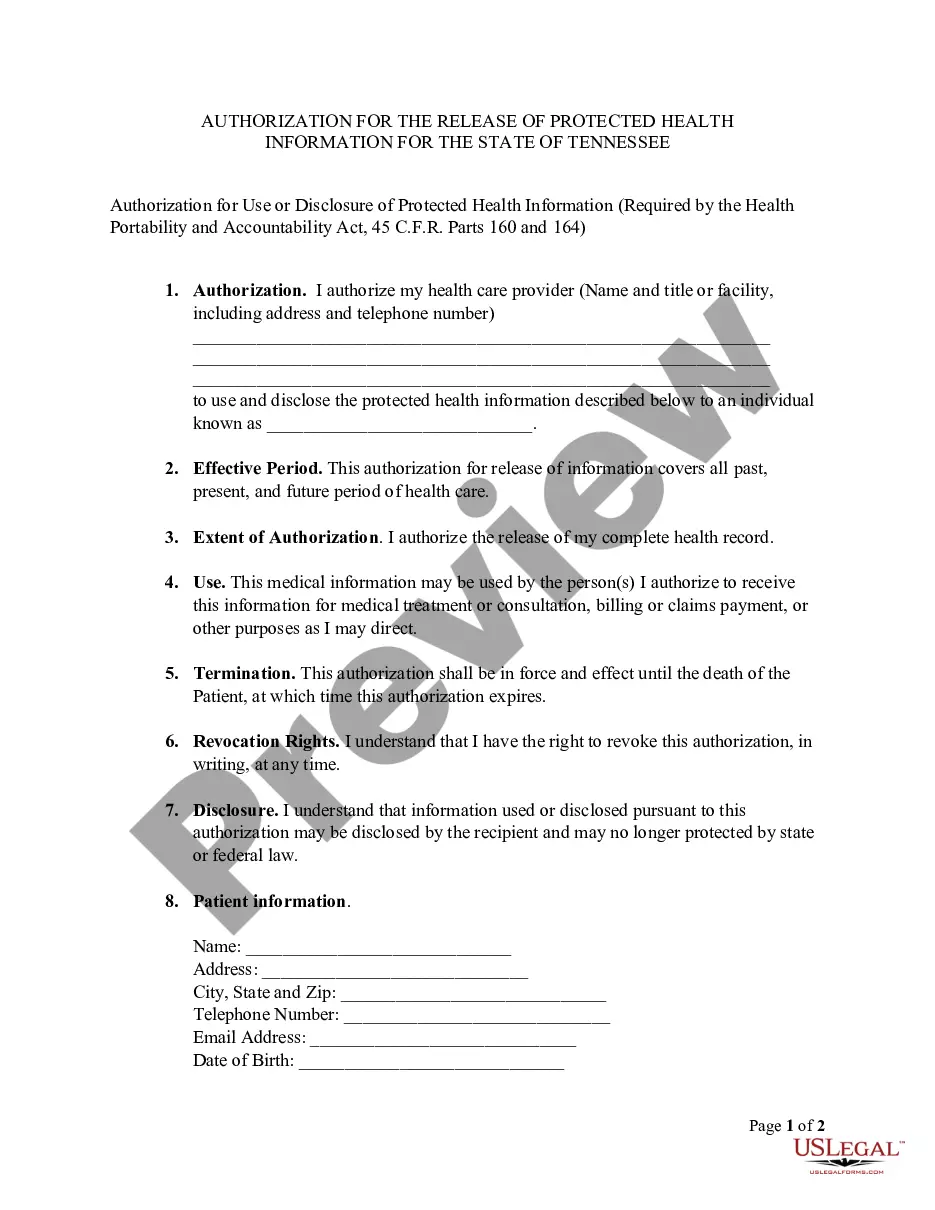
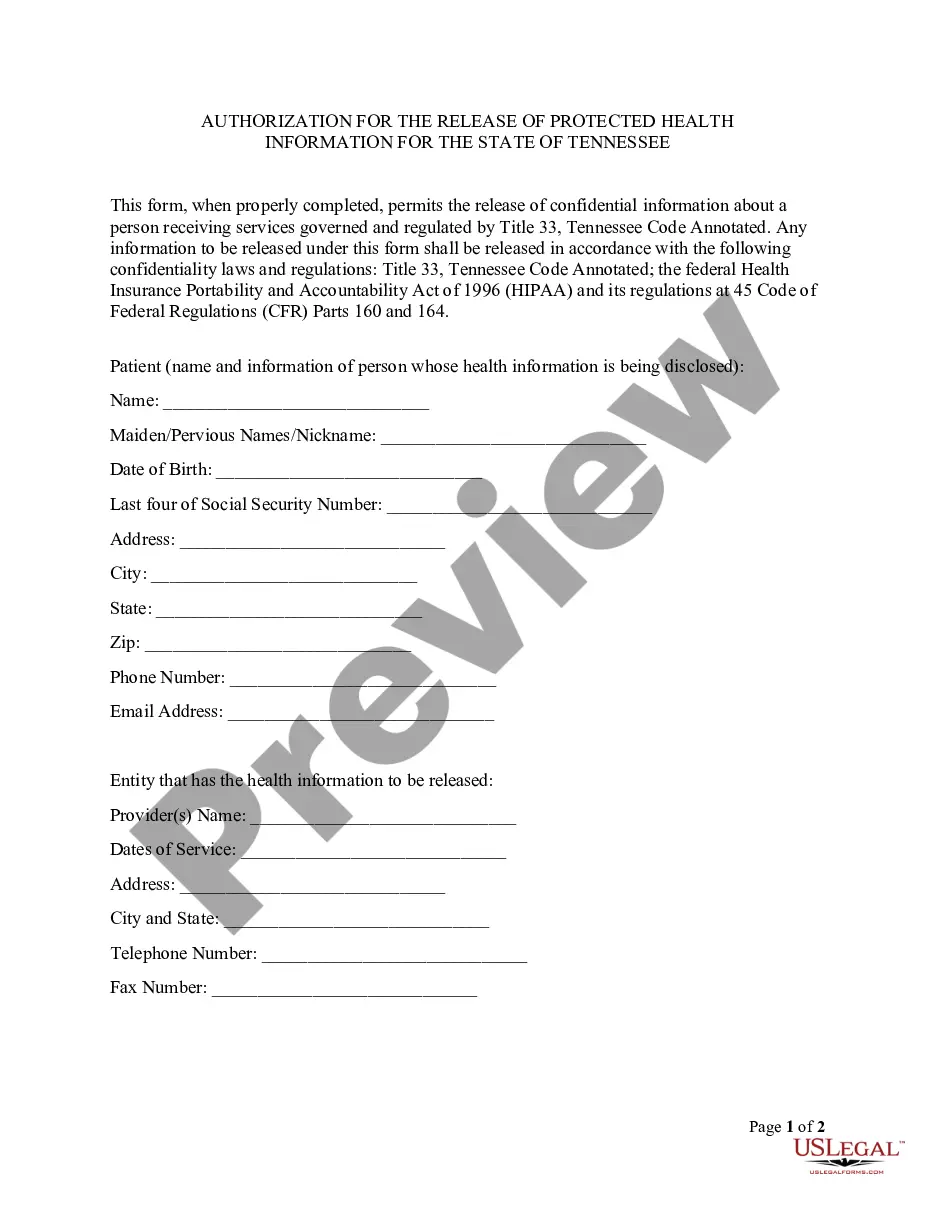
Typically, a medical release form is used to authorize the release of an individual's medical records. This form must be completed and signed by the plaintiff to facilitate access to medical information crucial for legal proceedings. It is often part of the Michigan Stipulated Order Compelling Plaintiff To Sign Medical Release Authorization, ensuring both parties have the necessary documentation to support their claims in court.
Rule 2.119 in Michigan outlines the procedures for compelling a plaintiff to sign a medical release authorization. This rule supports the legal process by ensuring that necessary medical records can be obtained, which may significantly impact the outcome of a case. When a Michigan Stipulated Order Compelling Plaintiff To Sign Medical Release Authorization is issued, it mandates compliance from the plaintiff, thus streamlining the discovery process.
Several factors can invalidate an authorization to release healthcare information. If the authorization is not signed properly or lacks necessary details, it may be deemed invalid. Additionally, a Michigan Stipulated Order Compelling Plaintiff To Sign Medical Release Authorization can specify boundaries that, if not adhered to, can compromise the authorization's validity. Always consult with legal professionals like those at uslegalforms to ensure that your authorization maintains its integrity.
A medical release form is usually signed by the patient whose records are being requested. In situations guided by a Michigan Stipulated Order Compelling Plaintiff To Sign Medical Release Authorization, the plaintiff must sign this form to facilitate the release of their healthcare information. It's important to ensure that the person signing the form is of sound mind and fully understands the purpose of the release. This signature acts as a legal endorsement of your intent.
Typically, the patient or their legal representative is responsible for signing the consent form. This consent is essential in a Michigan Stipulated Order Compelling Plaintiff To Sign Medical Release Authorization since it grants permission to access your medical records. By signing, you allow specific information to be released to the relevant parties. Make sure to review the form thoroughly and clarify any doubts before signing.