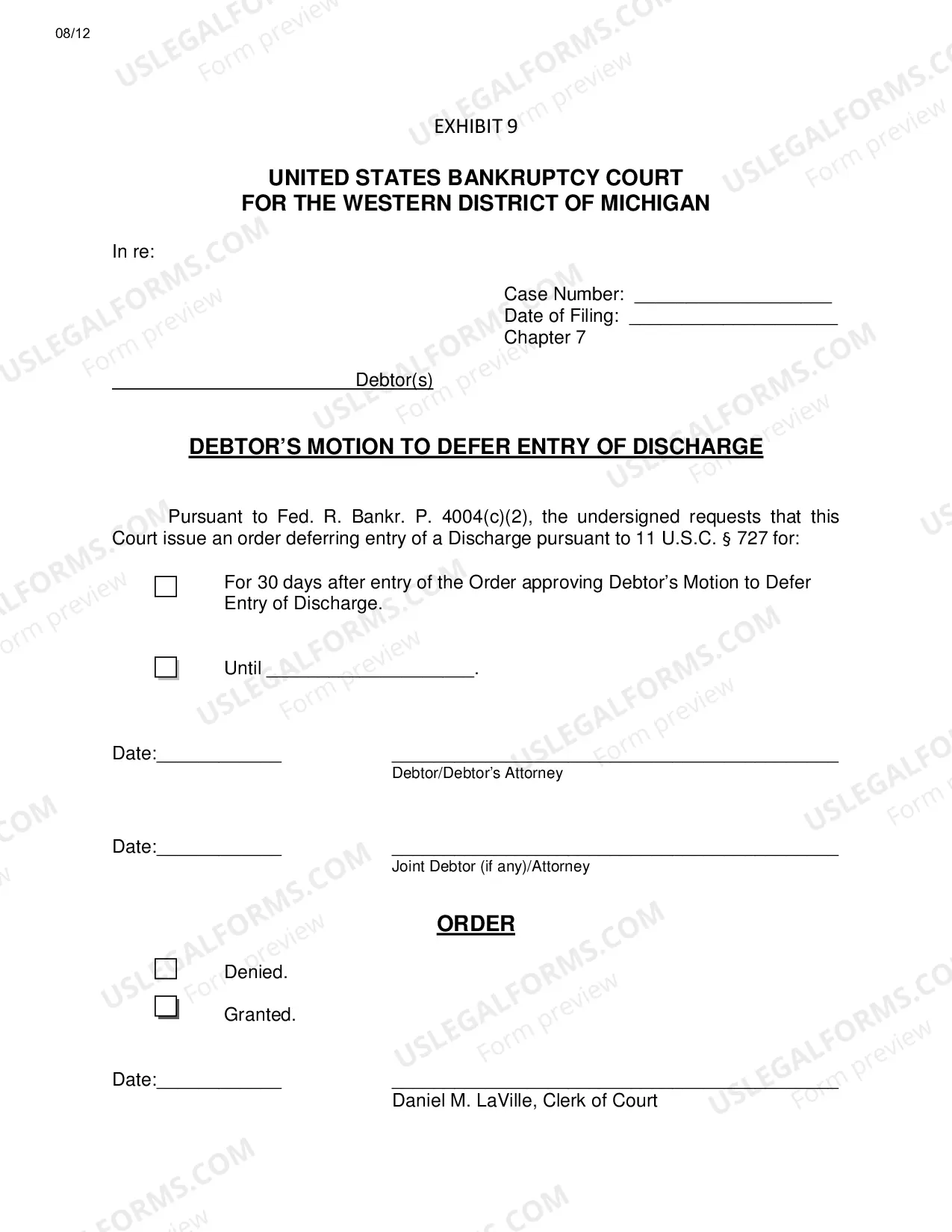
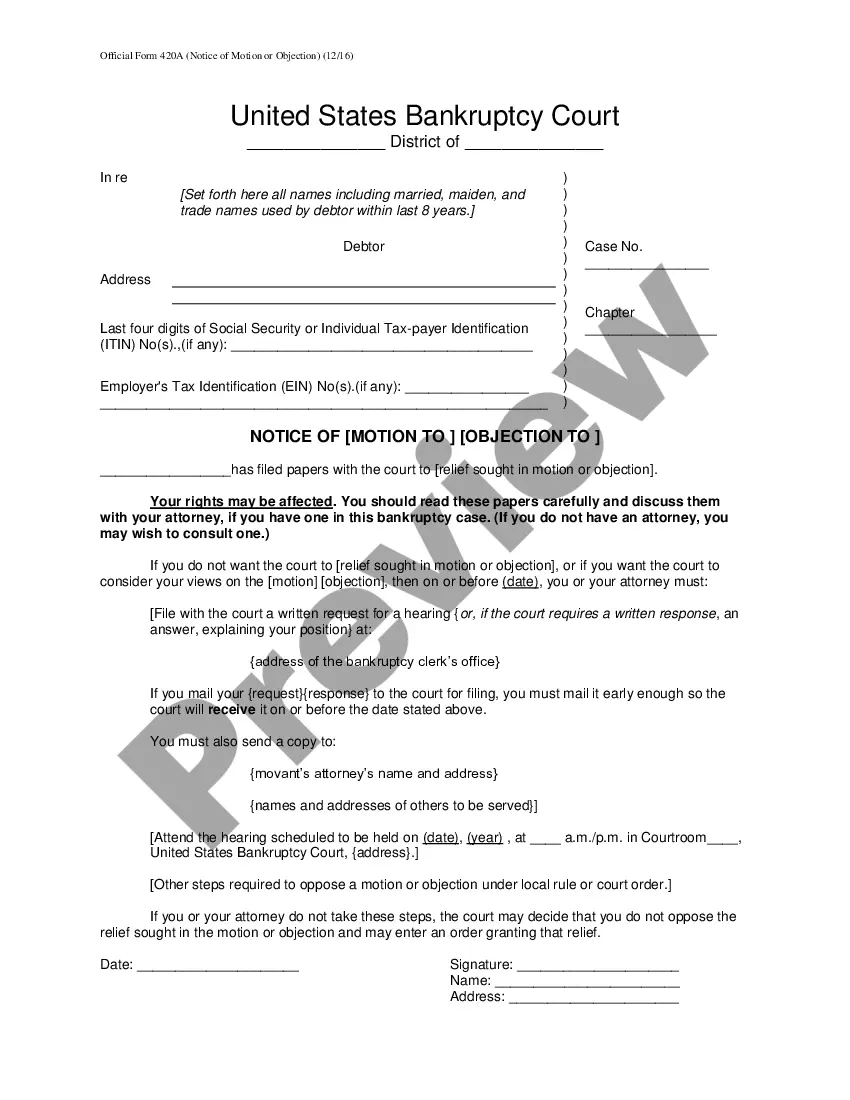
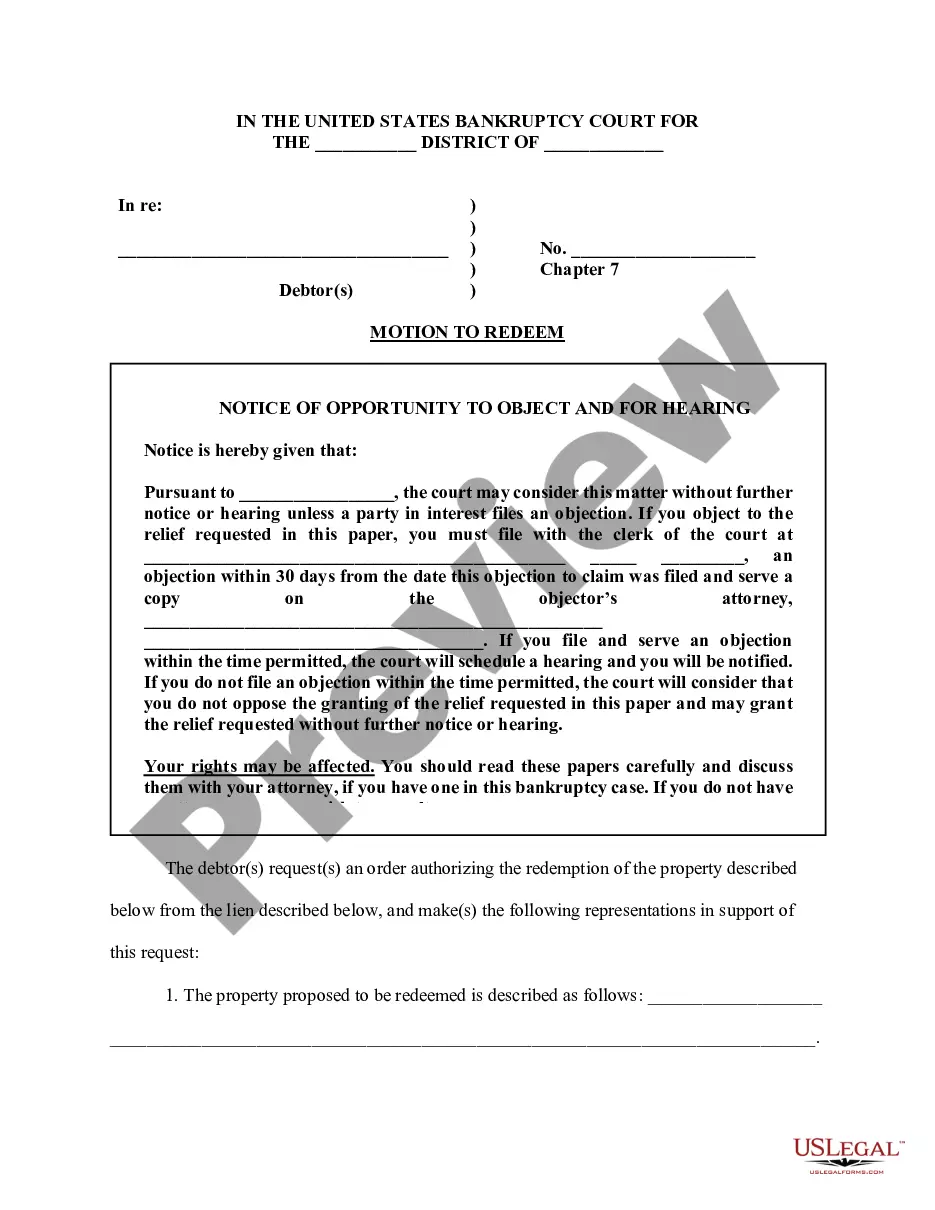
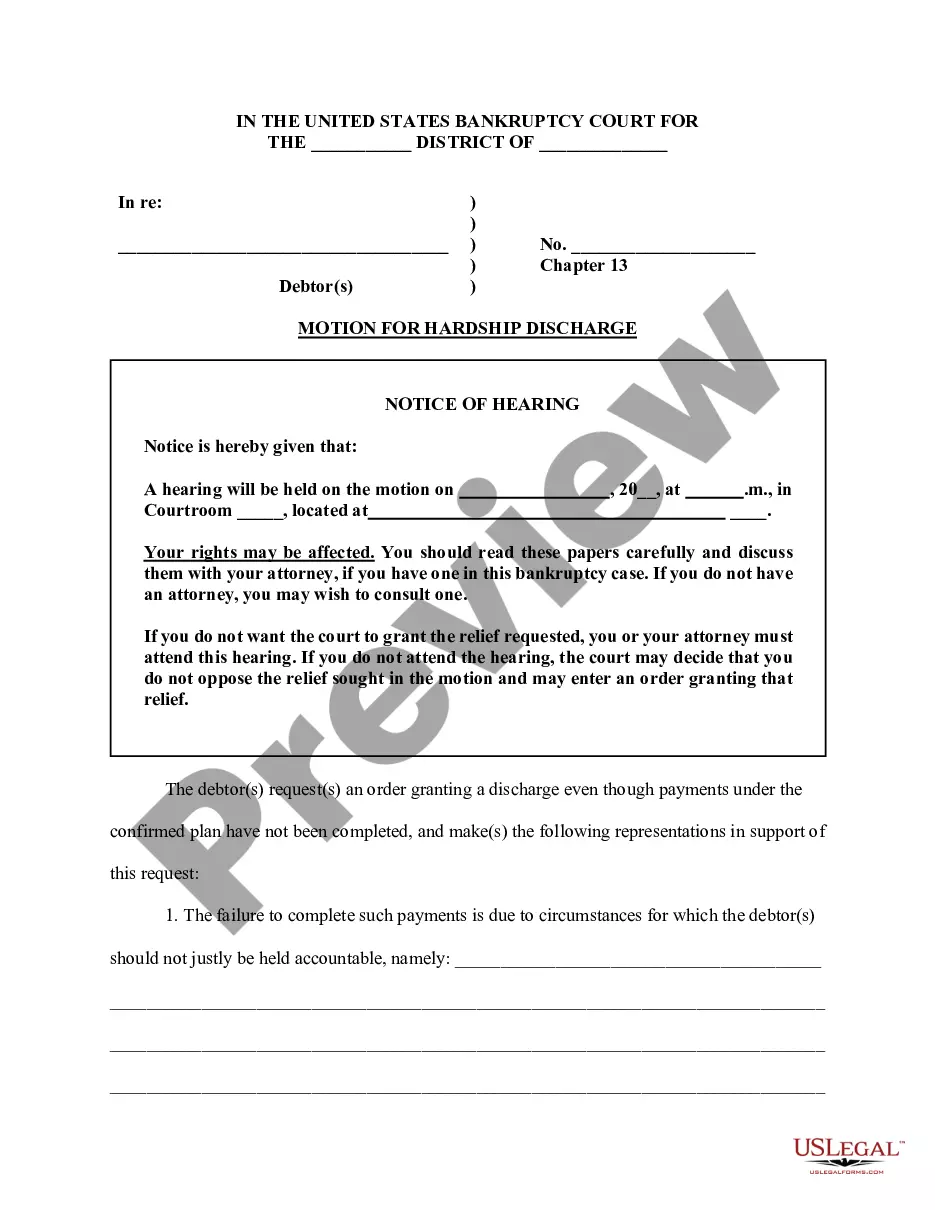
Michigan Debtors Motion To Defer Entry of Discharge is a legal document filed in the U.S. Bankruptcy Court for the Eastern District of Michigan. It is a request by the debtor to postpone the entry of the discharge of a bankruptcy case. This motion is typically used when a debtor has filed for bankruptcy and wishes to delay the entry of the discharge. In some cases, the debtor may wish to delay the entry of the discharge so that they may continue to make payments on a secured debt or to pay taxes to the IRS. There are two types of Michigan Debtors Motion To Defer Entry of Discharge: (1) Unsecured Motion and (2) Secured Motion. The Unsecured Motion is filed by a debtor who does not have any secured debts or obligations. The Secured Motion is filed by a debtor who has secured debts or obligations, such as a mortgage or car loan. The debtor must provide evidence that they will be able to make payments on the secured debt or obligation in order for the court to grant the motion.
Michigan Debtors Motion To Defer Entry of Discharge
Description
Get your form ready online
Our built-in tools help you complete, sign, share, and store your documents in one place.
Make edits, fill in missing information, and update formatting in US Legal Forms—just like you would in MS Word.
Download a copy, print it, send it by email, or mail it via USPS—whatever works best for your next step.
Sign and collect signatures with our SignNow integration. Send to multiple recipients, set reminders, and more. Go Premium to unlock E-Sign.
If this form requires notarization, complete it online through a secure video call—no need to meet a notary in person or wait for an appointment.
We protect your documents and personal data by following strict security and privacy standards.

Make edits, fill in missing information, and update formatting in US Legal Forms—just like you would in MS Word.

Download a copy, print it, send it by email, or mail it via USPS—whatever works best for your next step.

Sign and collect signatures with our SignNow integration. Send to multiple recipients, set reminders, and more. Go Premium to unlock E-Sign.

If this form requires notarization, complete it online through a secure video call—no need to meet a notary in person or wait for an appointment.

We protect your documents and personal data by following strict security and privacy standards.
Looking for another form?
How to fill out Michigan Debtors Motion To Defer Entry Of Discharge?
US Legal Forms is the easiest and most lucrative way to locate suitable official templates.
It’s the most comprehensive online collection of business and personal legal documents created and verified by lawyers.
Here, you can discover printable and fillable templates that adhere to federal and local laws - just like your Michigan Debtors Motion To Defer Entry of Discharge.
Review the form details or preview the document to confirm you’ve located the one that meets your needs, or find another using the search option above.
Click Buy now when you’re confident in its alignment with all the criteria, and choose the subscription plan that suits you best.
- Acquiring your template requires just a few straightforward steps.
- Users who already possess an account with an active subscription only need to Log In to the site and download the document onto their device.
- Subsequently, they can locate it in their profile under the My documents section.
- Here’s how you can obtain a correctly prepared Michigan Debtors Motion To Defer Entry of Discharge if you are using US Legal Forms for the first time.
Form popularity
FAQ
Filing an objection to discharge involves a formal process where a creditor or interested party contests a debtor's right to be discharged from debts. In Michigan, you must gather your reasons for the objection and submit your documentation to the bankruptcy court within specific deadlines. It is crucial to understand the legal grounds for your objection, as they can significantly impact the outcome. US Legal Forms offers resources and templates to help streamline this filing process, ensuring you present your case clearly and effectively.
A debtor's motion for entry of an order is a request made to the court to obtain specific relief concerning debts. In the context of Michigan debtors, this motion often aims to defer the entry of discharge, which allows individuals to address certain financial issues before discharge occurs. By filing this motion, debtors seek to preserve their rights and ensure they meet all necessary obligations. Using a service like US Legal Forms can simplify the process and provide guidance on preparing and submitting this motion effectively.
To file a motion with the court in Michigan, start by writing the motion document, detailing your case and the relief sought. Next, you will need to file the motion in person or electronically through the court’s online system, if available. Don’t forget to serve copies to all involved parties to ensure they are aware of the motion filed. The USLegalForms platform can provide you with streamlined forms and essential tips to help you navigate this process smoothly.
To file a Michigan Debtors Motion To Defer Entry of Discharge, you will generally need to draft the motion and submit it to the appropriate court. It's essential to include all relevant information, such as your case number and the specific relief you're seeking. After filing, you must provide notice to interested parties, allowing them to respond. For clear instructions and necessary templates, USLegalForms offers valuable assistance.
In Michigan, the 7 day order rule refers to a stringent timeline that allows debtors to file a motion to defer the entry of discharge within seven days after the court hears their case. This rule is crucial because failing to adhere to this timeframe could result in the dismissal of your motion. Therefore, understanding this rule can significantly impact your chances of successfully obtaining deferment. Using resources like USLegalForms can help guide you through this process effectively.
A motion for entry of default in Michigan is a legal request made when a defendant does not respond to a lawsuit within the specified timeframe. This motion allows the plaintiff to seek a judgment in their favor due to the lack of response, thereby streamlining the legal process. Understanding this motion is essential for anyone involved in a legal dispute, as it can significantly impact the outcome. If you're navigating such legal challenges, consider how a Michigan Debtors Motion To Defer Entry of Discharge could serve your needs effectively.
A debtor may be denied a discharge if they fail to provide required documentation, such as tax returns or financial statements, which demonstrates their financial status. Additionally, if the court finds evidence of fraud or misconduct, this can also lead to a denial. It's crucial for debtors to understand the implications of their actions and maintain transparency throughout the bankruptcy process to avoid complications. Utilizing a Michigan Debtors Motion To Defer Entry of Discharge can provide necessary legal guidance to navigate these challenges.