Michigan Electrical Contract for Contractor
What this document covers
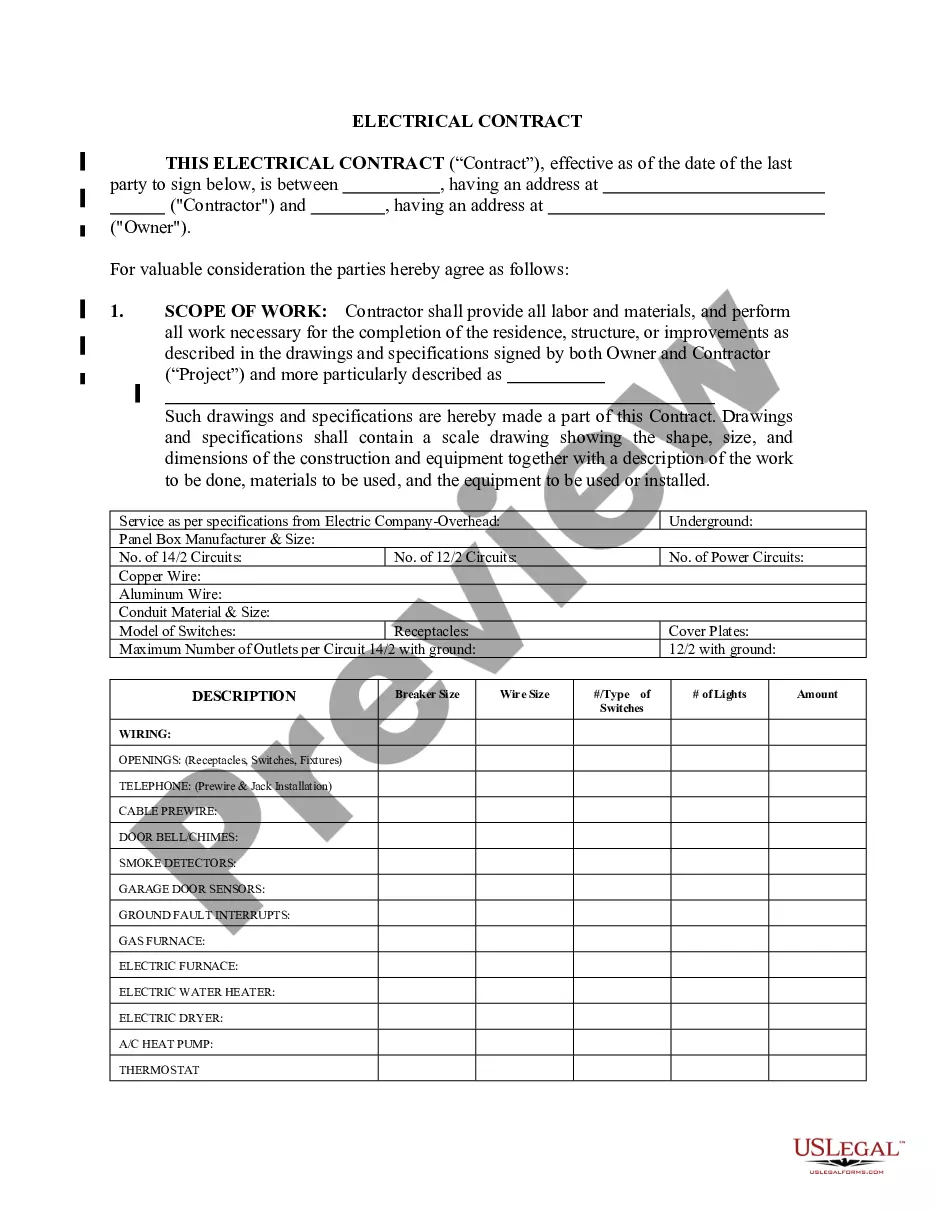
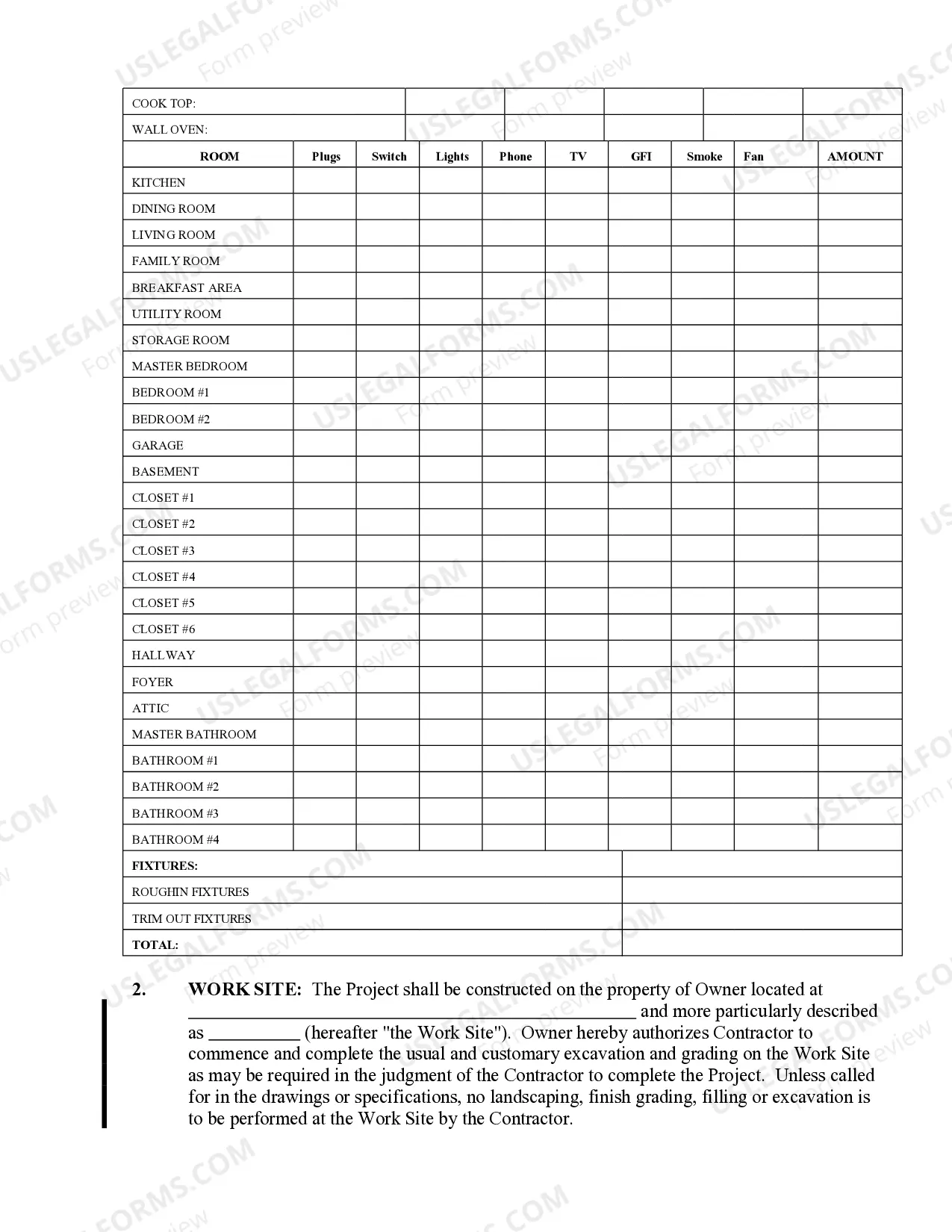
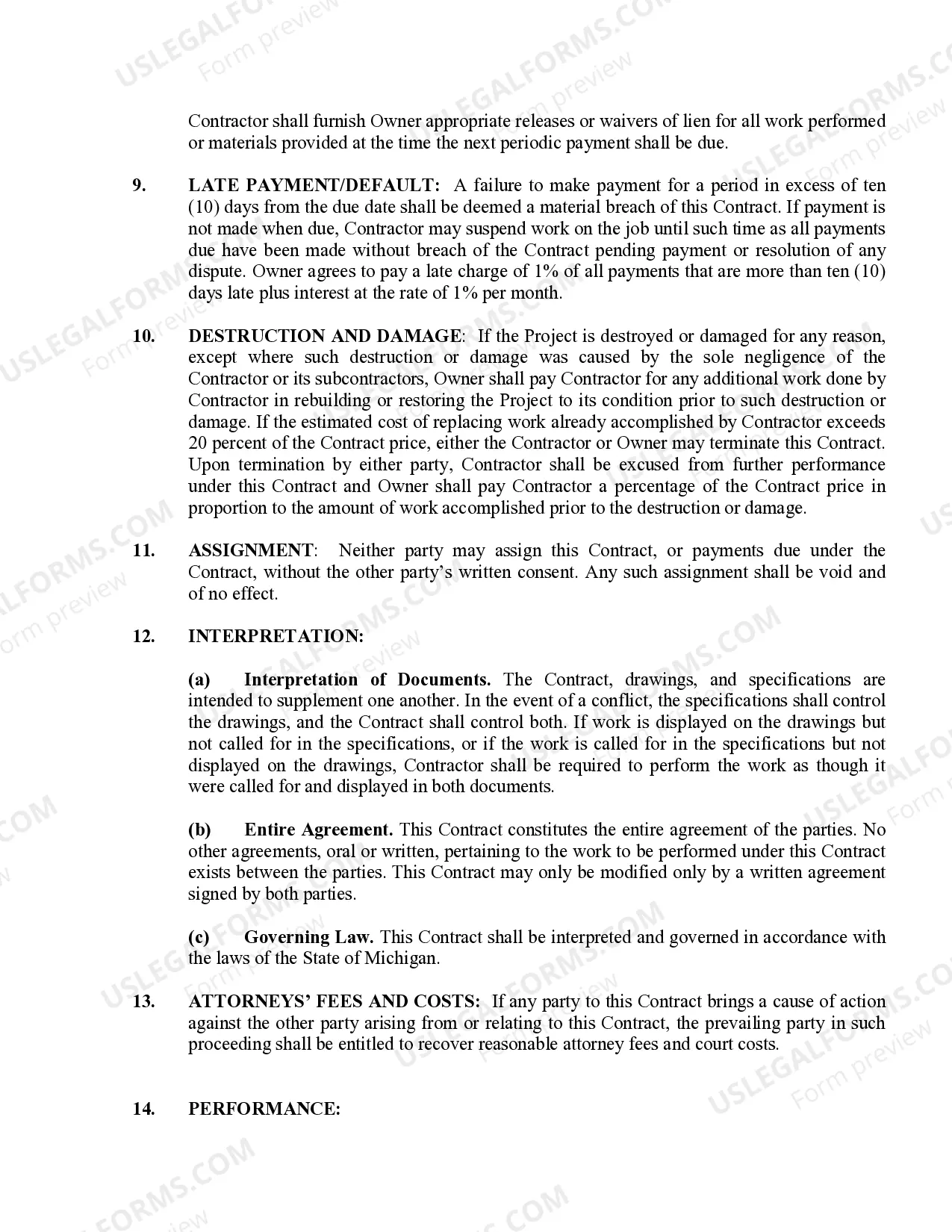
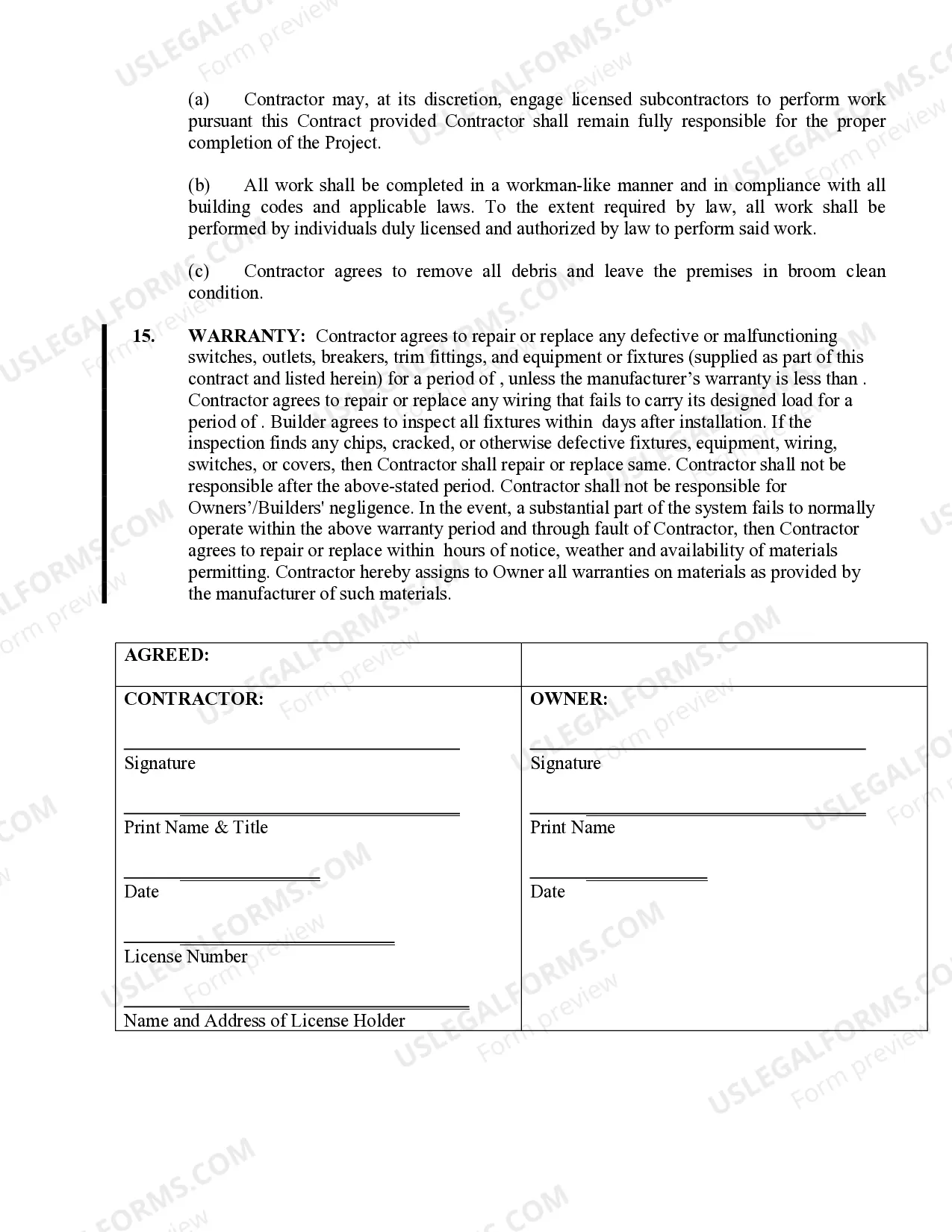
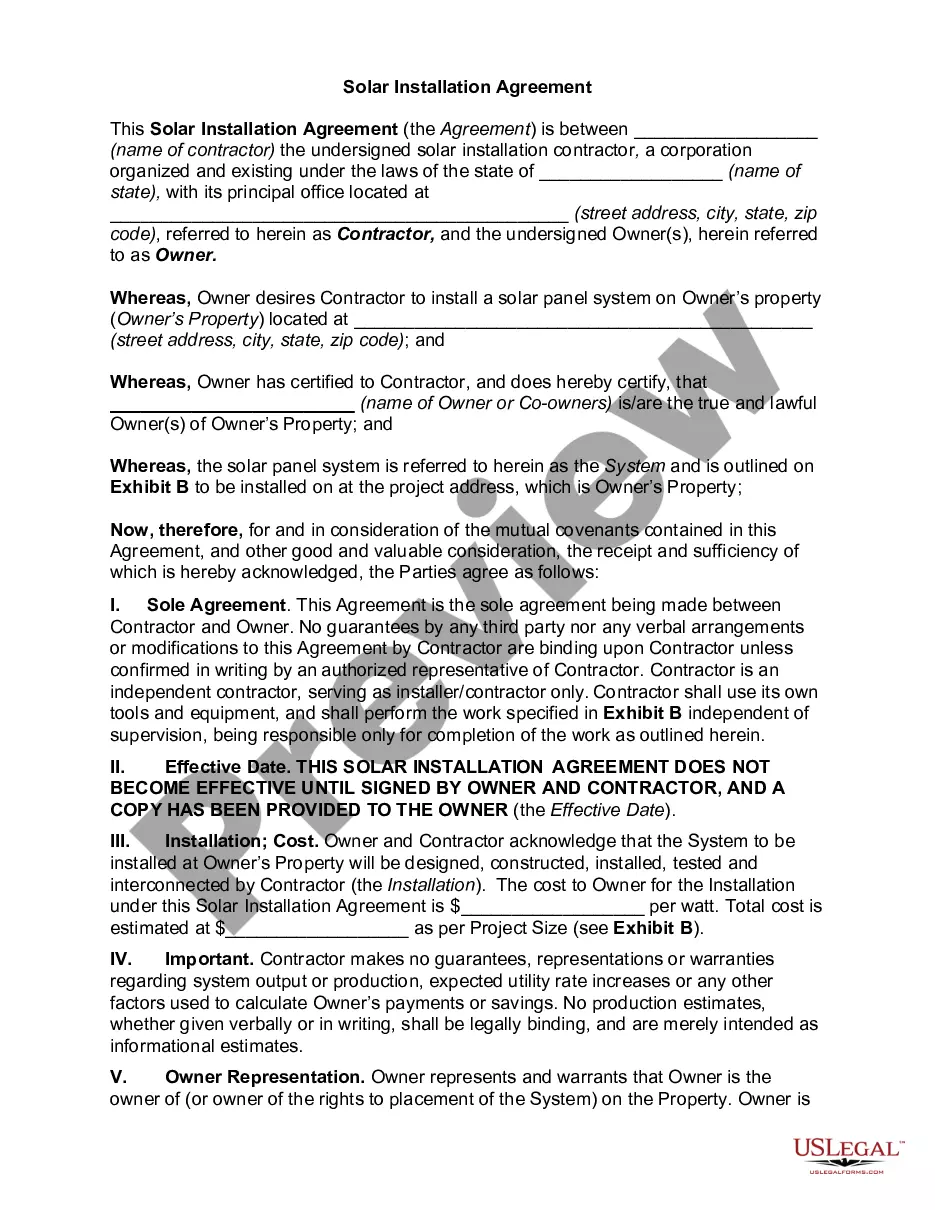
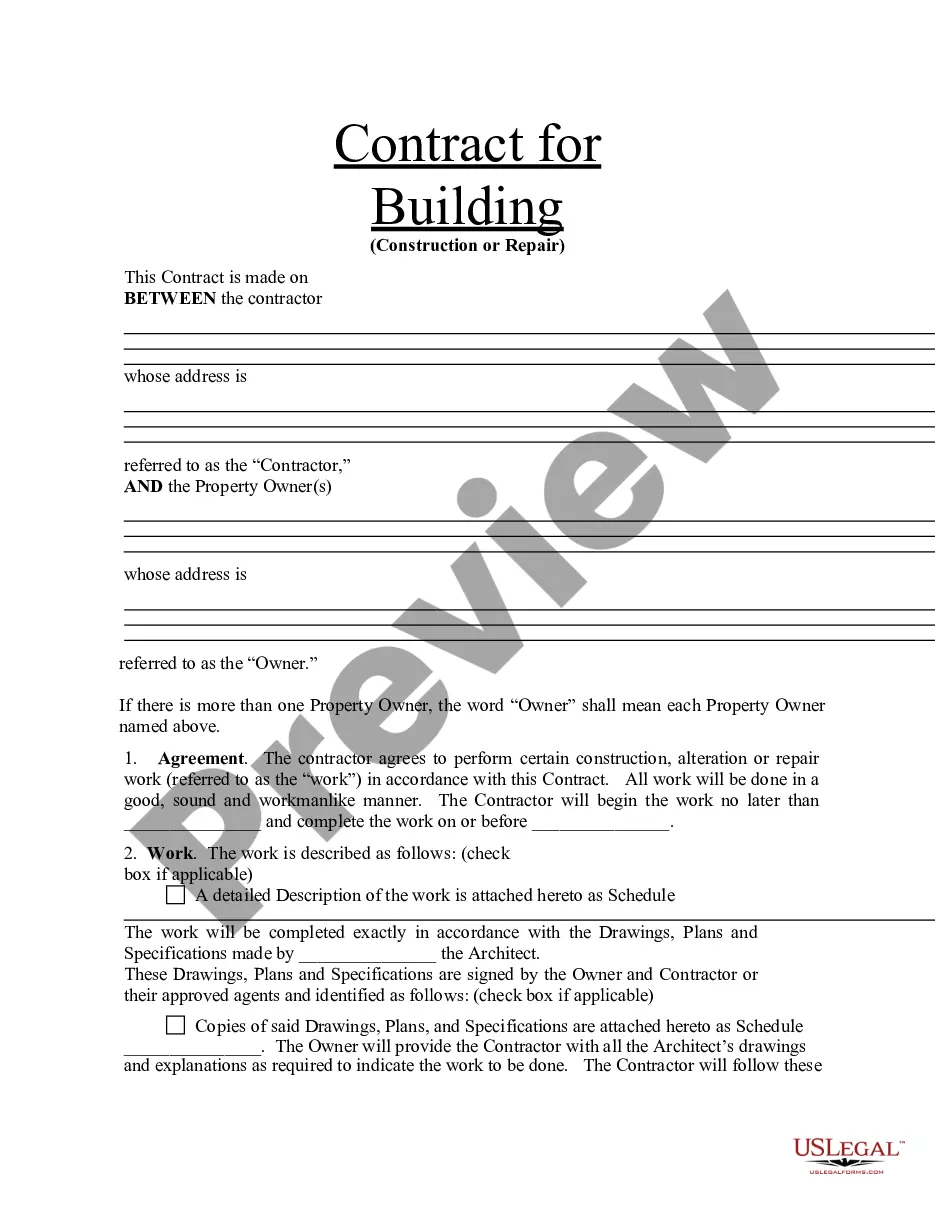
The Electrical Contract for Contractor is a legally binding agreement between electrical contractors and property owners. This form outlines essential terms, including payment arrangements, change orders, insurance, and site information. It is specifically tailored to comply with Michigan state laws, ensuring that both parties understand their rights and obligations throughout the project's duration.
Key parts of this document
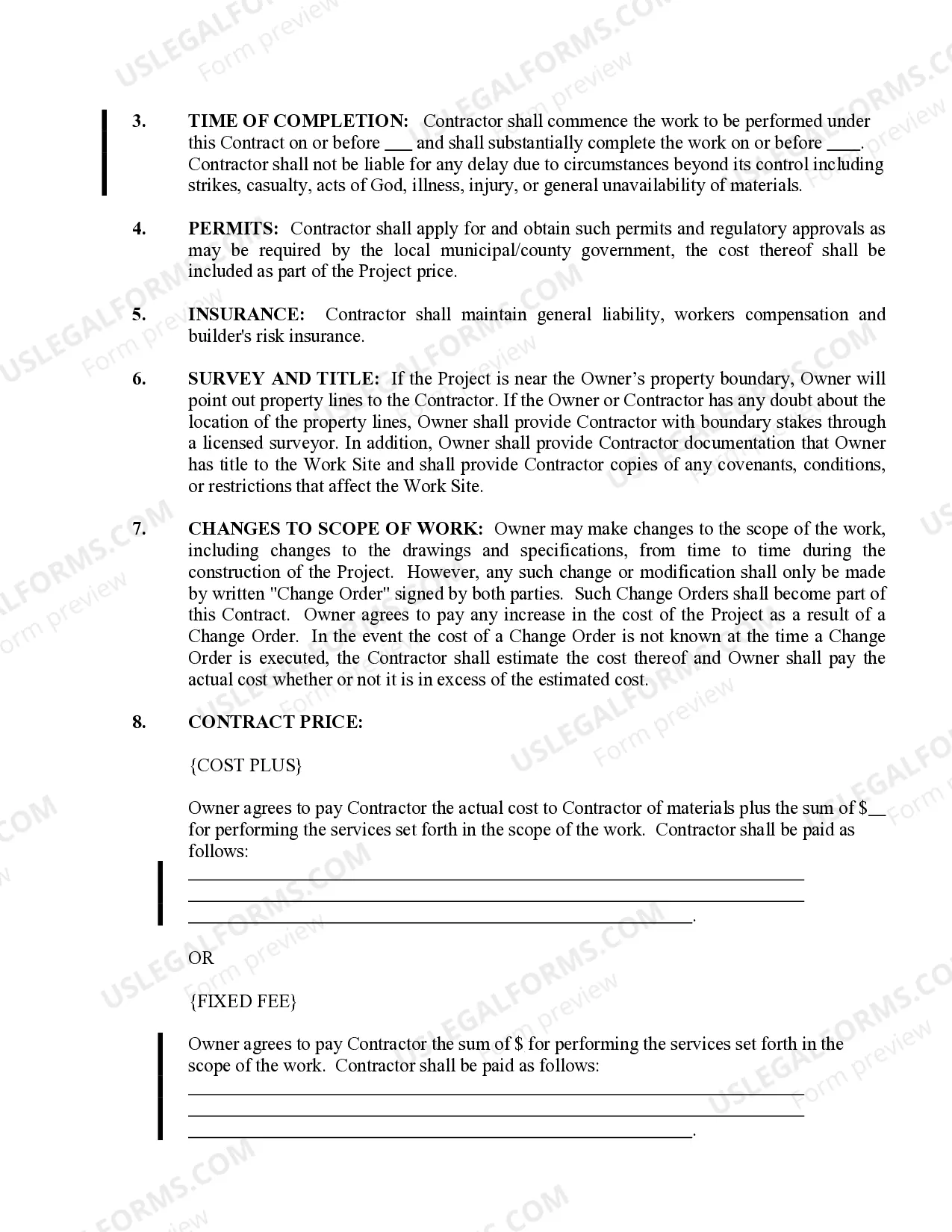
- Permits: The contractor is responsible for applying for and obtaining necessary permits for the project.
- Insurance: The contractor must maintain general liability, workers compensation, and builders risk insurance.
- Survey and Title: The property owner must identify property lines and provide proof of title for the work site.
- Changes to Scope of Work: Any changes during the project must be documented through written change orders, mutually agreed upon by both parties.


When to use this document
This form is used when property owners hire electrical contractors for a construction or remodeling project. It is especially important when the project involves significant electrical work, changes in scope, or requires various permits and insurance coverage. Using this contract helps protect both the contractor and the property owner by clearly outlining expectations and responsibilities.
Who can use this document
- Electrical contractors engaged in residential or commercial projects.
- Property owners seeking to hire an electrical contractor for renovation or new construction.
- Individuals or businesses in Michigan requiring a clear contractual framework for electrical work.
Instructions for completing this form
- Identify the parties involved: provide names and contact information for both the contractor and property owner.
- Specify the project details: describe the work to be performed and indicate whether the payment structure is cost plus or fixed fee.
- List necessary permits and regulatory approvals required for the project.
- Include information on insurance coverage maintained by the contractor.
- Document any change orders during the project, ensuring they are signed by both parties.
Notarization requirements for this form
This form does not typically require notarization unless specified by local law. However, obtaining notarization can add an extra layer of security for both parties involved.
Get your form ready online
Our built-in tools help you complete, sign, share, and store your documents in one place.
Make edits, fill in missing information, and update formatting in US Legal Forms—just like you would in MS Word.
Download a copy, print it, send it by email, or mail it via USPS—whatever works best for your next step.
Sign and collect signatures with our SignNow integration. Send to multiple recipients, set reminders, and more. Go Premium to unlock E-Sign.
If this form requires notarization, complete it online through a secure video call—no need to meet a notary in person or wait for an appointment.
We protect your documents and personal data by following strict security and privacy standards.

Make edits, fill in missing information, and update formatting in US Legal Forms—just like you would in MS Word.

Download a copy, print it, send it by email, or mail it via USPS—whatever works best for your next step.

Sign and collect signatures with our SignNow integration. Send to multiple recipients, set reminders, and more. Go Premium to unlock E-Sign.

If this form requires notarization, complete it online through a secure video call—no need to meet a notary in person or wait for an appointment.

We protect your documents and personal data by following strict security and privacy standards.
Common mistakes to avoid
- Failing to specify the payment arrangement accurately, leading to disputes later.
- Neglecting to document change orders, which can result in misunderstandings about project scope and costs.
- Not verifying that the contractor has the necessary permits before work begins.
- Overlooking insurance obligations, leaving parties unprotected from potential issues.
Benefits of using this form online
- Convenience: Downloadable form allows for quick access and use at any time.
- Editability: Easy to fill out, providing the ability to tailor the contract to specific project needs.
- Reliability: Forms are drafted by licensed attorneys to ensure legal compliance and effectiveness.
- Establishes a legally binding agreement between the parties involved.
- Clearly defines each party's responsibilities, reducing the risk of disputes.
- Adheres to Michigan's legal standards, making it enforceable in a court of law.
Main things to remember
- The Electrical Contract for Contractor is essential for projects involving electrical work between contractors and property owners in Michigan.
- It outlines crucial components such as permits, insurance, and change orders.
- Utilizing this form helps ensure clarity and protect the rights of both parties involved in a contract.
Looking for another form?
Form popularity
FAQ
Michigan General Contractor Licenses. Projects over $600 will require either a residential builders license or a maintenance and alteration contractors license. For these licenses, you must apply to the Michigan Licensing and Regulatory Affairs department. Both of these licenses will be regulated at the state level.
A residential builders or maintenance and alteration contractors license is required when contracting to construct, repair, alter, add to, or improve a residential or combination residential and commercial structure.
Concrete Work: Professionals working with concrete must be licensed by the Department of Licensing and Regulatory Affairs.
Getting your Michigan contractor license is a straightforward process. (And the process is that same if you want to become a licensed residential maintenance & alterations contractor.)Send the state your course completion certificate, your Michigan builders license application, and the relevant fees.
A homeowner performing electrical work in a single family home and accompanying outbuildings owned and occupied, or to be occupied, by the person performing the installation.An electrical permit application must be submitted to the appropriate enforcing agency.
You should be aware that all contractors offering to do work which totals $600 or more in labor and materials must be licensed by the Department of Licensing and Regulatory Affairs.
Michigan. A handyman in Michigan does not need a specific handyman's license to work in the state. However, there are many jobs that a handyman may do that could require a license, including carpentry, laying concrete, painting and tiling. These all require a Maintenance and Alteration Contractor License.
Michigan. A handyman in Michigan does not need a specific handyman's license to work in the state. However, there are many jobs that a handyman may do that could require a license, including carpentry, laying concrete, painting and tiling. These all require a Maintenance and Alteration Contractor License.