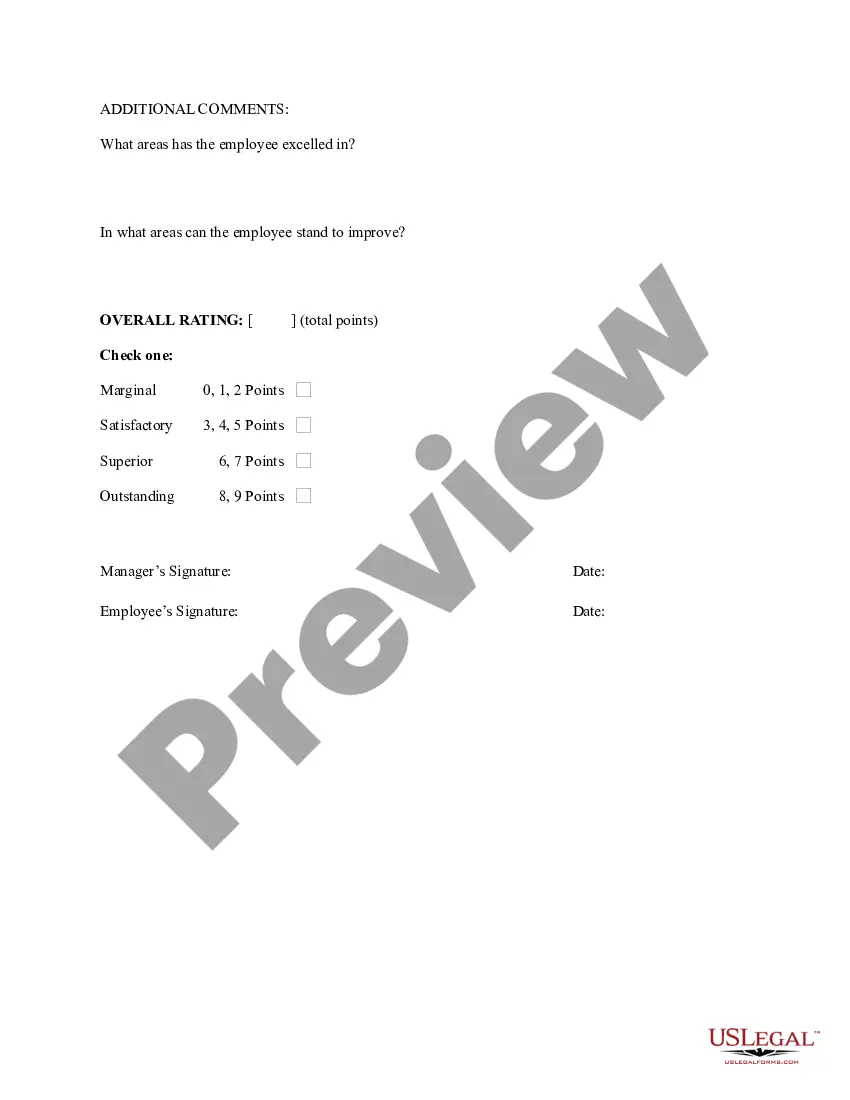
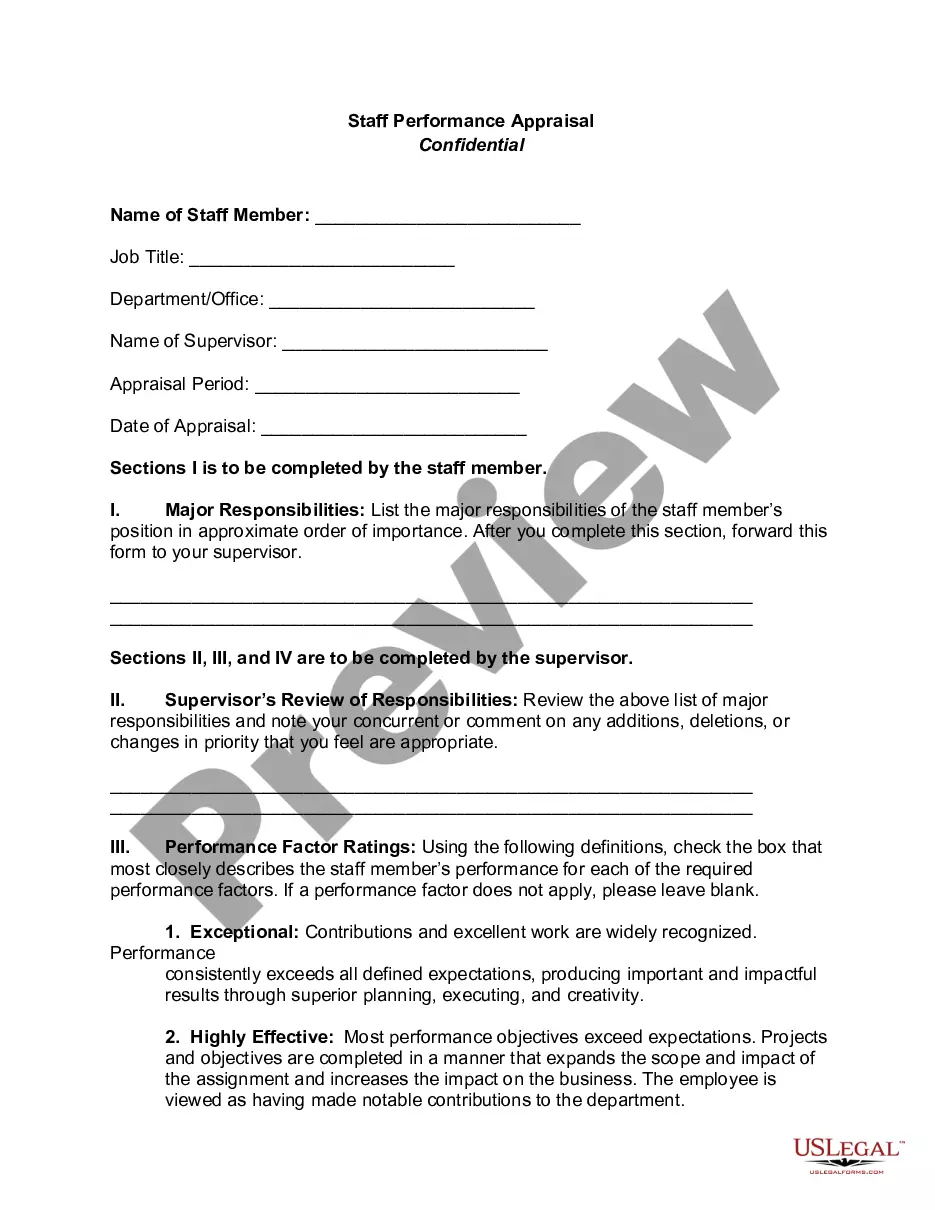
Maine Hourly Employee Evaluation
Description
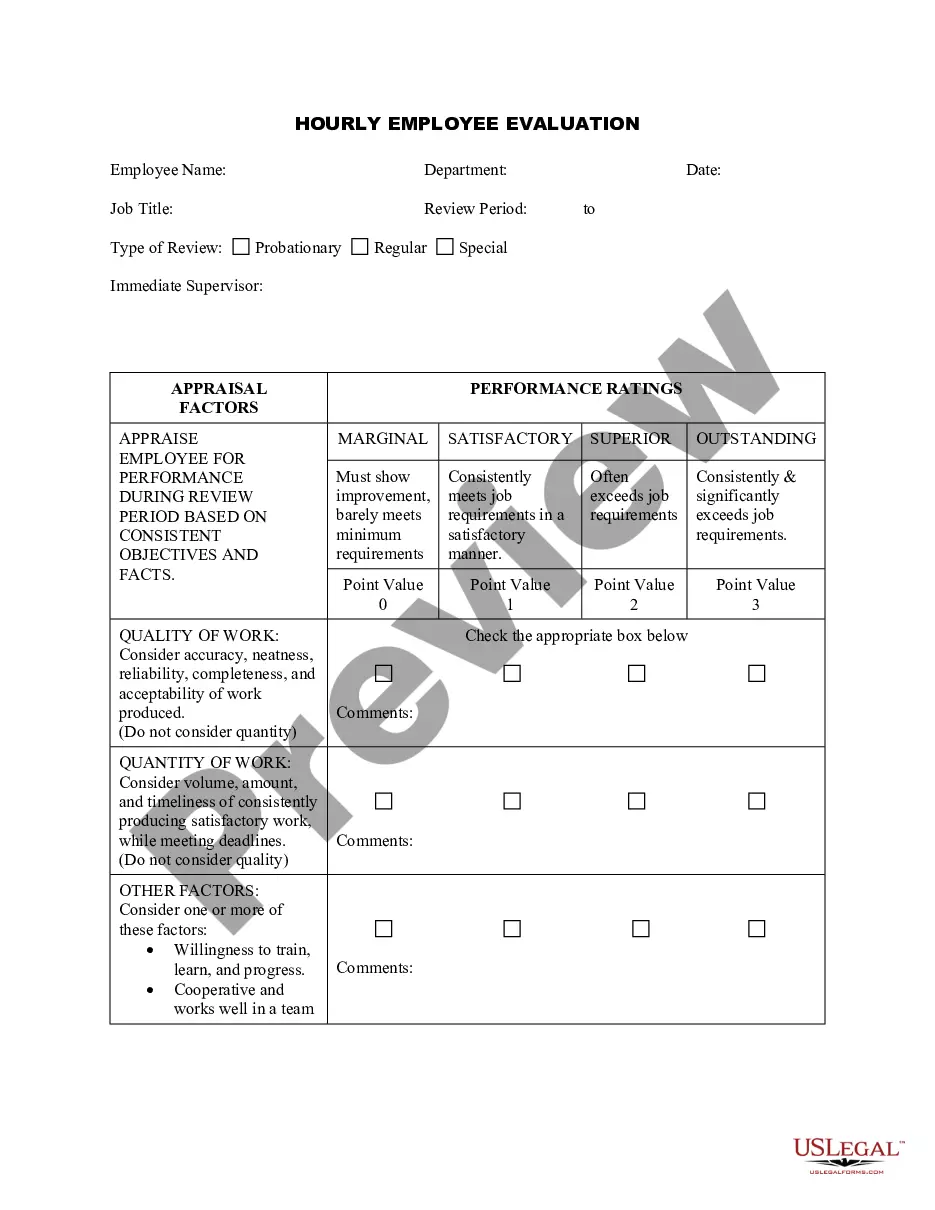
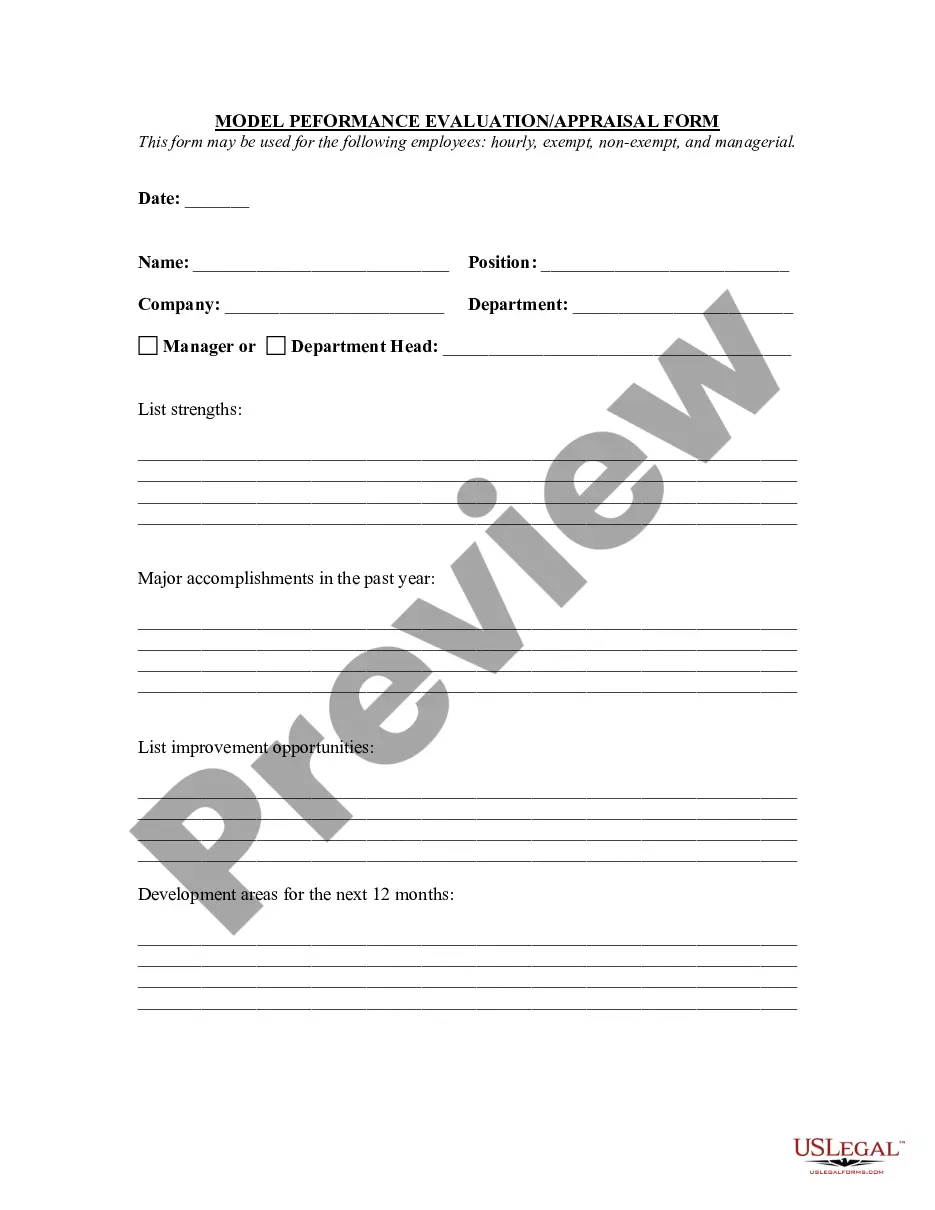
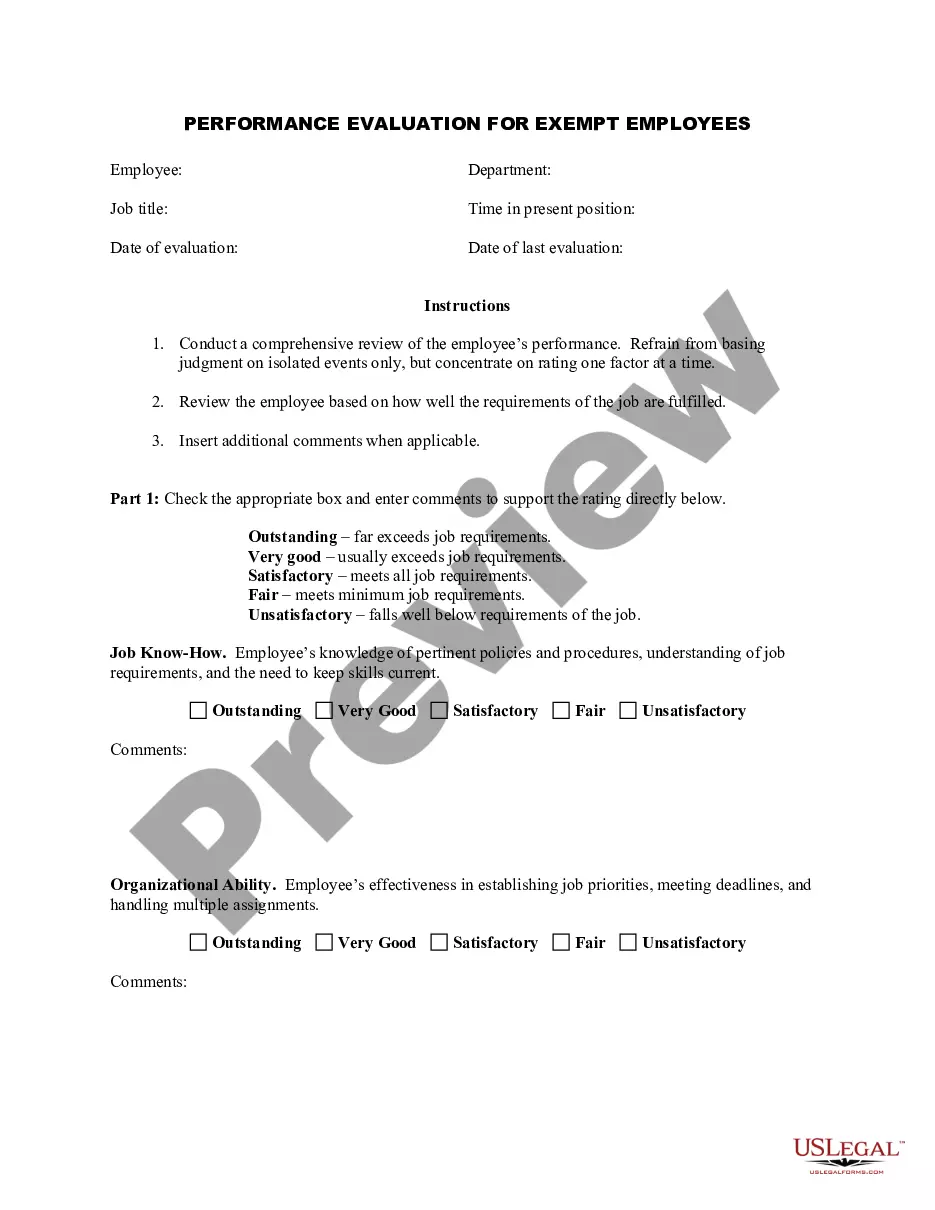
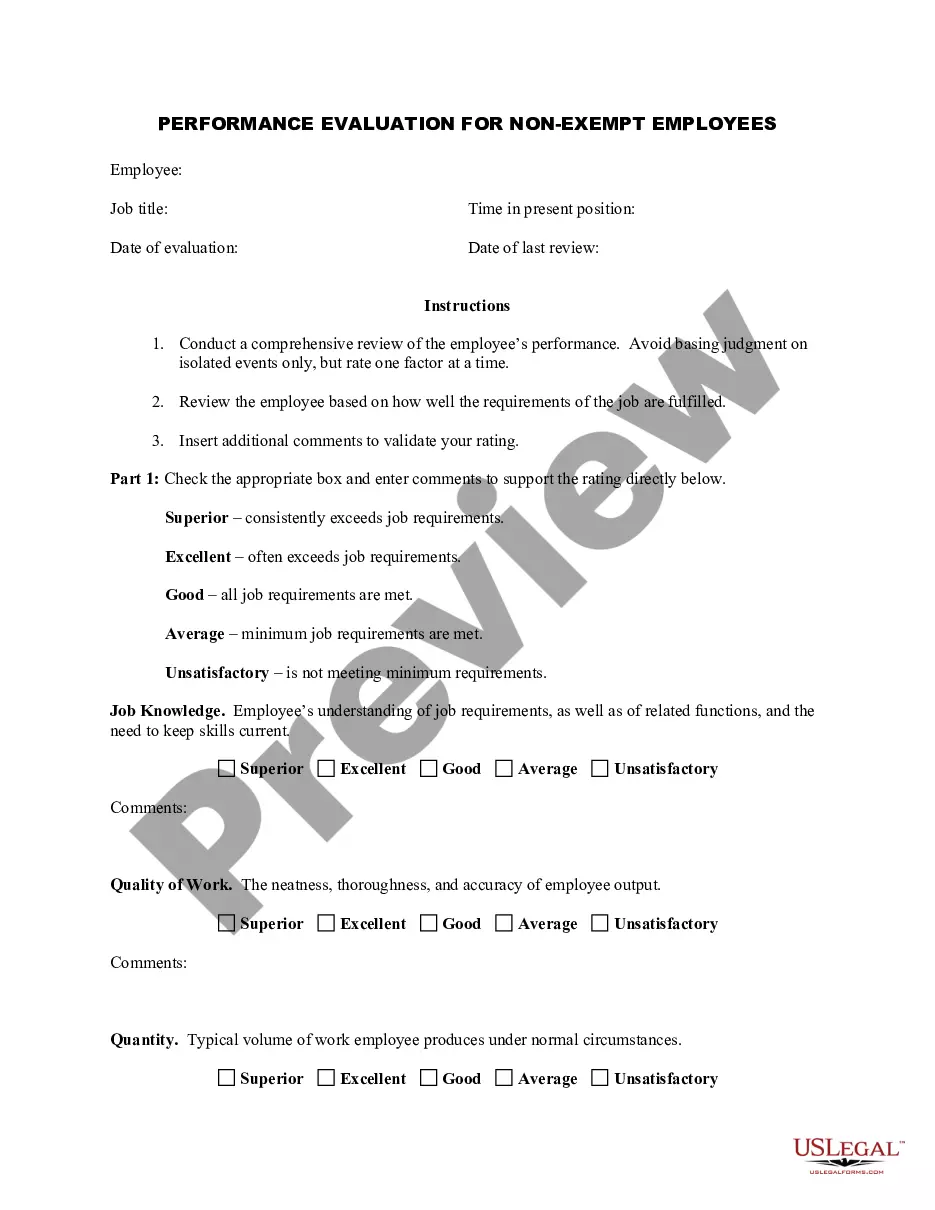
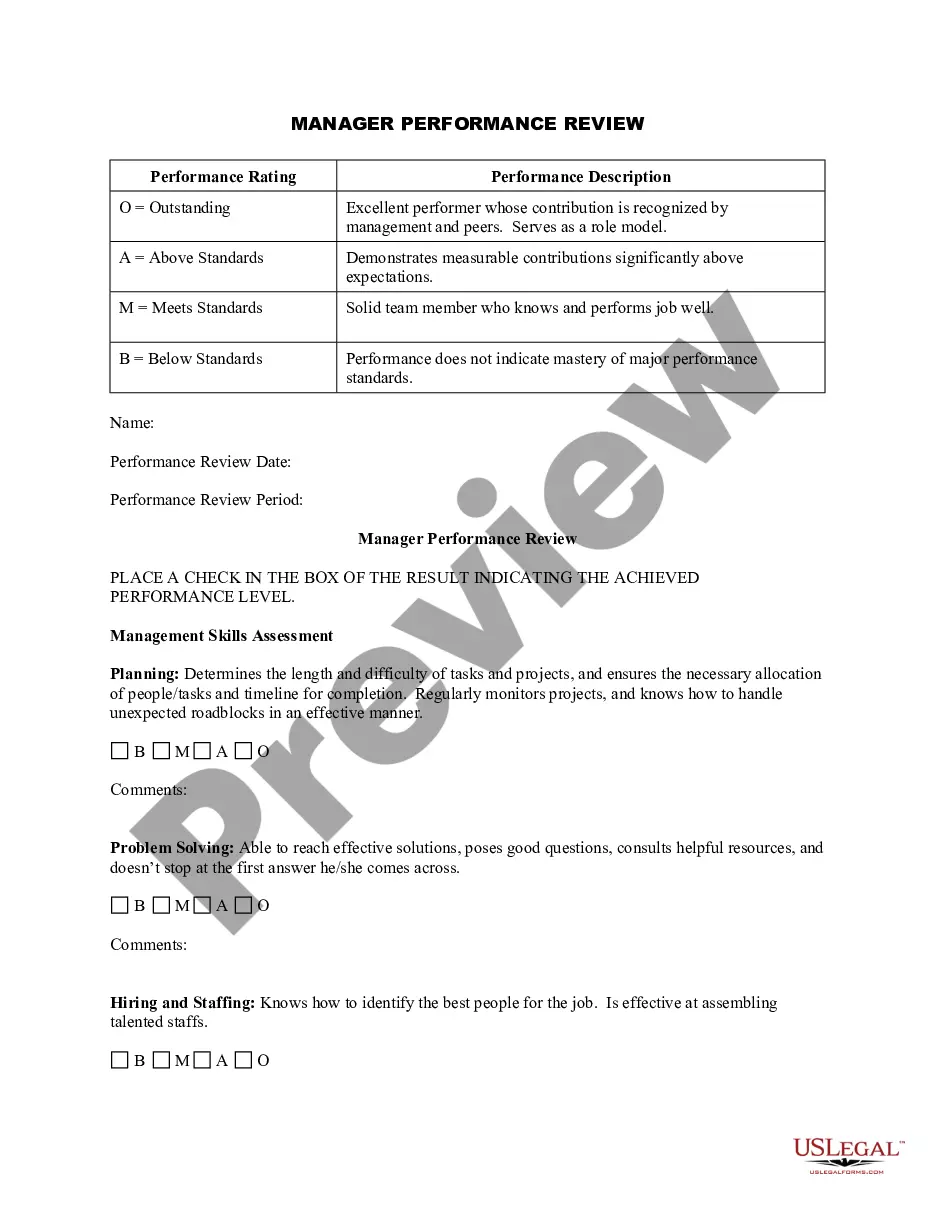
Get your form ready online
Our built-in tools help you complete, sign, share, and store your documents in one place.
Make edits, fill in missing information, and update formatting in US Legal Forms—just like you would in MS Word.
Download a copy, print it, send it by email, or mail it via USPS—whatever works best for your next step.
Sign and collect signatures with our SignNow integration. Send to multiple recipients, set reminders, and more. Go Premium to unlock E-Sign.
If this form requires notarization, complete it online through a secure video call—no need to meet a notary in person or wait for an appointment.
We protect your documents and personal data by following strict security and privacy standards.

Make edits, fill in missing information, and update formatting in US Legal Forms—just like you would in MS Word.

Download a copy, print it, send it by email, or mail it via USPS—whatever works best for your next step.

Sign and collect signatures with our SignNow integration. Send to multiple recipients, set reminders, and more. Go Premium to unlock E-Sign.

If this form requires notarization, complete it online through a secure video call—no need to meet a notary in person or wait for an appointment.

We protect your documents and personal data by following strict security and privacy standards.
Looking for another form?

How to fill out Hourly Employee Evaluation?
If you require to complete, obtain, or create legally binding document templates, utilize US Legal Forms, the largest collection of legal forms available online.
Utilize the website's user-friendly and convenient search function to find the documents you need.
A variety of templates for business and personal purposes are categorized by types and states, or keywords.
Step 4. Once you have found the form you need, click the Get Now button. Choose your preferred pricing plan and enter your credentials to register for an account.
Step 5. Complete the transaction. You can use your Visa or MasterCard or PayPal account to finalize the payment.
- Use US Legal Forms to acquire the Maine Hourly Employee Evaluation in just a few clicks.
- If you are already a US Legal Forms customer, Log In to your account and click on the Download button to access the Maine Hourly Employee Evaluation.
- You can also access forms you previously downloaded from the My documents section of your account.
- If you are using US Legal Forms for the first time, follow the instructions outlined below.
- Step 1. Ensure you have selected the form for your specific city/state.
- Step 2. Use the Preview option to review the form's content. Don't forget to read the details.
- Step 3. If you are not satisfied with the form, use the Search field at the top of the screen to find other variations of the legal document template.
Form popularity
FAQ
There is no legally defined number of hours for full time employment, where individual employers can decide how many hours per week are to be considered full time. The hours that workers are expected to work will usually be set out in the company working hours policy and/or within individual contracts of employment.
Susan Collins (and co-sponsored in the House by U.S. Rep. Bruce Poliquin from Maine's 2nd District), it would change the definition of full-time worker from an employee who works 30 hours weekly on average to 40 hours.
Employers may not discriminate against an employee for inquiring about, disclosing, comparing or otherwise discussing the employee's wages with others.
The State of Maine has no labor laws for defining part-time employment status. The Federal Bureau of Labor Statistics defines a part-time employee as someone who worked less than 35 hours per week.
Maine requires that employees receive a ½ hour meal break, after 6 consecutive hours of work, except in cases of emergency and except where the nature of their work allows employees frequent breaks during workday.
Susan Collins (and co-sponsored in the House by U.S. Rep. Bruce Poliquin from Maine's 2nd District), it would change the definition of full-time worker from an employee who works 30 hours weekly on average to 40 hours.
Employers must offer employees a consecutive 30-minute unpaid or paid rest break after 6 hours worked. An employee may waive his or her right to a rest break (preferably in writing).
Part-time employees typically work less than 32 hours per week, full-time is usually 32-40. Part-time employees are usually offered limited benefits and health care. Often a part-time employee is not eligible for paid time off, healthcare coverage, or paid sick leave.
Maine employers and employees work under a system called "employment-at-will." This means that you are free to quit your job whenever you want. Your employer is also free to fire you for any reason or no reason at all. The only limit is that your employer cannot fire you based on discrimination or retaliation.
Shorter breaks are common but not required by law. Shorter breaks or pauses away from performing duties must be paid and cannot be deducted from the employee's time worked.