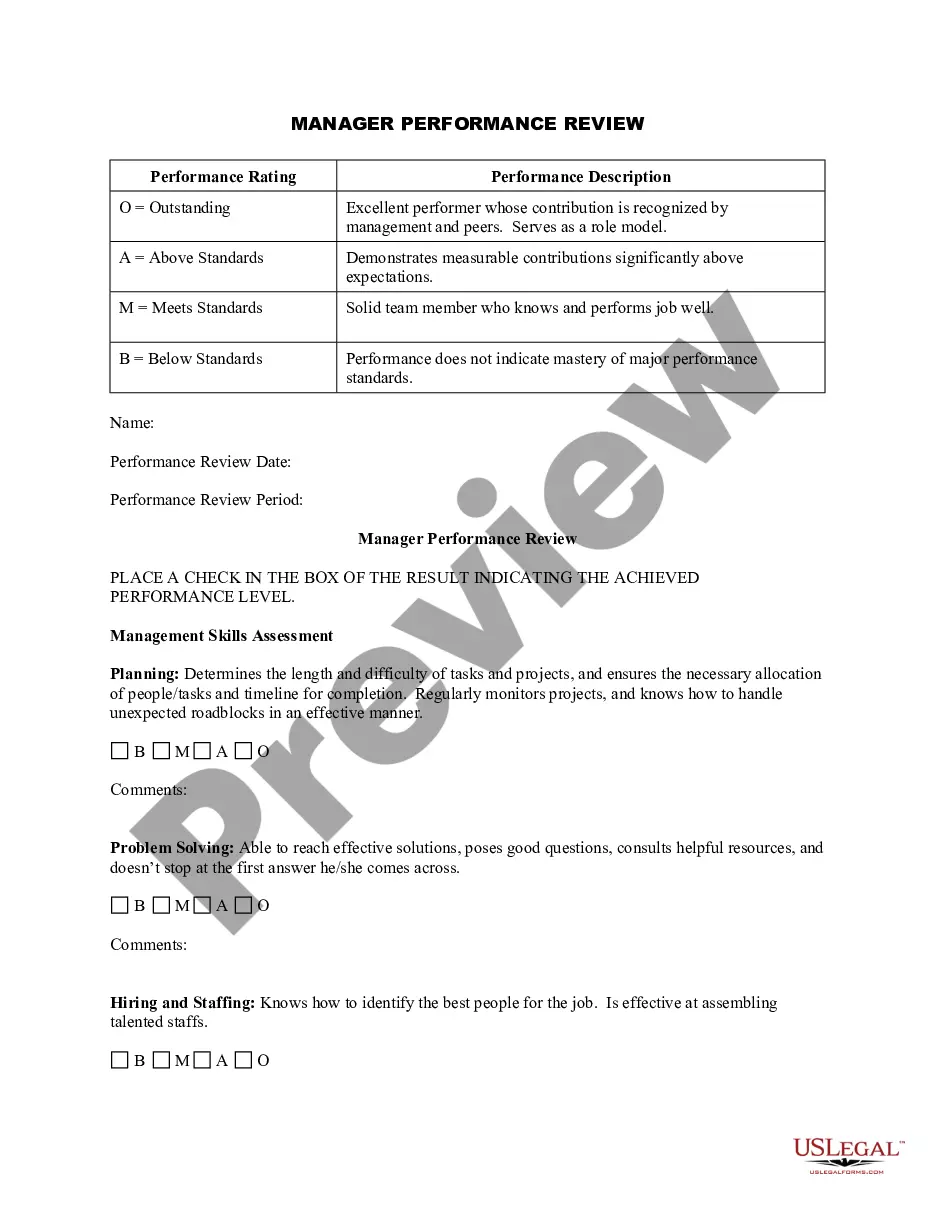
Maine Performance Evaluation for Nonexempt Employees
Description
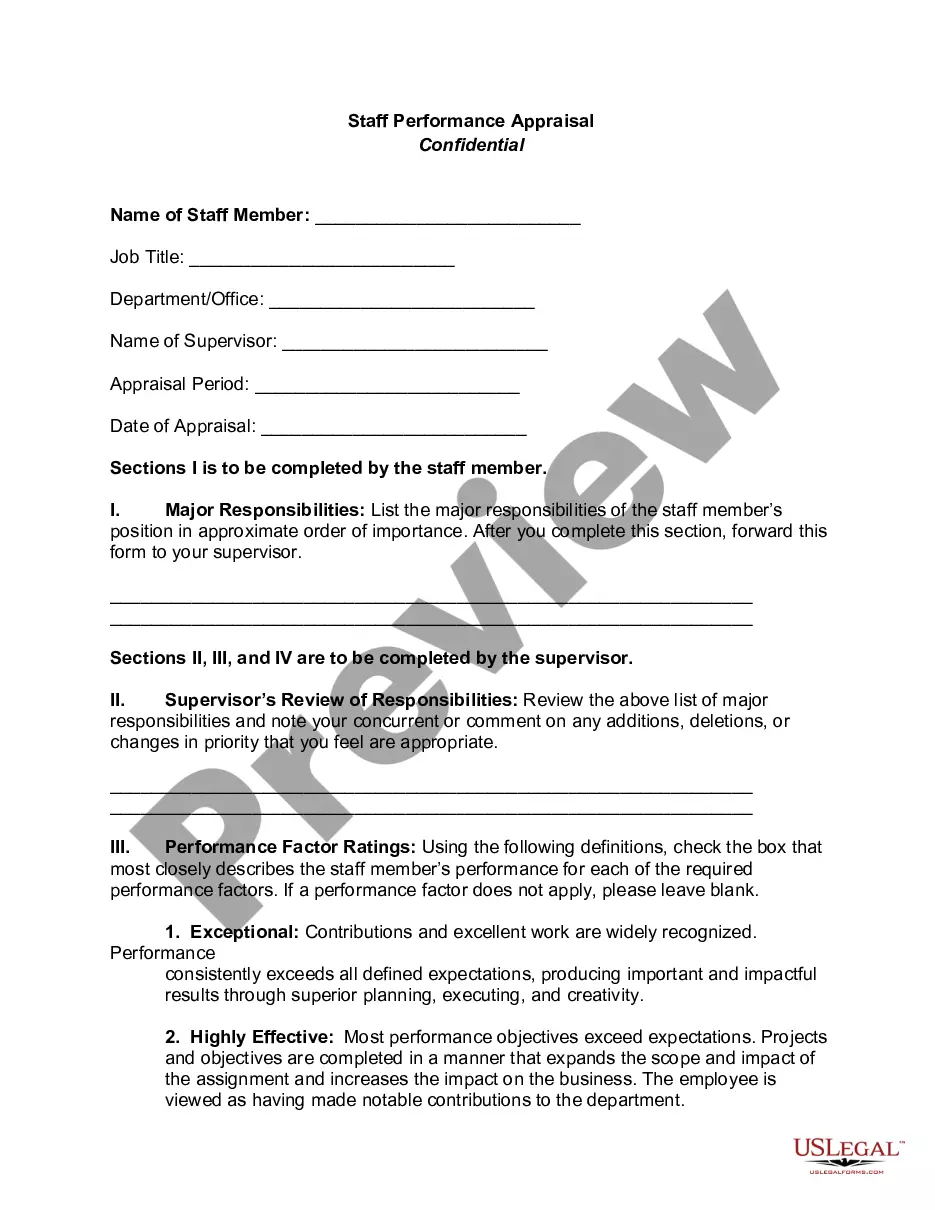
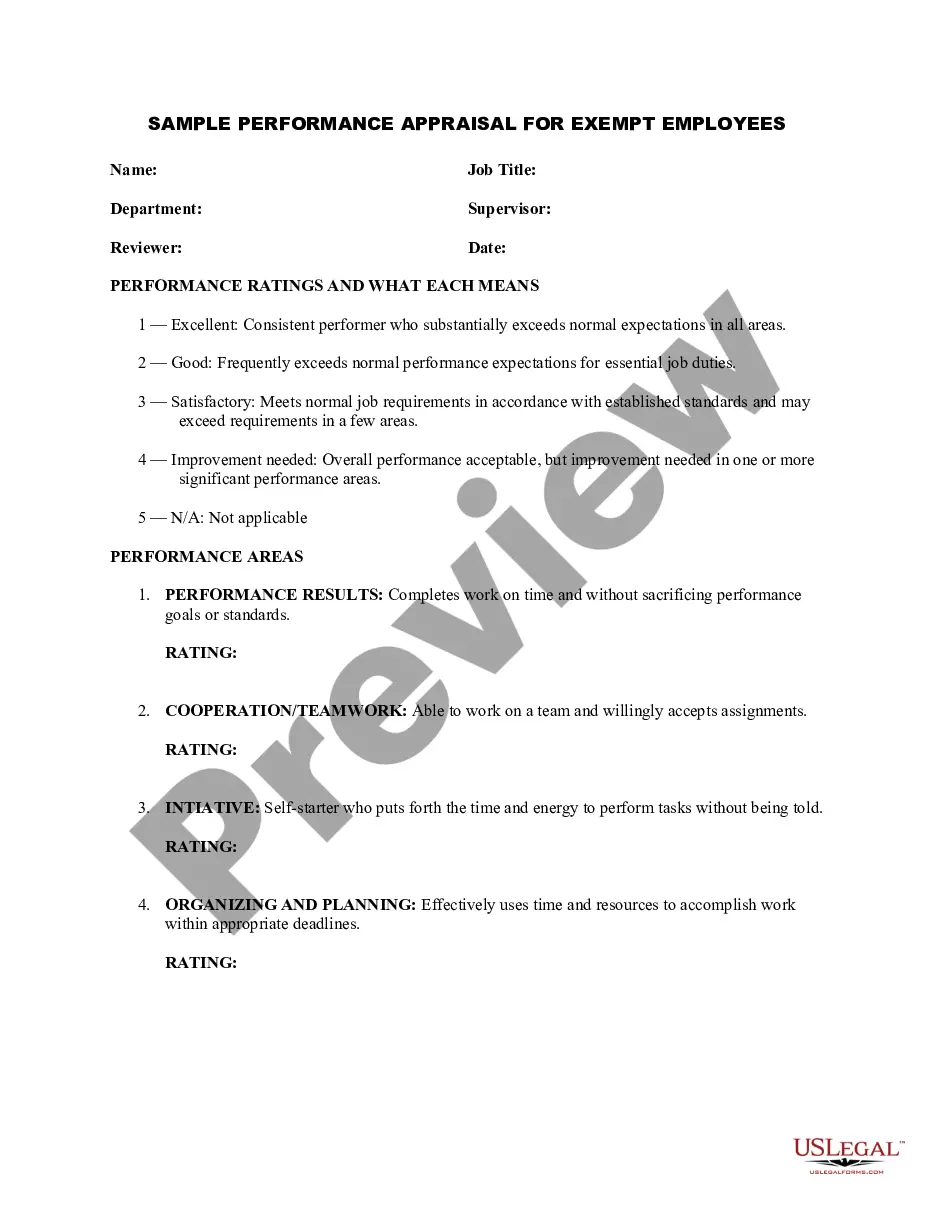
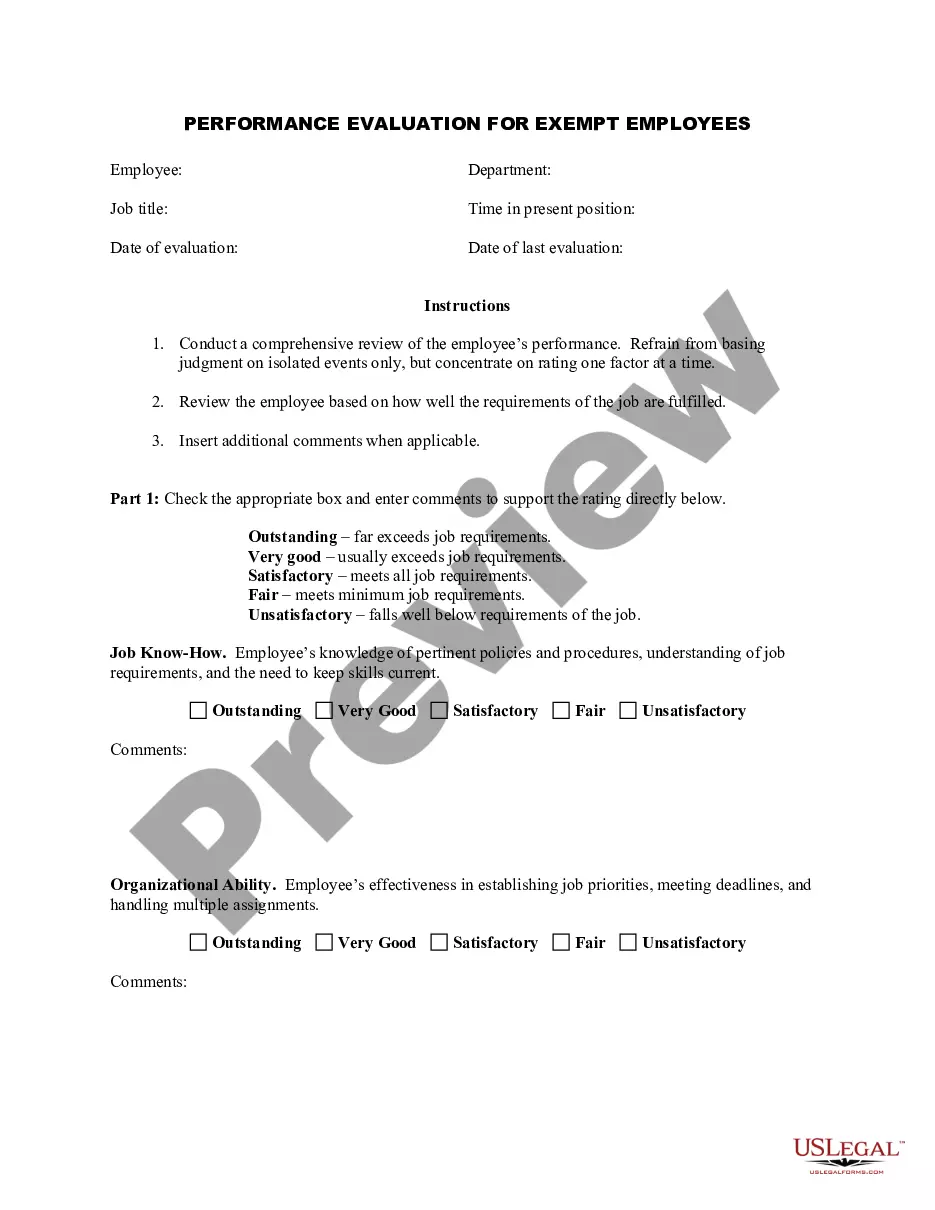
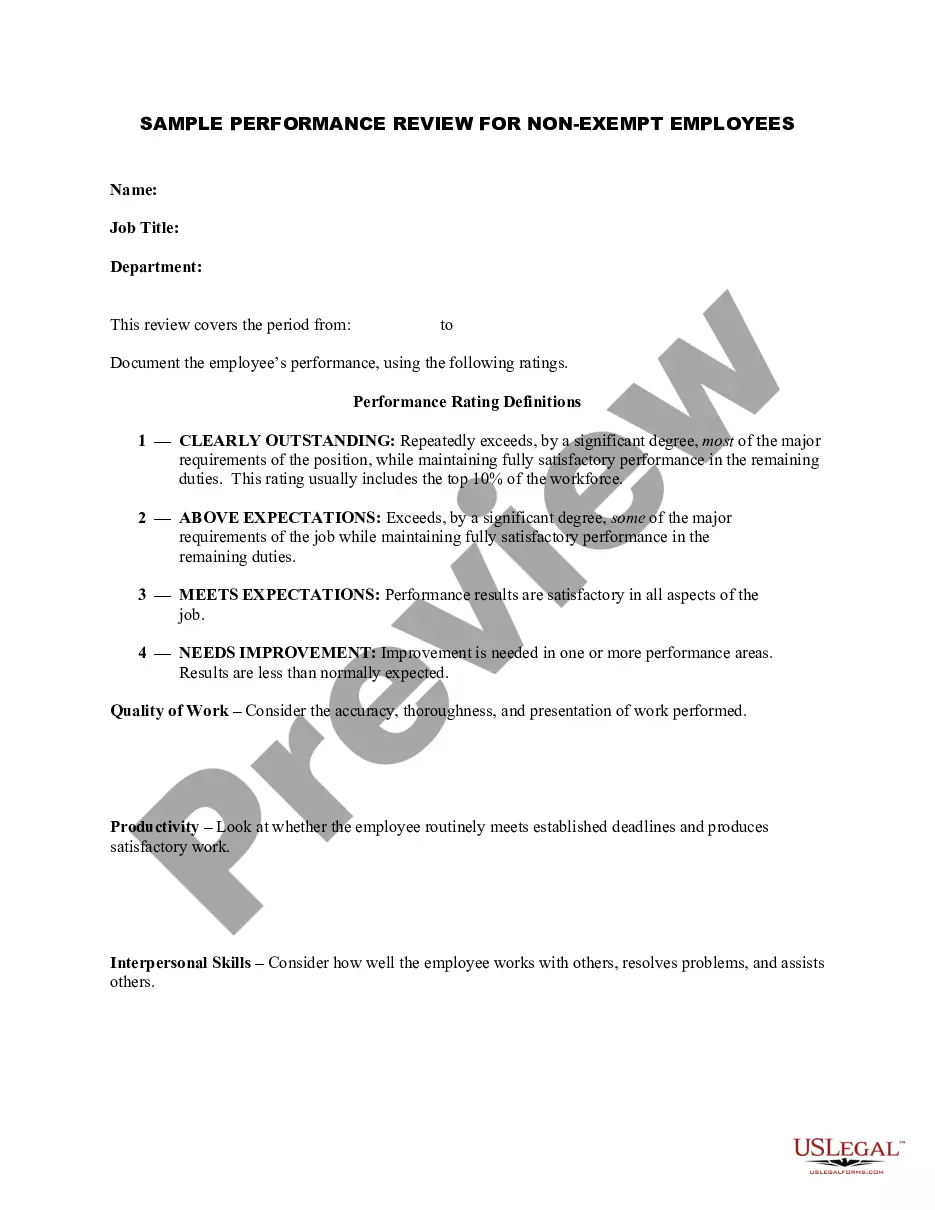
Get your form ready online
Our built-in tools help you complete, sign, share, and store your documents in one place.
Make edits, fill in missing information, and update formatting in US Legal Forms—just like you would in MS Word.
Download a copy, print it, send it by email, or mail it via USPS—whatever works best for your next step.
Sign and collect signatures with our SignNow integration. Send to multiple recipients, set reminders, and more. Go Premium to unlock E-Sign.
If this form requires notarization, complete it online through a secure video call—no need to meet a notary in person or wait for an appointment.
We protect your documents and personal data by following strict security and privacy standards.

Make edits, fill in missing information, and update formatting in US Legal Forms—just like you would in MS Word.

Download a copy, print it, send it by email, or mail it via USPS—whatever works best for your next step.

Sign and collect signatures with our SignNow integration. Send to multiple recipients, set reminders, and more. Go Premium to unlock E-Sign.

If this form requires notarization, complete it online through a secure video call—no need to meet a notary in person or wait for an appointment.

We protect your documents and personal data by following strict security and privacy standards.
Looking for another form?

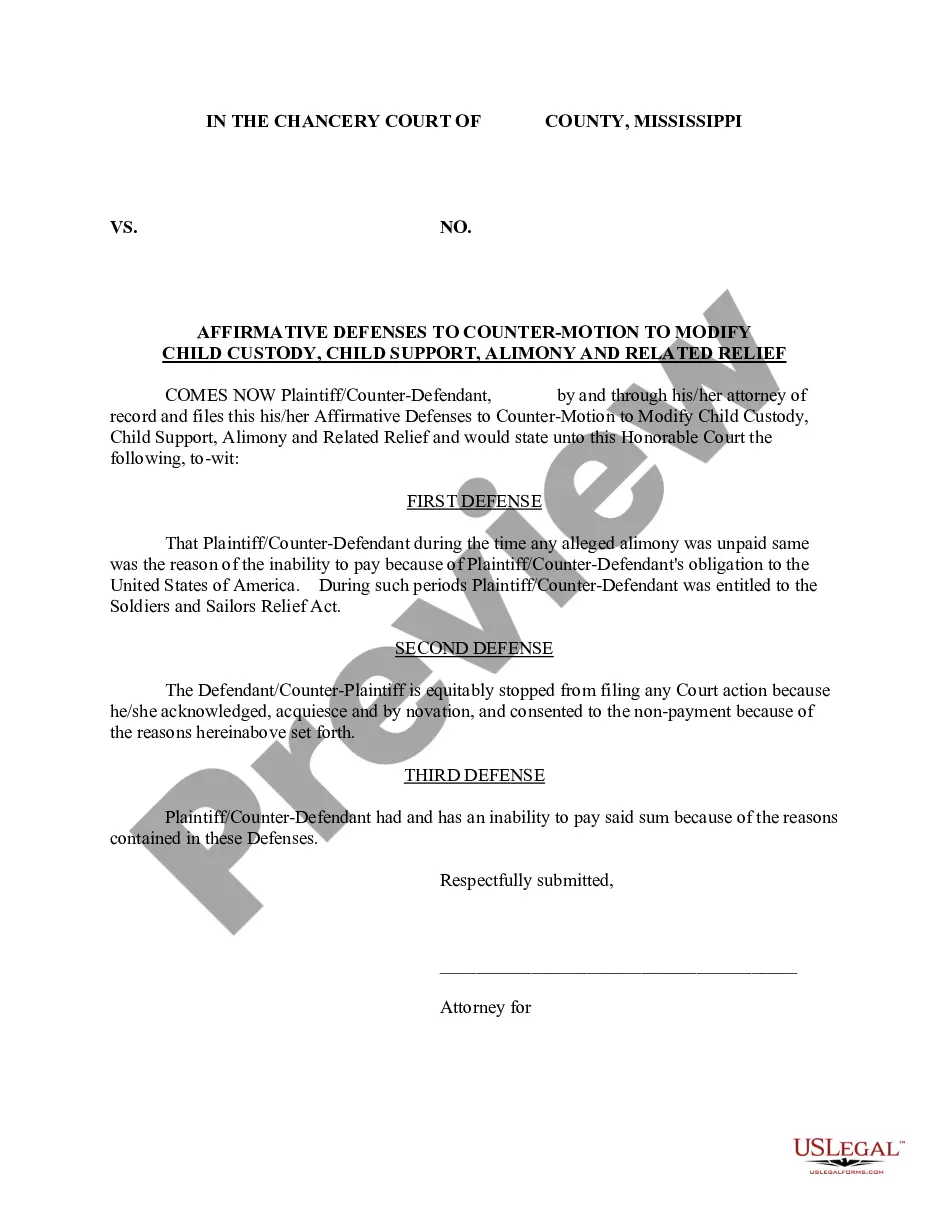





How to fill out Performance Evaluation For Nonexempt Employees?
If you require to fully, obtain, or create approved document templates, utilize US Legal Forms, the largest variety of legal forms, which are accessible online.
Employ the site’s straightforward and convenient search to locate the documents you need. Various templates for commercial and personal needs are categorized by types and states, or keywords.
Use US Legal Forms to locate the Maine Performance Review for Nonexempt Employees in just a few clicks.
Every legal document template you purchase is yours indefinitely. You will have access to every form you've downloaded in your account. Go to the My documents section and select a form to print or download again.
Compete and download, and print the Maine Performance Review for Nonexempt Employees with US Legal Forms. There are thousands of professional and state-specific forms you can use for your personal or business needs.
- If you are already a US Legal Forms member, sign in to your account and then click the Download button to obtain the Maine Performance Review for Nonexempt Employees.
- You can also access forms you have previously downloaded in the My documents section of your account.
- If you are utilizing US Legal Forms for the first time, follow the steps below.
- Step 1. Ensure you have selected the form for the correct city/state.
- Step 2. Use the Preview option to review the form’s details. Remember to read the description.
- Step 3. If you’re unsatisfied with the form, use the Search field at the top of the screen to find alternative versions of the legal form template.
- Step 4. After locating the form you need, select the Buy now button. Choose the payment plan you prefer and provide your information to register for an account.
- Step 5. Complete the transaction. You can use your credit card or PayPal account to process the transaction.
- Step 6. Choose the format of the legal form and download it to your device.
- Step 7. Fill out, modify, and print or sign the Maine Performance Review for Nonexempt Employees.
Form popularity
FAQ
Nonexempt: An individual who is not exempt from the overtime provisions of the FLSA and is therefore entitled to overtime pay for all hours worked beyond 40 in a workweek (as well as any state overtime provisions). Nonexempt employees may be paid on a salary, hourly or other basis.
Why Employers Use Employee Evaluations Regular employee evaluation helps remind workers what their managers expect in the workplace. They provide employers with information to use when making employment decisions, such as promotions, pay raises, and layoffs.
In an employee performance review, managers evaluate that individual's overall performance, identify their strengths and weaknesses, offer feedback, and help them set goals. Employees typically have the opportunity to ask questions and share feedback with their manager as well.
Employers may not discriminate against an employee for inquiring about, disclosing, comparing or otherwise discussing the employee's wages with others.
10 Easy Ways to Evaluate an Employee's PerformanceLevel of execution.Quality of work.Level of creativity.Amount of consistent improvement.Customer and peer feedback.Sales revenue generated.Responsiveness to feedback.Ability to take ownership.More items...
An employer must thereafter evaluate the productivity of each worker with a disability who is paid an hourly commensurate wage rate at least every 6 months, or whenever there is a change in the methods or materials used or the worker changes jobs.
Employees who are paid less than $23,600 per year ($455 per week) are nonexempt. (Employees who earn more than $100,000 per year are almost certainly exempt.)
As a general rule, most companies conduct performance reviews every 3-6 months. This keeps employees' focused and motivated, and ensures feedback is relevant and timely.
Maine is an employment-at-will state. This means that an employer may generally terminate an employee at any time and for any reason, unless a law or agreement provides otherwise.
Salary level test. Employees who are paid less than $23,600 per year ($455 per week) are nonexempt. (Employees who earn more than $100,000 per year are almost certainly exempt.)