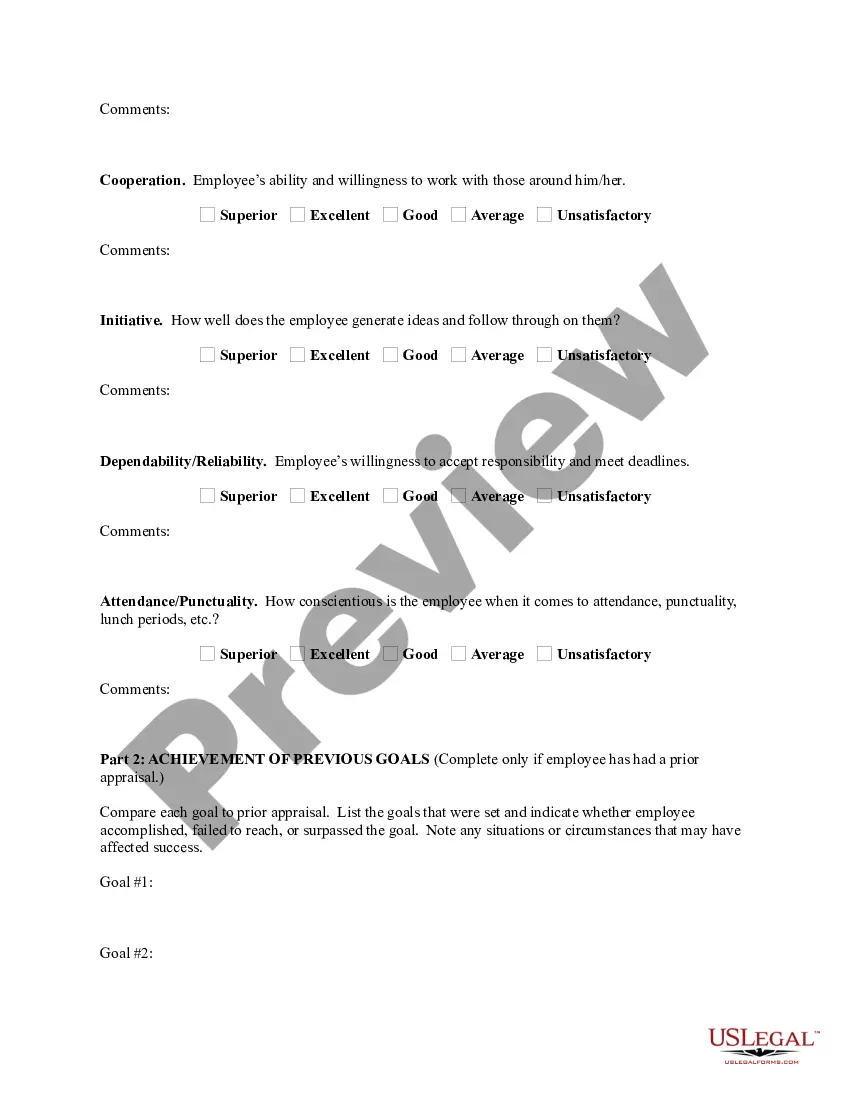
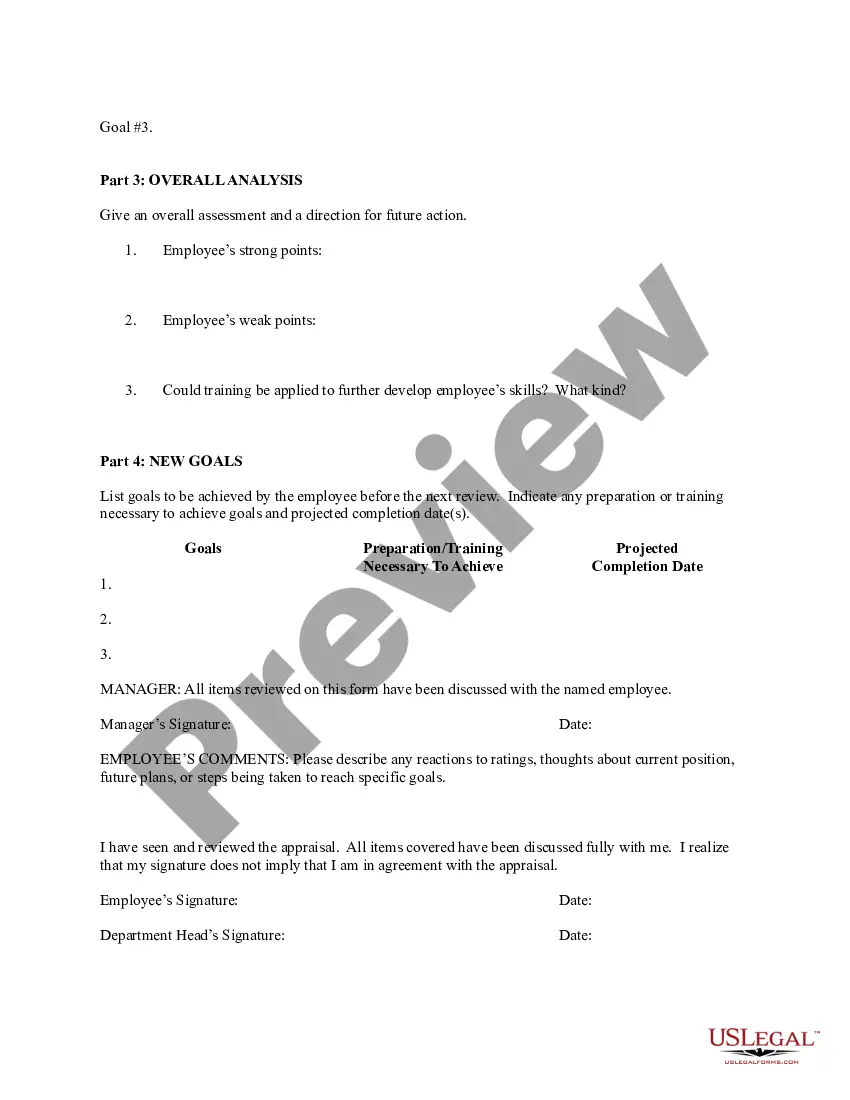
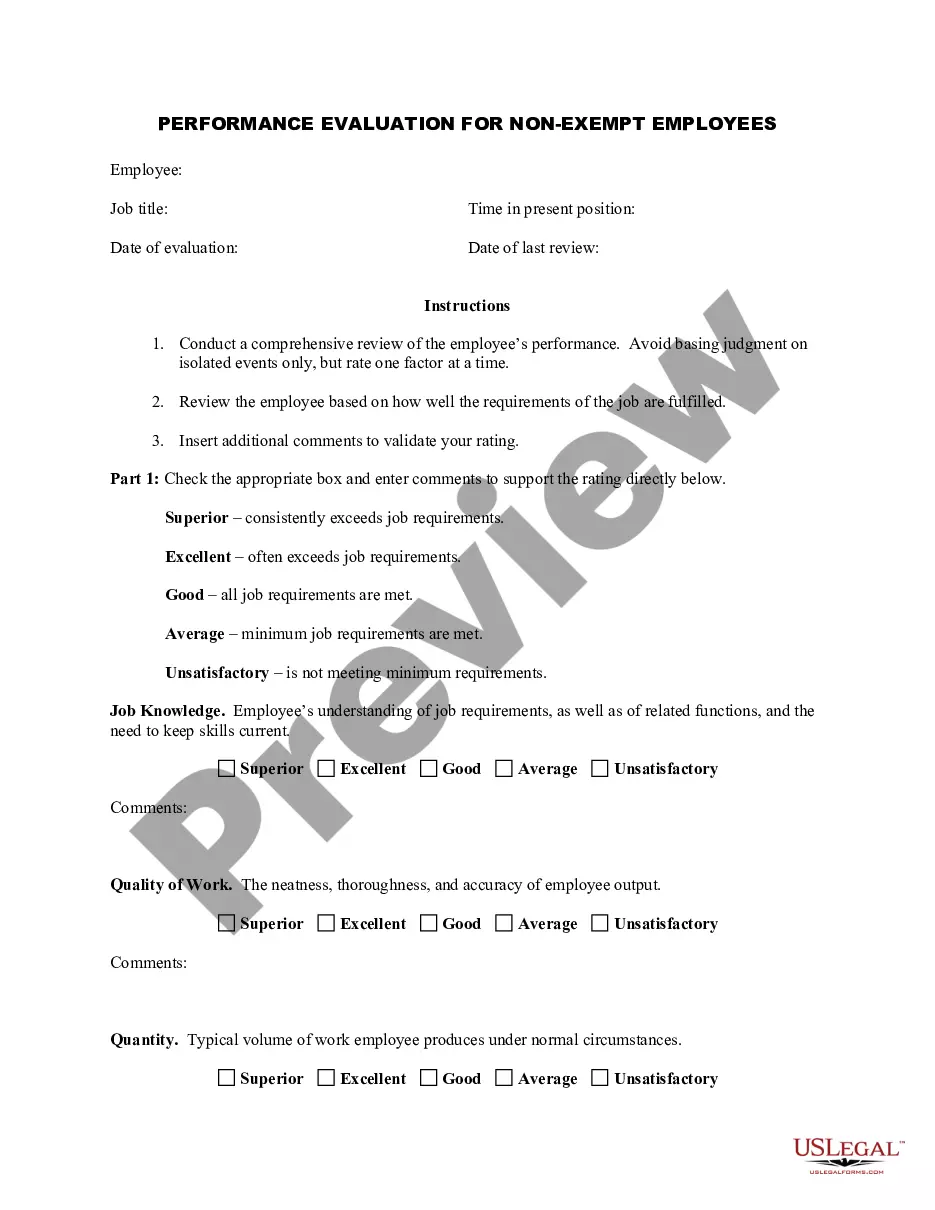
Maine Employee Evaluation Form for Librarian
Description
Get your form ready online
Our built-in tools help you complete, sign, share, and store your documents in one place.
Make edits, fill in missing information, and update formatting in US Legal Forms—just like you would in MS Word.
Download a copy, print it, send it by email, or mail it via USPS—whatever works best for your next step.
Sign and collect signatures with our SignNow integration. Send to multiple recipients, set reminders, and more. Go Premium to unlock E-Sign.
If this form requires notarization, complete it online through a secure video call—no need to meet a notary in person or wait for an appointment.
We protect your documents and personal data by following strict security and privacy standards.

Make edits, fill in missing information, and update formatting in US Legal Forms—just like you would in MS Word.

Download a copy, print it, send it by email, or mail it via USPS—whatever works best for your next step.

Sign and collect signatures with our SignNow integration. Send to multiple recipients, set reminders, and more. Go Premium to unlock E-Sign.

If this form requires notarization, complete it online through a secure video call—no need to meet a notary in person or wait for an appointment.

We protect your documents and personal data by following strict security and privacy standards.
Looking for another form?


How to fill out Employee Evaluation Form For Librarian?
It is feasible to spend hours online searching for the legal document template that meets the federal and state requirements you need.
US Legal Forms offers thousands of legal forms that are reviewed by professionals.
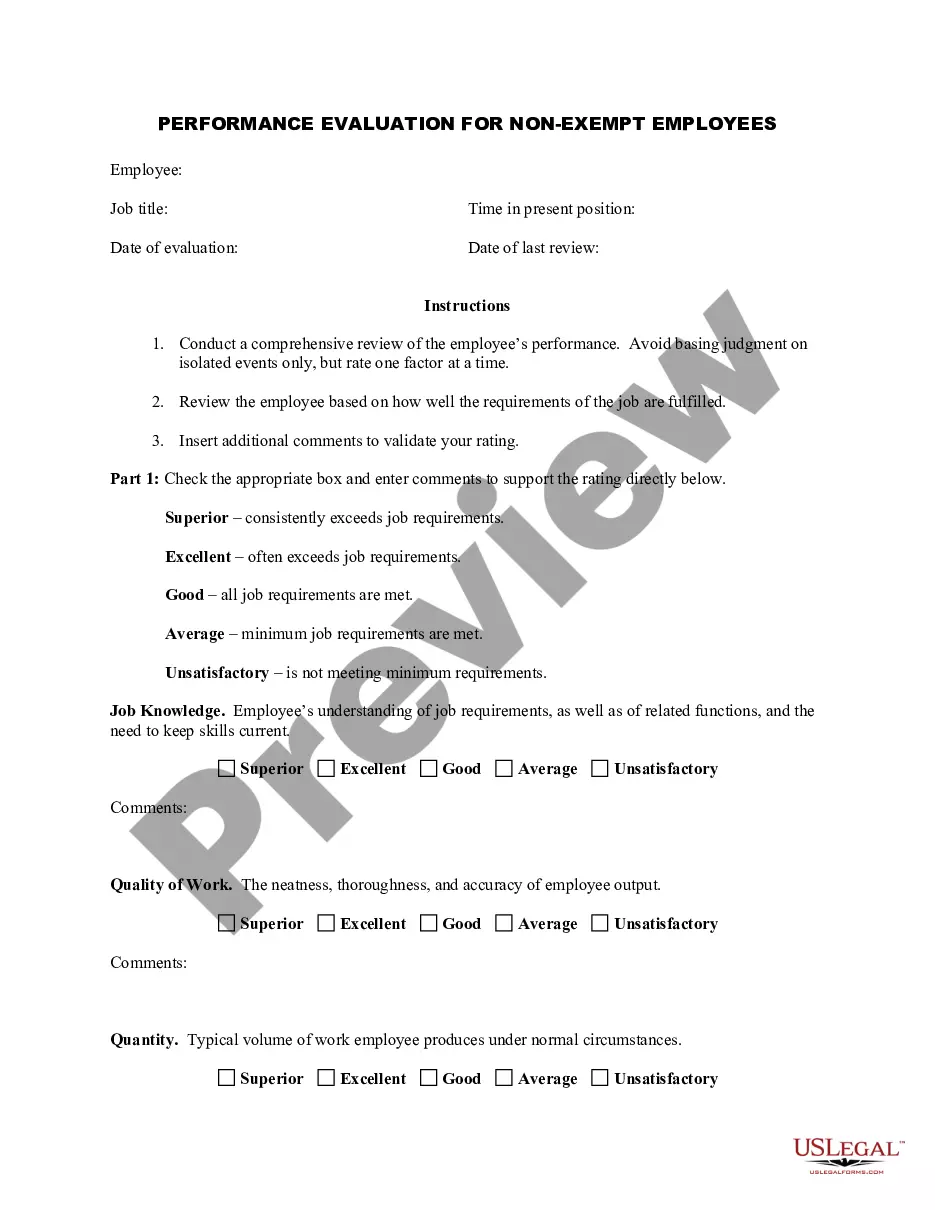
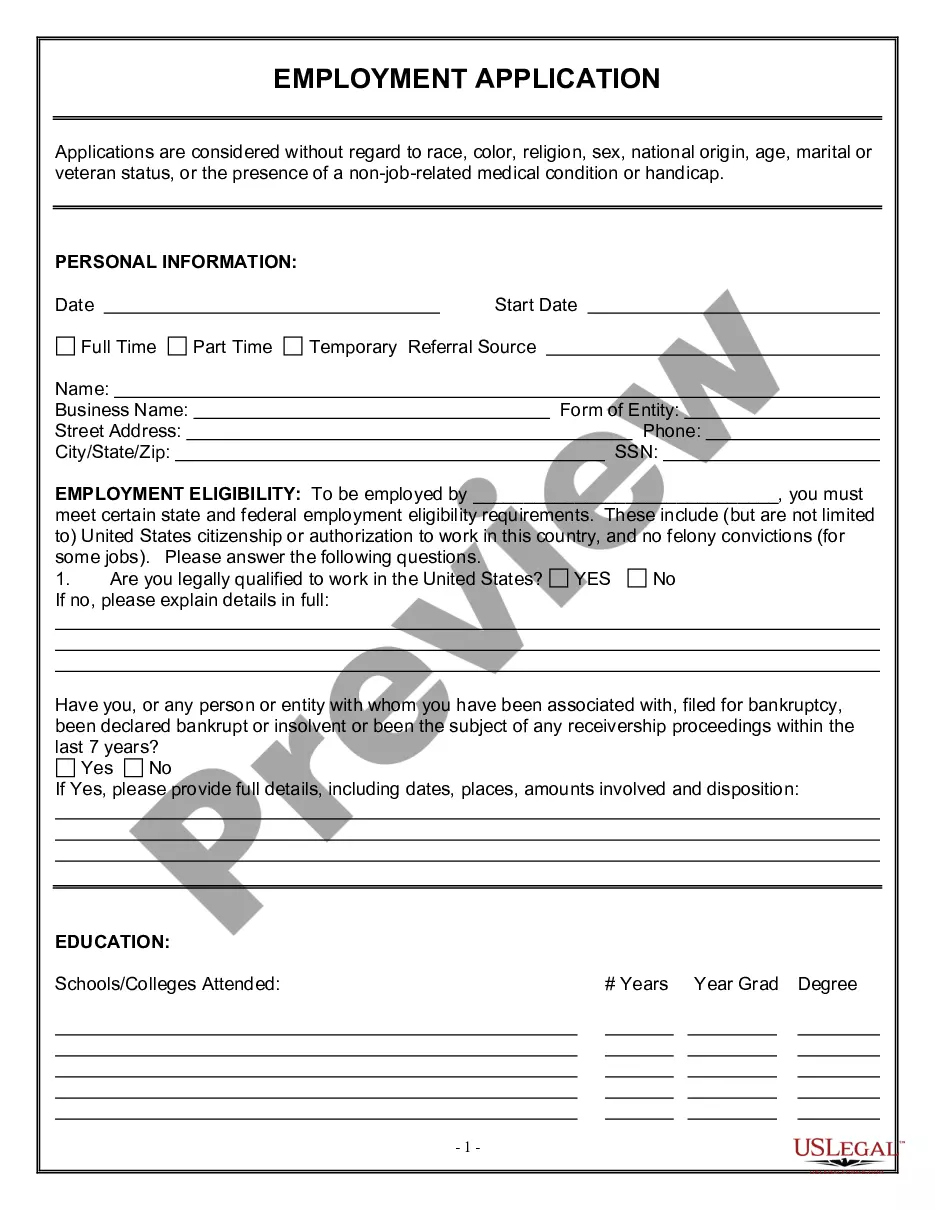
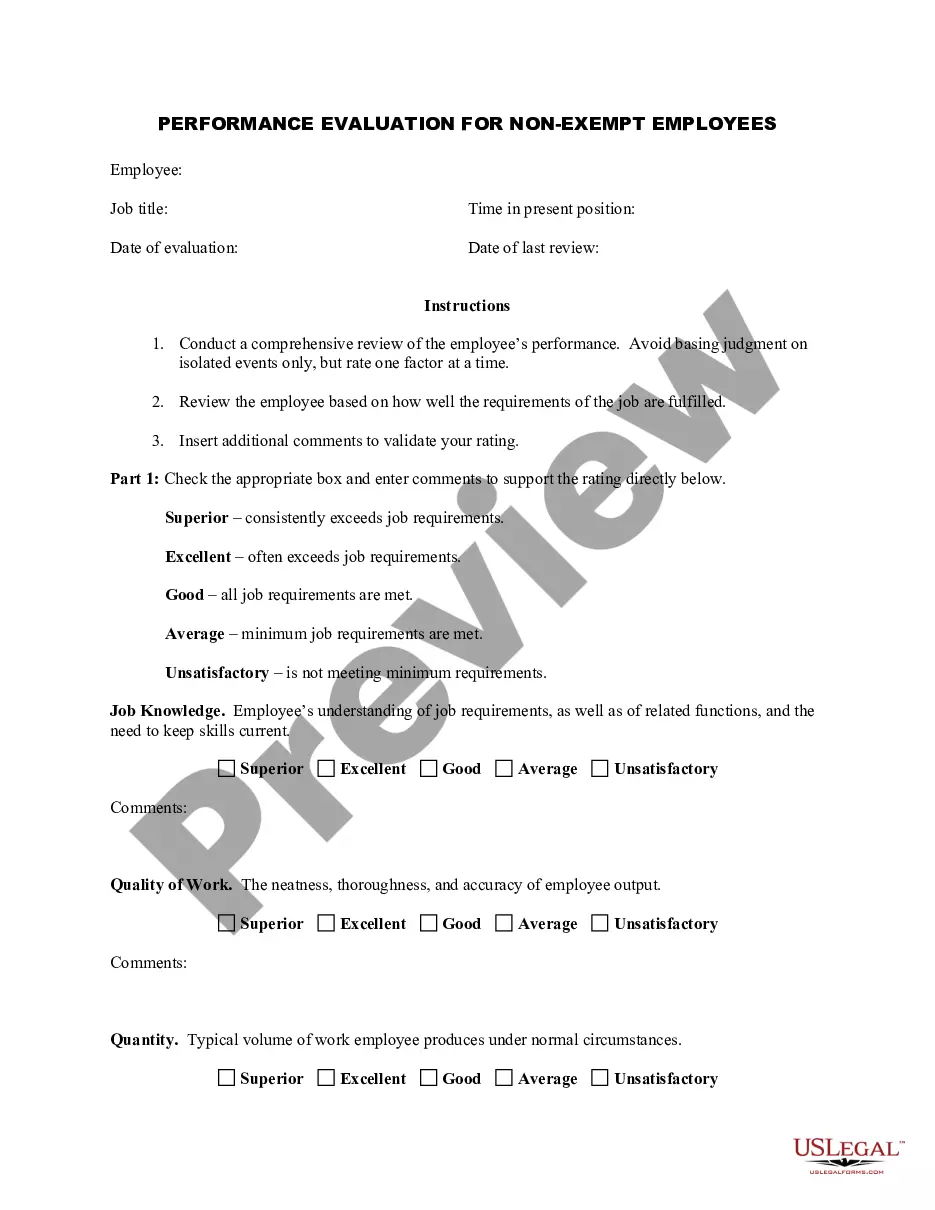
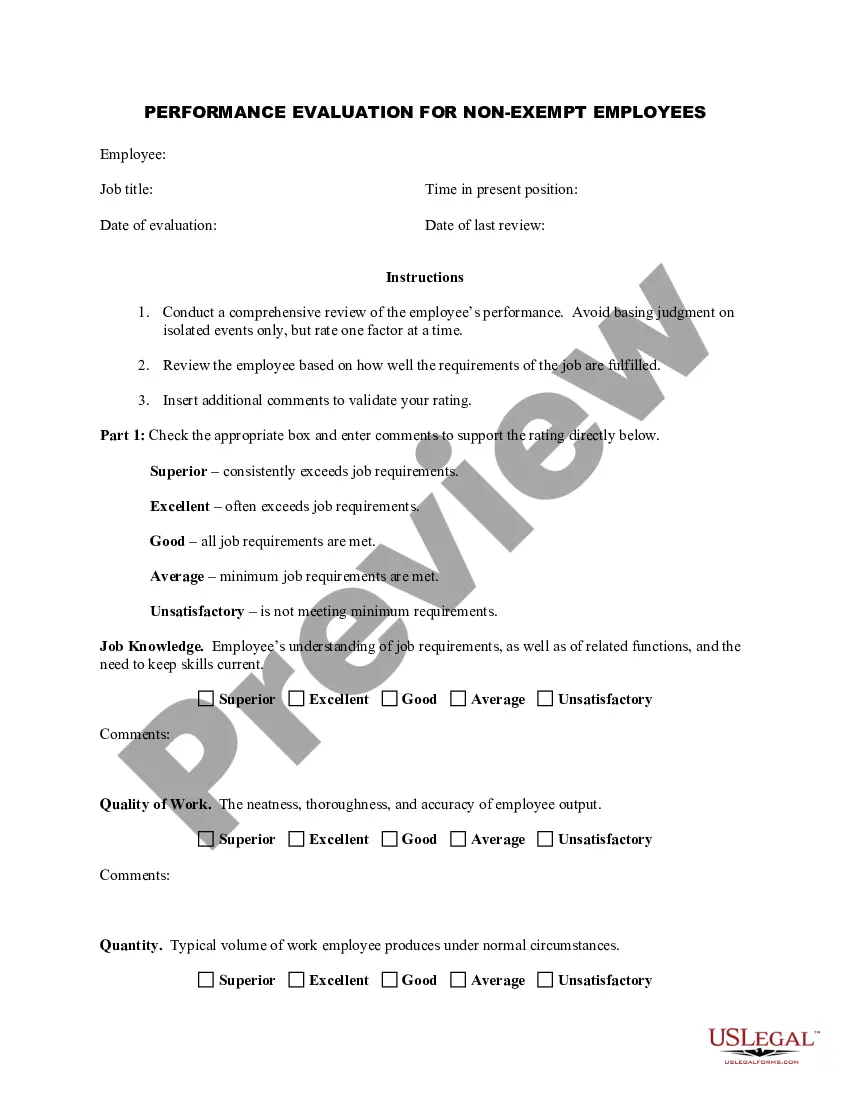
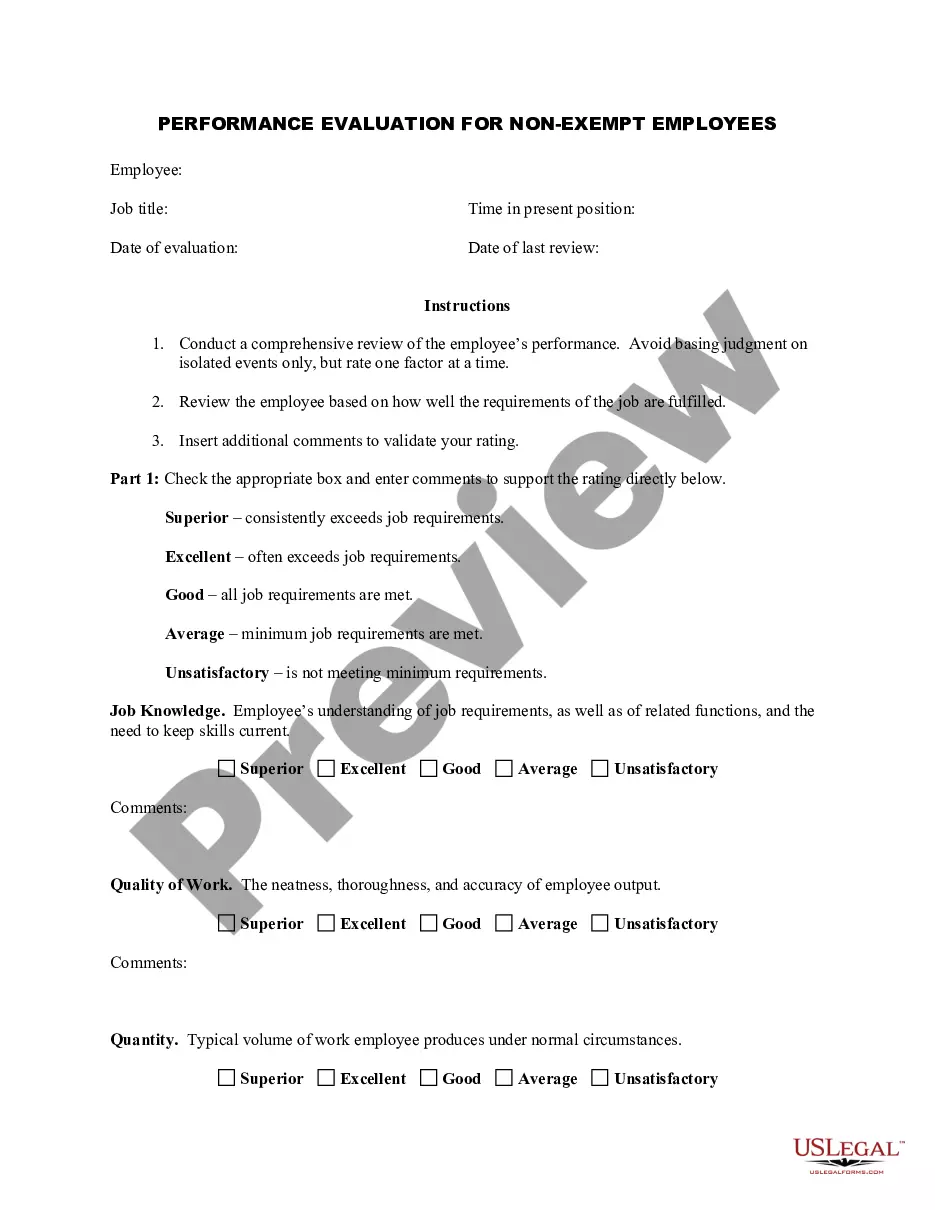
You can effortlessly obtain or print the Maine Employee Evaluation Form for Librarian from my service.
If available, use the Review option to browse through the document template as well.
- If you possess a US Legal Forms account, you can Log In and then click on the Download option.
- After that, you can complete, modify, print, or sign the Maine Employee Evaluation Form for Librarian.
- Every legal document template you acquire is your property forever.
- To obtain another copy of the downloaded form, visit the My documents tab and click on the relevant option.
- If you are using the US Legal Forms website for the first time, follow the simple instructions below.
- First, ensure that you have selected the correct document template for your desired area/town.
- Review the form outline to make certain you have chosen the right type.
Form popularity
FAQ
To fill out a self-evaluation using the Maine Employee Evaluation Form for Librarian, reflect on your performance and accomplishments over the evaluation period. Identify your achievements and areas where you would like to improve. Lastly, share any goals you wish to pursue, making sure to align them with the library’s mission.
How to write an employee evaluationGather employee information. Gather required information related to the employee to get the full picture of their value to the company.List employee responsibilities.Use objective language.Use action verbs.Compare performance ratings.Ask open-ended questions.Use a point system.
4 Tips for Writing an Effective Self-EvaluationBe specific and provide examples.Back up your contributions with metrics.Frame weaknesses as opportunities.Keep track of your accomplishments throughout the year.Communication and Cooperation.Achievements.Teamwork and Collaboration.Creativity and Innovation.More items...?
The BARS method is the most preferred performance appraisal method as it enables managers to gauge better results, provide constant feedback and maintain consistency in evaluation.
Reviews include key accomplishments and examples of both strengths and weaknesses. They should also include expectations and goals for the coming year. This will guide the employee's performance. Performance reviews should focus on observable and measurable performance.
Effective performance management systems typically include the following three broad elements: goal setting, performance review and a performance improvement process.
Best practices for writing a self-assessmentBe proud. One major goal of the self-evaluation is to highlight your accomplishments and recollect milestones in your professional development.Be honest and critical.Continuously strive for growth.Track your accomplishments.Be professional.
Management by Objectives (MBO) This performance appraisal method is used to match the overarching organizational goals with objectives of employees effectively while validating objectives using the SMART method to see if the set objective is specific, measurable, achievable, realistic, and time-sensitive.
For most staff positions, the job performance areas that should be included on a performance evaluation form are job knowledge and skills, quality of work, quantity of work, work habits and attitude.
The three main types of evaluation methods are goal-based, process-based and outcomes-based.