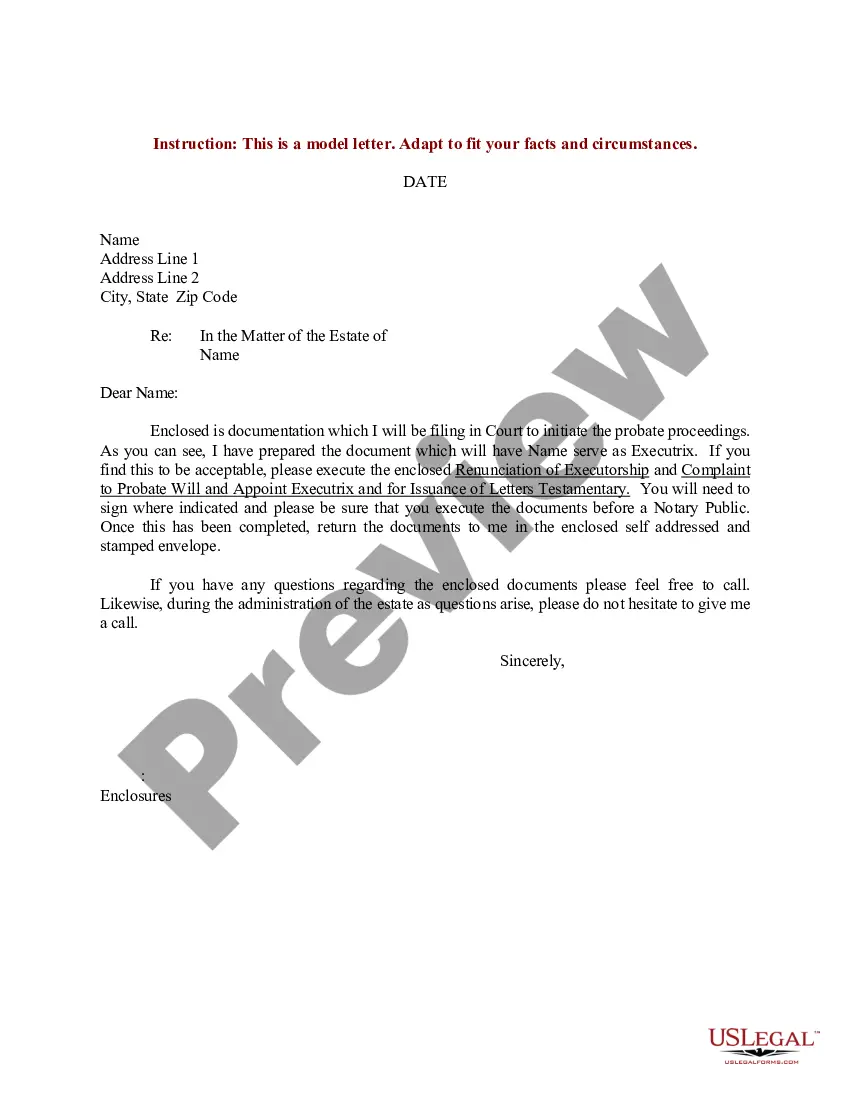
Maine Salaried Employee Appraisal Guidelines - Employee Specific
Description
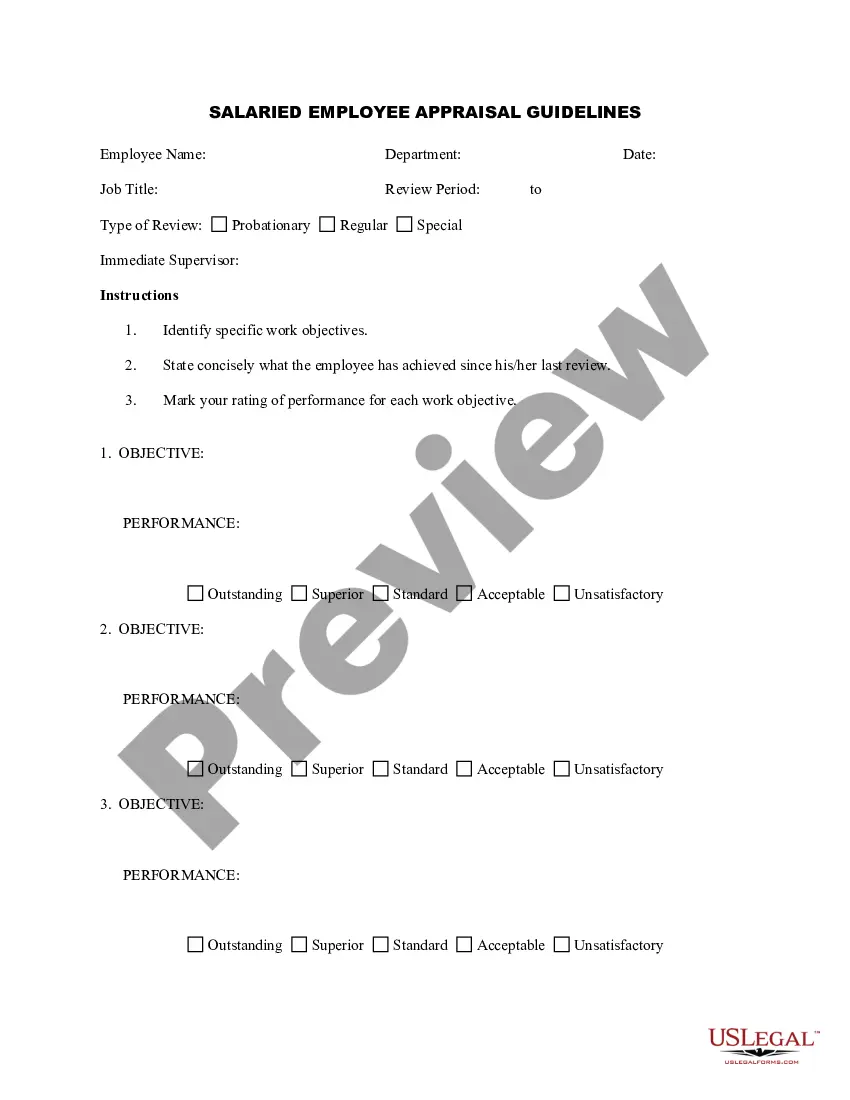
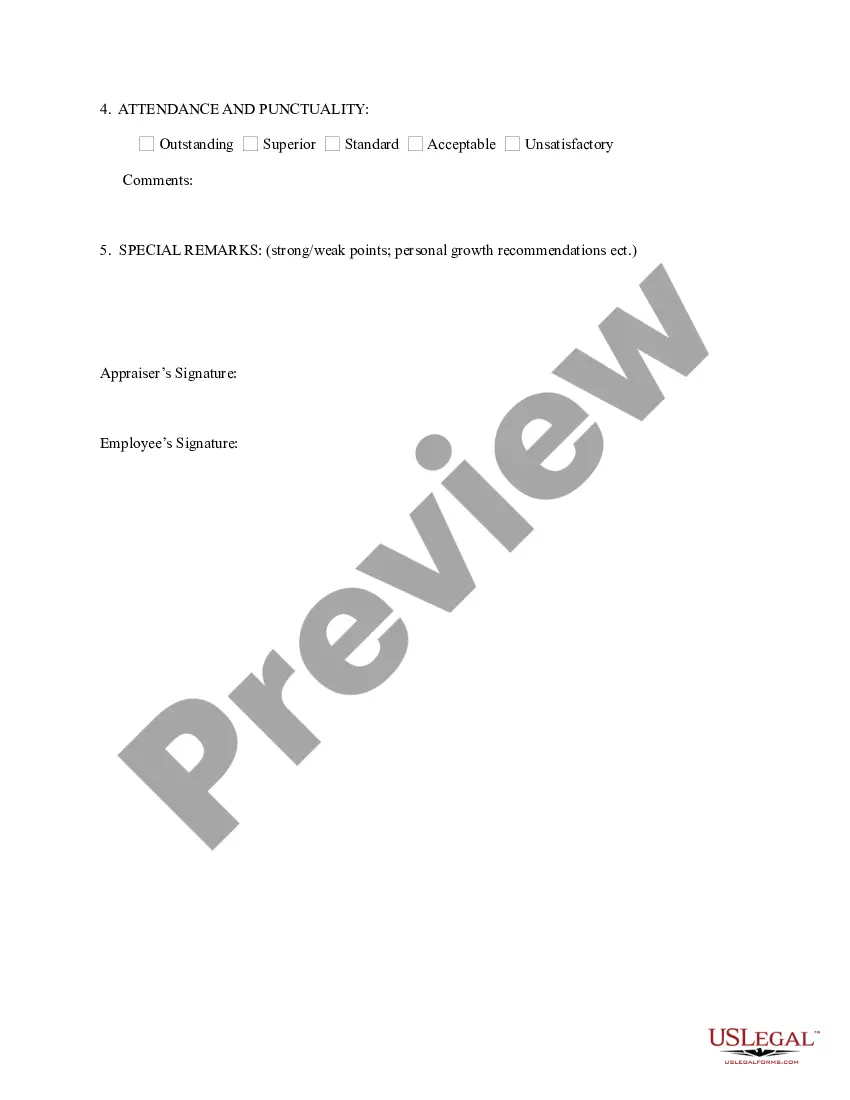
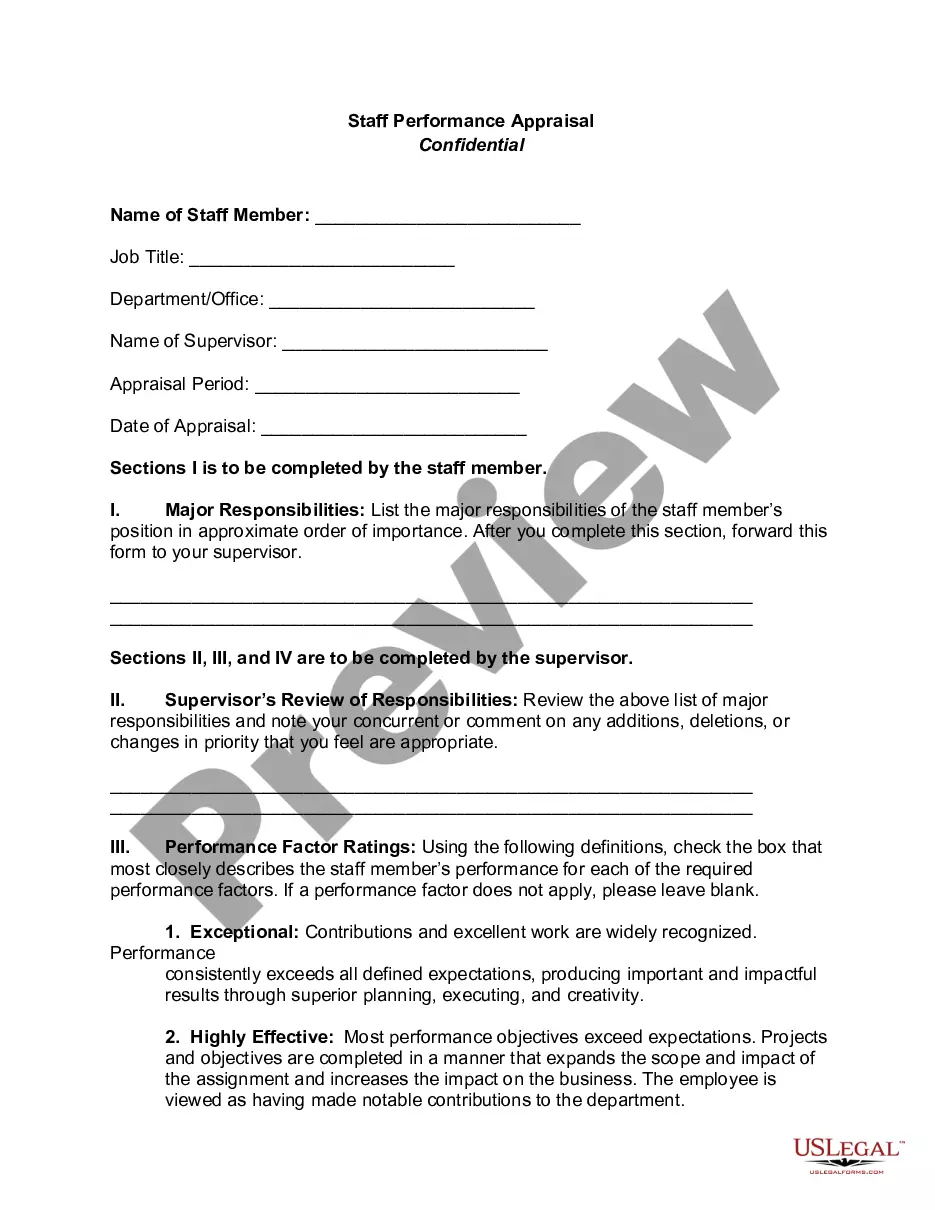
How to fill out Salaried Employee Appraisal Guidelines - Employee Specific?
Finding the correct legal document template can be a challenge. Naturally, there are numerous designs available online, but how do you secure the legal form you need.
Utilize the US Legal Forms website. The service provides a vast array of templates, including the Maine Salaried Employee Appraisal Guidelines - Employee Specific, which can be utilized for both business and personal purposes.
All documents are reviewed by professionals and comply with federal and state regulations.
- If you are currently registered, Log In to your account and click on the Download button to acquire the Maine Salaried Employee Appraisal Guidelines - Employee Specific.
- Use your account to search through the legal documents you may have acquired previously.
- Visit the My documents tab in your account to obtain another copy of the document you need.
- If you are a new user of US Legal Forms, here are simple instructions you can follow.
- Firstly, ensure you have selected the correct form for your area/region.
- You can browse the form using the Preview button and read the form description to confirm it is right for you.
- If the form does not meet your needs, utilize the Search field to find the correct form.
- Once you are certain that the form is appropriate, click the Purchase now button to acquire the form.
- Choose the pricing plan you prefer and input the necessary information.
- Create your account and process the payment with your PayPal account or credit card.
- Select the document format and download the legal document template to your device.
- Complete, modify, print, and sign the obtained Maine Salaried Employee Appraisal Guidelines - Employee Specific.
- US Legal Forms is the largest repository of legal forms where you can find numerous document templates.
- Utilize the service to download well-structured paperwork that adheres to state requirements.
Form popularity
FAQ
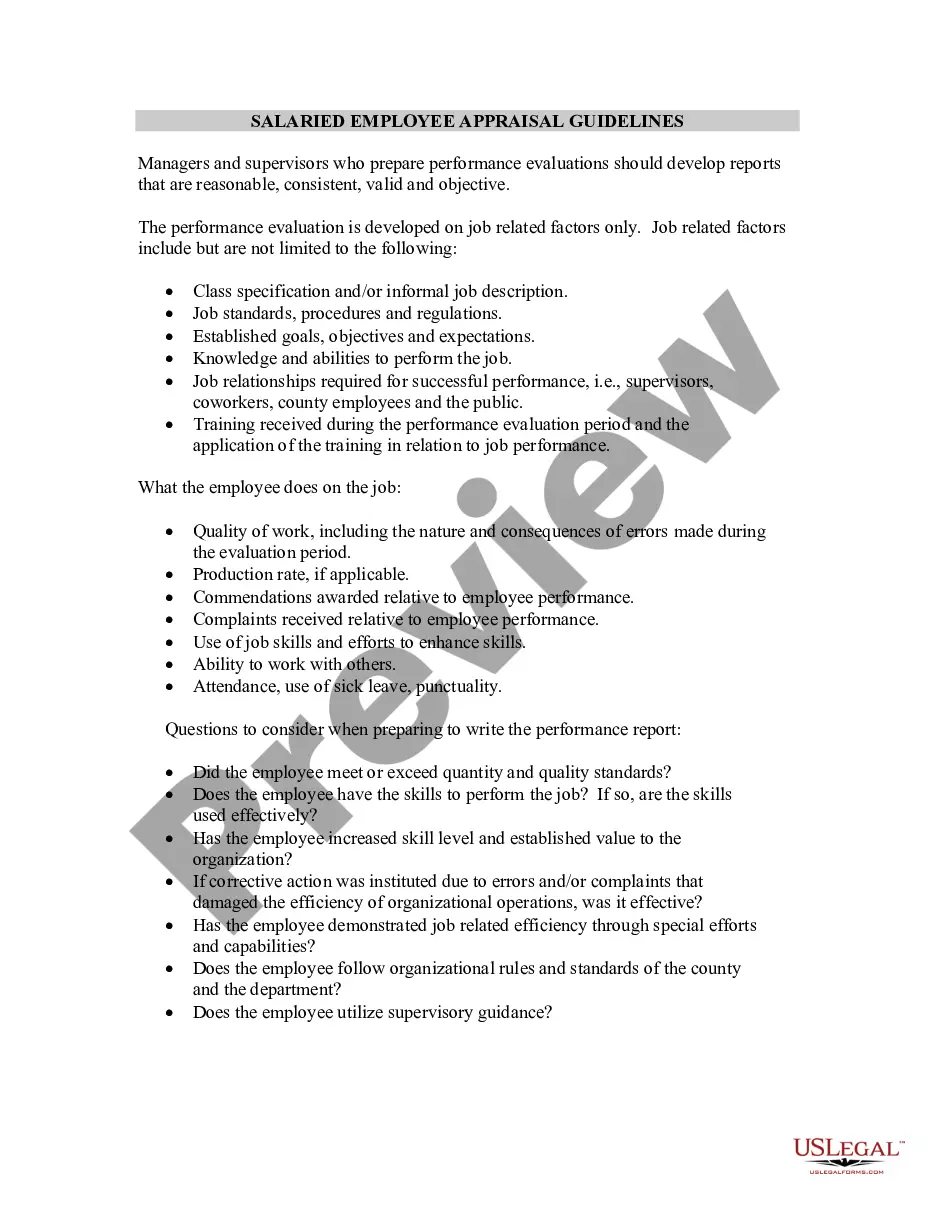
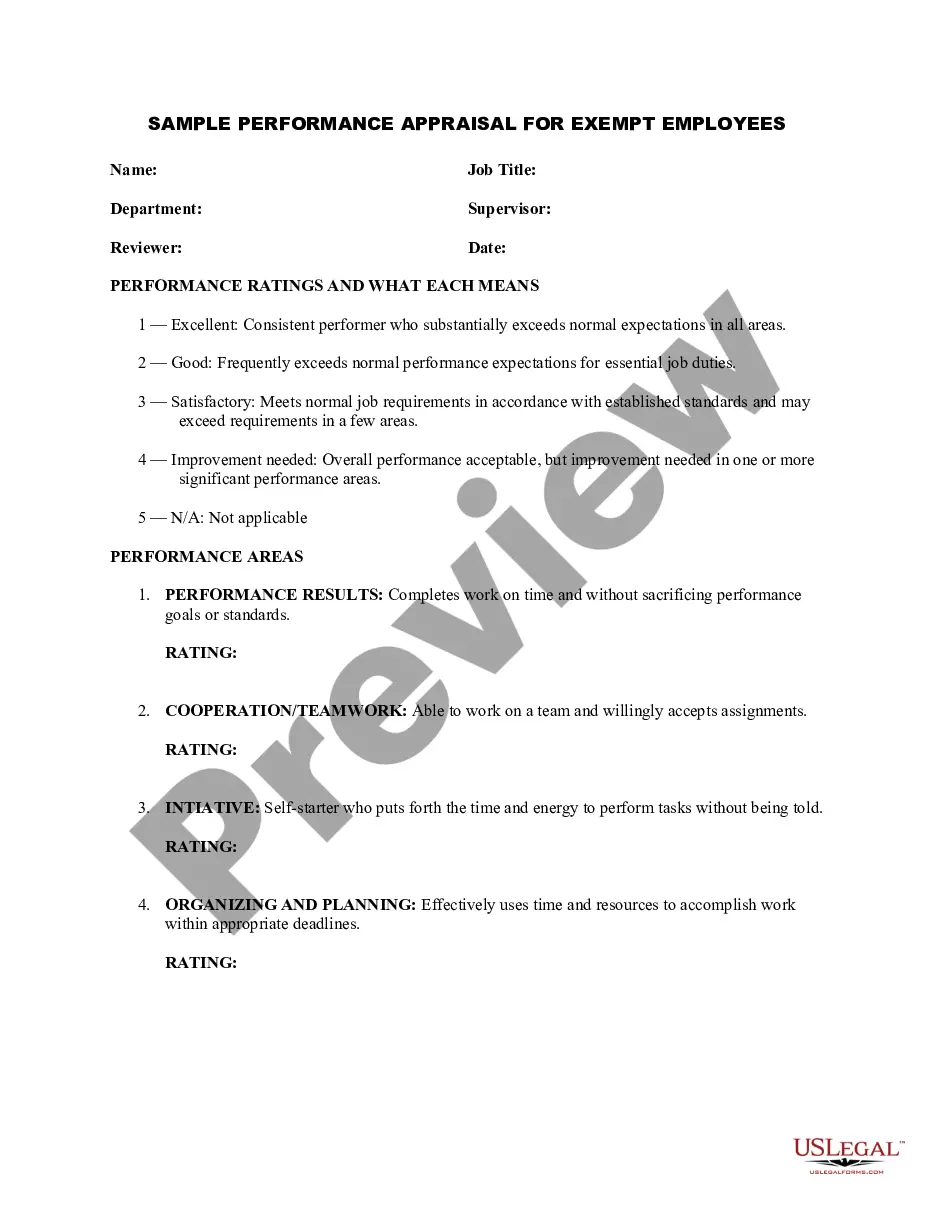
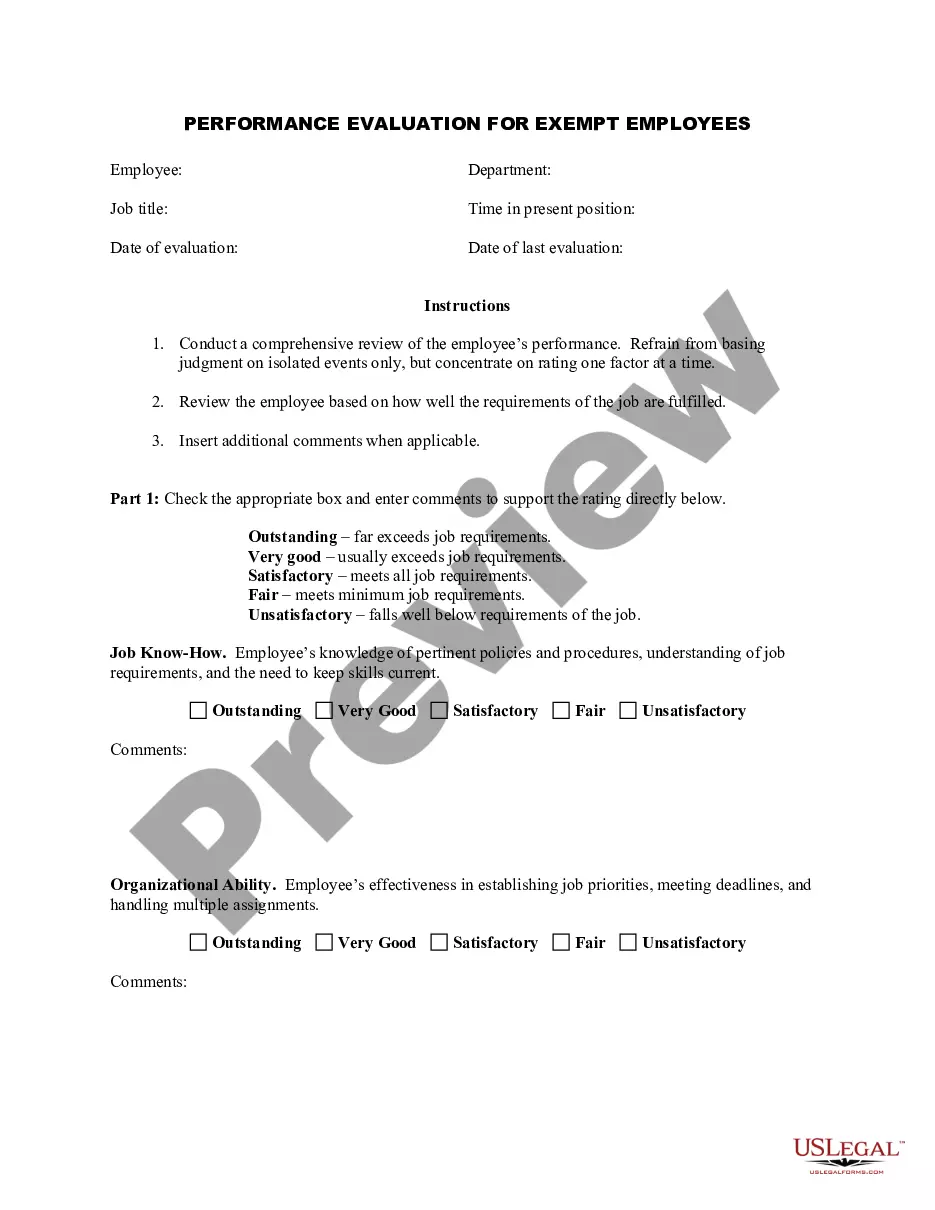
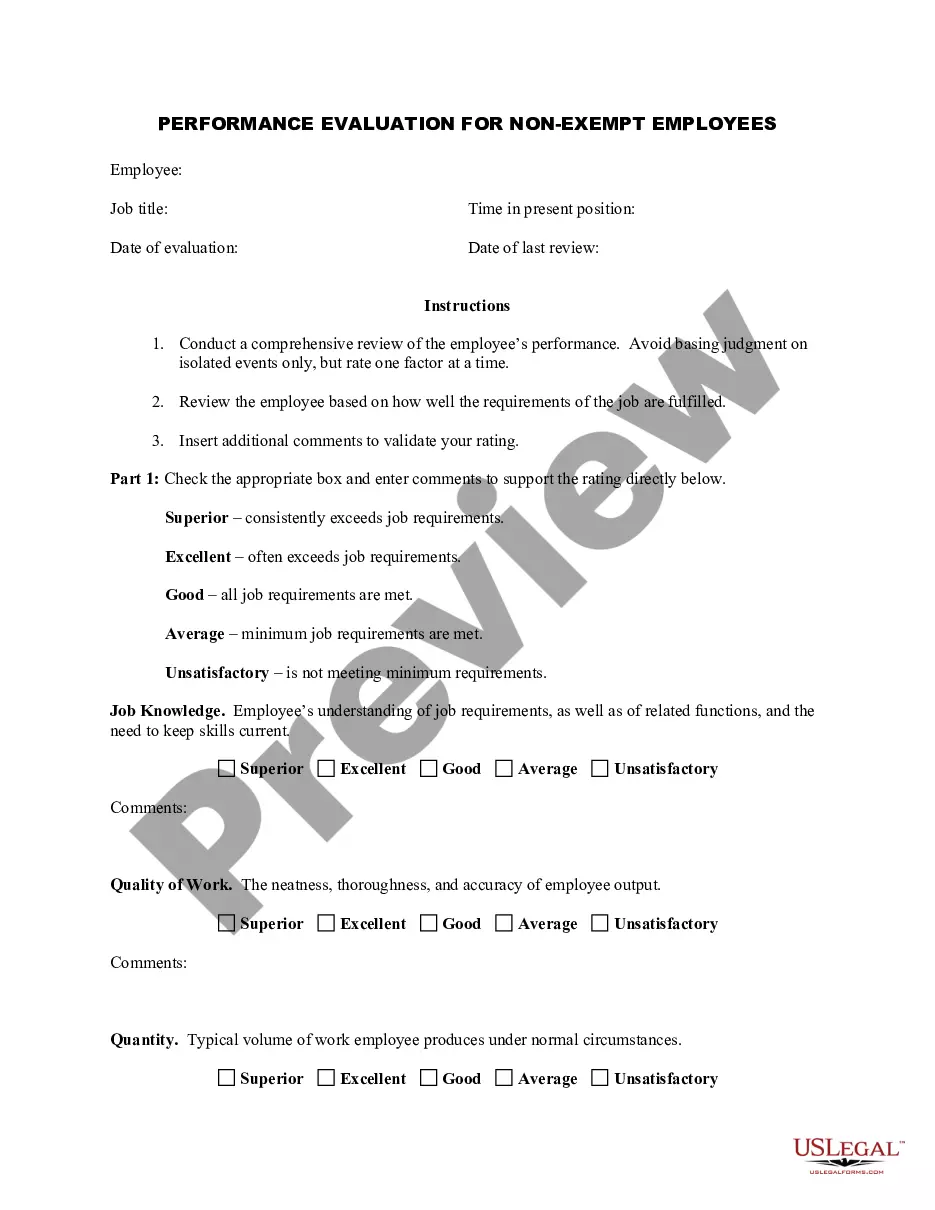
Establishing performance standards means setting specific criteria that define what employees should achieve in their roles. This process helps guide evaluations and provides employees with a clear understanding of their responsibilities. Following the Maine Salaried Employee Appraisal Guidelines - Employee Specific can help ensure that these standards are relevant and effective. Additionally, this clarity can enhance communication between managers and their teams.
Maine is now the eighth state to enact a salary history ban, joining its New England counterparts in Massachusetts and Connecticut. L.D. 278 specifically prohibits employers from asking about a prospective employee's compensation history until after that employer has extended a job offer including compensation terms.
Maine, like many other states, has established supplemental state funding to ensure continued service to workers and employers and preserve program integrity. The assessment for UPAF is 0.13% of taxable wages reported on line 5.
Determining Employment Status A general rule is if a worker is self-employed, he is in business on his own account and is responsible for the success of his business. Employed workers work for an employer and do not run their own business. They receive regular paychecks from an employer.
The law only requires employment for at least a year, whether continuous or not continuous, to be considered a regular employee. Further, the law deems repeated and continuing need for its performance as sufficient evidence of the necessity if not indispensability of that activity to the business.
These are individuals who work for someone else but are not employees....Key TakeawaysAn employee is a regular, long-term worker who gets paid a set hourly wage or annual salary for their work.The IRS sets guidelines to determine which workers are employees and which aren't.More items...?
An employee is on a company's payroll and receives wages and benefits in exchange for following the organization's guidelines and remaining loyal. A contractor is an independent worker who has autonomy and flexibility but does not receive benefits such as health insurance and paid time off.
The second type is for employees (commonly referred to as exempt) whose primary job duties meet the Executive, Administrative or Professional exemptions established in 26 MRS §663 (K). These employees are paid a predetermined fixed amount regardless of the hours worked.
An employer may not prohibit an employee from disclosing his or her own wages, discussing the wages of others, inquiring about another employee's wages, or aiding or encouraging any other employee to exercise rights under the Equal Pay Act.
Regular Employee means an employee whose employment is reasonably expected to continue for longer than two years, although such employment may be terminated earlier by action on the part of the Company or the employee.