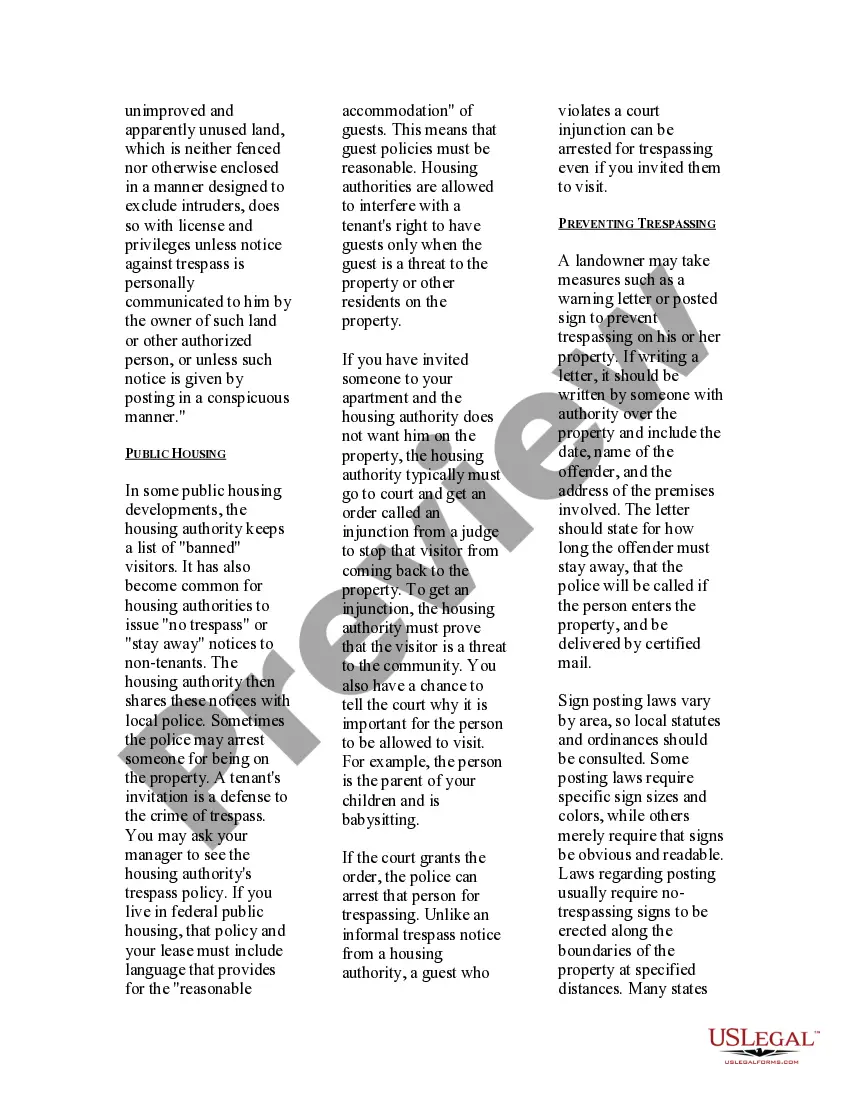
This pamphlet provides an overview of no trespass law. Topics covered include civil and criminal trespass, trespass in public housing, and how to prevent trespassing.
Maine USLegal Pamphlet on No Trespass
State:
Multi-State
Control #:
US-PMPH-23
Format:
Word;
Rich Text
50 downloads
Description
Free preview

Get your form ready online
Our built-in tools help you complete, sign, share, and store your documents in one place.
Built-in online Word editor
Make edits, fill in missing information, and update formatting in US Legal Forms—just like you would in MS Word.
Export easily
Download a copy, print it, send it by email, or mail it via USPS—whatever works best for your next step.
E-sign your document
Sign and collect signatures with our SignNow integration. Send to multiple recipients, set reminders, and more. Go Premium to unlock E-Sign.
Notarize online 24/7
If this form requires notarization, complete it online through a secure video call—no need to meet a notary in person or wait for an appointment.
Store your document securely
We protect your documents and personal data by following strict security and privacy standards.

Make edits, fill in missing information, and update formatting in US Legal Forms—just like you would in MS Word.

Download a copy, print it, send it by email, or mail it via USPS—whatever works best for your next step.

Sign and collect signatures with our SignNow integration. Send to multiple recipients, set reminders, and more. Go Premium to unlock E-Sign.

If this form requires notarization, complete it online through a secure video call—no need to meet a notary in person or wait for an appointment.

We protect your documents and personal data by following strict security and privacy standards.
Looking for another form?
How to fill out USLegal Pamphlet On No Trespass?
Locating the appropriate valid document template can be challenging. Naturally, there are numerous designs accessible online, but how will you find the authentic template you need? Utilize the US Legal Forms website. This service offers thousands of templates, including the Maine USLegal Pamphlet on No Trespass, which you can utilize for business and personal purposes. All of the documents are reviewed by professionals and meet federal and state requirements.
If you are already registered, Log In to your account and click the Download button to obtain the Maine USLegal Pamphlet on No Trespass. Use your account to browse the valid forms you have purchased in the past. Visit the My documents section of your account and download another copy of the documents you need.
If you are a new user of US Legal Forms, here are straightforward instructions for you to follow: First, ensure you have selected the correct template for your city/region. You can review the form using the Preview button and read the form description to confirm it is suitable for you. If the template does not meet your needs, utilize the Search field to find the appropriate form. Once you are confident the form is satisfactory, click the Purchase Now button to acquire the form. Choose the pricing plan you want and enter the necessary details. Create your account and pay for the order using your PayPal account or credit card. Select the download format and retrieve the valid document template to your device. Complete, modify, and print and sign the received Maine USLegal Pamphlet on No Trespass.
- US Legal Forms is the largest repository of valid templates where you can find various document designs.
- Utilize the service to acquire professionally-crafted documents that adhere to state regulations.
- Follow the outlined steps to ensure a smooth document acquisition process.
- Make sure to verify the form's suitability before finalizing your order.
- Access previously purchased forms easily through your account.
- Enjoy the convenience of having a wide selection of legal forms at your fingertips.
Form popularity
FAQ
Trespassing laws in Maine prohibit individuals from entering private property without permission. These laws are designed to protect property owners and their rights. The Maine USLegal Pamphlet on No Trespass provides comprehensive information about these laws, including penalties for violations. Familiarizing yourself with these regulations can help you better navigate property disputes and enhance your legal awareness.
Yes, you can put up no trespassing signs in your yard to protect your property rights. It is advisable to place these signs in visible locations to ensure they are easily seen by anyone approaching your property. The Maine USLegal Pamphlet on No Trespass recommends using clear language and symbols for maximum impact. By doing this, you communicate your expectations and discourage unwanted visitors.
A no trespass order in Maine is a legal mechanism used by property owners to prevent unauthorized access to their land. This order can be communicated verbally or through written notice, often accompanied by no trespassing signs. The Maine USLegal Pamphlet on No Trespass details the nuances of this order, ensuring property owners understand their rights. It is an essential tool for maintaining the privacy and security of your property.
A no trespass order in Maine works by legally prohibiting individuals from entering your property without permission. When issued, the order serves as a formal warning that trespassing is not allowed. The Maine USLegal Pamphlet on No Trespass explains that if someone disregards this order, you have the right to take legal action. Understanding this process is crucial for property owners looking to protect their rights.
In Maine, a no-trespassing order does not have a specific expiration date but remains in effect until you revoke it. You can revoke a no-trespassing order by providing written notice to the trespasser or removing the signs. The Maine USLegal Pamphlet on No Trespass provides further guidance on how to manage these orders. It’s important to document any communications regarding the order for your records.
To post no trespassing signs in Maine, ensure that you place them at regular intervals along your property boundary. The Maine USLegal Pamphlet on No Trespass suggests using clear and visible signs that state your property is private. Additionally, consider using signs that are weather-resistant to maintain visibility over time. This signage helps in communicating your rights and deterring trespassers effectively.
Yes, no trespassing signs can be legally binding in Maine, as long as they meet certain requirements. According to the Maine USLegal Pamphlet on No Trespass, these signs must be clearly visible and placed at strategic locations on your property. This helps inform others that they should not enter without permission. By using the proper signage, you can protect your property rights and reduce the risk of unwanted trespassing.