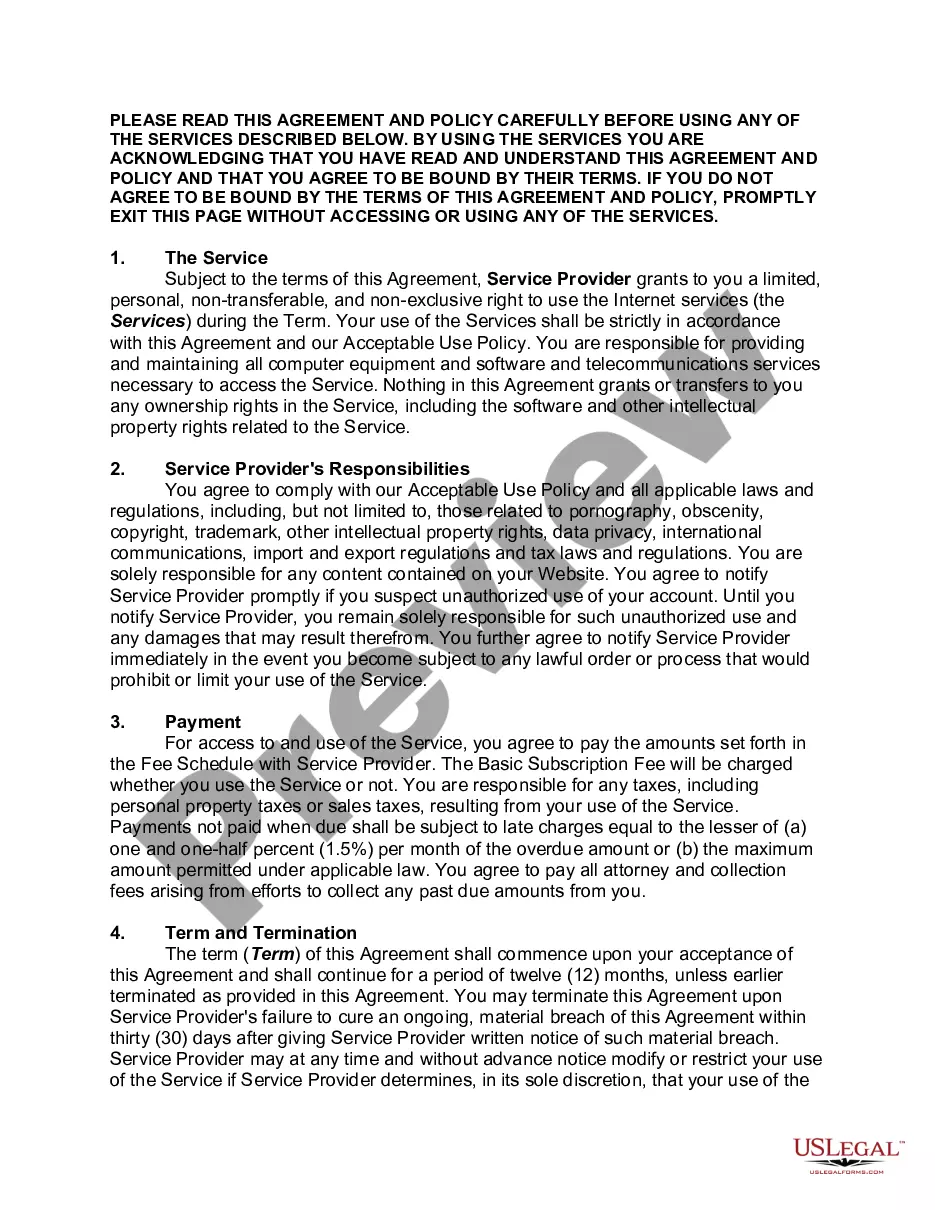
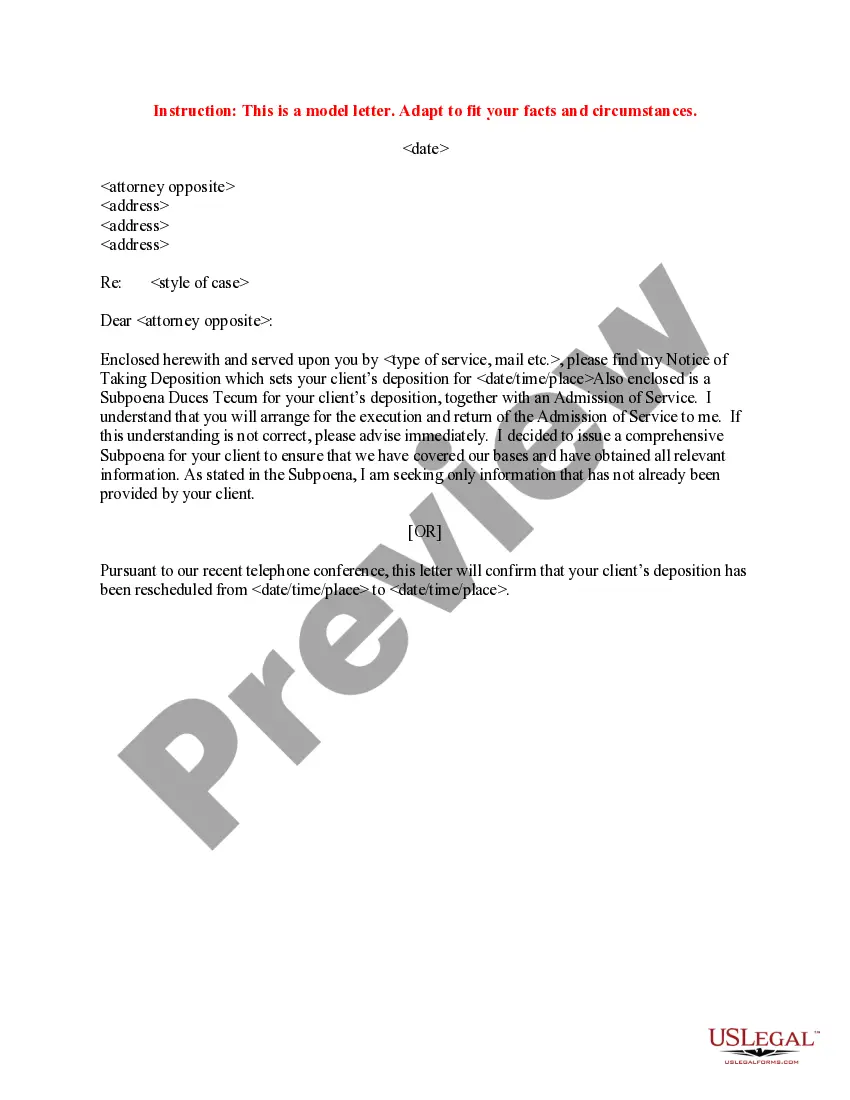
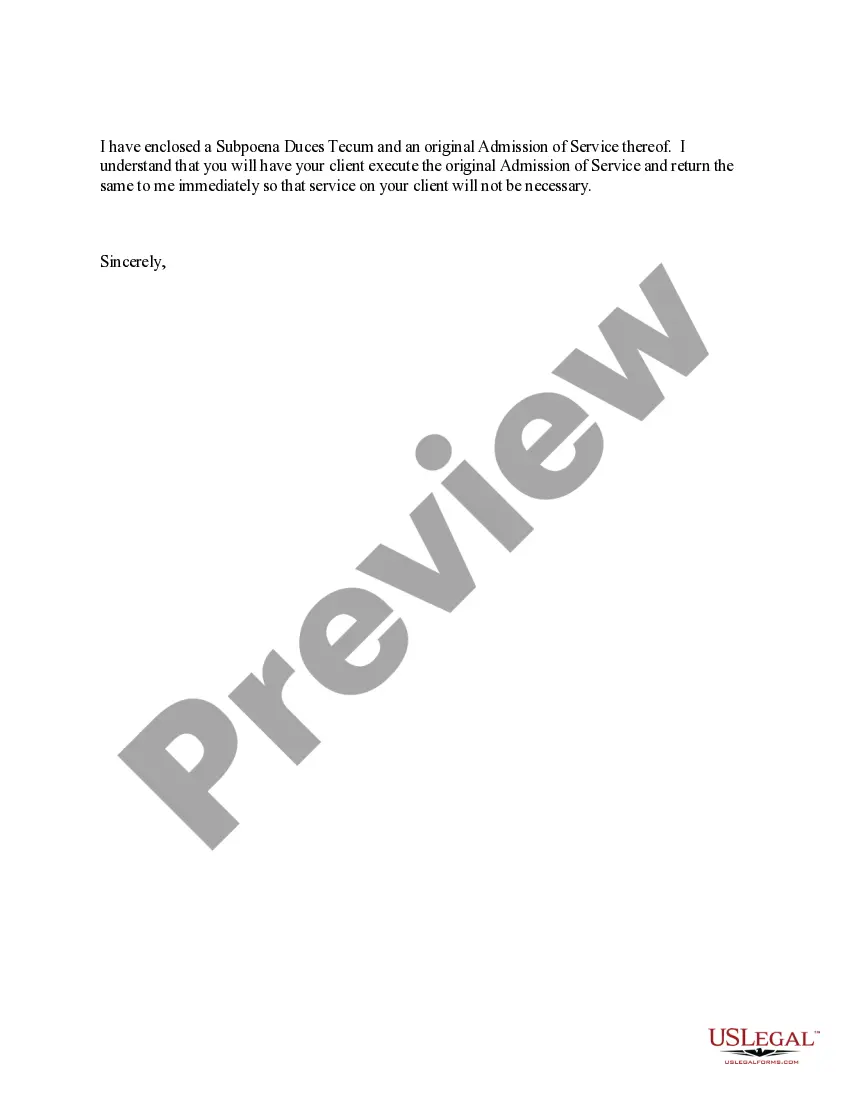
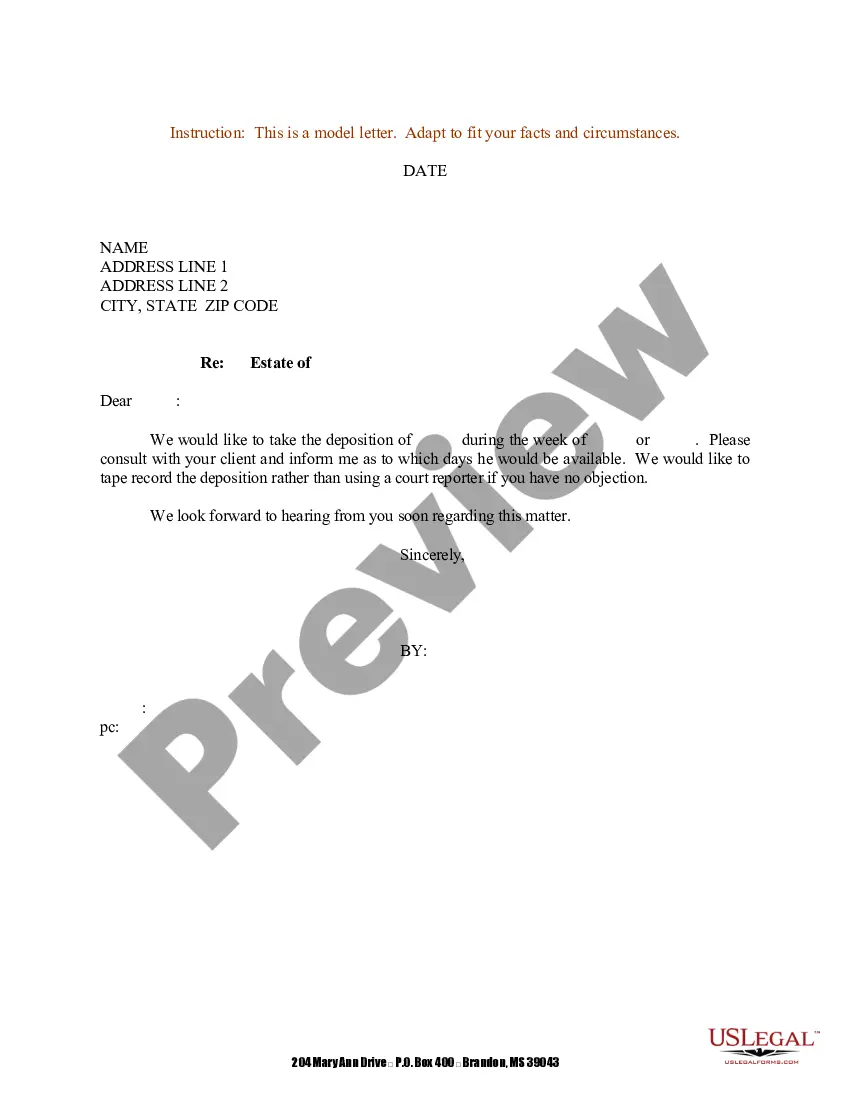
Maine Discovery - Sample Letter to Opposing Counsel regarding Deposition and Subpoena Duces Tecum
Description
Get your form ready online
Our built-in tools help you complete, sign, share, and store your documents in one place.
Make edits, fill in missing information, and update formatting in US Legal Forms—just like you would in MS Word.
Download a copy, print it, send it by email, or mail it via USPS—whatever works best for your next step.
Sign and collect signatures with our SignNow integration. Send to multiple recipients, set reminders, and more. Go Premium to unlock E-Sign.
If this form requires notarization, complete it online through a secure video call—no need to meet a notary in person or wait for an appointment.
We protect your documents and personal data by following strict security and privacy standards.

Make edits, fill in missing information, and update formatting in US Legal Forms—just like you would in MS Word.

Download a copy, print it, send it by email, or mail it via USPS—whatever works best for your next step.

Sign and collect signatures with our SignNow integration. Send to multiple recipients, set reminders, and more. Go Premium to unlock E-Sign.

If this form requires notarization, complete it online through a secure video call—no need to meet a notary in person or wait for an appointment.

We protect your documents and personal data by following strict security and privacy standards.
Looking for another form?



How to fill out Discovery - Sample Letter To Opposing Counsel Regarding Deposition And Subpoena Duces Tecum?
US Legal Forms - among the largest libraries of lawful types in the United States - provides an array of lawful papers layouts you are able to acquire or printing. Making use of the site, you can find a huge number of types for organization and individual uses, categorized by categories, claims, or search phrases.You will find the most recent variations of types like the Maine Discovery - Sample Letter to Opposing Counsel regarding Deposition and Subpoena Duces Tecum in seconds.
If you have a registration, log in and acquire Maine Discovery - Sample Letter to Opposing Counsel regarding Deposition and Subpoena Duces Tecum from the US Legal Forms collection. The Obtain key can look on each type you perspective. You get access to all earlier saved types in the My Forms tab of your respective profile.
If you would like use US Legal Forms the very first time, allow me to share straightforward guidelines to obtain started off:
- Be sure to have picked out the proper type for the metropolis/county. Go through the Preview key to analyze the form`s articles. Browse the type information to ensure that you have selected the correct type.
- If the type doesn`t match your needs, use the Research field towards the top of the display screen to get the one which does.
- Should you be happy with the shape, confirm your option by clicking on the Purchase now key. Then, select the pricing plan you prefer and give your credentials to sign up to have an profile.
- Procedure the financial transaction. Use your credit card or PayPal profile to accomplish the financial transaction.
- Choose the formatting and acquire the shape on your own gadget.
- Make changes. Fill up, edit and printing and signal the saved Maine Discovery - Sample Letter to Opposing Counsel regarding Deposition and Subpoena Duces Tecum.
Every single web template you included with your money does not have an expiration time and is yours eternally. So, if you would like acquire or printing an additional copy, just proceed to the My Forms section and then click about the type you require.
Get access to the Maine Discovery - Sample Letter to Opposing Counsel regarding Deposition and Subpoena Duces Tecum with US Legal Forms, by far the most substantial collection of lawful papers layouts. Use a huge number of specialist and status-specific layouts that fulfill your organization or individual demands and needs.
Form popularity
FAQ
Rule 37 - Failure to Make Disclosures or to Cooperate in Discovery; Sanctions (a)Motion for an Order Compelling Disclosure or Discovery. (1)In General. On notice to other parties and all affected persons, a party may move for an order compelling disclosure or discovery.
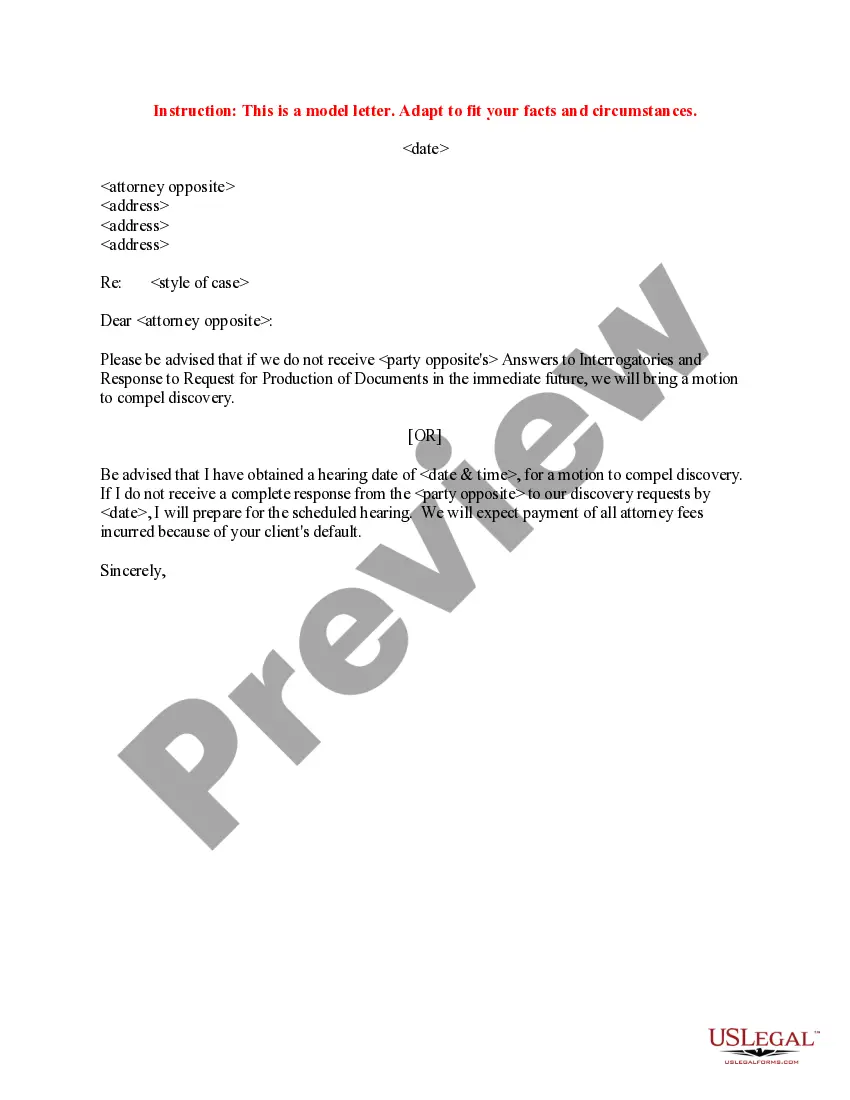
This letter is often called a good faith letter. And it is needed under many courts' rules before you can file a motion to compel discovery if the other party ignores your requests or provides evasive responses or move for sanctions if your opponent refuses to comply with the court's discovery order.
If the court where the discovery is taken orders a deponent to be sworn or to answer a question and the deponent fails to obey, the failure may be treated as contempt of court.
Rule 37 authorizes the court to direct that parties or attorneys who fail to participate in good faith in the discovery process pay the expenses, including attorney's fees, incurred by other parties as a result of that failure.
This notice is also referred to as a Duces Tecum in some jurisdictions. Whatever the nomenclature, the notice requests pertinent documents that allow the opposing lawyer to follow up on questions with the produced documents. It is a very valuable pleading in many civil litigation cases.
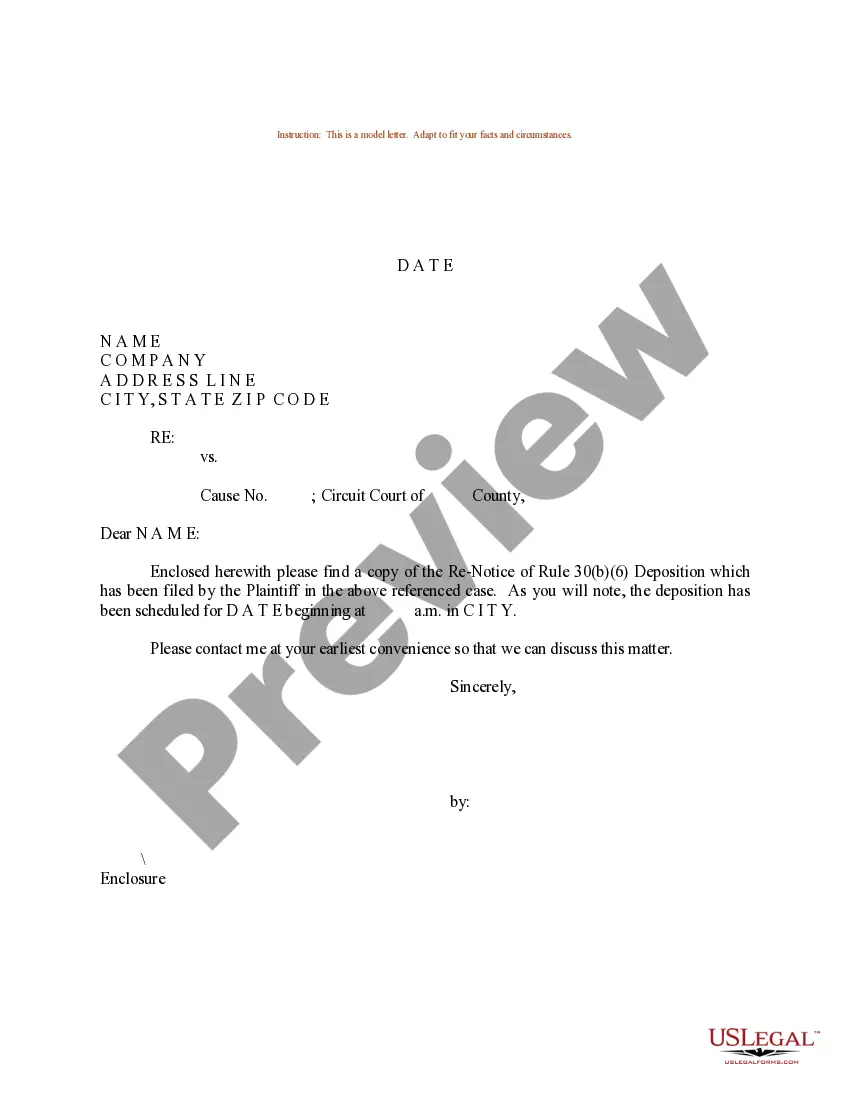
Dear [Opposing Counsel Name], I am writing to follow up on our recent communication regarding [case name]. I have not yet received a response from you regarding [list the specific issue or question]. Please let me know your thoughts as soon as possible so that we can continue to move forward with the case.
Rule 37-Failure to Make or Cooperate in Discovery: Sanctions. (a) Motion for Order Compelling Disclosure or Discovery. A party, upon reasonable notice to other parties and all persons affected thereby, may apply for an order compelling disclosure or discovery as follows: (1) Appropriate Court.