Maine Temporary Residential Lease - Occupation by Seller - Post-Closing
Description
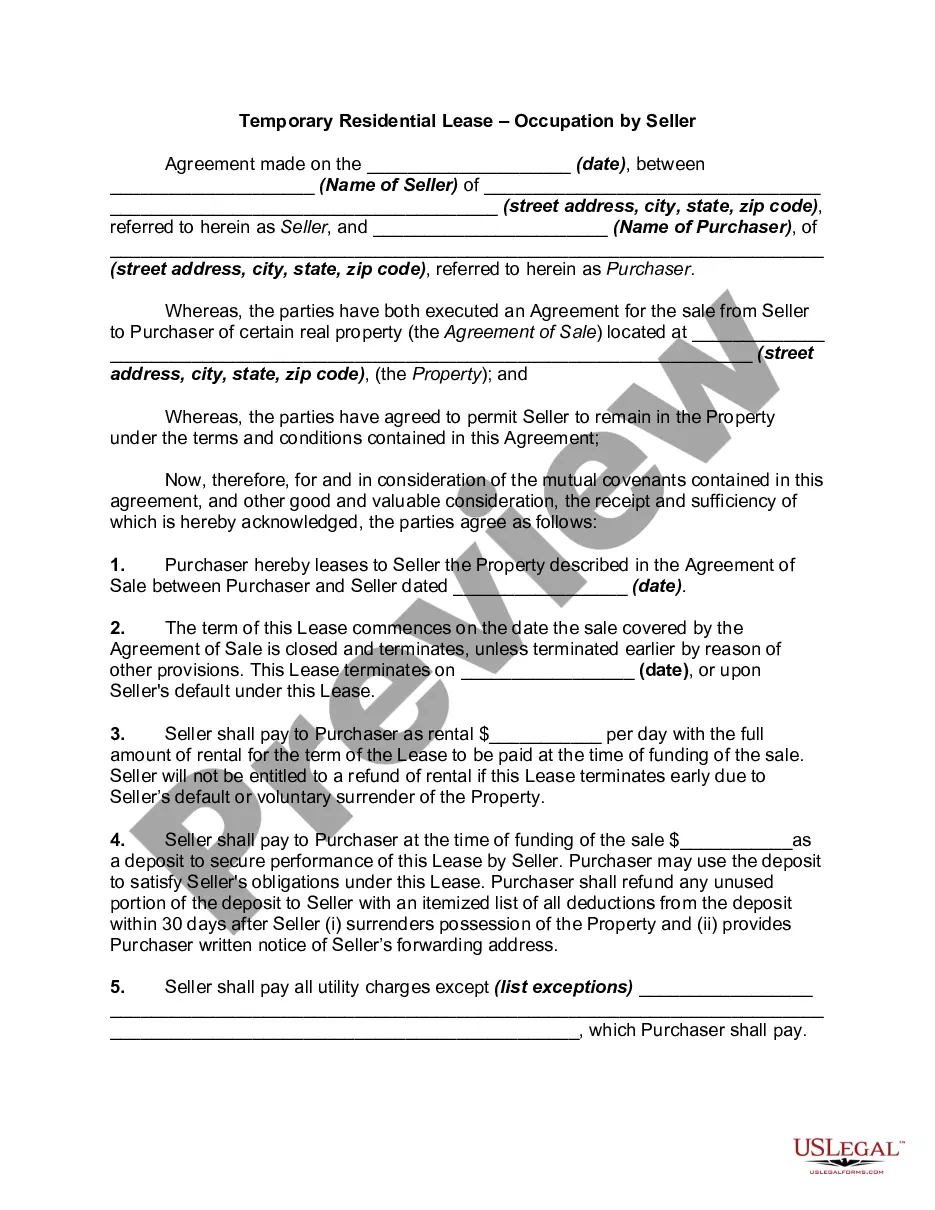
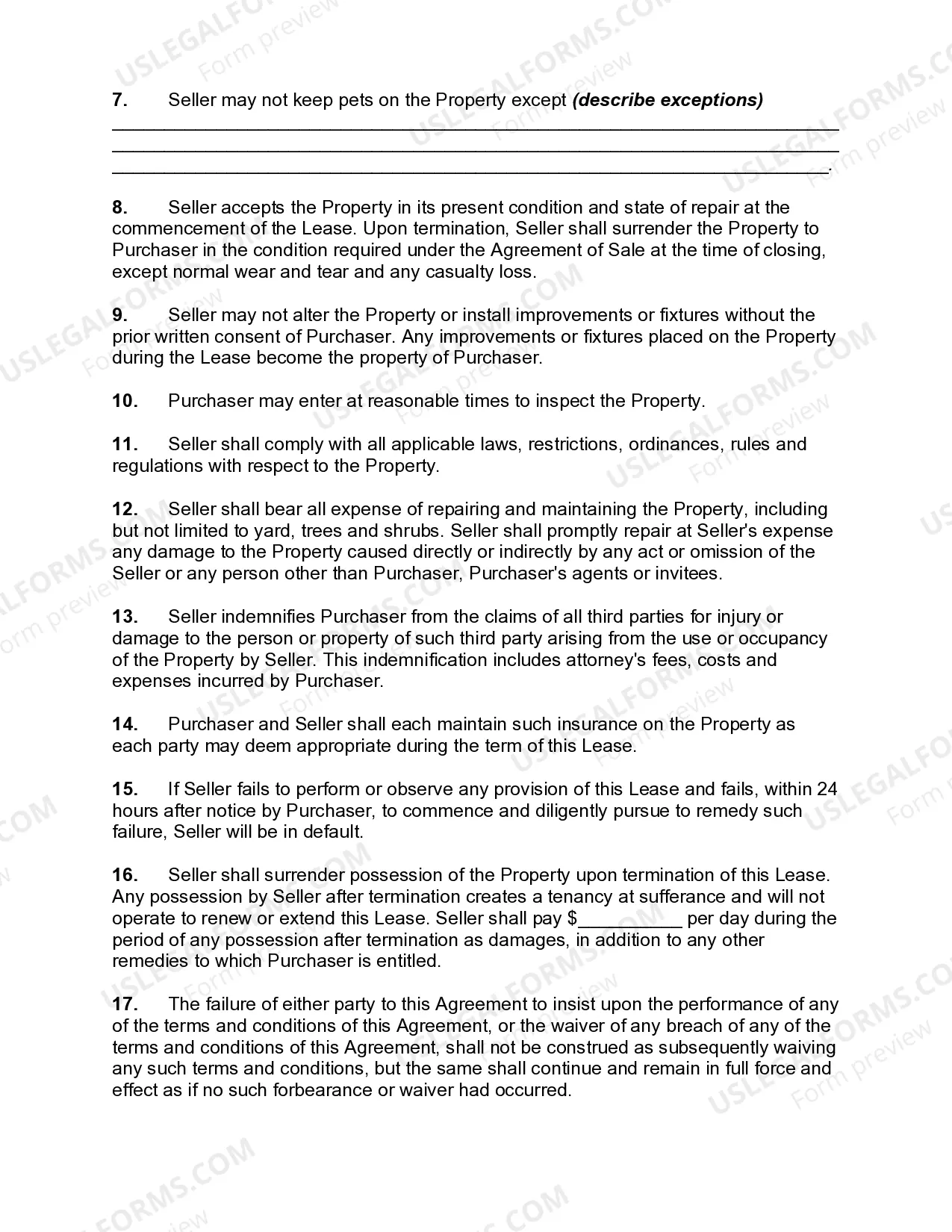
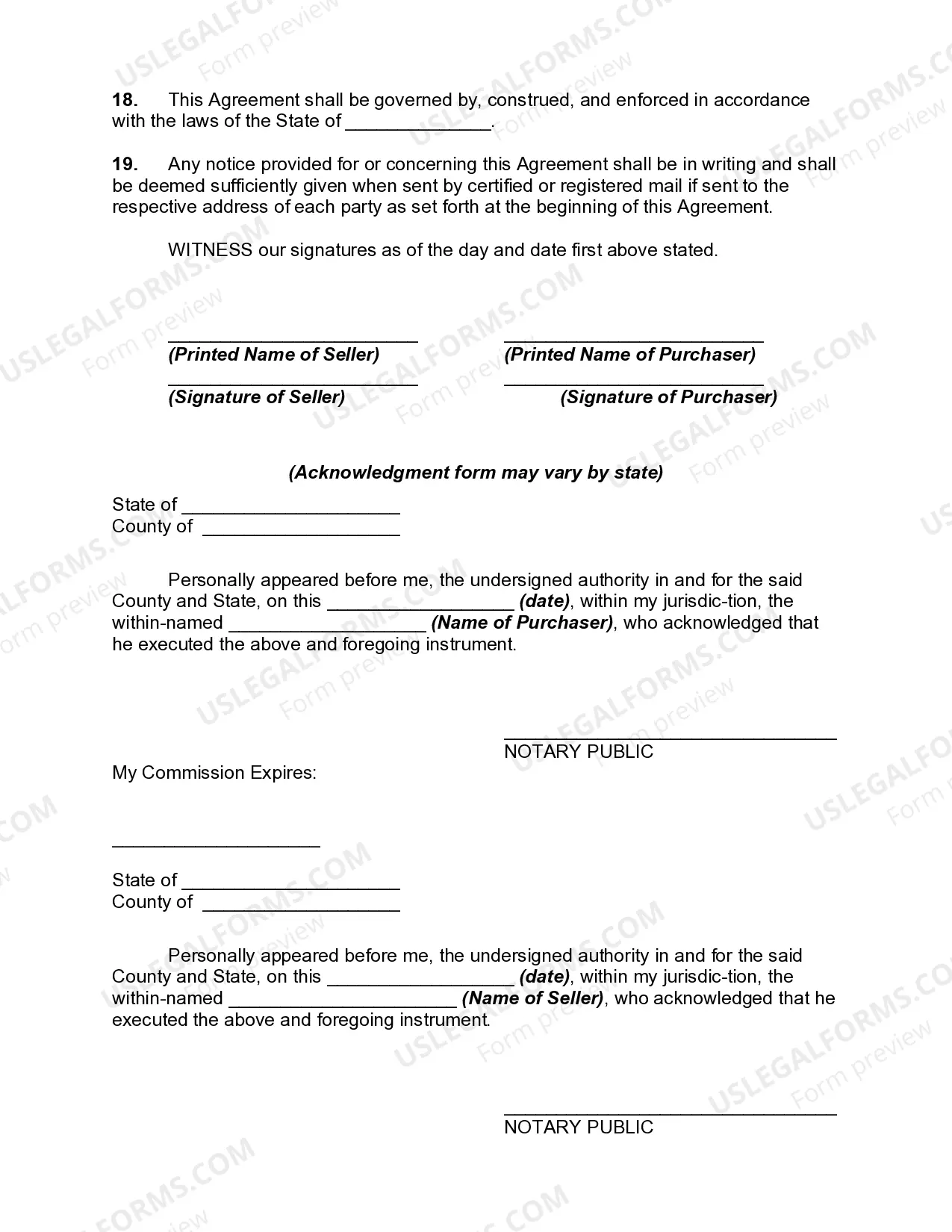

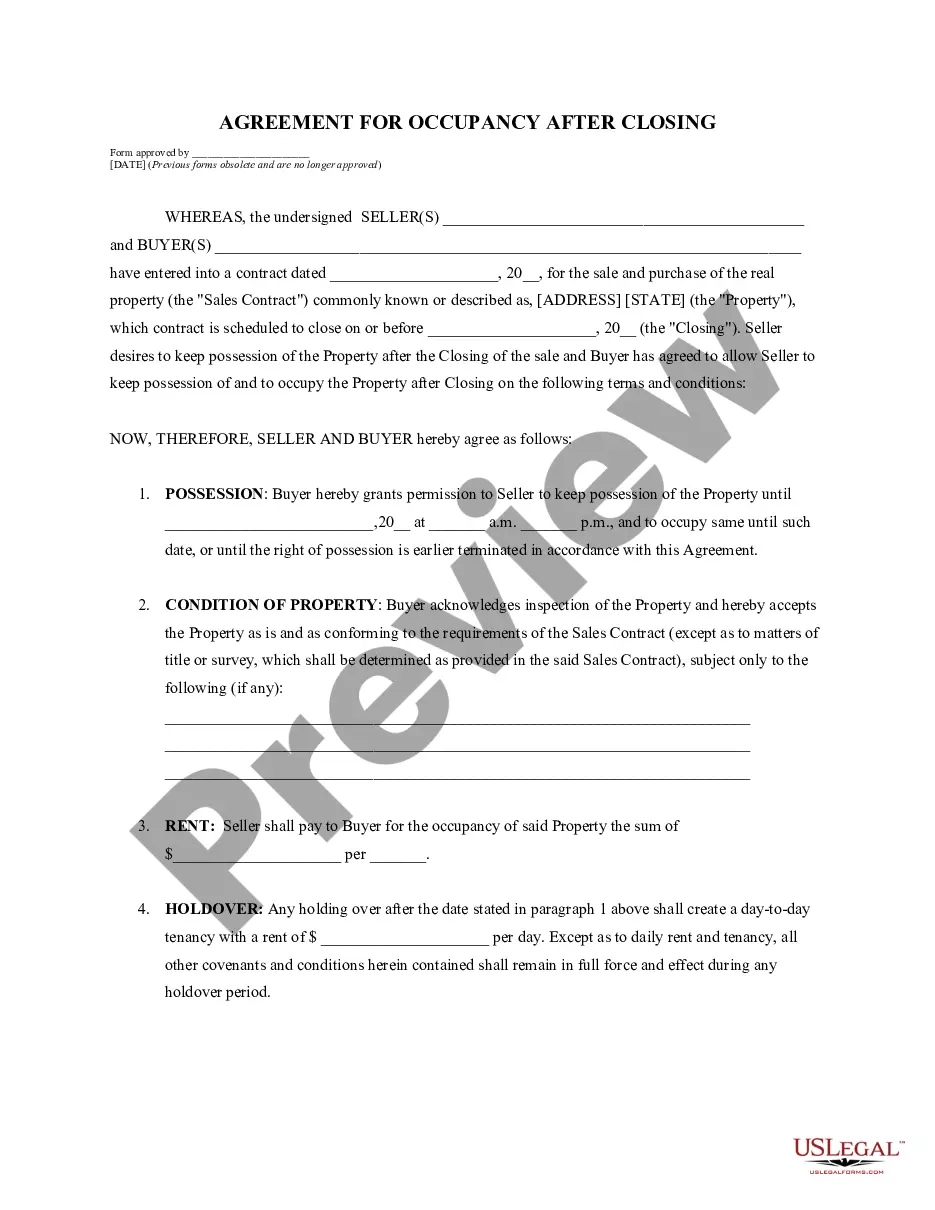
How to fill out Temporary Residential Lease - Occupation By Seller - Post-Closing?
It is feasible to spend hours online searching for the legal document template that satisfies the federal and state requirements you desire.
US Legal Forms offers a vast selection of legal forms that are reviewed by professionals.
It is easy to obtain or print the Maine Temporary Residential Lease - Occupation by Seller - Post-Closing from our services.
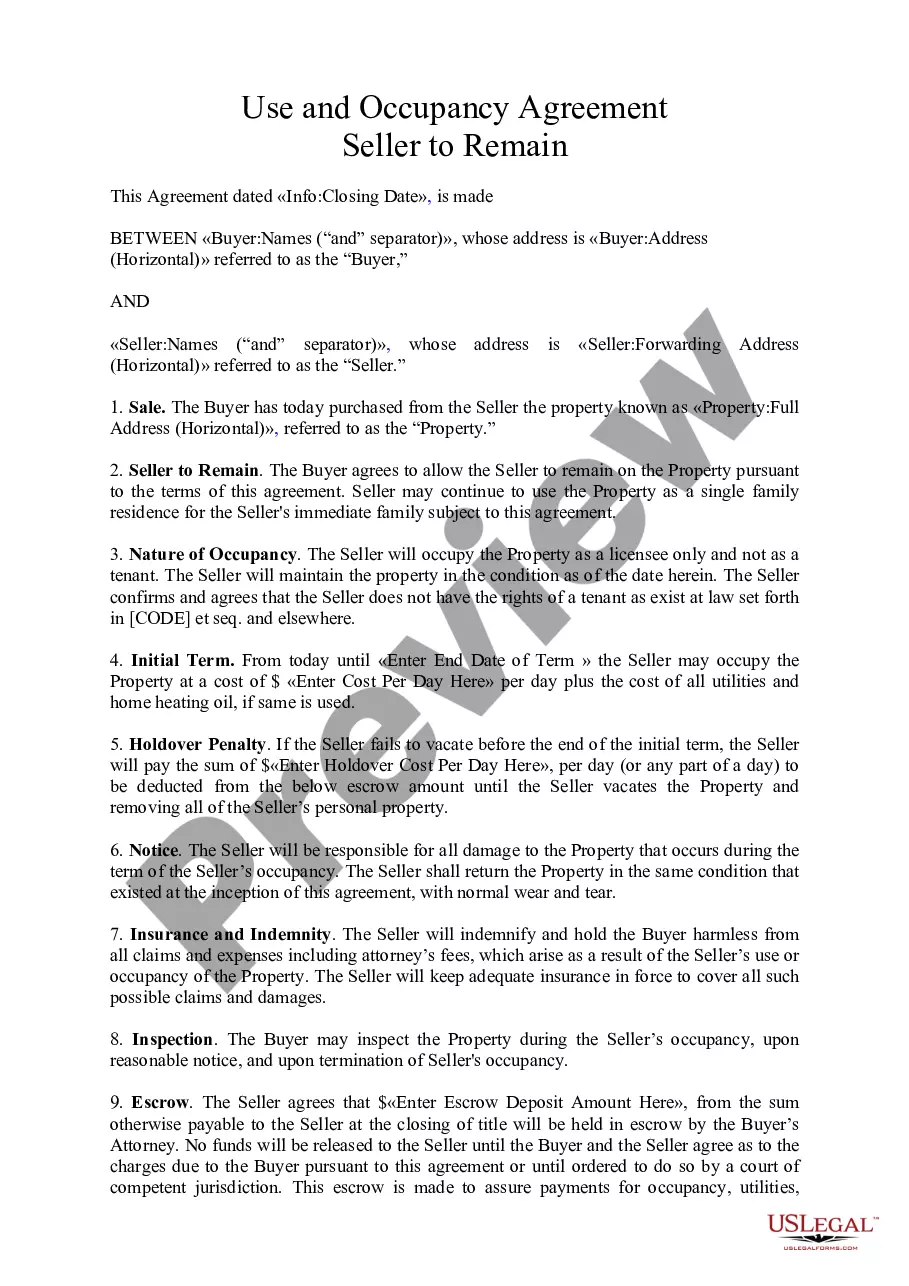
If available, use the Preview button to check the document template as well.
- If you already have a US Legal Forms account, you can Log In and then click the Download button.
- After that, you can complete, edit, print, or sign the Maine Temporary Residential Lease - Occupation by Seller - Post-Closing.
- Each legal document template you purchase is yours permanently.
- To get another copy of the purchased form, go to the My documents tab and click the relevant button.
- If you are using the US Legal Forms website for the first time, follow the simple instructions listed below.
- First, ensure that you have selected the correct document template for your state/area of choice.
- Review the form description to confirm you have chosen the right form.
Form popularity
FAQ
Post-closing occupancy refers to when the seller remains in the property after the closing date, under a lease agreement. In the context of Maine Temporary Residential Lease - Occupation by Seller - Post-Closing, this arrangement benefits the seller by providing additional time for relocation and allows the buyer to take ownership while keeping the seller as a temporary tenant. Understanding this term is essential for both parties to ensure they are on the same page regarding occupancy terms.
Post occupancy refers to the period during which a seller retains possession of a property after the sale is finalized. In the context of the Maine Temporary Residential Lease - Occupation by Seller - Post-Closing, it allows sellers to remain in their home while making arrangements for moving. This arrangement can provide sellers with flexibility and buyers with peace of mind, as both parties establish clear terms for the occupancy period.
The post-closing adjustment clause is a provision in the Maine Temporary Residential Lease - Occupation by Seller - Post-Closing that outlines how utilities and property expenses will be handled after the sale. This clause ensures clarity on financial responsibilities, making it easier for the buyer and seller to agree on payment and occupancy terms. By including this clause, both parties can avoid disputes about costs and ensure a smoother transition in ownership.
Maine Temporary Residential Lease - Occupation by Seller - Post-Closing presents certain risks, including potential disputes over property damage or maintenance responsibilities. If the seller remains in possession after closing, it may lead to confusion regarding the terms of occupancy. Additionally, if the seller does not vacate as agreed, it can complicate the buyer's ownership and increase legal costs. Understanding these risks is crucial when negotiating the lease agreement.
Yes, it is possible to move into a house before closing with a Maine Temporary Residential Lease - Occupation by Seller - Post-Closing. This lease allows you to take possession prior to the final transaction and provides a framework for ensuring both parties understand their obligations. Utilizing a professional service like uslegalforms can help you create a solid agreement that protects your interests.
In Maine, a new owner typically has to honor existing leases unless agreed otherwise. This aspect emphasizes the importance of documenting any agreements, such as a Maine Temporary Residential Lease - Occupation by Seller - Post-Closing. This document not only protects your rights as a seller but also informs the buyer of their responsibilities as a new owner.
Allowing buyers to take possession before closing without a documented agreement is risky. You might face issues like property damage, or unintentional liability. A Maine Temporary Residential Lease - Occupation by Seller - Post-Closing addresses these concerns and protects your interests during the interim period. Always prioritize a written agreement to clarify expectations.
Taking possession of a house before closing is possible with a Maine Temporary Residential Lease - Occupation by Seller - Post-Closing. This legal document allows you to occupy the home while formalizing the transaction. It's important to discuss this option with your real estate agent and to ensure all parties are aware of their rights and responsibilities during occupancy.
In general, occupying a home before closing is not standard practice, but it can be arranged using a Maine Temporary Residential Lease - Occupation by Seller - Post-Closing. This type of agreement allows you to move in prior to the official closing date while ensuring that both parties comply with legal obligations. It's crucial to have a written arrangement to clarify responsibilities and protect your interests during this transitional period.
Seller occupancy after closing refers to the arrangement that allows the seller to continue living in the property despite the sale's completion. This is governed by the terms established in the Maine Temporary Residential Lease - Occupation by Seller - Post-Closing, which details how long the seller may remain in the home. Understanding these provisions is essential for ensuring a smooth transition for all parties involved. Clarifying expectations early can prevent misunderstandings down the road.