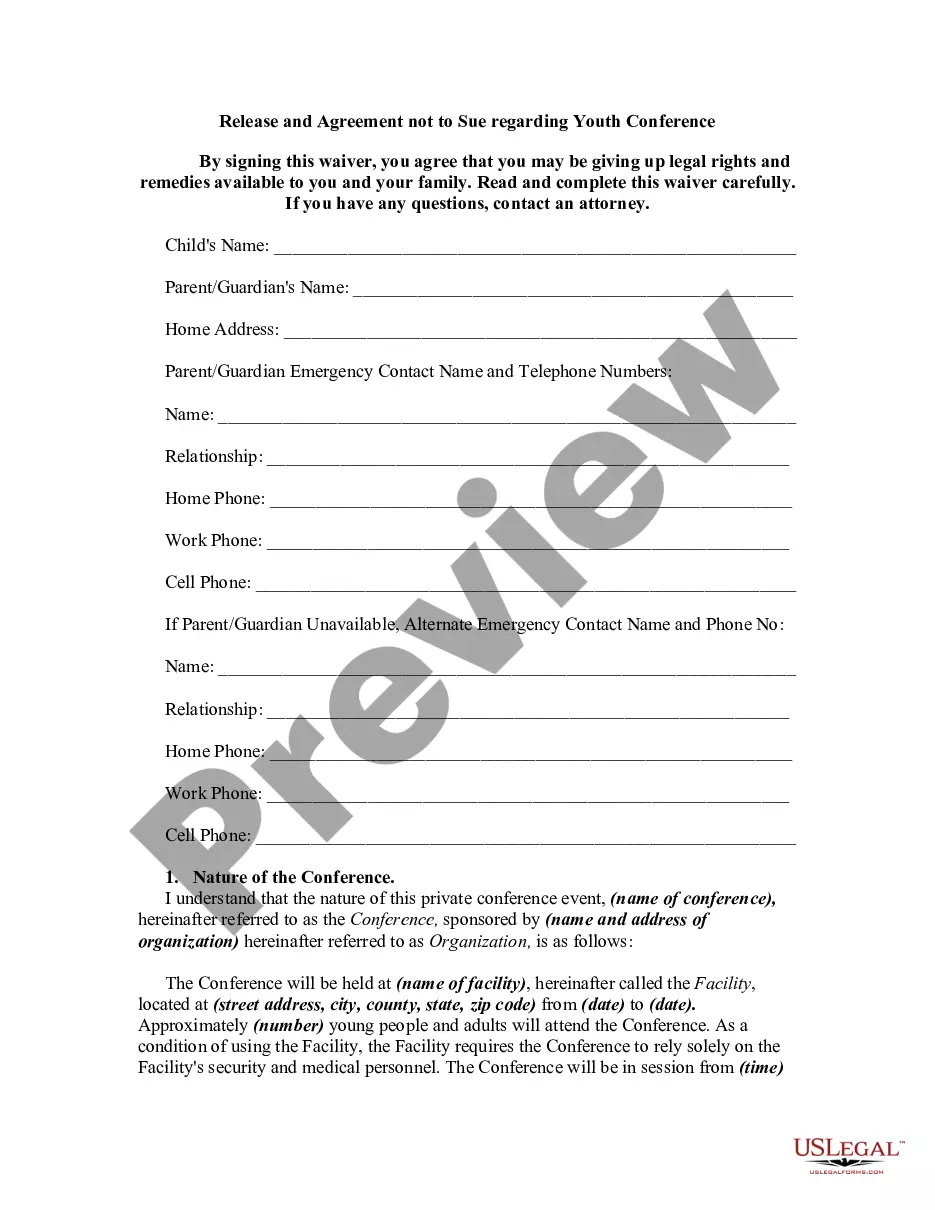
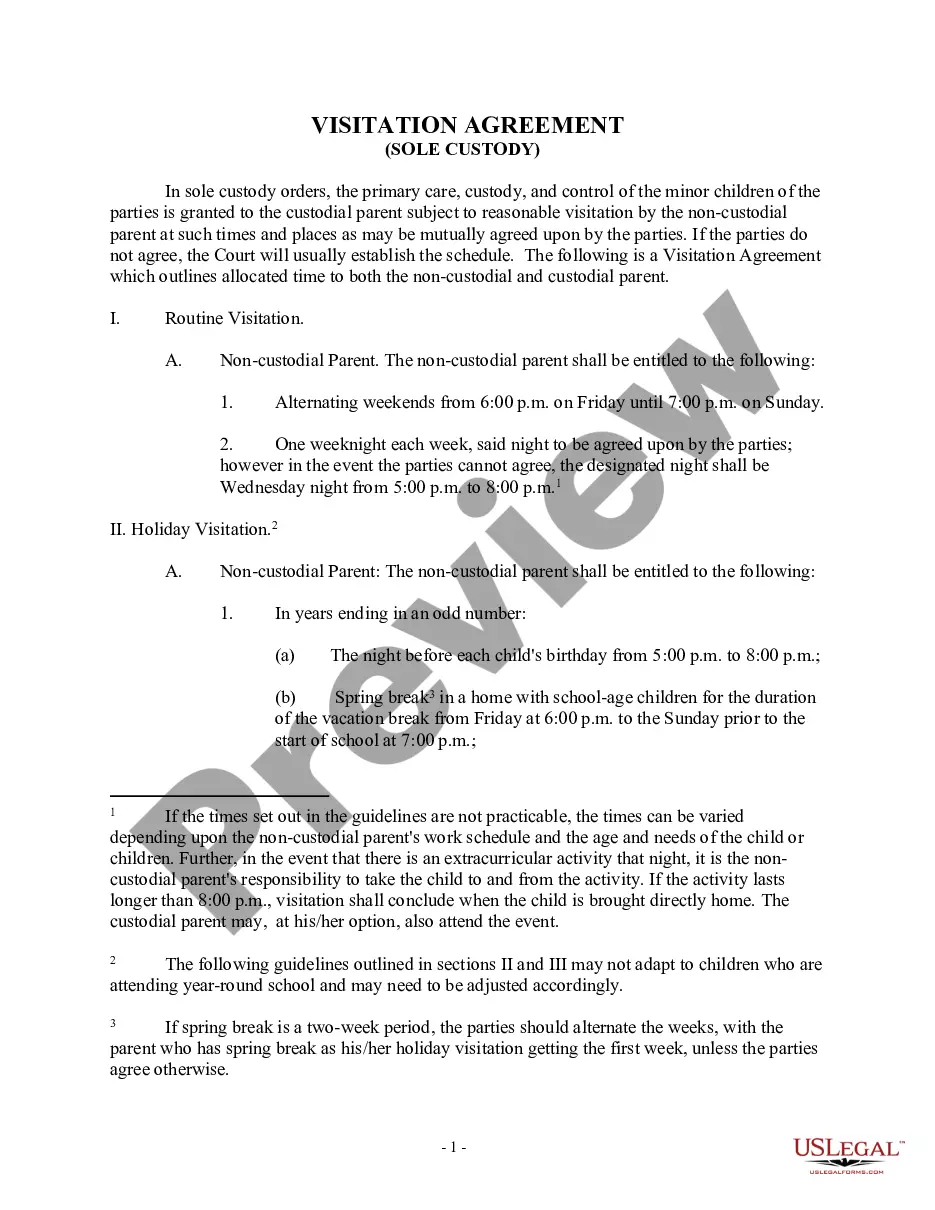
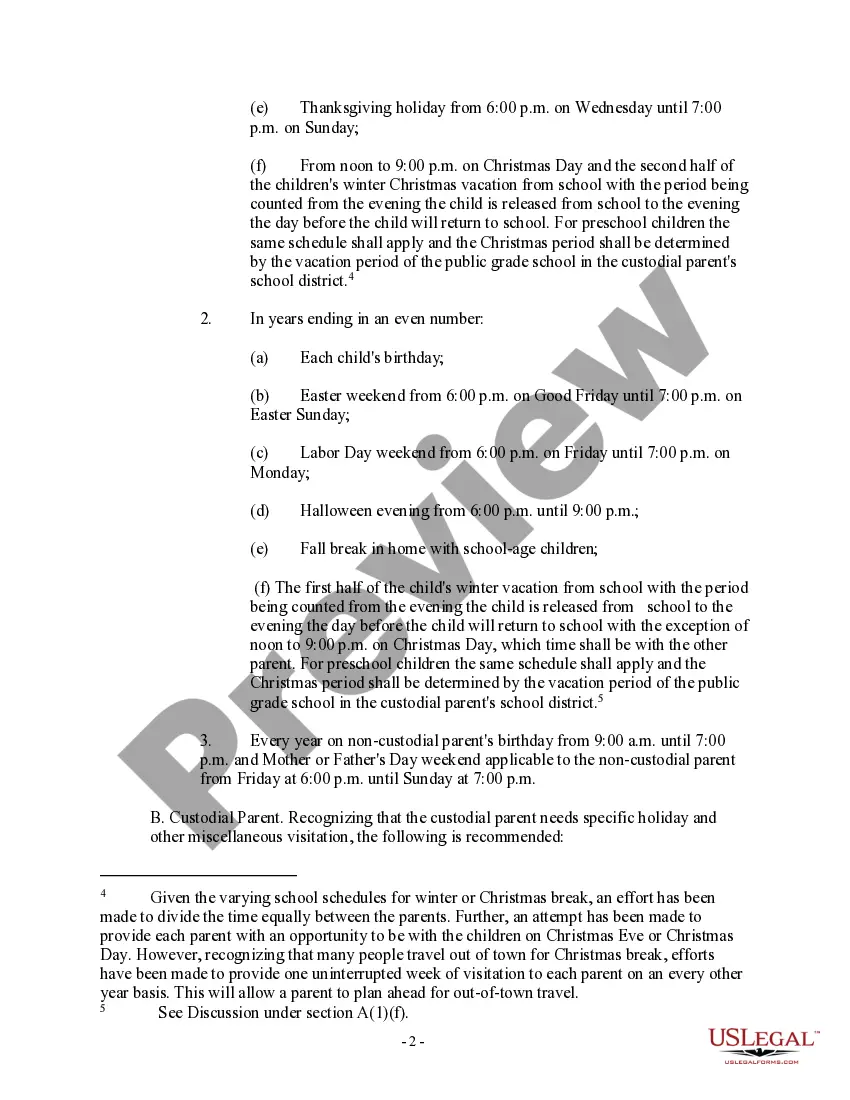
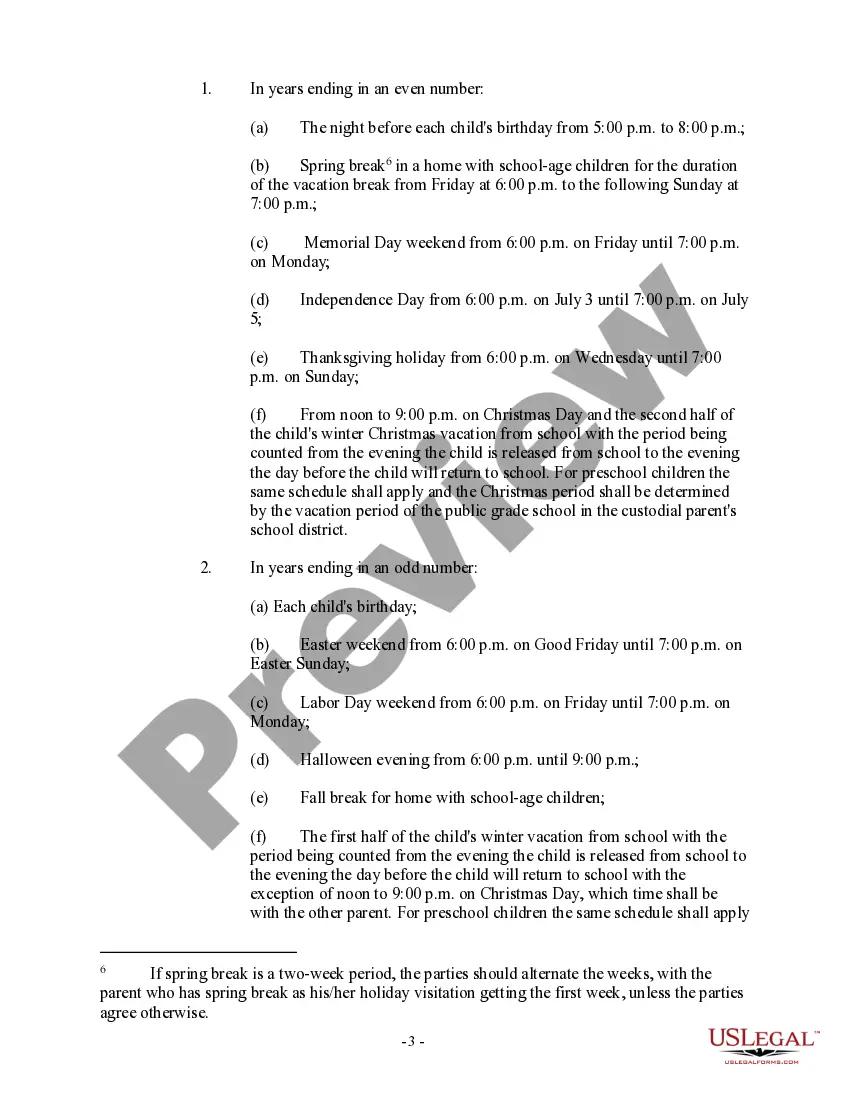
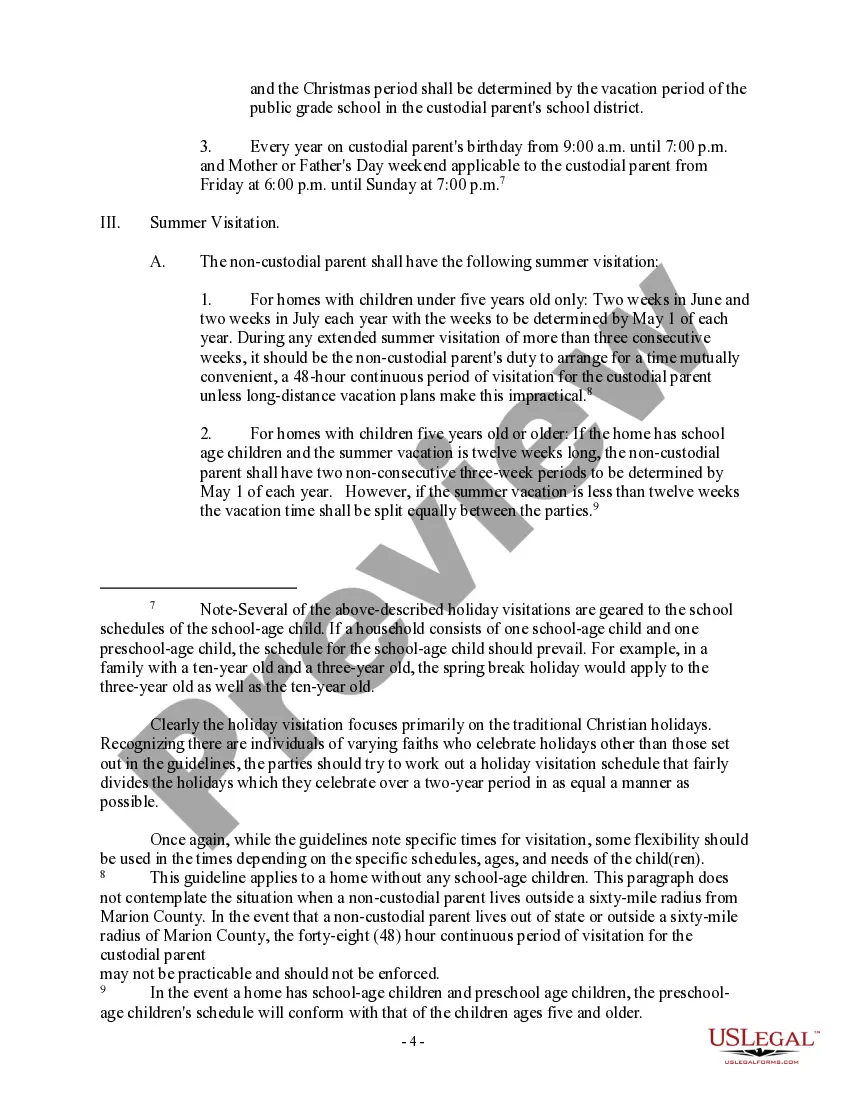
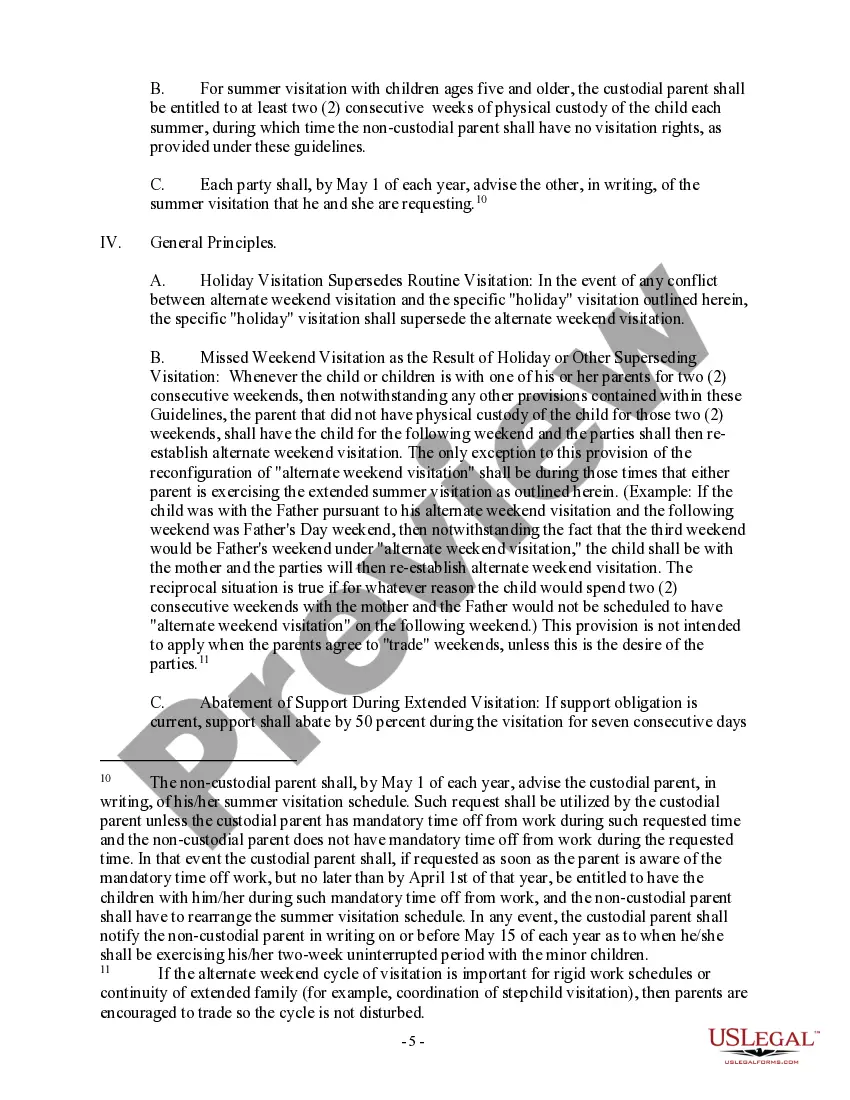
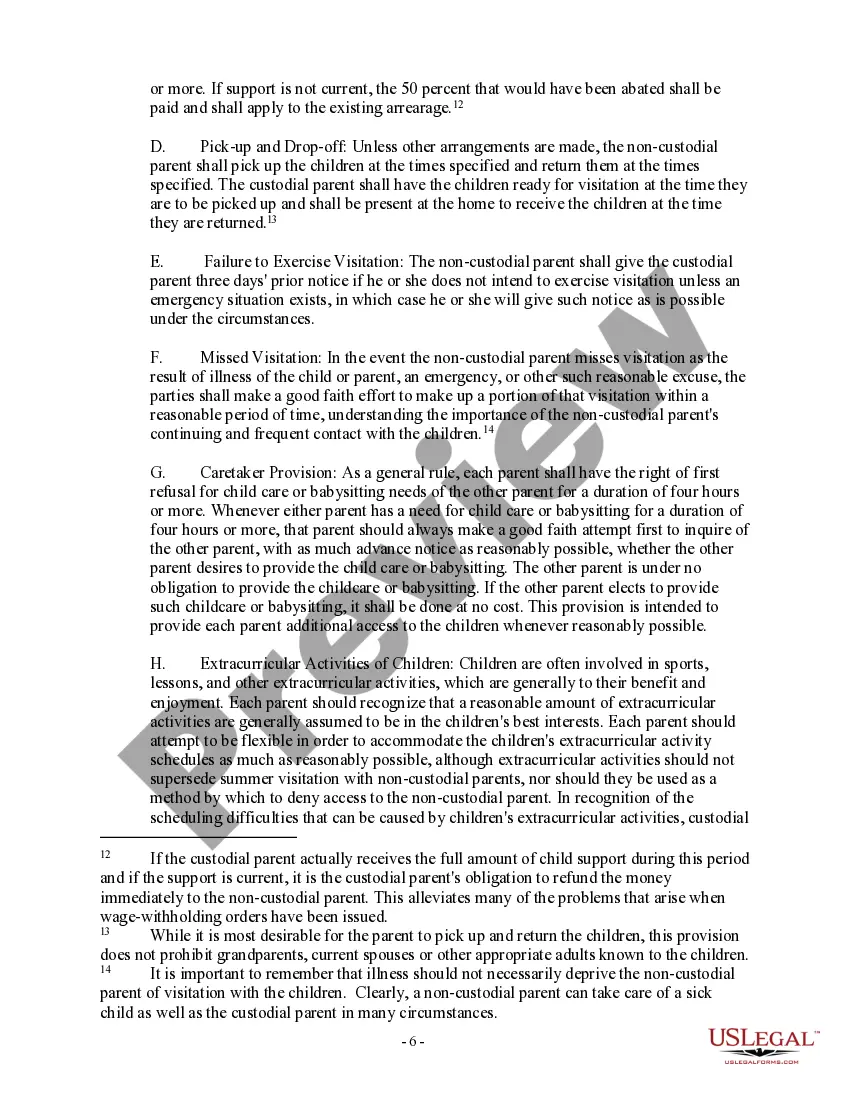
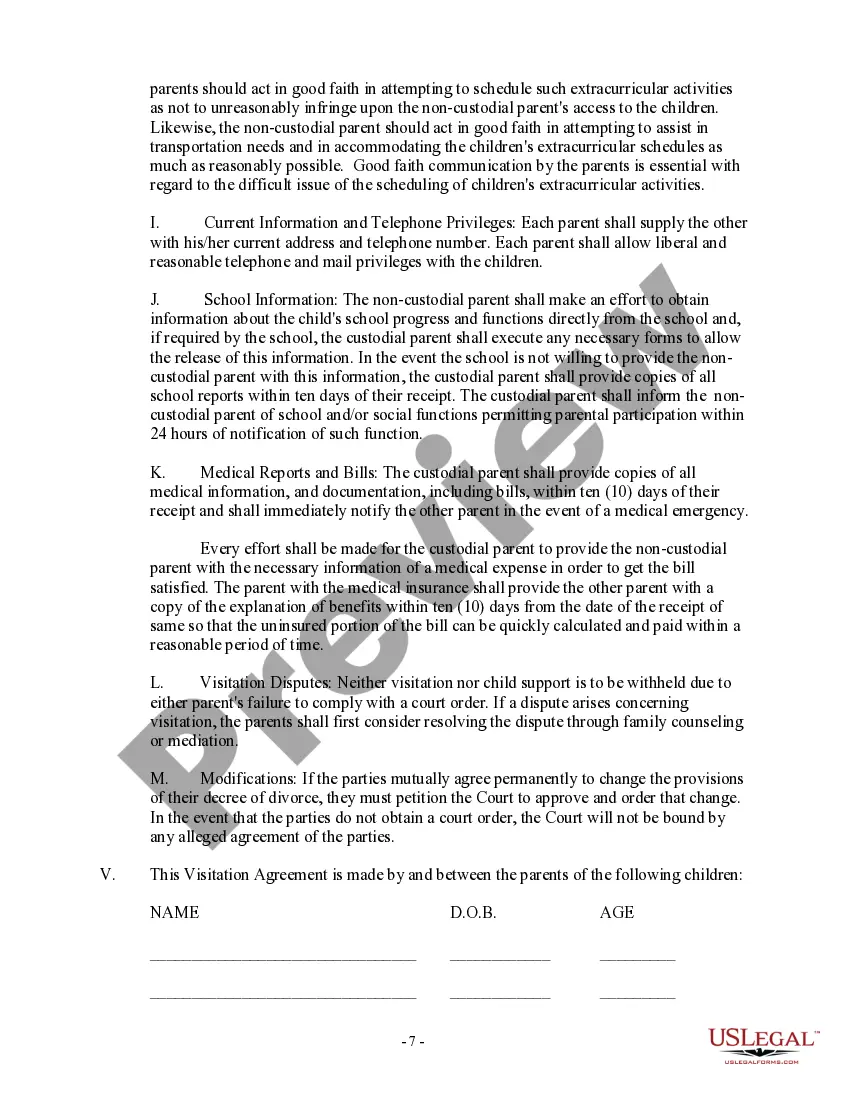
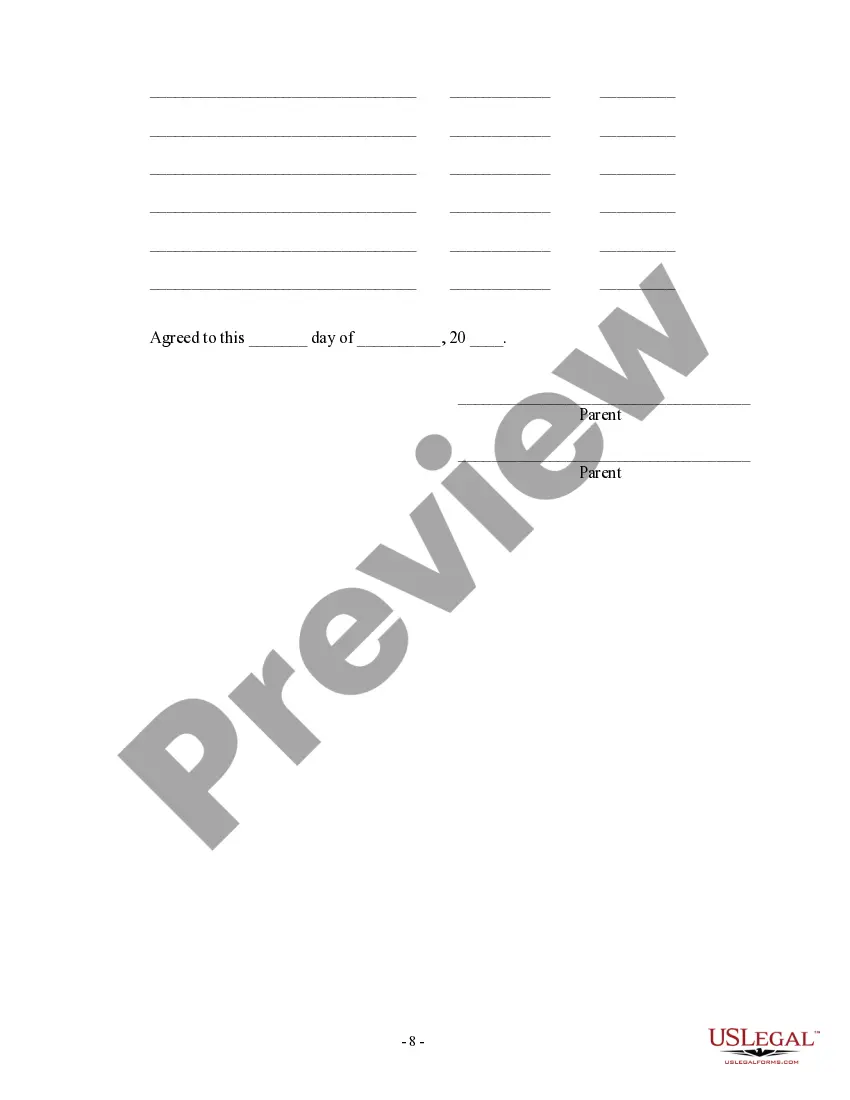
This form is a Visitation Agreement. The form provides a schedule which allots time for visitation to the non-custodial parent of minor children.
Maine Visitation Guidelines
Category:
State:
Multi-State
Control #:
US-02537
Format:
Word;
Rich Text
Instant download
Description
Free preview
Get your form ready online
Our built-in tools help you complete, sign, share, and store your documents in one place.
Built-in online Word editor
Make edits, fill in missing information, and update formatting in US Legal Forms—just like you would in MS Word.
Export easily
Download a copy, print it, send it by email, or mail it via USPS—whatever works best for your next step.
E-sign your document
Sign and collect signatures with our SignNow integration. Send to multiple recipients, set reminders, and more. Go Premium to unlock E-Sign.
Notarize online 24/7
If this form requires notarization, complete it online through a secure video call—no need to meet a notary in person or wait for an appointment.
Store your document securely
We protect your documents and personal data by following strict security and privacy standards.

Make edits, fill in missing information, and update formatting in US Legal Forms—just like you would in MS Word.

Download a copy, print it, send it by email, or mail it via USPS—whatever works best for your next step.

Sign and collect signatures with our SignNow integration. Send to multiple recipients, set reminders, and more. Go Premium to unlock E-Sign.

If this form requires notarization, complete it online through a secure video call—no need to meet a notary in person or wait for an appointment.

We protect your documents and personal data by following strict security and privacy standards.
Looking for another form?
How to fill out Visitation Guidelines?
You may spend hrs online attempting to find the legitimate file format that fits the federal and state demands you will need. US Legal Forms offers 1000s of legitimate kinds which are reviewed by experts. You can easily obtain or produce the Maine Visitation Guidelines from the service.
If you already have a US Legal Forms profile, you can log in and click on the Download key. Next, you can complete, edit, produce, or indicator the Maine Visitation Guidelines. Every single legitimate file format you acquire is the one you have for a long time. To obtain yet another version associated with a purchased kind, go to the My Forms tab and click on the corresponding key.
If you use the US Legal Forms web site the very first time, keep to the straightforward guidelines under:
- Very first, make sure that you have chosen the proper file format to the state/area of your choice. Read the kind description to make sure you have selected the proper kind. If offered, utilize the Preview key to appear through the file format as well.
- If you wish to find yet another variation from the kind, utilize the Search industry to discover the format that fits your needs and demands.
- Once you have located the format you would like, click Purchase now to proceed.
- Pick the pricing prepare you would like, key in your references, and sign up for an account on US Legal Forms.
- Total the transaction. You may use your credit card or PayPal profile to pay for the legitimate kind.
- Pick the file format from the file and obtain it to your device.
- Make adjustments to your file if necessary. You may complete, edit and indicator and produce Maine Visitation Guidelines.
Download and produce 1000s of file web templates utilizing the US Legal Forms site, that provides the greatest selection of legitimate kinds. Use specialist and express-certain web templates to tackle your company or individual demands.
Form popularity
FAQ
If a child doesn't want to live with a parent, it might be a safety issue. If your child is old enough, ask what is happening there that makes him or her not want to go. For small children, ask them to draw a picture of life at Daddy's house. A professional counselor and lawyers might need to be involved.
There are different kinds of visitation rights including the following types: Supervised Visitation. If a parent poses a potential risk to a child, that parent may be awarded only supervised visitation. ... Unsupervised Visitation. Unsupervised visitation provides much more flexibility. ... Virtual Visitation.
The first thing you should do when a child refuses visitation is to notify the other parent as soon as possible. Let them know what's happening, and explain the situation as clearly as possible. Some custody orders include preferred communication methods, and you should notify them via that method when possible.
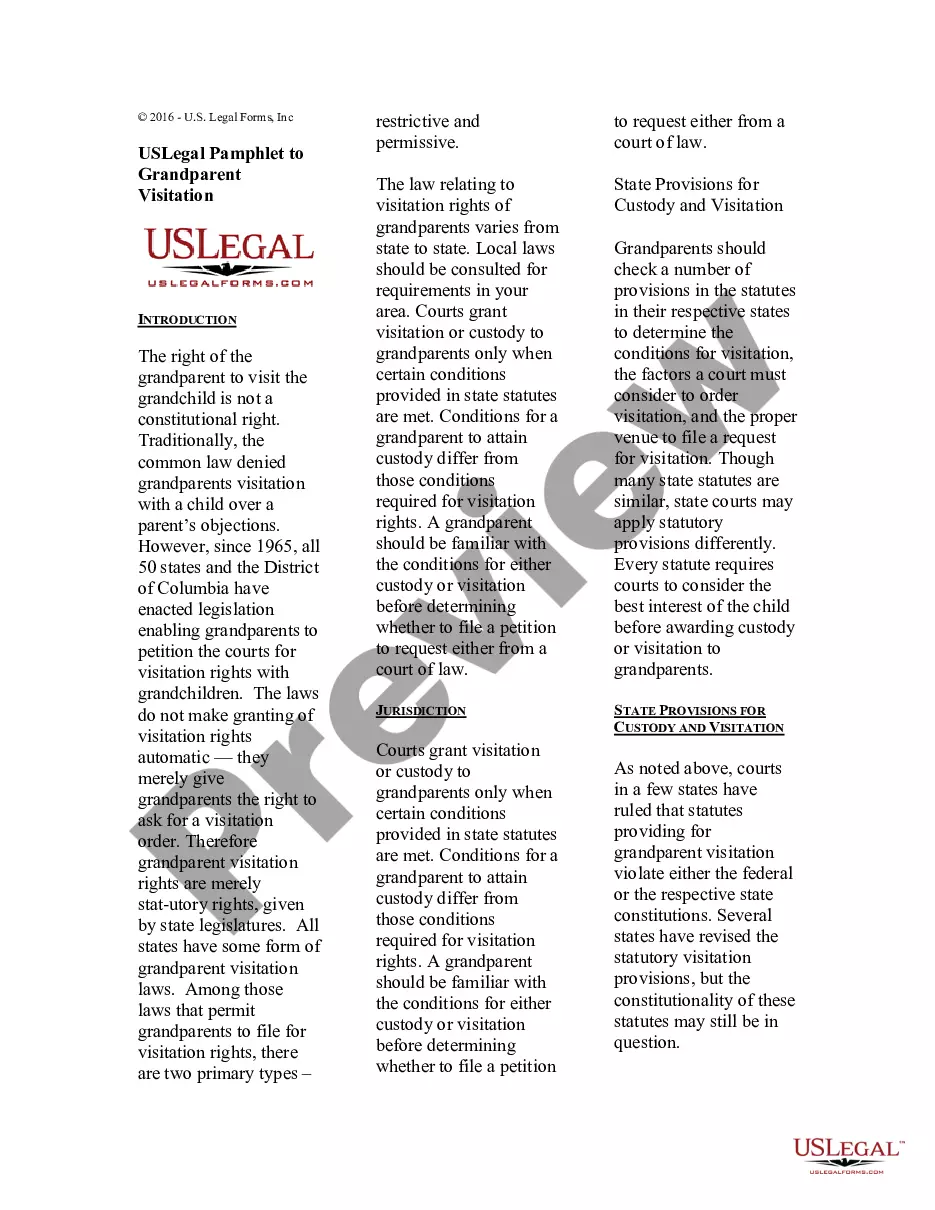
A grandparent has "standing," i.e., the right to file and be heard in a case for reasonable rights of visitation if: There is a sufficient existing relationship between the grandparent and the grandchild; The absence of contact between the grandparent and child will substantially and negatively affect the child; or.
Maine judges must consider the child's custodial preference whenever the child is old enough to have a meaningful opinion. There is no set age when the court will consider the child's opinion; the judge decides whether the child is "old enough" on a case-by-case basis.
Maine law does not specify a specific age at which a child can decide where he or she will live. If the child is old enough to have a meaningful preference, the court can take their input into consideration.
The parent has acted toward a child in a manner that is heinous or abhorrent to society or has failed to protect a child in a manner that is heinous or abhorrent to society, without regard to the intent of the parent; [PL 1995, c. 481, §3 (AMD).]