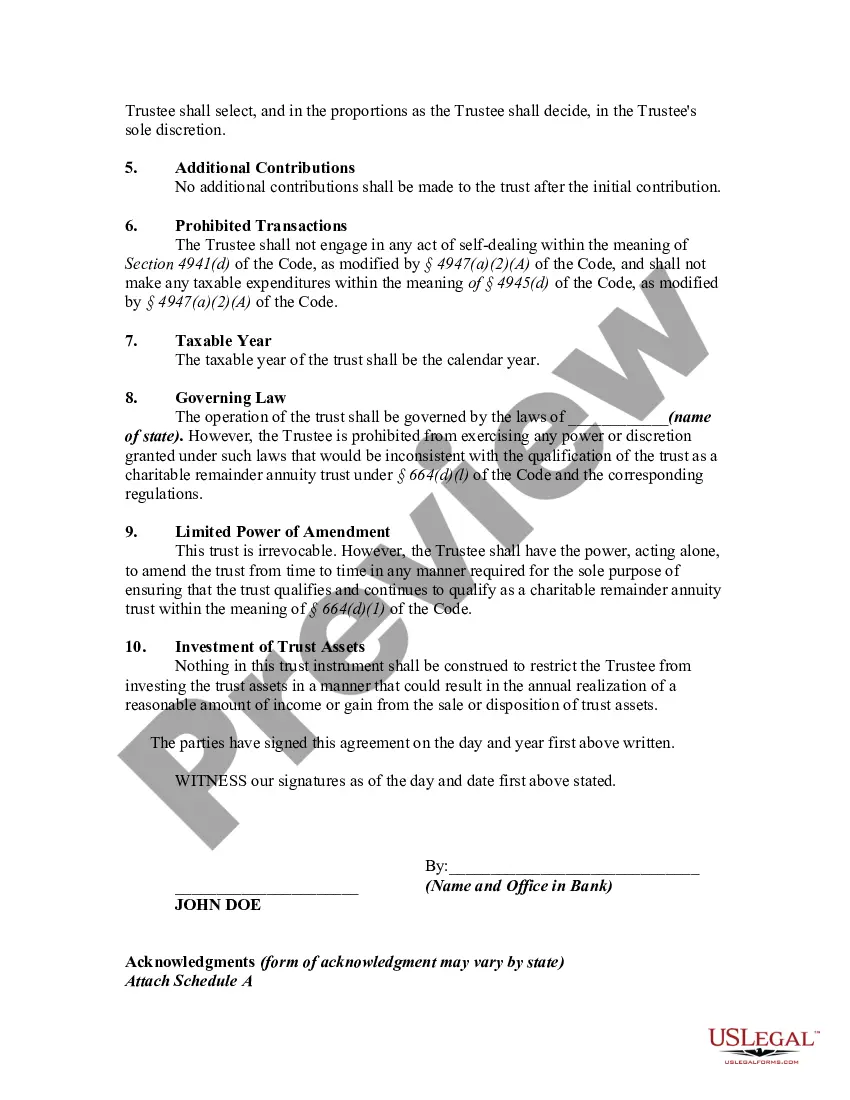
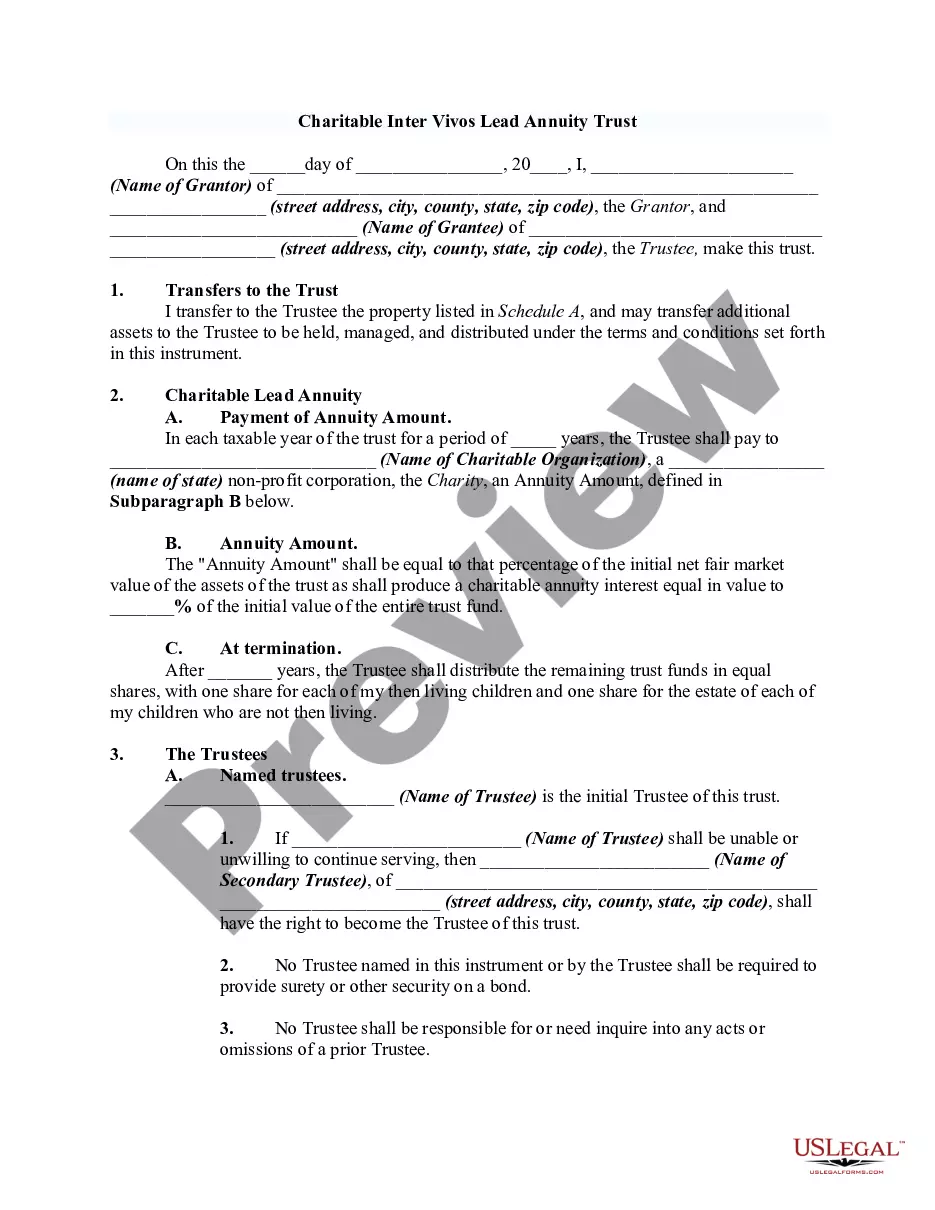
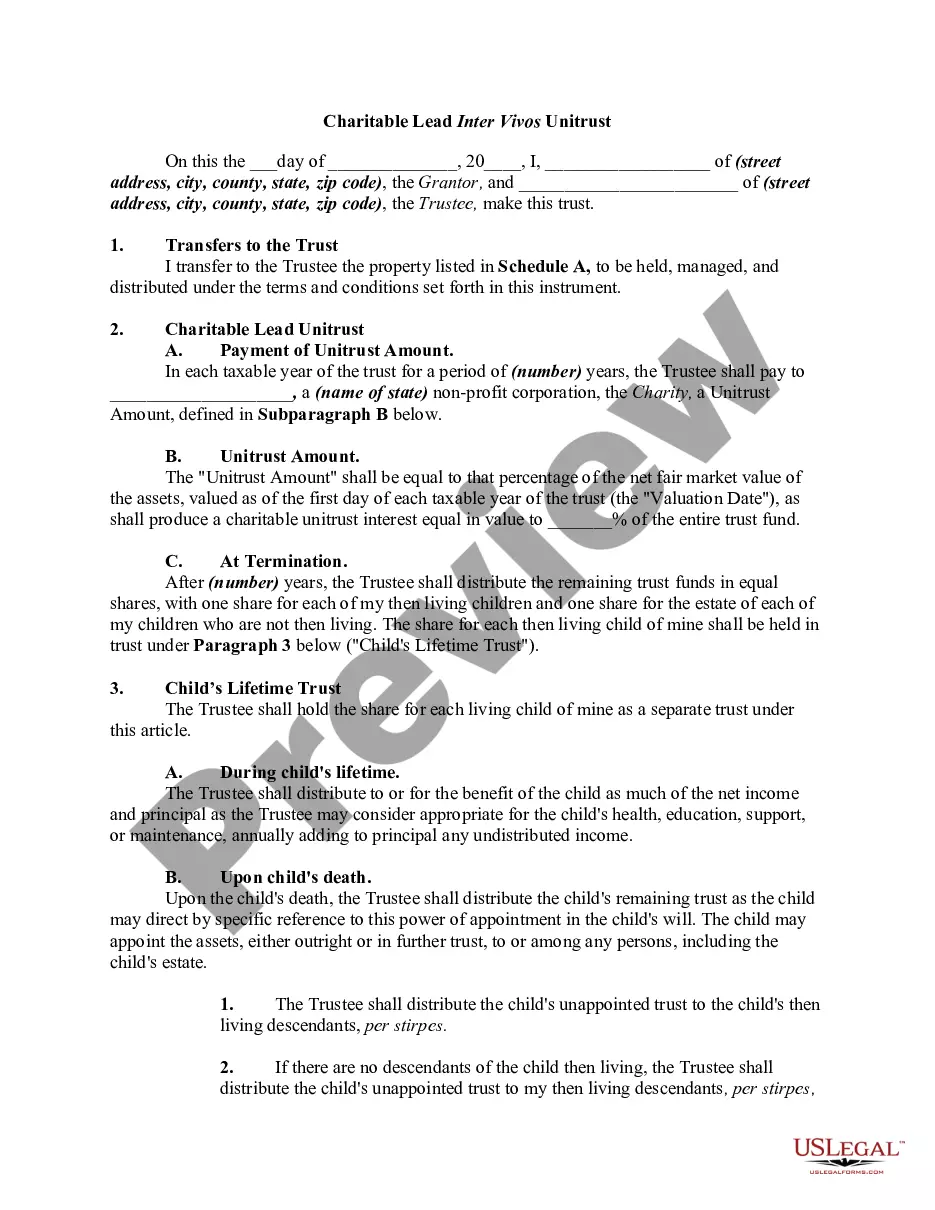
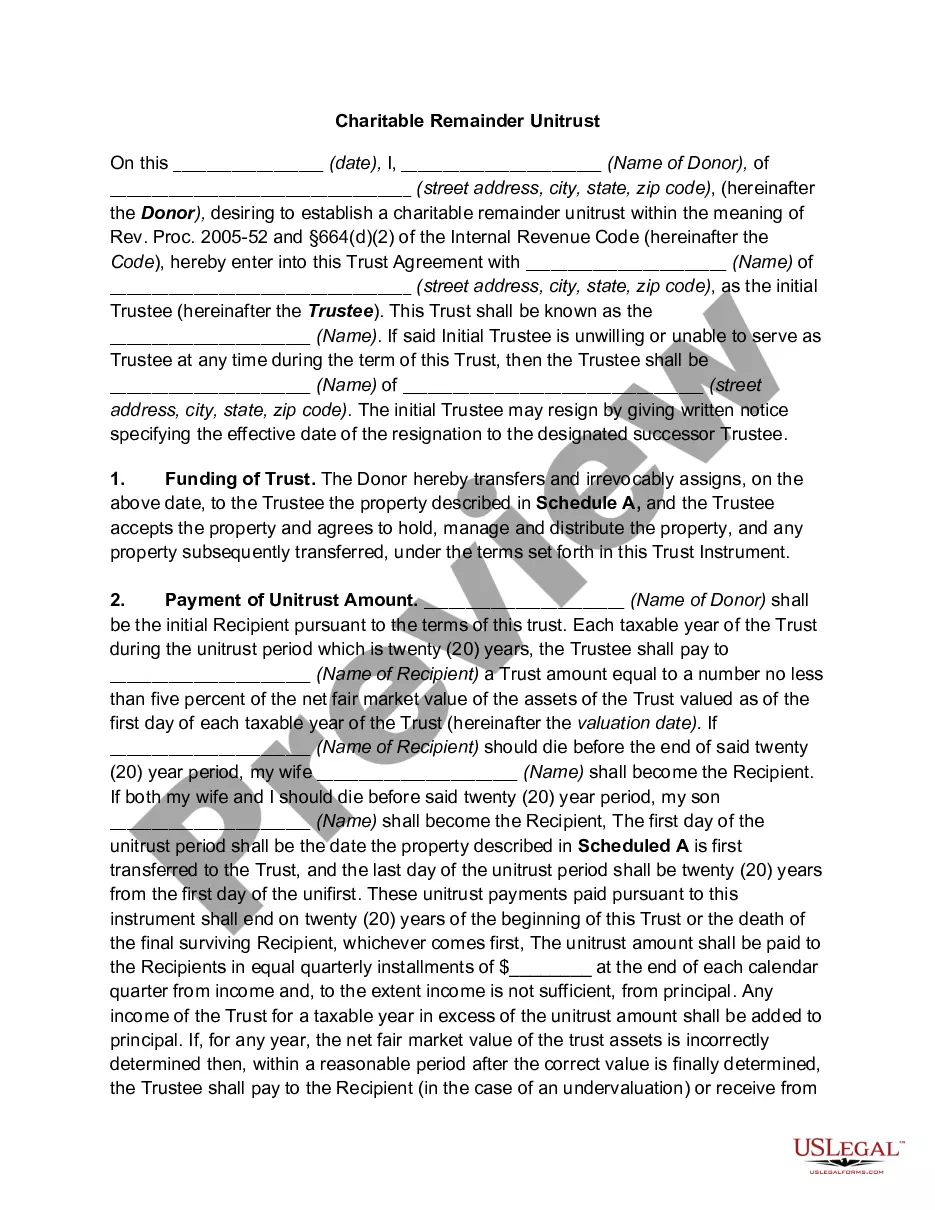
Maine Charitable Remainder Inter Vivos Annuity Trust
Description



Get your form ready online
Our built-in tools help you complete, sign, share, and store your documents in one place.
Make edits, fill in missing information, and update formatting in US Legal Forms—just like you would in MS Word.
Download a copy, print it, send it by email, or mail it via USPS—whatever works best for your next step.
Sign and collect signatures with our SignNow integration. Send to multiple recipients, set reminders, and more. Go Premium to unlock E-Sign.
If this form requires notarization, complete it online through a secure video call—no need to meet a notary in person or wait for an appointment.
We protect your documents and personal data by following strict security and privacy standards.

Make edits, fill in missing information, and update formatting in US Legal Forms—just like you would in MS Word.

Download a copy, print it, send it by email, or mail it via USPS—whatever works best for your next step.

Sign and collect signatures with our SignNow integration. Send to multiple recipients, set reminders, and more. Go Premium to unlock E-Sign.

If this form requires notarization, complete it online through a secure video call—no need to meet a notary in person or wait for an appointment.

We protect your documents and personal data by following strict security and privacy standards.
Looking for another form?






How to fill out Charitable Remainder Inter Vivos Annuity Trust?
Selecting the finest valid document template can be a challenge.
Undoubtedly, there are numerous designs accessible online, but how can you locate the genuine template you need.
Utilize the US Legal Forms website. The service offers thousands of templates, such as the Maine Charitable Remainder Inter Vivos Annuity Trust, which you can use for both business and personal needs.
If the form does not meet your requirements, use the Search field to find the appropriate document. Once you are confident that the form is suitable, click the Get now button to obtain the document.
- All the documents are verified by experts and comply with federal and state regulations.
- If you are currently registered, Log In to your account and click the Download button to access the Maine Charitable Remainder Inter Vivos Annuity Trust.
- Use your account to search through the legal forms you may have purchased previously.
- Visit the My documents tab in your account to download another copy of the document you need.
- If you are a new user of US Legal Forms, here are simple steps for you to follow.
- First, ensure you have selected the correct document for your city/state. You can preview the form using the Review button and read the form description to confirm it is suitable for you.
Form popularity
FAQ
Typically, additional contributions to a charitable remainder annuity trust, including a Maine Charitable Remainder Inter Vivos Annuity Trust, are not permitted once the initial contribution is made. These trusts are designed to provide fixed payments to beneficiaries over a specified term or their lifetime, which means additional funds can't be added without creating a new trust. However, it's important to seek advice from a financial advisor or legal expert for tailored guidance in your situation.
The tax rate for trusts in Maine varies based on the income generated by the trust. Maine imposes a progressive income tax on trust income, starting at 5.8% for lower income levels. As your trust's income increases, the tax rate can reach up to 7.15%. When managing a Maine Charitable Remainder Inter Vivos Annuity Trust, it is crucial to consult a tax professional for specific guidance on your tax obligations.
Yes, an inter vivos trust typically must file a tax return, especially if it generates income. The trustee is responsible for submitting IRS Form 1041 to report the trust's income. When establishing a Maine Charitable Remainder Inter Vivos Annuity Trust, it is vital to understand these filing responsibilities to stay compliant and protect your assets.
In Maine, there is no inheritance tax, allowing individuals to inherit any amount without incurring state taxes. This beneficial provision can enhance estate planning and philanthropic efforts. By incorporating a Maine Charitable Remainder Inter Vivos Annuity Trust, you can effectively pass on your wealth while supporting charitable causes.
A charitable remainder trust must file IRS Form 5227. This form reports the trust's income, expenses, and distributions to beneficiaries. It's essential to ensure all information is accurate and on time to maintain compliance while enjoying the benefits of your Maine Charitable Remainder Inter Vivos Annuity Trust.
Maine does not impose certain taxes, such as a state inheritance tax and sales tax on food and medicine. These tax exemptions can be beneficial for residents, particularly when engaging in estate planning or charitable giving. By knowing what taxes Maine does not have, you can better strategize using a Maine Charitable Remainder Inter Vivos Annuity Trust.
A charitable remainder trust (CRT) pays income to the donor or beneficiaries for a specified period, after which the remaining assets benefit a charity. In contrast, a charitable lead trust (CLT) provides income to a charity for a set term before passing the remaining assets to the beneficiaries. Understanding these differences is essential for those considering a Maine Charitable Remainder Inter Vivos Annuity Trust to meet their philanthropic and financial goals.
Maine does not impose a state inheritance tax, which is fantastic news for those considering estate planning. However, the state does collect estate taxes, which are applied to larger estates. Thus, if you are setting up a Maine Charitable Remainder Inter Vivos Annuity Trust, you can do so with the assurance that your heirs will not face inheritance tax liabilities in Maine.
Yes, Maine imposes taxes on certain types of trusts, including income generated from them. Trusts, like the Maine Charitable Remainder Inter Vivos Annuity Trust, may be subject to state income tax on earnings. It is essential to work with a financial advisor to navigate these tax obligations and maximize your benefits.
Maine does not tax Social Security benefits, providing relief for retirees. However, pension income may be subject to state income tax, depending on various factors. When setting up a Maine Charitable Remainder Inter Vivos Annuity Trust, understanding these tax implications can help you plan effectively for your retirement income and charitable giving.