Maine Life Lease
About this form
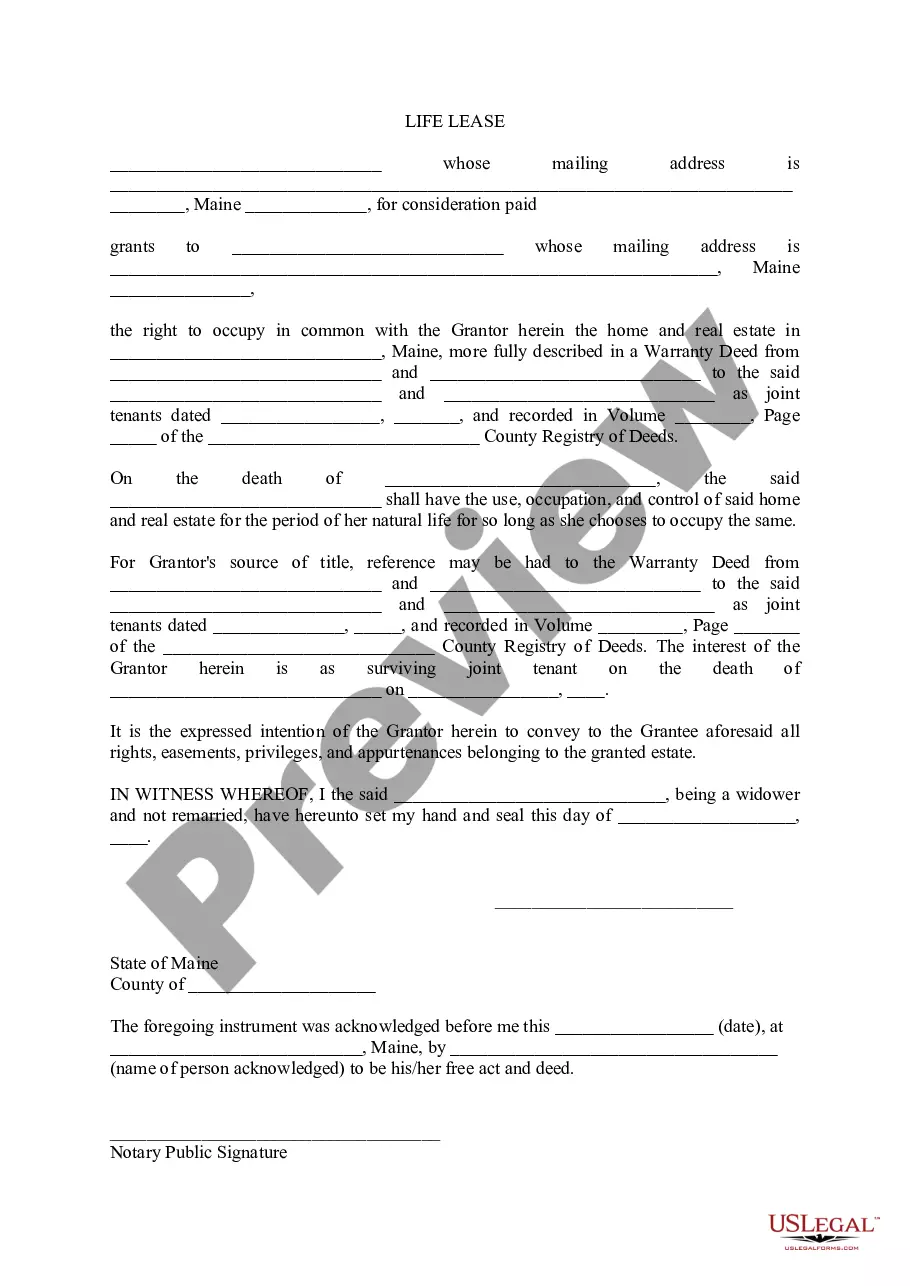
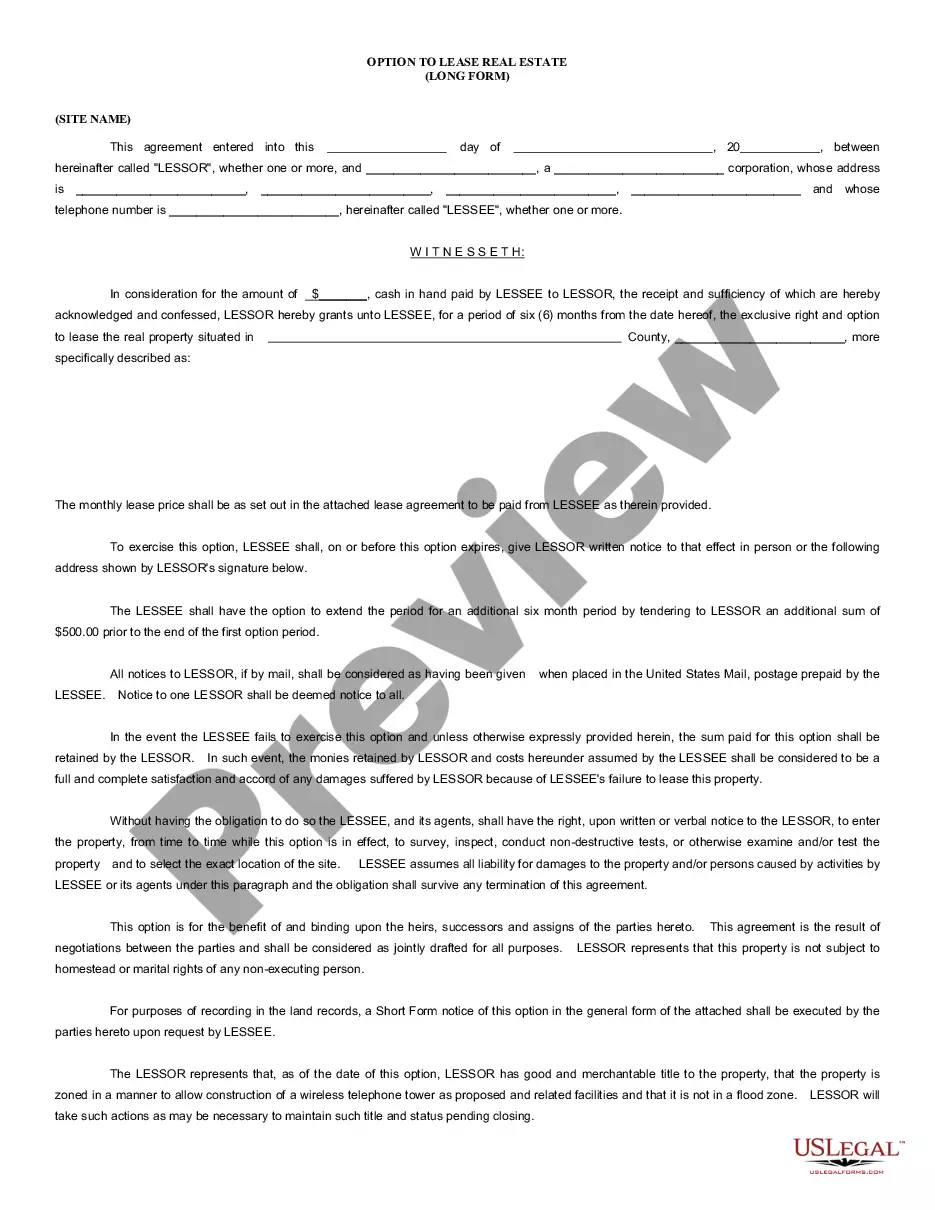
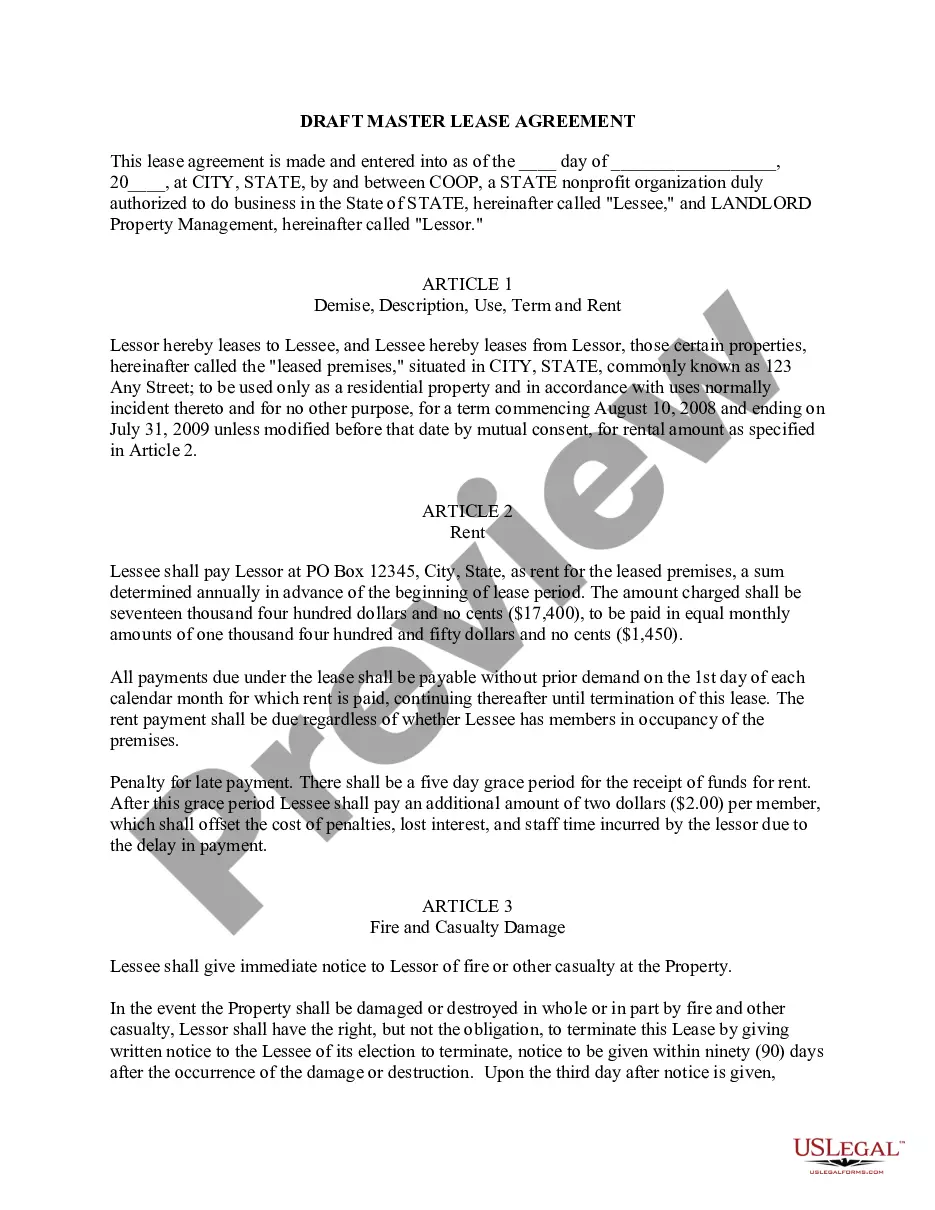
A life lease is a legal agreement that allows a tenant to occupy a residential unit for their lifetime in exchange for an entrance fee and monthly payments. This form outlines the rights of the tenant and the obligations of the grantor, providing a distinct framework compared to standard rental leases. It offers security for the tenant by ensuring their right to live in the property during their lifetime while allowing for the eventual transfer of ownership or rights upon their death.
Key components of this form
- Identification of the parties involved, including the grantor and grantee.
- Description of the property being leased, including location and legal identification via the Warranty Deed.
- Terms regarding the duration of the lease, typically for the life of the tenant or a predetermined period.
- Provisions that address the rights and privileges of the grantee in relation to the property.
- Signature section for both parties and notarization acknowledgment.

Common use cases
This life lease form is essential in situations where an individual desires to secure permanent housing for themselves without the burden of full property ownership. It is particularly useful for seniors or individuals seeking a stable living arrangement within a community that may offer additional support services. This lease is also beneficial when planning for estate transitions, ensuring housing stability for the surviving tenants or family members after the original tenant passes away.
Who should use this form
- Individuals seeking a life lease arrangement for stable housing.
- Property owners or grantors looking to offer long-term occupancy agreements.
- Families planning for future housing arrangements for elderly relatives.
- Attorneys or legal representatives assisting clients in residential leasing matters.
Completing this form step by step
- Identify all parties involved by entering their full names and mailing addresses.
- Provide the address of the property and include the legal description as provided in the Warranty Deed.
- Specify the terms regarding the length of occupancy and related rights granted to the tenant.
- Include the date and signatures of both parties to finalize the agreement.
- Ensure the form is notarized by a qualified notary public to validate the agreement.
Notarization guidance
Yes, this form must be notarized to be legally valid. It is important to have the document acknowledged by a notary public to ensure authenticity and enforceability. US Legal Forms provides integrated online notarization services that are available 24/7, secure, and legally equivalent to traditional notarization.
Get your form ready online
Our built-in tools help you complete, sign, share, and store your documents in one place.
Make edits, fill in missing information, and update formatting in US Legal Forms—just like you would in MS Word.
Download a copy, print it, send it by email, or mail it via USPS—whatever works best for your next step.
Sign and collect signatures with our SignNow integration. Send to multiple recipients, set reminders, and more. Go Premium to unlock E-Sign.
If this form requires notarization, complete it online through a secure video call—no need to meet a notary in person or wait for an appointment.
We protect your documents and personal data by following strict security and privacy standards.

Make edits, fill in missing information, and update formatting in US Legal Forms—just like you would in MS Word.

Download a copy, print it, send it by email, or mail it via USPS—whatever works best for your next step.

Sign and collect signatures with our SignNow integration. Send to multiple recipients, set reminders, and more. Go Premium to unlock E-Sign.

If this form requires notarization, complete it online through a secure video call—no need to meet a notary in person or wait for an appointment.

We protect your documents and personal data by following strict security and privacy standards.
Avoid these common issues
- Failing to properly identify the property in question, leading to potential disputes.
- Not mentioning all parties involved in the contract.
- Omitting the notarization step, making the form non-enforceable.
- Leaving blank fields, which could create ambiguity in terms of rights and responsibilities.
Benefits of using this form online
- Easy access to legal templates created by licensed attorneys, ensuring legal accuracy.
- Convenient download options that allow users to complete the form at their own pace.
- Instant customization to fit specific needs without the risk of overlooking important provisions.
- Enhanced security and privacy when completing sensitive documents online.
Looking for another form?
Form popularity
FAQ
A person owns property in a life estate only throughout their lifetime. Beneficiaries cannot sell property in a life estate before the beneficiary's death. One benefit of a life estate is that property can pass when the life tenant dies without being part of the tenant's estate.
Ownership of the property transfers automatically upon the life tenant's death.After the life estate deed is signed and recorded, the life tenant is no longer able to transfer, sell or mortgage the property without the joinder of the remainderman.
What happens to a life estate after someone dies? Upon the life tenant's death, the property passes to the remainder owner outside of probate.They can sell the property or move into and claim it as their primary residence (homestead). Property taxes will not be reassessed.
A lifetime estate on a deed is a type of property ownership. It gives an individual the right to occupy and use a property during that individual's lifetime.After the death of the occupant, the life estate terminates and transfers to another person, known as the remainderman.
The life estate can not be revoked. Your mom would have to sign a deed to end the life estate and if she is incompetent, as you state, then she does not have the capacity to sign the deed.
To accomplish this, you need to have the life estate deed that shows you have the right to own the property after the life estate holder dies. Using the information in this deed, along with the deceased's death certificate, you can prepare and record the required title transfer document to clear title.
To dissolve a life estate, the life tenant can give their ownership interest to the remainderman. So, if a mother has a life estate and her son has the remainder, she can convey her interest to him, and he will then own the entire interest in the property.
Possible tax breaks for the life tenant. Reduced capital gains taxes for remainderman after death of life tenant. Capital gains taxes for remainderman if property sold while life tenant still alive. Remainderman's financial problems can affect the life tenant.
A life estate deed permits the property owner to have full use of their property until their death, at which point the ownership of the property is automatically transferred to the beneficiary.In the right situations, it can be a streamlined and easy way to transfer ownership.