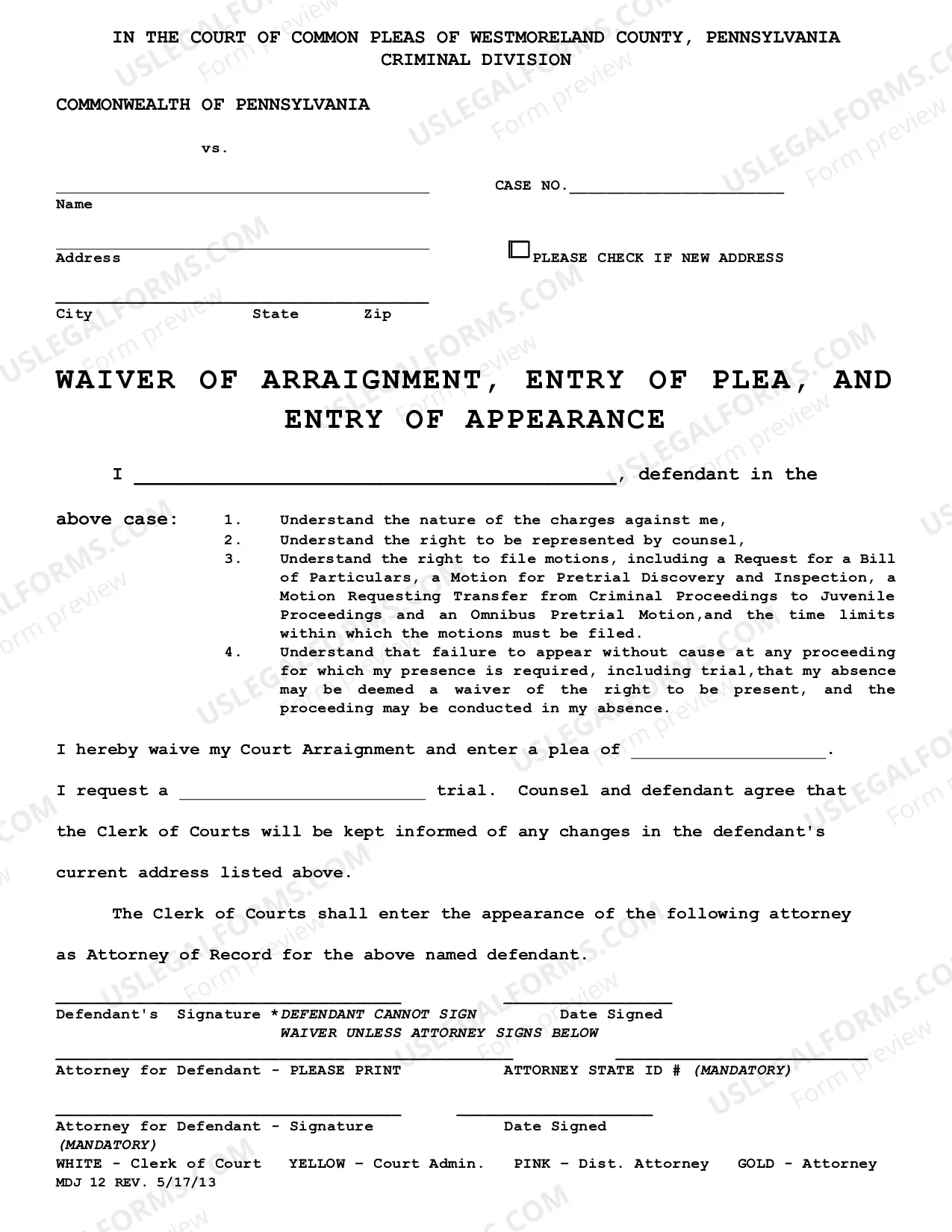
Maine Reciprocal Easement Deed
What this document covers
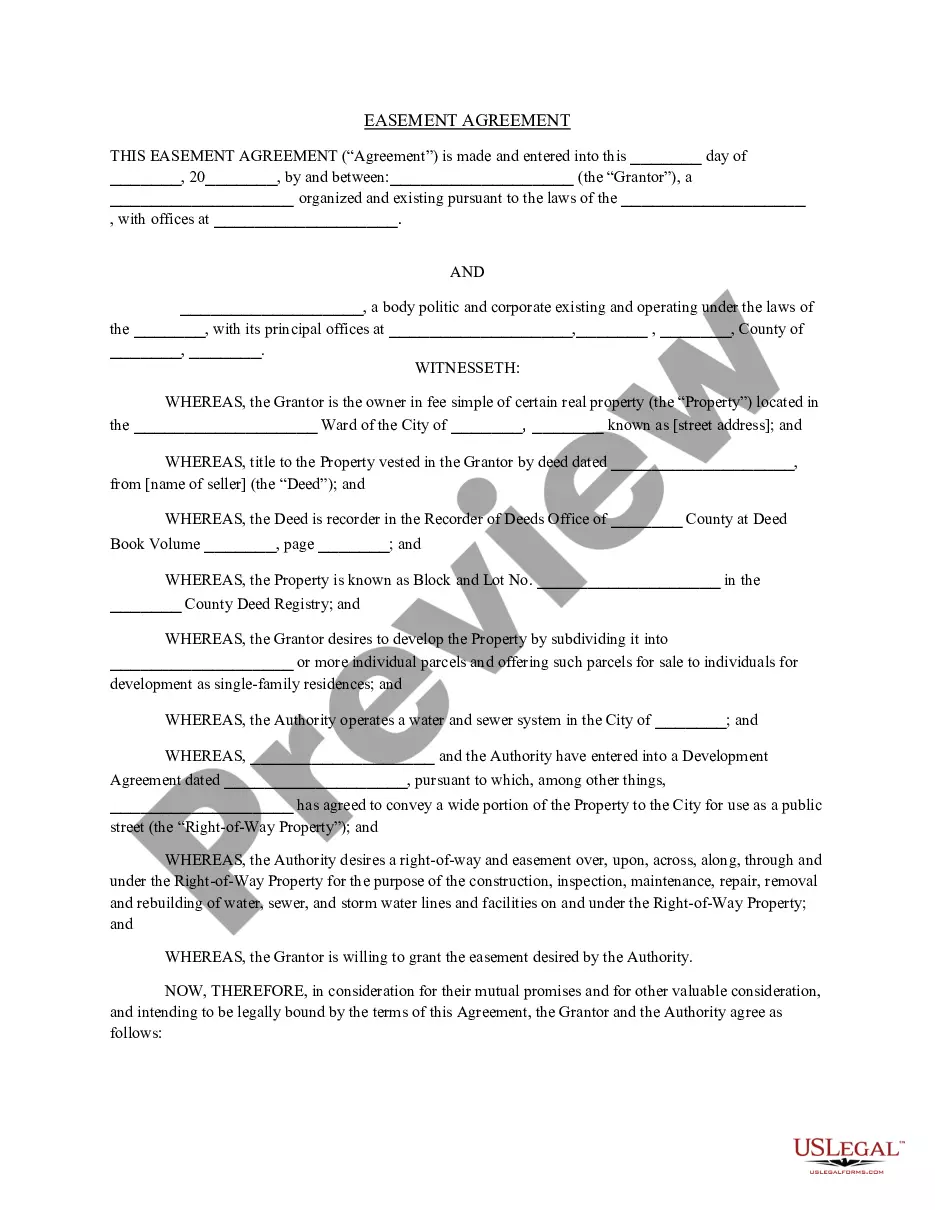
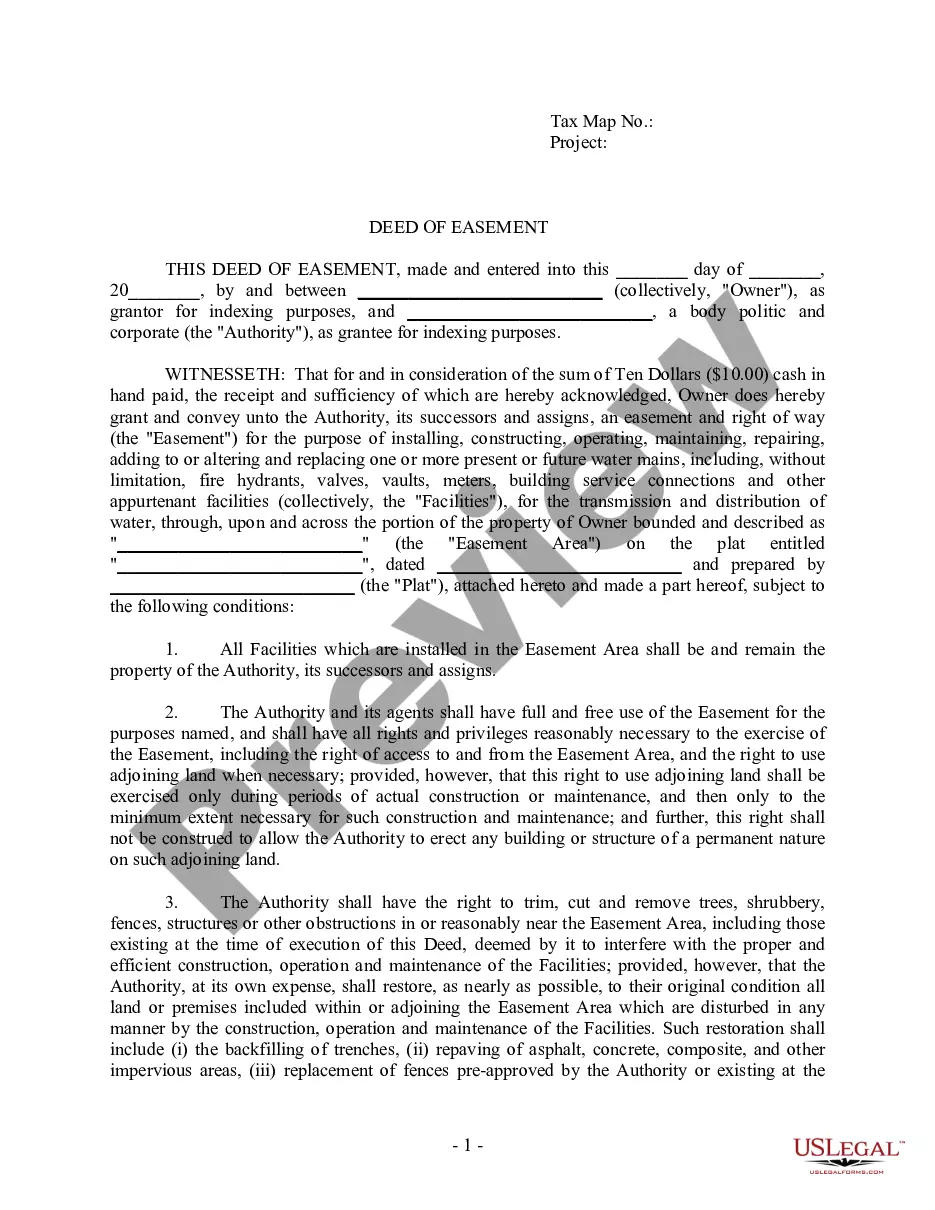
A reciprocal easement deed is a legal document that grants property owners the right to use a specific portion of land for accessing utilities or rights-of-way. This form not only establishes the easement for one party but also ensures reciprocal benefits for all abutting property owners. It is essential for maintaining shared access and utility lines among multiple properties, distinguishing it from other types of easement deeds that may only involve a single property owner.
Main sections of this form
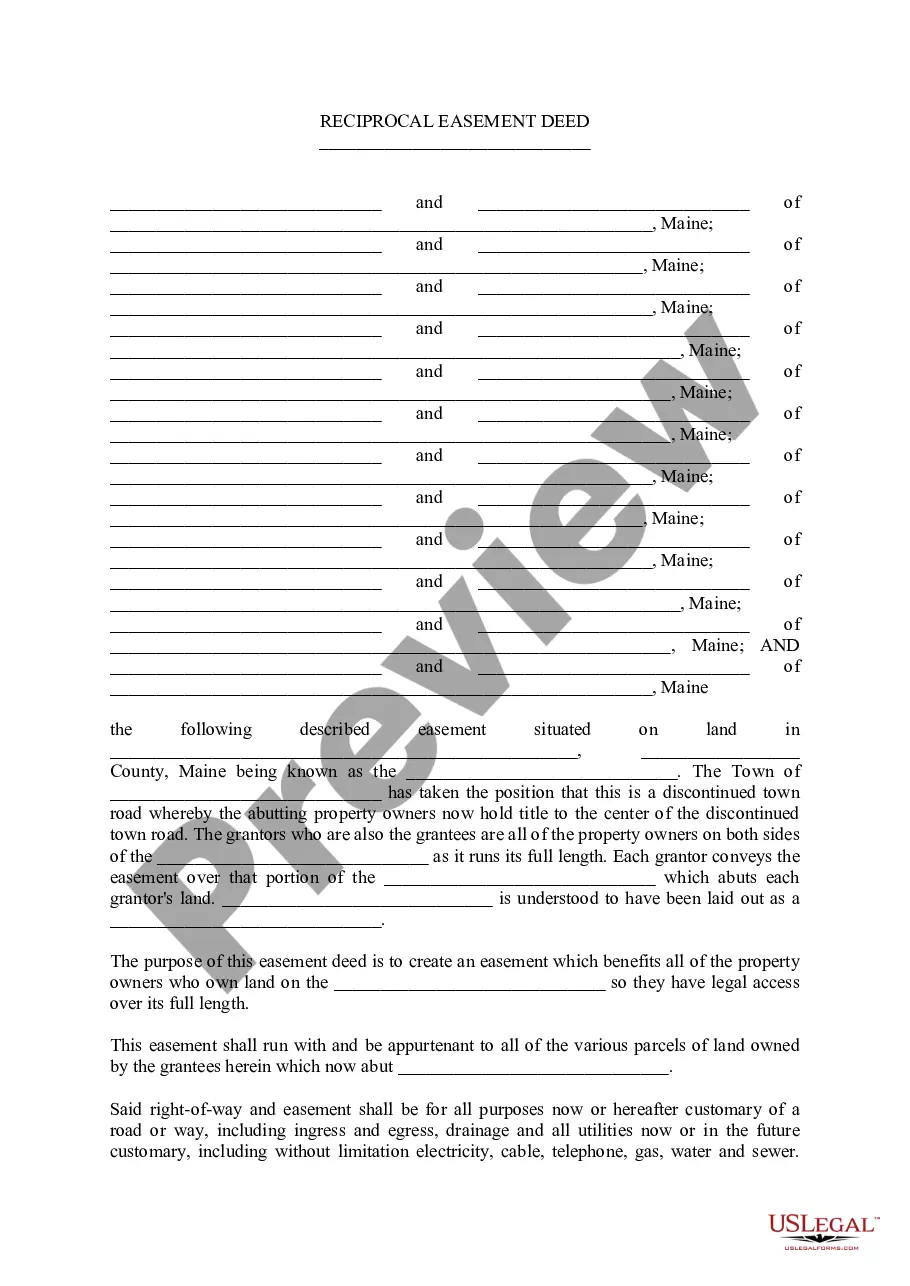
- Identification of grantors and grantees, specifying property owners involved.
- Description of the easement area, highlighting the exact portion of land affected.
- Statement of the purpose of the easement, detailing its uses, such as utility access.
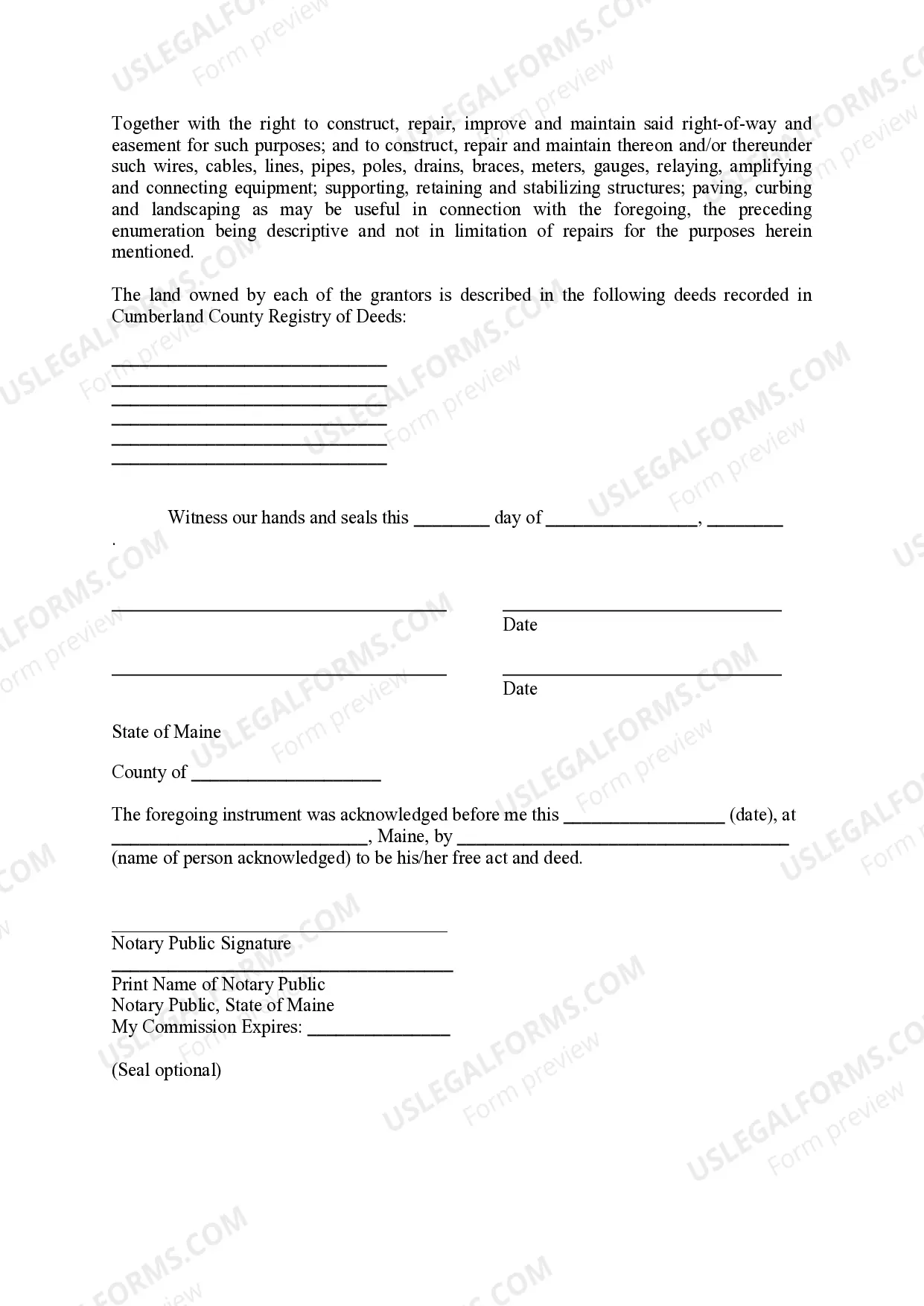
- Terms regarding maintenance and rights associated with the easement.
- Space for signatures and notary acknowledgment to validate the document.
Common use cases
This form is necessary when multiple property owners need to establish a shared access route or utility lines across a piece of land. Situations may include residential developments, adjacent commercial properties, or any scenario where land owners require mutual accessibility for maintenance or repairs of sewer lines and utilities.
Who should use this form
- Homeowners who share land boundaries with other properties.
- Developers needing to create shared access routes for multiple parcels.
- Property owners looking to establish legal rights for utility access.
- Neighbors seeking a formal agreement for shared maintenance responsibilities.
Steps to complete this form
- Identify all parties involved, including grantors and grantees.
- Provide a clear description of the easement area and the relevant property.
- State the purpose of the easement in detail.
- Sign and date the document in the presence of a notary public.
- Ensure that all necessary property deeds are referenced accurately.
Does this form need to be notarized?
Yes, this form must be notarized to be legally valid. The notarization process ensures that the signatures are verified and that the document is recognized under state laws. US Legal Forms provides integrated online notarization services, making it easy and convenient to complete the process securely via a video call.
Get your form ready online
Our built-in tools help you complete, sign, share, and store your documents in one place.
Make edits, fill in missing information, and update formatting in US Legal Forms—just like you would in MS Word.
Download a copy, print it, send it by email, or mail it via USPS—whatever works best for your next step.
Sign and collect signatures with our SignNow integration. Send to multiple recipients, set reminders, and more. Go Premium to unlock E-Sign.
If this form requires notarization, complete it online through a secure video call—no need to meet a notary in person or wait for an appointment.
We protect your documents and personal data by following strict security and privacy standards.

Make edits, fill in missing information, and update formatting in US Legal Forms—just like you would in MS Word.

Download a copy, print it, send it by email, or mail it via USPS—whatever works best for your next step.

Sign and collect signatures with our SignNow integration. Send to multiple recipients, set reminders, and more. Go Premium to unlock E-Sign.

If this form requires notarization, complete it online through a secure video call—no need to meet a notary in person or wait for an appointment.

We protect your documents and personal data by following strict security and privacy standards.
Typical mistakes to avoid
- Failing to include all property owners as grantors and grantees.
- Leaving out specific details about the easement area.
- Not obtaining a notary acknowledgment, which can invalidate the form.
- Inaccurately referencing property deeds or boundaries.
What to keep in mind
- A reciprocal easement deed provides shared access for multiple property owners.
- It is crucial for properties that require legal agreements for utilities and maintenance.
- The document must be notarized for legal validity.
- Ensure all property details and parties are correctly identified in the form.
Looking for another form?

Form popularity
FAQ
There are four types of easement Section. 5 of Easement Act deals with the types of easement. It provides that the easements are either continuous or discontinuous ,apparent or non apparent. A continuous easement is one whose enjoyment is, or may be, continual without the act of man.
An easement is a "nonpossessory" property interest that allows the holder of the easement to have a right of way or use property that they do not own or possess.If the easement only benefits an individual personally, not as an owner of a particular piece of land, the easement is known as "in gross."
An easement may be created by means of an appropriate dealing registered in NSW LRS or by the inclusion in a Section 88B instrument lodged with a new deposited plan.
Cross easements are reciprocal easements created by contract, the one being granted in favor of premises of one party in consideration of a grant by such party in favor of premises of the other party.
An easement deed allows a party that is not the owner to use a portion of the land. It is a written agreement between two parties that spells out what part of the property is available for access and how it may be used. Since you are granting an easement to your land, you can set any terms and conditions you like.
Easements can be created in a variety of ways. They can be created by an express grant, by implication, by necessity, and by adverse possession.
Typically, reciprocal easement agreements ("REAs") are used when a property is owned by more than one person or entity, and the persons or entities wish to develop the property as an integrated shopping center.These contractual obligations will run with the land of the property that comprises the shopping center.
Can You Fight an Easement? You might be able to successfully challenge an easement, but only if the circumstances are right. And be prepared to take the battle to court. It could be a simple matter if the holder of the easement such as your neighbor agrees to terminate the easement agreement.
The only way to add or remove a name on a deed is to have a new deed recorded. Once a document is recorded, it cannot be altered. In order to protect your legal interests, we strongly suggest that you contact an attorney to have this done for you.