Maine Affidavit regarding Estate Value
What is this form?
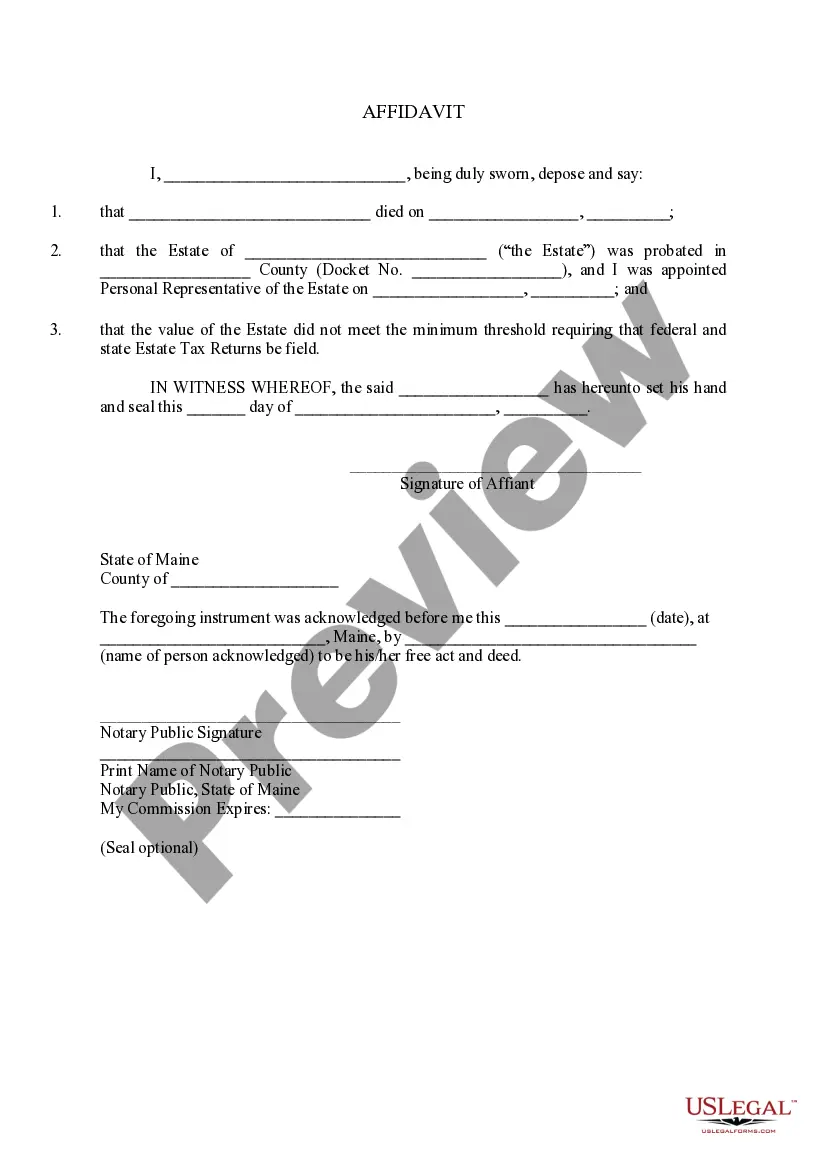
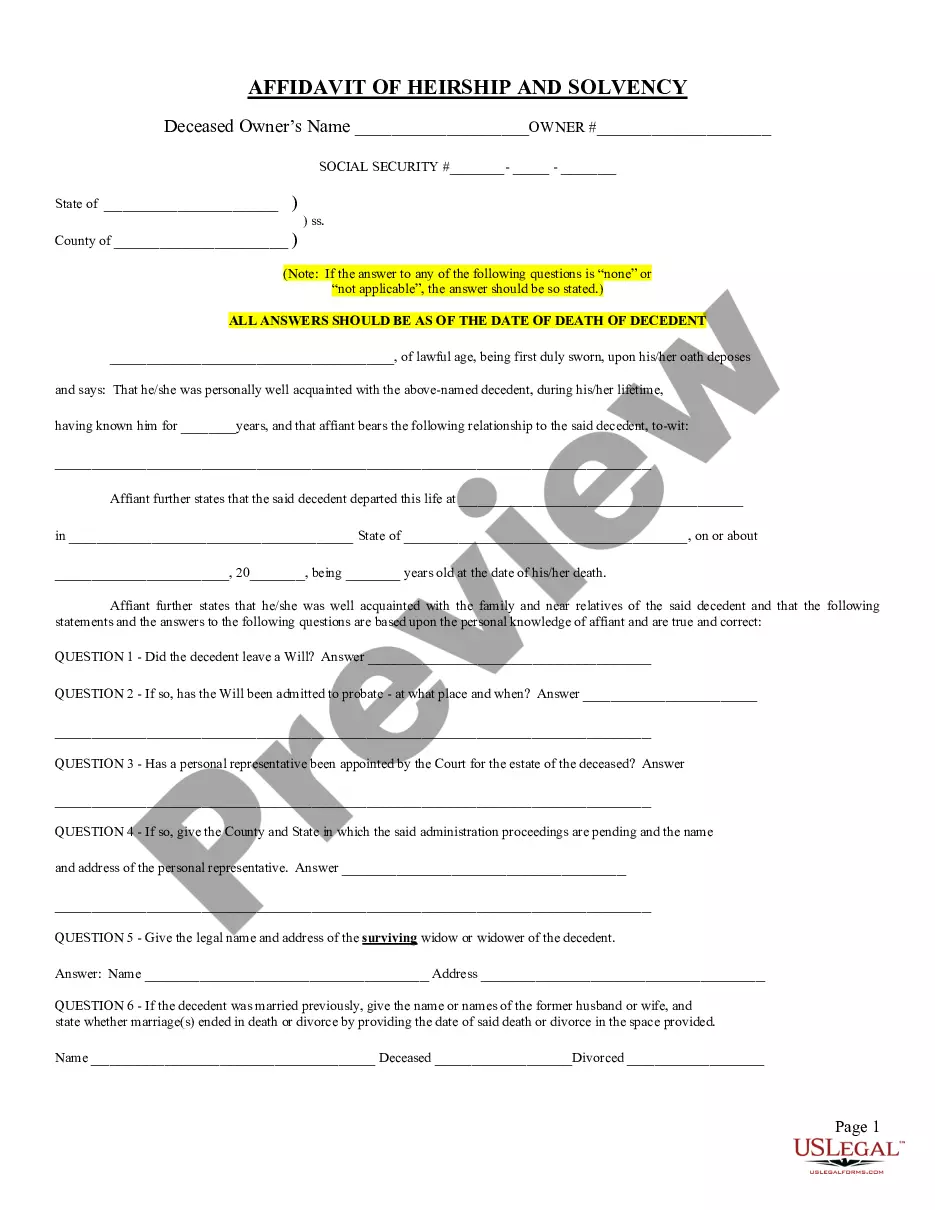
The Affidavit regarding Estate Value is a legal document signed by the personal representative of an estate. It affirms that the estate's total value does not exceed the federal and state estate tax threshold. This form is crucial for individuals managing the estates of deceased persons, particularly to verify that estate tax returns are not required. Unlike other estate-related forms, this affidavit specifically addresses estate valuation and tax obligations.
What’s included in this form
- Name of the deceased individual.
- Date and place of death.
- Probate county and docket number.
- Name of the personal representative.
- Affirmation regarding the estate's value concerning tax thresholds.
- Signatures of the affiant and notary public.
Situations where this form applies
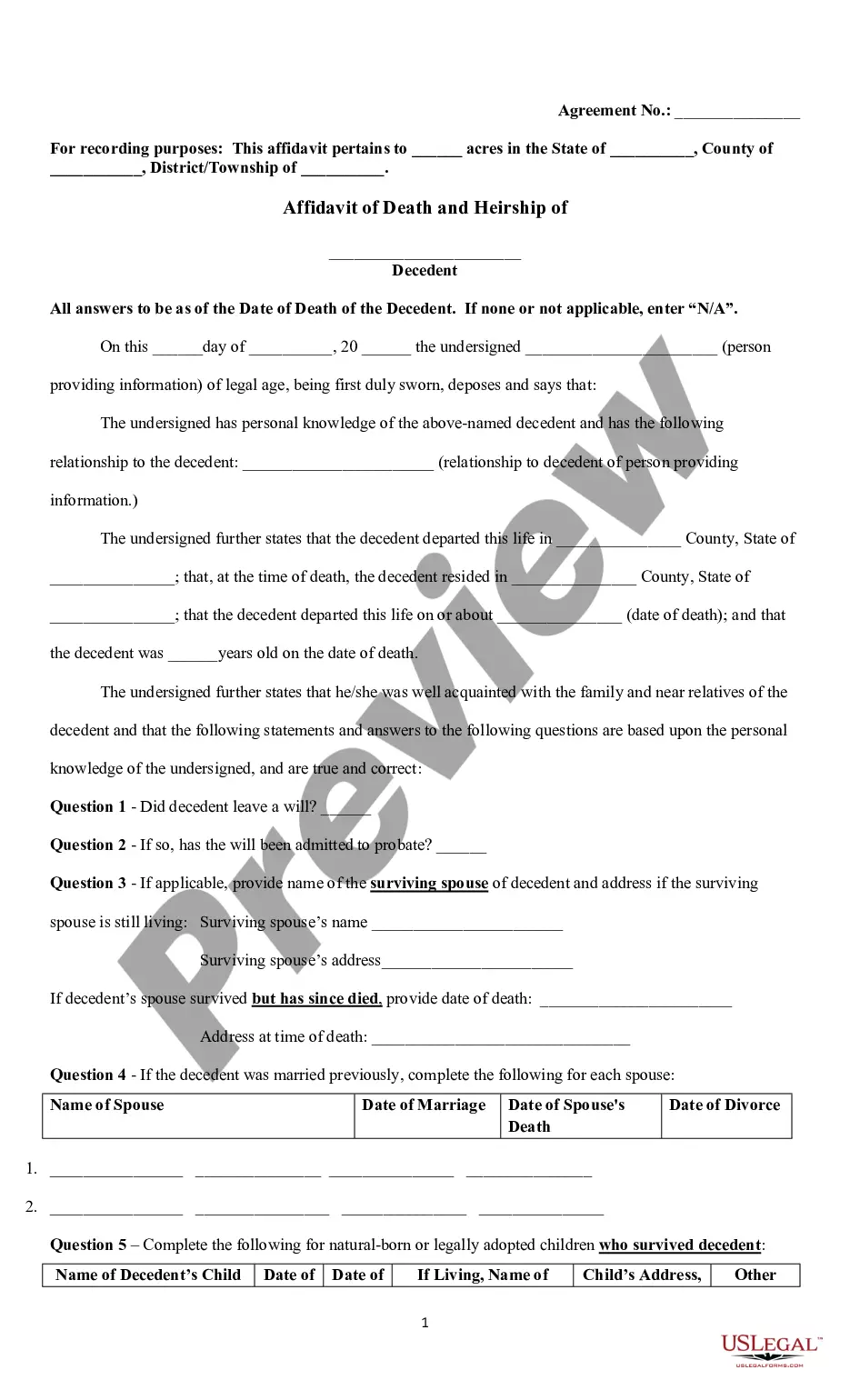
This form is used when a personal representative needs to declare the value of an estate during probate proceedings. It is typically required when the estate's value is below the thresholds for federal and state estate taxes, thus simplifying the estate settlement process by preventing unnecessary tax filings.
Who should use this form
- Personal representatives of an estate.
- Executors appointed by the court for probate matters.
- Heirs or beneficiaries managing estate affairs.
- Legal professionals assisting clients with estate management.
How to complete this form
- Identify and fill in the name of the deceased.
- Provide the date and location of the death.
- Enter the probate county and docket number.
- Include your name as the personal representative.
- Affirm the total value of the estate.
- Sign the affidavit in the presence of a notary public.
Does this document require notarization?
Yes, this form must be notarized to be legally valid. US Legal Forms offers integrated online notarization, which is available 24/7 through secure video calls. This ensures your document is not only valid but also convenient to finalize without the need for travel.
Get your form ready online
Our built-in tools help you complete, sign, share, and store your documents in one place.
Make edits, fill in missing information, and update formatting in US Legal Forms—just like you would in MS Word.
Download a copy, print it, send it by email, or mail it via USPS—whatever works best for your next step.
Sign and collect signatures with our SignNow integration. Send to multiple recipients, set reminders, and more. Go Premium to unlock E-Sign.
If this form requires notarization, complete it online through a secure video call—no need to meet a notary in person or wait for an appointment.
We protect your documents and personal data by following strict security and privacy standards.

Make edits, fill in missing information, and update formatting in US Legal Forms—just like you would in MS Word.

Download a copy, print it, send it by email, or mail it via USPS—whatever works best for your next step.

Sign and collect signatures with our SignNow integration. Send to multiple recipients, set reminders, and more. Go Premium to unlock E-Sign.

If this form requires notarization, complete it online through a secure video call—no need to meet a notary in person or wait for an appointment.

We protect your documents and personal data by following strict security and privacy standards.
Common mistakes to avoid
- Failing to provide complete information about the deceased.
- Leaving out the probate county or docket number.
- Not receiving notarization for the form.
- Incorrectly assessing the estateâs value.
Benefits of completing this form online
- Convenient access and immediate download of the form.
- Editable templates that can be customized to fit your needs.
- Reliable legal language drafted by licensed attorneys.
- Easy storage and retrieval of completed documents.
Looking for another form?
Form popularity
FAQ
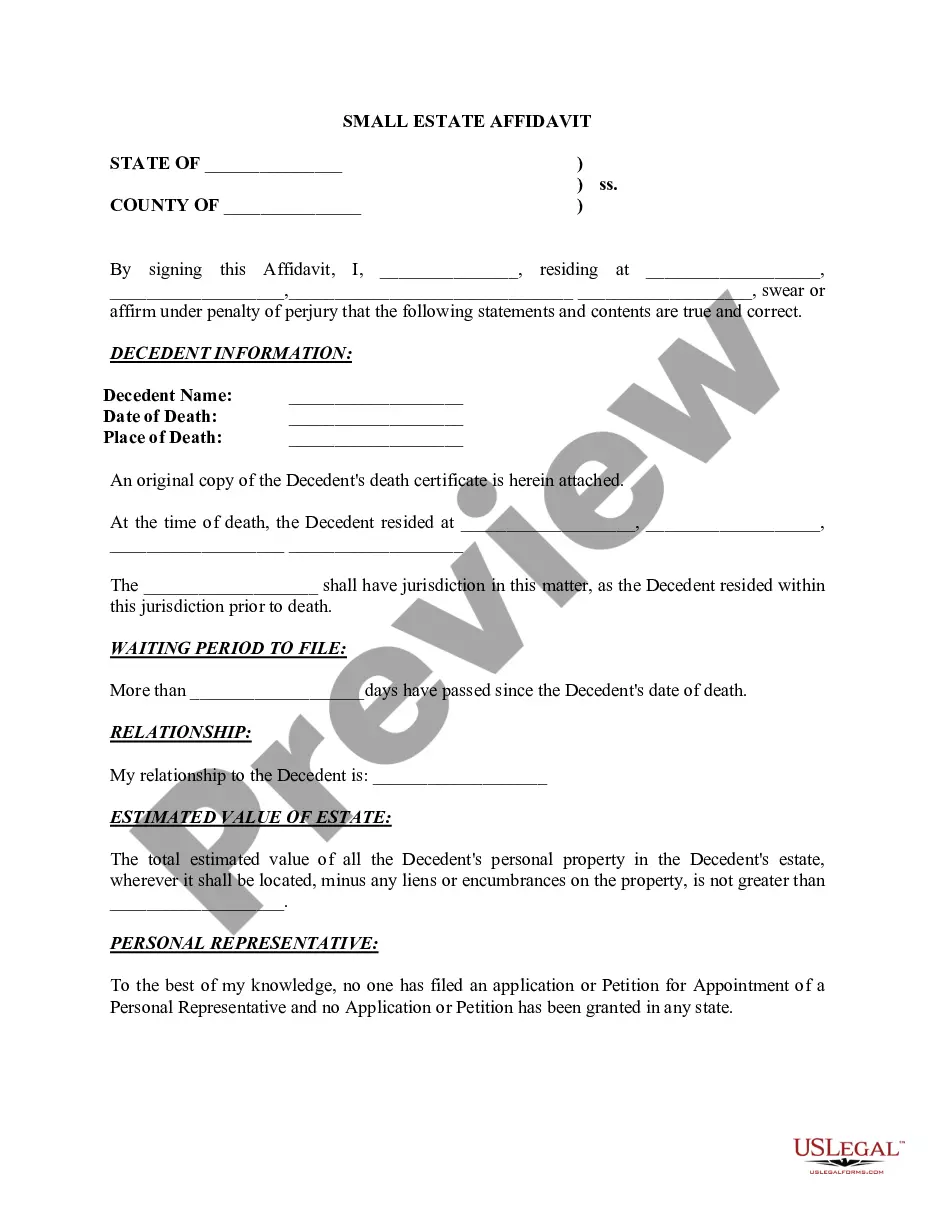
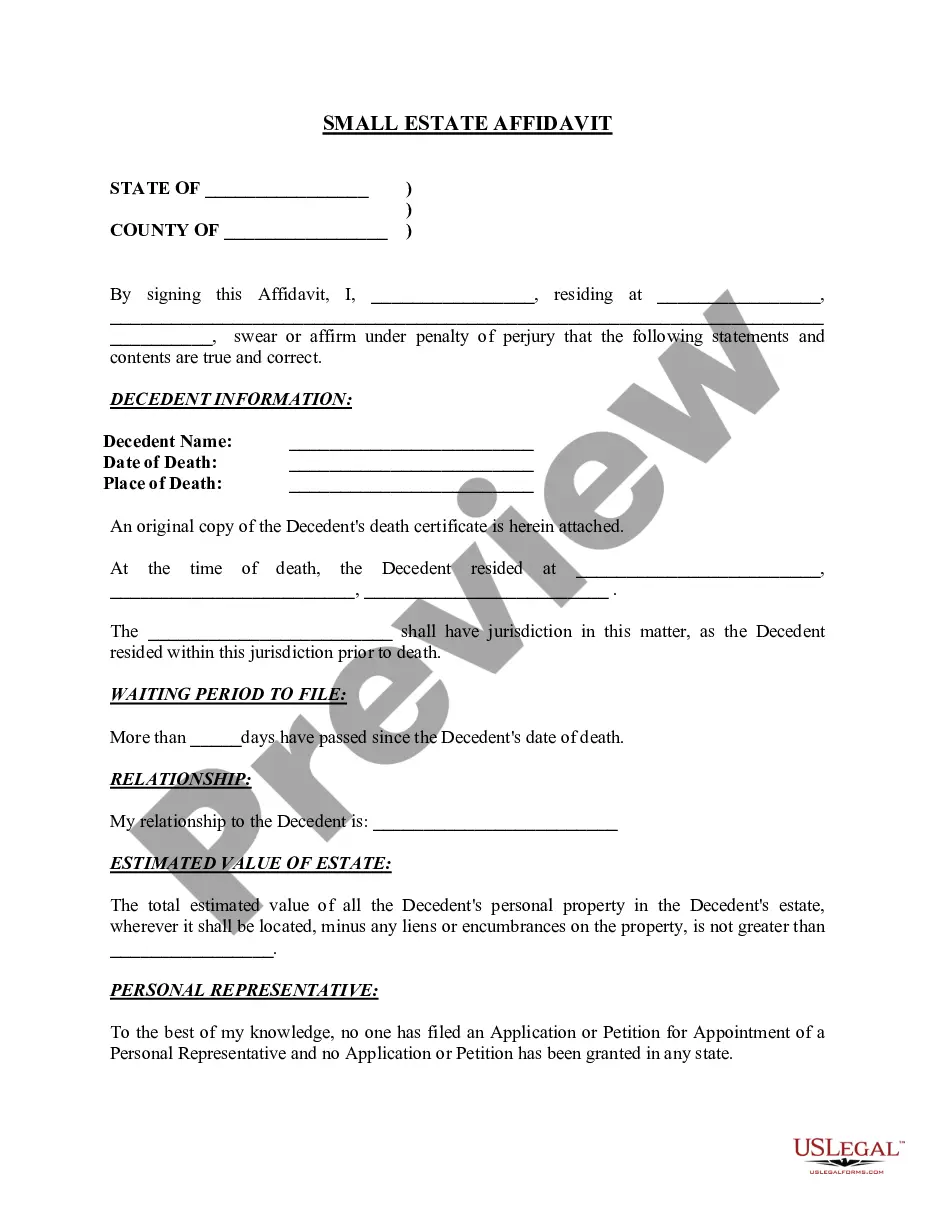
A small estate affidavit is a sworn written statement that authorizes someone to claim a decedent's assets outside of the formal probate process.
Guadalupe County Small Estate Affidavit Checklist Individuals then fill out a form without reading the statute and without understanding Texas intestacy law. They pay a $261 filing fee and expect approval.
In Maine, you can make a living trust to avoid probate for virtually any asset you ownreal estate, bank accounts, vehicles, and so on. You need to create a trust document (it's similar to a will), naming someone to take over as trustee after your death (called a successor trustee).
In most states, however, there is the option to use a small estate affidavit when the assets of the estate are under a certain dollar amount, which varies by state. An attorney is not required to file a small estate affidavit, although it may be helpful to consult with one prior to filing the small estate affidavit.
If the total value of all the assets you leave behind is less than a certain amount, the people who inherit your personal property -- that's anything except real estate -- may be able to skip probate entirely. The exact amount depends on state law, and varies hugely.
When you use a small estate affidavit , you have to pay the decedent's bills before paying money to anyone else. For example, the decedent might have owed money to a credit card company when they died. If you use the small estate affidavit, you must give money from the estate to pay the credit card company.
Small estate administration is a simplified court procedure that is an alternative to the longer probate process. It is available when the person who dies did not own that much in assets. There is often a limit to the value of the property, such as $25,000 or $100,000.