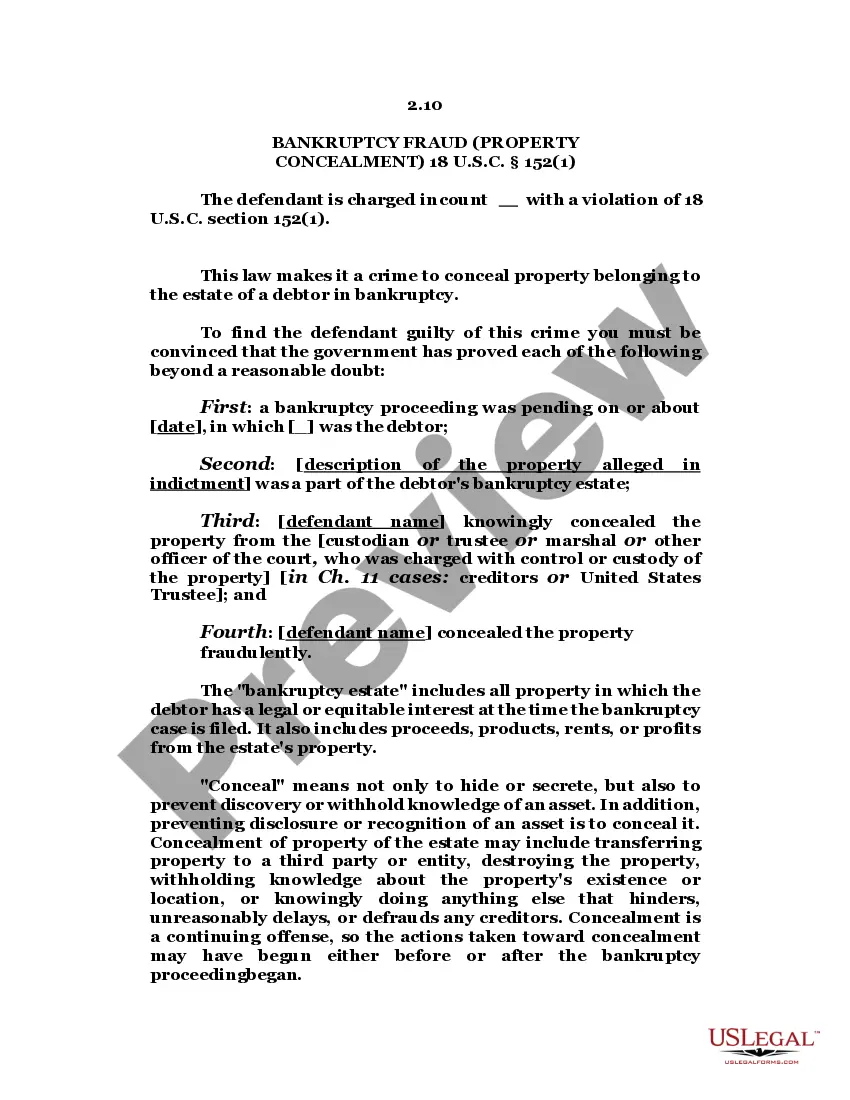
Maine Bankruptcy Fraud, Concealment, 18 U.S.C. Sec. 152(1), is a federal crime that occurs when a person knowingly and fraudulently conceals assets or otherwise attempts to defraud a bankruptcy court. This crime is punishable by up to 5 years in prison, a fine of up to $250,000, or both. The types of Maine Bankruptcy Fraud, Concealment, 18 U.S.C. Sec. 152(1), include: hiding assets from the court, failing to disclose assets or liabilities in a bankruptcy petition, lying on a bankruptcy petition or in an official bankruptcy proceeding, destroying or altering financial records, transferring assets to another person or entity in order to hide them from the court, and paying creditors without court approval.
Maine Bankruptcy Fraud, Concealment, 18 U.S.C. Sec. 152(1)
State:
Maine
Control #:
ME-FEDDC-JURY-4-18-152-1
Format:
Word
Instant download
This website is not affiliated with any governmental entity
Public form
Description
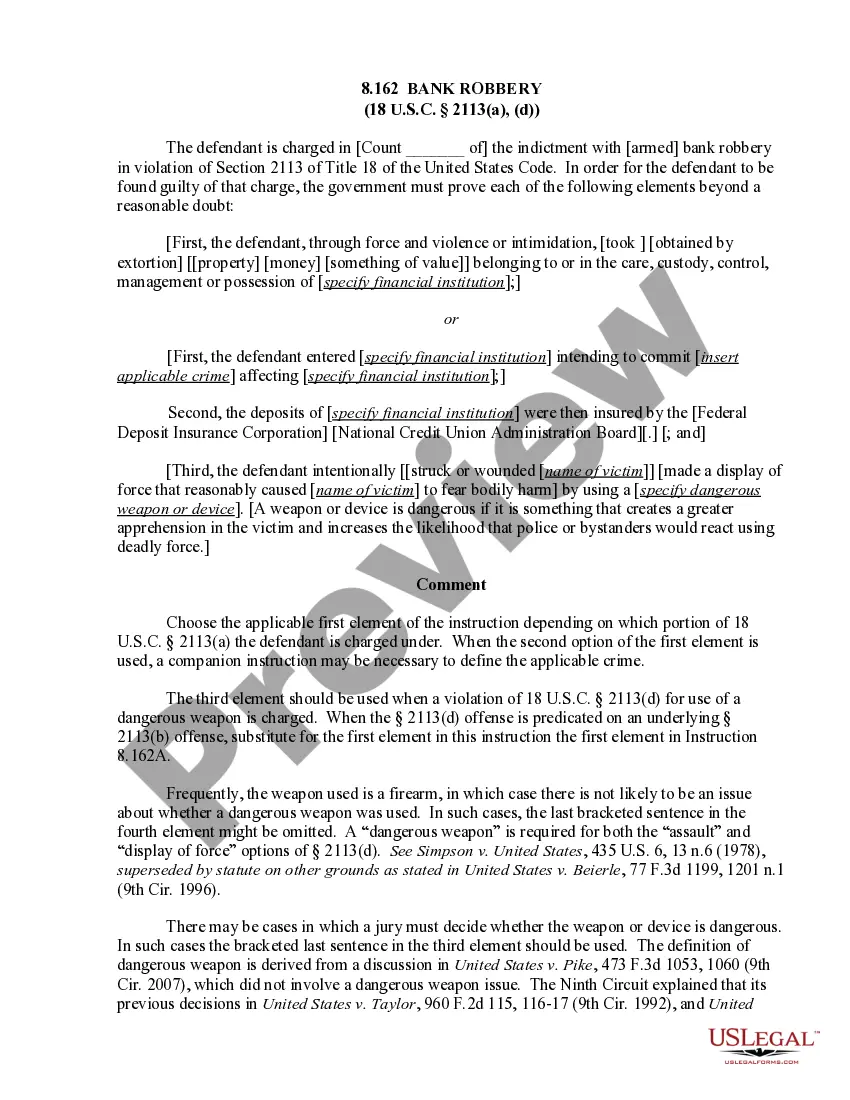
Official Pattern Jury Instructions for Criminal Cases in Federal District Court of Maine. All converted to Word format. Please see the official site for addional information. http://www.med.uscourts.gov/pattern-jury-instructions
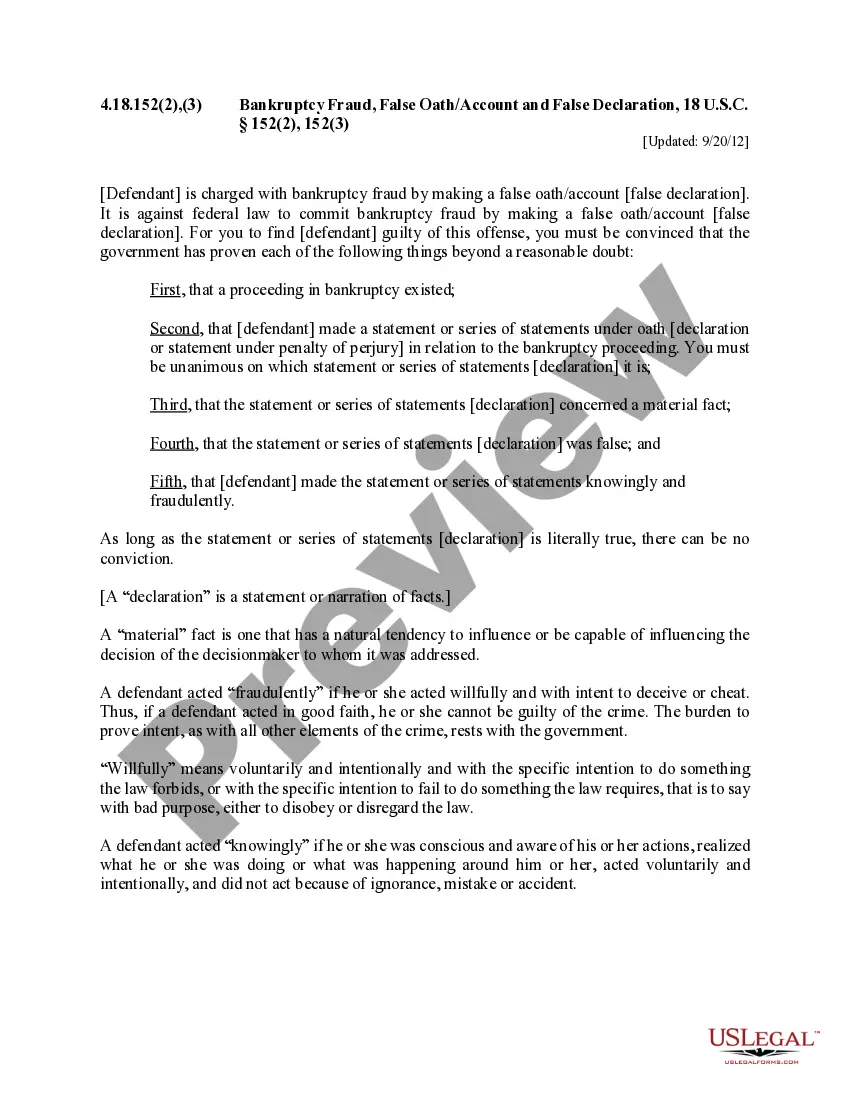
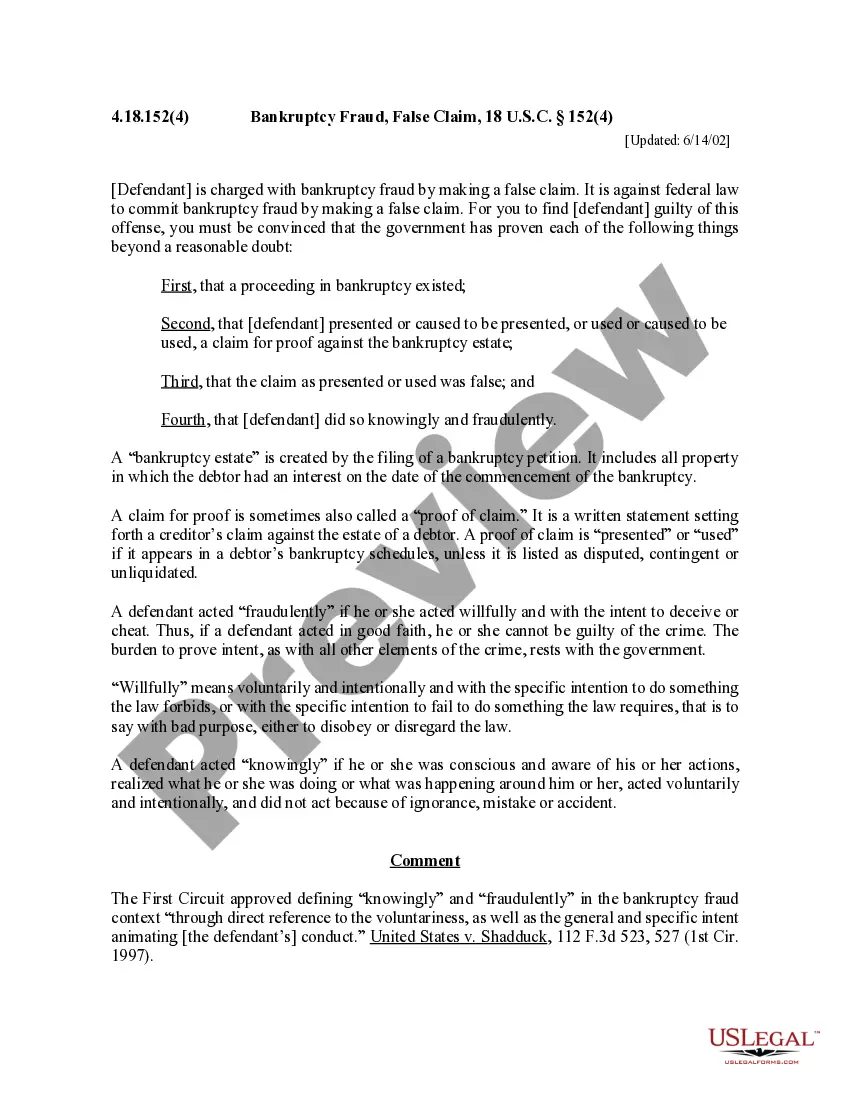
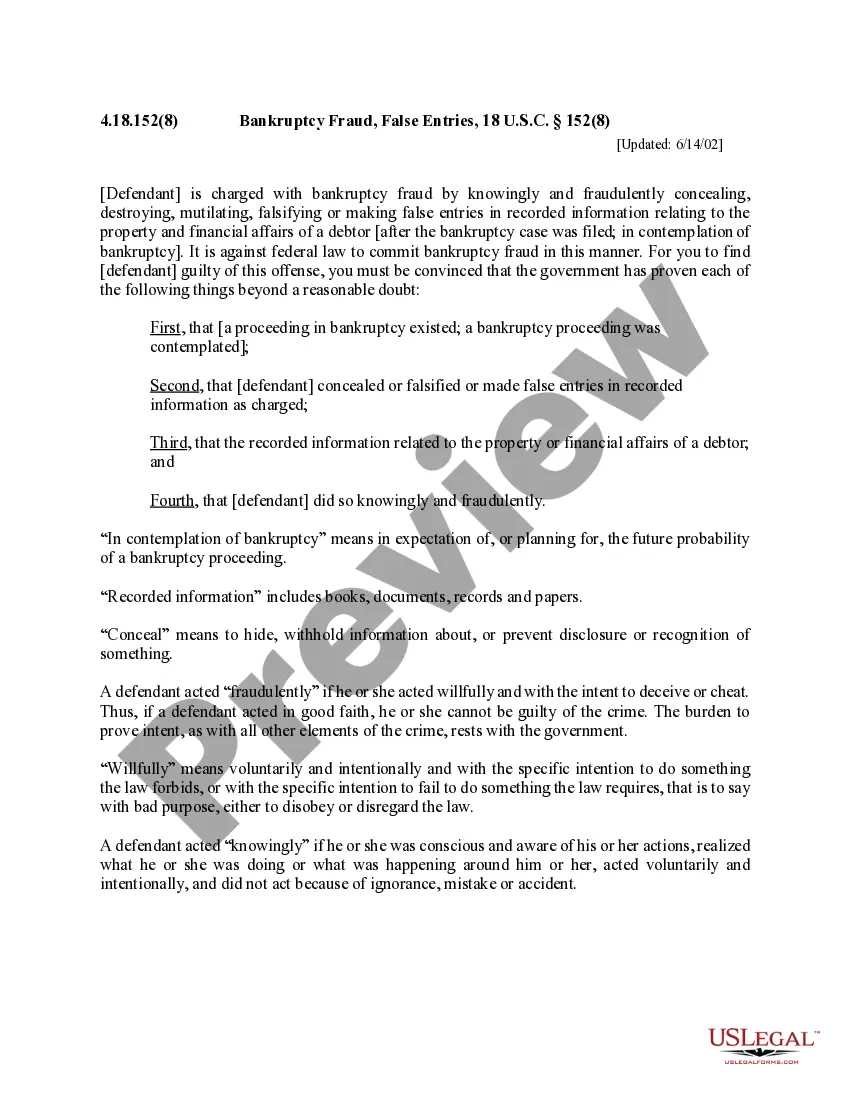
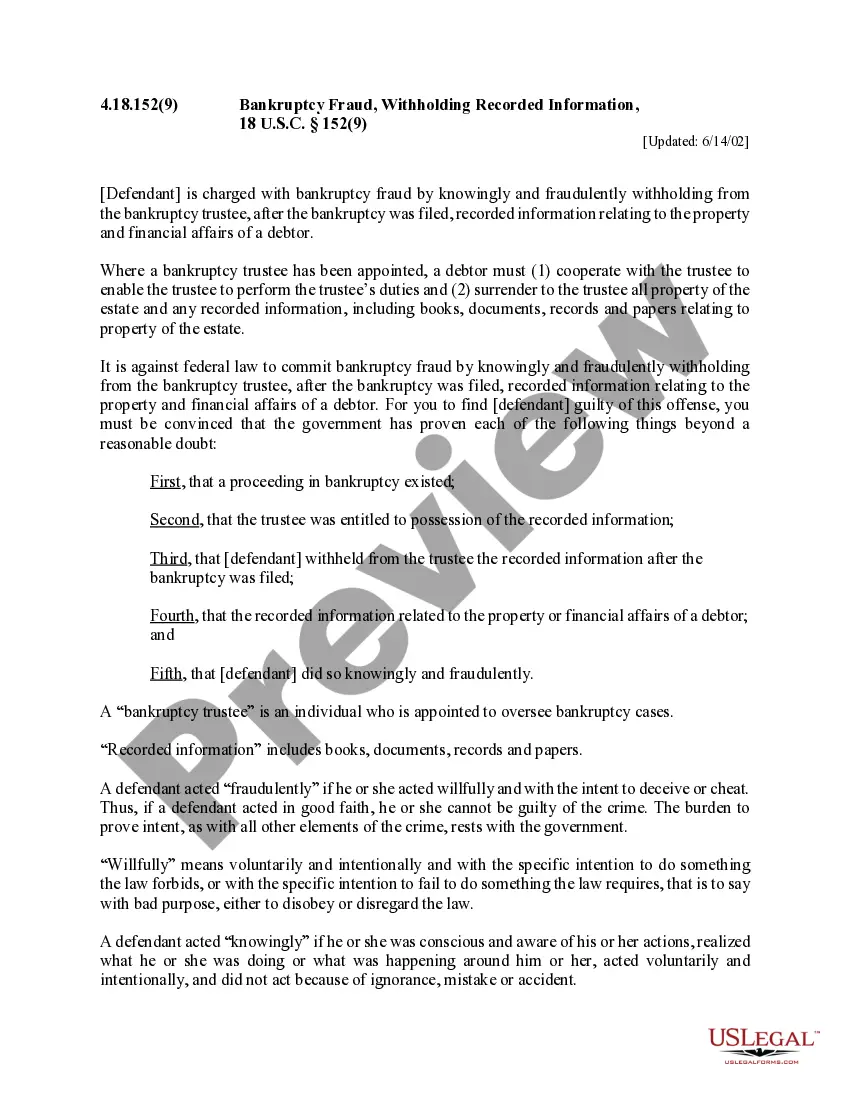

How to fill out Maine Bankruptcy Fraud, Concealment, 18 U.S.C. Sec. 152(1)?
If you’re looking for a method to effectively handle the Maine Bankruptcy Fraud, Concealment, 18 U.S.C. Sec. 152(1) without enlisting the help of a legal advisor, then you’re in the perfect place.
US Legal Forms has established itself as the most comprehensive and trustworthy repository of official templates for every personal and business scenario.
Another significant benefit of US Legal Forms is that you will never misplace the documents you obtained - you can access any of your downloaded forms in the My documents section of your profile whenever needed.
- Verify that the document displayed on the page aligns with your legal circumstances and state regulations by reviewing its text description or exploring the Preview mode.
- Enter the form name in the Search tab at the top of the page and select your state from the dropdown menu to locate an alternative template if any discrepancies arise.
- Repeat the content verification process and click Buy now when you are assured the paperwork complies with all requirements.
- Log in to your account and select Download. If you don’t have a subscription yet, register for the service and choose a plan.
- Utilize your credit card or the PayPal option to purchase your US Legal Forms subscription. The form will be available for download immediately afterwards.
- Select the format in which you wish to receive your Maine Bankruptcy Fraud, Concealment, 18 U.S.C. Sec. 152(1) and download it by clicking the corresponding button.
- Import your template into an online editor to quickly complete and sign it, or print it out to prepare your hard copy manually.
Form popularity
FAQ
Chapter 7 bankruptcy is indeed one of the most common types of personal bankruptcy. It allows individuals to discharge most of their debts while liquidating non-exempt assets to repay creditors. However, understanding the legal implications, including aspects related to Maine Bankruptcy Fraud, Concealment, 18 U.S.C. Sec. 152(1), is crucial to avoiding complications during this essential process.
Yes, one of the most prevalent schemes of bankruptcy fraud is the concealment of assets. Individuals may attempt to hide assets to avoid liquidation during the bankruptcy process. This act is illegal and can fall under Maine Bankruptcy Fraud, Concealment, 18 U.S.C. Sec. 152(1), resulting in severe penalties for those caught trying to mislead the court.
So intentional misrepresentations, or lawsuits based on intentional conduct that result in a judgment, could also be seen as not dischargeable in your bankruptcy case. This is why, if you are ever sued, and the lawsuit alleges fraud in any capacity, it should be concerning.
An individual intentionally files false or incomplete forms. Including false information on a bankruptcy form may also constitute perjury. An individual files multiple times using either false information or real information in several jurisdictions.
The crime of bankruptcy fraud is embodied in Title 18 U.S. Code § 157. This federal law prohibits anyone from knowingly filing a bankruptcy petition or related document with the intent to defraud creditors or the court.
Proving fraud can be difficult. For almost all bankruptcy crimes, the government has to resolve two questions: Did the defendant misrepresent a material (important) fact? Did the defendant intend to deceive, hinder, or delay the court or the creditors?
18 U.S.C. § 152 "attempts to cover all the possible methods by which a bankrupt or any other person may attempt to defeat the Bankruptcy Act through an effort to keep assets from being equitably distributed among creditors." Stegeman v.
A bankruptcy debtor is required to sign his/her petition under penalty of perjury, which can result in a fine or even prison time up to 8 years.
Chapter 7 bankruptcy liquidates a debtor's nonexempt assets, selling them to raise money for creditor repayment. Because it is means-tested, a common type of fraud is to lie about or conceal income to guarantee eligibility for this Chapter of bankruptcy.
Conspiracy to Commit Bankruptcy Fraud Pursuant to 18 U.S.C. § 371, Conspiracy to Commit Bankruptcy Fraud occurs when two or more people conspire to commit Bankruptcy Fraud. The government often charges minor participants with Conspiracy to Commit Bankruptcy Fraud because under 18 U.S.C.