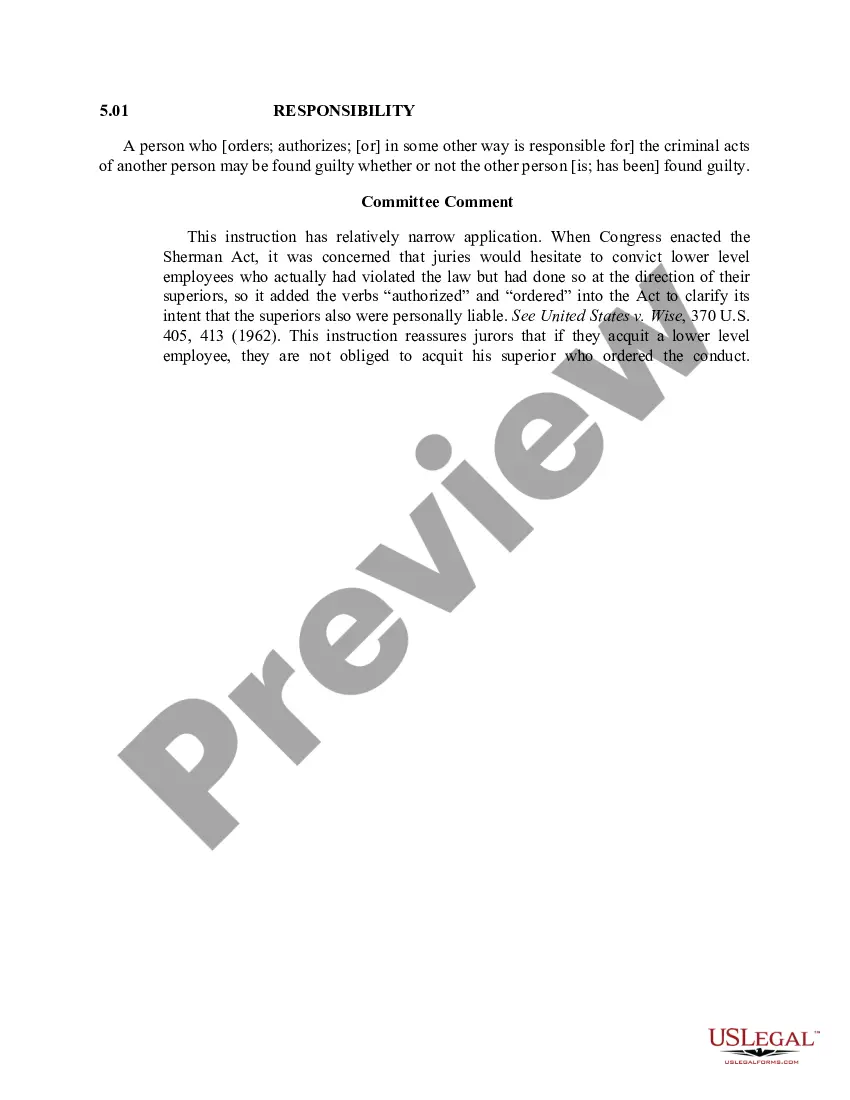
5.01 RESPONSIBILITY
About this form
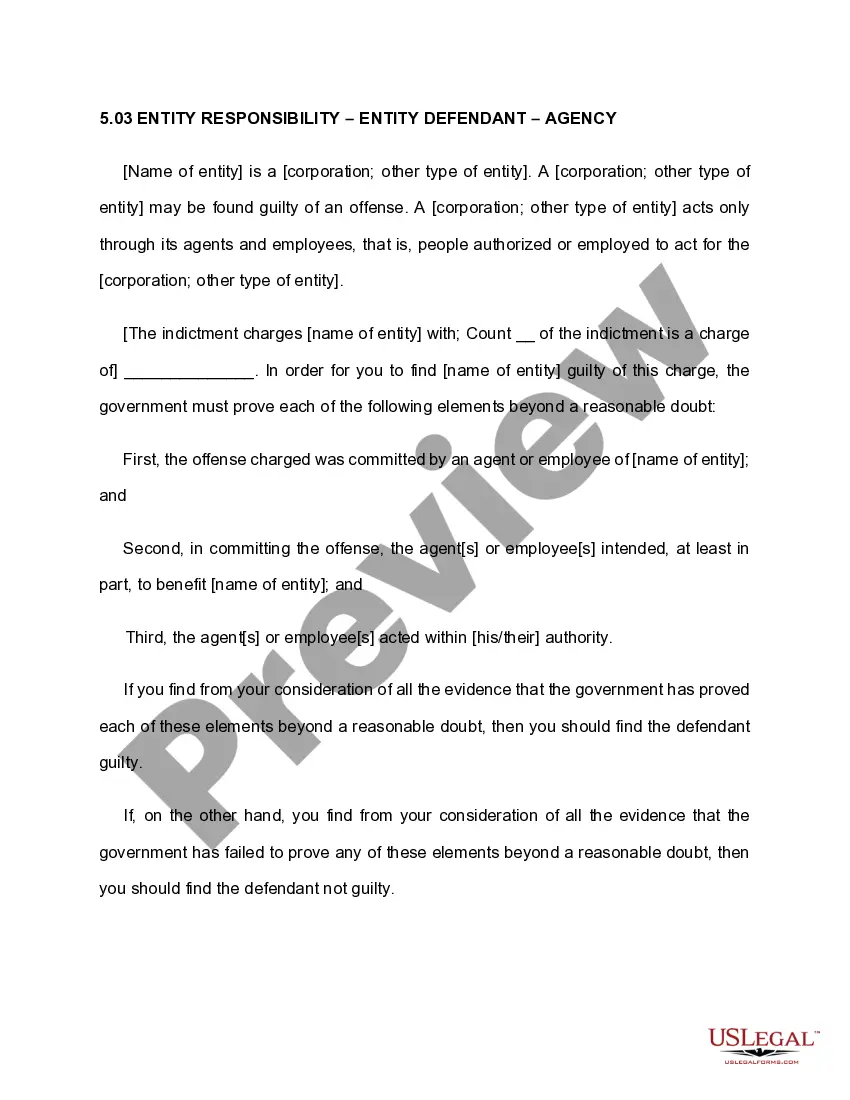
The 5.01 Responsibility form relates to the criminal liability of individuals involved in directing or authorizing criminal acts. It clarifies that a person can be found guilty even if the actual perpetrator of the crime has not been convicted. This instruction is particularly relevant in cases where a superior is implicated in directing unlawful activities, highlighting the expectation of accountability for those in leadership positions.
Main sections of this form
- Definition of responsibility for criminal acts.
- Clarification of terms such as "orders" and "authorizes."
- Explanation of juror expectations when assessing cases involving lower level employees.
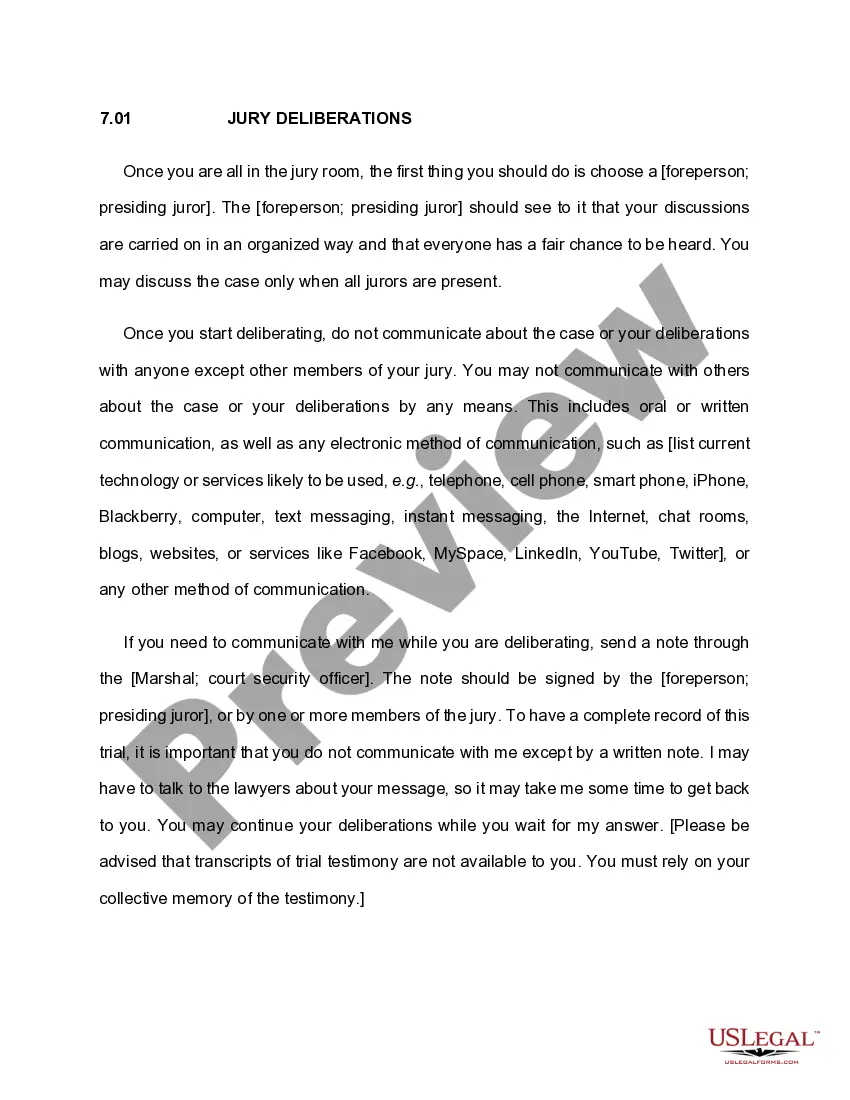
- Committee comment providing context and legal background.

When to use this document
This form is applicable in legal contexts where there are questions of direct involvement in criminal acts by a supervisor or higher authority. It is relevant during trials involving accusations against lower-level employees who may have been acting under the direction of their superiors. Use it to ensure jurors understand their ability to hold higher officials accountable regardless of the outcome for subordinate employees.
Who needs this form
- Legal professionals involved in criminal defense or prosecution.
- Judges presiding over cases with potential implications for higher authorities.
- Juries needing guidance on the accountability of defendants in corporate or organizational contexts.
Steps to complete this form
- Review the primary definitions and responsibilities outlined in the form.
- Clarify the context of the case to determine applicable liability standards.
- Discuss the terms of the instruction with jurors to aid their understanding.
- Ensure any references to liability are consistent with judicial standards.
Notarization requirements for this form
Notarization is generally not required for this form. However, certain states or situations might demand it. You can complete notarization online through US Legal Forms, powered by Notarize, using a verified video call available anytime.
Get your form ready online
Our built-in tools help you complete, sign, share, and store your documents in one place.
Make edits, fill in missing information, and update formatting in US Legal Forms—just like you would in MS Word.
Download a copy, print it, send it by email, or mail it via USPS—whatever works best for your next step.
Sign and collect signatures with our SignNow integration. Send to multiple recipients, set reminders, and more. Go Premium to unlock E-Sign.
If this form requires notarization, complete it online through a secure video call—no need to meet a notary in person or wait for an appointment.
We protect your documents and personal data by following strict security and privacy standards.

Make edits, fill in missing information, and update formatting in US Legal Forms—just like you would in MS Word.

Download a copy, print it, send it by email, or mail it via USPS—whatever works best for your next step.

Sign and collect signatures with our SignNow integration. Send to multiple recipients, set reminders, and more. Go Premium to unlock E-Sign.

If this form requires notarization, complete it online through a secure video call—no need to meet a notary in person or wait for an appointment.

We protect your documents and personal data by following strict security and privacy standards.
Mistakes to watch out for
- Failing to clarify the roles and responsibilities which may lead to confusion regarding liability.
- Assuming that the acquittal of a subordinate automatically leads to the acquittal of a supervisor.
- Ignoring the specific language of the jury instructions which may alter legal interpretations.
Benefits of completing this form online
- Convenient access to legal templates anytime, anywhere.
- Editable format allows for custom modifications according to case specifics.
- Reliable sources, drafted by licensed attorneys, ensure legal accuracy.
Legal use & context
- This form is pivotal in clarifying the principle of supervisory liability in criminal cases.
- Ensures that jurors understand their discretion when considering subordinate actions.
- Can be critical in maintaining organizational accountability in corporate crimes.
Looking for another form?
Form popularity
FAQ
Rule 5.03(b) of the Texas Rules of Evidence and Rule 5.03(b) of the Texas Rules of Criminal Evidence provide for a privilege with respect to "confidential communications" between client and lawyer.
The unauthorized practice of law is when a person who is not a licensed attorney in Texas provides legal advice or representation. This may be unlawful, with the exception of actions such as providing legal documents with a clear disclaimer. Only licensed attorneys may practice law in Texas.
1. An agreement restricting the rights of partners or associates to practice after leaving a firm not only limits their professional autonomy but also limits the freedom of clients to choose a lawyer.
In a criminal case, a client has a privilege to prevent a lawyer or lawyer's representative from disclosing any other fact that came to the knowledge of the lawyer or the lawyer's representative by reason of the attorney?client relationship.
When this rule forbids a jury from drawing an inference from a privilege claim, the court must, on request of a party against whom the jury might draw the inference, instruct the jury ingly.
Rule 505 - Privilege For Communications to a Clergy Member (a) Definitions. In this rule: (1) A "clergy member" is a minister, priest, rabbi, accredited Christian Science Practitioner, or other similar functionary of a religious organization or someone whom a communicant reasonably believes is a clergy member.
(5) A communication is "confidential" if not intended to be disclosed to third persons other than those: (A) to whom disclosure is made to further the rendition of professional legal services to the client; or (B) reasonably necessary to transmit the communication.
Duties Advise and represent clients in courts, before government agencies, and in private legal matters. Communicate with their clients, colleagues, judges, and others involved in the case. Conduct research and analysis of legal problems. Interpret laws, rulings, and regulations for individuals and businesses.