Maine Stipulations
What this document covers
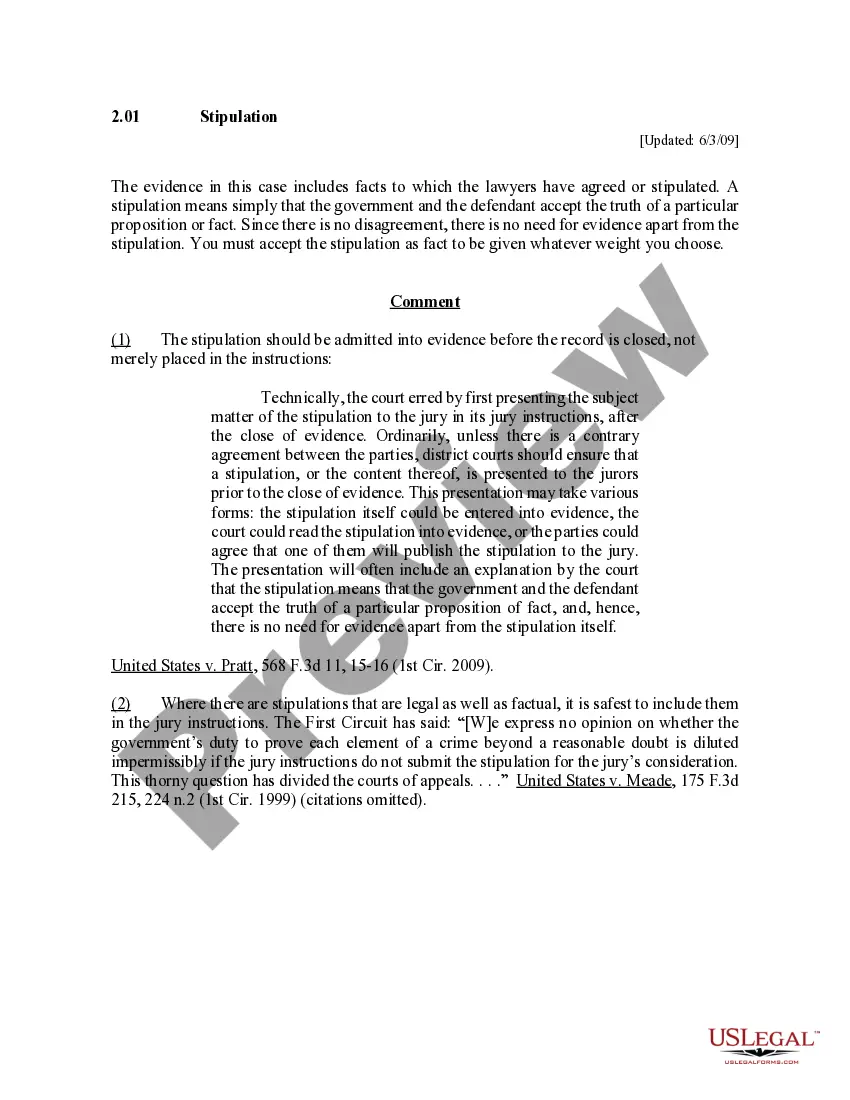
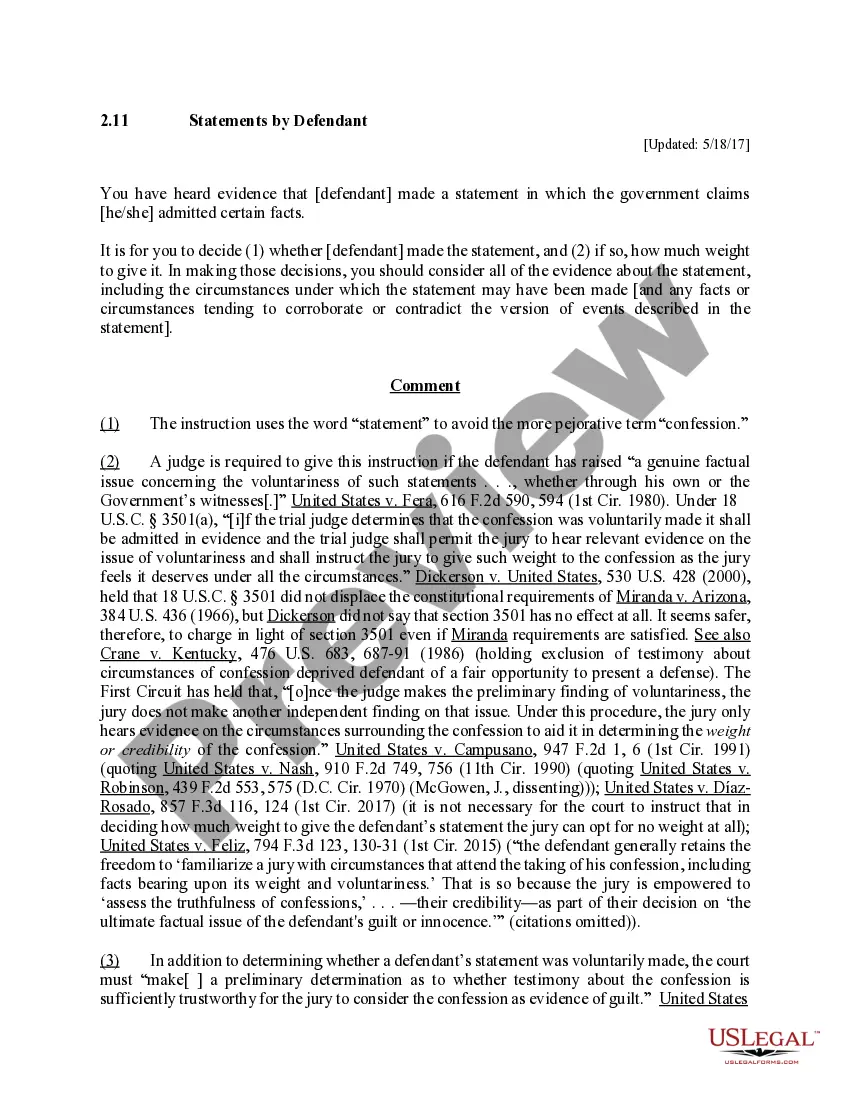
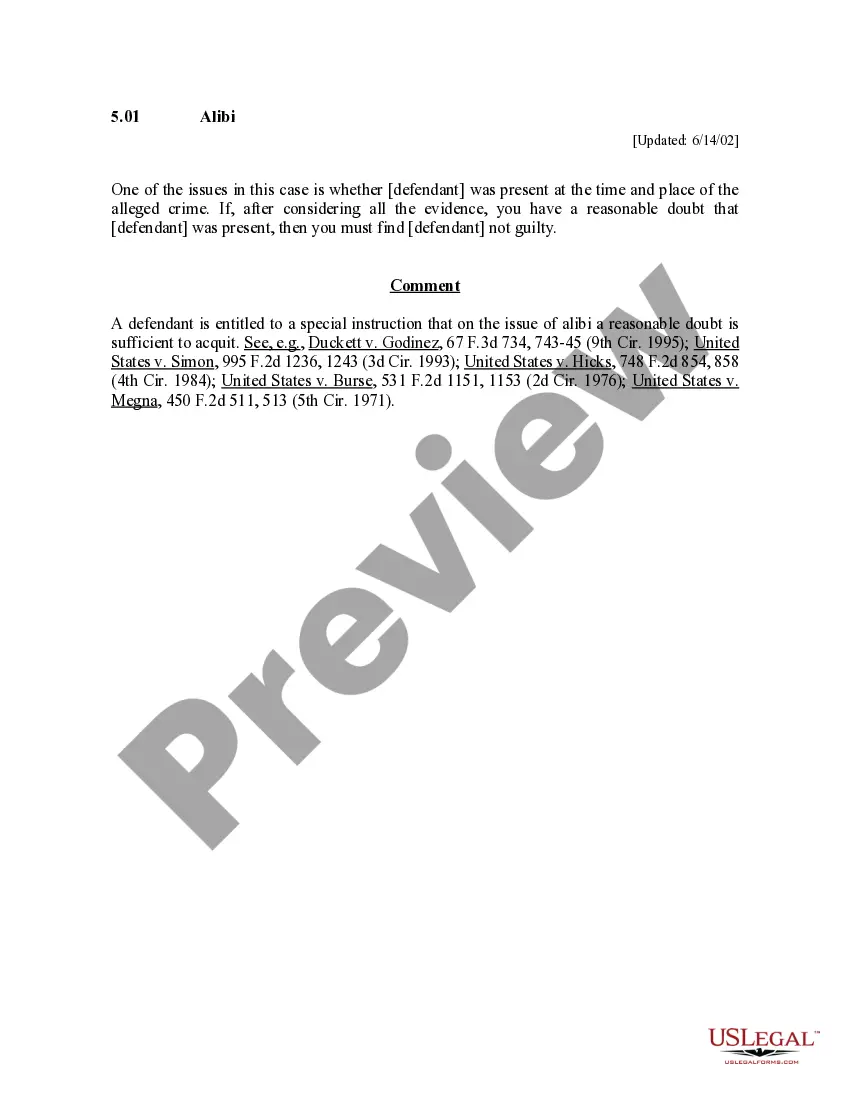
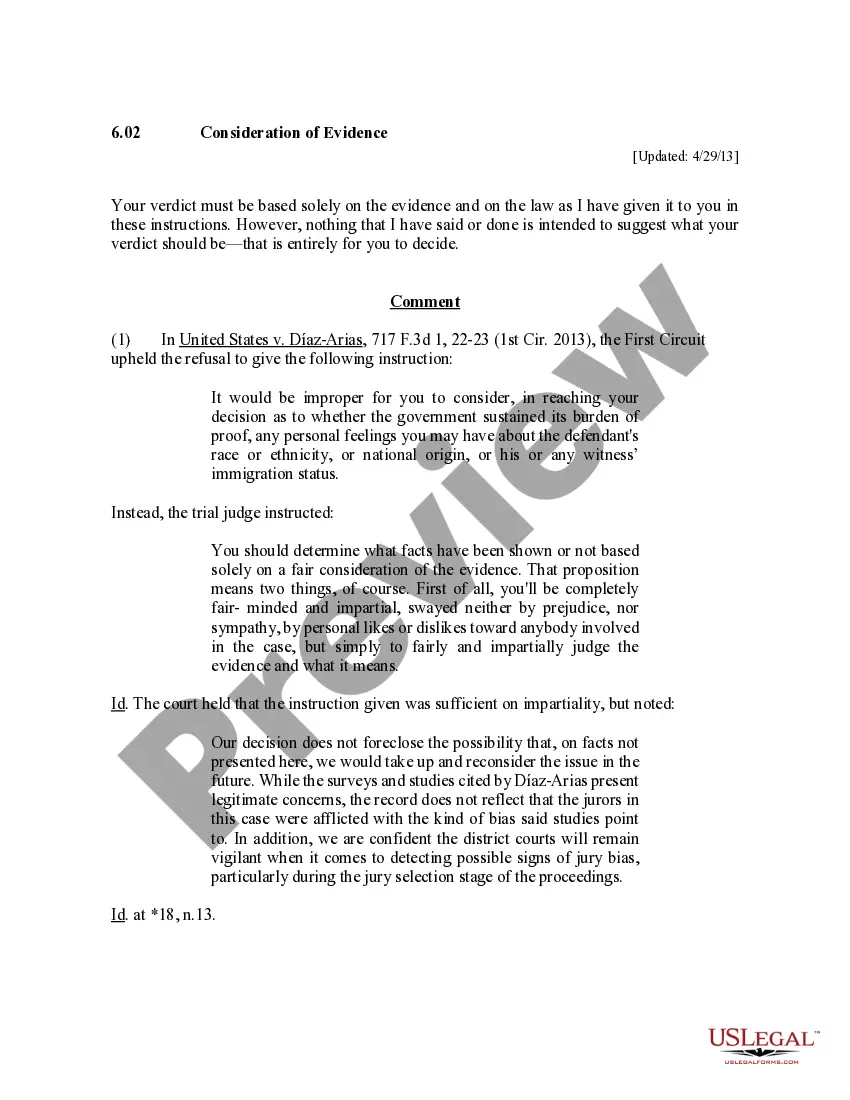
The Stipulation form is a legal document used in federal district court cases to outline facts that both the prosecution and defense agree upon. It serves to streamline court proceedings by eliminating the need for evidence regarding agreed facts, thus allowing juries to focus on disputed issues. This form is distinct from other legal documents as it specifically addresses the mutual acceptance of facts, making it crucial for cases where agreement on certain points exists, particularly in criminal cases in Maine.
Main sections of this form
- Introduction of the stipulation, stating the facts agreed upon by both parties.
- Clear statement on the acceptance of these facts without further evidence required.
- Provision for the presentation of the stipulation to the jury.
- Explanation on the importance of presenting stipulations before the close of evidence.
- Jurisdiction-specific considerations related to the inclusion of stipulations in jury instructions.
When to use this document
This form is used in scenarios where the prosecution and defense agree on certain facts regarding a criminal case. For instance, it is commonly utilized during trial proceedings to clarify uncontroversial points, allowing the trial to proceed more efficiently. This is particularly relevant in criminal cases where time and clarity are of the essence.
Intended users of this form
- Legal professionals involved in federal criminal cases.
- Defendants who are negotiating with the prosecution.
- Attorneys seeking to expedite court proceedings by agreeing on facts with opposing counsel.
- Parties in a criminal trial looking to present clear evidence to the jury efficiently.
How to complete this form
- Identify the parties involved in the stipulation, including the government and the defendant.
- Clearly outline the facts that both parties are agreeing to.
- Ensure that the stipulation is presented to the court before the close of evidence.
- Obtain any necessary approvals or signatures from both parties.
- File the stipulation with the court as required by local rules.
Notarization requirements for this form
In most cases, this form does not require notarization. However, some jurisdictions or signing circumstances might. US Legal Forms offers online notarization powered by Notarize, accessible 24/7 for a quick, remote process.
Get your form ready online
Our built-in tools help you complete, sign, share, and store your documents in one place.
Make edits, fill in missing information, and update formatting in US Legal Forms—just like you would in MS Word.
Download a copy, print it, send it by email, or mail it via USPS—whatever works best for your next step.
Sign and collect signatures with our SignNow integration. Send to multiple recipients, set reminders, and more. Go Premium to unlock E-Sign.
If this form requires notarization, complete it online through a secure video call—no need to meet a notary in person or wait for an appointment.
We protect your documents and personal data by following strict security and privacy standards.

Make edits, fill in missing information, and update formatting in US Legal Forms—just like you would in MS Word.

Download a copy, print it, send it by email, or mail it via USPS—whatever works best for your next step.

Sign and collect signatures with our SignNow integration. Send to multiple recipients, set reminders, and more. Go Premium to unlock E-Sign.

If this form requires notarization, complete it online through a secure video call—no need to meet a notary in person or wait for an appointment.

We protect your documents and personal data by following strict security and privacy standards.
Common mistakes to avoid
- Failing to present the stipulation to the jury before the close of evidence.
- Not clearly defining the agreed-upon facts, leading to potential misunderstandings.
- Overlooking jurisdiction-specific rules that may influence the stipulation's enforceability.
Advantages of online completion
- Convenience of accessing the form from anywhere, anytime.
- Editable format allows for easy customization to meet specific case needs.
- Reliability of using professionally drafted templates by licensed attorneys.
Looking for another form?

Form popularity
FAQ
If service is made by a person other than a sheriff or the sheriff's deputy or another person authorized by law, that person shall make proof thereof by affidavit. The officer or other person serving the process shall endorse the date of service upon the copy left with the defendant or other person.
The Rhode Island General Assembly passed its own "Maine Law" in 1852, which outlawed sale or consumption of liquor for eleven years.
Evidence is relevant if: (a) It has any tendency to make a fact more or less probable than it would be without the evidence; and (b) The fact is of consequence in determining the action.
A pleading which sets forth a claim for relief, whether an original claim, counterclaim, cross-claim, or third-party claim, shall contain (1) a short and plain statement of the claim showing that the pleader is entitled to relief, and (2) a demand for judgment for the relief which the pleader seeks.
17-A, § 511. The law also prohibits the concealed visual surveillance in public areas of an individual's body either under or through that person's clothing without that person's knowledge or consent.
Rule 55(c) permits a default to be set aside for good cause shown. If a default judgment has been rendered, it may be set aside only in ance with Rule 60(b), which replaces the Maine provisions for review as of right within one year in such a case.
Like the Federal Rule the new Maine Rule requires that in any action attacking the validity of an order of an officer or agency of the State of Maine not made a party, a copy of the summons and of the complaint just be mailed to that officer or agency.
Whenever a party has the right or is required to do some act or take some proceedings within a prescribed period after the service of a notice or other paper upon the party and the notice or paper is served upon the party by mail, 3 days shall be added to the prescribed period.