Maine Living Trust for Husband and Wife with One Child
Overview of this form
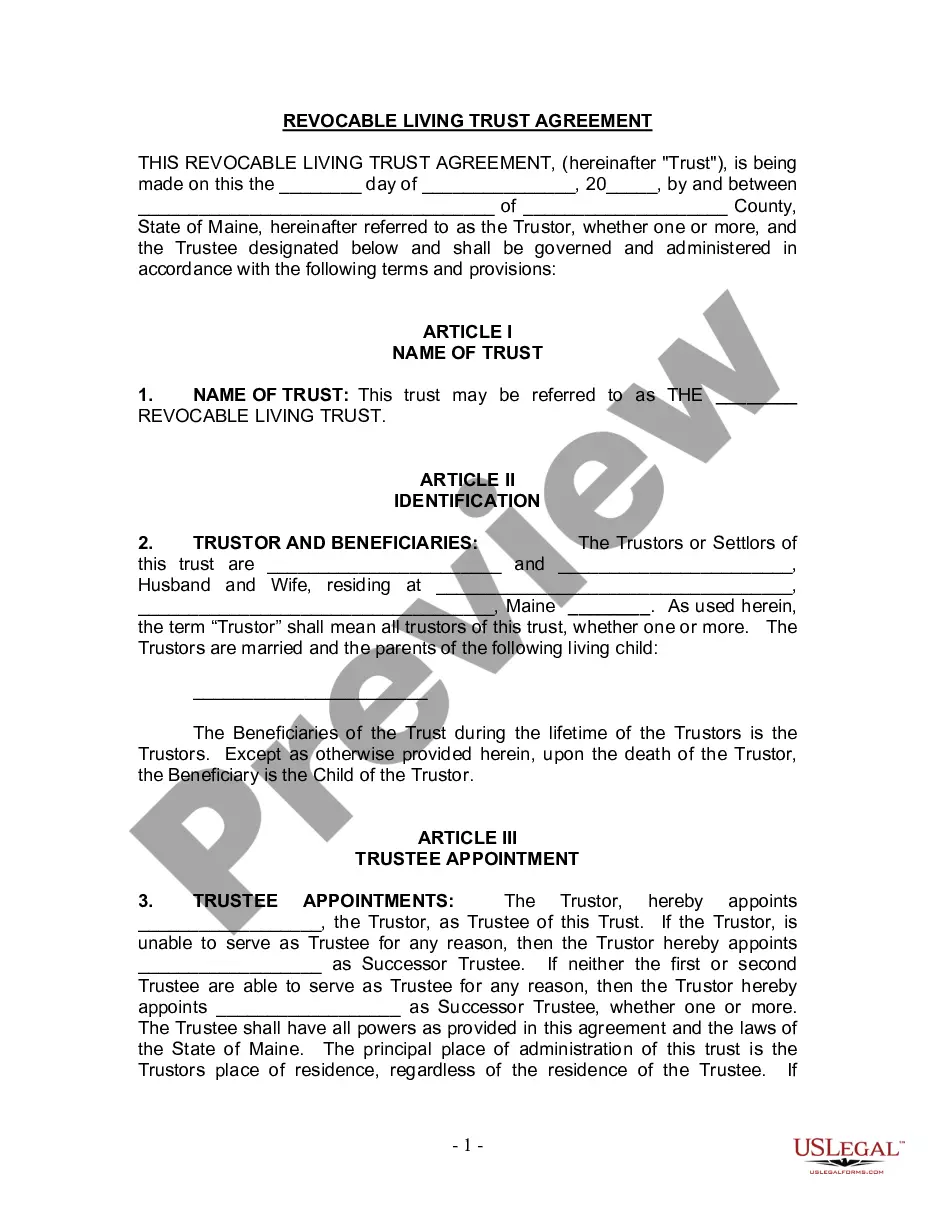
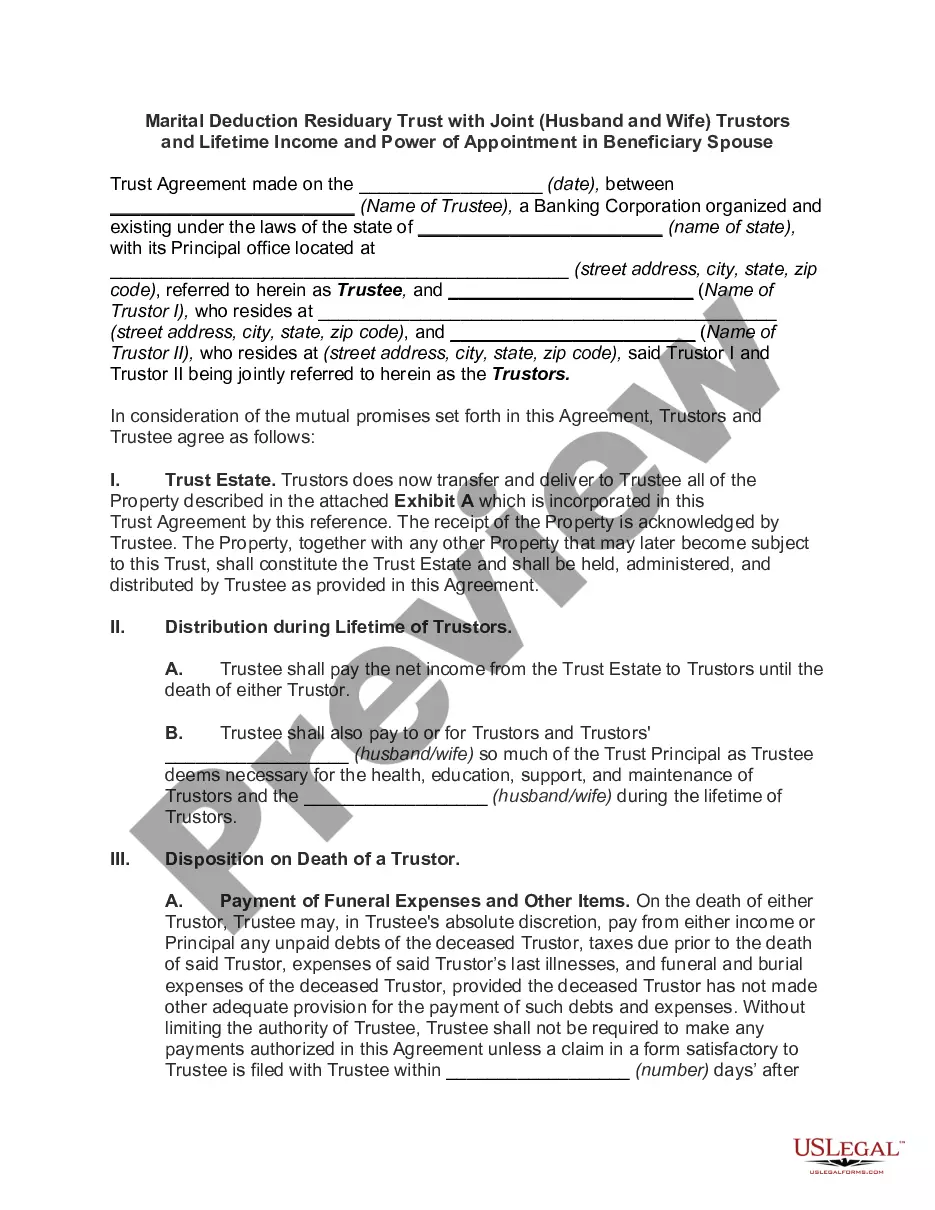
This form is a Living Trust designed for a husband and wife with one child. It serves as an estate planning tool that allows the couple to manage and distribute their assets while they are alive and after their passing. Unlike a will, which goes through probate, a living trust enables the transfer of assets directly to beneficiaries, making the process more efficient and private. This trust provides the couple with control over their property during their lifetime and easier management of their estate upon their death.
What’s included in this form
- Identification of the Trustors (husband and wife) and their child as beneficiaries.
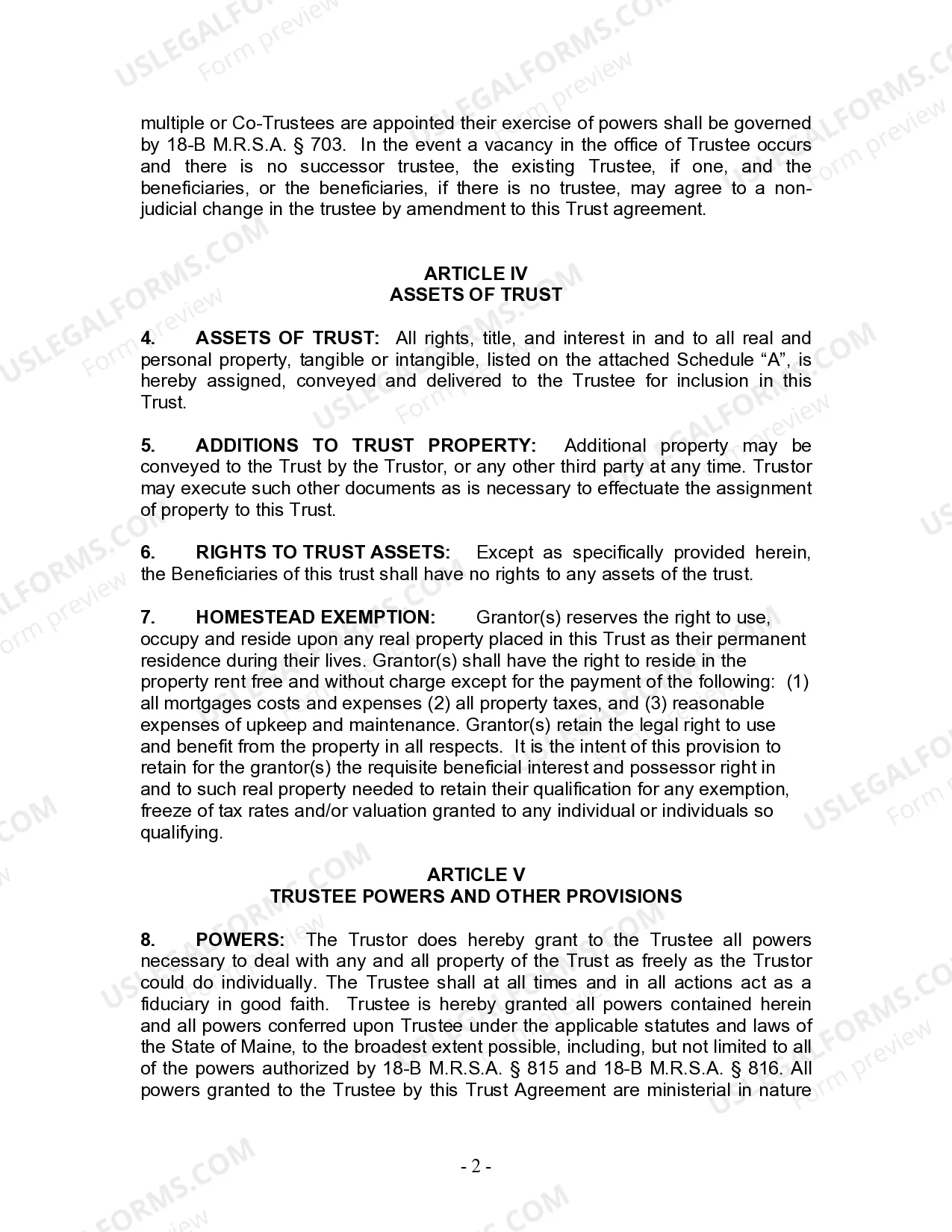
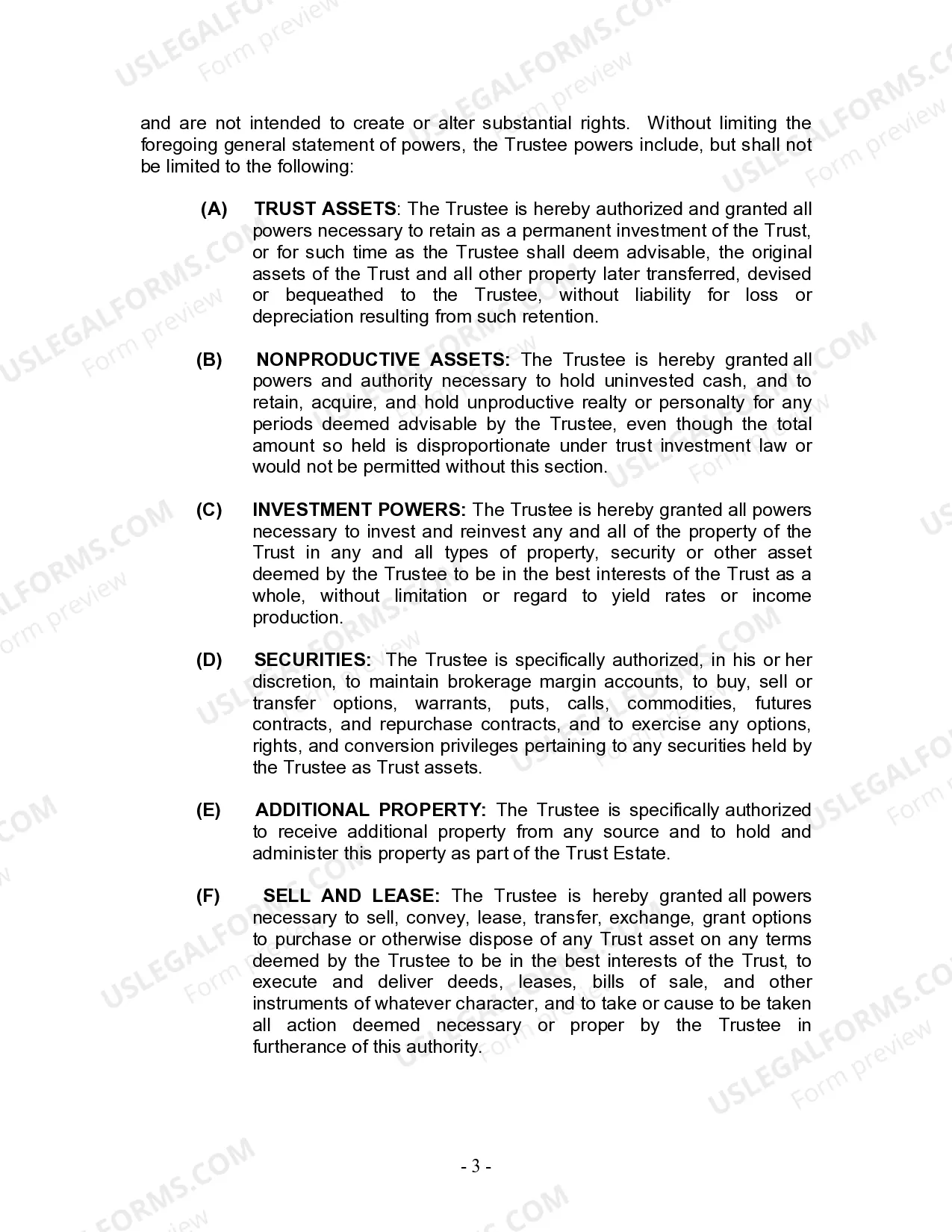
- Appointment of a Trustee responsible for managing the trust's assets.
- Specification of the assets included in the trust and their management rules.
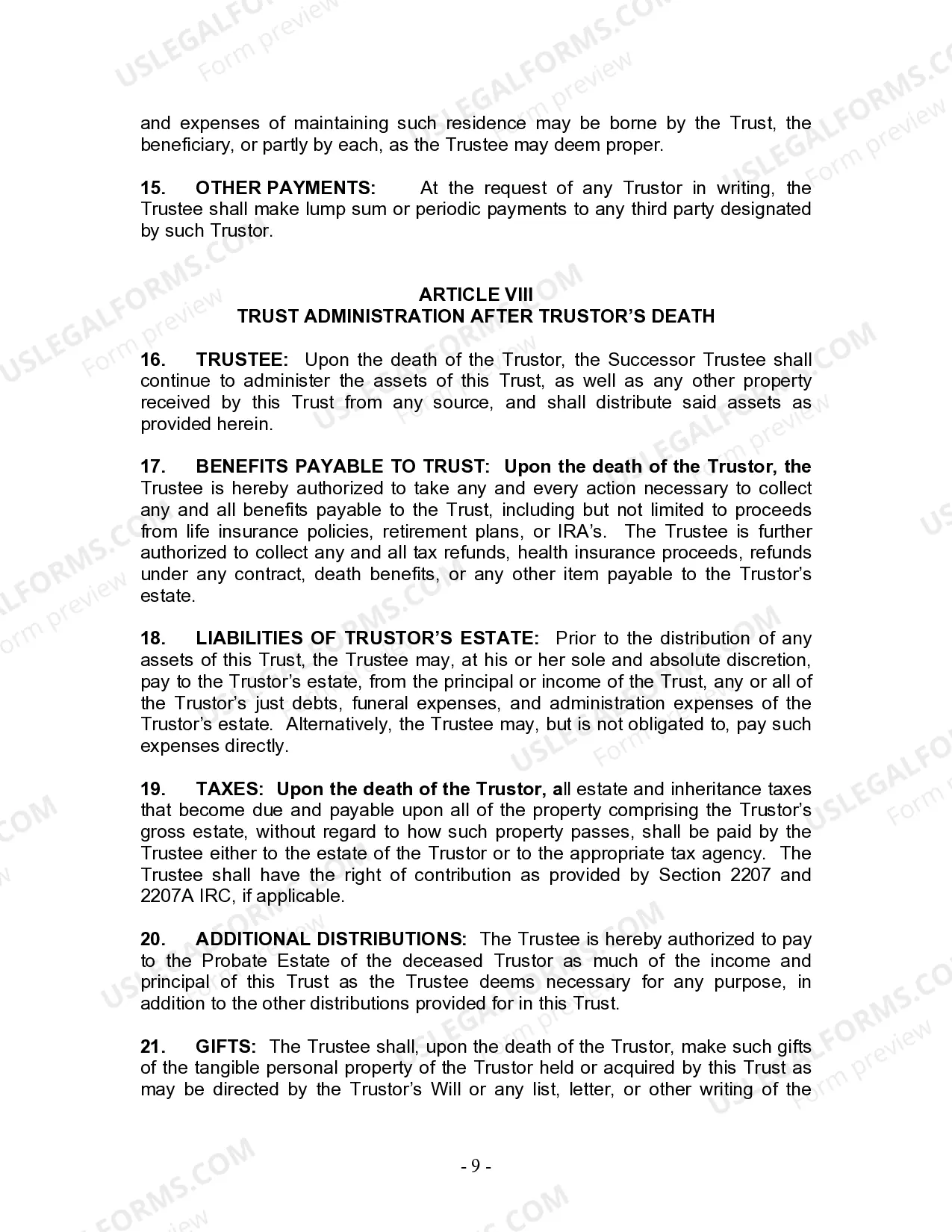
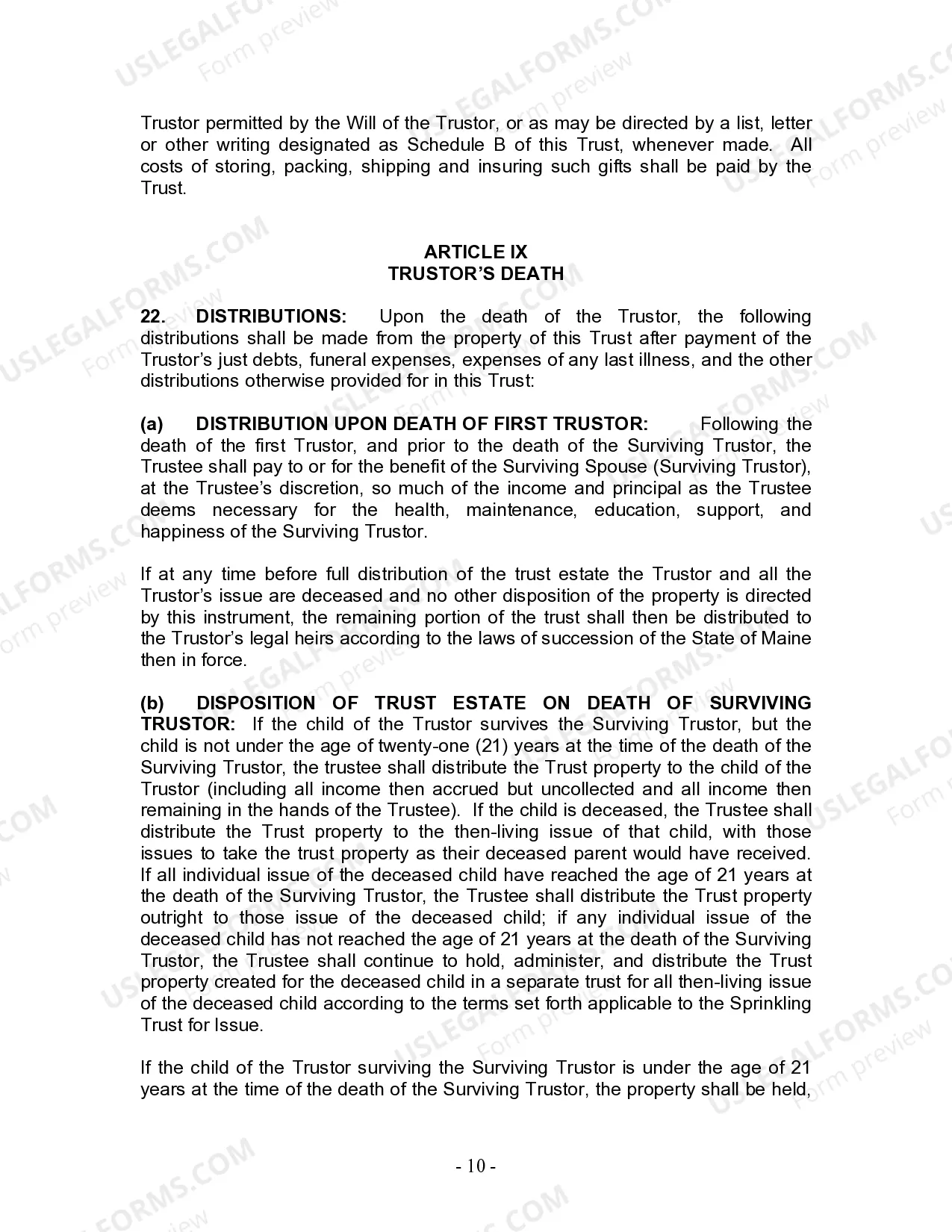
- Provisions for distributions to beneficiaries during the life of the Trustors and after their deaths.
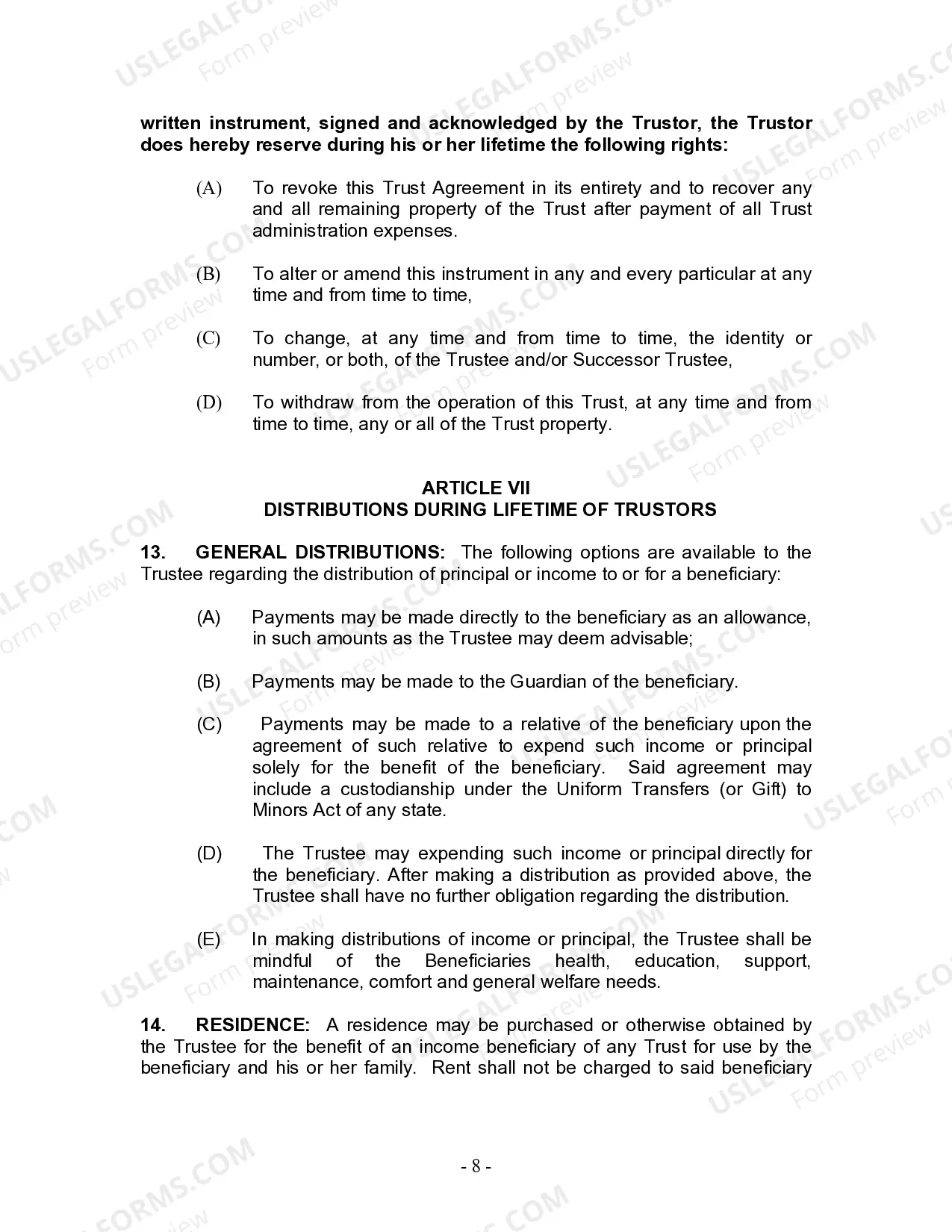
- Rights of the Trustors to amend or revoke the trust during their lifetime.

Situations where this form applies
This Living Trust form is ideal for couples who want to ensure that their assets are managed according to their wishes during their lifetime and distributed promptly and privately after their death. It is particularly beneficial for those who wish to avoid the lengthy probate process. Consider using this form if you are planning your estate, managing property, or seeking to provide for your child in a structured manner.
Who needs this form
This form is intended for:
- Couples (husband and wife) with at least one child.
- Individuals looking to manage their assets before and after their death.
- Parents wanting to ensure financial support for their child.
- Those wanting to simplify the transfer of assets and avoid probate.
- Any couple residing in Maine looking for a legally binding trust agreement.
Completing this form step by step
- Identify the Trustors by filling in their names and addresses.
- Designate a Trustee and any successor trustees by entering their names.
- List the assets that will be included in the trust in the attached Schedule A.
- Specify the rights of the Trustors regarding the management and distribution of the trust's assets.
- Sign the document in the presence of a notary public if required under state law.
Notarization requirements for this form
This form does not typically require notarization unless specified by local law. However, having it notarized may provide additional legal protection and authenticity, especially when dealing with financial institutions or real estate transfers.
Get your form ready online
Our built-in tools help you complete, sign, share, and store your documents in one place.
Make edits, fill in missing information, and update formatting in US Legal Forms—just like you would in MS Word.
Download a copy, print it, send it by email, or mail it via USPS—whatever works best for your next step.
Sign and collect signatures with our SignNow integration. Send to multiple recipients, set reminders, and more. Go Premium to unlock E-Sign.
If this form requires notarization, complete it online through a secure video call—no need to meet a notary in person or wait for an appointment.
We protect your documents and personal data by following strict security and privacy standards.

Make edits, fill in missing information, and update formatting in US Legal Forms—just like you would in MS Word.

Download a copy, print it, send it by email, or mail it via USPS—whatever works best for your next step.

Sign and collect signatures with our SignNow integration. Send to multiple recipients, set reminders, and more. Go Premium to unlock E-Sign.

If this form requires notarization, complete it online through a secure video call—no need to meet a notary in person or wait for an appointment.

We protect your documents and personal data by following strict security and privacy standards.
Avoid these common issues
- Not specifying all assets in Schedule A, which may lead to disputes later.
- Failing to appoint a successor trustee, which can complicate management after the Trustors' death.
- Not reviewing and updating the trust when significant life events occur, such as birth or death.
- Assuming the trust does not need to be reviewed periodically for legal compliance.
Why use this form online
- Instant access to downloadable documents tailored for your needs.
- Convenience of filling out and customizing the form from home.
- Time-saving compared to consulting with a lawyer face-to-face.
- Elimination of errors with guided instructions through the document.
- Cost-effective alternative to hiring a legal professional.
Legal use & context:
- This trust is legally recognized in the state of Maine, provided it is executed according to state laws and requirements.
- It prevents the need for probate for the assets listed in the trust, allowing for direct transfers upon the death of the Trustor.
Quick recap
- A Living Trust provides a way for couples to manage assets both during life and after death.
- It allows for seamless transfer of assets to beneficiaries without probate.
- This form is specific to Maine and follows relevant state laws.
- Correctly filling out the form ensures your wishes are carried out and can save time and money.
Looking for another form?
Form popularity
FAQ
When Should You Put a Bank Account into a Trust?More specifically, you can hold up to $166,250 of real or personal property outside a trust and avoid full probate in California. However, if you have more than $166,250 in a bank account, you should consider transferring it into your trust.
The trust in no way protects your assets, so that reasoning is simply false. You should put your vehicles into your trust in order to avoid probate. Only those assets held by the trust will avoid probate.
Houses and other real estate (even if they're mortgaged) stock, bond, and other security accounts held by brokerages (but think about naming a TOD beneficiary instead) small business interests (stock in a closely held corporation, partnership interests, or limited liability company shares)
So yes California law does seem to allow a trust to be a joint tenant.It has to be the person who transfers it to the trust. So, for example, Able and Buddy own a property together as joint tenants. Able wants to transfer his half to his trust.
Unfortunately for you and your other siblings, the Will generally does not override the Deed.Background: A key feature of the Joint Tenancy Deed is that, upon death of a joint tenant, it passes full ownership by automatic succession to the survivor without probate and with a minimum of paperwork.
Paperwork. Setting up a living trust isn't difficult or expensive, but it requires some paperwork. Record Keeping. After a revocable living trust is created, little day-to-day record keeping is required. Transfer Taxes. Difficulty Refinancing Trust Property. No Cutoff of Creditors' Claims.
Qualified retirement accounts 401ks, IRAs, 403(b)s, qualified annuities. Health saving accounts (HSAs) Medical saving accounts (MSAs) Uniform Transfers to Minors (UTMAs) Uniform Gifts to Minors (UGMAs) Life insurance. Motor vehicles.
With a shared trust, property left by one grantor to the survivor stays in the living trust when the first grantor dies; no transfer is necessary.You can transfer all of it to the trust, and each spouse can name beneficiaries (including each other) to receive his or her separate property.
Q: Can a person have more than one trust? A: Yes, it is not that uncommon for a person to be the beneficiary of multiple trusts. However, caution should be used. Trusts come in many shapes and sizes and can serve multiple purposes and can be established by you or by someone else for your benefit.