Maine Living Trust for Individual Who is Single, Divorced or Widow (or Widower) with Children

What is this form?
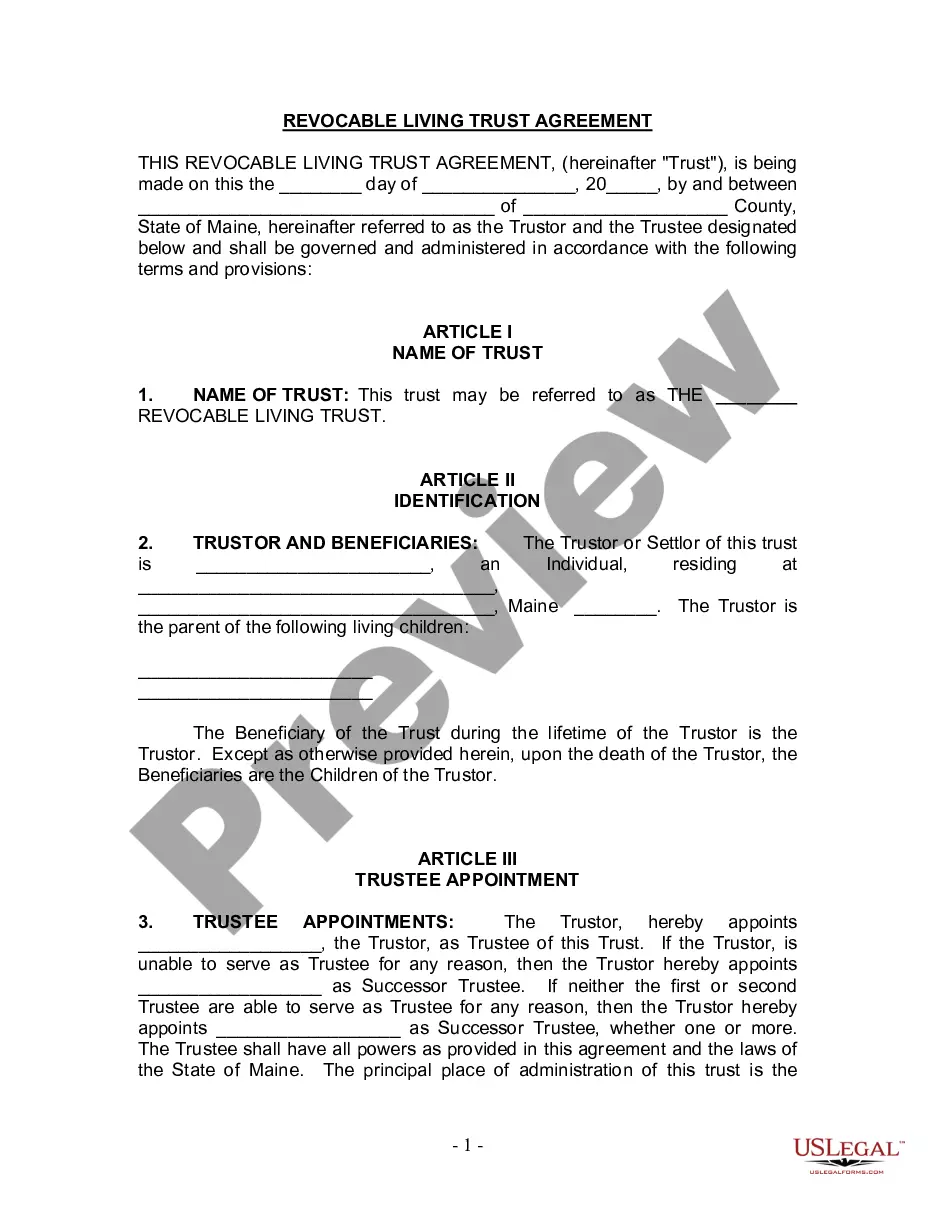
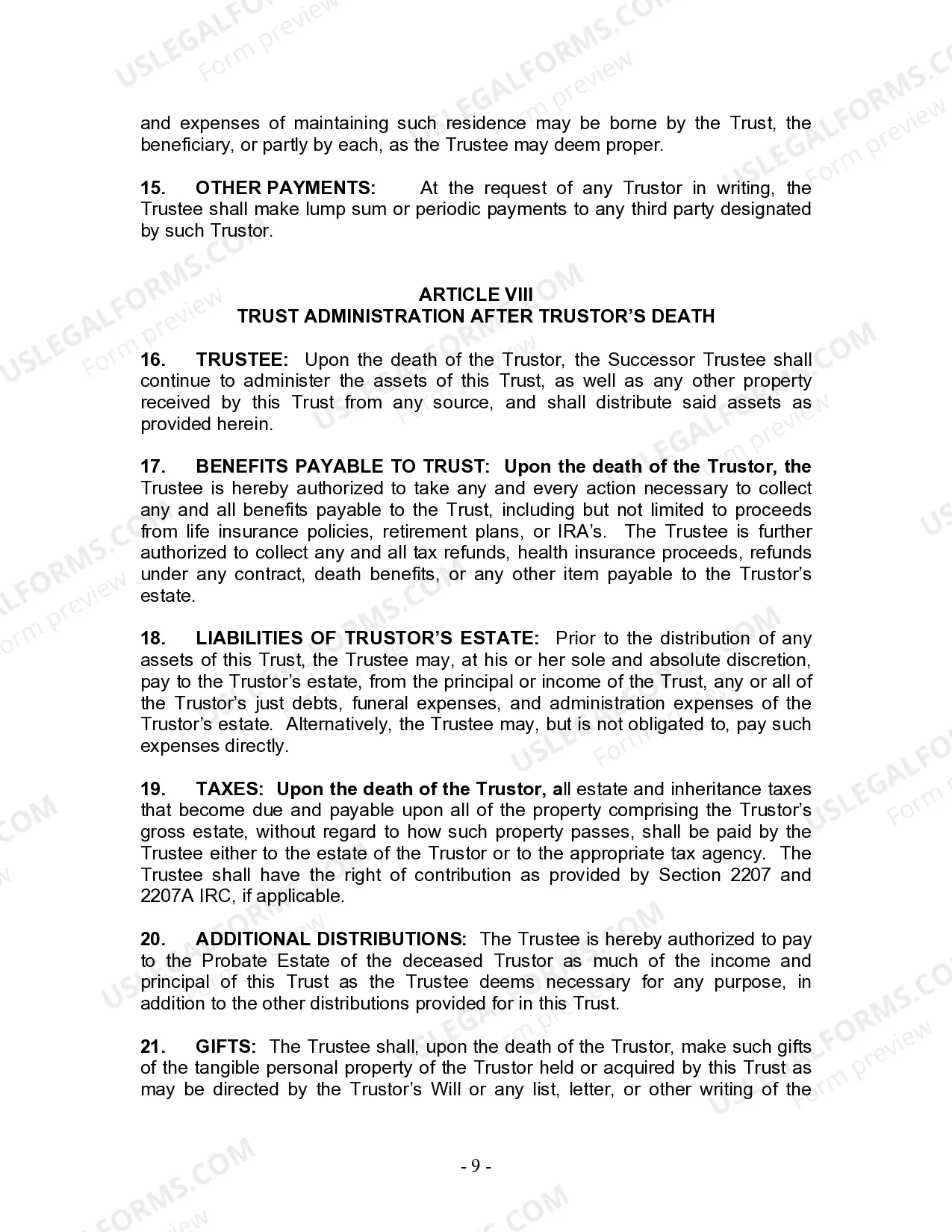
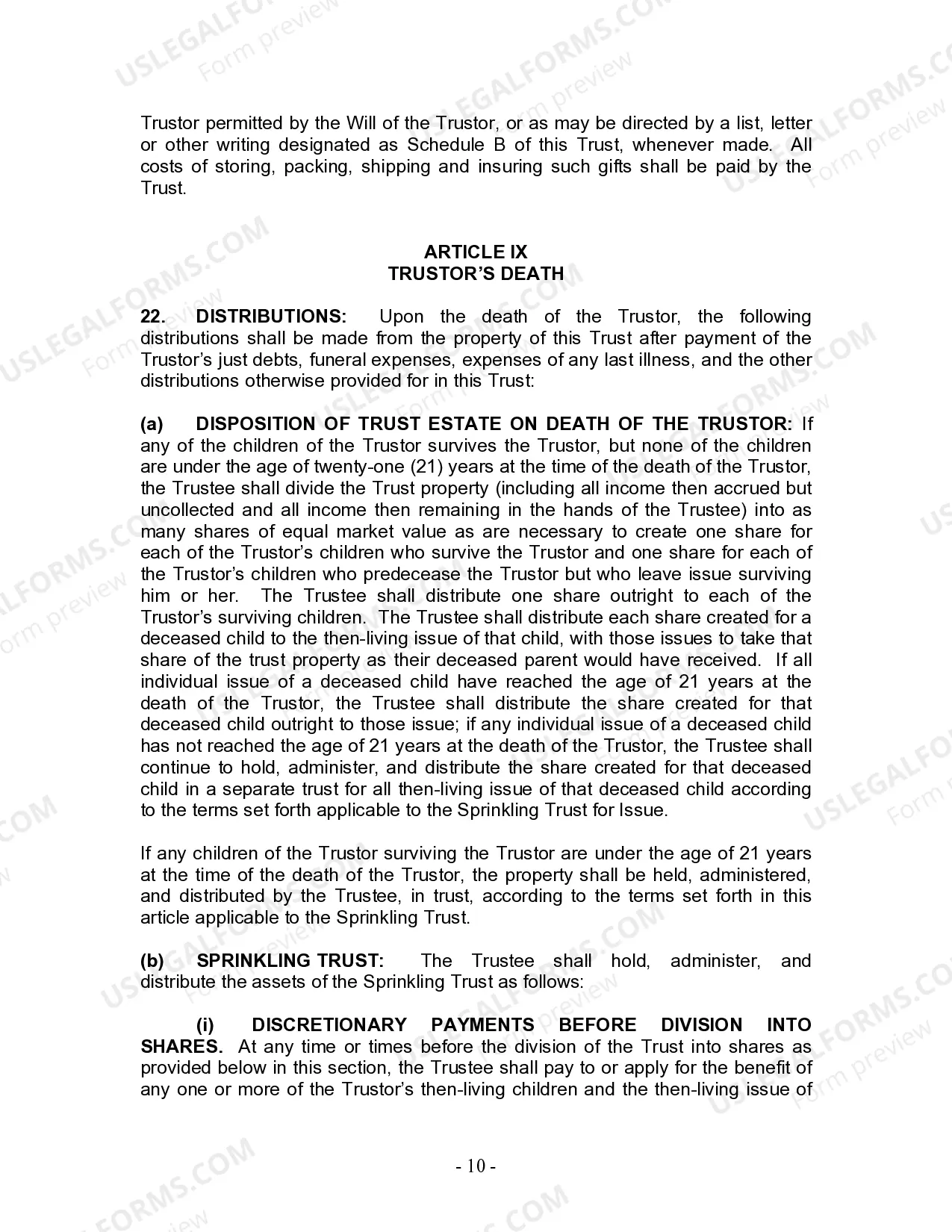
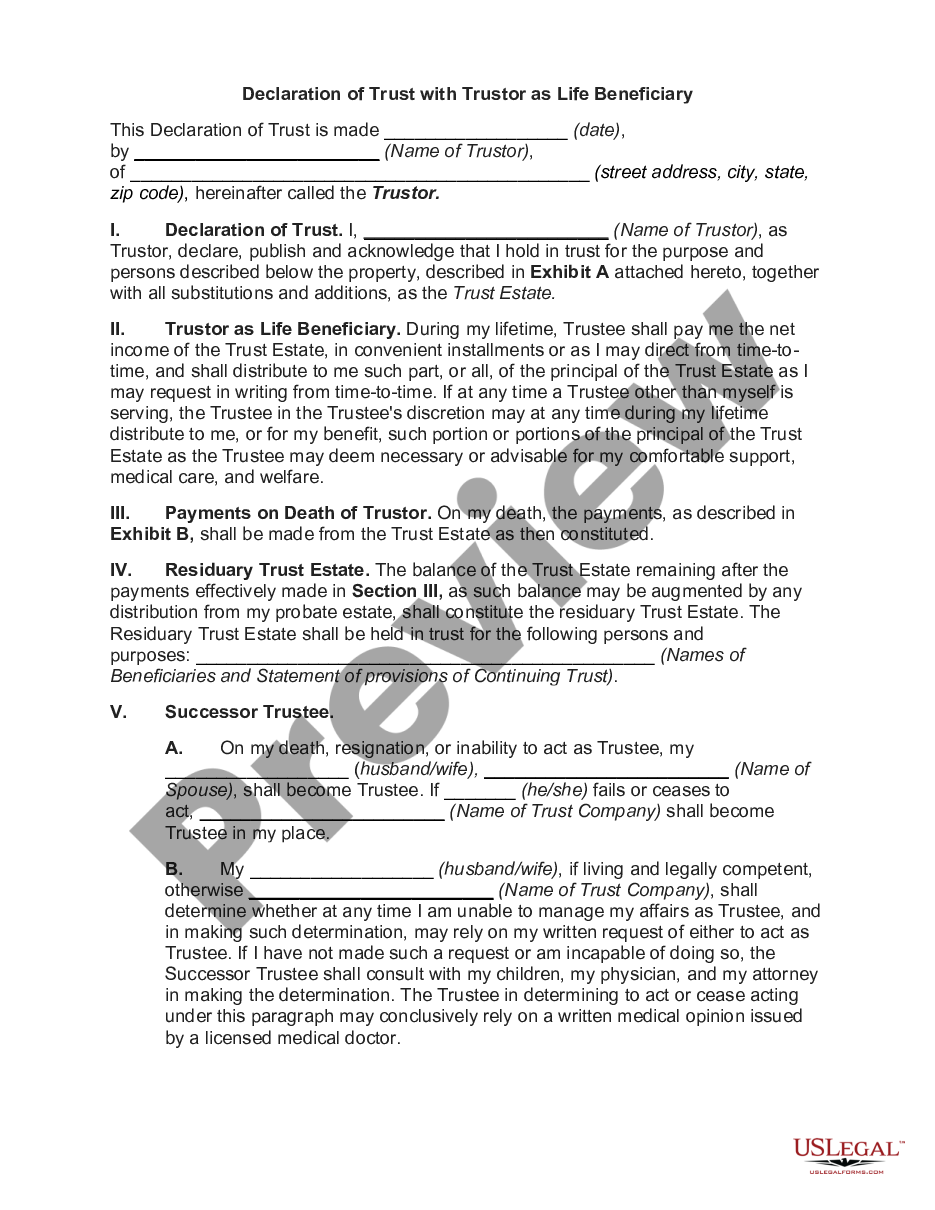
This Living Trust for Individual Who is Single, Divorced or Widow (or Widower) with Children is a legal document that allows an individual to place their assets into a trust during their lifetime. This form is specifically designed for those who are single, divorced, or widowed and have children, facilitating effective estate planning. Unlike a will, this trust allows for the direct transfer of assets to beneficiaries without going through probate, which can save time and reduce legal expenses.
Main sections of this form
- Trustor: The individual creating the trust who will also serve as the trustee.
- Beneficiaries: The children of the trustor who will inherit the trust assets.
- Successor Trustee: Appointments for individuals who can manage the trust when the original trustee is unable to do so.
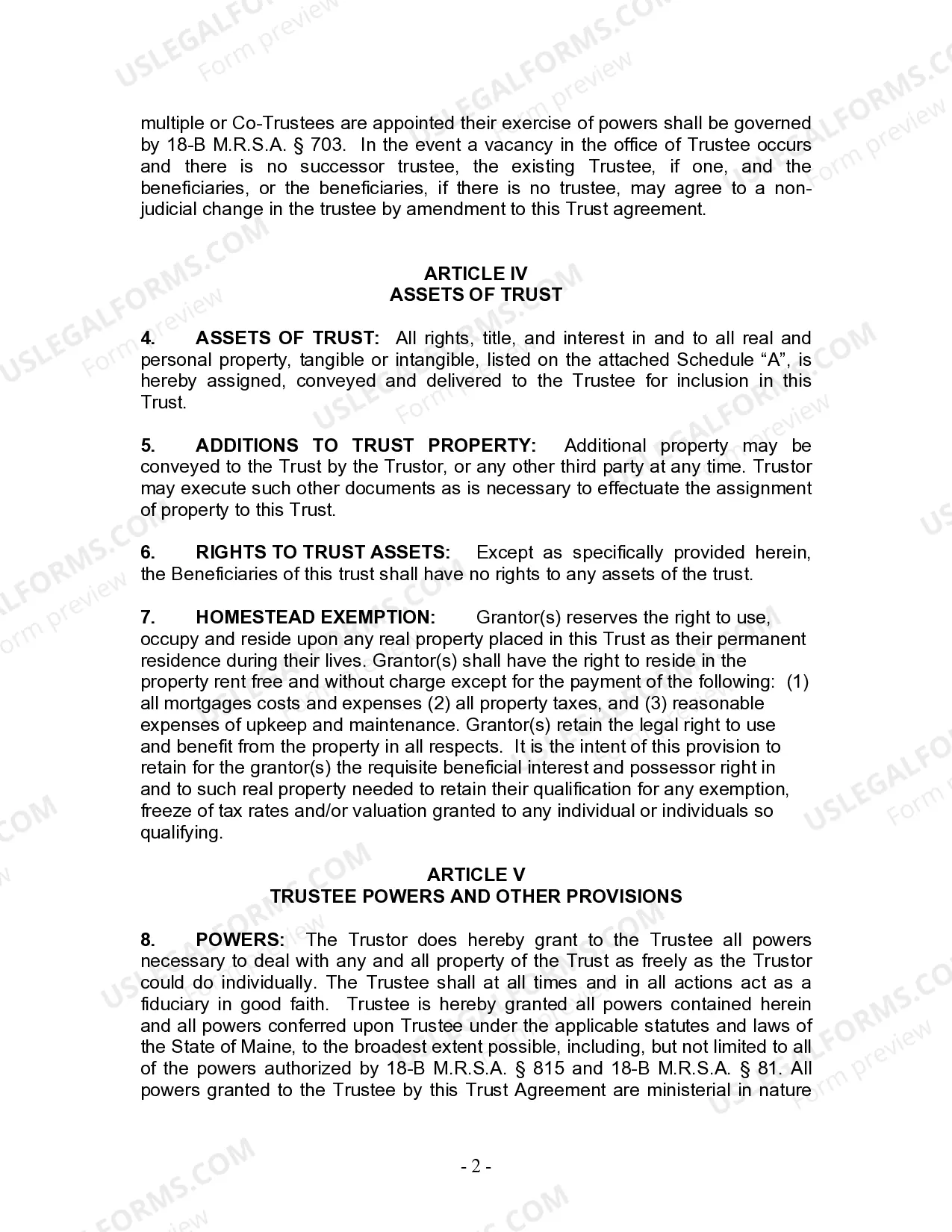
- Assets of Trust: A section to list all properties and assets included in the trust.
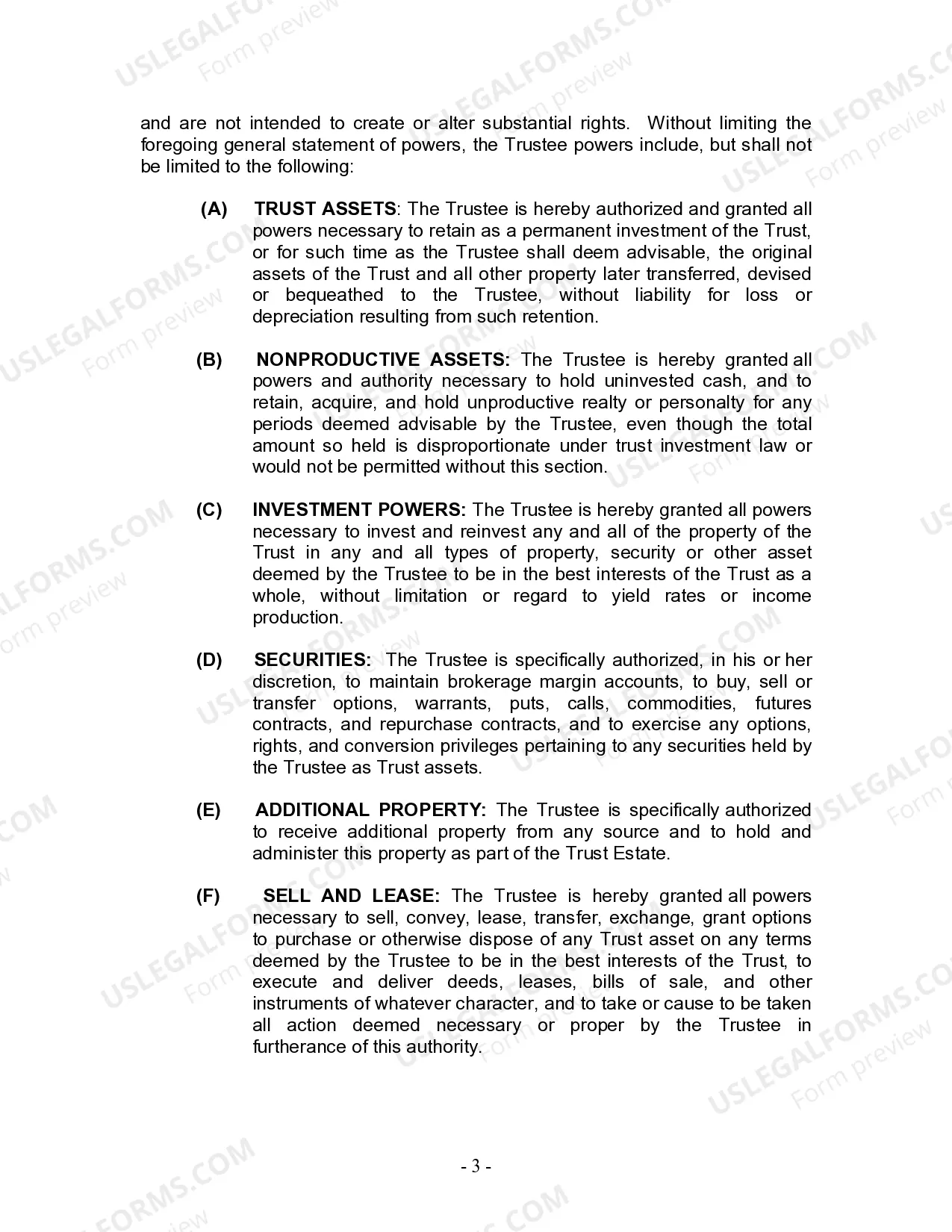
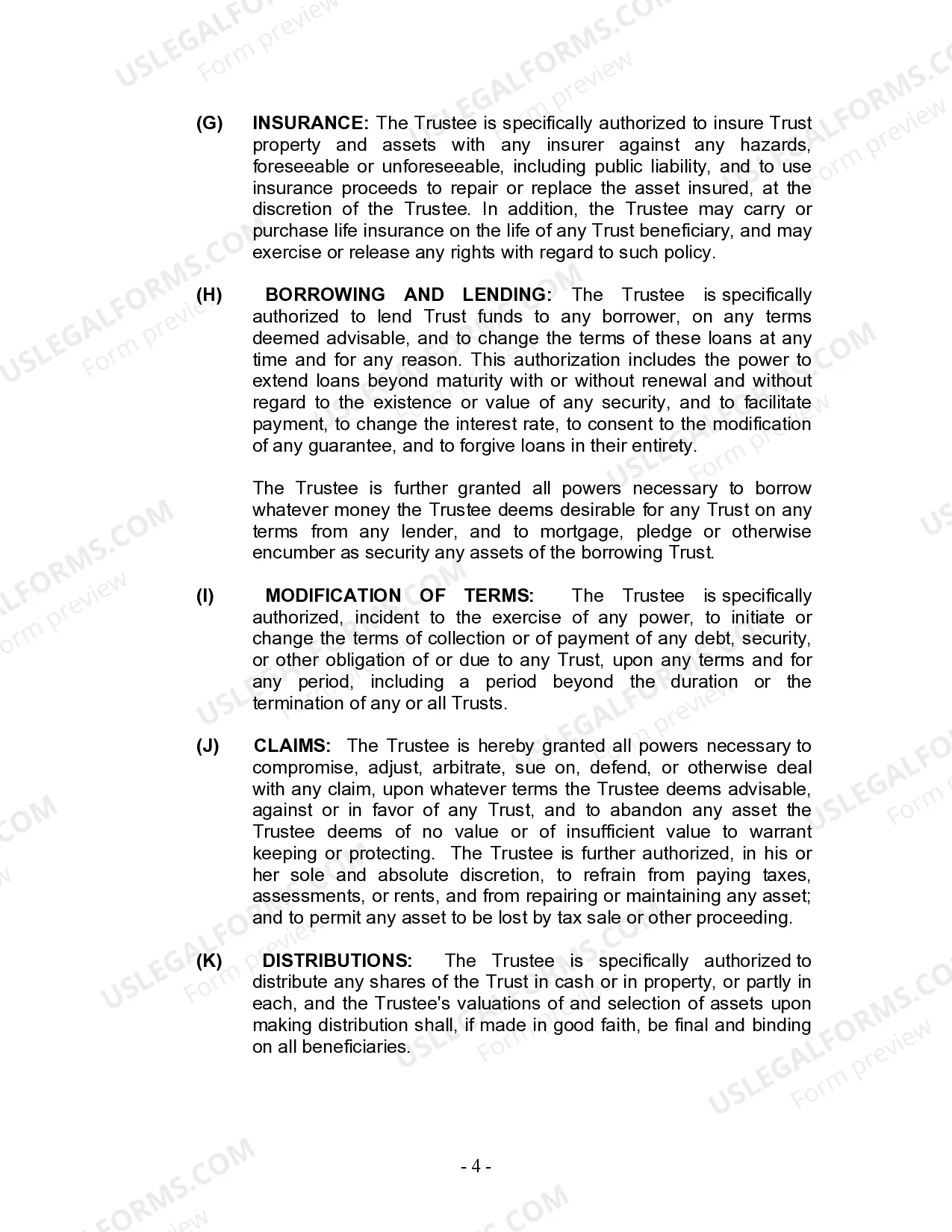
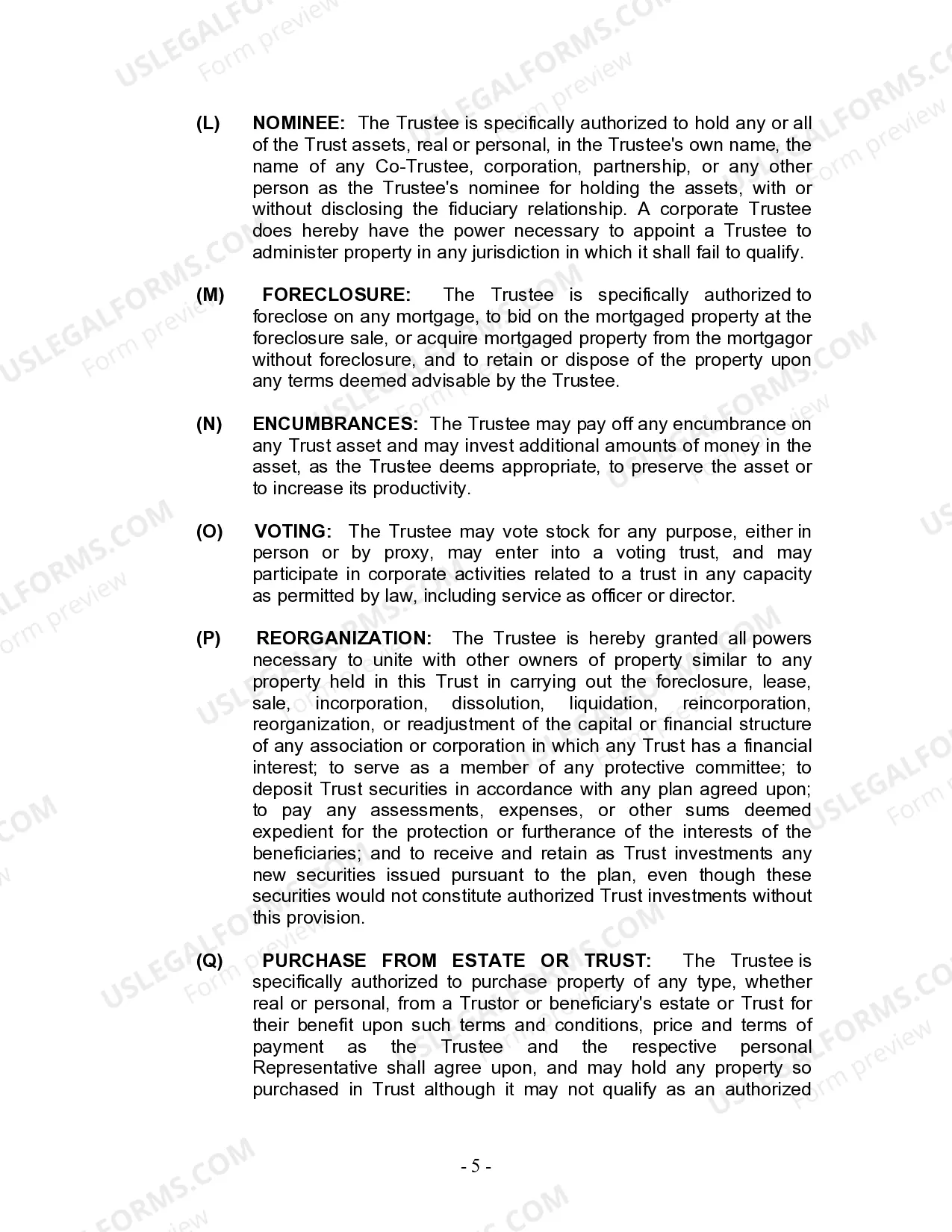
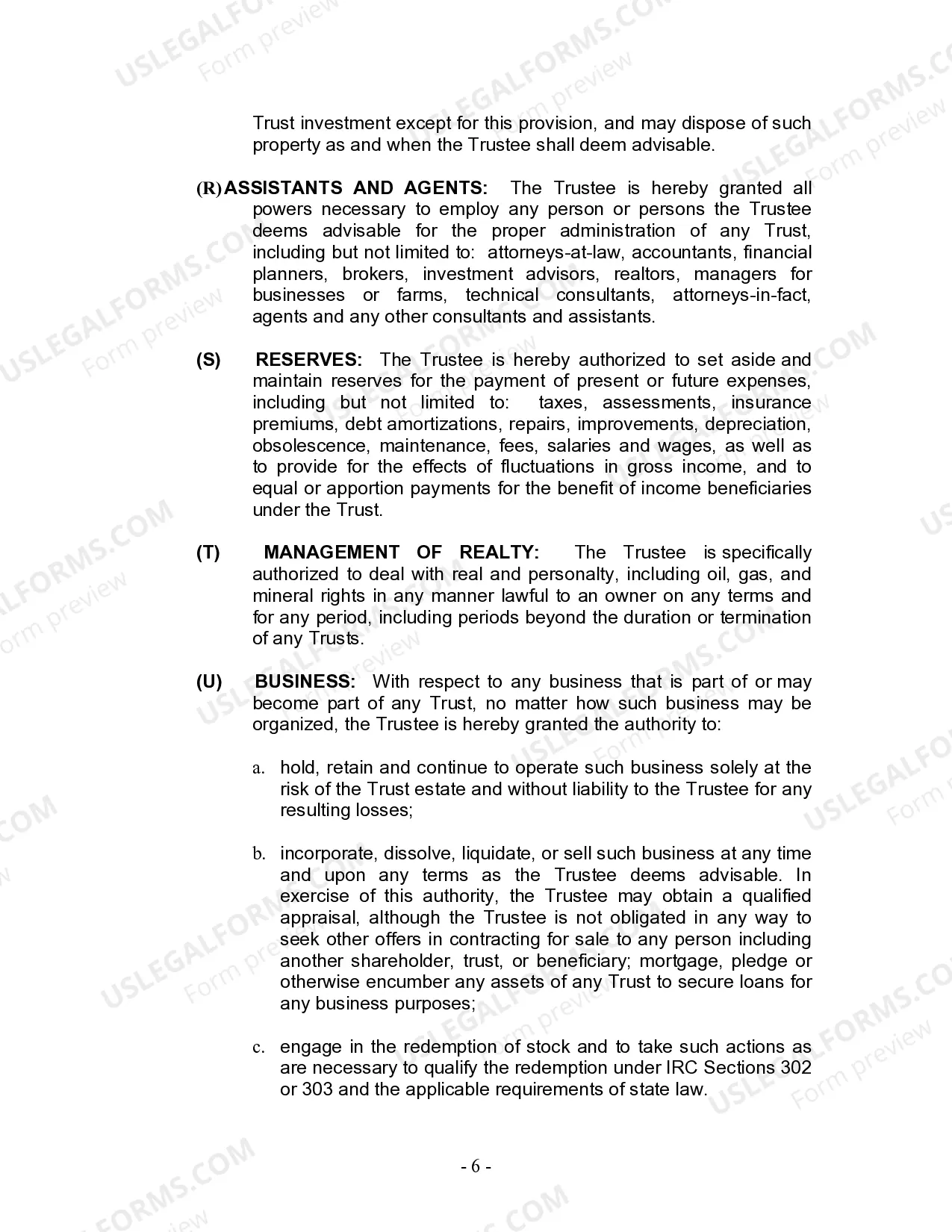
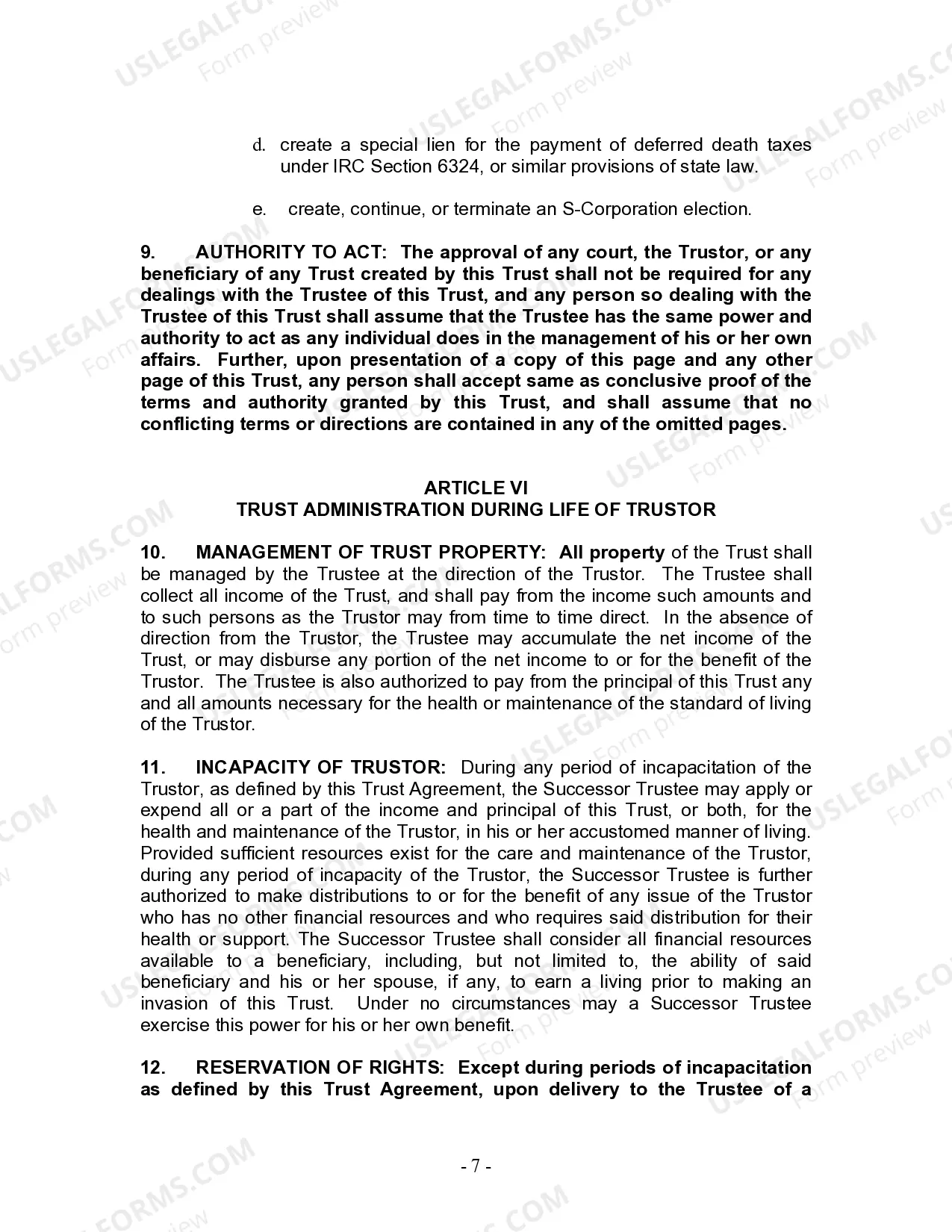
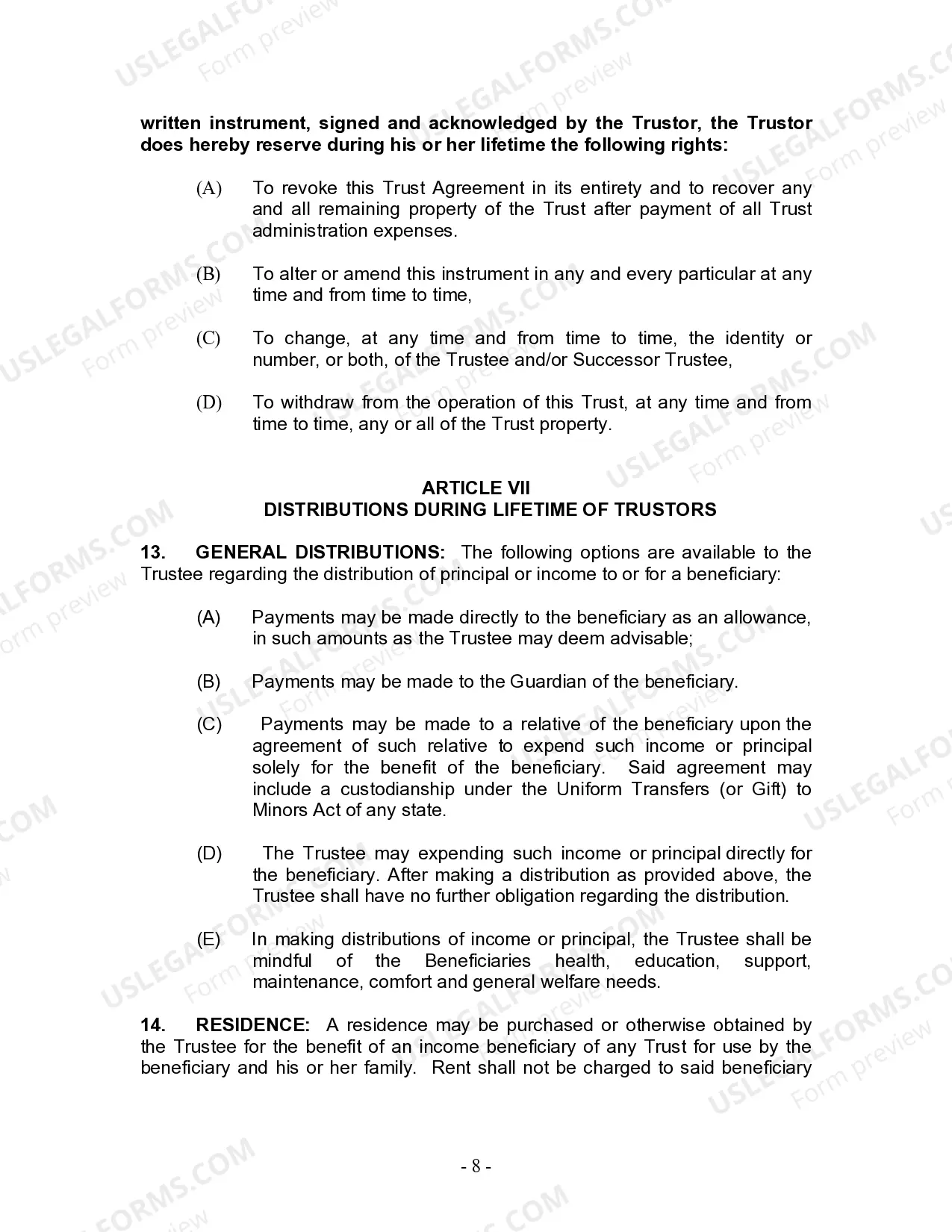
- Trustee Powers: Detailed authority granted to the trustee for managing trust assets.
- Distribution Instructions: Guidelines on how assets will be distributed upon the trustor's death.



When to use this form
This form is ideal for individuals who are single, divorced, or widowed and seek to effectively manage their estate by ensuring their assets are held in trust for the benefit of their children. It is particularly useful for avoiding the delays and costs associated with probate, offering peace of mind that one's wishes will be respected and carried out without complications.
Who needs this form
- Individuals who are single, divorced, or widowed with children.
- Parents wanting to establish a plan for transferring assets to their children.
- Anyone wishing to avoid probate for their assets upon death.
- Individuals looking to maintain control over their assets during their lifetime.
Completing this form step by step
- Identify the trustor: Enter your name and address as the trustor.
- List your beneficiaries: Specify your children who will benefit from the trust assets.
- Appoint a trustee: Designate yourself or another individual as the trustee to manage the trust.
- Describe the trust assets: Include a detailed list of all properties and assets being transferred to the trust.
- Complete the signature section: Sign and date the document in the presence of a notary, if required.
Is notarization required?
This form must be notarized to be legally valid. US Legal Forms provides secure online notarization powered by Notarize, allowing you to complete the process through a verified video call.
Get your form ready online
Our built-in tools help you complete, sign, share, and store your documents in one place.
Make edits, fill in missing information, and update formatting in US Legal Forms—just like you would in MS Word.
Download a copy, print it, send it by email, or mail it via USPS—whatever works best for your next step.
Sign and collect signatures with our SignNow integration. Send to multiple recipients, set reminders, and more. Go Premium to unlock E-Sign.
If this form requires notarization, complete it online through a secure video call—no need to meet a notary in person or wait for an appointment.
We protect your documents and personal data by following strict security and privacy standards.

Make edits, fill in missing information, and update formatting in US Legal Forms—just like you would in MS Word.

Download a copy, print it, send it by email, or mail it via USPS—whatever works best for your next step.

Sign and collect signatures with our SignNow integration. Send to multiple recipients, set reminders, and more. Go Premium to unlock E-Sign.

If this form requires notarization, complete it online through a secure video call—no need to meet a notary in person or wait for an appointment.

We protect your documents and personal data by following strict security and privacy standards.
Mistakes to watch out for
- Failing to clearly identify all beneficiaries, which can lead to confusion later.
- Not updating the trust after significant life changes, such as marriage or the birth of additional children.
- Including vague or incomplete descriptions of trust assets.
- Not appointing a successor trustee, which can complicate matters if the trustor becomes incapacitated.
Benefits of using this form online
- Convenience: Complete the form at your own pace from the comfort of your home.
- Editability: Customize the trust details easily to fit your specific situation.
- Reliable access: Use forms drafted by licensed attorneys ensuring compliance with state laws.
- Immediate download: Obtain your document quickly after completion without waiting.
Quick recap
- A living trust allows for management of assets while avoiding probate upon death.
- Ideal for single, divorced, or widowed individuals with children.
- Must be tailored to state-specific regulations to ensure validity.
Looking for another form?




Form popularity
FAQ
When a spouse dies, a marital trust may be subject to specific legal provisions based on its terms. Generally, the trust may convert to an irrevocable trust, and the surviving spouse may lose control over the assets. For individuals navigating this process under a Maine Living Trust for Individual Who is Single, Divorced or Widow (or Widower) with Children, it's crucial to consult with an attorney for clarity.
Houses and other real estate (even if they're mortgaged) stock, bond, and other security accounts held by brokerages (but think about naming a TOD beneficiary instead) small business interests (stock in a closely held corporation, partnership interests, or limited liability company shares)
When they pass away, the assets are distributed to beneficiaries, or the individuals they have chosen to receive their assets. A settlor can change or terminate a revocable trust during their lifetime. Generally, once they die, it becomes irrevocable and is no longer modifiable.
When one spouse dies, the joint trust will continue to operate for the benefit of the surviving spouse as a Survivor's Trust. Any specific gifts of tangible property from the first spouse to beneficiaries (other than the surviving spouse) will be given to those people.
The owner transfers assets into the account during their lifetime. When they pass away, the assets are distributed to beneficiaries, or the individuals they have chosen to receive their assets. A settlor can change or terminate a revocable trust during their lifetime.
Like a will, a living trust can be altered whenever you wish.After one spouse dies, the surviving spouse is free to amend the terms of the trust document that deal with his or her property, but can't change the parts that determine what happens to the deceased spouse's trust property.
Many married couples own most of their assets jointly with the right of survivorship. When one spouse dies, the surviving spouse automatically receives complete ownership of the property. This distribution cannot be changed by Will.
Generally, no. Most living or revocable trusts become irrevocable upon the death of the trust's maker or makers. This means that the trust cannot be altered in any way once the successor trustee takes over management of it.
What happens in this type of trust is that the trust is a joint revocable trust when both spouses are alive. When one of the spouses dies, the trust will then split into two trusts automatically. Each trust will have half the assets of the trust along with the separate property of the spouse.
The process of funding your living trust by transferring your assets to the trustee is an important part of what helps your loved ones avoid probate court in the event of your death or incapacity. Qualified retirement accounts such as 401(k)s, 403(b)s, IRAs, and annuities, should not be put in a living trust.