Maine Apartment Rules and Regulations
Overview of this form
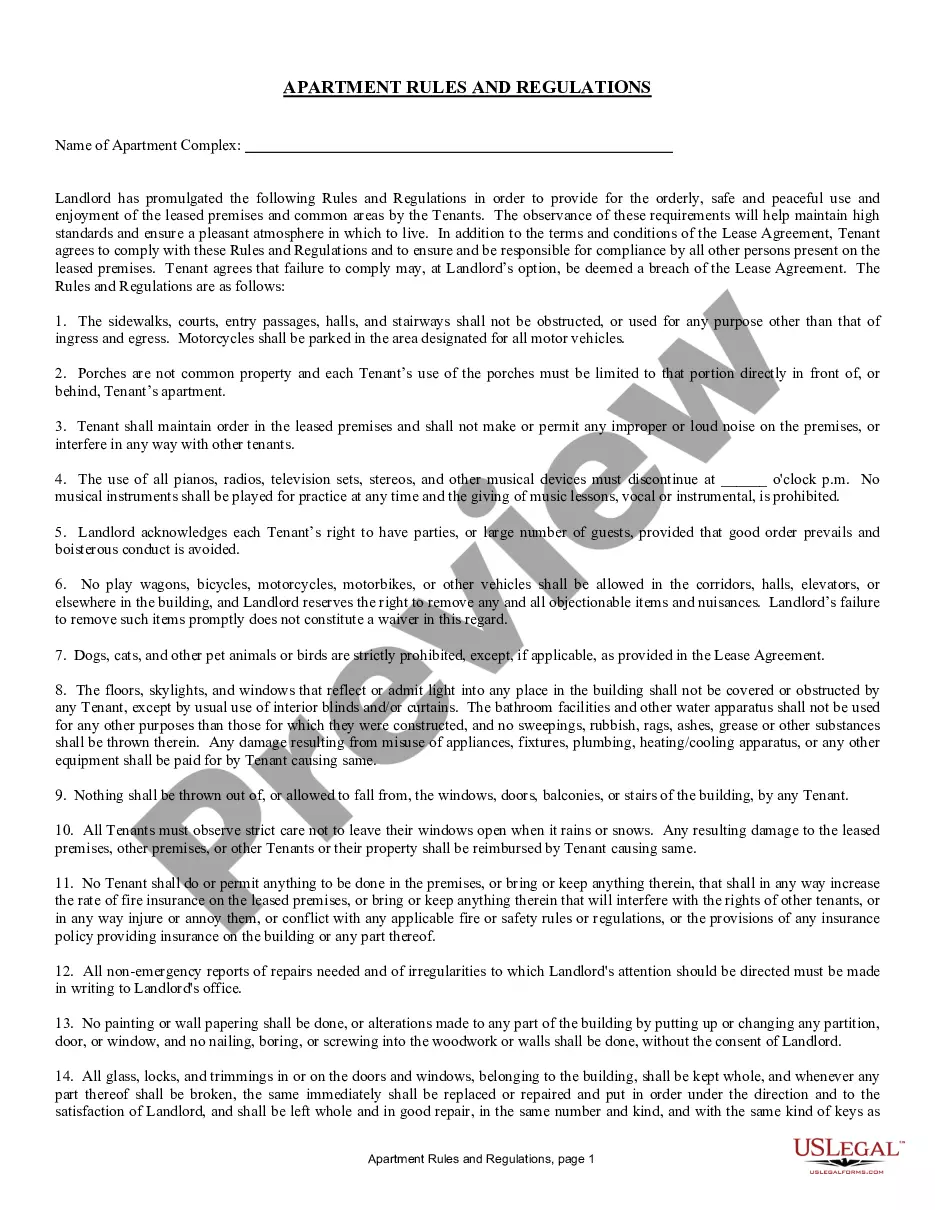
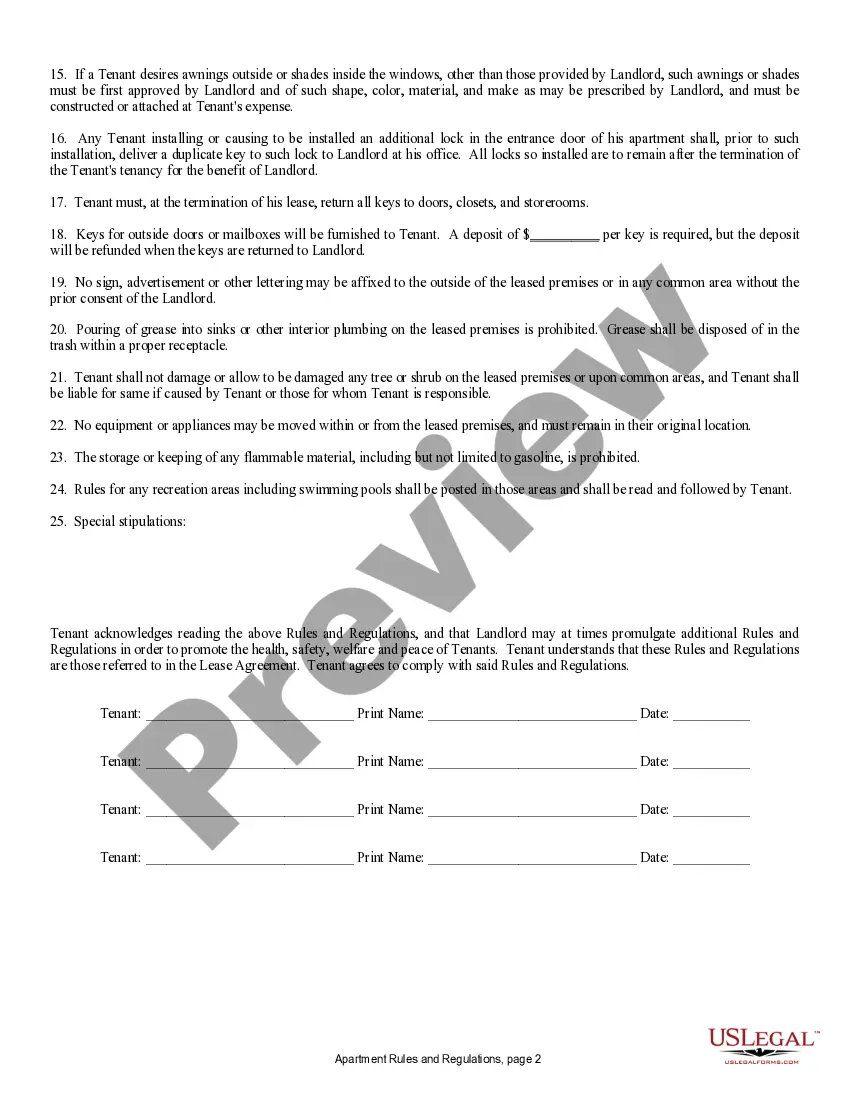
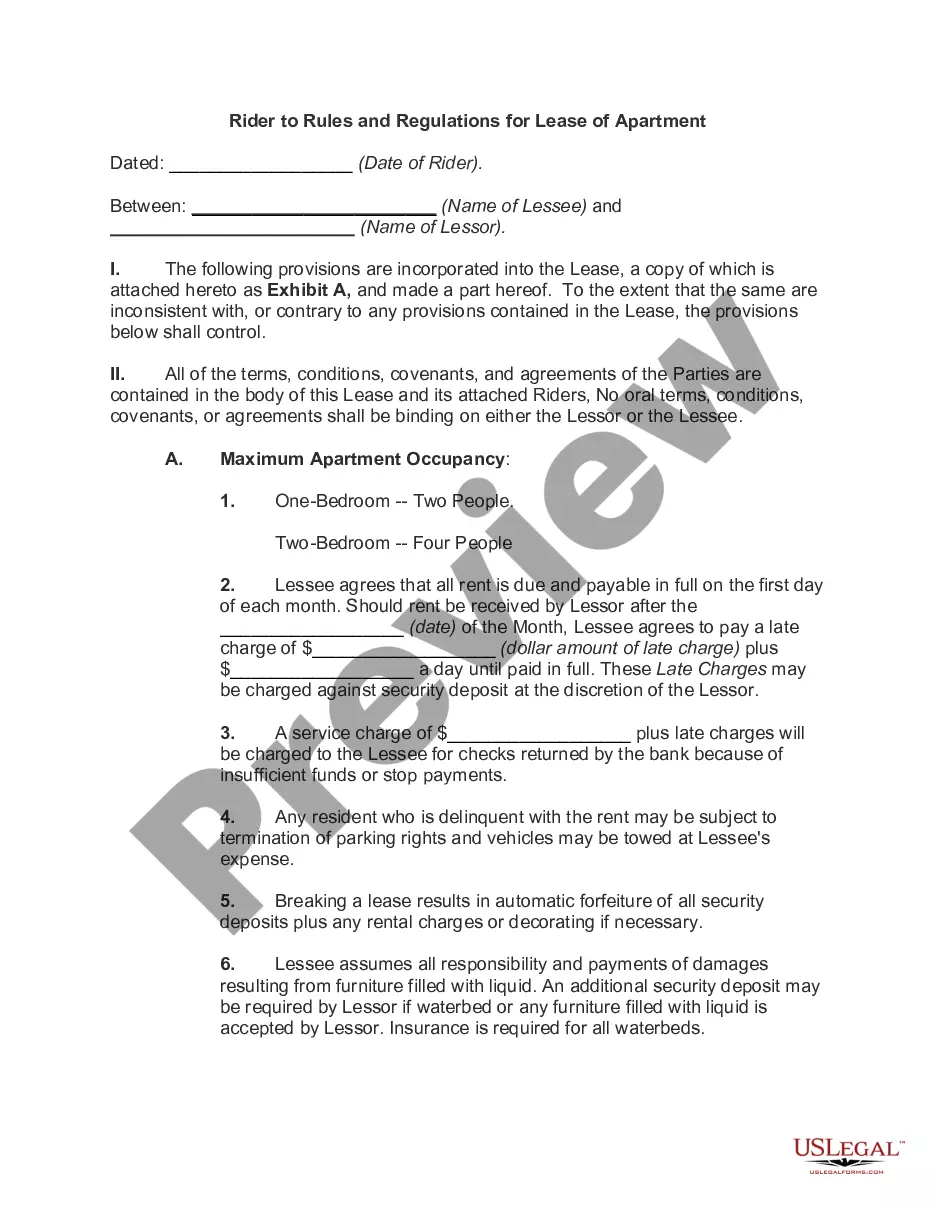
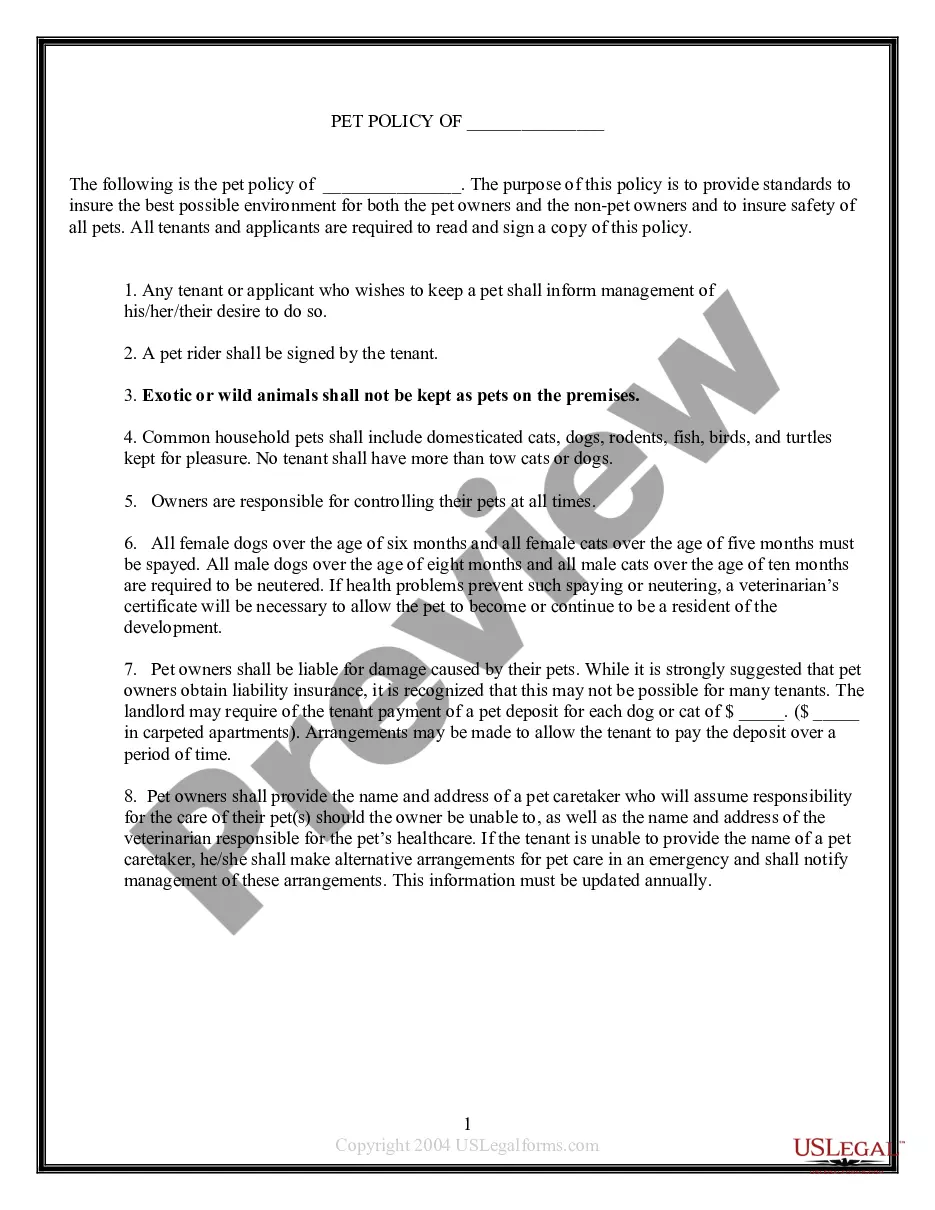
The Apartment Rules and Regulations form is a legal document designed to outline the expectations and guidelines that tenants must follow while residing in an apartment. This form complements the Apartment Lease Agreement by detailing everyday rules that are not typically addressed in the lease. It ensures that tenants are aware of their responsibilities, promoting a safe and enjoyable living environment for all residents.
Main sections of this form
- Name of the apartment complex.
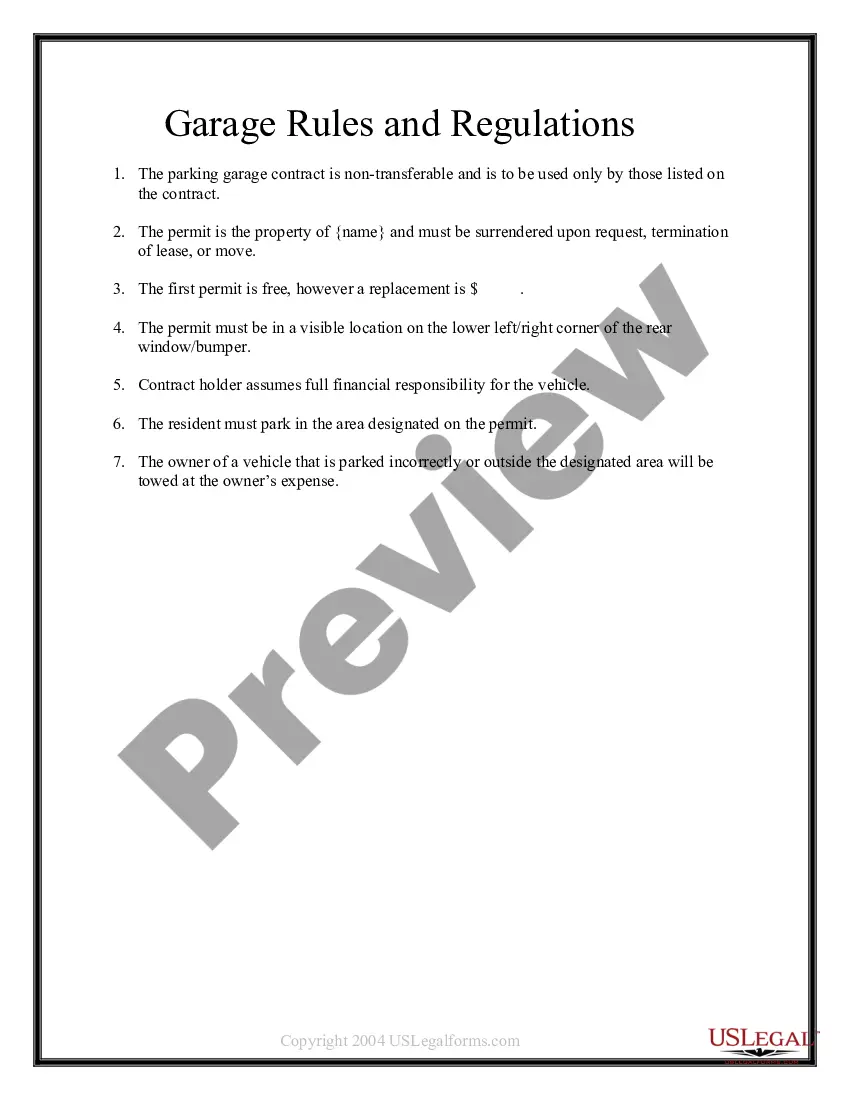
- Specific rules regarding noise levels, property maintenance, and common areas.
- Regulations about pets and access to recreational areas.
- Instructions for repair requests and modifications to the apartment.
- Penalties for violations of the rules and responsibilities for damages.
When to use this document
This form should be used at the beginning of a tenant's lease to clarify the rules governing the apartment community. It is especially useful for landlords and property managers who want to maintain order and reassure compliance among tenants on matters not detailed in the lease agreement.
Who needs this form
- Landlords or property management companies managing rental properties.
- Tenants signing a lease agreement who want to understand their responsibilities.
- Real estate professionals facilitating rental agreements.
How to prepare this document
- Enter the name of the apartment complex at the top of the form.
- Review the list of rules and ensure they are appropriate for your property.
- Specify any additional rules if necessary.
- Have each tenant print their name and sign the document.
- Keep a copy of the completed form for your records.
Notarization requirements for this form
In most cases, this form does not require notarization. However, some jurisdictions or signing circumstances might. US Legal Forms offers online notarization powered by Notarize, accessible 24/7 for a quick, remote process.
Get your form ready online
Our built-in tools help you complete, sign, share, and store your documents in one place.
Make edits, fill in missing information, and update formatting in US Legal Forms—just like you would in MS Word.
Download a copy, print it, send it by email, or mail it via USPS—whatever works best for your next step.
Sign and collect signatures with our SignNow integration. Send to multiple recipients, set reminders, and more. Go Premium to unlock E-Sign.
If this form requires notarization, complete it online through a secure video call—no need to meet a notary in person or wait for an appointment.
We protect your documents and personal data by following strict security and privacy standards.

Make edits, fill in missing information, and update formatting in US Legal Forms—just like you would in MS Word.

Download a copy, print it, send it by email, or mail it via USPS—whatever works best for your next step.

Sign and collect signatures with our SignNow integration. Send to multiple recipients, set reminders, and more. Go Premium to unlock E-Sign.

If this form requires notarization, complete it online through a secure video call—no need to meet a notary in person or wait for an appointment.

We protect your documents and personal data by following strict security and privacy standards.
Typical mistakes to avoid
- Failing to have all tenants sign the form, which can lead to misunderstandings.
- Neglecting to update the rules as needed, resulting in outdated information.
- Overcomplicating rules, making them difficult for tenants to understand.
Benefits of using this form online
- Convenient access to customizable templates that meet legal standards.
- Time-efficient completion and distribution without the need for physical paperwork.
- Increased reliability through professionally drafted legal language.
Legal use & context
- This form clarifies tenant expectations, making lease enforcement simpler.
- Adherence to these rules can prevent future legal disputes between landlords and tenants.
- Regulations contained within the document are designed to comply with general rental laws.
Main things to remember
- The Apartment Rules and Regulations form clarifies expectations for tenants.
- All parties should review the rules thoroughly before signing.
- Keeping a copy of the signed document helps resolve future disputes regarding compliance.
Looking for another form?

Form popularity
FAQ
In Maine, landlords can request first month’s rent, last month’s rent, and a security deposit, but there are specific limits and requirements. The total amount collected may not exceed two months' rent as a security deposit. This practice is guided by Maine apartment rules and regulations, which ensure fairness in the rental process. If you need a deeper understanding of these regulations, check out USLegalForms for legal documents and guidance.
Photo ID. name. address. phone number(s) email. employment and income information. previous address. pets (if applicable)
Dear (Name of landlord or property manager), My name is (Your name) and I have a keen interest in renting the apartment you have available at (Property name or address). I currently live at (Your current address) and have lived there for (XX) years.
Introduce yourself properly. Start by introducing yourself and make sure to mention: Good things to mention if you have them. Stable income or a permanent job. Use a customized template. Keep it short. Timing is key. Put yourself in the landlords shoes. Show genuine interest. Be proactive.
Honesty Is the Best Policy. Always fill out a rental application form as honestly as you possibly can when you're on the hunt to rent an apartment. Personal Information. The first thing that most applications will ask is for your name and current address. Places of Employment. Personal References. Legal Necessities.
Tenant's Name. Tenant's Address, Including Unit Number. Date of Move-In. Date of Move-Out (When Occurs). Date of Move-In Inspection. Date of Move-Out Inspection. Tenant Signature. Landlord Signature.
Fill out a rental application. Let's start with the basics: the apartment application itself. Pay the apartment application fee. Expect credit and background checks. Prove you can pay rent. Figure out if you need a co-signer. Show them that you are an agreeable renter. Have good personal references. Sign the lease.
The Tenant Doesn't Make Enough Income. The Tenant Smokes. The Tenant Has a Pet. The Tenant's Income Isn't Verified. The Tenant Has Been Convicted of a Crime. The Tenant Does Not Have Rental History. The Tenant Has a History of Damaging Property and Not Paying Rent. The Tenant Provides False Information.
This includes keeping the property clean, safe and habitable. The landlord must adhere to all building codes, perform necessary repairs, maintain common areas, keep all vital services, such as plumbing, electricity, and heat, in good working order, must provide proper trash receptacles and must supply running water.
State law regulates several rent-related issues, including late fees, the amount of notice (at least 45 days in Maine) landlords must give tenants to raise the rent, and how much time (seven days in Maine) a tenant has to pay rent or move before a landlord can file for eviction.