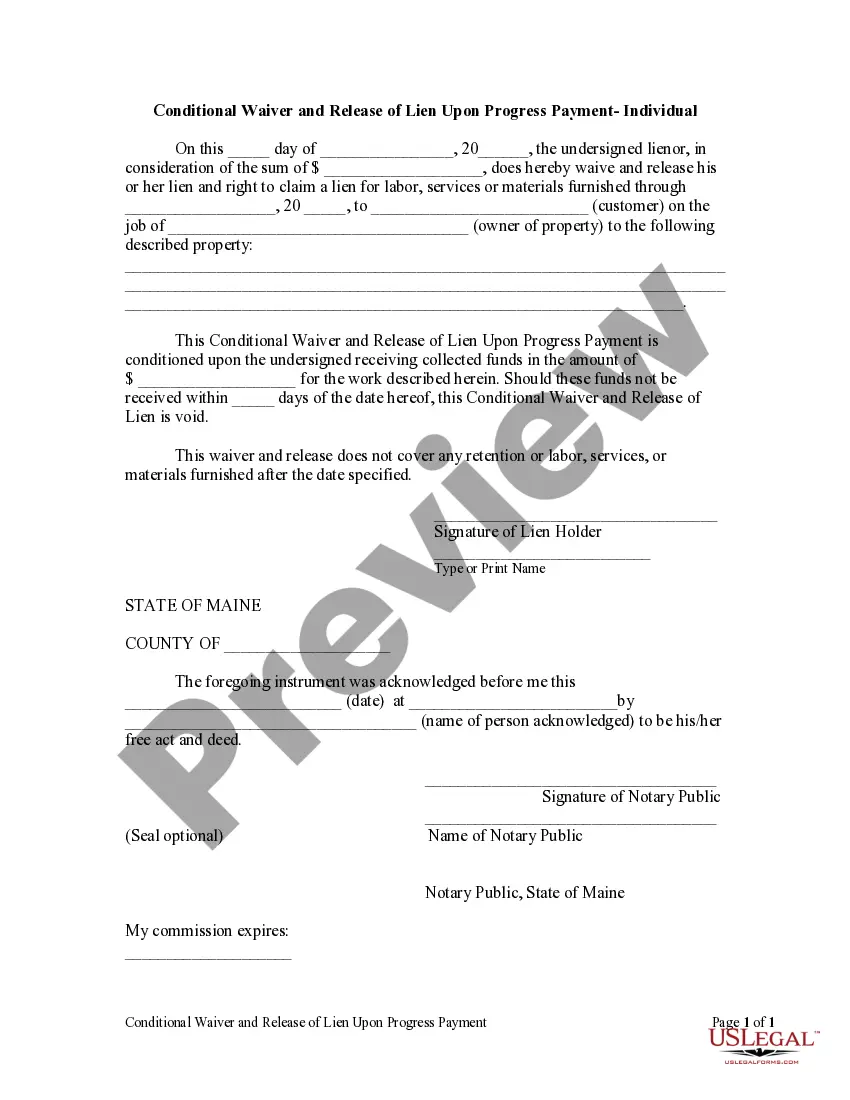
Maine Conditional Waiver and Release Upon Progress Payment - Individual
Understanding this form
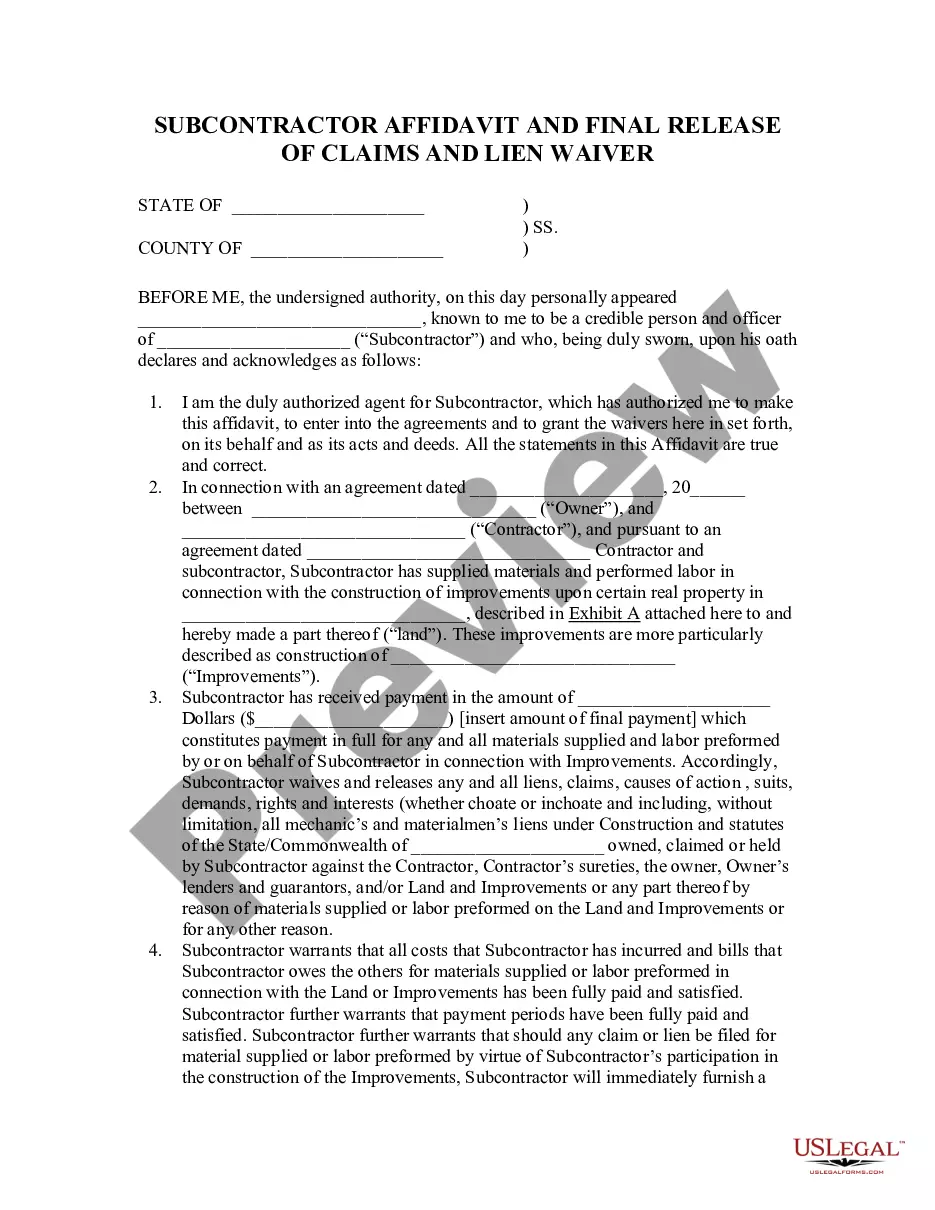
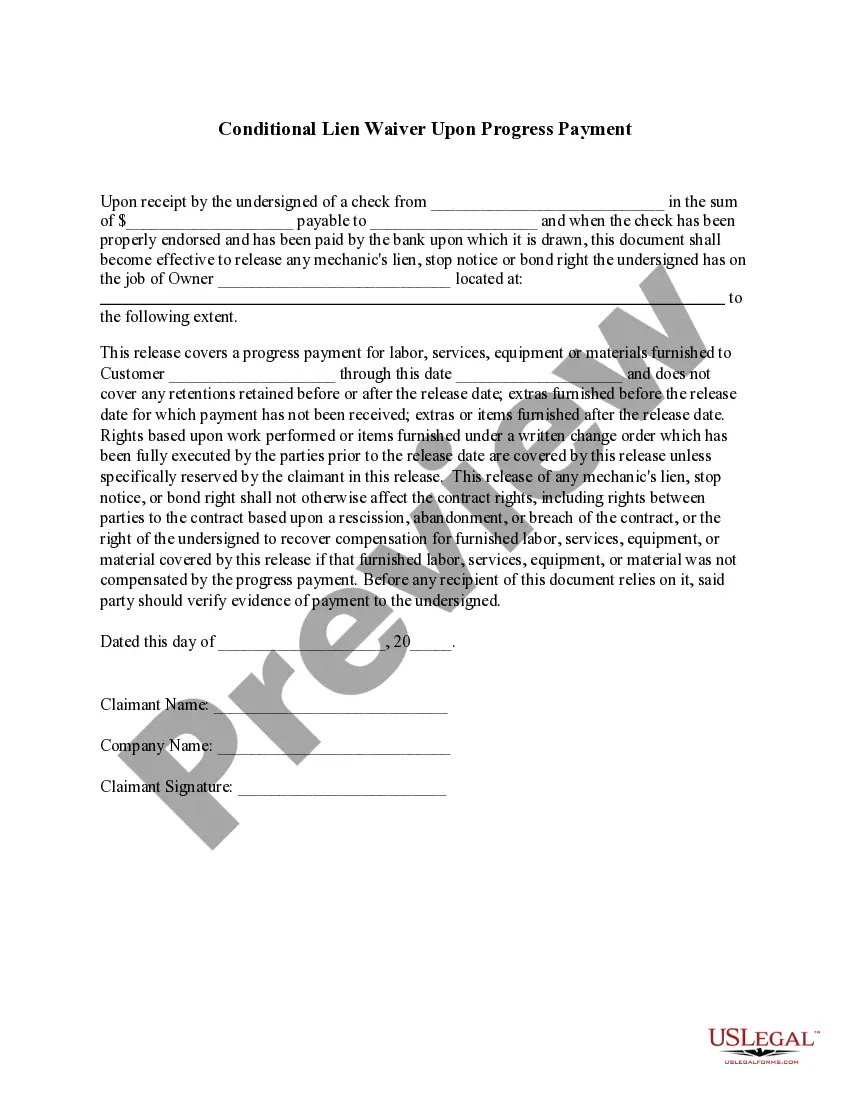
The Conditional Waiver and Release Upon Progress Payment is a legal document used by an individual lienor to waive their right to claim a lien for labor, services, or materials provided up to a specified date for a customer on an owner's property. This form serves as a safeguard for the customer, ensuring they only pay for work that has been completed. It differs from unconditional waivers because it is contingent on receiving payment, making it an important tool in construction and contracting contexts.
Main sections of this form
- Date of the waiver
- Amount of money exchanged for the waiver
- Details of the services or materials provided
- Name of the customer and property owner
- Conditions under which the waiver is declared void
- Signature of the lien holder and acknowledgment by a notary public
When to use this form
This form is used when an individual performing work on a property is ready to receive a payment for the labor, services, or materials provided. It is typically utilized in scenarios within the construction and contracting industries, where a lien may be filed if payment is not made. By using this conditional waiver, the lienor can assure the customer that they will not pursue a lien as long as they receive the agreed-upon payment within a specified timeframe.
Who should use this form
- Individuals or businesses providing services or materials in construction
- Contractors and subcontractors looking to secure progress payments
- Any lienor who wants to assure customers about their claim status
How to complete this form
- Identify the date of completion when signing the waiver.
- Specify the amount of payment received for the provided services or materials.
- Fill in the details of the work done, including the date services were rendered.
- Include the names of the customer and property owner clearly.
- State the conditions for the waiver to remain valid, including any deadlines for payment.
- Ensure the lien holder signs the document in the presence of a notary public.
Does this form need to be notarized?
Yes, this form must be notarized to be legally valid. This ensures that the signatures are authentic and that the document holds legal weight. US Legal Forms provides integrated online notarization, allowing you to complete this process securely via video call at any time.
Get your form ready online
Our built-in tools help you complete, sign, share, and store your documents in one place.
Make edits, fill in missing information, and update formatting in US Legal Forms—just like you would in MS Word.
Download a copy, print it, send it by email, or mail it via USPS—whatever works best for your next step.
Sign and collect signatures with our SignNow integration. Send to multiple recipients, set reminders, and more. Go Premium to unlock E-Sign.
If this form requires notarization, complete it online through a secure video call—no need to meet a notary in person or wait for an appointment.
We protect your documents and personal data by following strict security and privacy standards.

Make edits, fill in missing information, and update formatting in US Legal Forms—just like you would in MS Word.

Download a copy, print it, send it by email, or mail it via USPS—whatever works best for your next step.

Sign and collect signatures with our SignNow integration. Send to multiple recipients, set reminders, and more. Go Premium to unlock E-Sign.

If this form requires notarization, complete it online through a secure video call—no need to meet a notary in person or wait for an appointment.

We protect your documents and personal data by following strict security and privacy standards.
Avoid these common issues
- Failing to include all necessary details about the work performed.
- Not specifying the deadline for payment clearly.
- Omitting signatures or not having the form notarized when required.
- Using incorrect amounts that do not match agreed payments.
Benefits of completing this form online
- Convenience of downloading and completing the form at any time.
- Ability to edit the template to fit specific needs.
- Access to reliable templates drafted by licensed attorneys.
Main things to remember
- The Conditional Waiver and Release Upon Progress Payment protects both the lienor and the customer during a transaction.
- Proper completion ensures the waiver is enforceable and maintains payment security.
- Always be aware of local regulations that may affect how this form is used.
Looking for another form?
Form popularity
FAQ
To file a mechanics lien in Maine, you must prepare and record a lien statement with the appropriate registry of deeds. Ensure you include all required details such as parties involved, property description, and amount owed. If you are uncertain about the details involved, consider using uslegalforms to simplify the process and ensure compliance with the Maine Conditional Waiver and Release Upon Progress Payment - Individual.
A conditional release takes effect only when payment is made, while a non-conditional release is effective upon signing, regardless of whether payment has been received. Understanding these differences is crucial for contractors and subcontractors managing funds. If you are working under a Maine Conditional Waiver and Release Upon Progress Payment - Individual, knowing when each type applies can protect your interests.
Conditional lien waivers are provided by contractors or suppliers before they've been paid. The key language to look for in these documents is upon payment of an amount, the vendor releases their right to file a lien on the work provided up until a certain date.
LIen waivers are not required to be notarized. The primary times that a document needs to be notarized is if it is going to be filed with the county recorder or it is an affidavit. There are some other documents that often use notarization, but lien waivers don't fall into any of those that "need to be notarized."
An "Unconditional Waiver and Release Upon Progress Payment" discharges all claimant rights through a specific date with no stipulations. A "Conditional Waiver and Release Upon Progress Payment" discharges all claimant rights through a specific date, provided the payments have actually been received and processed.
A waiver is a legally binding provision where either party in a contract agrees to voluntarily forfeit a claim without the other party being liable.Examples of waivers include the waiving of parental rights, waiving liability, tangible goods waivers, and waiver for grounds of inadmissibility.
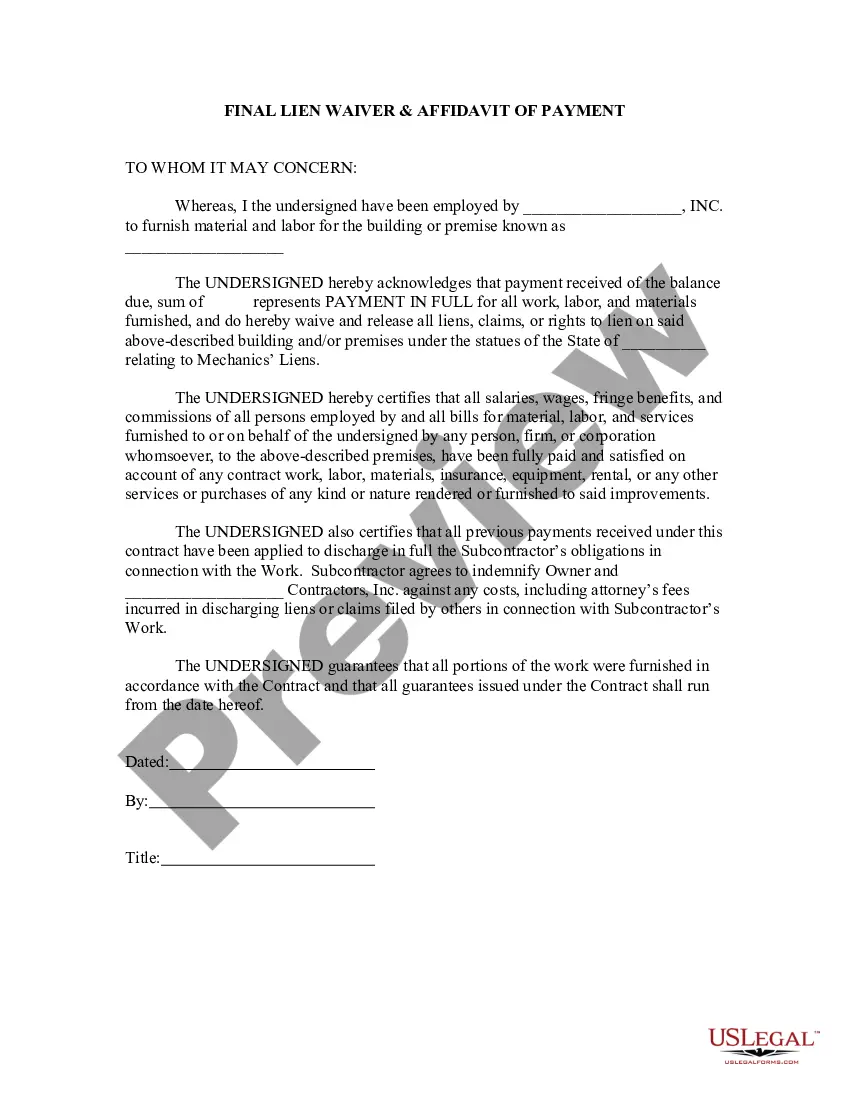
It basically states that you've paid the subcontractor what is owed, they accept the payment in full, and they waive the right to put a lien on your property. Simply present this form to the subcontractor with your payment and ask them to sign it. Make sure you get their signature!
The undersigned makes this Waiver specifically for the benefit of the Owner and the Owner's lender, and any other person or entity with a legal or equitable interest in the Property.
A "Conditional Waiver and Release Upon Progress Payment" discharges all claimant rights through a specific date, provided the payments have actually been received and processed. An "Unconditional Waiver and Release Upon Final Payment" extinguishes all claimant rights upon receipt of the payment.
Bottom Line: Never Sign an Unconditional Lien Waiver Prior to Receiving Payment!If the lien waiver is the only proof the owner has as to whether a particular party has been paid, the owner must be able to rely on it in order for the lien waiver to accomplish its purpose.