Maine Foundation Contract for Contractor
What is this form?
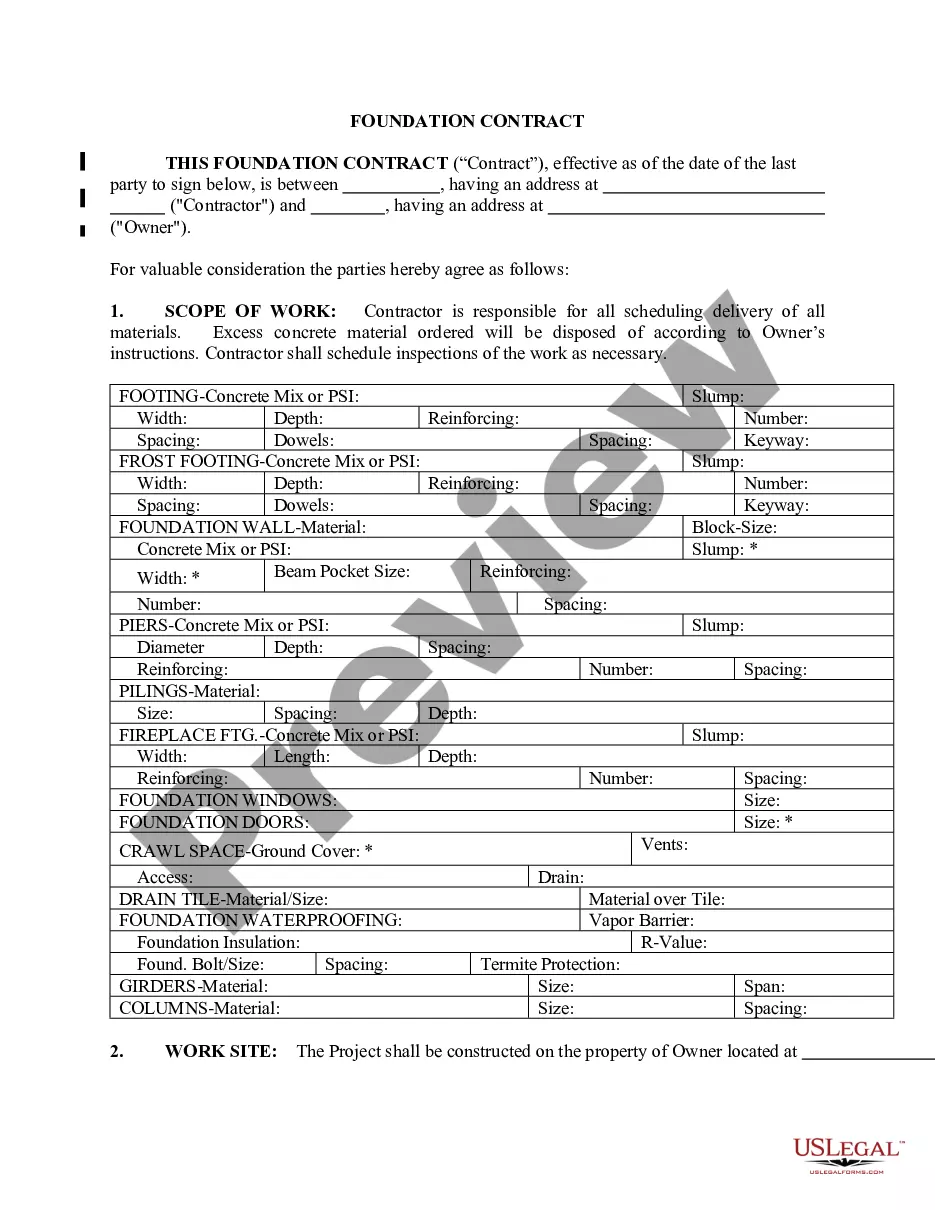
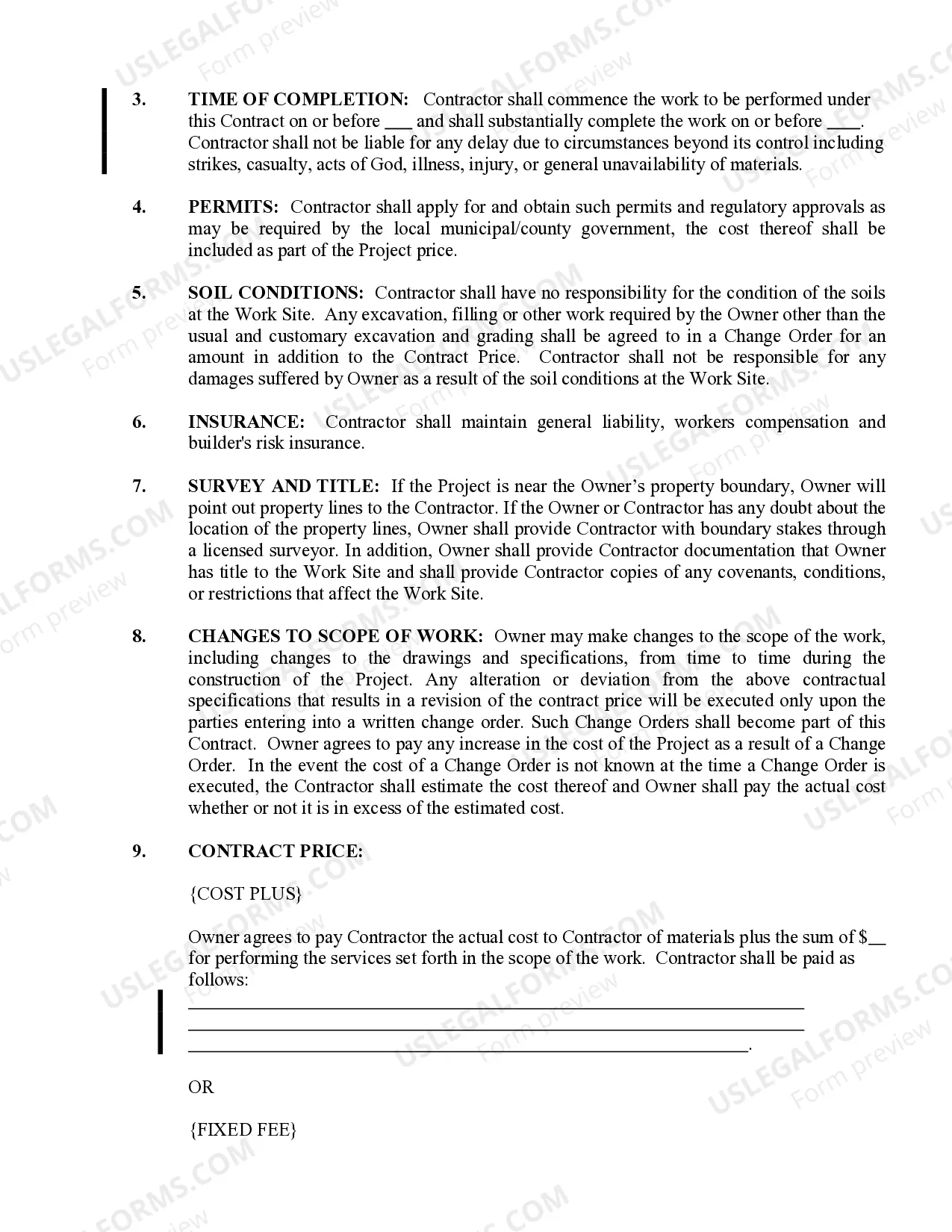
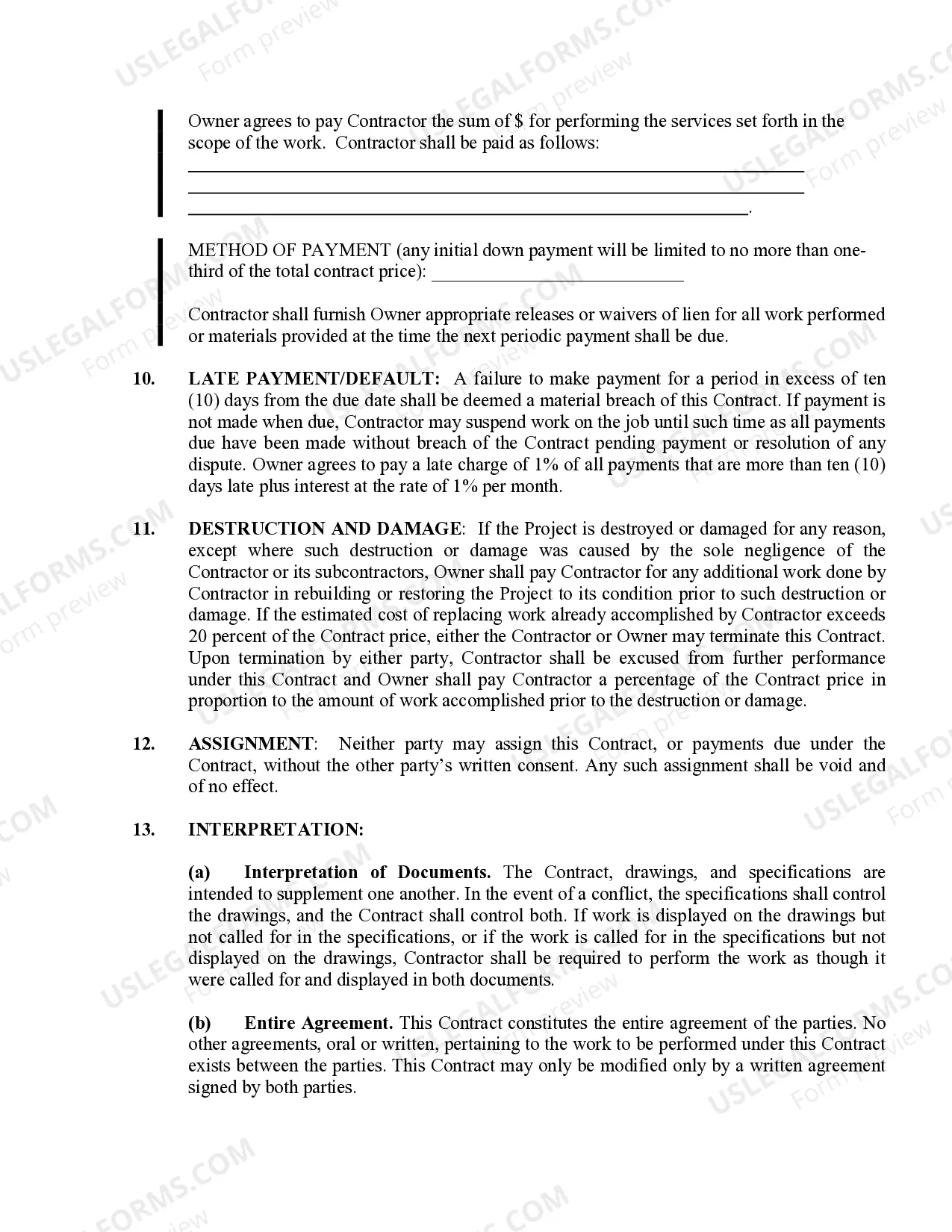
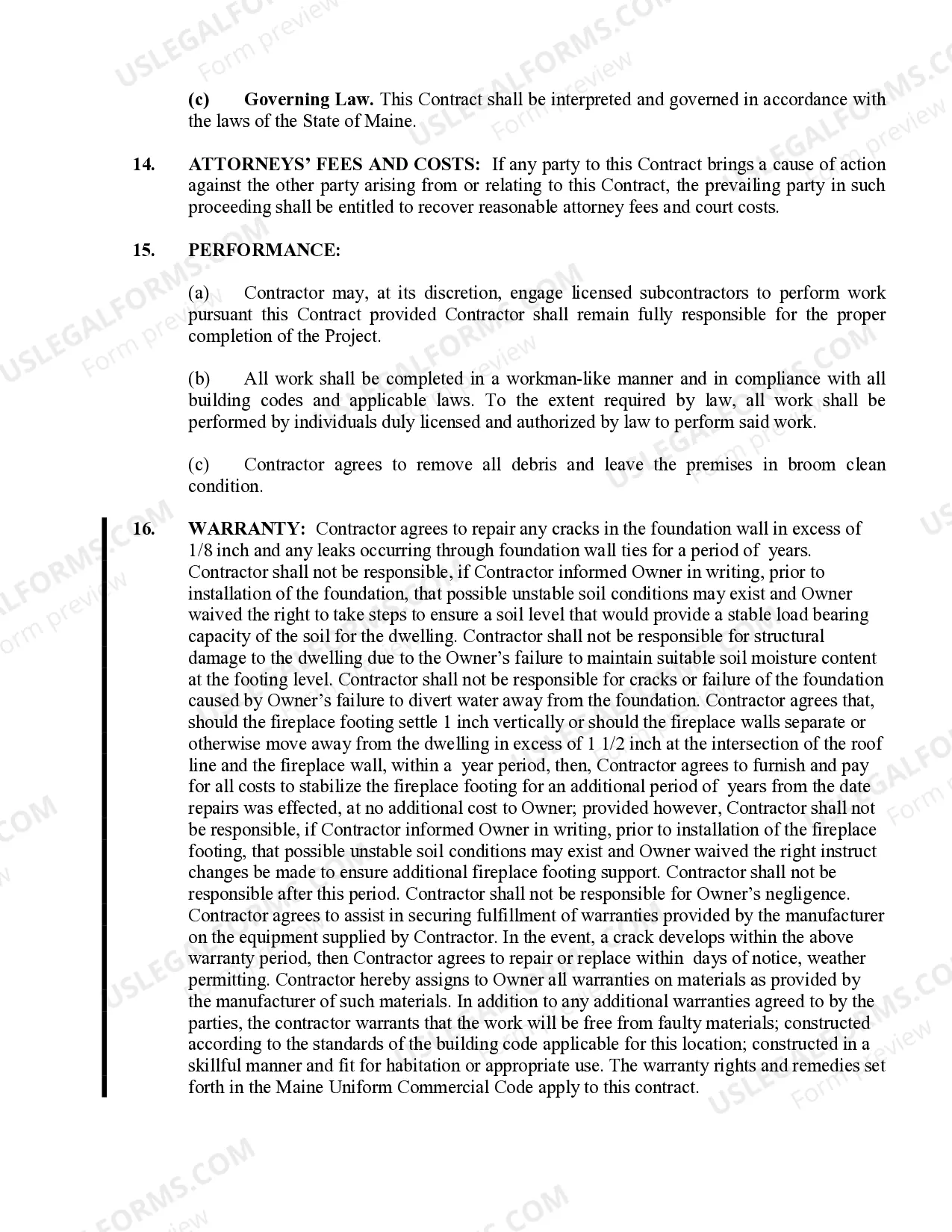
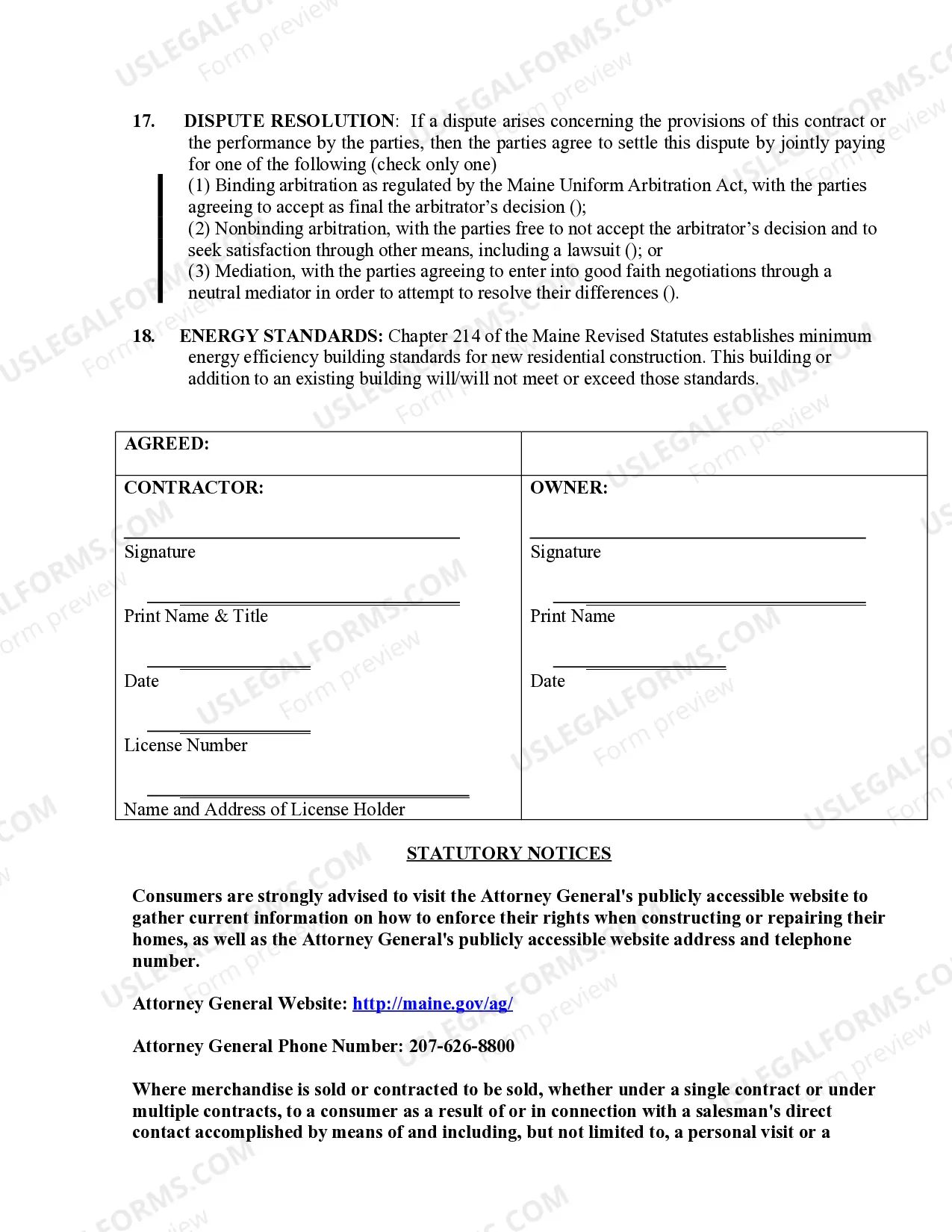
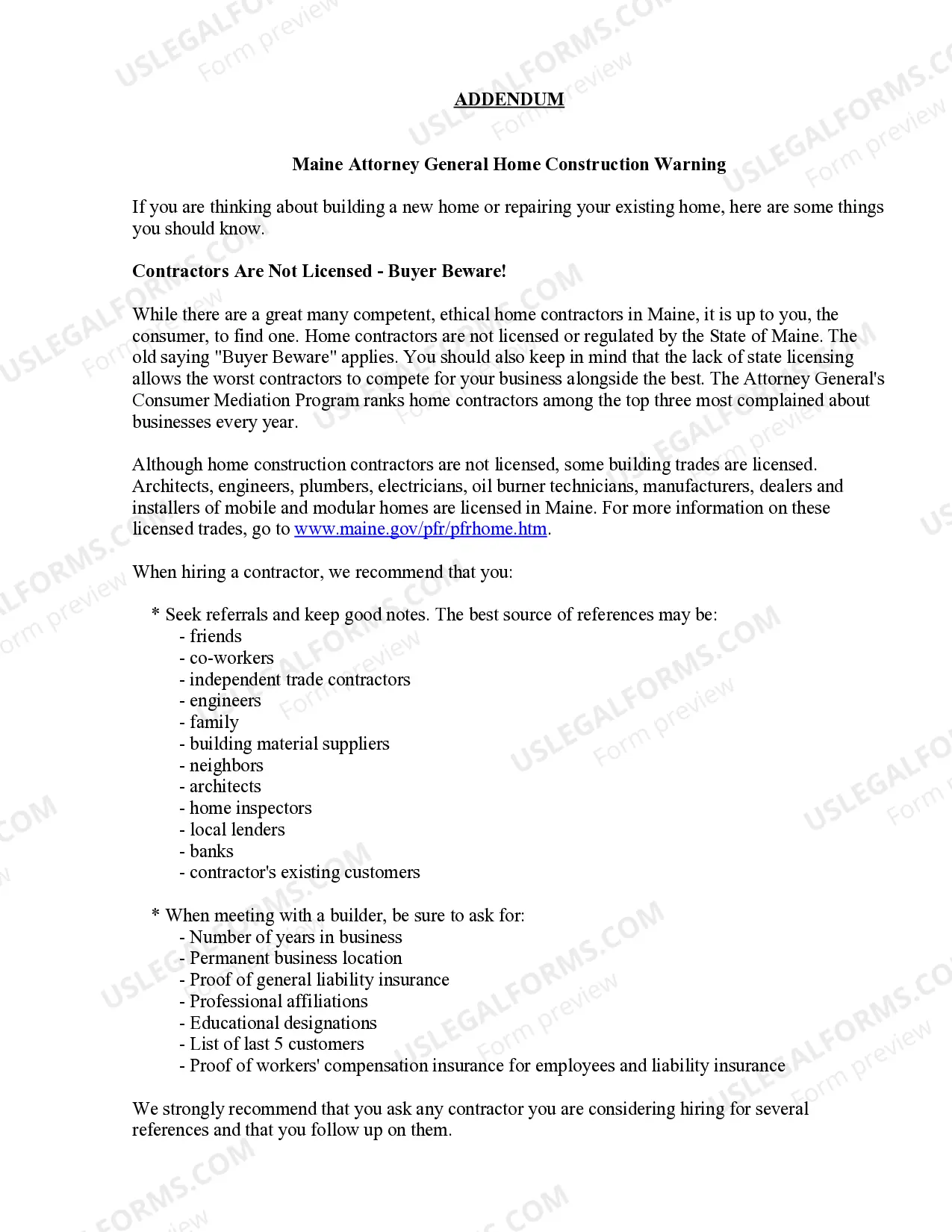
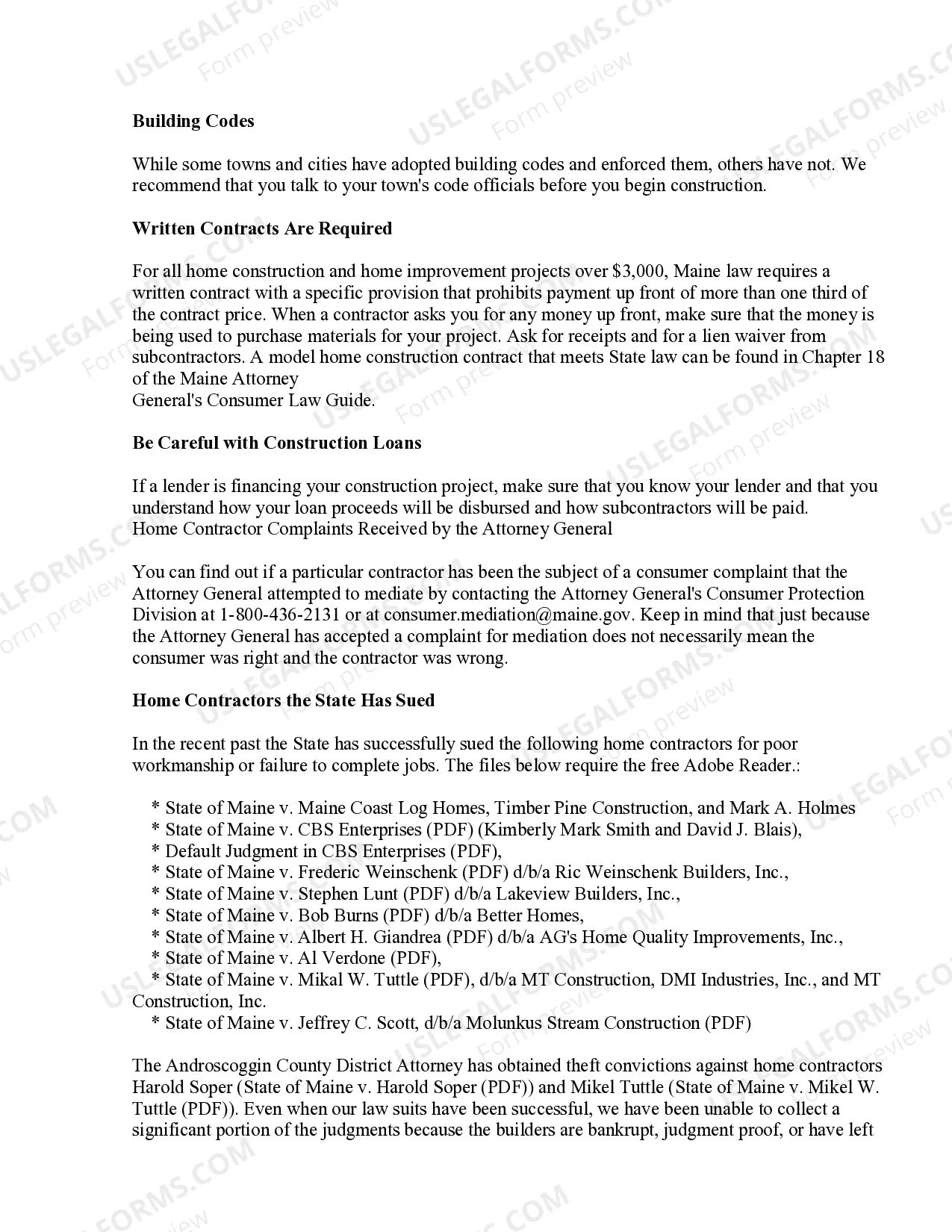
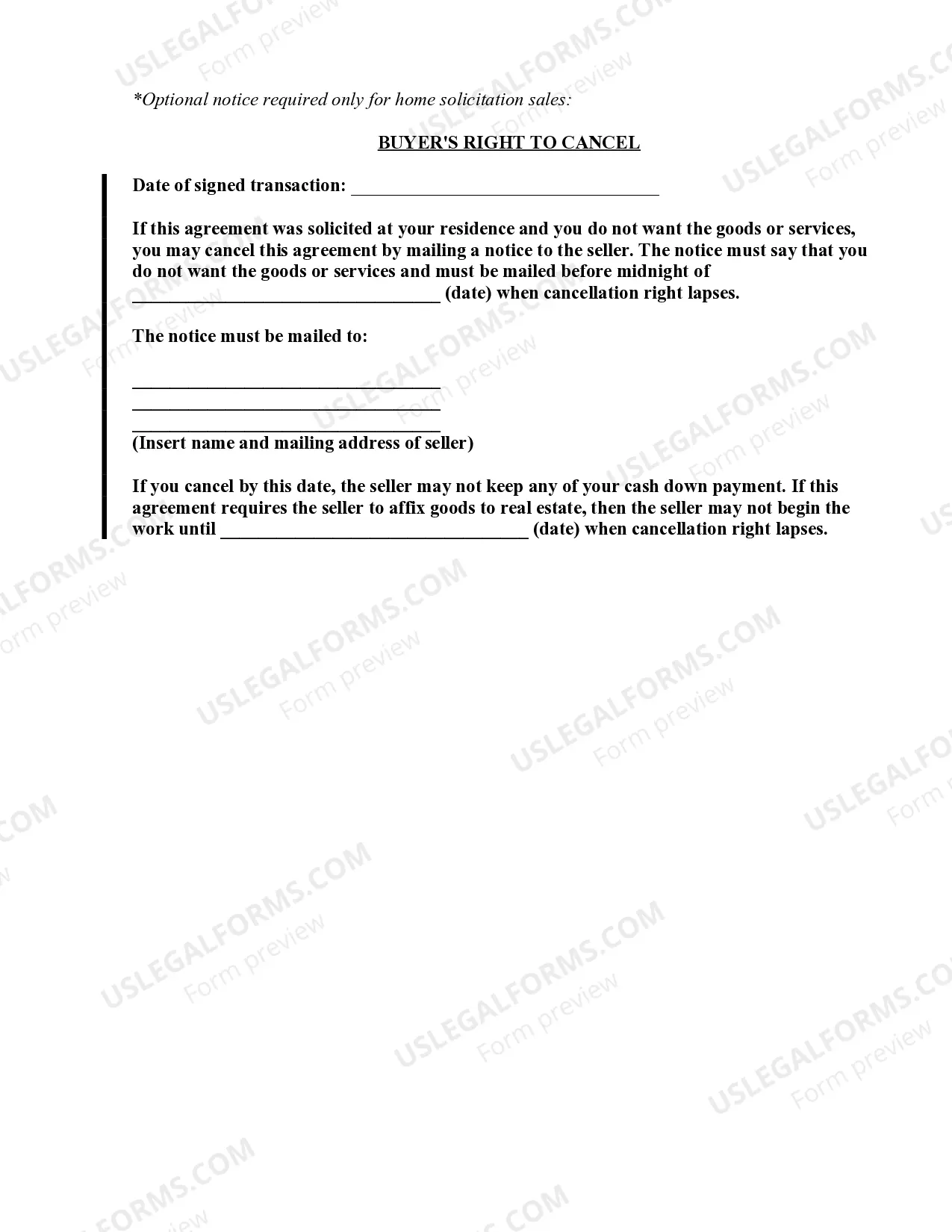
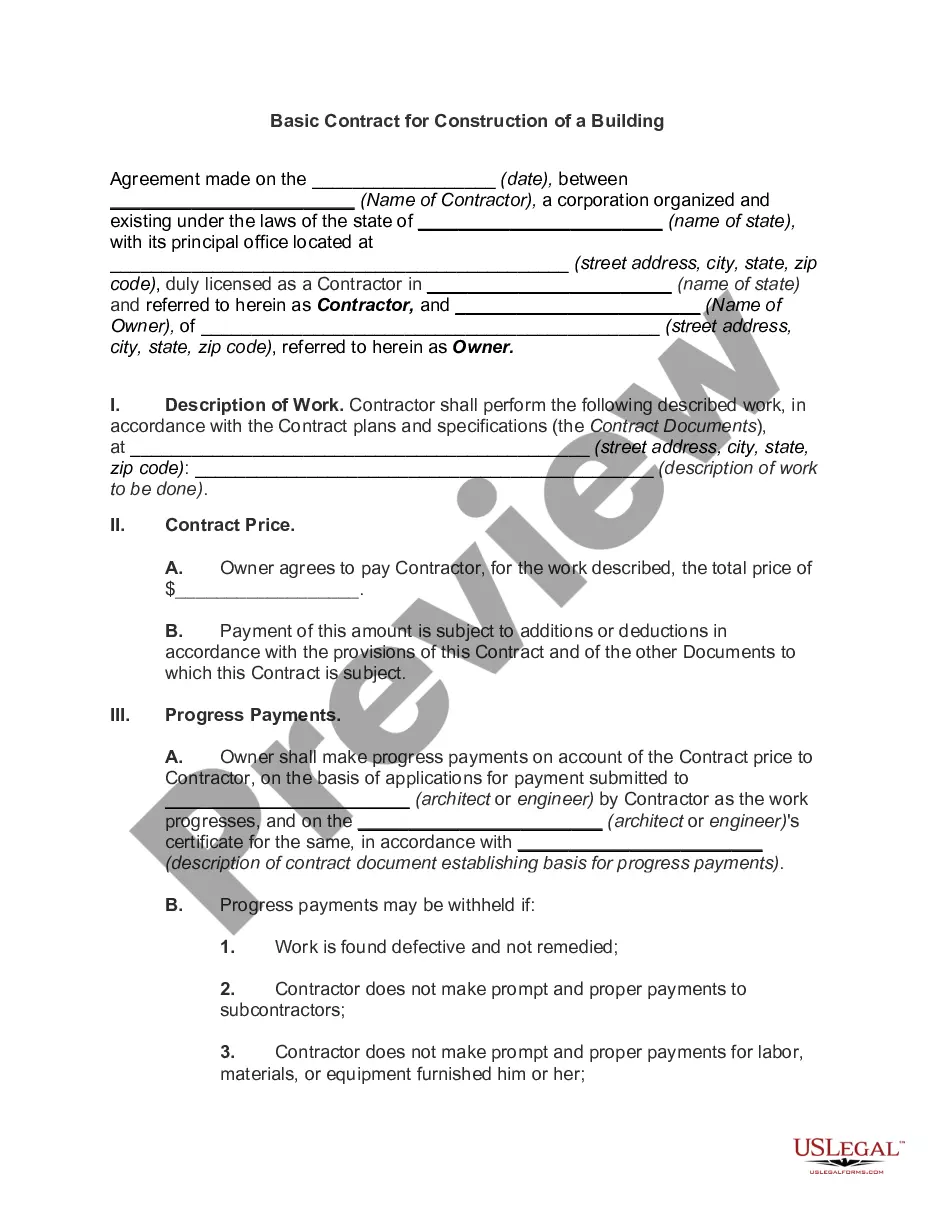
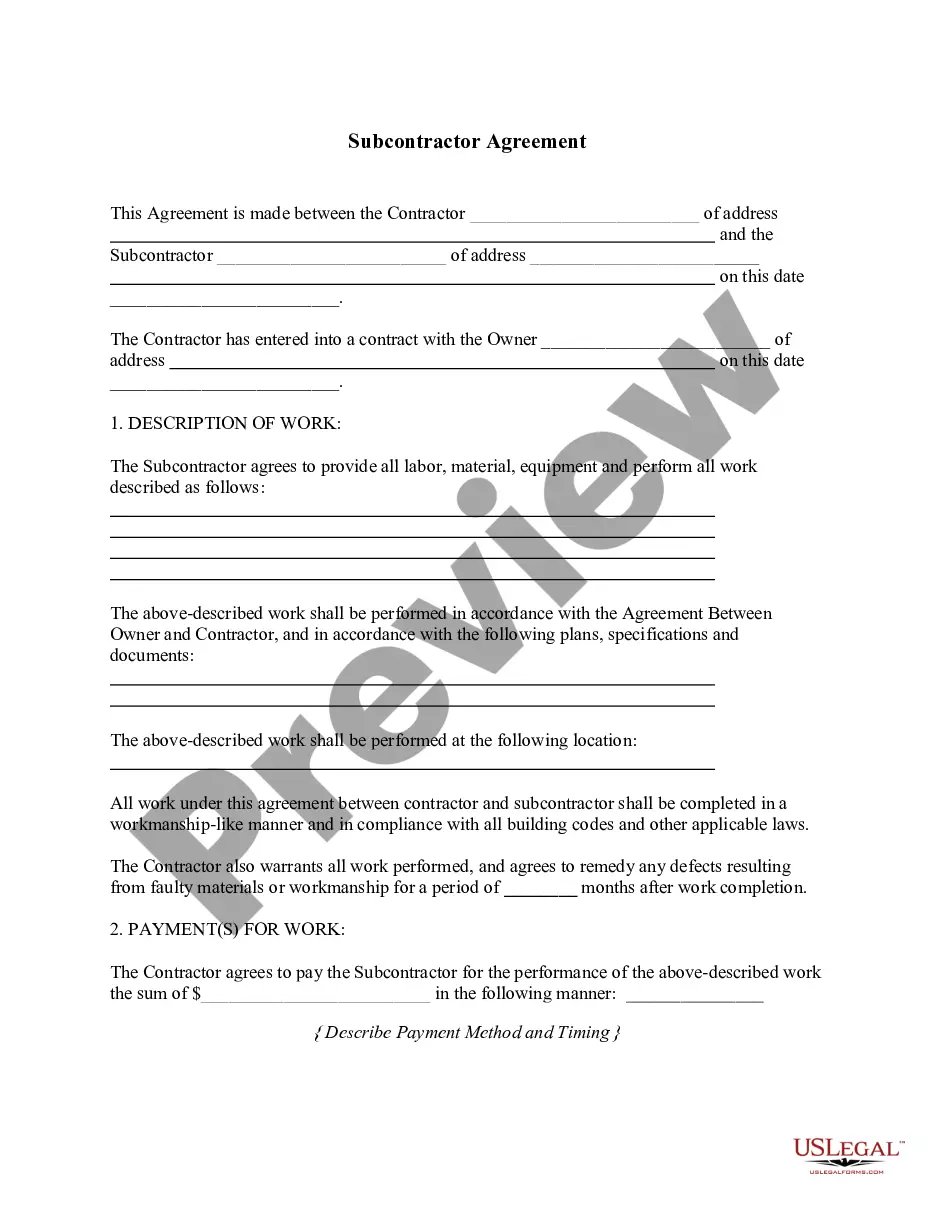
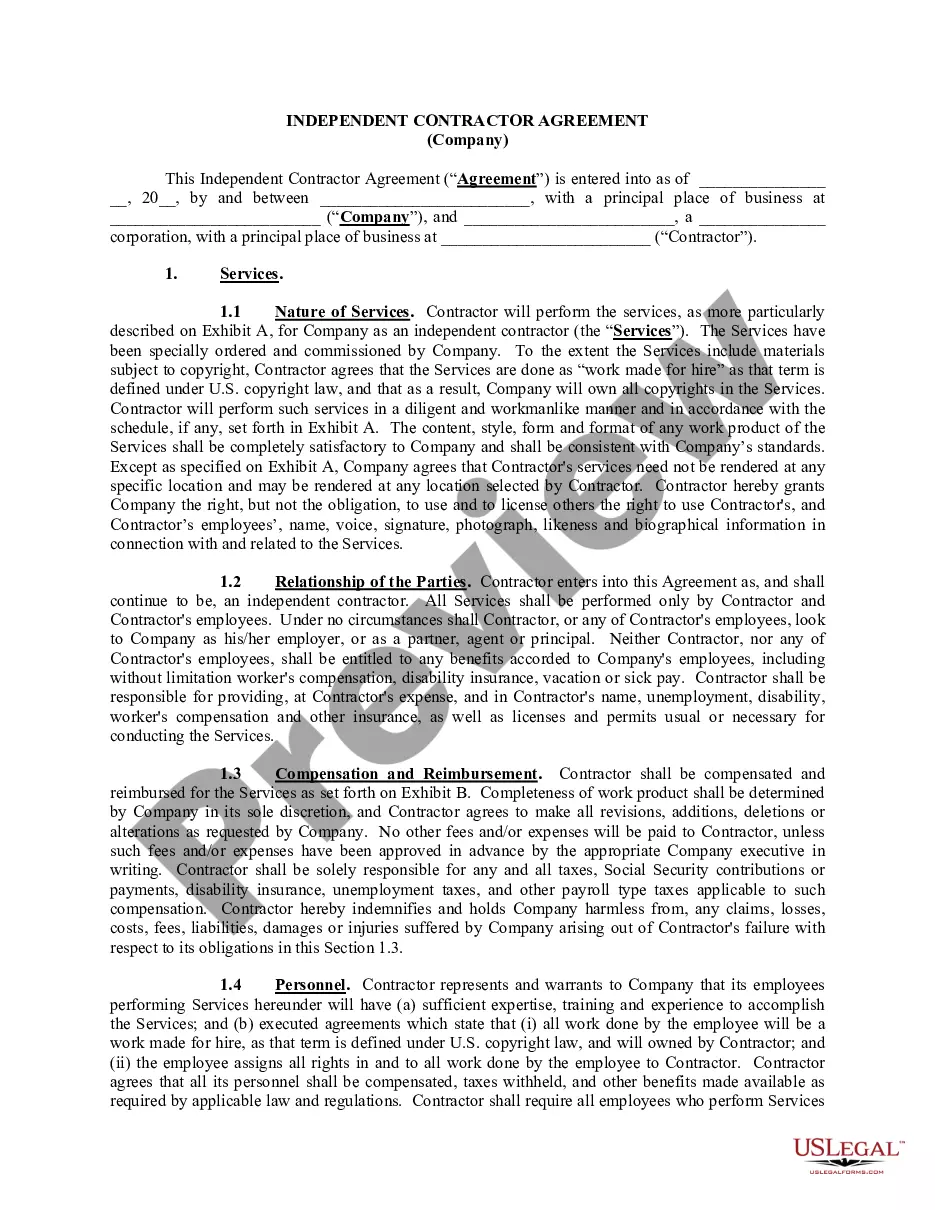
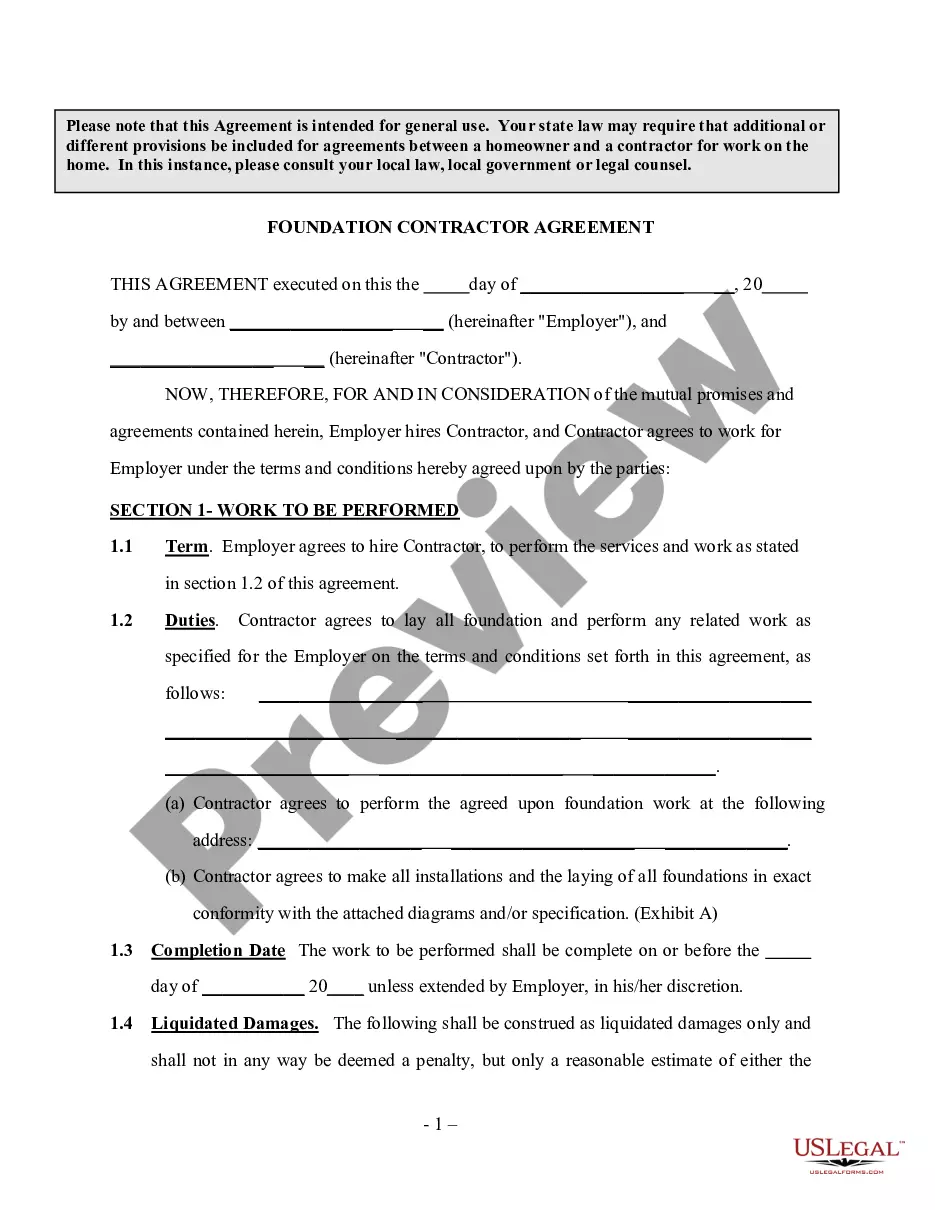
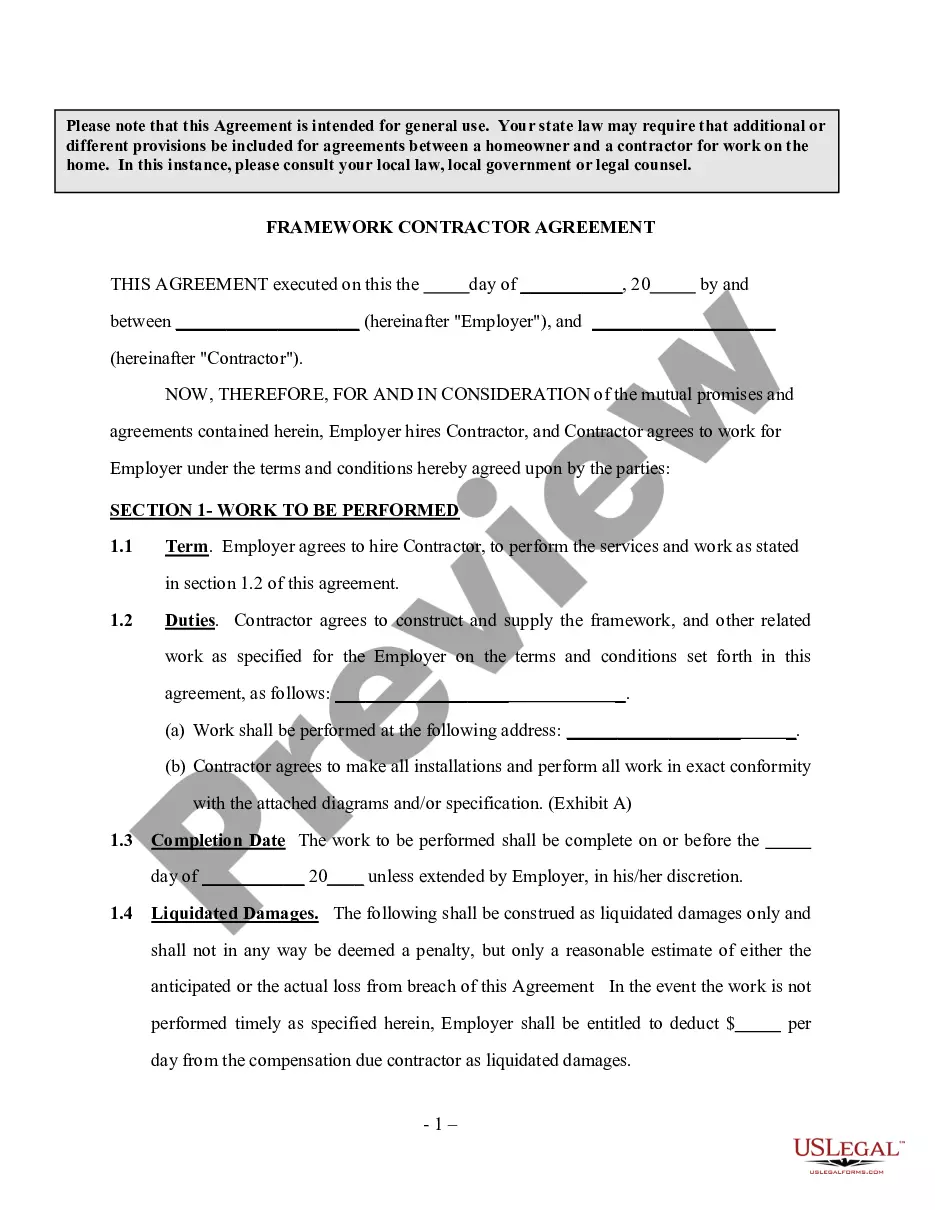
The Foundation Contract for Contractor is a legal document that outlines the agreement between foundation contractors and property owners. This contract can be established under either a cost-plus or a fixed fee arrangement. It covers various important aspects such as permits, soil conditions, insurance, and change orders. This form is specifically tailored to comply with the laws of the State of Maine, making it a reliable option for local construction projects.
Key components of this form
- Permits: Contractor's responsibility to obtain necessary permits.
- Soil Conditions: Clarifies contractor's lack of responsibility for soil conditions.
- Insurance: Requirements for general liability and workersâ compensation coverage.
- Changes to Scope of Work: Process for adjusting project specifications through written change orders.
- Late Payment: Provisions for defaults and late payment penalties.
- Dispute Resolution: Options for resolving disputes, including arbitration.


When this form is needed
This form should be used whenever a property owner engages a foundation contractor for construction or repair work on their property. It is particularly relevant when the project involves significant work that requires adherence to local building regulations and obtaining permits. It is also appropriate when changes to the scope of work may occur during the project timeline, ensuring that both parties are protected and informed.
Who should use this form
- Contractors looking to formalize agreements for foundation projects.
- Property owners seeking clear terms and conditions for construction services.
- Anyone involved in a building project in Maine that necessitates a legal contract with a foundation contractor.
Completing this form step by step
- Identify the parties: Enter the names and addresses of both the contractor and the property owner.
- Specify the project details: Include a clear description of the work to be completed.
- Outline payment terms: Indicate whether the payment will be a fixed fee or cost-plus.
- Detail changes to the scope: Include provisions for how changes will be communicated and handled.
- Sign and date the contract: Ensure both parties sign and date the form to validate the agreement.
Notarization requirements for this form
This form does not typically require notarization unless specified by local law. However, including notarization can provide an additional layer of authenticity and security for both parties involved.
Get your form ready online
Our built-in tools help you complete, sign, share, and store your documents in one place.
Make edits, fill in missing information, and update formatting in US Legal Forms—just like you would in MS Word.
Download a copy, print it, send it by email, or mail it via USPS—whatever works best for your next step.
Sign and collect signatures with our SignNow integration. Send to multiple recipients, set reminders, and more. Go Premium to unlock E-Sign.
If this form requires notarization, complete it online through a secure video call—no need to meet a notary in person or wait for an appointment.
We protect your documents and personal data by following strict security and privacy standards.

Make edits, fill in missing information, and update formatting in US Legal Forms—just like you would in MS Word.

Download a copy, print it, send it by email, or mail it via USPS—whatever works best for your next step.

Sign and collect signatures with our SignNow integration. Send to multiple recipients, set reminders, and more. Go Premium to unlock E-Sign.

If this form requires notarization, complete it online through a secure video call—no need to meet a notary in person or wait for an appointment.

We protect your documents and personal data by following strict security and privacy standards.
Common mistakes
- Failure to specify all necessary permits which can lead to project delays.
- Not including a clear detailed description of the work, causing misunderstandings.
- Neglecting the need for change orders when altering project specifications.
- Overlooking the importance of documenting payments and any late charges.
- Not obtaining necessary title documents or survey information prior to starting work.
Benefits of using this form online
- Convenience: Easily download and edit the form anytime, anywhere.
- Reliability: Forms are drafted by licensed attorneys ensuring compliance with legal standards.
- Cost-effective: Avoid expensive legal fees by using professionally designed templates.
- Time-saving: Quickly complete and print the form for immediate use.
What to keep in mind
- The Foundation Contract for Contractor ensures both parties understand their obligations and rights.
- It's crucial for property owners and contractors to agree on project details and payment terms.
- Using this form helps protect against disputes by clearly outlining terms and conditions.
- Always consider consulting a professional to review the completed contract if unsure.
Looking for another form?

Form popularity
FAQ
Home builder contracts are construction contracts that will lay out the responsibilities and expectations between the builder and the purchaser. Home builder contracts will define: The details of the work that is to be done. The price that the builder expects to be paid. The terms and conditions of the payment.
Residential contractors build and renovate homes or manage such projects from start to finish. The residential contractor typically secures permits, supervises labor and enlists specialized subcontractors such as plumbers and electricians.
A general contractor is responsible for providing all of the material, labor, equipment (such as engineering vehicles and tools) and services necessary for the construction of the project. A general contractor often hires specialized subcontractors to perform all or portions of the construction work.
Unlike other states, Maine doesn't require general contractors to be licensedonly plumbers, electricians, and contractors who do specialty work. Check out the full list of who needs to be licensed here. Instead, general contractors need to apply for Maine business licenses.
All licensed contractors are bonded.Contractors with employees and all roofing contractors are legally required to carry workers' compensation insurance. Contractors are not legally required to carry commercial general liability (CGL) insurance, although many do.
Generally speaking, a general contractor is someone who manages a team of subcontractors to help do various types of construction projects in your home. A custom home builder, however, is specialized in building custom homes and is able to complete this specific type of project start to finish on their own.
To become a general contractor, you need at least a high school diploma, but there is an increase in a need for a bachelor's degree or at least an associate degree, plus years of construction industry experience. Regardless of education though, experience in the industry is the most important requirement.
A certified contractor passed the state licensing examination. Certified contractors can work anywhere within the state in which they are licensed. A registered contractor is registered by a local county or municipality and receives a certificate of competency from the Electrical Contractors' Licensing Board.
To become a general contractor in Maine, according to the Office of the Maine Attorney General, one must simply apply for and obtain a business license, as well as include a written contract for all construction and home improvement projects over $3,000.